You do not need a big consulting firm to start a clinic. In many cases, that decision is the most expensive way to feel less anxious, not the best way to build a profitable practice.
That’s the myth: “Serious practices hire consultants.” I’ve watched too many post-residency docs burn $30k–$150k on glossy binders and vague “strategic roadmaps” that never translate into operational reality. Meanwhile, smaller, more focused help—or actual DIY with targeted tools—would have done 90% of the job for 10% of the cost.
Let’s strip this down to what actually matters when you’re starting a private practice right out of residency or after a couple of employed years.
What Big Consulting Firms Actually Sell (Hint: It’s Not What You Think)
Here’s the uncomfortable truth: big healthcare consulting firms are optimized for hospitals, systems, and large groups. Not for a solo internist renting 1,500 square feet in a strip mall.
What they actually sell you:
- A sense of safety: “We’ve done this hundreds of times.”
- A pile of documents: business plan, pro forma, workflow maps, policy templates.
- Connections you could often get on your own: bankers, architects, IT vendors.
- The illusion of certainty in a business that is inherently uncertain.
What they rarely sell:
- Skin in the game. If your clinic fails, they still get paid.
- Day-to-day operational fixes when you are drowning in denials and no-shows.
- Down-in-the-weeds help on week 7 when your biller quits and your cash flow tanks.
I’ve seen consultants hand a new clinic a 70-page “market analysis” that says things like: “Population growth in a 5-mile radius is 3.2% annually.” Meanwhile, the front desk has no script for collecting copays and new patient paperwork is a mess.
The real leverage in a new clinic is not a sophisticated market report. It’s basic, boring execution:
- Tight scheduling
- Clean billing
- Simple, efficient workflows
- Reasonable overhead
And none of those require a Big Name Firm™.
The Money Problem: What the Data and Math Actually Say
Let’s talk numbers, not vibes.
For a small primary care or typical outpatient specialty startup, you’re usually looking at:
- Build-out + equipment
- EHR + PM system
- Initial staffing
- Working capital for 3–6 months
Typical all-in start-up range: $150k–$400k depending on specialty and local costs.
Now drop a large consulting engagement on top: $25k–$150k+ for planning, feasibility, and “go-live support.”
Here’s the problem: new clinics are fragile in the first 18 months. Cash flow is unstable while volumes ramp and payers are slow to pay (especially credentialing-dependent ones like commercial plans).
Diverting $50k–$80k to a firm instead of to working capital can absolutely be the difference between surviving a slow ramp and closing your doors.
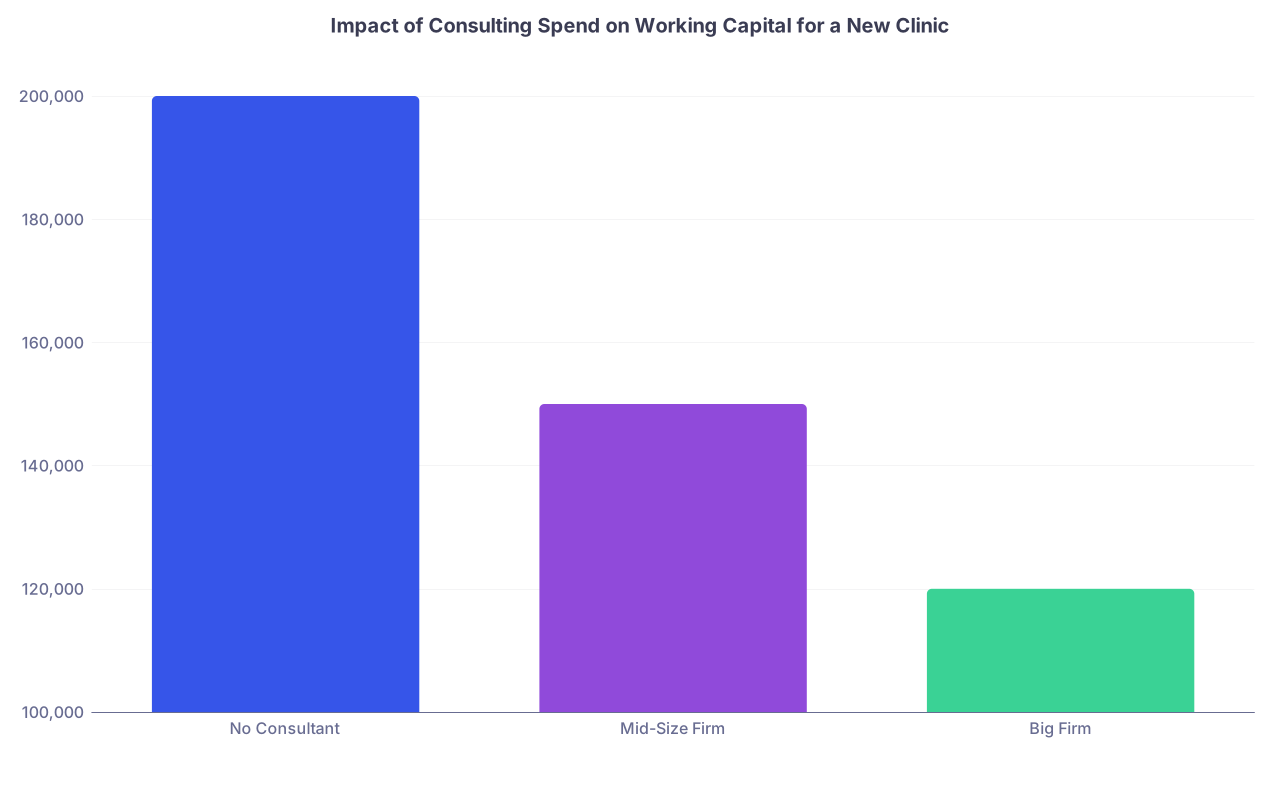
| Category | Value |
|---|---|
| No Consultant | 200000 |
| Mid-Size Firm | 150000 |
| Big Firm | 120000 |
In that simple example, you either have:
- $200k of cushion to pay rent, staff, and yourself minimally, or
- $120k because $80k went to “launch consulting.”
Which one gives you more real-world resilience when:
- Your landlord delays build-out by six weeks
- Two key insurers take four months to complete credentialing
- Your first MA quits at month three
Not hard.
Real clinics fail from cash flow and operational sloppiness. Not from lack of a 50-slide “strategic positioning” deck.
What You Actually Need to Get Right (None Require a Big Firm)
The core tasks to launch most outpatient clinics are shockingly repeatable and not mysterious.
You need to solve for:
- Definition of your model (panel size, visit types, payer mix, hours).
- Basic financial projections and break-even.
- Site selection and lease.
- Licensing and credentialing.
- EHR + practice management + billing setup.
- Staffing plan and workflows.
- Basic marketing and referral strategy.
That’s it. Each one of these can be handled with:
- A good accountant (ideally with medical practice experience)
- A healthcare attorney for contracts/lease review
- A competent revenue cycle / billing consultant or company
- Targeted one-on-one practice management coaching
- Templates and tools that already exist for small practices
You don’t hire McKinsey to decide your front desk script.
When Big Consulting Actually Makes Sense (Rare, But Real)
Let me be fair. There are scenarios where a larger consulting outfit can be justified. They mostly involve scale or complexity that you probably do not have as a new post-residency clinic.
Reasonable use cases:
- Multi-site launch (e.g., 5–10 urgent care locations under a PE-backed platform)
- Highly regulated or complex service lines (e.g., imaging centers, surgery centers)
- Integration into a larger network with shared risk contracts or advanced analytics
- Large multi-specialty group reorganization, not a one-doc startup
For the typical:
- Solo or 2–3 physician internal medicine clinic
- Small specialty outpatient clinic (endo, rheum, derm, psych, etc.)
- Direct primary care or concierge micro-practice
A big-name firm is overkill. It’s like hiring a neurosurgeon to remove a splinter.
The False Comfort of “They’ve Done This Before”
The line you’ll hear: “We’ve opened 200+ clinics nationwide.”
Sounds impressive. But ask the questions that actually matter:
- How many of those were 1–3 provider practices under 5,000 square feet?
- How many were started by physicians right out of residency?
- How many were self-funded vs hospital/PE-backed?
- What percentage were still open and profitable after 3 years?
Very few firms will give you real outcome data. Why? Because their business model is project-based, not performance-based.
Here’s what I’ve actually seen in the field:
- Gorgeous, fully branded clinics with custom signage and polished design… bleeding cash.
- “Optimized workflows” that ignore reality: patients who show up late, staff turnover, EHR glitches.
- Policy manuals that exactly nobody reads once the consultants leave.
Meanwhile, the scrappy clinic down the street:
- Negotiated a simple lease
- Picked a mainstream EHR
- Hired one efficient front-desk/biller hybrid
- Learned fast from early chaos
And three years later, they’re full and profitable.
Where Consultants Can Add Real Value (At the Right Scale)
The myth isn’t “all consulting is bad.” It’s “you must hire a big consulting firm to be legitimate or safe.” That’s just wrong.
Here’s where targeted consulting actually makes sense for a new clinic:
Physician-Owner Financial Coaching
You didn’t learn this in residency.- Understanding fixed vs variable costs
- Visit volume needed to break even
- How payer mix changes your reality
A few hours with a practice-savvy CPA beats a 100-page “feasibility” PDF every time.
Revenue Cycle / Billing Setup
This is a high-yield area for focused help.- Helping you pick billing software (or a billing company)
- Setting up clean claim workflows
- Training staff on eligibility checks and copay collection
Legal Structure and Contracts
A healthcare attorney is non-negotiable for:- Entity formation and ownership structure
- Reviewing your lease
- Reviewing payer contracts and any hospital “support” agreements
On-Site Operational Tune-Up (Short-Term)
A few days of in-clinic observation and systems setup by someone who has run small clinics can be worth more than six months of “strategy” calls with a firm partner who’s never scheduled a patient.
You want people who’ve been in the trenches: former practice managers, billers, clinic administrators. Not just consultants who live in Excel.
DIY vs Big Firm vs Targeted Help: A Real Comparison
Let’s put the options side by side.
| Option | Typical Cost | Best For | Main Weakness |
|---|---|---|---|
| DIY + Templates | $0–$5,000 | Simple clinics, low risk | Steep learning curve |
| Targeted Experts | $5k–$30k | Most new small practices | Need to coordinate people |
| Big Consulting Firm | $30k–$150k+ | Large/complex projects | Overkill and expensive |
The sweet spot for a typical post-residency clinic? Targeted experts and some DIY. Not the prestige firm.
Phase Reality: Post-Residency and the Job Market Trap
You’re coming out of residency or fellowship. You’re staring at:
- Employed offers with RVU quotas and noncompetes
- The temptation of a guaranteed salary
- Horror stories of “private practice is dead”
So when a consulting firm says, “We’ll de-risk this for you,” it lands. Emotionally.
But let’s be direct:
- Your biggest risks are undercapitalization, bad location, and incompetent billing.
- None of those are solved specifically by using a big-name firm instead of smarter, cheaper help.
- Many firms recycle the same playbooks—often designed for hospital-owned clinics with different economics than yours.
Instead of outsourcing your courage to a logo, you’re better off:
- Getting a brutally honest pro forma from a CPA
- Talking to 2–3 local private practice docs about payer behavior and local volume
- Piloting with lower overhead (modest space, minimal staff, used equipment where reasonable)
- Investing in backup cash reserves instead of “reassurance consulting”
The Overhead Trap: Ongoing Costs They Rarely Warn You About
Consultants love “right-sized staffing models.” You know who pays those salaries when the shiny deck is done? You.
I’ve seen recommended startup staffing for a single MD clinic that looked like this:
- 1 front desk
- 1 MA
- 0.5 FTE nurse
- 0.5 FTE biller
- Clinic manager (even at 0.5 FTE, that’s real money)
That’s a hospital mindset. For a lean, new clinic, that’s often insane.
Plenty of successful one-doc clinics start with:
- 1 cross-trained front desk / biller
- 1 MA (sometimes even part-time at first)
- No manager until you’re busy enough to justify it
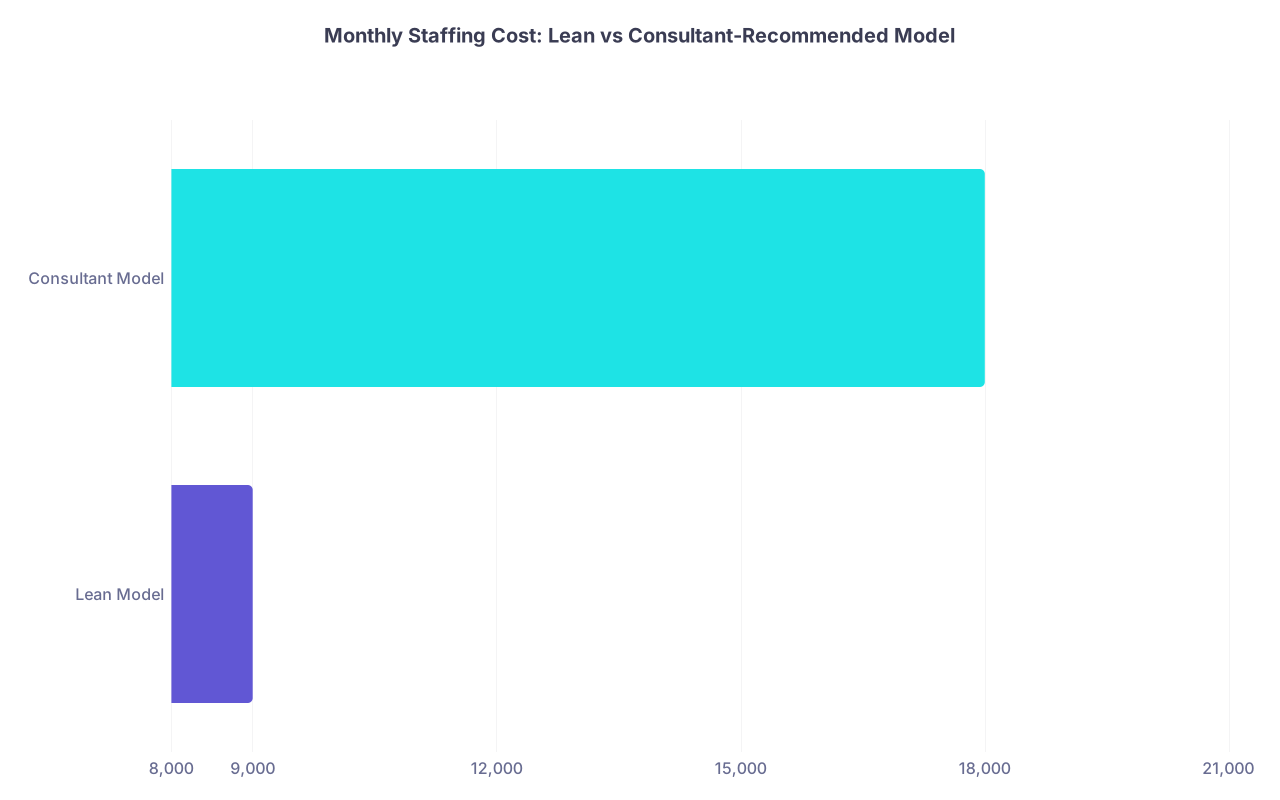
| Category | Value |
|---|---|
| Lean Model | 9000 |
| Consultant Model | 18000 |
That extra ~$9k/month? That’s $108k a year. Add that to a $60k consulting engagement and you’ve just burned the equivalent of one full year of a junior associate’s salary… before you’re at full panel.
The firm walks away saying, “We built a scalable model.” You’re left wondering why your bank account is empty.
How to Tell If a Firm Is Wrong for You in 10 Minutes
Some quick diagnostic questions:
Do they mostly showcase hospital and large group case studies?
Red flag. They probably don’t understand your scale.Do they talk more about “brand,” “market position,” and “growth strategy” than:
- Days in A/R
- Denial rates
- Front desk workflows
- Credentialing timelines
Then they’re selling theater, not survival.
Can they show you a real P&L from a similar-sized clinic they helped start (de-identified), with year 1–3 volumes and profitability?
If not, they’re asking you to buy on faith.Are they okay with a narrow scope (e.g., just supporting planning and financial projections), or do they push a huge “end-to-end” package?
Upsell culture = not your friend at this stage.
A Smarter Playbook for Most New Clinics
Here’s a far more rational approach for a post-residency doc starting a practice:
Spend ~$2k–$5k on a practice-savvy CPA
Get real pro formas, break-even analysis, and tax/entity planning.Spend ~$2k–$10k on legal work
Entities, lease review, and key contracts. Non-negotiable.Spend ~$3k–$15k on targeted practice consulting
Either short-term help from a former practice manager or enrollment/billing specialist to set up your systems.Save the rest for working capital
That extra $30k–$80k you didn’t spend on a big firm? That’s your real insurance policy.

| Step | Description |
|---|---|
| Step 1 | Decide to Start Clinic |
| Step 2 | Hire CPA |
| Step 3 | Hire Healthcare Attorney |
| Step 4 | Engage Targeted Practice Consultant |
| Step 5 | Set Up EHR and Billing |
| Step 6 | Hire Minimal Staff |
| Step 7 | Open Doors and Iterate |
You are buying resilience, not prestige.
Watch Out for the “Free Help” That Isn’t Free
A quick aside: hospitals and large systems sometimes offer “practice startup support” if you agree to align or take a “support” package in exchange for referral control or restrictive covenants.
This is consulting by another name. The bill just arrives as:
- Call coverage requirements
- Noncompetes
- RVU thresholds
- Loophole-heavy “guarantees” that claw back if you don’t generate enough revenue
Again: if the support is bundled, ask for:
- The actual cost the system is attributing to that “help”
- The financial break-even for you under that agreement
- What happens if your volume lags
Free help is often the most expensive of all.
What the Data Shows About Small Practice Survival
No, small private practice is not dead. It’s harder, yes. But survivable and profitable when done sanely.
Published data and MGMA-type surveys consistently show:
- Primary care and common outpatient specialties can run viable small practices with reasonable physician income.
- Overhead is the killer. Not lack of “strategy.”
- Owners who understand their numbers (or work with someone who does) outperform those who hand the keys to outside firms and walk away.
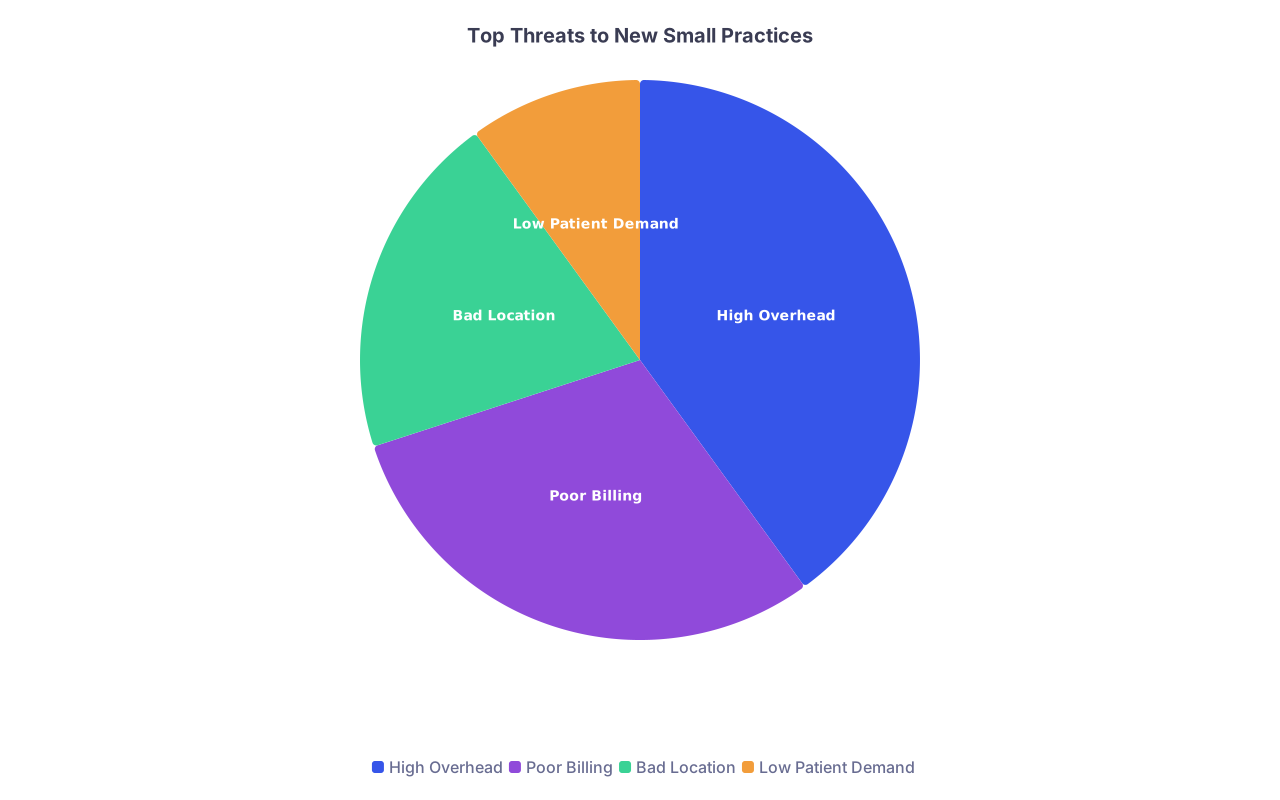
| Category | Value |
|---|---|
| High Overhead | 40 |
| Poor Billing | 30 |
| Bad Location | 20 |
| Low Patient Demand | 10 |
Notice what’s not on there: “Did not hire a brand-name consultant.”
How to Keep Yourself Honest
If you remember nothing else, remember this:
If a consultant cannot clearly explain how their fee will improve:
- Time to cash
- Revenue captured
- Overhead reduced
- Or risk truly mitigated
…then you’re probably paying for decoration.
Ask every potential firm or consultant to answer one question in writing:
“If I do not hire you, what is the most likely way my clinic fails in the first 2–3 years?”
If they can’t answer that without jargon, they don’t understand your problem well enough to be worth your money.
The Bottom Line
Let’s land this.
- Most new, small outpatient clinics do not need a big consulting firm. They need lean overhead, competent billing, and enough cash in the bank.
- Targeted experts (CPA, healthcare attorney, small-practice consultant) produce more value per dollar than large, prestige firms for a post-residency startup.
- Every dollar you pour into “strategy decks” is a dollar you’re not using to survive the very real chaos of your first 12–18 months in practice.
You don’t buy safety by buying a logo. You buy it by understanding your numbers, keeping your overhead sane, and getting just enough help from people who’ve actually run small clinics—not just studied them from a conference room.