
It’s January 2nd. You just got off a brutal night shift, your paycheck hit yesterday, and you’re staring at a pile of student loans you mostly ignore. You know you should ‘deal with your loans,’ but that phrase is useless. What does that even mean for a resident making $60K with $250K+ in debt?
Here’s the real answer: you need simple, repeatable quarterly financial routines. Not vague resolutions. Concrete checklists you run every 3 months so your loan situation doesn’t quietly drift into disaster.
You’re a resident. Your time and brainpower are already maxed. So we’ll build a year into four clean blocks:
- Q1: January–March
- Q2: April–June
- Q3: July–September
- Q4: October–December
At each point, you’ll know: “Right now, I should be doing this with my loans.”
The Quarterly Framework: What Never Changes
Every quarter, you’re doing the same core five checks. The details change (taxes, recertification, contract changes), but the backbone stays.
At the start of each quarter, you should:
Log into every loan servicer
- Confirm balances, interest rates, and status (IDR, forbearance, standard, etc.).
- Check for any notices or messages you ignored at 2 a.m. on call.
Verify your repayment plan and PSLF status
- Confirm you’re on the plan you think you’re on (e.g., SAVE, PAYE, IBR).
- If you’re aiming for Public Service Loan Forgiveness (PSLF), make sure:
- Your employer qualifies.
- Your payments are still counting as qualifying.
Update your loan dashboard
- Keep a simple spreadsheet or note with:
- Total federal debt
- Total private debt
- Weighted average interest rate
- Current repayment plan
- If you do nothing else, do this. Awareness beats denial.
- Keep a simple spreadsheet or note with:
Recalculate your “affordable payment range”
- Monthly net pay – essential expenses = bandwidth.
- Decide: can you pay the minimum, a bit extra, or just minimum and save cash?
Set 1–2 specific loan actions for the quarter
- Example:
- “Submit PSLF form by February 15.”
- “Save $500 in a ‘future refinance’ fund by June 30.”
- Example:
You’re not trying to “solve” your loans every quarter. You’re just steering the ship 5 degrees at a time.
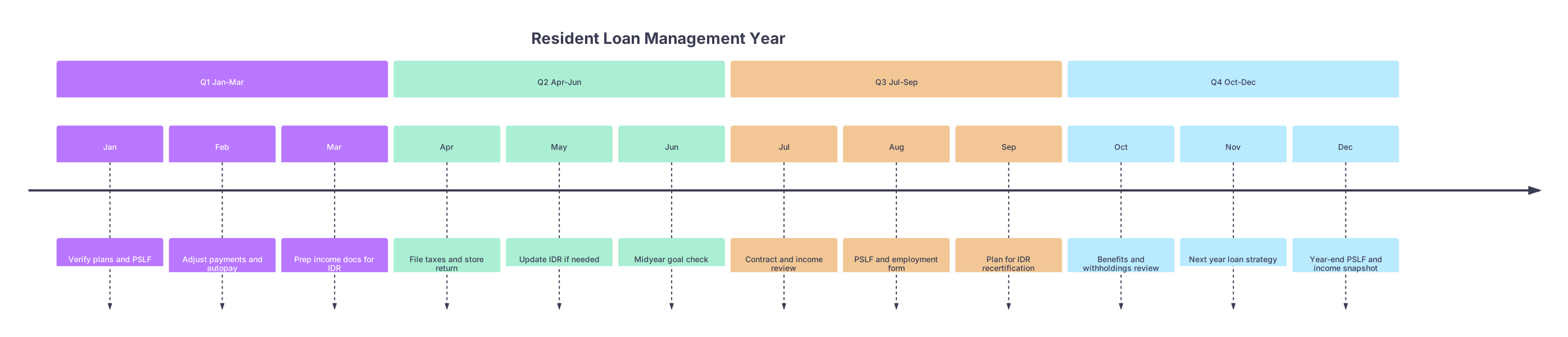
| Period | Event |
|---|---|
| Q1 Jan-Mar - Jan | Verify plans and PSLF |
| Q1 Jan-Mar - Feb | Adjust payments and autopay |
| Q1 Jan-Mar - Mar | Prep income docs for IDR |
| Q2 Apr-Jun - Apr | File taxes and store return |
| Q2 Apr-Jun - May | Update IDR if needed |
| Q2 Apr-Jun - Jun | Midyear goal check |
| Q3 Jul-Sep - Jul | Contract and income review |
| Q3 Jul-Sep - Aug | PSLF and employment form |
| Q3 Jul-Sep - Sep | Plan for IDR recertification |
| Q4 Oct-Dec - Oct | Benefits and withholdings review |
| Q4 Oct-Dec - Nov | Next year loan strategy |
| Q4 Oct-Dec - Dec | Year-end PSLF and income snapshot |
Q1 (Jan–Mar): Reset, Verify, and Stop Bleeding
You’re coming off holiday chaos and maybe a rotation change. This quarter is about getting your baseline right.
(See also: The First 30 Days of Medical School for more details.)
Week 1 of January: Hard Reset
At this point you should:
- Log into StudentAid.gov and every servicer.
- List:
- Federal loans: total, interest rates, current repayment plan.
- Private loans: total, interest rates, current payment and due date.
- Make sure your contact info is current. Email. Phone. Mailing address.
Now decide, explicitly:
- Are you pursuing PSLF?
- Are you planning to refinance after residency?
- Are you going to aggressively pay down principal during residency, or just keep things stable?
Write that in a note. You’ll forget later when you’re post-call and someone offers random advice.
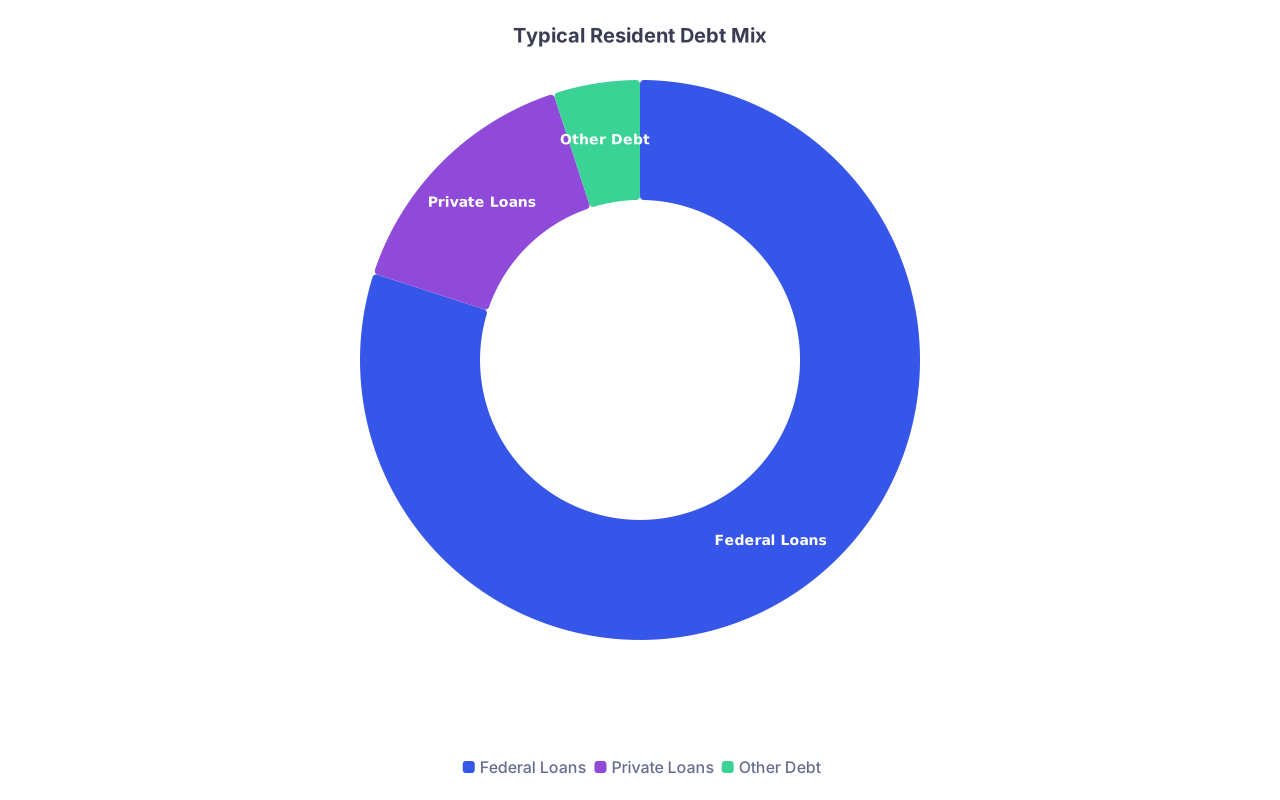
| Category | Value |
|---|---|
| Federal Loans | 80 |
| Private Loans | 15 |
| Other Debt | 5 |
Late January: Payment + Autopay Check
At this point you should:
- Confirm your monthly payment:
- If federal and on IDR (e.g., SAVE): confirm what they’re billing.
- If it looks off, call them. Yes, actually call. Wrong payments early can trash PSLF progress later.
- Enroll in autopay if:
- You have stable income.
- You can keep a small buffer in checking.
- You want the typical 0.25% interest rate reduction.
(Related: PSLF certification timing & paperwork)
If cash is tight, set autopay for the minimum, not some heroic number you will not sustain during ICU months.
February: Employer + PSLF Form
If you’re at a nonprofit hospital or university, at this point you should:
- Confirm your employer is PSLF eligible using the online PSLF Help Tool.
- Complete and submit a PSLF Form (Employment Certification Form):
- Do this once a year, minimum.
- Q1 is a clean time to do it so it becomes an annual habit.
- Make sure your HR/benefits office fills in their part correctly.
Your goal: see your qualifying payment count updated later this year and every year going forward.
March: Prep for IDR Recertification Season
Even if your IDR recert date isn’t in Q1, this is when you set up for it.
At this point you should:
- Gather:
- Most recent pay stubs (1–3 months).
- Last year’s tax return (once you have it).
- Decide which income to use for IDR (if you have the choice this year):
- If last year’s income was lower than your current PGY level, tax return may help.
- If this year’s income is lower (e.g., you worked as a scribe before, now as a PGY1), you may want to use pay stubs.
Make a note:
“IDR recert month: ___; use [tax return / pay stubs] this year.”
You’ll thank yourself later.
Q2 (Apr–Jun): Tax Return, IDR Strategy, and Midyear Check
This quarter sets up your payment size for the next 12 months if you’re on IDR. Do not sleepwalk through this.
April: Tax + Documentation
By mid-April, at this point you should:
- File your taxes.
- Save a PDF of your complete return:
- Upload to a cloud folder labeled something like “Loans + PSLF.”
- Note:
- Adjusted Gross Income (AGI).
- Filing status (single, married filing jointly, or married filing separately).
If you’re married (or will be soon), this is where people screw things up:
- IDR plans often use household income, which your marriage + filing status impact.
- PAYE / IBR / SAVE treat spousal income differently.
- Filing separately can lower payment but may cost more in taxes. You need to run both sets of numbers.
May: IDR Recertification or Reassessment
If your IDR recert date hits anywhere April–September, I’d treat May as your “IDR month.”
At this point you should:
- Log into your servicer and check:
- Recertification due date.
- Current income info they’re using.
- Decide:
- Use last year’s tax return if AGI is lower than your current annualized PGY income.
- Use current pay stubs if this year’s income is lower than last year’s AGI.
Then:
- Submit IDR recertification 30–45 days before it’s due.
- Screenshot or save confirmation pages. Servicers lose things. I’ve seen it more than once.
June: Midyear Loan Health Check
At the midpoint of the year, at this point you should:
- Compare:
- Loan balance on January 1
- Loan balance now
- Ask:
- Is your balance growing, flat, or shrinking?
- Does that match your current strategy (PSLF vs pay-off)?
If you’re aiming for PSLF, rising balances are usually acceptable. You’re optimizing for minimal payments, not principal reduction as a resident.
If you’re planning to refinance and pay off aggressively after training, you might:
- Set a small autopay extra toward high-interest private loans, like $50–$150/month.
- Start or continue building a “future payoff” fund in a high-yield savings account.

Q3 (Jul–Sep): New Contracts, Raises, and PSLF Paperwork
This is when most residents advance a PGY level. New income. New contract. Time to tune your loan setup.
July: New PGY, New Income
When your new PGY salary starts, at this point you should:
- Look at your first new-year pay stub:
- New base salary.
- Changes in withholdings and benefits.
- Recalculate:
- Take-home pay.
- “Safe” range for loan payments or savings contributions.
If your income jumps but you’re on an IDR plan with old, lower income still driving payments:
- PSLF track? Great. Bank the difference. Do not lifestyle-inflate all of it.
- Not PSLF? Consider:
- Modestly increasing payments on high-interest private loans.
- Or increasing savings dedicated to future lump-sum payoff.
August: PSLF Employment Certification (Again)
Yes, we’re doing this yearly. Residents forget, then scramble 6–8 years later.
At this point you should:
- Complete another PSLF Form covering the last academic year.
- Get HR to sign off while your employment dates are fresh and easy to verify.
- Submit and save:
- Completed form PDF.
- Any confirmation emails or updated qualifying payment counts.
| Step | When Each Year | Where |
|---|---|---|
| Verify employer eligibility | Q1 | PSLF Help Tool |
| Submit PSLF form | Q1 or Q3 | Servicer / Fed |
| Save employer-signed copy | Same day | Cloud folder |
| Check updated payment count | Q3 or Q4 | Servicer site |
September: IDR + Future Planning Check
If your IDR recert comes later in the year, September is prep month. At this point you should:
- Confirm your recertification deadline.
- Decide whether you want your new higher income to hit your payments this year or next:
- If PSLF: delaying higher payments (by recerting later, when allowed) can save you real money.
- If payoff-focused: you might voluntarily report new income earlier to get higher payments going.
Also:
- Glance at fellowship or job timelines:
- When might your income jump enough to justify refinancing private loans?
- If finishing residency in <2 years, you’re entering the “pre-refinance strategy” window.
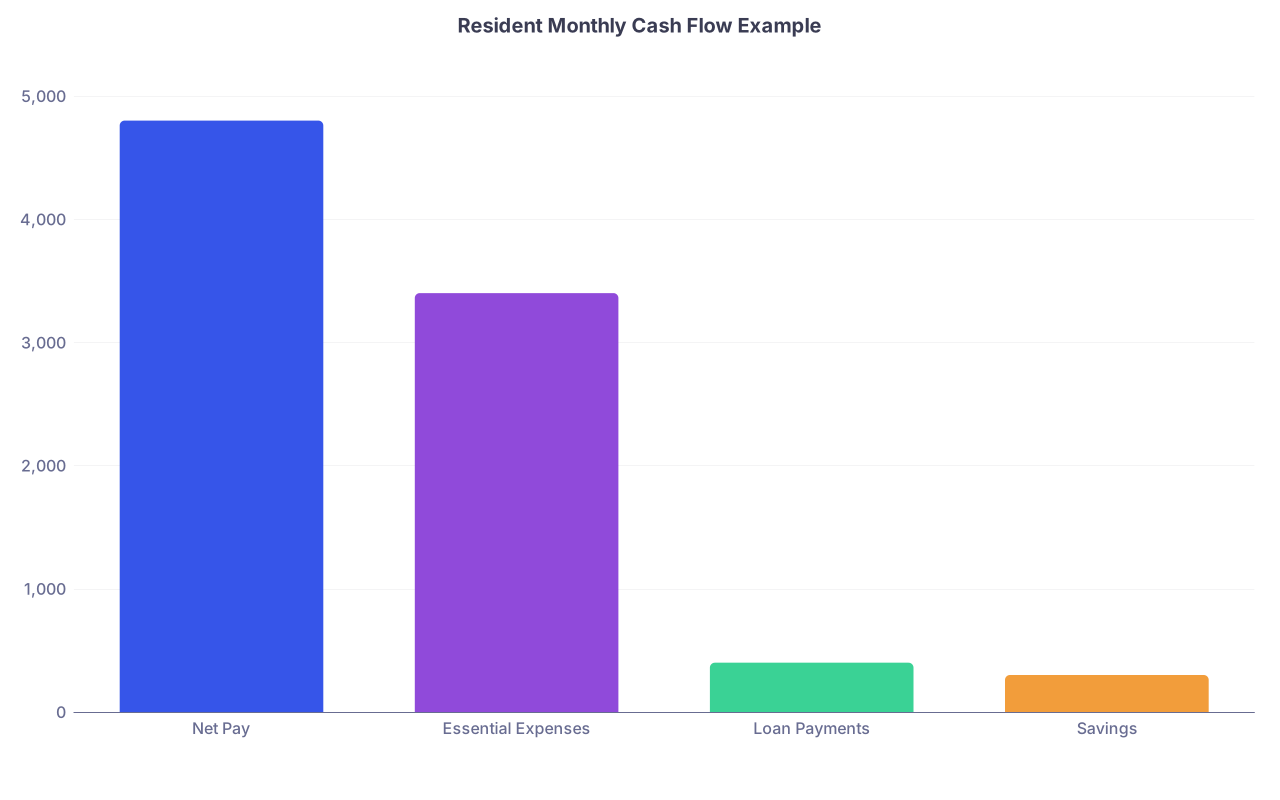
| Category | Value |
|---|---|
| Net Pay | 4800 |
| Essential Expenses | 3400 |
| Loan Payments | 400 |
| Savings | 300 |
Q4 (Oct–Dec): Year-End Strategy and Next-Year Setup
This is where you lock in your next year’s plan and clean up the messes you created during busy rotations.
October: Benefits, Withholding, and Cash Buffer
Open enrollment usually hits now. At this point you should:
- Review:
- Retirement contributions (even modest 2–4% matters later).
- Disability insurance (yes, this is part of loan planning; your debt doesn’t vanish if you can’t work).
- Decide:
- If you’re PSLF-bound, aggressive retirement savings can lower AGI, lowering future IDR payments.
Also:
- Check your emergency fund progress:
- Target at least $1,000–$2,000 as a resident.
- More is fine. None is dangerous.
November: Next-Year Loan Strategy Meeting (With Yourself)
Before holiday brain kicks in, at this point you should:
Revisit your big-picture loan stance:
- PSLF still makes sense?
- Plan to refinance after residency still the move?
- Any talk of changing specialties, doing extra fellowships, switching employers?
If within 12–18 months of finishing training:
- Start a list of refinance lenders to compare later (Laurel Road, SoFi, Earnest, etc.).
- Do not refinance federal loans prematurely if PSLF remains on the table.
Create a one-page summary for yourself:
- Current balances
- Plan (PSLF vs non-PSLF)
- Target “decision points” (e.g., “Re-evaluate refinance options 6 months before fellowship ends.”)
December: Year-End Snapshot + PSLF Count Check
Before the year ends, at this point you should:
Save a year-end snapshot
- Take screenshots/PDFs of:
- Total loan balances.
- Current repayment plan.
- Any PSLF qualifying payment totals.
- Store in that same cloud folder.
- Take screenshots/PDFs of:
Check your PSLF count
- Log into your servicer.
- Confirm your updated qualifying payment number.
- Compare to how many months you think you’ve made payments.
- If it looks off, make a note to call them in January. The earlier you fix errors, the better.
Set two concrete goals for next year
- Example:
- “Submit PSLF form every July.”
- “Hit $3,000 in emergency savings.”
- “Pay $100 extra/month on private 9% loan.”
- Example:

Putting It All Together: A Simple Quarterly Checklist
Print this. Stick it inside a kitchen cabinet or in your notes app. Once per quarter, at this point you should run it.
Quarterly Resident Loan Checklist
Log in to all servicers
- Confirm balances, interest, repayment plan, autopay status.
Update your loan summary note
- Total federal, total private, plan type, PSLF yes/no.
Check IDR and PSLF
- Any recert forms due soon?
- Need to submit/update PSLF certification?
Review income + cash flow
- Did your pay or expenses change this quarter?
- Do you need to adjust payments or savings?
Set 1–2 actions for this quarter
- Concrete, small, and dated.
If you follow this for just one year, your loans stop being this vague black cloud in the background. They become a project. Slow, tedious, but under control.

FAQ (Exactly 2 Questions)
1. I’m a PGY1 drowning in call. If I can only do one thing each quarter, what should it be?
Do a 10-minute login + snapshot: log into your servicer(s), verify your repayment plan and autopay, then update a single note with balances and plan type. That’s it. This prevents silent disasters—like getting kicked off IDR, missing payments counted toward PSLF, or having mail go to an old address—and gives you a stable base to build on when you have more bandwidth.
2. How do I decide between PSLF and refinancing after residency, and when should that decision show up in my quarterly routine?
Use a simple rule: if you’ll spend 10 years or more in qualifying nonprofit/academic work and have high federal debt relative to income, PSLF is usually superior. If you plan on private practice with a big attending salary early and don’t expect to stay at qualifying employers, long-term refinancing and payoff make more sense. That decision should drive your quarterly behavior: PSLF track means focus on minimizing IDR payments and documenting PSLF employment; refinance track means building a cash buffer, tightening expenses, and planning to attack principal hard after training. Revisit that decision every Q3–Q4 as contracts and career plans evolve.
Open your calendar app right now and create four recurring events titled “Loan Check – Q1/Q2/Q3/Q4” on the first weekend of January, April, July, and October. Add one line in the notes: “Log in, update balances, check IDR/PSLF, set one action.” That’s your starting move.