
It’s July 1st. You just started intern year. You’re exhausted, your badge photo is terrible, and MOON (the hospital onboarding portal) has 17 incomplete tasks… but sitting quietly in the background are six figures of federal loans and three letters that actually matter: PSLF.
You keep hearing: “Sign up early for PSLF.”
Nobody tells you when to review it, how often to touch the paperwork, or what needs to be checked at each stage of training.
That’s what I’m going to lay out. Time-based. Step-by-step. So you don’t get to year 9 and find out half your payments never counted.
Big Picture Timeline: PSLF During Training
Before we zoom into month-by-month, here’s the spine of your PSLF timeline.
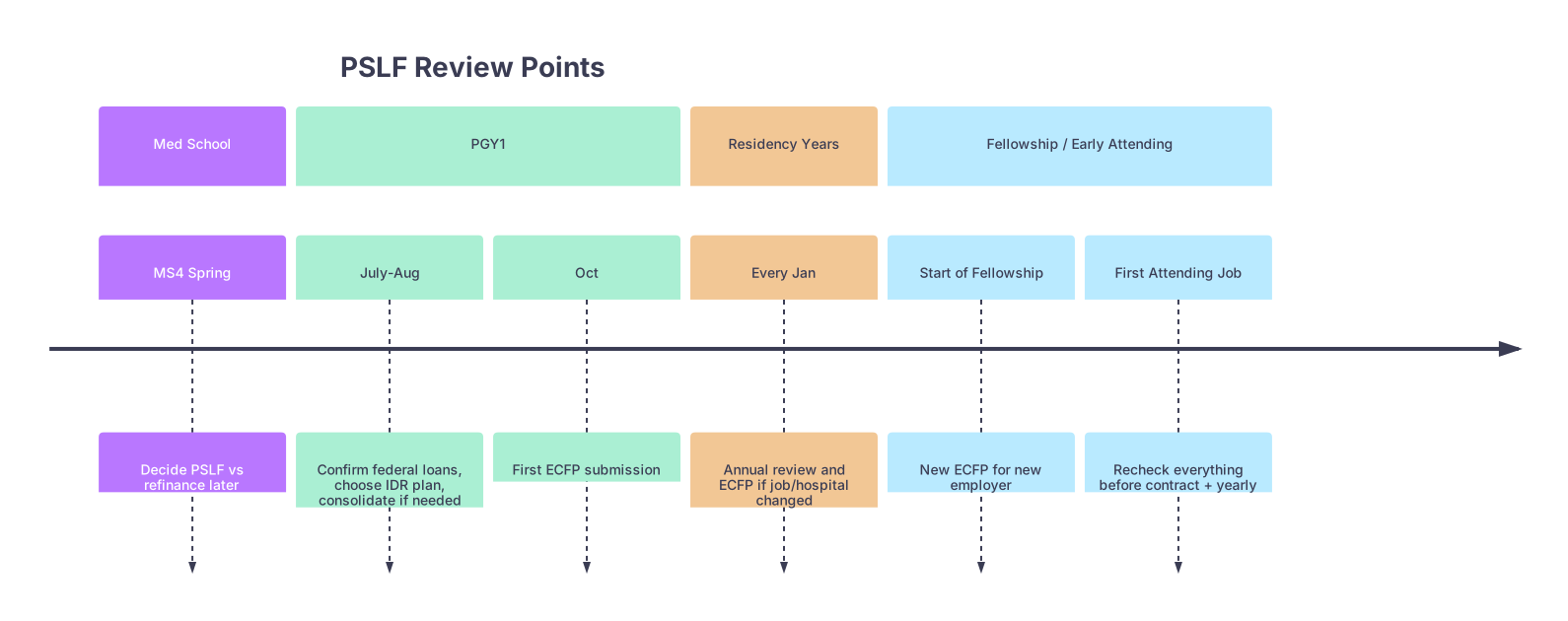
| Period | Event |
|---|---|
| Med School - MS4 Spring | Decide PSLF vs refinance later |
| PGY1 - July-Aug | Confirm federal loans, choose IDR plan, consolidate if needed |
| PGY1 - Oct | First ECFP submission |
| Residency Years - Every Jan | Annual review and ECFP if job/hospital changed |
| Fellowship / Early Attending - Start of Fellowship | New ECFP for new employer |
| Fellowship / Early Attending - First Attending Job | Recheck everything before contract + yearly |
PSLF review isn’t a one-time chore. It’s a recurring process. The people who mess this up usually do one of two things:
- Never file anything until year 8–10. Disaster.
- File once and never verify again. Also bad.
You want a light but consistent touch. Think annual checkup, not daily obsession.
Late MS4: Set the Strategy Before Internship
You’re in your last year of med school. Matching soon. Loans are in in-school status or grace. This is the “decide your lane” phase.
At this point you should:
Decide if PSLF is even your likely path.
Good PSLF candidate:
- Federal Direct loans (not private)
- Planning residency + maybe fellowship at 501(c)(3) hospitals
- Considering working at academic centers, big nonprofit health systems, VA, county hospitals
- Total loans high enough that forgiveness is meaningful (often >$100k, usually >$200k)
Bad PSLF candidate (often):
- Mostly private loans
- Clear plan to join high-paying private practice not at a nonprofit hospital
- Very low total federal debt and aggressive payoff plan
Make sure your loans are actually PSLF-eligible.
- Verify all loans are Direct Loans through studentaid.gov
- If you see FFEL or Perkins, you’ll likely need a Direct Consolidation Loan before payments count for PSLF.
Pick your PSLF “start date” target.
Aim: have your first PSLF-qualifying payment early in PGY1.
That means:- You’ll be on an income-driven repayment (IDR) plan
- You’ll be working full time at a qualifying employer
- You’ll submit employment certification within the first few months of residency
No forms yet. Just decisions and cleanup.
PGY1: The Critical Setup Year (Month-by-Month)
This is where people quietly win or lose years of PSLF credit.
July–August PGY1: Turn PSLF “On”
At this point you should:
Confirm employer eligibility.
- Ask GME: “Is this hospital a 501(c)(3) or government employer for PSLF purposes?”
- If yes → good.
- If they don’t know → red flag; check IRS status, HR, or PSLF employer search.
Consolidate if needed (once, early).
- If you have FFEL or Perkins loans, combine into a Direct Consolidation Loan through studentaid.gov.
- Do this before you start making payments you hope will count.
- Don’t keep reconsolidating annually. One time, early, then stop.
Choose and enroll in an IDR plan. Typical options now:
- SAVE (successor to REPAYE) – often best for residents
- PAYE (phasing out for new borrowers)
- IBR (usually second choice or backup)
Your goal:
- Low payments during residency
- PSLF-qualifying plan from day 1
Turn auto-pay ON.
- Set it from your checking account
- Track when the first actual payment posts (date matters for your count)
October PGY1: First PSLF Employment Certification
This is your first big paperwork milestone.
At this point you should:
Submit your first PSLF form (ECFP). The form is now called the PSLF & TEPSLF Certification & Application. It does three key things:
- Confirms your employment is qualifying
- Ties your employer data to your loans
- Starts your official PSLF payment count on servicer records
Have HR sign it, not you.
- Fill out your part
- HR/Med Staff Office / GME completes employer section
- Keep a scanned copy of the signed form before uploading or mailing
Create a PSLF folder system. Digital is fine:
- Folder named:
PSLF - Subfolders:
Forms,Servicer Statements,Employment Contracts - Save: every submitted form + every PSLF count letter from your servicer
- Folder named:
You’ve just converted “I think I qualify” into “My servicer has it on record.”
PGY2–PGY3 (and Beyond): Annual PSLF Checkups
This is where your habit matters. It doesn’t take long, but skipping it creates landmines.
Once Per Year: A Fixed PSLF Review Month
Pick a month you’ll remember. January, tax season, birthday month, whatever. I’ll use January here.
At this point every January you should:
Log in to studentaid.gov + your servicer.
- Check your IDR plan is still correct
- Confirm recertification date for income (usually annually)
- Make sure employment type and contact info are current
Download your latest PSLF payment count letter.
- This shows how many qualifying payments they think you have
- File it in your PSLF folder
Compare payment count to your own tracker. Yes, you should keep your own simple tracker:
- A spreadsheet with:
- Month/year
- Whether you worked full time (≥30 hrs or hospital’s FTE standard)
- Whether a payment was made
- You’re checking that:
- No big gaps
- No weird “0 payments” months you can’t explain
- A spreadsheet with:
Submit a PSLF form if:
- You changed jobs or training sites
- Your hospital changed legal entity / tax ID
- You’re finishing residency or fellowship
- You haven’t submitted one in the last 12 months
Yearly certification isn’t mandatory, but it’s smart. I’ve seen residents discover 3–4 years of payments missing because nobody checked until fellowship.
When You Change Programs, Institutions, or Titles
This is the silent killer of PSLF. Different GME office, new HR system, new EIN, and suddenly your servicer treats it like a new job.
Events that should trigger an immediate PSLF review:
- Switch residencies (e.g., IM → Anesthesiology)
- Move institutions (e.g., Community Hospital A → University Hospital B)
- Start fellowship at a different hospital or university
- Your hospital merges or rebrands under a new corporate identity
At this point, with any of these changes, you should:
Submit a PSLF form for the job you’re leaving. Lock in those years. Do it within 1–2 months of your last day.
Submit a new PSLF form for the new employer once you start. As soon as you’ve completed onboarding and are in the system as full-time.
Update your tracker.
- Mark clear end date at old job
- Start date at new job
- Note employer names + tax IDs if you have them
This is how you prevent residency years from “disappearing” when you finally apply for forgiveness.
End of Residency: Transition Checkpoint
You’re PGY3, PGY4, PGY5 — finishing up. Maybe fellowship, maybe straight to attending.
At this point (final 3–6 months of residency) you should:
Do a full PSLF audit.
- Total months you think should count
- Compare to servicer count
- Identify any discrepant years (e.g., PGY2 shows 8 qualifying payments when you know you paid 12)
Submit a PSLF form for residency employment one last time.
- Covers from your last certified date through your final day as a resident
- Make sure HR uses correct dates
Plan your next employment step with PSLF in mind.
Options:
- Fellowship at a 501(c)(3) or government hospital
- PSLF-qualifying if full time and on IDR
- Hospital-employed attending at nonprofit or VA
- Also qualifying
- Private practice / for-profit hospital
- Typically not PSLF-qualifying
- Fellowship at a 501(c)(3) or government hospital
This is the moment to decide if you’re committing to PSLF long-term or considering refinancing once you hit a high income in private practice.
Fellowship Years: Do Not Zone Out
Fellowship is sneaky. You’re “still in training,” but your status, employer, and pay may have changed.
At this point, at the start of fellowship, you should:
Treat it like a new job.
- Confirm employer PSLF eligibility
- Submit a new PSLF form with fellowship employer details
- Update your payment tracker from “resident” to “fellow” period
Recheck your IDR plan when your income jumps.
- Some fellowships pay significantly more
- Your IDR payment will adjust after income recertification
- If you’re sticking with PSLF, that’s fine — higher payments just mean more forgiven later.
And then keep your annual January review going:
- Confirm payment counts
- Submit updated forms as needed
- Save all letters and confirmations
First Attending Job: The High-Risk Spot for PSLF
This is where many people wreck a perfectly good PSLF path because the paycheck looks big and the refinancing emails sound convincing.
At this point — before you sign your first attending contract — you should:
Classify the job: PSLF-eligible or not?
Ask:
- Is the employer a 501(c)(3) or government entity?
- Will you be full-time (FTE ≥0.75–1.0 depending on policy)?
- Are you paid as a W-2 employee, not a 1099 contractor?
If the answer is no across the board → PSLF probably stops here.
Estimate your total PSLF path.
Rough calculation:
- Count PSLF-qualifying years from residency + fellowship
- Add expected years at new job
- See where you land relative to 120 payments (10 years)
Example:
- 3 years residency + 2 years fellowship = 5
- 5 more years at non-profit attending = 10 → full PSLF
Do NOT refinance federal loans if PSLF is still viable.
- Private refinance = PSLF is dead. Permanently. No appeal.
- If you take a PSLF-eligible attending job, keeping loans federal and on IDR usually makes sense until forgiveness.
Within first 3–6 months of attending job:
- Submit PSLF form for previous fellowship or residency to close that chapter
- Submit PSLF form for new attending job
- Verify your new higher income is reflected correctly on IDR when it recertifies
Quick Reference: Key PSLF Review Points
| Stage | Key Actions |
|---|---|
| Late MS4 | Confirm Direct loans, plan PSLF path |
| PGY1 (July–Oct) | Choose IDR, consolidate, 1st PSLF form |
| Every Year | January checkup + optional PSLF form |
| Job/Program Change | PSLF form for old + new employer |
| End of Residency | Full audit + final residency form |
| Start Fellowship | New PSLF form, confirm eligibility |
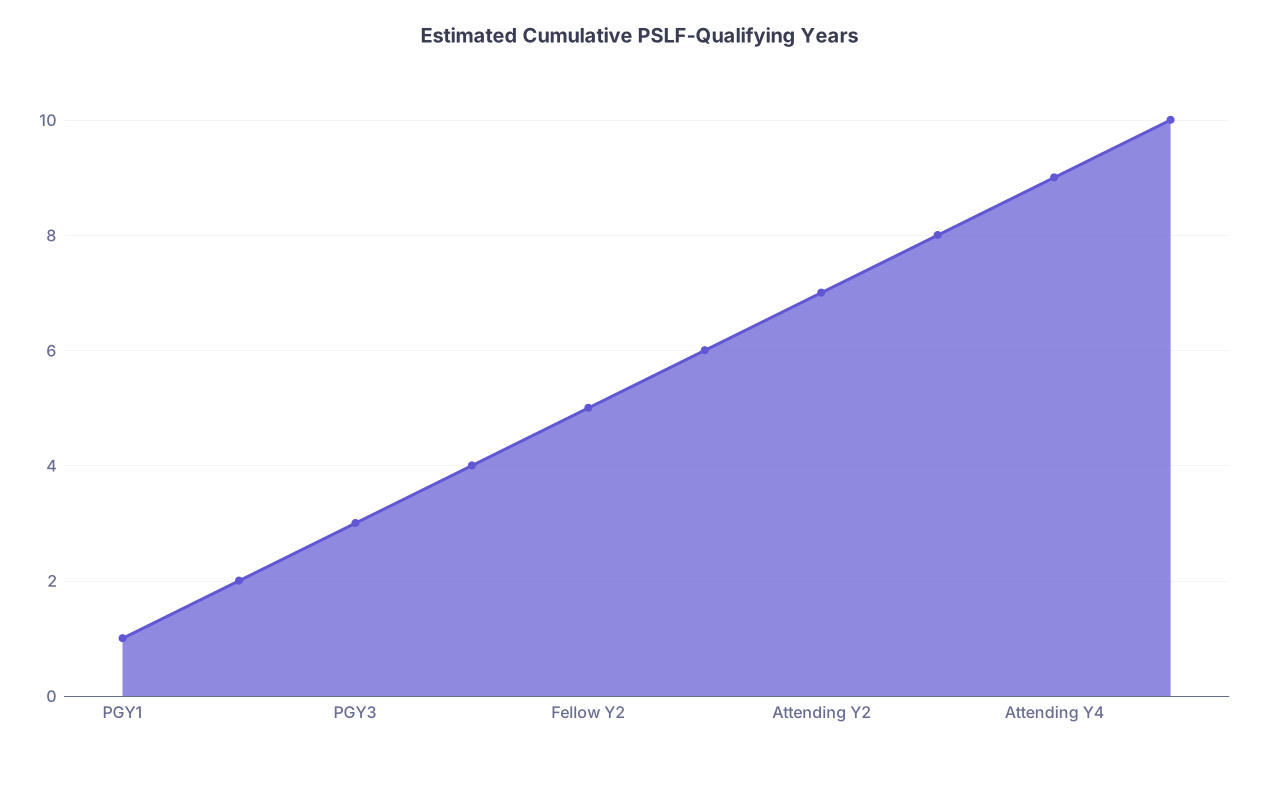
| Category | Value |
|---|---|
| PGY1 | 1 |
| PGY2 | 2 |
| PGY3 | 3 |
| Fellow Y1 | 4 |
| Fellow Y2 | 5 |
| Attending Y1 | 6 |
| Attending Y2 | 7 |
| Attending Y3 | 8 |
| Attending Y4 | 9 |
| Attending Y5 | 10 |
What to Do Every Time You Touch PSLF Paperwork
At this point — whenever you submit a PSLF form, once a year or during a transition — you should run the same mini-checklist.

Mini-checklist (15–30 minutes):
Confirm:
- Employer type is still qualifying
- You’re full time by PSLF standards
Check your:
- IDR plan
- Recertification date
- Monthly payment amount
Submit PSLF form if:
- New employer
- New tax year and you want updated employment on record
- Servicer’s PSLF count looks off or outdated
Save:
- PDF of the completed form
- Any new PSLF payment count letters
If you do just this once a year, you’re already ahead of 80% of physicians.
Visual: PSLF Review vs. Years of Training
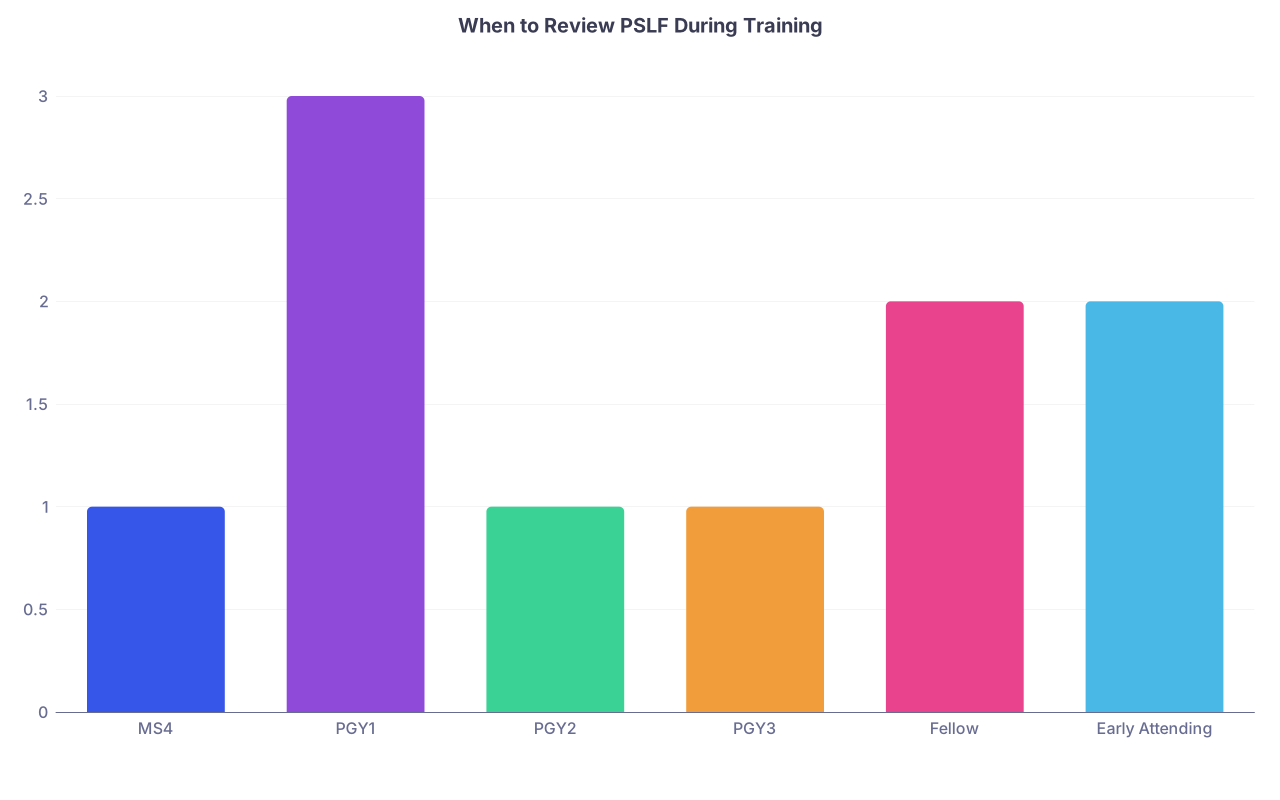
| Category | Value |
|---|---|
| MS4 | 1 |
| PGY1 | 3 |
| PGY2 | 1 |
| PGY3 | 1 |
| Fellow | 2 |
| Early Attending | 2 |
Think of those numbers like “intensity of attention.” You don’t need to live in your loan portal. But you do need to spike your attention at the right times: PGY1, transitions, early attending.
A Few Things People Consistently Get Wrong

Let me be blunt. I’ve seen these blow up, repeatedly:
Never submitting any PSLF certification until year 8 or 9.
Servicer records are a mess, HR staff have changed, and now you’re trying to reconstruct a decade of employment after the fact. Doable, sometimes. Miserable, always.Assuming “resident = PSLF automatically.”
No. You need:- Direct Loans
- IDR plan
- Qualifying employer
- Full-time status
- Actual payments being made
All of them.
Letting autopay fail silently.
Card expired, bank account changed, payment bounced. Months of no qualifying payments. You only notice when the PSLF count stalls. Check once per year.Refinancing with a private lender mid-training because the rate looks better.
You might save some interest. You might also walk away from six figures of future forgiveness. Once you go private, PSLF is gone.
Simple Recurring Habits That Protect You

If you want the stripped-down, no-BS version of what actually keeps you safe:
- One PSLF folder with every form and letter.
- One spreadsheet with 120 rows (one per month), check mark for each qualifying month.
- One annual review month you treat like a dentist appointment: annoying, but you go.
That’s it. You do those for 10 years, you’re fine.
FAQ (exactly 2 questions)
1. Do I really need to submit the PSLF form every single year during training?
No, it’s not mandatory. You could submit once at the end of 10 years. I think that’s reckless. What I recommend:
- Submit once early in PGY1 to establish your record.
- Then submit about once per year or whenever you change employers or finish a phase (end of residency, end of fellowship, job change).
The yearly submission forces your servicer to recalculate your qualifying payment count and flush out any errors while they’re still fixable.
2. If my PSLF payment count looks wrong, when should I fight it?
Immediately. Don’t “wait until it catches up.” If your count is off by more than 1–2 months, especially for older years, you should:
- Pull your own payment history from your servicer.
- Confirm you were full-time and on IDR during those months.
- Call your servicer and open a dispute, and be ready to resubmit PSLF forms or employment verification for the contested period.
Fixing small discrepancies yearly is manageable. Fixing 36 missing payments at year 9 is a nightmare.
Key points to remember:
- Touch PSLF early (PGY1), then lightly but consistently every year.
- Submit PSLF forms at every transition: new job, new institution, end of residency/fellowship.
- Keep your own simple record and folder, and don’t refinance out of PSLF territory unless you’re absolutely sure you’re done with it.