
The worst financial mistakes of intern year don’t feel like mistakes at the time. They feel like “I’ll deal with this later.”
You will not “deal with it later.” You’ll be post-call, behind on notes, and signing whatever your loan servicer emails you at 11:47 pm.
So let’s take the guesswork out. Month-by-month. Week-by-week. What to do, when to enroll in IDR, when to refinance, and when to reassess.
This is the intern year money timeline I wish everyone got on Match Day.
Big Picture: Your Intern-Year Playbook
Before we zoom into dates, you need the framework. Here’s the 30,000-foot view of what you’re doing with your student loans in intern year:
Spring (Match → Graduation)
- Decide: Are you a PSLF candidate or a refinance/payoff candidate?
- Set up the correct federal plan (usually IDR) before grace ends.
- Get your servicer, total balance, and interest rates under control.
Summer (Orientation → First Paychecks)
- Make your first real plan-driven payment (or $0 qualifying payment).
- Lock in IDR / SAVE and PSLF tracking if needed.
- Build a starter emergency fund before you throw money at loans.
Fall/Winter (Settled into residency)
- Reassess: income, budget, PSLF trajectory, and possible early refinance if PSLF is off the table.
- Adjust your IDR certification schedule and plan for next July.
That’s it. Three phases. Now let’s walk the actual timeline.
Phase 1: March–June (Match to Graduation) – Decision and Setup
This is where you silently decide if future-you is going for Public Service Loan Forgiveness or not. That decision drives everything.
Match Month (March)
At this point you should:
Inventory every loan you have
- Log into:
- studentaid.gov → see all federal loans
- Any private lenders (Sallie Mae, Discover, SoFi, etc.)
- Note:
- Type: Direct, FFEL, Perkins, private
- Interest rate
- Balance
- Log into:
Decide your likely path: PSLF vs refinance/payoff
Ask yourself three blunt questions:
- Are you going into (or leaning toward) an academic or hospital-employed role?
- Are you OK with staying full-time at a 501(c)(3) / government employer for at least 10 years total (residency + attending)?
- Is your total debt-to-income ratio high? (Rough rule: total med school debt > 1.5–2× expected attending salary)
If mostly yes → you’re probably a PSLF candidate.
If mostly no, and you have moderate debt and high earning potential → refinance/payoff candidate.You don’t have to tattoo this decision on your forehead. But you do need a working hypothesis now.
| Scenario | Likely Path |
|---|---|
| $350k debt, pediatrics, academic | PSLF |
| $200k debt, EM, big city hospital | PSLF-lean |
| $180k debt, anesthesia, private group | Refinance |
| $120k debt, derm, high-paying job | Refinance |
| $250k debt, undecided but loves academia | PSLF-lean |
- Consolidation decision (for PSLF-leaning people)
If you have older FFEL or Perkins loans, you should usually:
- Direct Consolidate at studentaid.gov before payments restart or grace ends
- Choose an IDR plan during that process (usually SAVE)
Why now:
- Consolidation can reset old PSLF credit, so you want it done early.
- You don’t want to be in a random non-qualifying plan when residency starts.
If all your loans are already Direct and you’re starting fresh, you might skip consolidation. But check. I’ve seen too many interns say “I think they’re Direct” and later find stranded FFEL loans.
April–May (Final Med School Months)
At this point you should:
- Pick your federal plan and set it up early
If you intend to:
- Pursue PSLF → enroll in SAVE (or another IDR plan)
- Not pursue PSLF and maybe refinance later → you can still use SAVE/IDR with low payments during residency, then refinance as an attending
Go to your loan servicer (or studentaid.gov if you’re starting fresh) and:
- Apply for IDR now, even though payments may not be due yet
- Use last year’s tax return if it shows low income
- If you didn’t earn much as an MS4, your calculated payment can be $0 or close to it—and that $0 still counts as a qualifying PSLF payment.
- Verify your servicer and PSLF tracking
If you’re PSLF-bound:
- Make sure your loans are with the correct servicer (currently MOHELA for PSLF)
- If they aren’t, that will usually happen automatically once you file the PSLF form
- Don’t obsess if it takes a bit; just don’t ignore weird mail from servicers
- Mentally schedule your loan action dates
Write down three anchors:
- Residency start date (July-ish)
- First real paycheck (usually mid/late July)
- When your grace period ends – usually 6 months after graduation for unsubsidized loans, but many people’s schedules changed under COVID policies, so check actual due dates on your account.
You’re setting the chessboard here, not making big payments.
June (Graduation and Pre-Intern Gap)
This is the quiet-before-the-storm month where you can save yourself a ton of future pain.
At this point you should:
- Confirm your IDR enrollment status
Log in to your servicer:
- Check: “Plan: SAVE (or other IDR), status: approved/pending”
- If pending, check what they’re waiting for (income docs, signature, etc.)
Do not assume “no emails” means “everything is fine.” Servicers misplace things. Routinely.
- Submit PSLF form if you know your residency
Once you have your residency contract and HR info:
- File the PSLF Employment Certification Form listing your residency hospital as your employer
- You can submit this early in intern year or now; I’m a fan of doing it within the first few months of PGY-1, so if HR is slow now, set a calendar reminder for September
- Plan your first 3 paychecks
Decide now:
- How much goes to emergency fund (goal: at least $1,000–$2,000 by end of summer)
- How much to minimum loan payment
- How much to retirement match (if your program offers 403(b)/401(k) with a match, that’s free money; don’t ignore it)
Phase 2: July–September (Start of Residency) – Enroll, Pay, and Stabilize
This is where mistakes usually happen because you’re overwhelmed. So here’s the sequence.
Late June – Early July (Orientation and Paperwork Week)
At this point you should:
- Confirm your employer is PSLF-eligible
Ask HR or look at your contract:
- Is the hospital a 501(c)(3) or government entity?
Most teaching hospitals are. If yes: - Residency years count toward PSLF. If not:
- You’re probably not getting PSLF credit here. That tilts you toward a refinance/payoff path later.
- Double-check your loan due dates
Log in to your servicer:
- Find the exact date of your first payment
- Confirm the plan: IDR/SAVE, not Standard 10-year unless you want that
If anything says “forbearance,” “grace,” or “deferment” that you didn’t intentionally choose, fix it. That time might not count for PSLF.
- Set up autopay
Enroll in automatic payments:
- You usually get a 0.25% interest rate reduction
- It keeps you from missing a payment when you’re on nights and half-dead
July–August (First Checks, First Payments)
Your first paychecks hit. This is the “oh, so that’s what my net pay is” moment.
At this point you should:
- Make your first qualifying payment
For PSLF-minded:
- Pay whatever IDR calculates, even if $0
- Every month in a qualifying plan while full-time at a qualifying employer = one PSLF credit
For non-PSLF / refinance-later:
- Still pay via IDR or SAVE
- Goal: keep cash flow flexible during intern year, then hit harder later
- Do NOT refinance yet (in most cases)
Refinancing from federal → private kills PSLF and federal protections.
In intern year, refinancing usually makes sense only if:
- You are 100% sure you will never use PSLF
- Your debt load is moderate and rates are truly awful
- A reputable lender offers you a meaningful reduced rate even on resident salary
Even then, I often tell interns:
“Wait until at least PGY-2 or early PGY-3 unless your rate is outrageous.”
- Start an intern-year budget that actually respects your fatigue
You will not track every latte. You will:
- Set a simple monthly number you can safely send to loans
- Protect a chunk for emergency fund + basic living + some sanity spending (coffee, takeout, Uber post-call)
Aim by end of September:
- Emergency fund: at least $1,000–$3,000
- All loans: on a known plan, autopay set, no surprises
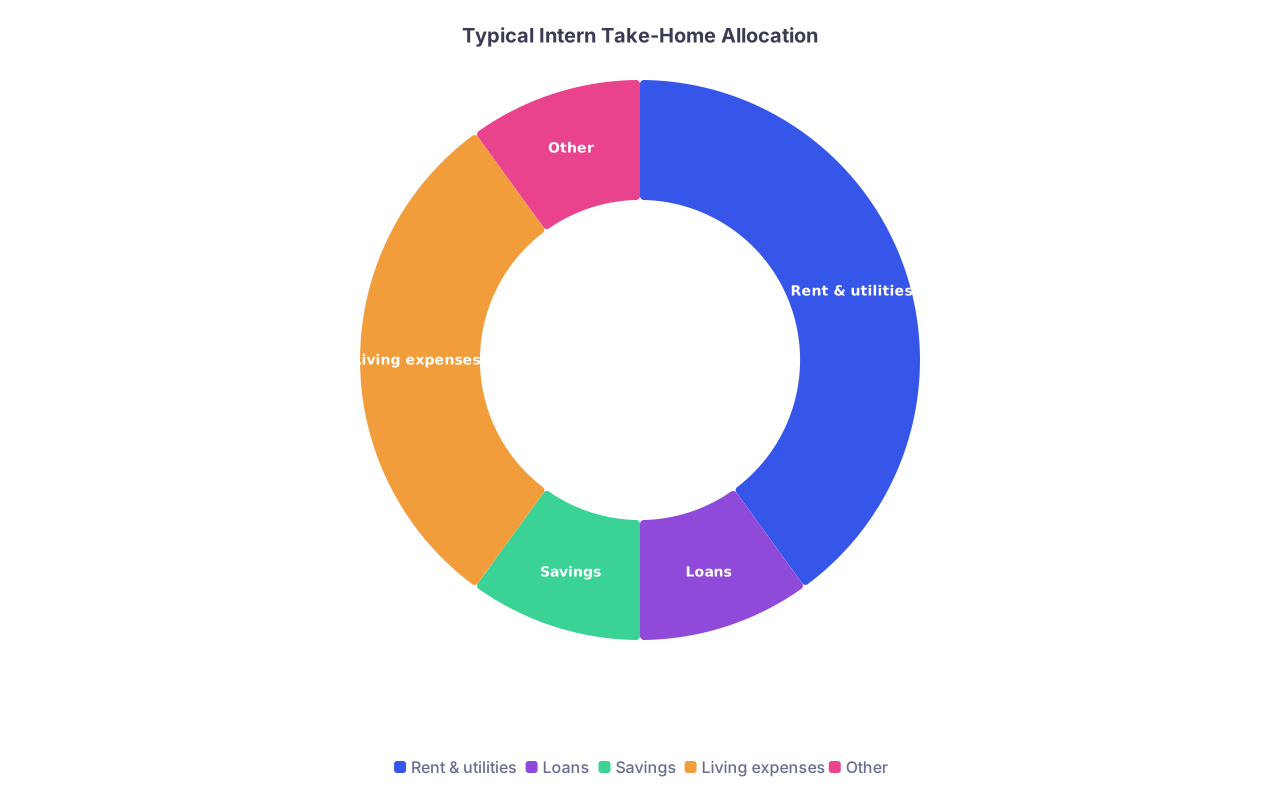
| Category | Value |
|---|---|
| Rent & utilities | 40 |
| Loans | 10 |
| Savings | 10 |
| Living expenses | 30 |
| Other | 10 |
September (3-Month Checkpoint)
At this point you should:
- Check PSLF credit count (if applicable)
Once your PSLF form is processed:
- MOHELA should show qualifying payment counts
- Early on, this number may be slow to update; that’s normal, but you want to see the pipeline moving
- Verify your IDR recertification date
Your servicer will list when they’ll next ask for income:
- Usually 12 months from IDR approval
- Write that month down. That month matters every year.
- Adjust withholding and benefits if needed
- Check if your tax withholding is wildly off
- Decide on retirement contributions (if there’s an employer match, strongly consider grabbing it even on intern salary)
Phase 3: October–Next June – Reassess, Adjust, and Prepare to Re-Certify
This is the long middle stretch. You are stable enough to make smarter decisions, but not yet flush with attending money.
October–December (Fall of Intern Year)
At this point you should:
- Reassess your attending career path
You now have:
- A clearer sense of specialty direction
- Exposure to academic vs private structures
Ask yourself again:
- Am I realistically going to be at a PSLF-qualifying employer for most of my career?
- Does my future salary justify aggressive payoff instead?
You do not have to know the exact job. You just need the direction of travel.
- Run both scenarios: PSLF vs refinance/payoff
Do a 30-minute back-of-envelope:
Scenario A: PSLF
- Intern through fellowship at 501(c)(3)
- Then academic job for at least a few years
- Use SAVE the whole way with payments tied to income
- See how many eligible years you’ll have by graduation + early attending
Scenario B: No PSLF
- Continue low payments during residency
- Refinance partway through training or at attending start
- Aggressive payoff in 5–10 years total
This is where a basic online loan calculator or PSLF estimator is actually useful.
- Increase payments slightly if you can
If you’re:
- Not doing PSLF → any extra principal payment during residency saves real money
- Doing PSLF → extra payments don’t reduce forgiveness amount, but they can make you sleep better if your debt feels suffocating. Just know you’re paying more than strictly necessary.
January–March (Mid-Year: Taxes and IDR Awareness)
Now you’re thinking about your next IDR recertification and what that will do to your payment.
At this point you should:
- Decide how to file taxes (if married/partnered)
If you marry or will marry during residency:
- PSLF/IDR people often benefit from filing Married Filing Separately to keep IDR payments based on your income alone (depends on plan and law at that time)
- Non-PSLF or refinance-bound folks may just choose Married Filing Jointly for broader tax benefits
You don’t pick this in a vacuum. It feeds directly into your next IDR calculation.
- Estimate your next IDR payment
Use:
- The loan simulator at studentaid.gov
- Your expected AGI on your next tax return
Know the ballpark:
- If your PGY-2 payment will jump from $0 → $250, that’s not a surprise you want in August.
- Check for any temporary forbearances or missed payments
Sometimes:
- Autopay fails when your card expires
- Servicer switches cause “administrative forbearance”
You want a clean payment history. If something’s off:
- Call them
- Fix the autopay
- Confirm PSLF eligibility for those months if you’re pursuing it
April–June (End of Intern Year – Reassess and Plan Next Year’s Moves)
You’ve survived most of intern year. Now you act like a PGY-2 financially.
At this point you should:
- Prepare for IDR recertification (if due soon)
Most interns who enrolled in IDR around graduation/orientation will re-certify around next summer.
Two smart moves:
- Time your income documentation to use the lowest reasonable AGI (often last year’s taxes)
- Submit paperwork 1–2 months early so you don’t bounce to a higher estimated payment due to “missing info”
- Re-check your refinance readiness
Ask again:
- Am I still not planning on PSLF?
- Is my debt-to-income ratio now more manageable?
- Are refinance rates significantly better than my current federal rates?
You still may decide to wait until PGY-3 or attending year, but you want to consciously decide, not drift.
For many residents, the sweet spot to seriously consider refinancing (if PSLF is truly off the table) is:
- Late residency (PGY-3/4+)
- Or right before/after attending start when income jumps
- Tune your payment level for PGY-2
Based on:
- Expected PGY-2 salary (small bump)
- New IDR payment
- Your comfort level
Decide:
- Minimum: match the IDR amount
- Stretch goal (non-PSLF): add an extra fixed amount per month toward principal (even $100–$200 helps)
- PSLF-focused: you can stay at IDR minimum and prioritize retirement or savings
Quick Month-by-Month Summary
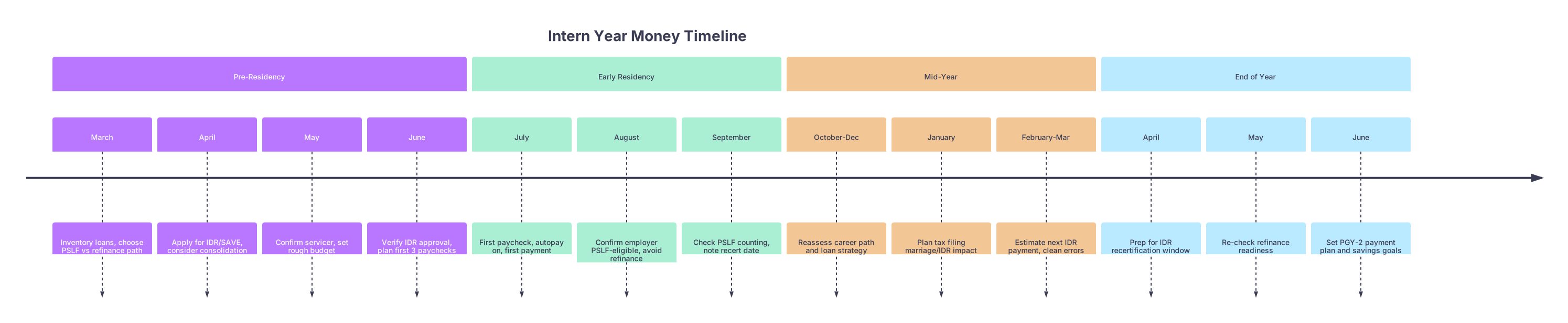
| Period | Event |
|---|---|
| Pre-Residency - March | Inventory loans, choose PSLF vs refinance path |
| Pre-Residency - April | Apply for IDR/SAVE, consider consolidation |
| Pre-Residency - May | Confirm servicer, set rough budget |
| Pre-Residency - June | Verify IDR approval, plan first 3 paychecks |
| Early Residency - July | First paycheck, autopay on, first payment |
| Early Residency - August | Confirm employer PSLF-eligible, avoid refinance |
| Early Residency - September | Check PSLF counting, note recert date |
| Mid-Year - October-Dec | Reassess career path and loan strategy |
| Mid-Year - January | Plan tax filing marriage/IDR impact |
| Mid-Year - February-Mar | Estimate next IDR payment, clean errors |
| End of Year - April | Prep for IDR recertification window |
| End of Year - May | Re-check refinance readiness |
| End of Year - June | Set PGY-2 payment plan and savings goals |
When to Enroll in IDR, Refinance, and Reassess – Clean Answers
Let me answer the three headline questions directly.
1. When to Enroll in IDR?
- Best window:
- April–June before intern year
- Absolute latest:
- Before your first payment is due after grace/forbearance ends
- Reason:
- You want low payments based on your low med school income or early residency income
- You want every month of residency to potentially count for PSLF
2. When to Refinance?
- For most residents: Not during intern year
- Ideal timing if PSLF is off the table:
- Late residency (PGY-3/4) or
- Early attending year, once:
- Your job is stable
- Your emergency fund is real
- You understand your actual cash flow
Early refinance (PGY-1) should be rare and deliberate, usually only if:
- You have no interest in PSLF
- Your balance and rates are reasonable
- The rate cut is substantial and from a vetted lender
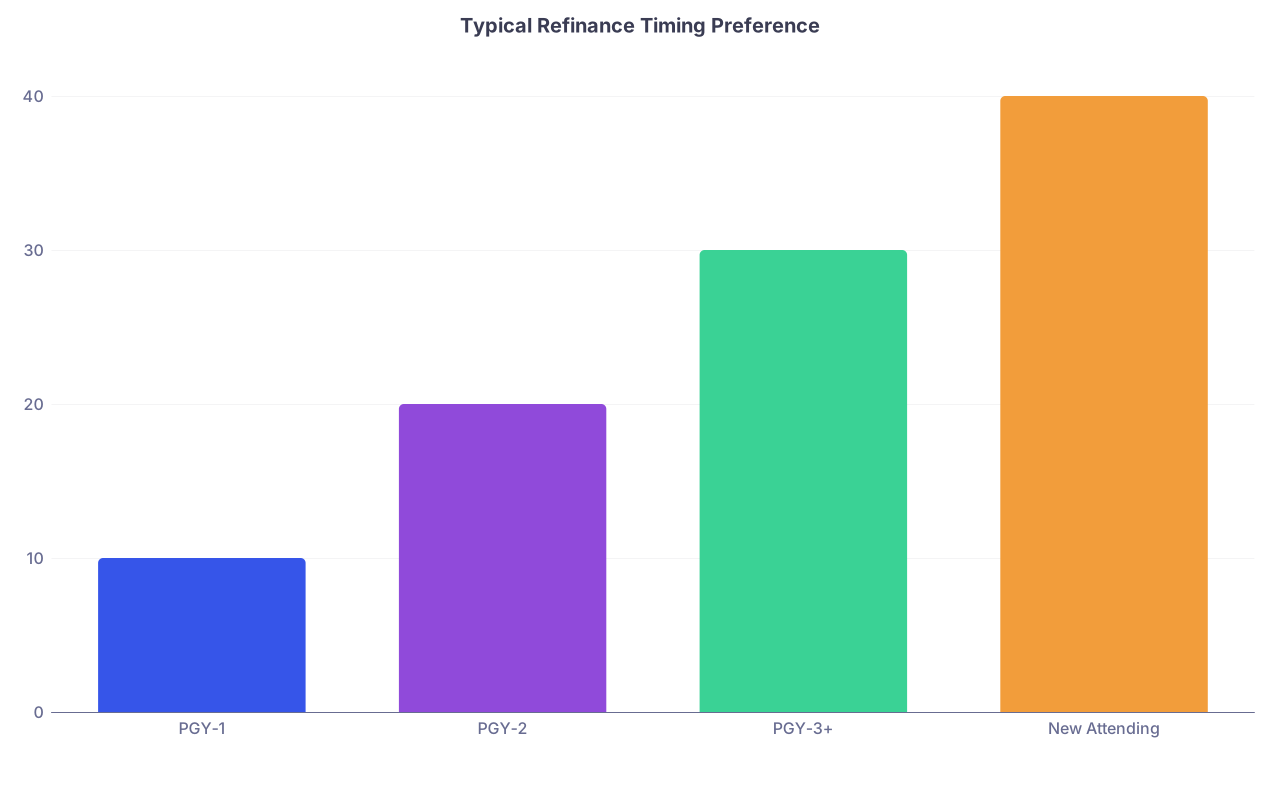
| Category | Value |
|---|---|
| PGY-1 | 10 |
| PGY-2 | 20 |
| PGY-3+ | 30 |
| New Attending | 40 |
3. When to Reassess?
You should consciously reassess your loan strategy at four checkpoints:
- Match → Graduation (Spring)
- Initial PSLF vs payoff path
- September of Intern Year
- After 2–3 paychecks and reality check
- Tax season (Jan–Mar)
- When income and marital status affect IDR
- Every year 1–2 months before IDR recertification
- Adjust plans based on new income, specialty, and job direction
The Bottom Line
Three key points to walk away with:
Enroll in IDR early—April to June before intern year—not after your first “surprise” bill hits. This locks in low payments and PSLF eligibility from day one.
Do not rush to refinance in intern year unless you are absolutely certain PSLF is off the table and the rate drop is meaningful. Most people are better off waiting until late residency or attending life.
Build a rhythm of reassessment at predictable checkpoints—Match, fall of intern year, tax season, and pre-recertification—so your loan strategy evolves with your career instead of drifting behind it.
You handle sick patients on no sleep. You can absolutely handle this, as long as you hit the right actions at the right times.