
The way attendings negotiate their first job around salary and debt is far more ruthless—and far more strategic—than anyone is teaching you.
You’re being told to “just be grateful for an offer” while the people hiring you are running spreadsheets on exactly how little they can pay you before you walk. And the attendings who come out ahead? They walk into that process already having decided how their student loans will shape their ask, not as an afterthought.
Let me show you what they actually do.
The Real Leverage: Your Debt Is Not Just Your Problem
Here’s the line I’ve heard more than once in closed-door discussions with hospital leadership:
“They’re coming out with 300k+ in loans. They’ll take it.”
You think your debt makes you desperate. They think your debt makes you easy.
Smart attendings flip that script. They turn debt into a structured, rational justification for more money, better terms, or both.
First thing they do—before they ever talk to a recruiter—they run the brutal math. Not the fantasy math. The “what does my monthly life actually look like” math.
They answer questions like:
- What’s my real post-tax, post-retirement, post-loan-payment monthly cash flow?
- On this offer, how many years until I’m not underwater on my student loans?
- How much does this job’s benefits package actually do for my loan plan (PSLF, 403(b) match, 457(b), sign-on, housing, relocation)?
The mistake new grads make is thinking: “I made 65k as a resident; 275k sounds amazing.” The attendings who negotiated hard knew that 275k in a high COL area with $350k loans might translate to the same psychological pressure as residency—just in nicer clothes.
They don’t say that out loud in negotiations. But they let those numbers dictate their walk-away point.
How Attendings Quietly Use Their Loan Balance as a Negotiation Tool
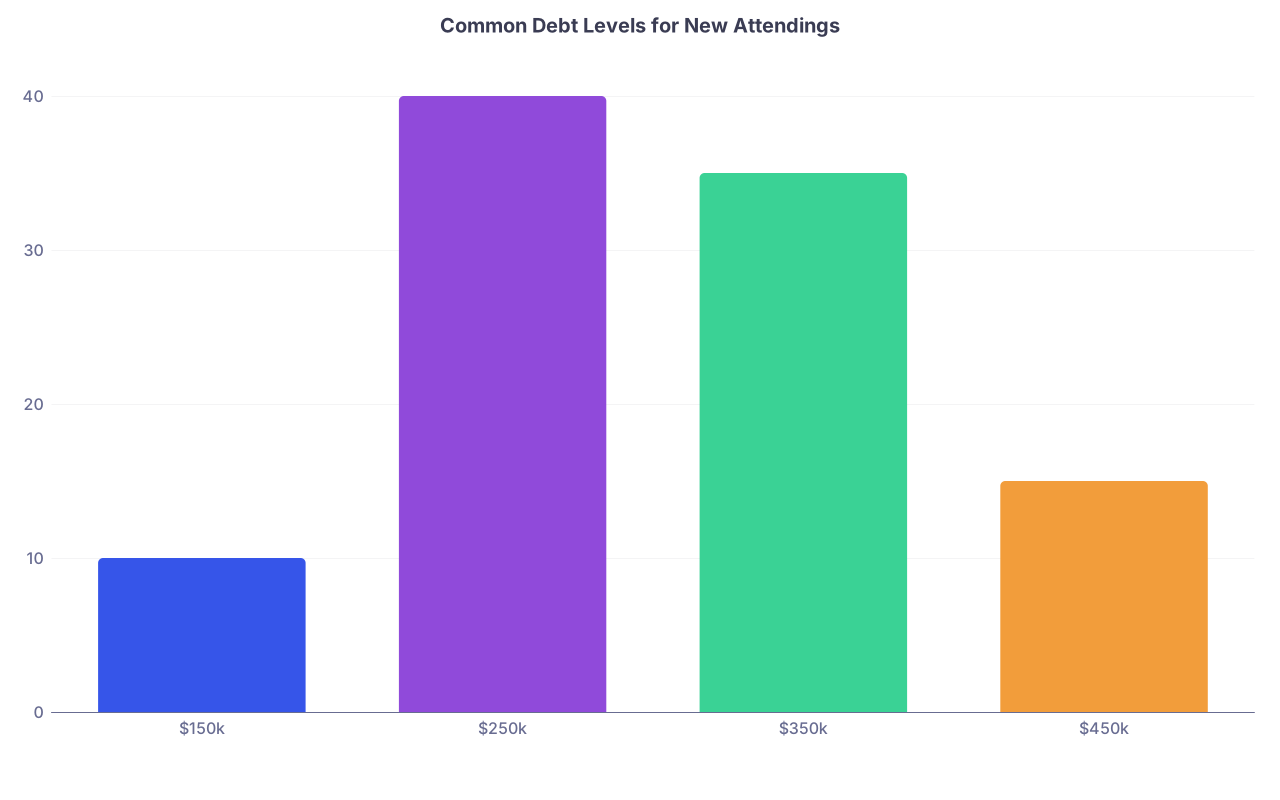
| Category | Value |
|---|---|
| $150k | 10 |
| $250k | 40 |
| $350k | 35 |
| $450k | 15 |
Let me be blunt: nobody hiring you cares about your feelings around debt. They care about retention risk, coverage, and margins. So the way you talk about loans has to be translated into their language.
Here’s how experienced attendings frame it.
They never say:
“I have $400k in loans, can you pay me more?”
They say variants of:
“Given my debt load from training and my goal to commit long term, I need a total compensation structure that gets me to X. That’s what it would take for me to be able to stay here 5+ years without needing to chase locums or second jobs.”
Debt becomes part of a “stability story,” not a pity story.
Behind closed doors, these are the specific debt-shaped tactics I’ve seen work:
Anchoring with a precise number tied to a financial plan
A cardiologist I know walked into a community job offer at 450k. He came back with:“At my current loan balance and family obligations, I’ve worked with my financial planner. I need to be at 525k total comp to make this my long-term home. We can get there with either a higher base or structured bonuses/loan assistance.”
He got 485k base + a real bonus structure + 50k loan repayment. Why? Concrete, rational ask. Not “I want more because I’m worth it.” Because “this is what it takes to not need to leave.”Framing debt as retention leverage
Admins love the phrase “golden handcuffs.” You can weaponize that.“If you build in structured loan repayment over 3–5 years, that aligns my incentives to stay. You’ll get stability in coverage, and I get predictability in tackling my loans.”
Now your personal problem becomes their retention tool. That’s how some people end up with 25–50k per year in loan repayment, not a one-time 10k “sign-on.”Tying call and unpleasant work to debt reality
One attending flat-out said to a rural hospital:“With my loan balance, I’m willing to take more call than average for the first few years, but only if that translates to a guaranteed income floor of X so I can front-load my payoff.”
They gave him a higher call stipend and a guaranteed minimum his first two years. Why? Because he framed extra work as a way to reduce his financial stress and therefore keep him there, not as “you’re abusing me.”
The theme: debt is never presented as “help me.” It’s presented as “here’s what I need to be stable and loyal.” That difference is everything.
The Silent Spreadsheet: How They Actually Evaluate Offers
The attendings who win negotiations are running internal spreadsheets you never see. Some are literally pulling up Excel during the phone call.
Here’s what they plug in. Not fluff. Actual levers.
| Factor | Example Range |
|---|---|
| Base Salary | $220k – $450k |
| Bonus / RVU Structure | 5–25% of base |
| Loan Repayment | $0 – $50k per year |
| Retirement Match | 0% – 6% of salary |
| PSLF Eligible (Y/N) | Yes or No |
| Call Pay | $0 – $1,000+ per call |
Then they layer in loan strategy:
- PSLF target? They care more about 501(c)(3) status, job security, and not being forced into private refinancing.
- Private refinance plan? They care more about guaranteed cash flow early on, not “maybe bonuses.”
- Aggressive 5–7 year payoff? They look for high upside with overtime/call/locums options plus low cost of living.
What they don’t do is accept an offer because, “It’s what everyone here gets.”
I watched one new hospitalist analyze two offers:
- Job A: 275k base, no loan repayment, average COL, weak 401(k)
- Job B: 240k base, 20k/year loan repayment, PSLF-eligible, 5% retirement match, lower COL
On paper, A “pays more.” On the spreadsheet, over seven years, B was six figures ahead between loan forgiveness prospects, retirement contributions, and real after-tax cash. Most residents grab job A out of ego and a bigger number. The one who did the math took B.
You need that mindset before you “negotiate,” otherwise you’re just begging for more base salary without knowing what actually matters.
PSLF, Non-Profit vs For-Profit: How Attendings Game The System
Here’s a dirty little secret: a lot of attendings accept a lower sticker salary because they understand the PSLF math better than admin does.
Most hospital recruiters understand PSLF at a “checkbox” level: Is this a qualifying employer? Yes/No.
The attendings who think like strategists look at it differently:
- “I’m 5 years into qualifying payments. If I stay in a 501(c)(3) job at a reasonable salary, PSLF might be worth 200–300k+ tax-free.”
- “If this private group wants to pull me away from PSLF, they need to overpay significantly or I’m lighting hundreds of thousands on fire.”
So here’s what’s actually happening behind the scenes:
A senior fellow finishing cards had ~$420k federal loans, all in IDR, 6 years of qualifying PSLF payments during residency/fellowship.
University job:
- 410k base
- 501(c)(3), PSLF-eligible
- Average COL, okay benefits
Private group job:
- 550k projected once ramped up
- For-profit, PSLF gone
- No loan repayment support
On paper, 550k is sexy. What did he say to the private group?
“To walk away from PSLF at this stage, I’d be giving up roughly 250–300k in forgiveness value. I’d need a significantly higher guaranteed comp and a concrete plan—like a 5-year loan repayment package or guaranteed income floor—before I could justify that.”
Not whiny. Clinical. He literally quantified his opportunity cost.
They bumped the first two years to a guaranteed 600k with a 50k/year loan repayment component. He still walked away and took the academic job because his spreadsheet said PSLF + academic benefits beat the after-tax difference.
The point is not what he chose. The point is how he used PSLF as a priced asset in negotiation rather than just a side benefit.
You should be doing the same. PSLF years already completed are a bargaining chip. Walking away from PSLF is expensive. You need to make them pay for that, or you stay where the forgiveness lives.
The Dark Art of Sign-On Bonuses and Loan Repayment
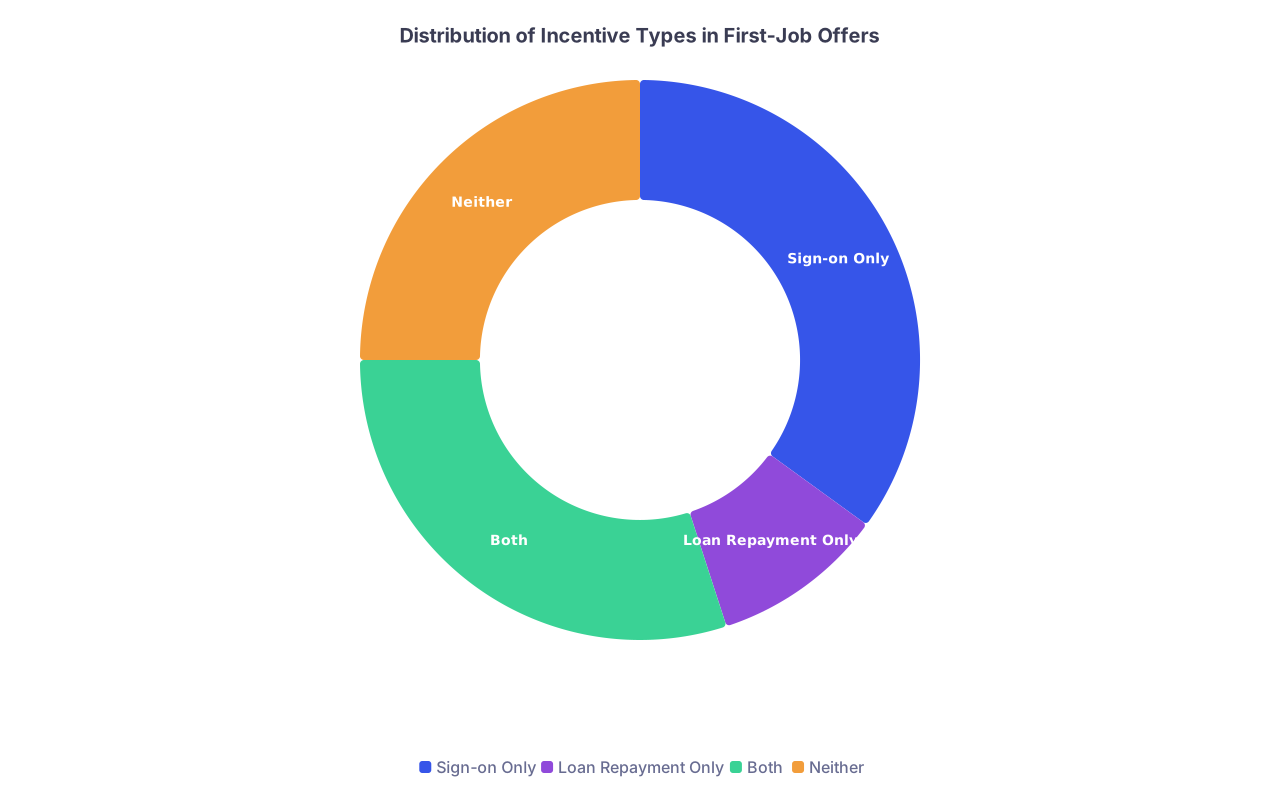
| Category | Value |
|---|---|
| Sign-on Only | 35 |
| Loan Repayment Only | 10 |
| Both | 30 |
| Neither | 25 |
Admin loves sign-on bonuses. They sound generous, headlines well, and they’re easy to claw back in fine print. Loan repayment is stickier and more aligned with your long-term solvency, which is why they’d rather give you a one-time 20k than 25k/year for four years.
Here’s how attendings quietly manipulate that structure.
First, they understand a few truths:
- A sign-on bonus is often taxed heavily and usually tied to a 1–3 year commitment with repayment clauses if you leave early.
- Loan repayment can sometimes be structured over multiple years, occasionally with tax assistance baked in, and functions as a retention tool.
- Both are negotiable in size and structure even if HR initially calls them “standard.”
The strong negotiators don’t just ask: “Can you increase the sign-on?” They say:
“I’m less interested in a larger sign-on and more in structured loan support over the first 3–5 years. That’s what will stabilize me financially and keep me here longer term.”
Now you’re talking like someone planning to stay. Admin eats that up.
I’ve seen this exact move play out:
Offer:
- 20k sign-on, paid on first paycheck
- No loan repayment
Counter by attending:
- “Can we shift that to 10k sign-on and 10k/year for three years in loan repayment?”
Result after back-and-forth:
- 15k sign-on
- 15k/year for three years loan repayment
Total package more than doubled from 20k → 60k, simply by reframing what mattered.
The “debt-aware” part of this is key: you’re not just chasing free money; you’re explicitly tying the structure to your repayment horizon. You can literally say:
“My plan is to eliminate my federal debt in 7–10 years. If we can front-load some of that support in the early years, that reduces my financial pressure and makes it much less likely I’d need to leave for higher paying, less stable options.”
That’s honest. It’s also persuasive.
How They Quietly Use Multiple Offers to Solve Their Loan Problem
Every program director knows this line: “I have another offer, but I’d prefer to stay here if we can get closer on numbers.”
Most graduating residents never say it. The attendings who do—and mean it—get paid.
Here’s what they do differently:
They run their debt number first, then reverse-engineer their leverage.
If their student loans are massive and they’re not going after PSLF, they often deliberately obtain at least one “high-comp, less desirable” offer. Rural, rough schedule, or high-RVU grind. They might not intend to take it. They intend to use it as an anchor.
For example:
- Offer A (urban academic): 240k, PSLF, strong benefits
- Offer B (rural, private): 340k, no PSLF, minimal benefits
They want A. But their debt is 400k and they want more breathing room. What do they say?
“I have an offer at 340k in a more rural setting. I’d prefer to be here for professional and family reasons, but given my loan burden, I need to get closer to 280–300k total effective comp to make this work. Is there room via base, stipend, or loan repayment to narrow that gap?”
Notice the phrase “total effective comp.” That opens the door:
- Higher base
- Loan repayment
- Extra protected time that still counts for PSLF but lets you moonlight
- Call stipends
- Relocation + housing
The goal isn’t to match the private offer dollar-for-dollar. It’s to make the gap small enough that the PSLF + academic upsides plus geography justify the choice.
Behind closed doors, admin will say things like:
“Can we throw 20k/year loan repayment at them and maybe a small RVU bonus to keep them?”
Answer is often yes—if you ask in the right way.
The Psychological Game: How They Talk, Not Just What They Ask For

The attendings who absolutely tank negotiations usually do it with their mouth, not their numbers.
Two patterns kill leverage fast:
Sounding desperate because of loans
“I just really need to make as much as I can because I have so much debt.”
Translation in admin’s head: “They’ll probably take whatever we offer.”Sounding entitled because of loans
“I have 450k in loans; you have to pay me more.”
Translation: “They don’t understand budgets. This will be a problem.”
The ones who do well have a very specific tone: professional, analytical, forward-looking.
They say things like:
“Given my loan balance and long-term goals, I’ve modeled my finances and here’s the range where this job is sustainable for me over 5–10 years.”
Or:
“I’m committed to staying somewhere long term; for that to be realistic, I need a compensation structure that supports my loan repayment plan and family needs. Here’s what that looks like for me.”
They talk about plans, not panic. About ranges, not demands. They reference “my advisor/CPA/financial planner” even if that’s just a reputable online calculator and a spreadsheet. It signals you’re not guessing.
That tone matters more than you think. Administrators are evaluating not just “Do we want this physician?” but “Is this person going to be a drama magnet about money every year?”
Show them you understand your own numbers and you won’t be back in their office every three months.
Contract Traps That Blow Up Your Debt Strategy
You can negotiate a nice headline number and silently wreck your loan life because of what’s buried in the contract.
Here are a few ugly ones I’ve seen new attendings sign without blinking:
Mandatory private refinancing with a “partner” lender
Some groups “help” by steering you to a preferred lender. If you’re PSLF-eligible and they push you to refinance federal loans privately, you’re setting your future self on fire. Attendings who know better say clearly:“I plan to keep my loans federal for now because of PSLF/IDR strategy. I won’t be participating in required refinancing programs.”
Insane clawback language on bonuses/loan repayment
I’ve seen contracts where if you leave at month 23 of a 24-month commitment, you owe back the entire sign-on bonus and every loan repayment dollar. That’s not “retention,” that’s hostage-taking. A reasonable structure is prorated forgiveness over time.Non-competes that kill your ability to adjust
If you’re tied to a metro area for family reasons and a non-compete blocks you from working within 25–50 miles, you might not be able to leave a bad job to take a better-paying one and still stay local. For someone with massive loans, that’s dangerous. You’ve just handcuffed your earning potential in your highest-income years.
The attendings who treat debt seriously read those sections like their life depends on it. Because financially, it does.
How to Prepare Before You Ever Talk Money

| Step | Description |
|---|---|
| Step 1 | Know Loan Type and Balance |
| Step 2 | Choose Strategy - PSLF or Refinance or Hybrid |
| Step 3 | Calculate Needed Take Home Range |
| Step 4 | Research Market Comp for Specialty |
| Step 5 | Set Walk Away Number and Ideal Terms |
| Step 6 | Obtain 2 to 3 Real Offers |
| Step 7 | Negotiate Structure - Base and Loan and Bonus |
| Step 8 | Review Contract Fine Print |
| Step 9 | Decide and Sign |
Here’s what the attendings who crushed their first negotiation had already done as senior residents/fellows:
They knew:
- Exact loan balances, interest rates, and whether each dollar was federal vs private.
- Which repayment plan they were on and how many PSLF-qualifying payments they already had.
- Whether PSLF was truly realistic based on likely job paths, not just “maybe someday.”
- What a “good” salary actually was for their specialty and region—not from Reddit, but from MGMA data, trusted mentors, and multiple real offers.
They had:
- A rough 10-year repayment vision: PSLF trajectory, aggressive payoff, or reasonable middle ground.
- A target monthly surplus they wanted after taxes, loans, and retirement contributions.
So in negotiation, they weren’t winging it. They were saying things like:
“To stay on track with my loan repayment timeline and retirement savings, I need to net roughly X/month after loans and 15–20% retirement contributions. That typically corresponds to a base salary in the Y range in this region. How close can we get?”
This is how grown-ups talk money. That’s how administrators hear you as a peer, not a kid who just left residency.
Final Thoughts: What Attendings Really Do Differently
Three things separate the attendings who use salary–debt tactics well from the ones who get steamrolled.
They treat their student loans as a priced asset in negotiation, not an embarrassing secret. PSLF years, balance size, and repayment horizon all become rational arguments for structure, not excuses.
They care more about total effective compensation and contract terms than the sticker salary. Loan repayment, PSLF eligibility, retirement match, clawbacks, and non-competes all get run through a spreadsheet before they say yes.
They talk like calm professionals with a plan, not panicked graduates. Clear ranges, specific needs, long-term commitment. No begging. No entitlement. Just numbers, trade-offs, and a realistic walk-away point.
You’re walking into the highest earning decade of your life with the largest debt you’ll probably ever have. Handle that intersection like the attendings who quietly win, not like the residents who just sign the first “decent” offer and hope it works out.