
It’s a Tuesday night at 8:30 p.m. The clinic is closed. The last staff member just turned off the lights at the front desk. In the back conference room, three partners are still sitting around a table with cold coffee and a printed copy of your CV.
Your name is at the top. Step scores, residency, fellowship, reference letters, all there.
And then there’s the part you do not see.
A spreadsheet someone quietly pulled from an online calculator: “What this candidate will actually take home with $420K in loans at 7%.”
That’s the meeting you’re not invited to.
This is what they actually say in that room.
1. How Much They Actually Know About Your Debt
Here’s the first secret: they almost never know your exact number.
They don’t need to. They reverse-engineer it.
One of the senior partners looks at your CV. Graduated med school 4 years ago, no military, no obvious scholarship program listed, private med school, big coastal city. He’s been on enough hiring committees to know the neighborhood.
He’ll say something like:
“She’s probably sitting on 350–450 easy. Maybe more if she has undergrad loans.”
They make assumptions. And those assumptions affect how they interpret everything else you do.
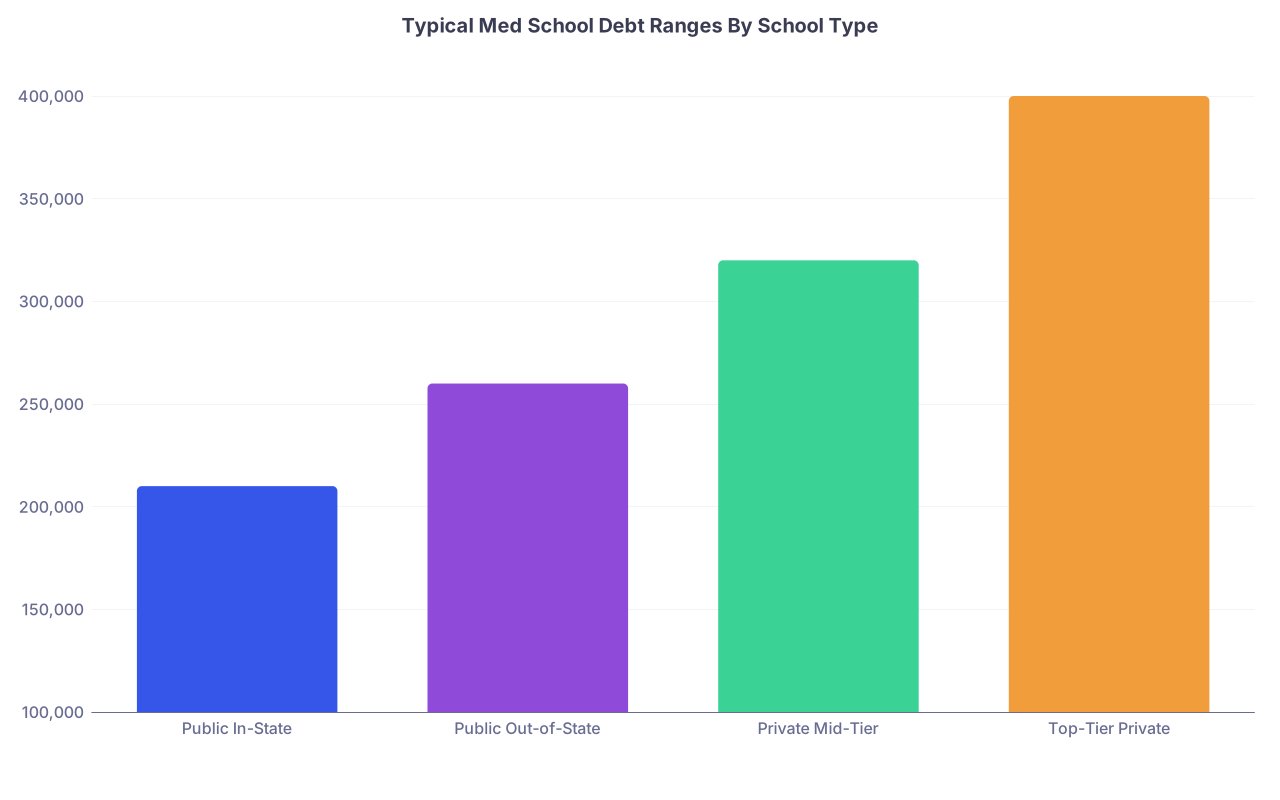
| Category | Value |
|---|---|
| Public In-State | 210000 |
| Public Out-of-State | 260000 |
| Private Mid-Tier | 320000 |
| Top-Tier Private | 400000 |
I’ve heard some version of this dozens of times:
- “He’s coming out of [expensive private school]. Call it 400K.”
- “She did DO, plus Caribbean undergrad, no family money. She’s probably buried.”
- “He’s from [state school], probably not as bad, but with fellowship plus deferment, interest will have ballooned.”
They’re not trying to be cruel. They’re trying to predict behavior.
Because to a partnership, your debt is not just a number. It’s a risk variable.
When they do ask directly
Sometimes someone on the committee will push it:
“Did you ask what his debt looks like?”
Most of the time, they’ll back off because they know it’s a legal landmine. No one wants a candidate claiming discrimination based on financial status. Good groups are careful.
So instead, they ask about it sideways:
- “How do you feel about compensation models—are you more comfortable with a stable salary or do you prefer productivity upside?”
- “Any big financial obligations we should be aware of as you’re planning your first few years? Family you’re supporting, that kind of thing?”
- “Are you planning to stay on federal loan programs like PSLF, or are you thinking of refinancing privately?”
They’re not asking out of curiosity. They’re mapping your financial pressure against the job they’re offering.
2. The Quiet Math: How Your Debt Affects Your Negotiation Power
Let me spell out the harsh reality:
If they think you’re drowning in loans, they assume three things:
- You’ll be less likely to walk away from a mediocre offer.
- You’ll be more tolerant of RVU-heavy, grind-heavy, “eat what you kill” structures.
- You’re a flight risk in the medium term if something better paying comes along.
Contradictory? Yes. But both thoughts live in the same room.
I sat in one discussion where they had two finalists:
- Candidate A: modest loans, spouse working, said openly, “We’re pretty comfortable. I’m more focused on lifestyle and a stable group.”
- Candidate B: hinted at “significant loans,” asked detailed questions about moonlighting options and extra shifts.
The managing partner turned to the group and said:
“B is going to produce like crazy for three years, then either burn out or bolt for a hospital salary. A is more expensive up front, but she feels like a 10-year play.”
Guess who they offered more guaranteed salary to?
Candidate A.
They structured B’s offer with big upside, big risk, and a lower base. Because they knew he’d feel compelled to accept and then grind to hit the higher tiers.
They weaponized his debt against him. Nicely. Professionally. With smiles.
3. What They Say When You Leave the Interview Room
Here’s the part no one tells you: the most honest conversation about you happens 3 minutes after you leave.
You walk out. The door closes. Someone exhales.
Then:
“So. What do we think?”
If you seemed nervous about money, they noticed. If you brought up “I’ve got $500K in loans” more than once? They definitely noticed.
Common comments I’ve heard, verbatim:
- “He’s going to be chasing every dollar. That can be good… or a problem.”
- “She asked about call pay three different times. That’s debt talking.”
- “He mentioned refinancing with a private lender. So he’s locked in—no PSLF parachute. He has to make this work.”
They’ll also read between the lines of your life situation:
- Dependent kids? They assume higher expenses.
- Non-working spouse? More pressure.
- Moving from a low cost-of-living area to a high one? They know the squeeze will be brutal.
None of this is written in policy. It’s just how human beings in a business conversation think.

4. The Loan Program They Care About More Than You Think: PSLF
Partners in private practice have a particular reaction when PSLF enters the chat.
If they hear:
“I’m on PSLF and planning to stay in non-profit settings to hit my 10 years.”
The subtext they hear is:
“I will not stay here if you’re not a qualifying employer.”
If they’re a for-profit group without PSLF-eligible status, some version of this will happen behind closed doors:
- “He’s PSLF. He’s going to leave for the hospital direct model if they dangle a qualifying job.”
- “We’re not PSLF-eligible; he’d be crazy to give that up. So either he doesn’t understand it, or he’s going to have buyer’s remorse in a few years.”
- “She’ll use us as a stepping stone while she figures out how to get back into the non-profit system.”
On the flip side, hospital-employed groups that are PSLF-eligible use it as a retention hook.
You think PSLF is your lifeline. They think PSLF is a 10-year handcuff.
One academic chair once told me, off the record:
“I love when they come in with $500K in loans and on PSLF. They are not going anywhere before their 10 years are done. We know exactly how sticky they are.”
Just understand: mentioning PSLF makes them immediately categorize your long-term loyalty risk. It changes the conversation about partnership track, leadership roles, and future investment in you.
5. How Your Debt Changes the Offer Structure (The Stuff They Never Explain)
You see a contract and think: salary, bonus, benefits.
They see a candidate profile and think: leverage, risk, and how far they can push.
Here’s the pattern I’ve watched play out:
If they think you are heavily indebted and anxious about it, the internal conversation shifts like this:
“We can come in a little lower on base but pump up the RVU bonus. He’ll take it. He needs the upside.”
Or:
“She’s going to want a signing bonus. Let’s make it decent but tie it to a multi-year payback clause and a non-compete that actually has teeth.”
This is the part nobody explains when you sign.
Your financial desperation is an asset to them. If you telegraph it too loudly, they use it.
| Perceived Debt Level | Base Salary Tendency | Productivity Pressure | Signing Bonus Style |
|---|---|---|---|
| Low/Modest | Higher, more stable | Moderate | Smaller, cleaner |
| High but Calm | Solid, balanced | Higher upside | Moderate, some strings |
| High and Anxious | Lower relative | Aggressive | Larger, heavy strings |
What “strings” look like in practice:
- Signing bonus with 3–5 year clawback if you leave.
- Non-compete that covers an absurd radius.
- Partnership buy-in structured in a way that ties you down just when you’re about to pay off loans.
I’ve seen groups open two draft contracts side by side—one for a candidate they perceive as “financially stable, not desperate,” and one for “huge loans, needs cash now.” The second one always has more complexity, more contingencies, and more opportunities for the group to win if you break.
6. Red Flags They Notice That You Think Are Harmless
You think you’re just “being honest.”
They think they’re seeing liability.
Red flag moments that spark debt-related discussions after you leave:
You talk a lot about moonlighting.
They hear: “Clinic volume won’t be enough; they’re going to be exhausted; maybe less committed to building this practice.”You immediately ask about early partnership or buy-in.
They hear: “He’s already thinking about money and ownership before proving value. Might be pushy later.”You mention other high-paying offers right away.
They hear: “She’s auctioning us. Debt-driven. Might jump if someone offers 20K more.”You give detailed numbers about your loans in the first interview.
They hear: “He’s leading with his financial panic instead of his clinical value.”
One real example: a candidate looked great on paper—strong from a respected academic IM program, solid references. After the interview, someone said:
“He mentioned his 480K of loans three times and how he 'needs to be making at least X by year three.' I don’t want that hanging over every volume discussion.”
They passed. Chose someone slightly less qualified clinically, but calmer financially.
7. How to Talk About Debt Without Hurting Yourself
You can’t pretend you don’t have loans. Programs know the reality of modern med school costs. The goal is not to hide your debt. The goal is to not let your debt define your professional identity.
Here’s what lands well in partner discussions later:
You say something like:
“Yes, I have significant loans like most physicians my age, but I’m managing them in a structured way. I’m more focused on finding the right long-term fit than chasing the absolute top starting salary. I know if I’m in the right environment and practice well, the financial side will work out.”
That one statement does a few things:
- Signals you’re not oblivious.
- Signals you’re not panicking.
- Reassures them you’re thinking long-term.
Compare that to:
“I’m at about $520K in loans, and I really need to be making at least $350K by year two or I’m in trouble.”
Guess which line ends up driving the post-interview conversation.
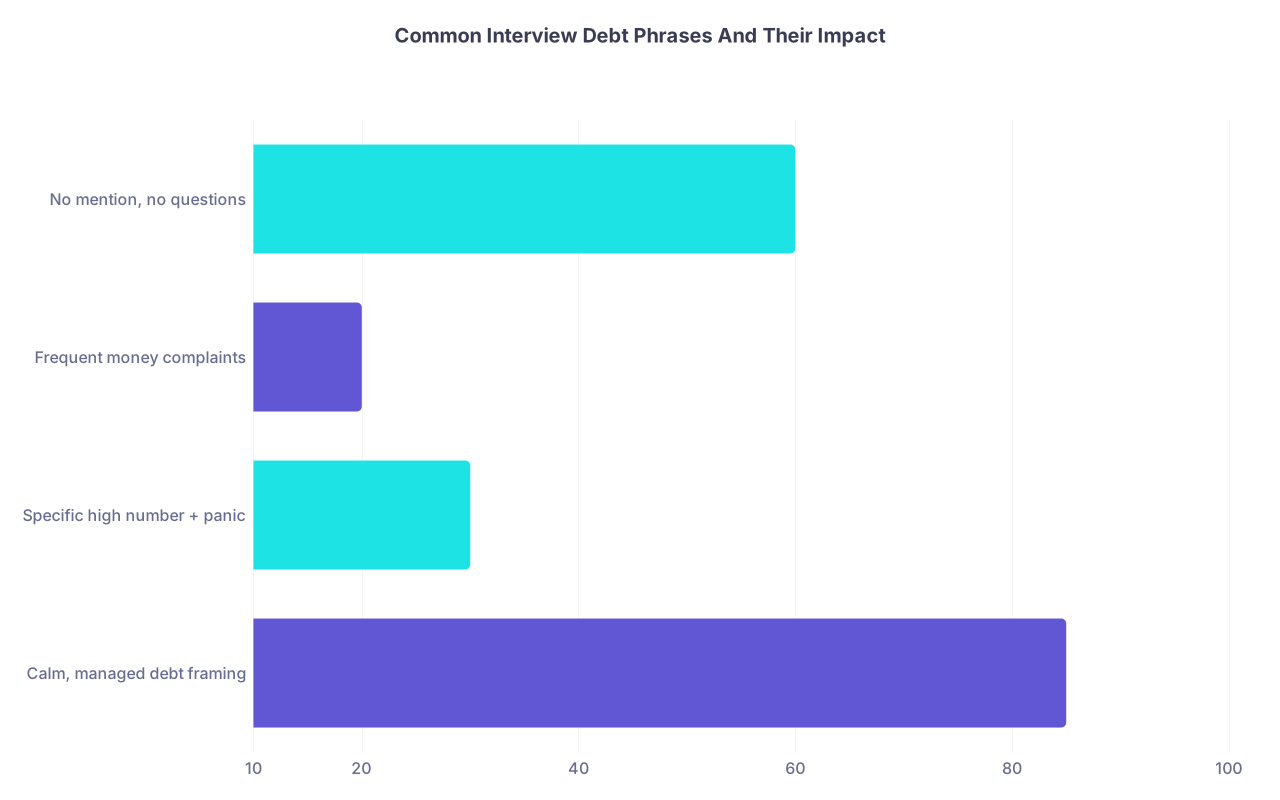
| Category | Value |
|---|---|
| Calm, managed debt framing | 85 |
| Specific high number + panic | 30 |
| Frequent money complaints | 20 |
| No mention, no questions | 60 |
You do not win points for shock value or vulnerability here. This is not therapy. This is a business meeting.
Ask smart structural questions instead of emotional ones:
- “How do new physicians here typically progress from base to higher productivity tiers over the first 3–5 years?”
- “Do you see most partners eventually moving toward ownership, or do some stay on an employed track?”
Those questions tell them you’re thinking like a professional, not a drowning borrower.
8. What They Say About You Once You’re Already Hired
The conversation about your debt does not stop when you sign.
A year in, when they discuss raises, RVUs, and partnership, your financial behavior still gets airtime.
Comments I’ve heard in those closed-door comp meetings:
- “He’s constantly asking to pick up extra call. He’s clearly under pressure.”
- “She took every extra weekend this year. Great for revenue, but I’m worried about burnout—and if she flames out, that’s lost investment for us.”
- “He wants to buy into the surgery center but is still dealing with his loans. I don’t want him overleveraged.”
If you present as someone who always needs “just a little more,” they start planning around that. Carefully.
And when it comes time to consider you for partnership, someone will absolutely ask:
“Is he financially stable enough to buy in and stick around?”
If the answer is “probably not,” you get delayed. Or sidelined.

9. The Debt Profiles That Actually Reassure Partners
Here’s the paradox you need to understand: it’s not the amount that scares them most. It’s the behavior they infer from it.
I’ve seen partners unanimously back candidates with $600K+ in loans who presented like this:
- They had a concrete plan: refinance vs. keep federal, realistic payment expectations, no fantasy thinking.
- They didn’t lead every conversation with money.
- They could clearly explain why they wanted this practice beyond compensation.
Meanwhile, they passed on candidates with less debt but obvious financial chaos in their story:
- No idea what repayment plan they were on.
- Wild, unrealistic expectations about lifestyle versus income.
- Chasing the highest pure-dollar offer with no attention to workload or retention.
The unspoken rule in a lot of partner rooms:
“We can work with big debt if the doc is stable. We cannot fix desperate and impulsive.”
So if you want them to stop weaponizing your debt against you, show them you’re not going to be reactionary about it.
10. How to Prepare Before You Ever Sit in That Room
You want the brutal checklist? Here:
Know your actual numbers cold.
Not just “a lot.” They respect candidates who can calmly say, “Around 420K total, on REPAYE right now, projected payment about X if I switch to this model.”Have a baseline plan independent of any one job.
Something like: “If I take a typical starting income in my specialty, here’s how my loans play out over 5–10 years.” If you look like you rely on this specific offer to save you, you’ve already lost leverage.Decide your true minimums privately.
Not “what I want.” Your actual floor numbers where you’d walk away. Do not share them. But know them.Practice neutral money language.
How you talk about money matters as much as what you say. Strip out panic phrases. Learn to say, “I’m looking for alignment between the compensation structure and the expectations,” instead of “I just really need X to make my loans work.”

| Step | Description |
|---|---|
| Step 1 | Candidate Profile |
| Step 2 | Stable Offer |
| Step 3 | Balanced Offer |
| Step 4 | Aggressive RVU Offer |
| Step 5 | Higher Base |
| Step 6 | Mixed Base and Bonus |
| Step 7 | Lower Base, High Strings |
| Step 8 | Perceived Debt Pressure |
FAQ (Exactly 3 Questions)
1. Should I ever tell a potential employer my exact loan balance?
Generally, no. There’s almost no upside. You can acknowledge “significant loans, like most recent grads,” and then pivot to long-term fit and clinical interests. Exact numbers invite judgment and get repeated in partner meetings in ways that don’t help you.
2. Does having huge student loan debt make it impossible to get a good offer?
Not at all. I’ve seen heavily indebted physicians get excellent packages. The difference is whether you project desperation or professionalism. If you act like a panicked borrower, they’ll structure the offer to exploit that. If you act like a calm, long-term colleague, they’ll treat you like one.
3. How do I push for better compensation without sounding like my debt is driving everything?
Frame it around value and expectations, not your personal situation. “Given the call burden and productivity expectations, I’d expect compensation to be in the X–Y range” lands much better than “I need this to cover my loans.” Tie your ask to market data, workload, and comparison to similar roles—not to your monthly payment.
Key points you should walk away with:
Your debt is not just a number to hiring partners; it’s a behavioral signal they quietly model you around.
They don’t need your exact balance—they infer it from your school, your questions, and how you talk about money.
If you let your debt speak louder than your professionalism, they’ll use it to justify lower bases, more strings, and riskier structures. If you show up informed, calm, and focused on long-term fit, your loans stop being a weapon and become just another background fact in the deal.