
The default advice that “you should always buy instead of rent” is garbage for most people with med school loans.
If you’ve got six figures of student debt, a new attending salary on the horizon, and Zillow bookmarked on your phone, you need a different playbook. Let’s walk through when buying a house with med school loans actually makes sense—and when it’s a dumb financial flex that handcuffs your future.
The Core Question: What Has to Be True Before You Buy?
Here’s the blunt version:
Buying with med school loans only makes sense when all of these are reasonably true:
- You’ll stay put for at least 5–7 years.
- Your total monthly debt obligations (loans + mortgage + other debt) don’t crush your cash flow.
- Your loan strategy (IDR, PSLF, aggressive payoff, whatever) doesn’t get derailed by the house.
- You have enough cash to handle real-life home costs—not just the down payment.
- Your career stage isn’t about to explode with uncertainty (fellowship, potential move, unstable job).
If any one of those is clearly false, you’re usually better off renting.
Step 1: Look at Your Debt-to-Income Reality, Not Just Your Salary
Everyone stares at the attending paycheck and thinks, “Finally, I can afford a house.” Not quite.
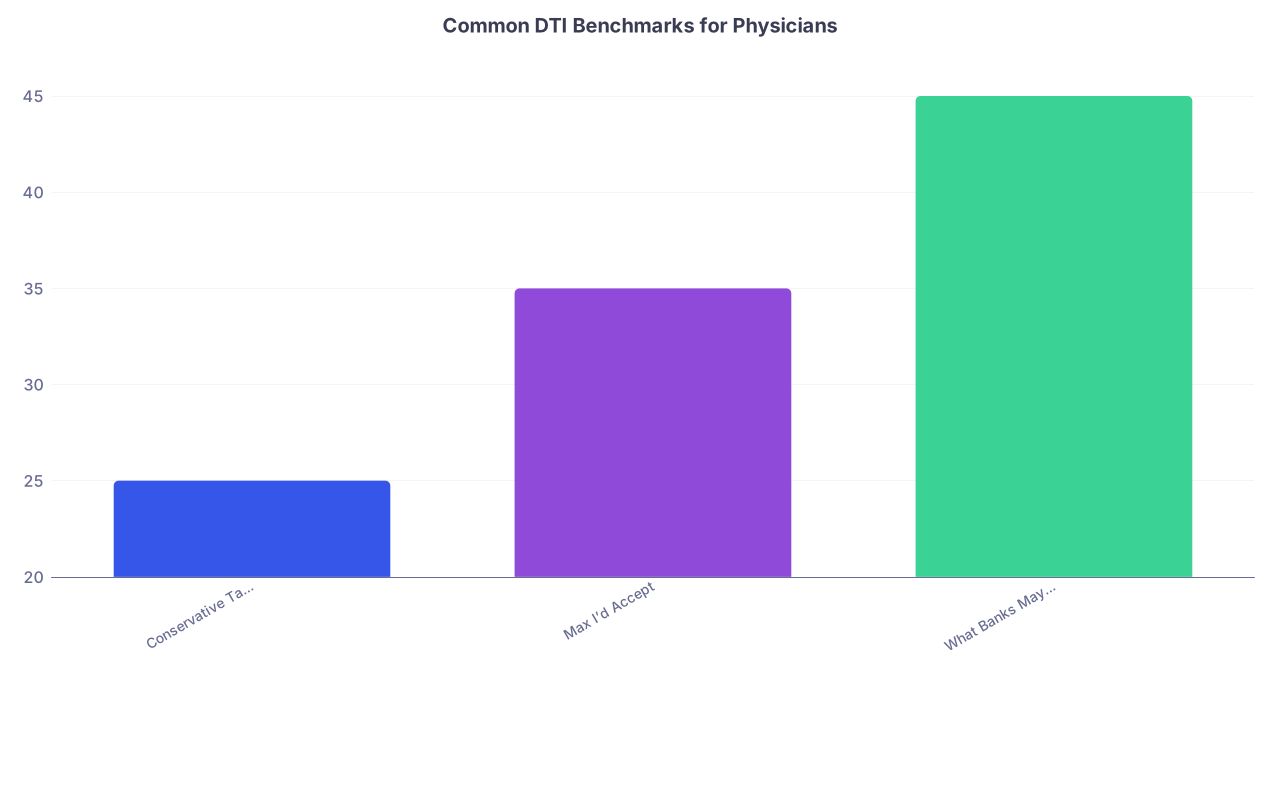
You need to think in terms of DTI: debt-to-income ratio. Lenders obsess over it. You should too.
| Category | Value |
|---|---|
| Conservative Target | 25 |
| Max I’d Accept | 35 |
| What Banks May Allow | 45 |
Rough guide:
- Total DTI (all debts / gross monthly income):
- Under 25%: Very comfortable
- 25–35%: Reasonable for most physicians
- 35–45%: Bank may approve, but you’ll feel it
- Over 45%: You’re house-poor and debt-heavy
Now include everything in that DTI:
- Student loan payment (actual or IDR)
- Mortgage (principal, interest, property tax, insurance, HOA if any)
- Car loans, credit cards, personal loans
If buying a house pushes your total DTI well above 35–40%, you’re not “upgrading your life,” you’re locking yourself into a rigid, stressful monthly nut.
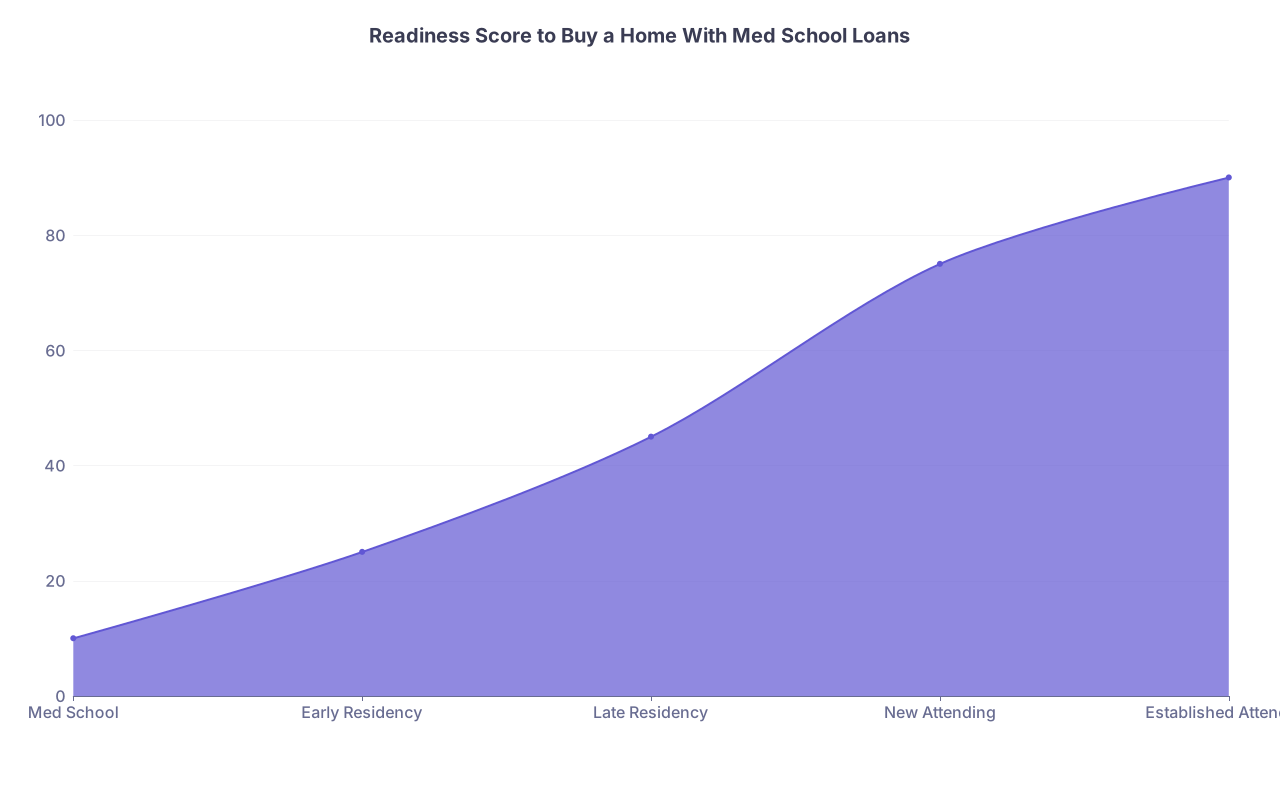
Step 2: Timing – Med School, Residency, or Attending?
The “Should I buy?” answer changes dramatically by career stage.

| Step | Description |
|---|---|
| Step 1 | Med Student |
| Step 2 | Rent |
| Step 3 | Maybe buy - rare |
| Step 4 | Resident |
| Step 5 | Rent |
| Step 6 | Consider buy late in residency |
| Step 7 | New Attending |
| Step 8 | Rent or short-term |
| Step 9 | Buying can make sense |
| Step 10 | Stay 7 years or more? |
| Step 11 | Residency 5 years or more and staying for job? |
| Step 12 | Stable job and city 5-7 years? |
Med school
Buy during med school? Almost never makes sense.
- Tiny income
- High uncertainty about residency location
- Huge transaction costs buying and selling
- Condos near schools are often overpriced “student housing” traps
Only scenario where it might barely make sense: your family is buying a place you might keep as a long-term rental, and they understand they’re basically investing, not “helping you own while in school.”
Residency
Buying during residency is where a lot of people make their first big financial mistake.
Ask yourself:
- Is your residency 5+ years in one city and highly likely you’ll stay on as faculty/attending locally?
- Are you in a low cost-of-living market where buying is clearly cheaper over 7–10 years than renting?
- Do you have cash for maintenance and emergencies, not just a down payment?
If you’re in a 3-year IM residency and then probably doing a fellowship elsewhere, buying is usually a bad bet. You’ll barely build equity before selling costs eat it.
There’s one reasonable variant: buying in PGY-3 if:
- You already know you’re matched locally for fellowship or signed a local attending contract
- You expect to stay at least 7–10 years total in that city
Still not common. But that scenario isn’t crazy.
Early attending
This is the first time buying usually starts to make real sense—if:
- You’ve passed any probationary period or first-year “let’s see if this job is real” phase
- You don’t expect to change cities for at least 5–7 years
- Your new attending budget accounts for taxes and lifestyle creep, not just gross salary
If your first attending job is with a shaky private group, or you’re secretly planning to apply to fellowships next year, don’t buy yet.
Step 3: How Med School Loans Change the Math
Your loans don’t just affect your mood. They change both cash flow and tax strategy, and that’s where people screw this up.
Case 1: You’re going for PSLF
If you’re on income-driven repayment (IDR) and seriously committed to PSLF:
- The key goal: keep IDR payments reasonable, stay employed at a qualifying employer, and don’t do dumb things that force you into higher payments or job changes.
- If buying a house forces you to take a higher-paying non-PSLF job, that house is wildly expensive in hidden loan costs.
- If your spouse’s income + your attending pay will cause your IDR payment to rise a lot, you need to run the numbers before locking into a mortgage.
Buying makes more sense if:
- You’re in a long-term academic/PSLF-qualifying attending role
- Mortgage + IDR + life expenses still leave room to save and invest
- You’re not tempted to jump to private practice purely for cash to “afford” the house
Case 2: You’re aggressively paying off loans
If your plan is: “I want these loans gone in 3–7 years,” then the question is simple:
Can you still hit that payoff timeline after you buy?
Example:
- Loans = $300k at 5%
- Target payoff = 7 years
- Required payment ≈ $4,200–$4,500/month
If buying drops your available loan payment from $4,500 to $2,500, you’ve just turned a 7-year plan into a 15–20 year slog. The house is slowing down your best-guaranteed return (debt payoff at 5–7%).
Buying makes sense here if:
- You can comfortably keep high loan payments going
- You’re not stretching to the top end of what the bank will approve
- You’re okay delaying some lifestyle upgrades (cars, trips, private schools) so you’re not juggling everything at once
Step 4: The Hidden Costs of Owning (Where Residents Get Burned)
Rent is simple. Owning is not. That’s the trap.
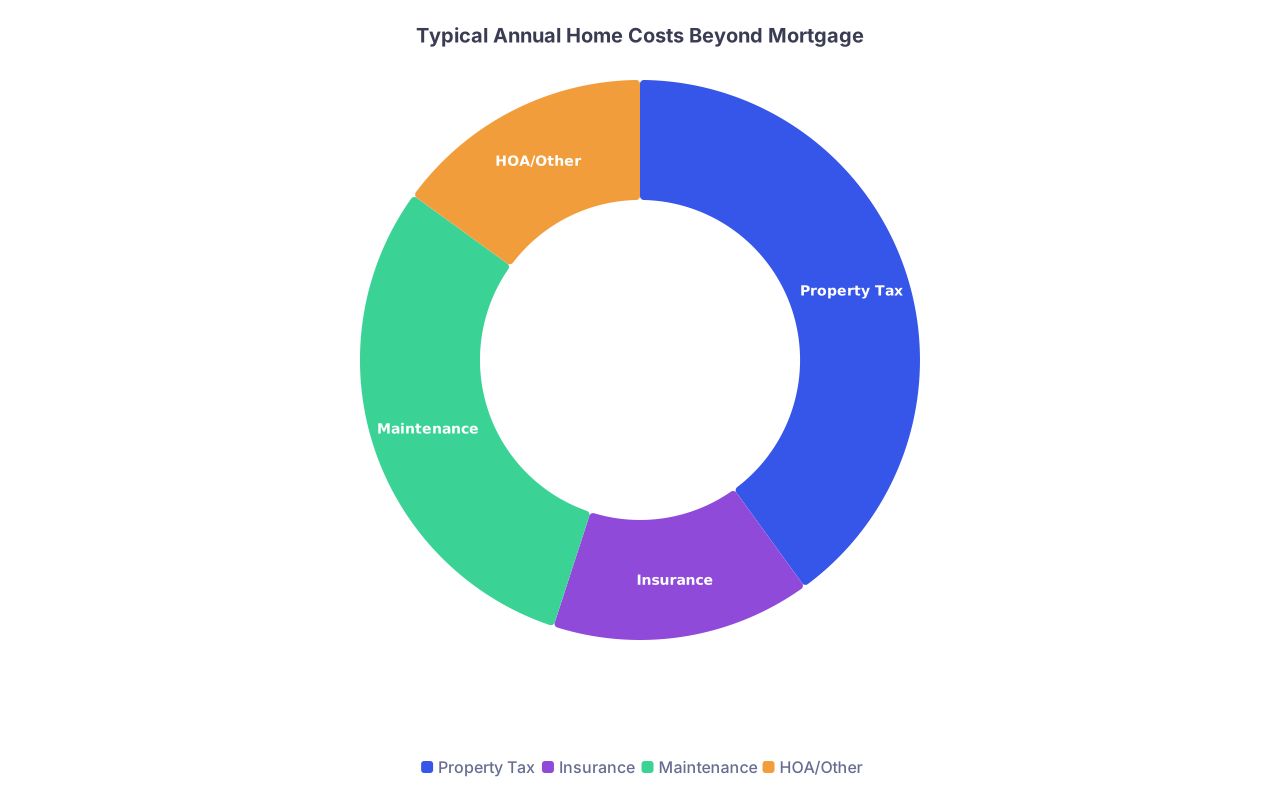
Owning includes:
- Mortgage
- Property tax
- Homeowners insurance
- HOA/condo fees (often non-trivial)
- Maintenance and repairs (1–2% of home value per year is a solid rule of thumb)
- Closing costs when you buy
- 5–6% realtor and selling costs when you sell
| Category | Value |
|---|---|
| Property Tax | 40 |
| Insurance | 15 |
| Maintenance | 30 |
| HOA/Other | 15 |
If you buy a $500k house:
- 1–2% yearly maintenance = $5k–$10k
- Property tax can easily be $6k–$12k depending on your state
- Insurance, maybe $1.5k–$3k
That’s $12.5k–$25k per year on top of principal + interest.
So the real question isn’t “Can I afford the mortgage?” It’s “Can I afford the entire package without wrecking my loan strategy or my sanity?”
Step 5: How Long You’ll Stay – The 5–7 Year Rule
Short version: If you’re not confident you’ll stay put at least 5–7 years, renting is usually safer.
Why? Transaction costs.
| Time in Home | Owning Usually | Renting Usually |
|---|---|---|
| 1–3 years | Loses vs rent | Better |
| 4–6 years | Toss-up | Often safer |
| 7–10 years | Often wins | Depends market |
Here’s what kills people:
- They buy in PGY-2
- They match fellowship elsewhere
- They sell 3 years after buying, pay 6% commission, and discover most “equity” went to interest and selling costs
You want enough time for:
- Appreciation to matter
- Principal paydown to be meaningful
- Closing/selling costs to be spread over many years, not a 2–3 year stint
Step 6: Physician Mortgage vs Conventional – Does It Help?
Physician mortgages are marketed like magic keys. 0% down! Ignore your student loans! You’re special!
They’re not magic. They’re tools—with tradeoffs.
| Feature | Physician Mortgage | Conventional Loan |
|---|---|---|
| Down Payment | 0–10% | Usually 5–20% |
| PMI | Usually none | Often if <20% down |
| Rate | Often slightly higher | Often slightly lower |
| Student Loans | More flexible treatment | Stricter DTI rules |
When it makes sense:
- You’re a new attending with strong long-term income but limited savings
- You truly need 0–5% down to keep cash buffer for emergencies and loan strategy
- You’re buying a home you’ll keep long enough that slightly higher rates still work out
When it backfires:
- You use it to buy “as much house as the bank will approve”
- You skip building an emergency fund because “I’m a doctor; I’ll earn more later”
- You’re not maxing retirement accounts or addressing loans because the mortgage owns your cash flow
You don’t get points for using a physician loan. You get points for having options and breathing room.
Step 7: The Real Decision Framework
Let’s simplify. Here’s the checklist I’d use with any resident or new attending sitting across from me.
You’re probably ready to buy if:
Location & Time
- You’re very likely to stay in the same city and job for at least 5–7 years.
Debt & Cash Flow
- Total DTI (loans + mortgage + other debt) stays under ~35–40%.
- You can still:
- Make your planned student loan payments (PSLF or aggressive payoff)
- Save at least 15–20% of gross income across retirement/taxable savings
- Maintain a 3–6 month emergency fund after closing
Loan Strategy Isn’t Compromised
- If PSLF: House doesn’t tempt you into leaving qualifying employment just to chase a bigger paycheck.
- If payoff: You can still hit your payoff timeline within a few years of original goal.
You Understand the Real Costs
- You’ve budgeted for taxes, insurance, maintenance, and HOA.
- You’re not counting on unrealistic appreciation to “bail you out.”
You’re Buying a Home, Not an Identity
- You’re not buying to prove you’re a “real doctor” now.
- You’re okay with a reasonable starter home, not your dream forever-home on day one.
If you can’t confidently check most of those boxes, rent without shame. You’re not “throwing money away.” You’re buying flexibility while your career and loans stabilize.
Visual Summary: When Buying With Med School Loans Makes Sense
| Category | Value |
|---|---|
| Med School | 10 |
| Early Residency | 25 |
| Late Residency | 45 |
| New Attending | 75 |
| Established Attending | 90 |
One More Thing: Lifestyle Creep Will Hit You Hard
I’ve watched new attendings go from:
- $60k as a resident, renting a modest apartment
to - $300k+ as an attending, immediately upgrading to:
- Big house
- Two new cars
- Private school
- Maxed-out lifestyle
Then, five years later, they’re somehow still “broke” with huge student loans.
Buying can absolutely fit into a healthy financial plan with med school loans. But if it’s one of many upgrades you’re making at once, something’s going to give. And it’s usually your loan strategy and future savings.
Start smaller than you feel you “deserve.” That gap between what you could buy and what you actually buy? That’s your freedom margin.

FAQs
1. Is it ever smart to buy a house during residency?
Yes, but it’s rare. It can make sense if:
- You’re in a 5+ year program or combined residency/fellowship in one city
- You’re very likely to stay in that city as an attending
- Your total DTI stays reasonable and you’re not stretching just to own
Most categorical residencies (3 years, then likely move) don’t pass this test. If you “might” leave after residency, rent.
2. Should I pay off my med school loans before buying a house?
Not necessarily. That all-or-nothing thinking hurts people. Better question:
Can you:
- Make solid progress on loans (PSLF or payoff),
- Save for retirement,
- And still comfortably afford the house?
If buying cuts your loan progress to a crawl and delays payoff by a decade, that’s usually a bad trade. But you don’t need to be debt-free to buy—just not suffocated.
3. Do physician mortgages make it easier or riskier to buy with student loans?
Both. They make approval easier but riskier if you misuse them. They’re helpful when you’ve got strong future income, limited savings, and you’re otherwise on good financial footing. They’re dangerous when you use them to max out house size or skip building an emergency fund. The problem usually isn’t the physician loan—it’s how aggressively people use it.
4. How much house can I afford with $300k+ in med school loans?
Forget the lender’s maximum. That number is useless. Aim for:
- Total DTI (all debts) under 35–40% of gross income
- Mortgage (PITI + HOA) under ~25–30% of gross income
Then check: after all that, can you still save 15–20% of income and hit your loan goals? If not, the house is too big, regardless of what a bank says.
5. Should I rent longer even as an attending if I’m going for PSLF?
Often yes, especially in your first few attending years. If your job, city, or long-term plans feel even slightly shaky, renting keeps you flexible. PSLF already handcuffs you a bit to employer type; you don’t need a mortgage handcuffing you to a geography you’re not sure about yet.
6. Is renting really “throwing money away” once I’m a physician?
No. That line is lazy and wrong. Rent buys you:
- Flexibility to move
- Zero repair stress
- No transaction cost risk if you leave in 2–3 years
You’re “throwing money away” when you buy too early, sell too soon, and pay thousands in closing and realtor fees for the privilege of being stuck. A stable renting phase while your career and loans settle is often the smartest financial move you can make.
Key takeaways:
- Buying with med school loans only makes sense when your job, city, and cash flow are stable for 5–7+ years.
- Your student loan strategy (PSLF or payoff) has to survive the mortgage, not be sacrificed to it.
- Ignore what the bank says you “can afford.” Use your own DTI, savings goals, and timeline to decide if buying is actually smart—or just expensive cosplay as a “real adult.”