
The worst mistake new attendings make is lifestyle inflation before they understand their loans. Your first year out is not a victory lap. It is a one‑year sprint to put your med school debt in a chokehold.
You are about to go from “I hope my card goes through” to “I can afford a Tesla… maybe.” This is exactly when people lock themselves into giant mortgages, luxury cars, and private school tuitions without the faintest idea what interest is doing to their loans every month.
Here is the antidote: a month‑by‑month plan for your first attending year. At each point, I will tell you exactly what you should be doing, in what order, and what to ignore.
Big Picture: Your First Attending Year in Phases
Before we go month by month, zoom out. Your year has three phases:
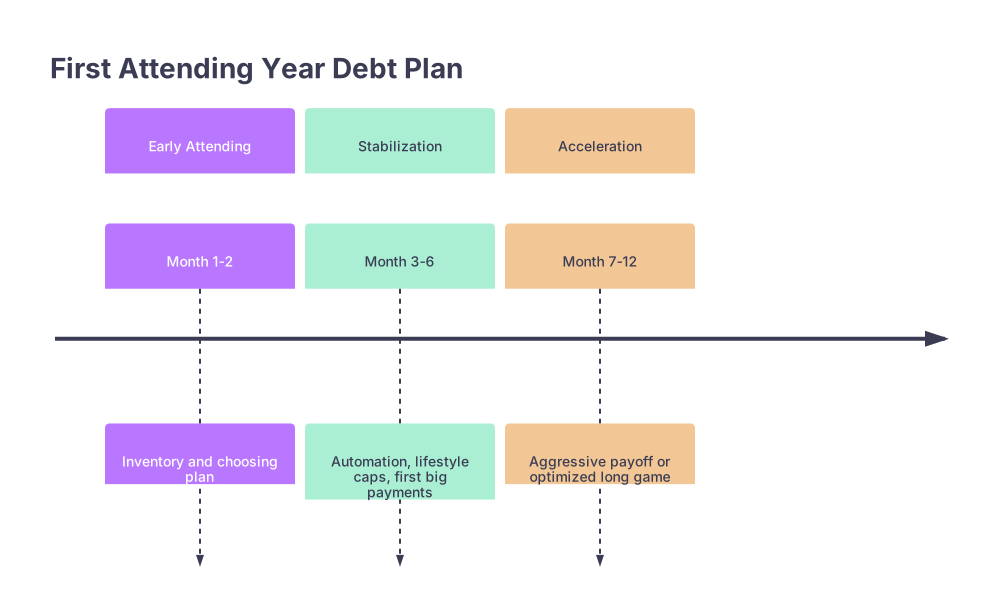
| Period | Event |
|---|---|
| Early Attending - Month 1-2 | Inventory and choosing plan |
| Stabilization - Month 3-6 | Automation, lifestyle caps, first big payments |
| Acceleration - Month 7-12 | Aggressive payoff or optimized long game |
At a high level, this is what changes across the year:
| Phase | Primary Goal | Debt Strategy Focus |
|---|---|---|
| Months 1-2 | Get organized | Inventory + choose plan |
| Months 3-4 | Avoid lifestyle trap | Lock in budget + automate |
| Months 5-8 | Build momentum | Extra payments / PSLF prep |
| Months 9-12 | Optimize and accelerate | Refinance or commit long |
Now the details.
Month 1: The “No Big Purchases” Month
At this point you should freeze any major financial decision. No house. No new car. No big renovations. You are on a fact‑finding mission.
This month, your only jobs:
- Collect every single loan detail
Create one master spreadsheet. Columns should include:
- Servicer (MOHELA, Nelnet, SoFi, Laurel Road, etc.)
- Federal vs private
- Loan type (Direct Unsubsidized, Grad PLUS, Perkins, refinanced private)
- Interest rate
- Balance
- Status (in repayment, grace, IDR, forbearance)
- Whether the loan is PSLF‑eligible (federal Direct loans, qualifying employer)
If you do not know all of these, call the servicer. Do not guess.
- Confirm your career direction for the next 5–10 years
Not perfectly. But enough to choose a debt path.
Ask yourself:
- Am I working for a 501(c)(3) / VA / government hospital?
- Do I reasonably expect to stay in nonprofit/academic/VA for 10 years?
- Am I likely to jump to private practice in the next 2–4 years?
Because this one fork matters:
- Long‑term nonprofit / academic / VA → PSLF is usually king.
- Private practice / for‑profit group → Aggressive payoff and/or refinancing usually wins.
- Pull your first real attending pay stub
You want:
- Gross pay per pay period
- Deductions (tax, retirement, disability, health insurance)
- Net take‑home
Then annualize it. Get your real yearly take‑home, not what your contract said before taxes and deductions.
- Set your “lifestyle cap”
This is where future you will either thank you or swear at you.
Rule I like:
- For your first year, pretend your spendable income is a well‑paid senior resident’s.
- Everything above that? Goes to:
- Emergency fund
- Loan payments
- Retirement accounts
You do not need a perfect budget yet. Just a hard ceiling number for monthly spending.
Month 2: Choose Your Debt Strategy
At this point you should stop being vague and pick a lane: PSLF or payoff.
Step 1: Decide PSLF vs Non‑PSLF
If you are at a qualifying employer and staying at least several years, you must run the numbers. Hand‑waving is how people throw away six figures.
Rough rule:
- Debt > 1.5–2x your gross income and you are PSLF‑eligible?
PSLF is usually the right call. - Debt < 1–1.5x income, or you are 90% sure you’ll go private?
Paying off aggressively (often with refinancing) usually wins.
Step 2: For PSLF path – lock in the right IDR plan
If PSLF is likely:
- Consolidate any stray federal loans that are not Direct into a Direct Consolidation Loan (if needed).
- Enroll in a modern IDR plan (SAVE, PAYE, etc., depending on current rules) that:
- Minimizes your payment
- Keeps you PSLF‑eligible
- Submit the PSLF Employer Certification Form for your current job.
Your goal: start the attending year with:
- All federal loans on one clear IDR plan
- PSLF clock clearly ticking
- Payments low but qualifying
Step 2B: For non‑PSLF path – set your payoff horizon
If PSLF is off the table:
Decide your target payoff window for your student loans, not your mortgage:
- Aggressive: 3–5 years
- Moderate: 5–7 years
- Slow (usually a bad idea): 10+ years
The shorter the window, the less you pay in interest, and the more flexibility you buy for the rest of your career.
Step 3: Start building your automation skeleton
End of Month 2:
- Minimum payments set up on autopay for every loan
- You know:
- Total monthly minimum payment
- How much extra per month you could throw at loans if you kept lifestyle lean
Do not start making extra payments just yet. You need one more month to stabilize cash flow.
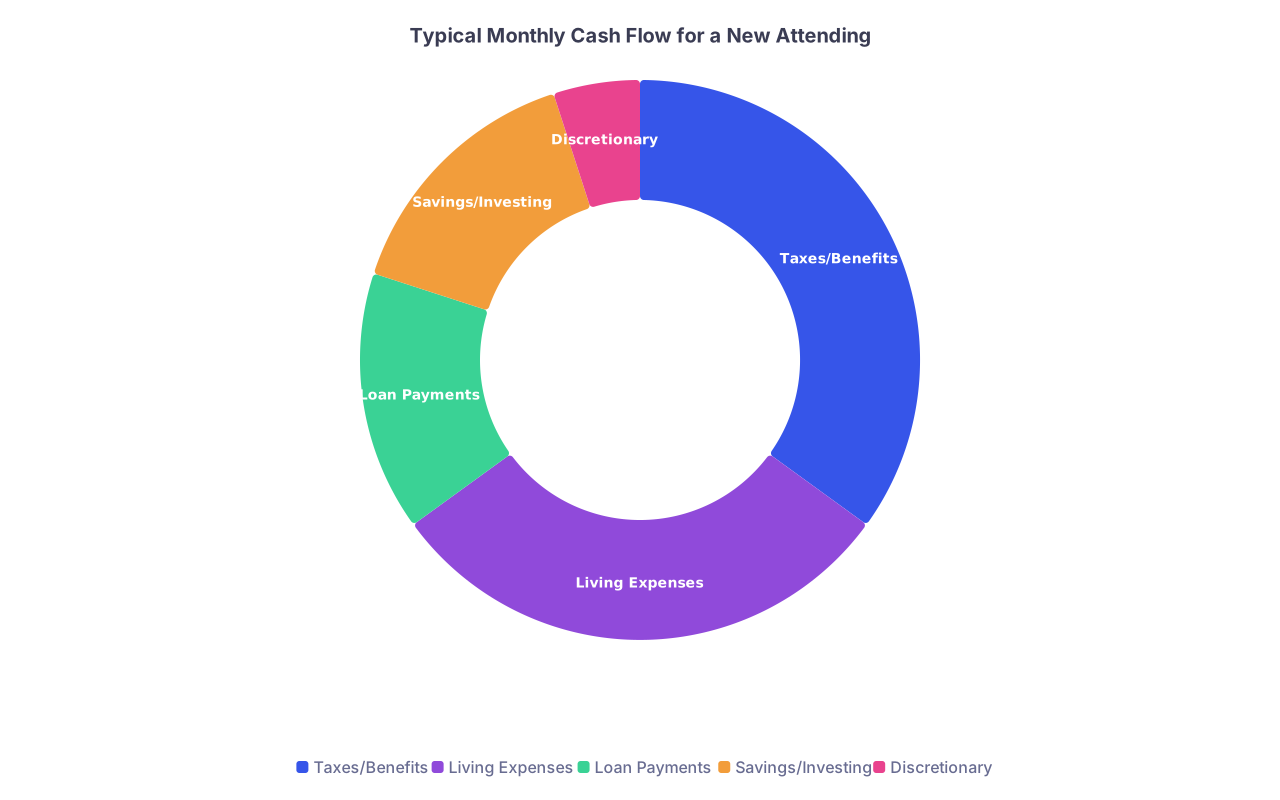
| Category | Value |
|---|---|
| Taxes/Benefits | 35 |
| Living Expenses | 30 |
| Loan Payments | 15 |
| Savings/Investing | 15 |
| Discretionary | 5 |
Month 3: Build the Safety Net, Not the Kitchen Remodel
At this point you should build your emergency defense before attacking loans.
Priority order this month:
- Emergency fund to at least 1 month of expenses (aiming for 3–6)
You are just starting as an attending. Credentialing delays, contract changes, weird schedule shifts happen.
- Automatic transfers every paycheck into a high‑yield savings account
- Target = 3–6 months of core expenses (rent/mortgage, utilities, food, minimum payments, insurance)
- Baseline protections
You are your own ATM. Protect it.
- Ensure you have:
- Long‑term disability insurance (own‑occupation if possible)
- Adequate term life insurance if someone relies on your income
- If your employer’s policies are weak, start the process for individual coverage. Do not wait on this. A single abnormal lab or imaging result can make you uninsurable.
- Dial in a real budget
You now have 2 months of attending pay stubs. Build a simple monthly structure:
- Fixed:
- Housing
- Insurance
- Utilities
- Loan minimums
- Childcare
- Variable:
- Groceries
- Gas/transport
- Dining out
- Travel
- Goals:
- Emergency fund
- Retirement contributions
- Extra loan payments
You are looking for one number: realistic surplus each month that can go to debt and savings without making you miserable.
Month 4: First Real Attack on Interest
At this point you should start actually reducing principal, not just studying your loans.
If you are on PSLF path
Your goal is not to pay these loans off fast. It is to:
- Maximize qualifying payments
- Avoid unnecessary extra payments
- Lower taxable income where it also lowers IDR calculation (depending on current rules)
This month:
- Confirm your IDR payment amount with servicer
- Turn on autopay (often small interest rate reduction)
- Start or increase pretax retirement contributions (401k/403b/457b), which may reduce IDR payments and increase forgiveness value
Extra money? You have three options, roughly in this order:
- Beef up emergency fund toward full 3–6 months
- Maximize retirement account contributions
- Only then consider modest extra payments to highest‑interest loans if PSLF math still makes sense afterward
If you are on payoff path (non‑PSLF)
Now you start hitting the principal.
- Rank your loans from highest interest rate to lowest.
- Keep required minimums on all, and send every extra dollar to the highest interest loan.
Example:
- Loan A (private refinanced): 5.5%, $150k
- Loan B (federal): 6.8%, $50k
- Loan C (Grad PLUS): 7.2%, $80k
You attack Loan C first. Then B. Then A.
At the end of this month you should have:
- Emergency fund at least 1–2 months of expenses
- A clear extra payment amount you will send every month
- Autopay set so you do not think about minimums
Month 5–6: Stabilize Lifestyle, Lock in Refinancing (If Appropriate)
These two months are when people crack. After 4–6 paychecks, the temptation to “reward yourself” spikes.
At this point you should consciously choose which indulgence you will allow, and then firewall the rest.
Month 5: Reality check and adjustment
- Review your last 2–3 months of spending
Look for creep:
- Uber Eats 12 times a month
- Random Amazon “necessities”
- Subscription bloat
Trim aggressively, but not masochistically. Leave a “fun money” category. Just cap it.
- Recalculate your monthly surplus
With spending trimmed and savings started, you now know your true monthly extra available for loans.
Lock this number in. Commit to it for the next 6 months.
Month 6: Decide on refinancing (non‑PSLF only)
If you are not doing PSLF and you have solid job stability, this is the month to seriously consider refinancing.
You refinance if:
- You are definitely not using PSLF
- Your credit and income can get you:
- A much lower rate than your federal loans
- Reasonable term (5–10 years)
- You have 3–6 months of expenses saved, or at least are well on your way
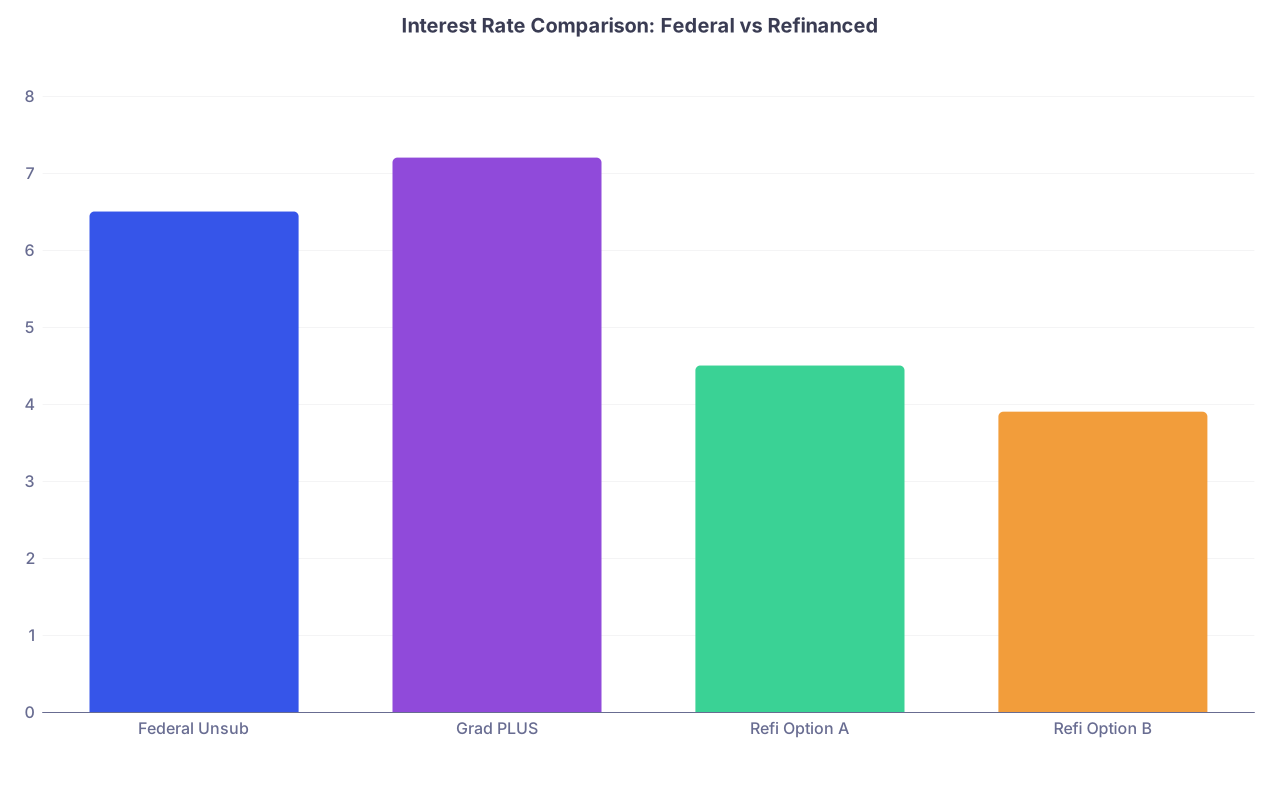
| Category | Value |
|---|---|
| Federal Unsub | 6.5 |
| Grad PLUS | 7.2 |
| Refi Option A | 4.5 |
| Refi Option B | 3.9 |
Rules:
- Never refinance loans that could be PSLF‑eligible if your job situation might change towards nonprofit.
- Start with a few major physician‑focused lenders (SoFi, Laurel Road, Earnest, etc.), get quotes, compare:
- Interest rate
- Term length
- Monthly payment
- Choose a term that:
- Fits your target payoff horizon
- Does not require so high a payment that a job loss would destroy you
After refinancing, update your spreadsheet and automation.
Month 7–8: Acceleration Phase
By mid‑year, your finances should be mostly on rails. At this point you should pour on speed without accidentally sabotaging yourself.
Month 7: Increase payments with raises and extra shifts
Many attendings get small raises, shift differentials, moonlighting, or bonuses around mid‑year. Your rule:
- At least 50–75% of any new money goes directly to:
- Extra loan payments, and/or
- Retirement contributions
Let the remaining percentage slightly upgrade life if you must. But keep the ratio tilted toward future you.
Month 8: Run the 1‑year projection
This is nerdy, and necessary.
- Using your current payment levels:
- Project where each loan balance will be at 1 year from now
- Calculate total principal paid vs total interest
- Adjust:
- If you are barely reducing principal → increase payments
- If you are on PSLF and paying more than required → probably dial back and redirect to investing

For non‑PSLF: You should see clearly that you are ahead of schedule for your target payoff horizon. If not, this is your warning bell.
Month 9–10: Clean Up Loose Ends and Avoid Scope Creep
At this point you should have:
- Clear loan strategy (PSLF vs payoff)
- Automated payments
- Emergency fund close to or at target
- Some retirement contributions going
Now you fix the messiness.
Month 9: Tidy every financial corner
- Kill small, annoying debts
- Credit card balances
- Old residency relocation loans
- 0% financing schemes for furniture or gadgets
These are distractions. Wipe them out.
- Standardize accounts
- One primary checking account for inflow
- One high‑yield savings for emergency fund
- One, maybe two, main credit cards you pay off monthly
You are trying to make it boring to manage your money.
Month 10: Reevaluate insurance and legal basics
You are almost a year removed from residency. Life might have changed.
- Check:
- Disability coverage still adequate for your now higher income
- Life insurance adequate if you added a partner or child
- Legal:
- Basic will
- Healthcare proxy
- Beneficiaries updated on retirement accounts and life insurance
None of this feels like debt payoff. But a single catastrophe without these in place will shred your financial plan.
Month 11–12: End‑of‑Year Optimization and Next‑Year Setup
This is where you stop thinking like a resident and start thinking like a financially competent attending.
Month 11: Tax and retirement coordination
At this point you should:
- Maximize tax‑advantaged accounts as much as realistically possible:
- 401k/403b
- 457b (if available and decent)
- HSA (if on a high‑deductible health plan)
For PSLF folks:
- Higher pretax retirement contributions often mean lower IDR payments, which means more forgiven at the end of 10 years. Use that.
For non‑PSLF:
- You must balance:
- Accelerated loan payoff
- Not neglecting retirement to an absurd degree
Rule of thumb: you should still aim to at least get to a reasonably high retirement savings rate (often 15–20% of gross income) by the end of this first attending year, even while attacking loans.
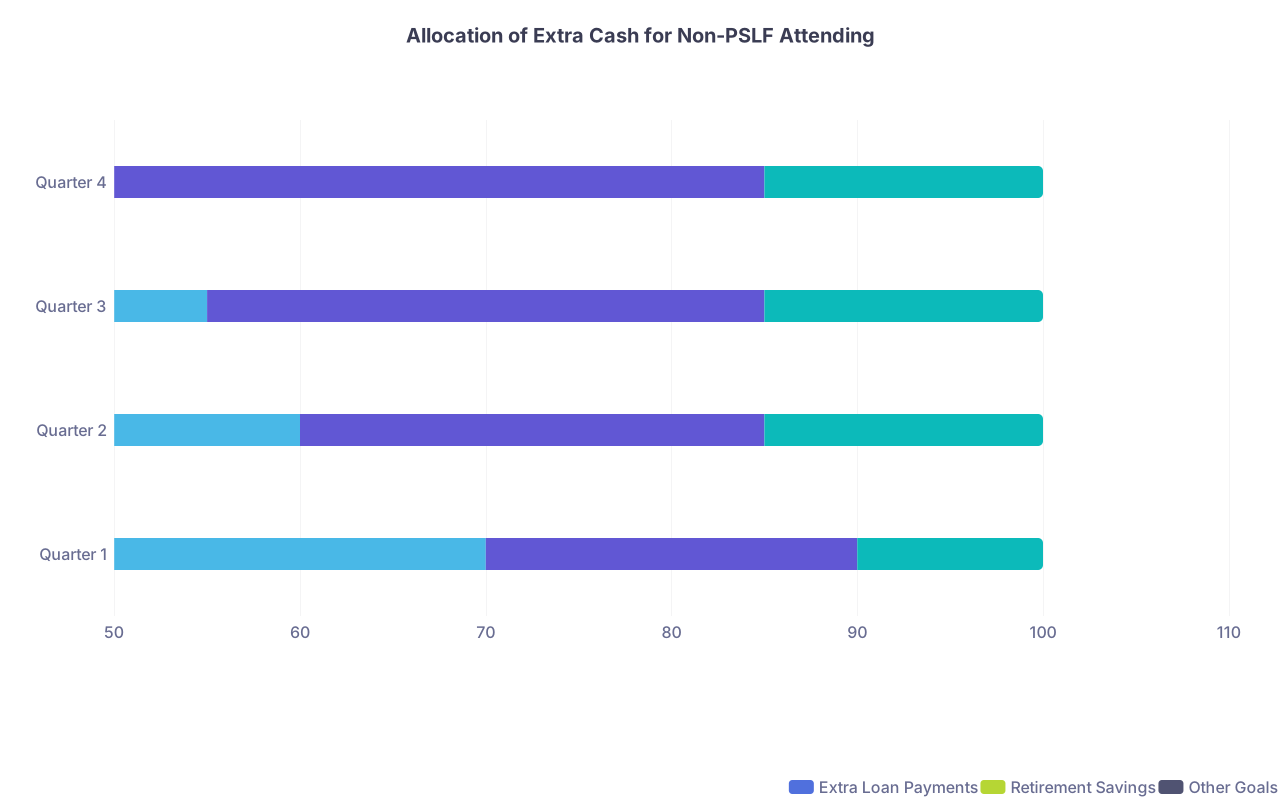
| Category | Extra Loan Payments | Retirement Savings | Other Goals |
|---|---|---|---|
| Quarter 1 | 70 | 20 | 10 |
| Quarter 2 | 60 | 25 | 15 |
| Quarter 3 | 55 | 30 | 15 |
| Quarter 4 | 50 | 35 | 15 |
Month 12: Full‑year review and next‑year targets
Sit down, uninterrupted, and answer four questions:
- How much principal did I actually pay this year?
- How much interest did I pay?
- Is my current strategy still aligned with my 5–10 year career plan?
- Where can I safely increase pressure next year?
Then set concrete Year 2 targets:
- PSLF path:
- Confirm annual IDR recertification schedule
- Plan to submit PSLF employer certification each year
- Target retirement savings increase (e.g., from 15% to 18% of gross)
- Non‑PSLF path:
- New total minimum monthly payment to hit a shorter payoff date
- Date when each remaining loan will be zero
- Ceiling on lifestyle upgrades (percentage of income)

A Quick “At This Point You Should…” Checklist by Quarter
Sometimes you just need the snapshot.
| Timepoint | At This Point You Should Have… |
|---|---|
| End of Month 3 | Full loan inventory, chosen PSLF vs payoff, starter EF |
| End of Month 6 | Automated payments, lifestyle cap, refi decision made |
| End of Month 9 | Extra payments flowing, small debts cleared, EF solid |
| End of Month 12 | Clear 3–5 year plan, big principal reduction, systems set |

Final Thoughts: Three Things That Actually Matter
- Your first attending year is where you either bury your med school debt trajectory or lock yourself into 10–20 years of unnecessary payments. The money you refuse to let lifestyle eat now is worth far more than the same dollars later.
- You must choose consciously between PSLF and aggressive payoff. Waffling in the middle—paying extra on PSLF‑eligible loans without commitment, or halfheartedly attacking huge balances—is how people burn cash.
- Automation, not willpower, wins. By the end of Month 6, your system should be doing the right thing with every paycheck without you thinking too hard. Your job after that is simple: keep your lifestyle honest and turn every raise into more freedom, not more stuff.