It is October of your M4 year. You just submitted ERAS, interview invites are trickling in, and your inbox is a graveyard of loan servicer emails you have not opened since Step 1. You know residency means more debt, but right now it feels abstract. “I will deal with it later” is starting to sound reckless instead of comforting.
This is where you get ahead of it.
I am going to walk you through fourth year month‑by‑month, then tighten it to what you should do by match week, pre‑graduation, and the first days of residency. Specific moves. Specific documents. So by the time you sign that first residency contract or residency relocation loan, you actually know what you are signing yourself into.
Big Picture: Your Fourth-Year Financial Timeline
Start with the skeleton of the year. Then we will fill it in.
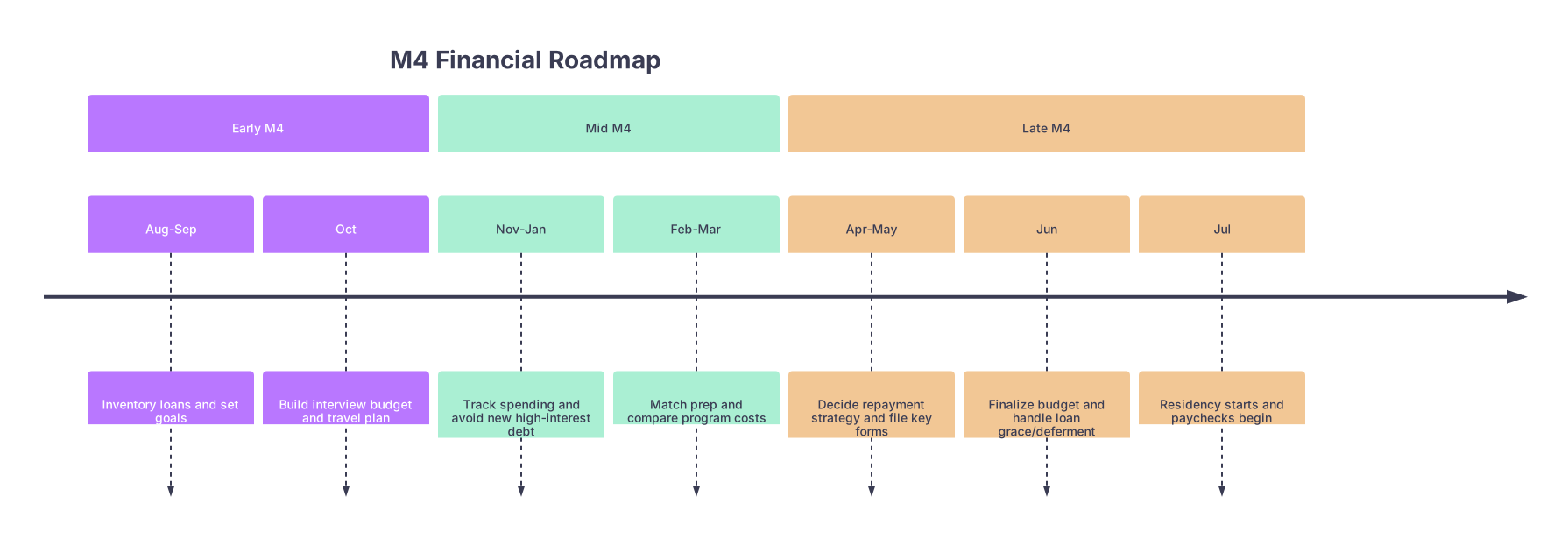
| Period | Event |
|---|---|
| Early M4 - Aug-Sep | Inventory loans and set goals |
| Early M4 - Oct | Build interview budget and travel plan |
| Mid M4 - Nov-Jan | Track spending and avoid new high-interest debt |
| Mid M4 - Feb-Mar | Match prep and compare program costs |
| Late M4 - Apr-May | Decide repayment strategy and file key forms |
| Late M4 - Jun | Finalize budget and handle loan grace/deferment |
| Late M4 - Jul | Residency starts and paychecks begin |
At each phase, you have a different job:
- Early M4: Figure out what you actually owe and how you spend.
- Mid M4: Avoid dumb debt while you interview and rank.
- Late M4: Lock in your repayment/forgiveness plan and prepare for residency‑level expenses.
August–October (Early M4): Get Your Financial Baseline
At this point you should stop guessing about your loans. Most M4s are off by tens of thousands when I ask them their total balance. That is not acceptable if you are about to borrow more.
Step 1: List every single loan
By end of August, you should have a complete inventory:
Log in to studentaid.gov
- Go to “My Aid” and download your full aid summary.
- List:
- Loan type (Direct Unsubsidized, Grad PLUS, Perkins, institutional, private).
- Current balance.
- Interest rate.
- Servicer (MOHELA, Nelnet, EdFinancial, etc.).
Log in to each loan servicer
- Confirm:
- Capitalized interest so far.
- Current status (in school, grace, forbearance).
- Accrued interest not yet capitalized.
- Confirm:
Create a simple spreadsheet (Google Sheets is fine)
Columns:- Lender
- Type (Federal – unsub / Federal – PLUS / Private / Institutional)
- Balance
- Interest rate
- Subsidized? (almost always no, but confirm)
- Notes (e.g., “school loan, 0% during residency, then 5%”)
| Lender | Type | Balance | Rate |
|---|---|---|---|
| Direct Loans | Unsubsidized | $210,000 | 6.54% |
| Direct Loans | Grad PLUS | $80,000 | 7.54% |
| Med School | Institutional Loan | $15,000 | 0% R |
| Private Bank | Private Loan | $10,000 | 8.00% |
If you cannot produce something like that in under a minute, your first task this week is to build it.
Step 2: Map your monthly cash flow
By early September, you should know where your money actually goes. Not where you think it goes.
For one full month:
- Track:
- Rent / utilities
- Food (separate groceries vs eating out)
- Transportation (gas, Uber, parking)
- Exams/fees (ERAS, Step 2, etc.)
- Travel / hotels
- “Leak” spending (subscriptions, coffee, DoorDash, Amazon impulse buys)
Do not guess. Pull your bank and credit card statements.
Your goal:
- Identify:
- Expenses that will disappear when school ends.
- Expenses that will increase in residency (rent, commuting, professional wardrobe, board fees).
- Areas you can cut now to avoid putting interviews on credit cards at 24% interest.
Step 3: Set your “maximum pain” number for total debt
By October 1, you should have a clear “I will not cross this” total debt target.
Look at your current total and estimate:
- Remaining M4 borrowing.
- Moving costs.
- Any expected residency‑related personal loans (car, furniture, etc.).
Be honest. If your total projected debt looks like $420k and you know your specialty pays $220k, you do not have infinite margin for error.
This number will guide decisions like:
- How many interviews you actually can afford.
- Whether you can justify an expensive city program over a cheaper one.
- How aggressively you should cut spending in the next 9–12 months.
October–January: Interview Season Without Destroying Your Future
Now you start spending money you do not yet have. Dangerous territory. At this point you should be extremely deliberate.
Step 4: Build an interview season budget before you click “book”
By mid‑October, before peak invites, build a per‑program cost estimate:
- For each potential interview:
- Airfare / gas.
- Lodging (assume 1–2 nights).
- Ground transportation.
- Food.
Make a realistic “average cost per interview” and a hard cap on:
- Total number of in‑person interviews you can pay for without high‑interest credit.
- Maximum you are willing to put on a 0% promo card (if you are disciplined and know you can pay it off by the end of PGY1).
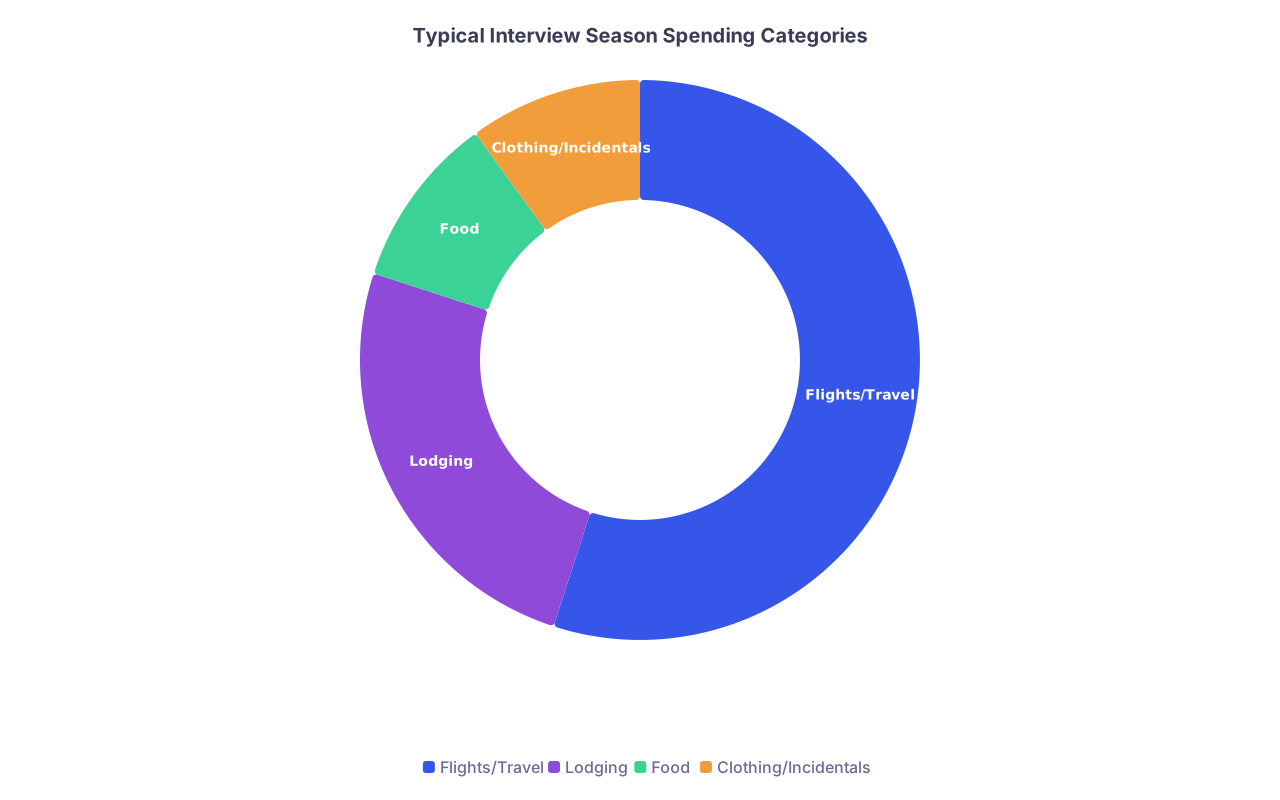
| Category | Value |
|---|---|
| Flights/Travel | 55 |
| Lodging | 25 |
| Food | 10 |
| Clothing/Incidentals | 10 |
If you are sitting at 18 invites for a moderately competitive specialty, you do not need to attend all 18 in‑person. Video interviews, selective cancellation, and regional clustering are your friends.
Step 5: Use the right money, in the right order
During interviews (Nov–Jan), at this point you should follow a strict hierarchy:
- Use existing checking/savings first.
- Then use:
- 0% APR promotional credit cards only if:
- The promo period covers deep into PGY1.
- You can project realistic payments to clear it before the rate jumps.
- 0% APR promotional credit cards only if:
- Avoid:
- High‑interest personal loans marketed to “medical students.”
- New private student loans just to cover interview travel.
- Carrying large credit card balances past the statement due date.
If your school offers a short‑term emergency loan at low or 0% interest for interviews, use that over 22% credit cards. I have seen schools quietly provide $2–5k bridge loans if you simply ask the financial aid office.
Step 6: Keep an eye on your credit
By January, you want your credit profile in decent shape before residency:
- Pull your free credit reports (AnnualCreditReport.com).
- Check:
- Utilization (ideally <30% of your credit limit).
- Any late payments (fix errors now, not in intern year).
- Old unpaid random bills (parking, utilities, phone plan) that might haunt you.
You will likely need a credit check for:
- Apartment rental.
- Maybe a car loan.
- Possibly a residency relocation loan (if you choose to take one).
Clean it now while you still have some emotional bandwidth.
February–March: Match Decisions with Real Financial Consequences
By rank list deadline, you should factor money in. Not as the only variable, but as a real one.
Step 7: Compare program cost of living, not just prestige
By early February, build a simple cost comparison for your top programs:
- Estimated PGY1 salary at each program.
- Local cost of living (rent, parking, commute).
- State income tax (huge difference between Texas and California, for example).
- Proximity to family support (free childcare, couch to crash on during transitions).
| Program | PGY1 Salary | Est. Monthly Rent | State Tax |
|---|---|---|---|
| NYC A | $72,000 | $2,600 | High |
| Midwest B | $61,000 | $1,200 | Low |
| Texas C | $60,000 | $1,100 | None |
Do not pretend a $72k salary in Manhattan is “better” than $60k in a low‑cost city. It is usually worse in practice.
Step 8: Think about your likely repayment path
By match week (mid‑March), you do not need every detail, but you should have a strong leaning:
If you are aiming for Public Service Loan Forgiveness (PSLF):
- Any 501(c)(3) hospital or government facility qualifies.
- Residency years count toward 120 payments.
- You will likely want an income‑driven plan like SAVE (or its current equivalent).
If you are absolutely sure you will refinance privately later:
- Higher‑paying specialties in non‑academic jobs (ortho, derm, plastics, some EM, anesthesia).
- PSLF less likely to be needed.
- Flexibility to consider private refinancing after residency or even late residency.
You do not lock anything in yet. But you should know whether you are leaning:
- “PSLF + academic / 501(c)(3)”
vs - “Private refinance and crush debt quickly”
This will shape how you think about residency salaries, moonlighting, and living expenses.
April–May: Pre‑Graduation – Set Up Your Repayment Strategy
Now you are post‑Match and the adrenaline is wearing off. At this point you should get tactical with your loans.
Step 9: Confirm your servicer and draft repayment plan
By late April:
Log into studentaid.gov again:
- Confirm your servicer (the Department of Education has been shuffling them).
- Confirm all loans are listed and assigned.
Decide your provisional repayment plan, assuming:
- You want to maximize PSLF → likely SAVE or the current most favorable IDR.
- You want lowest payments during residency, no PSLF → also usually an IDR during residency, with intent to refinance later.
- You want to pay aggressively right away → consider standard 10‑year, but run the numbers; most residents cannot afford it.
Run sample numbers with a loan simulator (federal site has one). You should know:
- Your projected payment in PGY1 and PGY2 on each plan.
- Whether unpaid interest is forgiven or partially forgiven (under plans like SAVE).
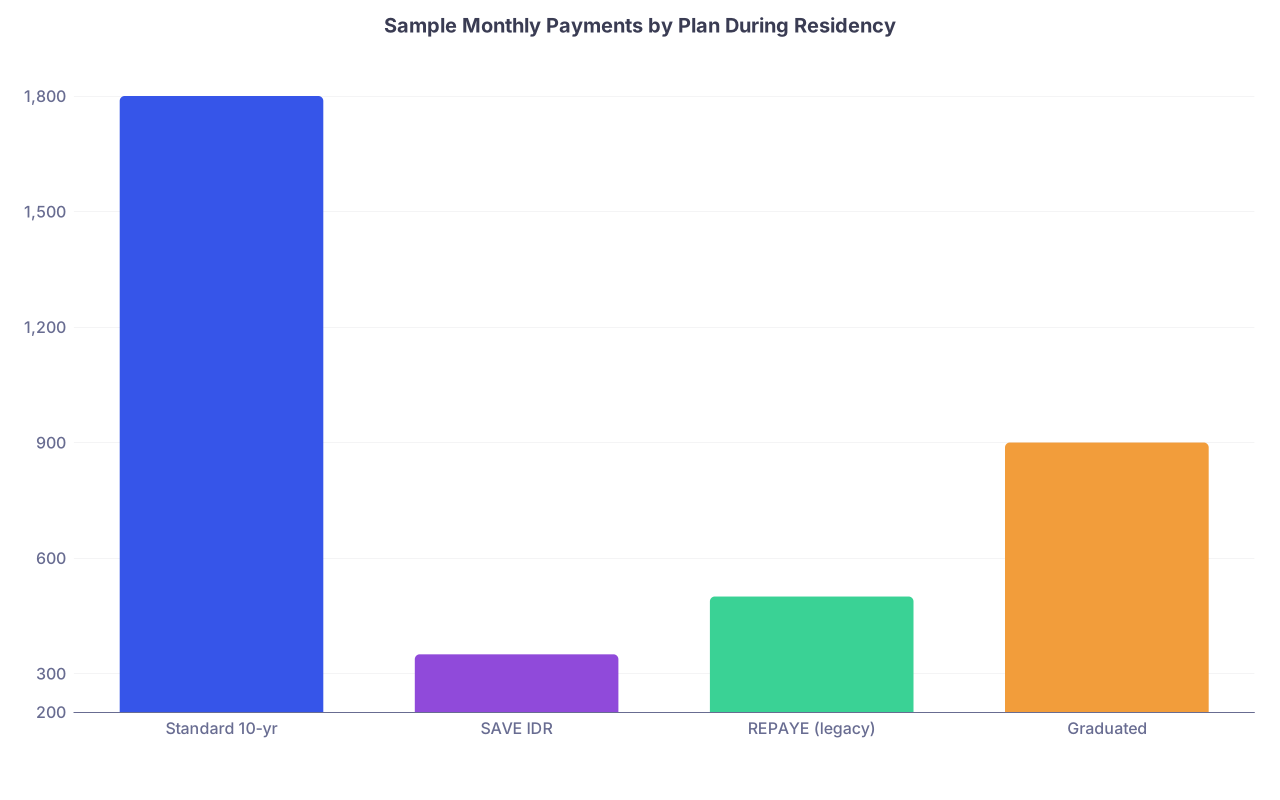
| Category | Value |
|---|---|
| Standard 10-yr | 1800 |
| SAVE IDR | 350 |
| REPAYE (legacy) | 500 |
| Graduated | 900 |
If you cannot afford Standard 10‑year on a resident salary (you probably cannot), stop pretending you will. Pick an IDR that fits reality.
Step 10: Decide on consolidation (or not)
By early May, you should decide whether to consolidate your federal loans:
Consolidation can be good if:
- You have multiple servicers and want one bill.
- You want to include older FFEL or Perkins loans in PSLF eligibility.
- You are not trying to preserve any special low‑interest or school‑based terms.
But consolidation:
- Can reset certain timelines.
- May capitalize interest (adding to your principal).
- Is permanent.
Do not consolidate private loans with federal loans. That move is bad almost 100% of the time.
Step 11: Clarify in‑school, grace, deferment, and forbearance timelines
By graduation month you should know, for each loan:
- When does in‑school status end?
- When does grace period start and end?
- What happens to interest?
- Are there any residency‑specific deferment options (rare, but some institutional loans have them)?
Some M4s assume “no payments until the end of residency.” That is usually false. Standard federal loans enter repayment 6 months after you fall below half‑time enrollment.
If you are graduating in May:
- Expect repayment to start around November unless you enroll in IDR, forbearance, or deferment.
June–July: Transition to Residency Without Financial Whiplash
Now you are packing, moving, and onboarding. Money will feel tight. At this point you should prevent unforced errors.
Step 12: Build a first‑year resident budget before you move
By early June (before you sign a lease):
- Estimate:
- Net monthly income (after fed/state tax, retirement contributions if forced, health insurance).
- Core monthly costs:
- Rent + utilities
- Car (loan + insurance + gas + parking)
- Food
- Required work expenses (parking at hospital, scrubs, exams)
- Projected loan payment under your chosen plan.
You want to see if the math works before you lock into a luxury high‑rise.

If the budget is negative:
- Lower rent expectations.
- Consider cheaper transit or a used car instead of a new lease.
- Cut recurring extras (subscriptions, meal delivery) before they trap you.
Step 13: Handle moving costs intelligently
June and early July are prime “dumb loan” season. Moving, deposits, furniture. At this point you should:
- Compare:
- 0% APR credit card offers (with clear payoff plan).
- Employer relocation stipends (some programs reimburse moving costs).
- Dedicated “relocation loans” from banks (usually worse rates, use sparingly).
Avoid:
- High‑interest personal loans you will drag for 7 years.
- Financing big-ticket furniture when you could buy used for Year 1 and upgrade later.
Your goal: Get through the move with as little long‑term, high‑interest debt as possible.
Late June–July: Right Before and Right After Your First Paycheck
This period is where many residents unintentionally sabotage their future with one rushed decision.
Step 14: Enroll in your repayment plan on time
Before your grace period ends (often around November, but some institutional loans differ), you should:
Submit your IDR application (if using SAVE or other IDR).
- Use your most recent tax return or pay stubs as required.
- If your income rose sharply with residency, make sure you understand which income will be used.
Enroll in auto‑pay if:
- There is an interest rate reduction (common).
- You are sure you will not overdraw your account.
If you are going PSLF:
- Make at least one qualifying payment as soon as you are required to, not months late.
- Keep every confirmation email and statement.
Step 15: Start PSLF paperwork early (yes, in PGY1)
By the end of your first 3–6 months of residency:
- Fill out the PSLF Employer Certification Form:
- Have your program’s HR or GME office sign it.
- Submit to your servicer (currently often MOHELA).
Do this annually or when you switch employers. If you wait until year 9, you are at the mercy of decades‑old HR records.

One-Page Checklist: What You Should Do and When
Here is your condensed, time‑based checklist.
| Timeframe | Key Tasks |
|---|---|
| Aug–Sep (M4) | Inventory loans, track spending, set max debt |
| Oct–Jan | Build interview budget, protect credit |
| Feb–Mar | Compare programs by cost, choose likely repayment path |
| Apr–May | Pick provisional plan, decide on consolidation |
| Jun–Jul (pre-PGY1) | Build resident budget, plan move costs |
| PGY1 early | Enroll in IDR, set auto-pay, start PSLF forms |
FAQ (Exactly 3 Questions)
1. Should I take out a residency relocation loan, or just put moving costs on a credit card?
If you have a genuine 0% APR card with a long introductory period and a realistic plan to pay it off by late PGY1, that usually beats a relocation loan at 8–12%. If your credit is weak or you are prone to carrying balances, a fixed‑term relocation loan might be safer. What is never smart: high‑interest cards with no payoff strategy, or borrowing more “just in case” and then inflating your lifestyle to match.
2. Is it ever smart to pay extra on my loans during residency?
Yes, but only after you have a stable emergency fund (at least 1–2 months of expenses, ideally 3–6) and you know your long‑term plan. If you are going for PSLF, paying a lot extra in residency often makes no sense; those dollars are better in savings or retirement. If you are certain you will refinance and attack the loans aggressively post‑residency, small extra payments in PGY3+ can help, but do not crush yourself in PGY1 for marginal gains.
3. Do I need a financial advisor before residency?
Most residents do not need a paid advisor right away. You need: a clear repayment strategy, a simple budget, and basic protections (appropriate disability coverage, understanding of your employer benefits). If you have complex issues—spouse with debt, significant investments already, or you are considering early attending‑level refinancing—then a fee‑only advisor who understands physicians can be worth it. Avoid anyone whose main “service” is selling you whole life insurance.
Today’s next step is simple:
Open studentaid.gov, download your aid summary, and build a 10‑minute spreadsheet of every loan you have. No more guessing.