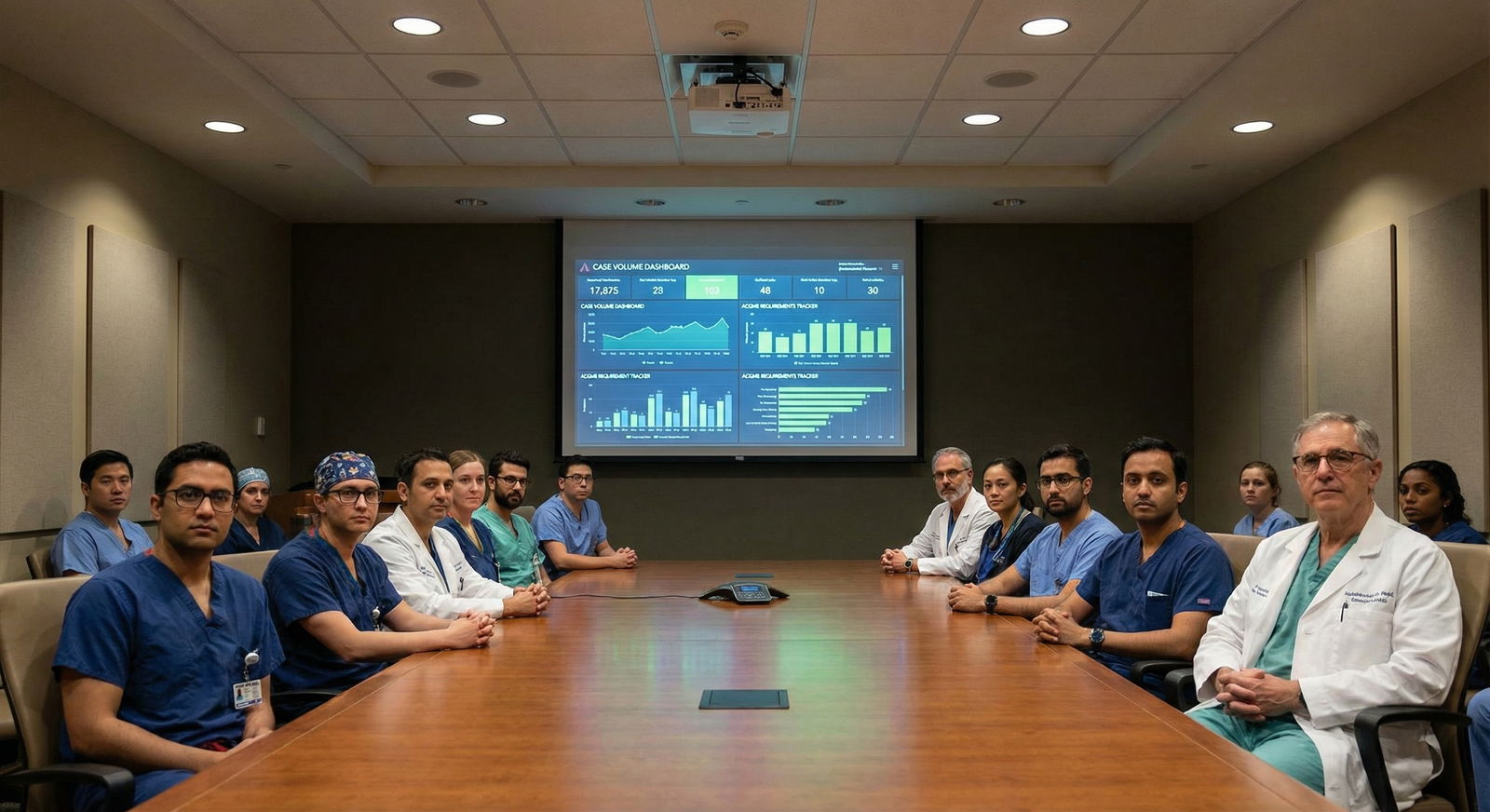
Myth of the ‘Busy Trauma Program’: Why Numbers Can Mislead Applicants
How many times have you heard a resident brag, “We’re the busiest trauma center in the state—you’ll get amazing experience here,” and watched applicants instantly light up as if that one sentence settled everything?
It should not.
The cult of the “busy trauma program” is one of the more persistent half-truths in surgical training. Applicants obsess over raw trauma volume like it’s a proxy for competence, autonomy, and operative skill. Programs market it like a badge of honor. And everyone quietly glosses over the uncomfortable detail that high trauma numbers alone often correlate just as nicely with scut, burnout, and you holding traction at 3 a.m. on your seventh ex-lap of the week.
There’s a huge gap between “lots of trauma comes through the door” and “this is a great place to train in surgery.”
Let’s pull that apart.
The Volume Trap: Why “Busiest” Is Almost Meaningless
I’ve lost count of how many program websites scream some version of: “Level 1 Trauma Center – 4,000+ admissions per year – one of the busiest in the region!”
Sounds impressive. Until you ask three basic questions:
- Who actually manages the trauma patients?
- What proportion of cases are operative and done by surgeons?
- How is that operative work distributed across services and residents?
Most applicants never get past the headline number.
Volume ≠ Operative Experience
At many “busy” trauma centers:
- A huge chunk of volume is blunt, non-operative trauma managed by protocols, imaging, and observation.
- Trauma service is co-managed or led by emergency medicine, anesthesia critical care, or hospitalists.
- Trauma surgeons function primarily as intensivists and proceduralists, not as high-volume emergency surgeons.
So when a program says, “We see 5,000 traumas per year,” you need to mentally translate that: a lot of consults, CTs, chest tubes, central lines, serial exams, and discharges. That can be valuable. But it’s not magical.
Look at it another way:
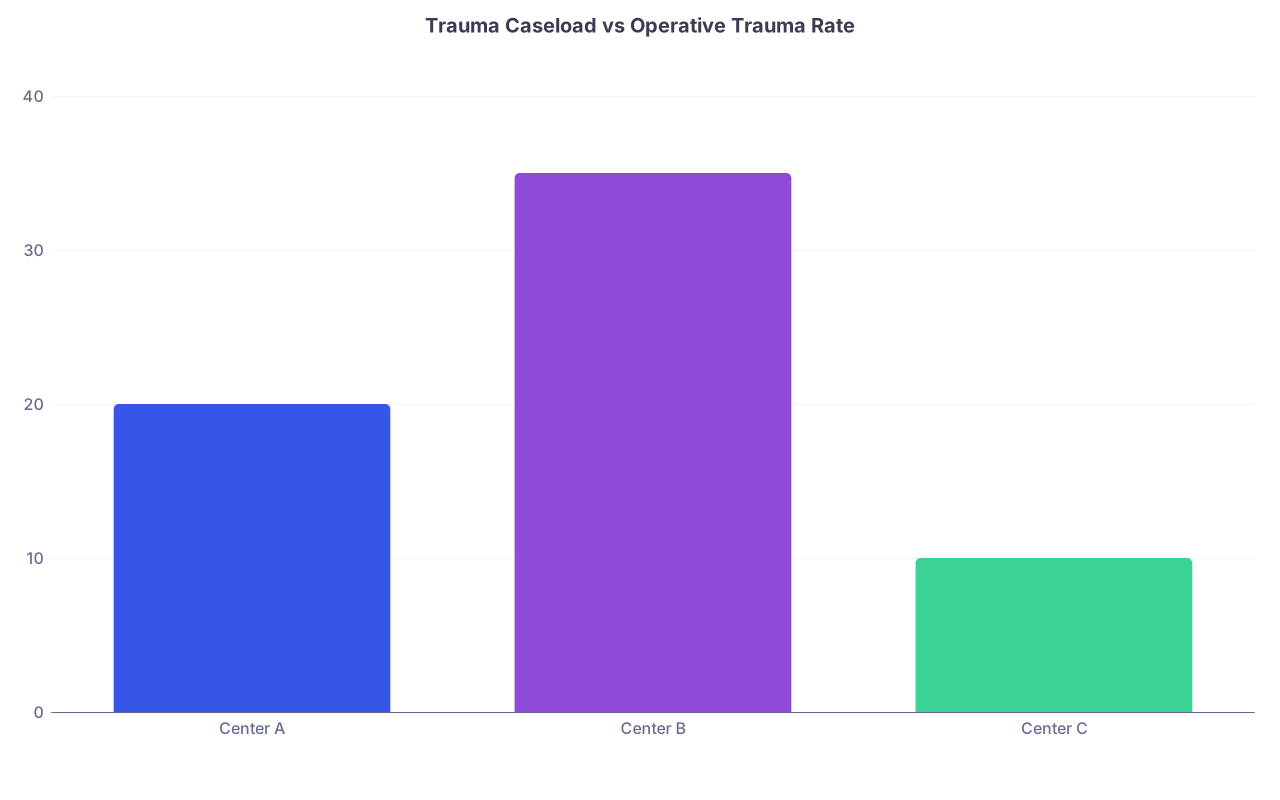
| Category | Value |
|---|---|
| Center A | 20 |
| Center B | 35 |
| Center C | 10 |
If “Center A” is busier but only 20% of major traumas go to the OR, while “Center B” has fewer traumas but 35% are operative, which one really offers more surgical experience?
Exactly.
The “Pager Volume” Illusion
There’s also a nasty confusion between pager volume and case volume.
Residents equate constant pages, consults, and cross-coverage with “busy” and then backwards-infer “busy = good training.” What they’re actually describing is workload, not growth.
You can easily be in a “busy” program where you:
- Field nonstop pages for pain control and diet orders.
- Admit dozens of low-acuity trauma patients.
- Write endless notes and chase labs.
- Do one mediocre ex-lap every few nights, and scrub as junior assist.
That’s not high-yield operative training. That’s just you being over-deployed as a ward manager.
What the Data Actually Shows: Volume Has Diminishing Returns
Surgical education literature has been pretty consistent on one thing: some volume is necessary for competence, but after a certain threshold, more cases don’t linearly equal better training.
The pattern is more like this: early volume boosts learning dramatically, then the benefit curve flattens while the burnout curve keeps climbing.
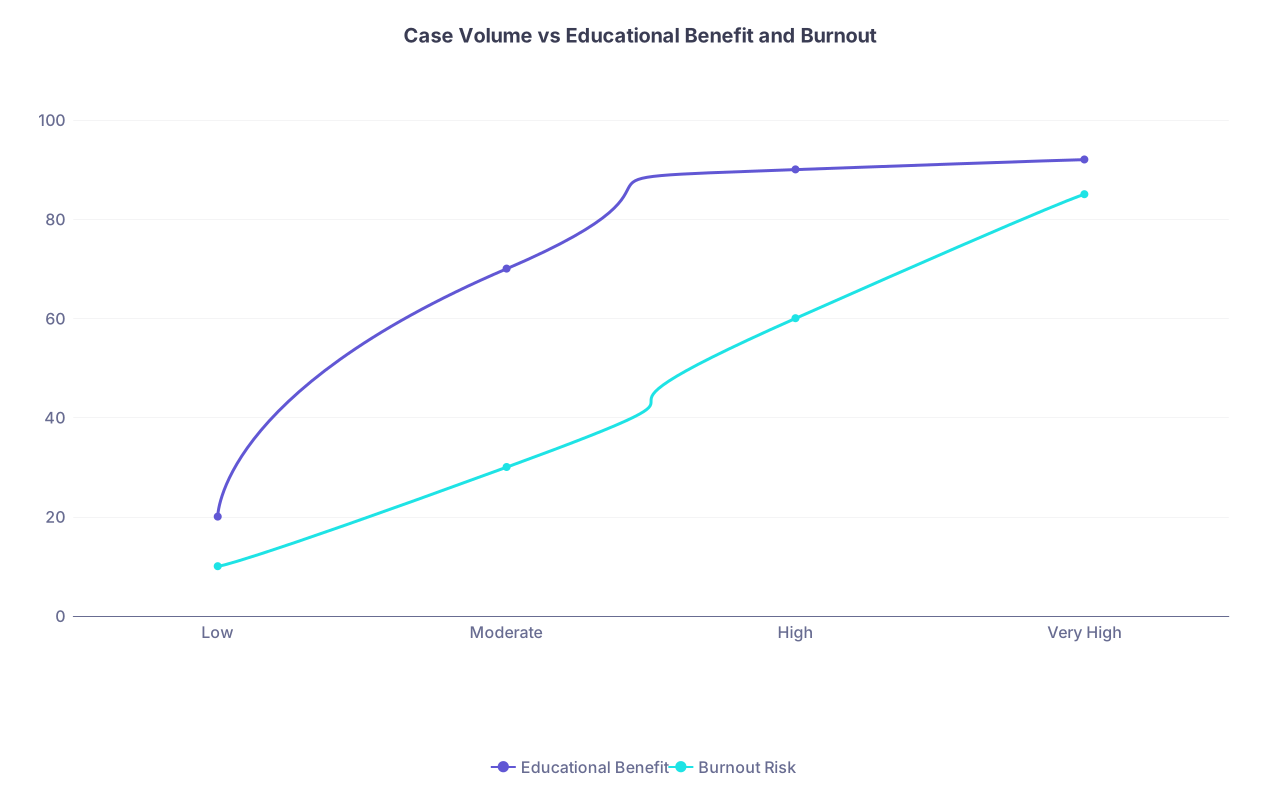
| Category | Educational Benefit | Burnout Risk |
|---|---|---|
| Low | 20 | 10 |
| Moderate | 70 | 30 |
| High | 90 | 60 |
| Very High | 92 | 85 |
Past “moderately high” volume, you’re mostly repeating variations of the same patterns while your sleep, judgment, and patience fall apart.
I’ve watched residents in ultra-busy trauma programs literally turn into note-writing machines with OR access. They can resuscitate, place lines, and run an ICU. But they graduate weaker on elective, oncologic, or technically complex cases. They were so busy “surviving trauma nights” that the broader surgical curriculum got squeezed.
That’s the part nobody advertises on the website.
The Types of Trauma That Actually Matter for Training
The word “trauma” gets lumped together like it’s one thing. It’s not. The value of a trauma program for your surgical education depends heavily on case mix, not just case count.
Here’s the uncomfortable breakdown.
1. Blunt vs Penetrating: The Dirty Secret
U.S. trauma has become increasingly blunt and non-operative. Seatbelt laws, airbags, and improved EMS have shifted the landscape. Penetrating trauma (GSWs, stabbings) makes up a small fraction in many regions.
You’ll hear, “We’re a Level 1 trauma center, see tons of MVCs.” That mostly means: high-speed CT scanner usage, not you clamping the aorta.
Programs that still see meaningful penetrating trauma (e.g., certain urban centers) often do not need to tell you they’re “busy.” The cases speak for themselves.
2. Operative Spectrum: Breadth vs Repetition
There’s a big difference between:
- Repeating low-complexity ex-laps for hollow viscus injuries and
- Tackling vascular repairs, complex liver trauma, pelvic packing, combined injuries with ortho, neurosurg, and so on.
If your trauma experience is 90% washouts and damage-control laparotomies with rapid handoff to ICU, you’re missing the reconstruction side—and the decision-making that goes with it.
3. Integration With General Surgery
The best trauma programs for general surgery residents are usually those where trauma is not an isolated fiefdom but integrated into:
- Acute care surgery
- Emergency general surgery (EGS)
- Critical care
There, high trauma volume feeds directly into robust experience in emergency laparotomies, bowel resections, perforated visci, strangulated hernias, and other bread-and-butter acute surgery. Not just “one trauma month where you get wrecked and then never see the service again.”
How Trauma Case Volume Really Interacts With Your Training
Let me translate the hidden curriculum.
1. More Trauma Can Mean Less Autonomy
Odd but true. Extremely high-acuity centers often run on tight, risk-averse, attending-driven workflows because the stakes are higher and cases are faster.
Attending takes the critical parts. Senior does the setup and closure. Junior suctions and holds retractors. Why? Because when the patient is crashing, nobody wants the PGY-2 dissecting the porta hepatis slowly while anesthesia is begging for clamp time.
Compare that with a moderately busy trauma center where residents actually do the cases, run the resuscitations, and present plans. The “numbers” may look less impressive, but your growth curve will be steeper.
2. High Trauma Can Crowd Out Elective and Subspecialty Exposure
Surgical training isn’t “trauma training.” It’s general surgery training. That includes:
- Colorectal
- HPB
- Endocrine
- Minimally invasive/foregut
- Surgical oncology
- Transplant (at some centers)
Oversized trauma/acute care workloads can cannibalize your time on these services. You’ll hear things like:
“Yeah, you’re technically on HPB, but you’re on jeopardy for trauma nights, so you’ll miss a lot of days post-call.”
Or:
“Trauma got slammed, we pulled you from clinic and cases.”
Over a five-year residency, that adds up. You match thinking you’re joining a “high-volume trauma powerhouse” and graduate weaker in the domains that actually define most surgeons’ careers.
3. Fatigue Destroys Marginal Learning
There’s evidence for something all residents already know: beyond a certain level of fatigue, learning efficiency nosedives. You remember less. You cut fewer corners in the right places and more in the wrong ones. Your cognitive bandwidth shrinks to: don’t kill anyone, get through the list, crash in call room.
Extreme trauma volume almost always comes wrapped in brutal call schedules and relentless nights. If you think that environment necessarily improves your skills just because you’re busy, you’re lying to yourself.
Questions That Actually Expose the Truth Behind “Busy”
When you tour programs or talk with residents, asking “How busy is your trauma?” is a useless question. Everyone will answer reflexively: “Very busy.” “Super busy.” “Crazy busy.”
Ask questions that force specifics and reveal structure.
| Focus Area | Example Question |
|---|---|
| Operative role | As a PGY-3 and PGY-4, what parts of trauma laparotomies are you routinely doing yourself? |
| Case mix | Roughly what percentage of your traumas go to the OR vs non-operative management? |
| Ownership | Who runs the trauma resuscitation initially: EM, surgery, or a mixed model? |
| Competition | Do fellows or other specialties take key trauma cases away from residents? |
| Impact on electives | How often does trauma pull you from elective services or subspecialty clinics? |
You’ll see residents pause a bit longer. You’ll start hearing things like:
- “We’re busy, but EM runs the bay mostly.”
- “We do a lot of ICU and lines; the actual trauma surgery is less than you’d think.”
- “The fellows do most of the cool vascular trauma.”
- “We get pulled from electives a lot when the trauma service explodes.”
Those answers tell you infinitely more than a proud “we’re the busiest in the region.”
The Future: Trauma Is Getting Less Operative and More Systems-Driven
If you think trauma today is what trauma was in the 1990s—knife-and-gun-club ex-laps every night—you’re about three eras behind.
Three trends are reshaping the field:
- Non-operative management: Solid organ injuries, many pelvic fractures, and some vascular injuries are increasingly managed without open surgery or with endovascular approaches.
- Interventional radiology: IR is now front and center for embolizations and selective control. Trauma surgeons share, or cede, parts of what used to be “their” cases.
- Protocol-driven care: ATLS, damage-control resuscitation, MTPs, and standardized CT/injury algorithms reduce the variation and improvisation that used to define trauma care.
What that means for you: the marginal educational benefit of even more raw “trauma volume” is shrinking. The actionable question becomes: how does this program position me for the future of acute care and emergency surgery?
You need a place where:
- Trauma is integrated with EGS, so you’re not just managing blunt MVCs but also perforated ulcers, incarcerated hernias, Fournier’s, necrotizing fasciitis, SBOs.
- Residents learn critical care and complex OR problem-solving, not just plugging protocol holes.
- There’s real exposure to the interfaces—IR, endoscopy, hybrid ORs.
That’s where modern surgical competency is moving.
A More Honest Checklist: What Actually Matters More Than “Busy”
If I had to choose between two programs—one “insanely busy trauma” and one “moderately busy but structured”—I’d ignore the marketing and look at these realities.
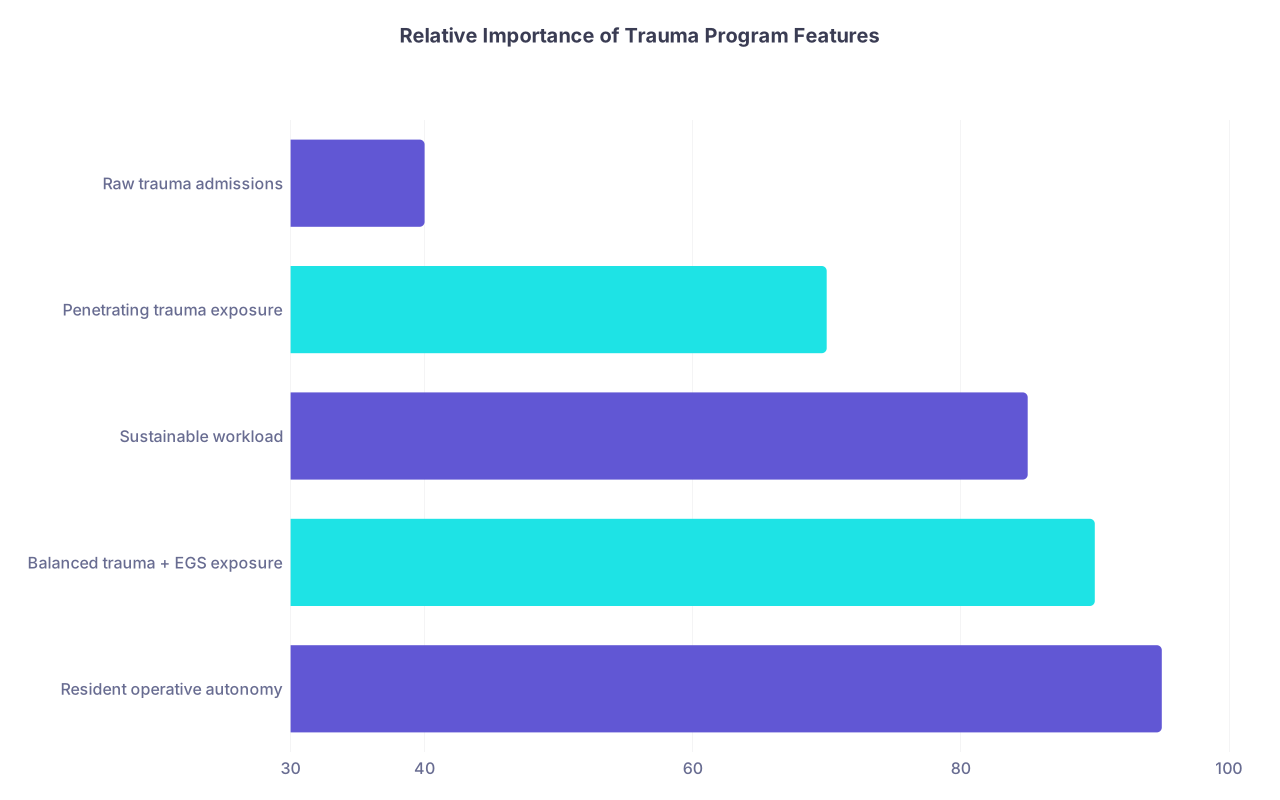
| Category | Value |
|---|---|
| Resident operative autonomy | 95 |
| Balanced trauma + EGS exposure | 90 |
| Sustainable workload | 85 |
| Penetrating trauma exposure | 70 |
| Raw trauma admissions | 40 |
You should prioritize:
- Resident-level operative autonomy on trauma and EGS.
- Balance of trauma with elective and subspecialty surgery.
- Penetrating trauma and complex case variety, not just endless repetitive blunt injuries.
- A call structure that’s intense but not sadistic, because chronic sleep deprivation flattens your learning.
And you should heavily discount:
- “We’re the busiest Level 1 in the state/country/quadrant of the galaxy.”
- Any line that sounds like a flex on how destroyed their residents are.
- Places where the trauma service exists mostly as proof of how heroic and overworked everyone is, with very little discussion of curriculum, graduated responsibility, or case ownership.
How to Decode the Hype on Interview Day
On interview day, trauma is one of the easiest areas to see through if you pay attention.

| Step | Description |
|---|---|
| Step 1 | Program claims very busy trauma |
| Step 2 | Good sign |
| Step 3 | Red flag |
| Step 4 | High training value |
| Step 5 | Limited skill set |
| Step 6 | Balanced training |
| Step 7 | Skewed experience |
| Step 8 | Ask about OR role |
| Step 9 | Ask about EGS integration |
| Step 10 | Ask about electives impact |
Listen carefully for:
- “We’re slammed, but honestly EM runs most of the initial trauma workups.”
- “You’ll get good at critical care; the OR side is more hit-or-miss.”
- “Our fellows take the complex vascular and chest cases.”
Those are all subtle ways of telling you: high trauma volume, limited resident surgical yield.
Programs that are actually excellent for surgical trauma training usually sound more like:
- “By PGY-3, you’re running large parts of the trauma bay, and by PGY-4/5 you’re primary on most trauma laparotomies.”
- “Our trauma is tightly linked with EGS; residents get tons of emergency general surgery.”
- “We protect elective time even when trauma is busy; we don’t just yank people randomly.”
The Bottom Line
Let me strip this to the studs.
Most applicants wildly overvalue “busy trauma” as a selling point and underestimate the trade-offs.
Key points:
- Raw trauma numbers are largely meaningless without context. Ask who operates, what proportion is operative, and how much autonomy residents really get.
- Extremely high trauma volume often comes at a cost. Fatigue, lost elective exposure, and limited operative autonomy can quietly undercut your training, even as your pager never stops.
- You’re training to be a surgeon, not a trauma ward clerk. Prioritize programs with balanced trauma + EGS, real OR responsibility, and sustainable workloads over those that market themselves purely on how “insanely busy” they are.
If a place leads its pitch with “We’re the busiest trauma center in X,” your reflex should not be “Perfect.” It should be: “Show me how that actually makes your residents better surgeons.”