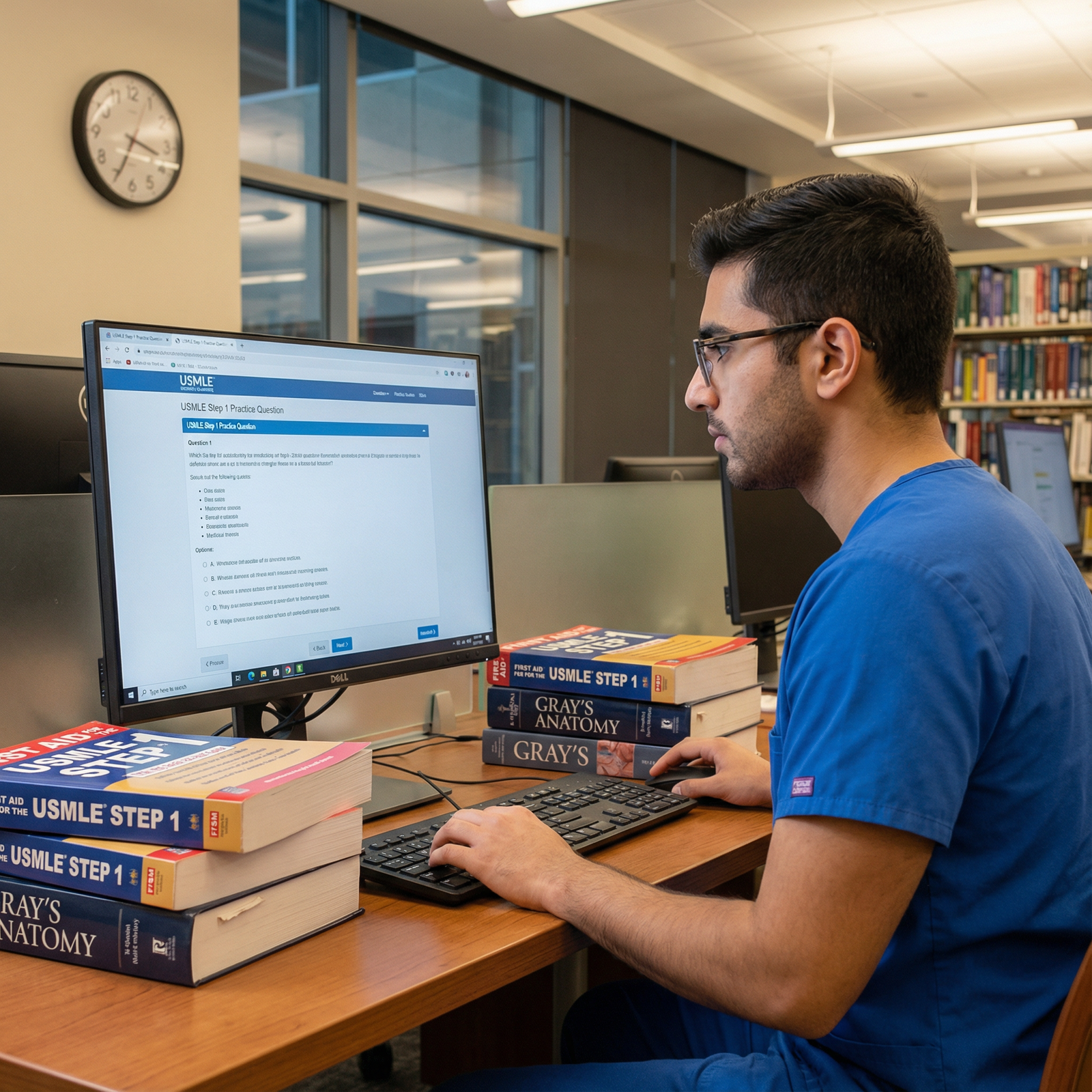
The default advice about “always use timed mode” for Step 1 question banks is lazy – and wrong for most students.
You shouldn’t pick timed vs tutor like a personality quiz. You use each mode for a different job at a different point in your prep. If you’re doing everything in timed mode from day one, you’re wasting questions. If you’re stuck in tutor mode the whole time, you’re sabotaging test-day performance.
Here’s the answer you’re actually looking for.
The Short Answer: How You Should Really Use Timed vs Tutor
Let me be blunt and specific.
If you’re in:
- Early dedicated or still in classes → Mostly Tutor Mode, Untimed, with some short timed sets.
- Mid dedicated → Split 50/50 Tutor and Timed, depending on goal of the session.
- Final 3–4 weeks → Majority Timed Blocks (40 Qs), Exam Mode, with limited targeted tutor cleanup.
The key distinction:
- Tutor mode is for learning and diagnosis.
You use it to:- Build understanding of content and patterns
- Slow down and dissect stems
- Practice process of elimination and thinking out loud
- Timed mode is for performance and endurance.
You use it to:- Train pace and stamina
- Simulate real test stress
- Expose timing and decision-making problems
You need both. The mistake is using them in the wrong phase, or expecting tutor mode to magically raise your score without ever stress-testing under real conditions.
What Each Mode Actually Trains (Not What People Claim)
Let’s break it down like an adult, not like a Reddit thread.
What Tutor Mode Does Well
Tutor mode (especially untimed) is a learning lab, not a test.
It’s best for:
Deliberate practice You can:
- Pause after each question
- Ask: “What was tested here? What clue did I miss?”
- Look up relevant First Aid/BnB/Sketchy pages while the question is still fresh
Building a reproducible thought process This is where you train yourself to:
- Read the last line first
- Identify question type (diagnosis vs mechanism vs next best step)
- Flag key data (age, acuity, vitals, timeline, buzzwords)
- Generate 1–2 likely answers before seeing choices
In tutor mode, you’re free to do this without the clock breathing down your neck.
Immediate feedback loop You answer → you’re right or wrong → you see why immediately.
That’s powerful. Your brain ties:- The stem pattern
- Your thought process
- The correct explanation
All in one shot.
Emotion management while learning Early on, timed blocks feel like getting punched in the face every 60 seconds.
Tutor mode lets you:- Get questions wrong
- Actually learn from them
- Not spiral into “I’m stupid” territory every block
Where tutor mode fails:
- It underestimates the pain of time pressure
- It lets you stall forever on one question
- It can create a fake sense of “I’m fine, I eventually get it”
(The exam doesn’t care what you “eventually” figure out in 3 minutes and 45 seconds.)
What Timed Mode Actually Trains
Timed mode (especially 40-question blocks, exam mode, no answers until the end) is performance training. This is where people wait too long to start.
It’s best for:
Pacing You learn what 90 seconds feels like.
You’re forced to:- Move on when you’re stuck
- Avoid rereading stems 4 times
- Accept “good enough reasoning” instead of perfectionism
Stamina and consistency Step 1 is hours long. You need to:
- Stay focused for multiple back-to-back blocks
- Avoid crashing mentally after lunch Only timed blocks and NBME/UWorld self-assessments really mimic this.
Realistic scoring and weaknesses Untimed tutor performance is a fantasy.
Timed performance:- Exposes your real weak systems
- Shows which question types you burn time on (biostats, long ethics stems, pharm charts, etc.)
Stress inoculation The clock is part of the exam. It raises arousal, and your brain works differently under it. If you’ve only done tutor mode, test day will feel like a brand-new sport.
Where timed mode fails:
- You don’t learn deeply from each question during the block
- It can crush confidence if you start too early when you don’t know content
- You rush, guess, and move on—without figuring out what went wrong
So again: different tools, different jobs.
How To Sequence Modes By Phase of Prep
Let’s be practical. Here’s how I’ve seen high scorers (250+ back when it was scored) and solid passers both use modes effectively.
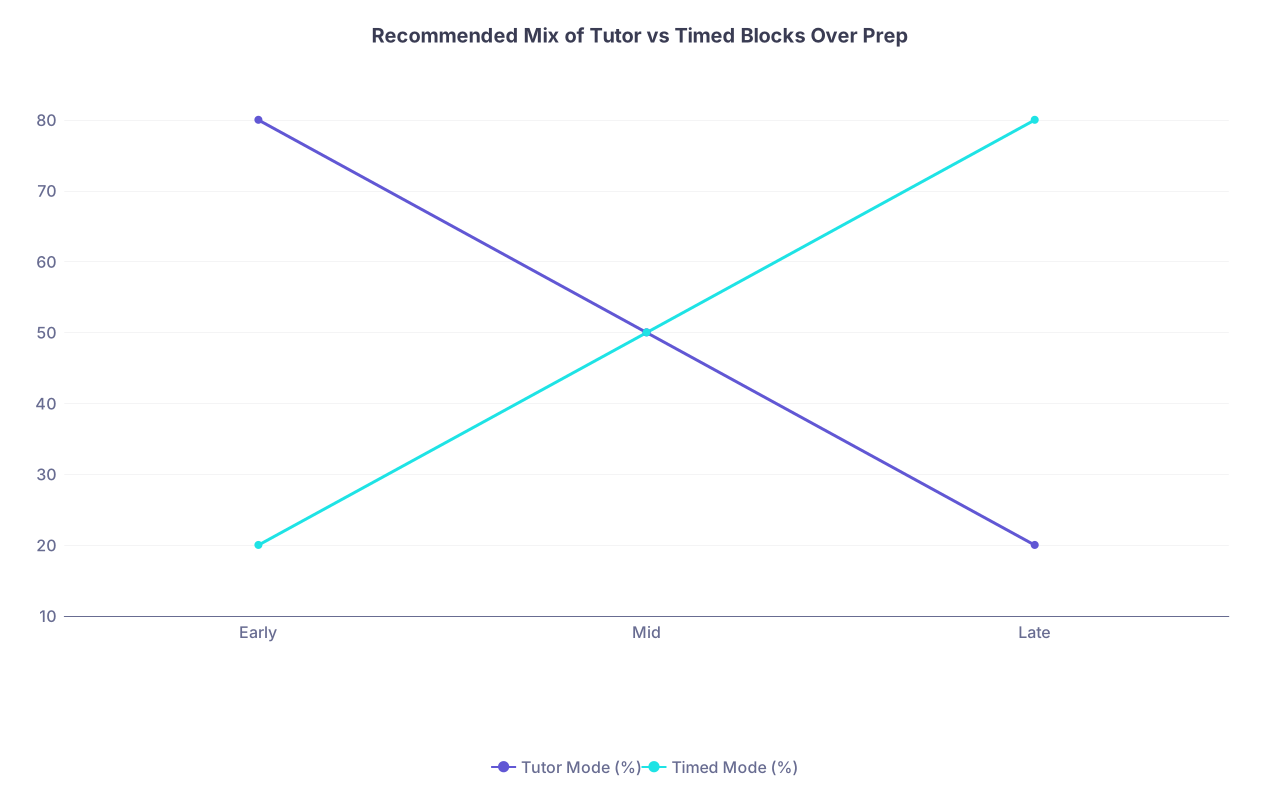
| Category | Tutor Mode (%) | Timed Mode (%) |
|---|---|---|
| Early | 80 | 20 |
| Mid | 50 | 50 |
| Late | 20 | 80 |
Phase 1: Early Prep (Foundation Building)
Who you are here:
- Still in preclinical or just starting dedicated
- Content gaps everywhere
- Reading stems feels slow and clunky
Best setup:
70–90% Tutor Mode, Often Untimed
- Single-system blocks (e.g., all cardio, all renal)
- 10–20 question sets
- Focus on: process of elimination, recognizing patterns, nailing fundamentals
10–30% Short Timed Sets
- 5–10 question mini-blocks, mixed subjects
- Full timer on, answers at the end
- Goal: get used to feeling the countdown, not to crush performance
The key rule here:
Use tutor mode to solve the puzzle, not to mindlessly click and read explanations like a bedtime story. You should be actively thinking:
- What was the concept behind this question?
- What in the stem told me the answer?
- What’s one way they might twist this same idea next time?
Phase 2: Middle Prep (You Know Stuff, Now Prove It)
Who you are:
- You’ve covered most content at least once
- UWorld/AMBOSS % is maybe 50–65%
- You’re 4–8 weeks from your exam date
Here’s where most people screw it up. They stay in tutor mode because it’s comfortable. Don’t.
Best setup:
- Roughly 50/50 Tutor vs Timed
Example weekly pattern:
- 1–2 days heavy learning:
- Tutor, untimed or light time pressure
- System-specific if needed (e.g., weak neuro)
- 3–4 days performance focus:
- Full 40-question timed blocks, mixed systems
- Exam simulation: no checking until the end
Critical:
Every timed block must be followed by serious review. That review can feel like tutor mode: slow, detailed, explanation-heavy. That’s where you pull the learning from the timed block.
Phase 3: Final 3–4 Weeks (Game Shape Only)
Who you are:
- Content mostly covered
- At least a few NBME/self-assessment scores under your belt
- You’re now tuning performance, not learning major new systems from scratch
Best setup:
70–90% Timed, Exam-Style Blocks
- 40-question blocks
- Mixed subject, mixed difficulty
- Timed, answers only at the end
- Simulate test-day conditions (breaks, silence, no phone)
10–30% Highly Targeted Tutor Mode Use tutor mode only for:
- Hammering chronic weak spots (e.g., immunodeficiencies, renal phys)
- Reviewing questions you marked
- Going deeper on missed concepts from timed blocks
If you reach your final week and have barely done any timed blocks, you’ve trained for the wrong exam. You’ll feel it on test day.
How To Decide Mode For a Given Block (Simple Decision Tree)
You can use a simple mental flowchart when you sit down to do questions.

| Step | Description |
|---|---|
| Step 1 | Start QBank Session |
| Step 2 | Learn New Content |
| Step 3 | Diagnose Weakness |
| Step 4 | Simulate Exam |
| Step 5 | Tutor Mode, Untimed or Loose Timer |
| Step 6 | Timed 20-40 Qs, Mixed Topics |
| Step 7 | Timed 40 Qs, Exam Conditions |
| Step 8 | Deep Review After Each Q |
| Step 9 | Review All Missed and Marked Qs |
| Step 10 | Full Post-Block Review + Notes |
| Step 11 | Goal Today? |
Quick rules of thumb:
- If your goal is learning → Tutor Mode.
- If your goal is measuring yourself → Timed Mode.
- If your goal is simulating the real thing → Timed, full-length blocks.
Don’t confuse those goals. That’s where people get lost.
Common Mistakes With Tutor vs Timed (And How To Fix Them)
Let’s address the stuff I see all the time.
Mistake 1: “I Do Everything in Tutor Mode Because I Learn Better That Way”
Translation: “I’m avoiding discomfort.”
Problem:
- You never learn pace
- Your percentages look artificially inflated
- Test day feels like a different exam
Fix:
- Starting mid-prep, force yourself:
For each tutor block, do a separate timed block the same day, even if shorter. - In the last month: at least one fully timed 40-question block daily, non-negotiable.
Mistake 2: “I Switched to Timed Mode Too Early and My Scores Tanked, Now I’m Panicking”
I’ve seen this: student jumps into all timed, mixed blocks with poor foundation. Score nose-dives, confidence crashes.
Fix:
- Go back to targeted tutor mode for your worst 2–3 systems for a few days
- Then reintroduce timed blocks + review
- Use tutor mode within your review sessions, not as your only mode
Mistake 3: “I Do Timed Mode but Check Answers Right Away”
That’s not really timed mode. That’s just tutor mode with an annoying clock.
If you’re going to simulate the exam:
- Do not reveal answers until the end of the block
- Sit with the uncertainty for 40 questions
That uncertainty is part of the mental game on test day.
A Concrete Weekly Example
Here’s what a mid-dedicated week might look like for a student aiming for strong performance.
| Day | Morning Block | Afternoon Block |
|---|---|---|
| Mon | 40Q Tutor, system-based | 40Q Timed, mixed |
| Tue | 40Q Timed, mixed | Content review + Anki |
| Wed | NBME / Self-assessment | Deep review (tutor-style) |
| Thu | 40Q Tutor, weak system | 40Q Timed, mixed |
| Fri | 40Q Timed, mixed | Review + targeted tutor set |
| Sat | 40Q Timed, mixed | Light review |
| Sun | Rest or light tutor mode | No full blocks |
You can flex this, but the pattern is clear:
- Timed blocks for performance
- Tutor blocks and review for learning
How This Interacts With NBME and Self-Assessments
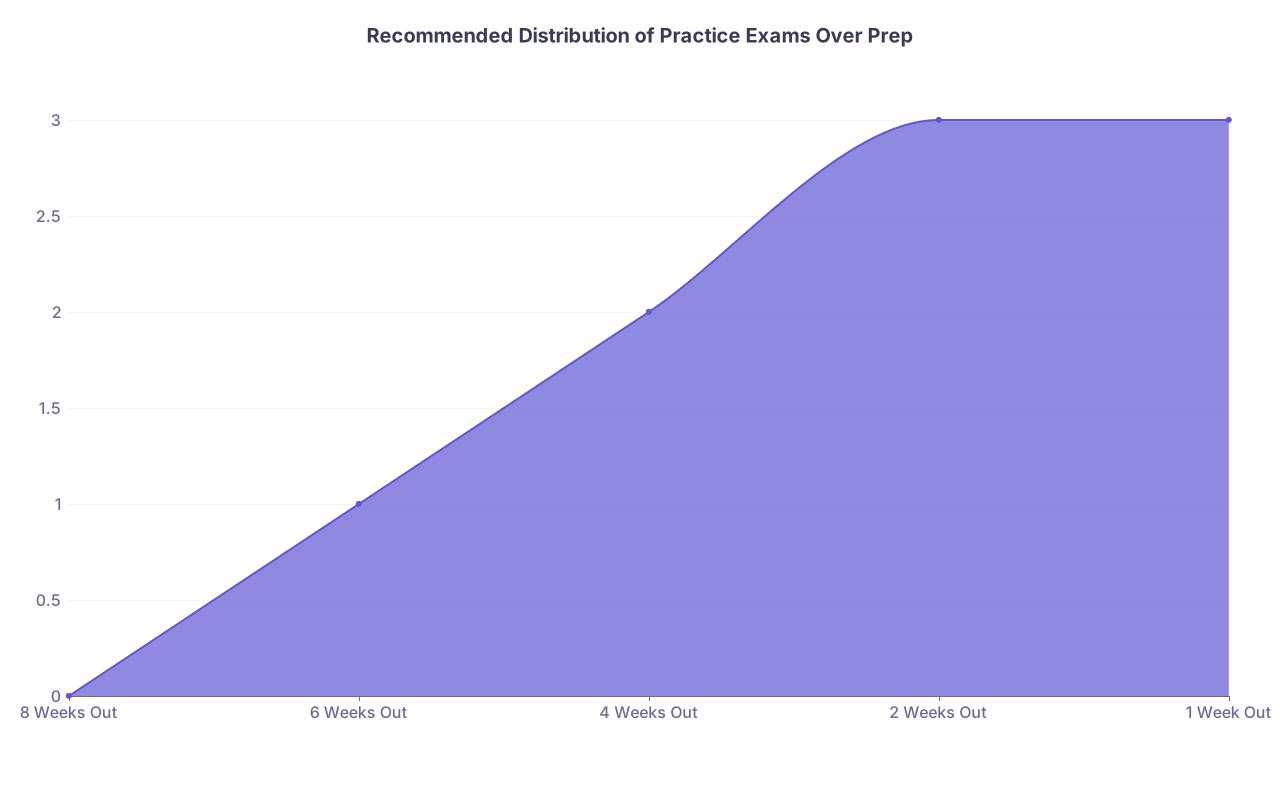
| Category | Value |
|---|---|
| 8 Weeks Out | 0 |
| 6 Weeks Out | 1 |
| 4 Weeks Out | 2 |
| 2 Weeks Out | 3 |
| 1 Week Out | 3 |
NBMEs and UWorld self-assessments are just big timed blocks with scoring. Treat them as:
- Benchmarks (timed mode)
- Massive question sources (review in “tutor style” afterward)
Rule of thumb:
- Take them fully timed
- Review each exam like a giant tutor-mode session: dissect every wrong and marked question, look up associated content, make targeted notes.
Visual: How Your Day Might Flow

| Step | Description |
|---|---|
| Step 1 | Start Day |
| Step 2 | Timed 40Q Block |
| Step 3 | Short Break |
| Step 4 | Deep Review of Block |
| Step 5 | Tutor 20Q Weak Topic |
| Step 6 | Content Review/Anki |
| Step 7 | End Day |
Morning: train performance.
Midday: learn from it.
Afternoon: shore up weak spots in tutor mode.
That’s a much better use of your question bank than just cranking through 80 tutor-mode questions and calling it a day.
FAQs
1. If I’m really slow, should I avoid timed mode until I’m faster?
No. You get faster by doing some timed work.
Compromise: start with short timed blocks (10–15 questions) and build up. Combine that with tutor-mode sessions where you explicitly practice reading stems efficiently and not overthinking.
2. Is it bad to do all of UWorld in tutor mode, then redo it timed?
Not “bad,” but inefficient. Repeated exposure to the exact same questions massively inflates your apparent performance. Better pattern:
- First pass: mixed tutor + timed, depending on phase
- Later in prep: use different Qbank or NBMEs for fresh timed practice, not just recycling UWorld.
3. Should I ever do tutor mode but still use the timer?
Yes. This is a solid hybrid:
- Turn the timer on
- Answer each question aiming for 60–90 seconds
- Still see answer/explanation right away
This trains pace awareness while keeping the immediate learning loop.
4. How many timed blocks per day in the last month?
For most full-time dedicated students:
- 1–2 full 40-question timed blocks per day, plus review
- On heavy exam-sim days, maybe 3 blocks Quality review beats sheer volume. If your review is lazy, you’re burning questions for nothing.
5. My tutor-mode % is 70%, but timed blocks are 55%. Which one should I trust?
Trust the timed performance. That’s closer to reality.
Use the gap as a signal: you understand the content when relaxed but crumble under time/pressure. Your job: increase the share of your study using timed blocks and exam-style practice, and review those thoroughly.
Key takeaways:
Use tutor mode to learn and refine your reasoning, and timed mode to test and harden your performance. Shift from mostly tutor → balanced → mostly timed as you get closer to test day. And never confuse comfort with effectiveness—your score will always reflect how you perform under the clock, not how smart you feel in tutor mode.