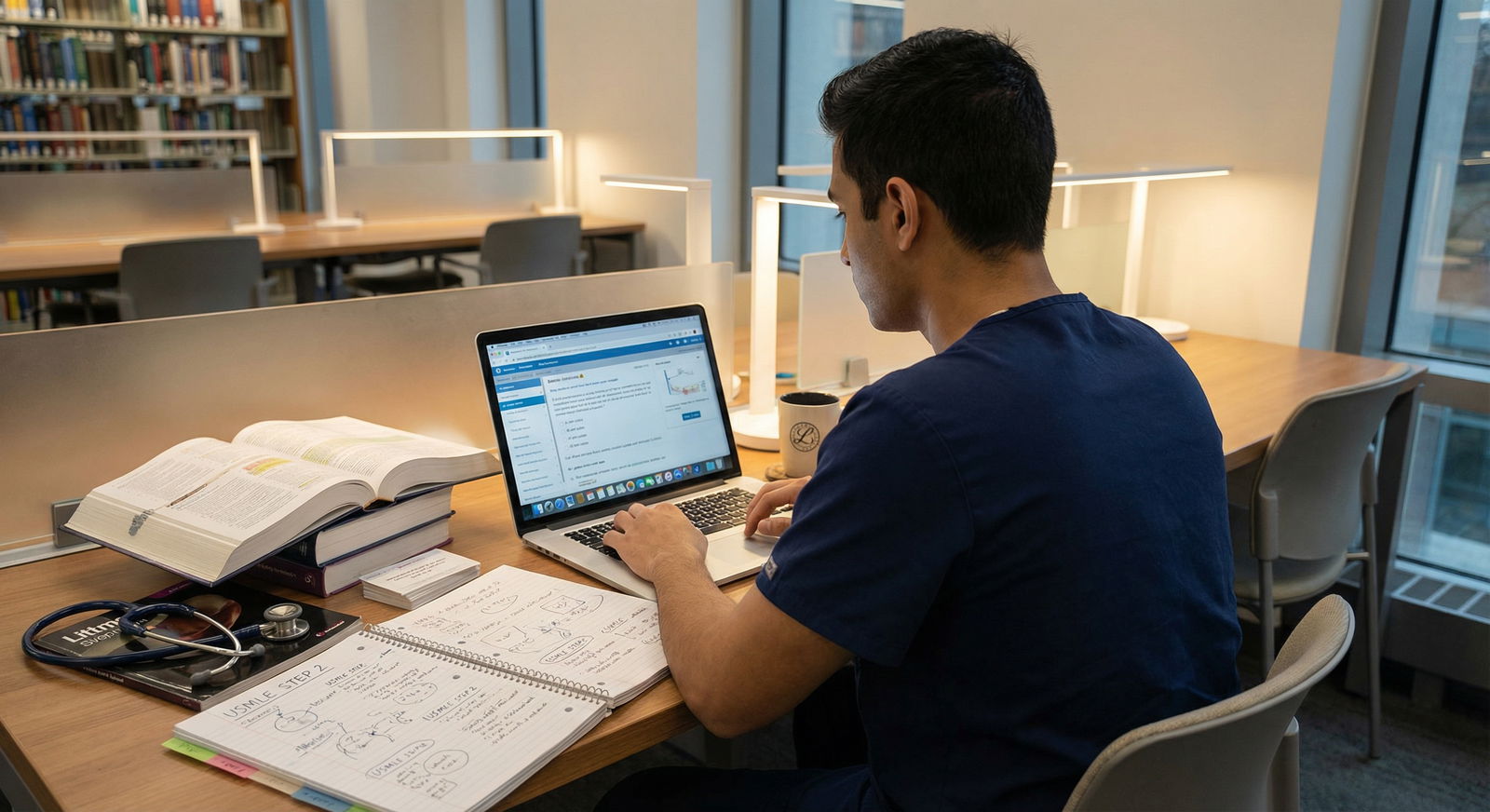
The Best Online Resources for Step 2 CK and CS Preparation
Preparing for USMLE Step 2 is one of the most pivotal phases of medical school. Step 2 Clinical Knowledge (CK) tests how well you can apply your medical knowledge in a clinical context, while the former Step 2 Clinical Skills (CS) historically assessed how you interact with patients, communicate, and perform focused exams. Although Step 2 CS as an exam has been discontinued, the underlying Clinical Skills it emphasized—history taking, physical exam, note-writing, and communication—remain essential for clinical rotations, OSCEs, and residency interviews.
In a world where Medical Exam Preparation is increasingly digital, using the right Online Study Resources can dramatically improve both your efficiency and your score. This guide walks you through the best online tools for building strong Clinical Knowledge and Clinical Skills, how to integrate them into a structured study plan, and how to adapt them to your learning style.
Step 2 CK Preparation: Core Online Resources for High Scores
Step 2 CK is now the main standardized metric for many residency programs, making smart resource selection essential. Below are the most widely respected platforms and how to use them strategically.
1. UWorld: The Gold Standard Question Bank for Step 2 CK
Overview
UWorld remains the cornerstone resource for USMLE Step 2 CK preparation. Its question bank is designed to match the exam’s difficulty, style, and emphasis on clinical reasoning. Almost every successful Step 2 taker considers UWorld an essential component of their prep.
Key Features
- Thousands of exam-style questions that simulate real testing conditions
- Detailed rationales explaining the correct and incorrect options with supporting images, tables, and charts
- Subject- and system-based filtering to create targeted question blocks
- Performance analytics tracking your progress over time and by discipline
- Timed and tutor modes for flexible practice
How to Use UWorld Effectively
- Start early in your clerkships: Instead of waiting until a dedicated study period, integrate UWorld questions into each rotation. For example, during your internal medicine clerkship, complete IM-related sets and thoroughly review explanations.
- Prioritize understanding over completion: The learning value is primarily in the explanations. Spend time dissecting why each option is right or wrong, and link it to real clinical scenarios you see on the wards.
- Create an error log or flashcards: For every question you get wrong—or nearly wrong—capture the key takeaway (e.g., “First-line treatment for acute COPD exacerbation,” “When to choose CT vs MRI in stroke evaluation”).
- Simulate the real exam: In the final 2–3 weeks before your test date, do timed, random, 40-question blocks to mimic exam conditions and build stamina.
Why It’s Essential
UWorld doesn’t just help you pass; it trains you to think like a resident. The emphasis on management decisions, diagnostic workups, and evidence-based care directly strengthens your Clinical Knowledge and your performance on the wards.
2. AMBOSS: Integrated Clinical Library and Question Bank
Overview
AMBOSS combines a robust Step 2 CK question bank with a deeply integrated clinical library. It’s especially useful during clinical rotations when you need quick, reliable answers at the point of care.
Key Features
- High-yield, focused explanations for each question linked directly to library articles
- “Attending tips” that highlight testable nuances and common pitfalls
- Highlighting and learning radar features to identify what you do and don’t know
- Rapid reference articles that function like a digital, searchable clinical handbook
- Coverage that spans both Step 1 and Step 2 material, supporting longitudinal learning
Strategic Uses
- During rotations: Use AMBOSS to look up differentials or management algorithms between patient encounters. For example, look up “pneumonia severity index” or “DKA management” and then reinforce with related question sets.
- Pre-dedicated review: Do subject-based blocks (e.g., OB/GYN, pediatrics) immediately after finishing those clerkships to consolidate learning.
- Side-by-side with UWorld: Many students use UWorld as their primary Qbank and AMBOSS as a secondary resource for questions plus rapid reference.
Why It’s Valuable
AMBOSS is especially efficient for learners who like to read short, structured summaries instead of long textbook chapters. It bridges the gap between exam prep and real-world clinical practice.
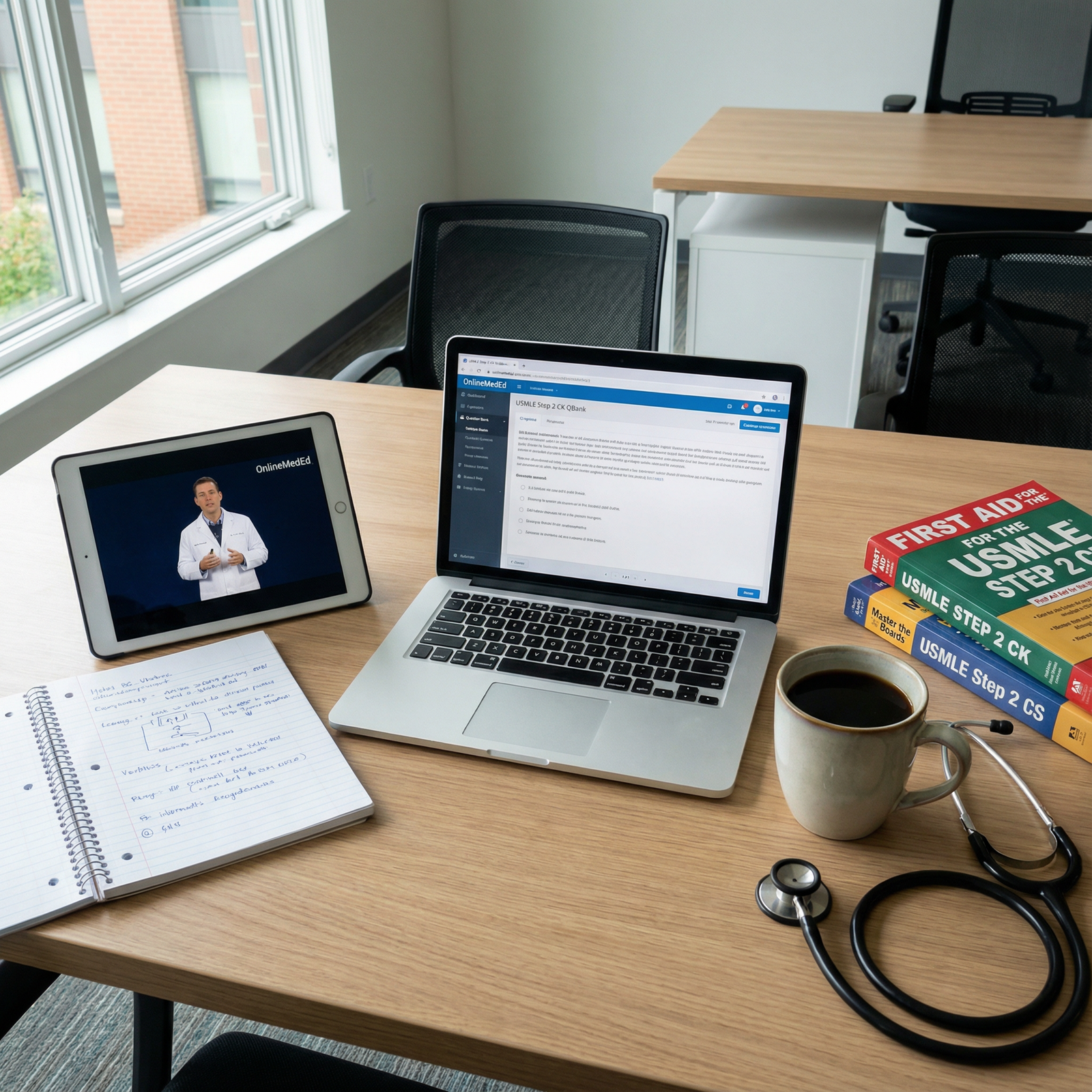
3. Online MedEd: Structured Video Curriculum for Clinical Knowledge
Overview
Online MedEd (OME) is built around high-yield video lectures that break down complex topics into digestible, clinically oriented frameworks. It’s particularly helpful early in clerkships and during a first pass at material.
Key Features
- Organized by clerkship and system (medicine, surgery, OB/GYN, pediatrics, psychiatry, etc.)
- Clear, algorithm-based approaches to diagnosis and management
- Accompanying PDF notes and whiteboard-style visuals
- Question sets and flashcards to reinforce learning
- Audio-friendly format that works well on commutes or while doing chores
How to Integrate OME into Your Study Plan
- Before each clerkship: Watch the core videos for that rotation to establish a mental framework. For example, before starting surgery, review videos on pre-op evaluation, acute abdomen, and trauma.
- Parallel to question banks: Watch videos on weak subjects identified through UWorld or NBME practice tests, then return to questions to see improvement.
- During dedicated Step 2 study: Use OME as a quick way to refresh entire subjects in 1–2 days per specialty.
Why It Works
OME is especially helpful for visual and auditory learners. It simplifies complex decision paths (e.g., chest pain workup, anemia evaluation) and gives you repeatable methods you can apply to both the exam and clinical care.
4. Kaplan Test Prep: Structured Courses and Supplemental Resources
Overview
Kaplan has long been a major player in USMLE prep, offering live and on-demand courses, textbooks, and question banks for Step 2 CK.
Key Features
- Live online or in-person classes with experienced faculty
- Recorded lectures with comprehensive coverage of Step 2 topics
- A dedicated Step 2 CK question bank and full-length practice exams
- Study calendars and structured schedules designed by educators
- Supplemental books and lecture notes for deeper reading
Who Benefits Most from Kaplan
- Students who prefer a classroom feel or external accountability
- International medical graduates (IMGs) or nontraditional students who want a structured, guided approach
- Learners needing a “big picture” sweep of all topics before going into more detailed Qbank work
Integrating Kaplan into Your Prep
- Use Kaplan lectures as an initial pass through material, then reinforce with UWorld and AMBOSS.
- Take Kaplan’s full-length practice tests early to identify baseline strengths and weaknesses, then repeat closer to your exam after focused remediation.
5. BoardVitals: A Solid Supplemental Question Bank
Overview
BoardVitals offers a USMLE Step 2 CK question bank that is frequently used as a secondary resource, especially by students who have fully completed UWorld and want additional practice.
Key Features
- Over 2,000 Step 2–style questions with detailed explanations
- Question difficulty filters and specialty-based organization
- Performance dashboards to identify areas of weakness
- Mobile-friendly interface for studying during short breaks
Best Ways to Use BoardVitals
- As a second Qbank: After completing most of UWorld, use BoardVitals to diversify question exposure and avoid memorizing answers.
- For targeted review: Focus on specialties or systems that your NBME practice exams show as weak (e.g., neurology, rheumatology, psychiatry).
- During lighter rotations: Keep your test-taking skills sharp with a few questions per day when your schedule is less intense.
Why Consider It
BoardVitals is generally more affordable than some competitors, making it attractive for students looking to supplement without significantly increasing costs.
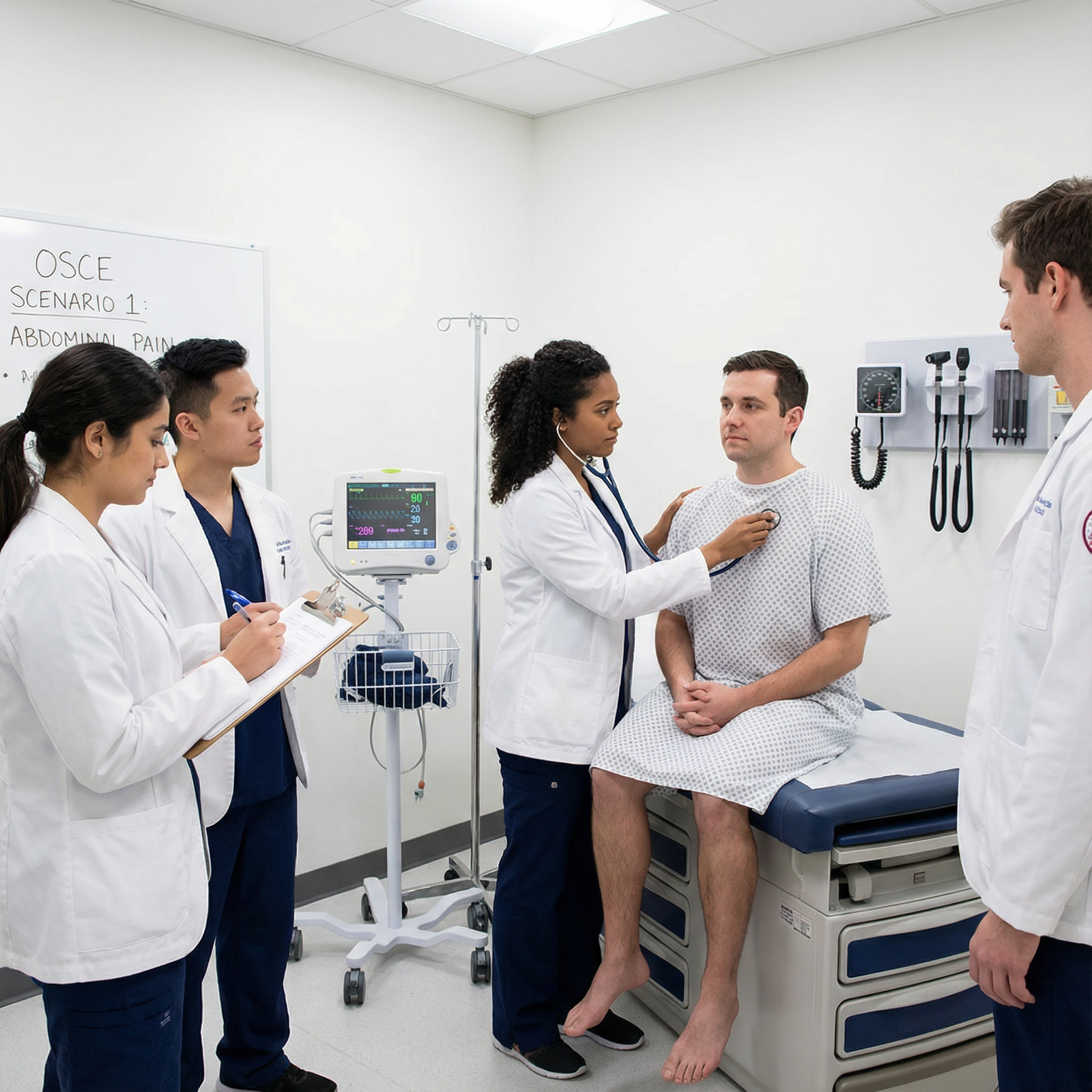
Building Clinical Skills for OSCEs and Former Step 2 CS Competencies
While the official Step 2 CS exam is no longer administered, residency programs and medical schools continue to evaluate your Clinical Skills through OSCEs, clerkship evaluations, and interviews. The same skills once tested on CS—communication, physical exam technique, clinical reasoning, and note-writing—are still critical.
The following resources and strategies will help you build those Clinical Skills using online tools and simulation-based learning.
1. UWorld and Case-Based Learning for Clinical Skills
Overview
While UWorld’s primary focus is Step 2 CK, its clinical vignettes and extended stems can serve as virtual cases to practice your reasoning and communication approach.
How to Use UWorld to Strengthen Clinical Skills
- Case simulation: For each question stem, imagine how you would open the encounter, what questions you would ask, and how you would explain your plan to the patient.
- Note-writing practice: Periodically pick a UWorld question and, before viewing the answer, write out:
- A focused history and physical summary
- A problem list and differential diagnosis
- A diagnostic and management plan
- Communication scripting: For common scenarios (e.g., delivering bad news, discussing nonadherence, counseling on lifestyle changes), draft sample phrases you would use with patients.
This habit helps you transform multiple-choice Clinical Knowledge into real-world Clinical Skills.
2. Official USMLE Materials and Exam Descriptions
Overview
Even though Step 2 CS was retired, the USMLE and NBME websites still provide high-yield content relevant to Clinical Skills and Step 2 CK, including:
- Practice materials and sample cases from the former CS exam
- Step 2 CK content outlines and test specifications
- Free practice forms and question sets
How to Leverage Official Resources
- Review content outlines: Ensure your study plan covers all listed systems and competencies, from cardiology to patient safety.
- Use official questions as benchmarks: NBME self-assessments mirror test style and can help you check whether your current prep resources are aligned with the actual exam.
3. Practicing with Standardized Patients and Simulation Platforms
Overview
Simulation remains one of the most powerful ways to improve Clinical Skills. While many schools provide structured OSCEs, there are also online and hybrid resources that mimic standardized patient encounters.
Key Avenues to Explore
- MedEdPORTAL (AAMC): Offers peer-reviewed simulation cases, communication exercises, and OSCE scenarios that can be adapted to small group practice.
- Your medical school’s simulation center: Often has recorded cases, standardized patient scripts, and faculty-developed checklists you can practice with.
- Telemedicine/virtual OSCEs: Increasingly common, these let you practice history taking and counseling via video calls.
Practical Tips
- Form small groups (2–4 students). Rotate roles: patient, physician, observer.
- Use standardized scenarios (e.g., chest pain, depression, abdominal pain) and a simple checklist: introduction, open-ended questions, focused ROS, relevant social and family history, counseling, and closure.
- Record your encounters when possible and review for fillers, clarity, empathy, and structure.
4. Online Videos and Clinical Skills Demonstration Tools
Overview
Online video platforms provide valuable examples of excellent—and not-so-excellent—clinical encounters. Watching and analyzing these can sharpen your own Clinical Skills.
High-Yield Sources
- YouTube channels from medical schools demonstrating OSCE encounters and physical exam techniques
- Sketchy or similar platforms that include clinical scenario walkthroughs (even if their main focus is on memorization and pathophysiology)
- University-produced clinical skills videos covering cardiovascular, pulmonary, abdominal, neurologic, and musculoskeletal exams
How to Use Videos Purposefully
- Watch with a checklist: Was the introduction clear? Did the clinician wash hands, ask permission, drape appropriately, and explain each step?
- Pause and predict: Before the clinician speaks, decide what you would say or ask next. Compare your approach with theirs.
- Practice along: For physical exam videos, perform maneuvers on a classmate or family member while watching.
5. Peer Study Groups, Online Forums, and Community Support
Overview
Learning Clinical Skills is inherently social. Study groups and online communities provide accountability, emotional support, and exposure to diverse problem-solving approaches.
Useful Platforms
- Reddit (r/Step2, r/medicalschool): Shared experiences, study schedules, and resource reviews
- Student Doctor Network (SDN): Threaded discussions on Step 2 strategies and clinical rotations
- Facebook and WhatsApp groups: Often organized by school or graduating class, useful for sharing files, OSCE cases, and practice schedules
- Discord study servers: Real-time text and voice channels for case discussions and rapid Q&A
Best Practices for Group-Based Clinical Skills Prep
- Schedule regular mock OSCE nights: Rotate cases and roles, debrief afterward.
- Share SOAP note templates and practice writing concise notes under time pressure.
- Use groups to hold each other accountable for question blocks, practice exams, and video reviews.
Putting It All Together: A Sample Integrated Study Strategy
To move from resource overload to an efficient plan, consider the following framework and adapt based on your timeline:
During Core Clerkships
- Primary Qbank: Start UWorld for each ongoing rotation (e.g., medicine questions during IM, OB questions during OB/GYN).
- Supplement: Use AMBOSS articles and questions for topics you encounter on the wards.
- Video learning: Watch Online MedEd videos at the start of each clerkship, then rewatch complex topics before the shelf exam.
- Clinical Skills:
- Practice introductions, focused histories, and counseling with classmates.
- Observe attendings and residents carefully for communication styles and physical exam technique.
- Use online videos to refine your own physical exam skills.
Dedicated Step 2 Study Period (4–8 weeks)
- Finish or nearly finish UWorld at least once. Consider a second pass of incorrects or marked questions.
- Add AMBOSS or BoardVitals as a second Qbank if your timing and energy allow.
- Do at least 2–3 NBME self-assessments to gauge readiness and refine weak topics.
- Use Online MedEd (or similar) for fast, structured content review of weaker specialties.
- Continue practicing Clinical Skills for upcoming OSCEs or sub-internships by:
- Writing practice notes from UWorld/AMBOSS cases
- Running mock patient encounters with peers
Final 1–2 Weeks Before Exam
- Focus on mixed, timed, random Qbank blocks.
- Review high-yield summaries (e.g., algorithms, emergency management steps, obstetric protocols).
- Sleep, exercise, and nutrition become just as important as additional study hours.
FAQs: Online Resources and Strategies for USMLE Step 2 CK and Clinical Skills
1. What is the difference between Step 2 CK and the former Step 2 CS, and why do Clinical Skills still matter?
- Step 2 CK assesses your Clinical Knowledge—how you diagnose, manage, and prioritize care using multiple-choice questions.
- Step 2 CS previously tested hands-on Clinical Skills like history taking, physical exams, communication, and note-writing via standardized patient encounters. While the CS exam is discontinued, those skills are still:
- Evaluated in OSCEs and clerkship assessments
- Critical for strong letters of recommendation
- Observed during residency interviews and as a new intern
Online Study Resources for Step 2 should therefore support both Clinical Knowledge (via Qbanks and videos) and Clinical Skills (via simulations, videos, and practice encounters).
2. How can I get the most out of UWorld for USMLE Step 2 CK?
- Treat every question as a learning module, not just a test. Carefully read the explanation, even when you get the question right.
- Keep an error log or flashcard deck of your mistakes and near-misses. Revisit it multiple times before your exam.
- Do timed, random blocks in the final weeks to simulate the exam environment and build endurance.
- Use performance analytics to target your weakest systems (e.g., endocrine, neurology) and focus additional reading or videos there.
3. Are there high-yield free or low-cost online resources for Step 2 preparation?
Yes. While premium resources are excellent, you can supplement with:
- USMLE and NBME official websites – free practice questions, content outlines, and exam info
- YouTube channels – many academic institutions share free clinical skills and OSCE videos
- MedEdPORTAL – free, peer-reviewed simulation scenarios and teaching modules
- Reddit, SDN, and other forums – shared Anki decks, study schedules, and advice (use with critical thinking)
You can build a strong foundation using free resources and then invest selectively in key tools like UWorld, AMBOSS, or Online MedEd as your budget allows.
4. How important is practicing with real or standardized patients for Clinical Skills?
It’s extremely valuable. Whether or not there is a specific high-stakes CS exam, real or simulated patient interaction helps you:
- Develop confidence in talking to patients and building rapport
- Practice focused history and physical exams efficiently
- Fine-tune counseling and explanation skills, which are vital for patient satisfaction and safety
- Receive feedback from peers, faculty, or standardized patients to identify blind spots
If your school has limited simulation resources, adapt online OSCE cases or MedEdPORTAL scenarios for peer practice via in-person or video calls.
5. Should I study alone or in groups for Step 2 CK and Clinical Skills?
A combination is usually best:
- Study alone for high-concentration tasks: Qbank blocks, reviewing explanations, and watching lectures.
- Study in groups for:
- Discussing difficult concepts and high-yield topics
- Running mock patient encounters and OSCE practice
- Peer teaching (explaining topics to others solidifies your own understanding)
- Accountability and emotional support
Aim for intentional, structured group sessions (with a clear agenda and time limit) rather than casual, unfocused gatherings.
By strategically combining question banks (UWorld, AMBOSS, BoardVitals), structured video curricula (Online MedEd, Kaplan), and Clinical Skills practice (simulation tools, OSCEs, peer practice), you can build a robust preparation plan for USMLE Step 2 CK and the real-world clinical skills that residency programs value. With consistent effort, deliberate practice, and the right mix of Online Study Resources, you’ll be well-positioned to excel on exam day and in your clinical training.