
The biggest silent killer on Step 2 CK is not some obscure vasculitis. It is misreading basic labs you should own cold.
You do not miss points because you have never heard of Wilson disease. You miss them because you panic when you see a pH of 7.28, an AST of 650, or an LDH of 1100 and cannot instantly translate numbers into mechanisms and management.
Let me break this down specifically: ABGs, LFTs, and hemolysis labs are exam goldmines. Once you recognize the patterns, these questions become automatic. If you keep getting them wrong, it is not because they are “tricky.” It is because you do not have a fast, systematic lens for reading the data.
We are going to fix that.
1. ABGs for Step 2 CK: Pattern Recognition, Not Math
You are not doing ICU consults on Step 2. You are pattern-matching pathophysiology. ABG questions are testing whether you can:
- Identify primary disorder (metabolic vs respiratory; acidosis vs alkalosis)
- Decide if compensation is appropriate
- Spot mixed disorders that change management (especially in sick ICU patients)
Forget long-winded “approach” write-ups. You need a 4-step mental script.
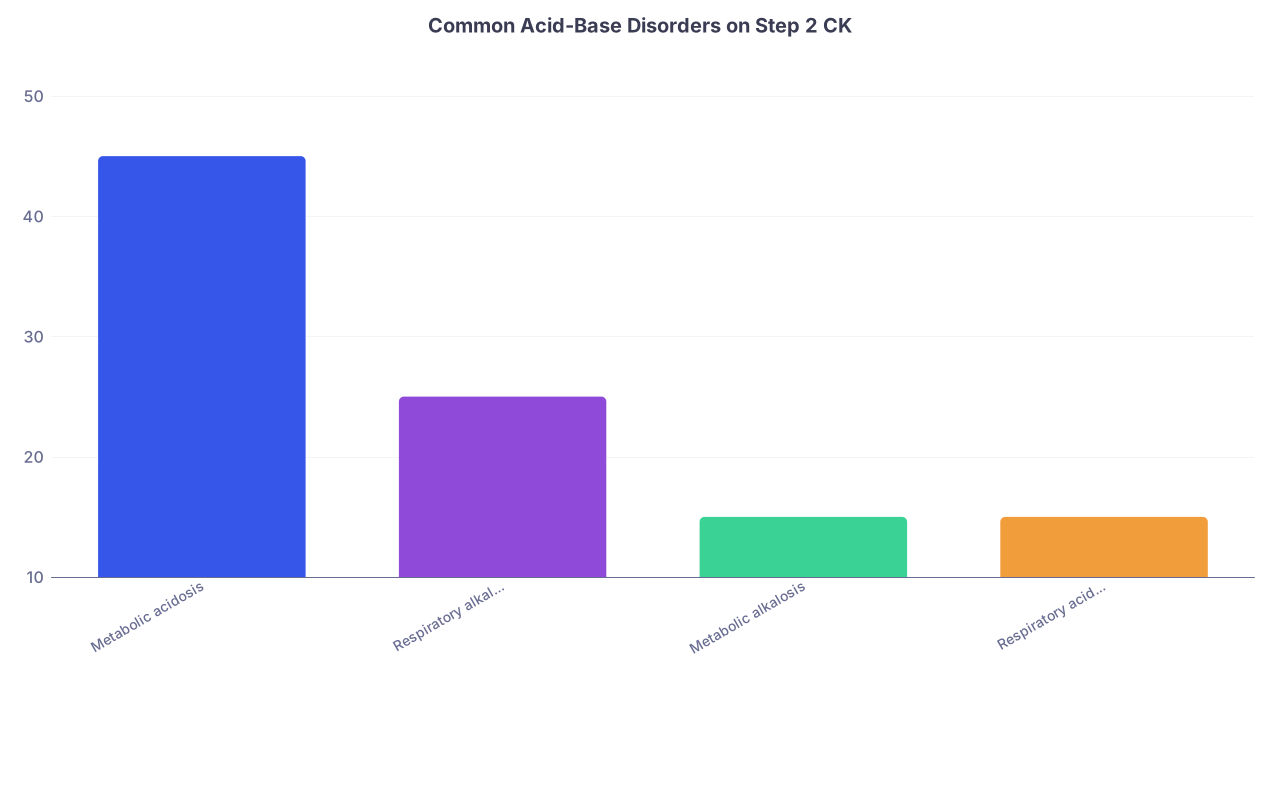
| Category | Value |
|---|---|
| Metabolic acidosis | 45 |
| Respiratory alkalosis | 25 |
| Metabolic alkalosis | 15 |
| Respiratory acidosis | 15 |
1.1 The 4-Step ABG Script
You see: pH, PaCO₂, HCO₃⁻ (sometimes Na⁺, Cl⁻ to calculate anion gap).
Run this in your head:
Look at pH → acidosis or alkalosis?
- pH < 7.35 → acidosis
- pH > 7.45 → alkalosis
Which value matches the pH direction?
- Metabolic component: HCO₃⁻
- Low HCO₃⁻ → metabolic acidosis
- High HCO₃⁻ → metabolic alkalosis
- Respiratory component: PaCO₂
- High PaCO₂ → respiratory acidosis
- Low PaCO₂ → respiratory alkalosis
The one that moves in the same direction as pH abnormality is the primary disorder.
- Metabolic component: HCO₃⁻
Check expected compensation.
- This is where Step 2 likes to nail you on mixed disorders.
- If compensation is “off,” there is a second primary disorder.
Then overlay clinical context (sepsis, COPD, DKA, pregnancy, salicylate overdose).
Step 2 is not asking “what is the acid–base?” only. It is usually:- What is the next best step in management?
- What is the most likely cause?
- What additional abnormality do you expect?
1.2 Quick Compensation Rules You Must Memorize
You do not need tables. You need a few numbers burned into your brain.
| Primary Disorder | Quick Compensation Rule |
|---|---|
| Metabolic acidosis | Winter's: PaCO₂ ≈ 1.5 × HCO₃⁻ + 8 ± 2 |
| Metabolic alkalosis | PaCO₂ ≈ 0.7 × (HCO₃⁻ − 24) + 40 ± 5 |
| Acute resp. acidosis | HCO₃⁻ ↑ ~1 mEq/L per 10 mmHg PaCO₂ above 40 |
| Chronic resp. acidosis | HCO₃⁻ ↑ ~3–4 per 10 mmHg PaCO₂ above 40 |
| Acute resp. alkalosis | HCO₃⁻ ↓ ~2 per 10 mmHg PaCO₂ below 40 |
| Chronic resp. alkalosis | HCO₃⁻ ↓ ~4–5 per 10 mmHg PaCO₂ below 40 |
You do not estimate these to the decimal. Roughly right is enough to spot a second disorder.
Metabolic Acidosis: Use Winter’s Formula
Example:
- pH 7.22
- PaCO₂ 24
- HCO₃⁻ 10
Step 1: pH low → acidosis
Step 2: HCO₃⁻ low → primary metabolic acidosis
Now Winter’s: PaCO₂ ≈ 1.5 × HCO₃⁻ + 8 ± 2
= 1.5 × 10 + 8 = 23 ± 2 → range ~21–25
Actual PaCO₂ = 24 → compensation appropriate → pure metabolic acidosis.
Now layer context: Kussmaul respirations, fruity breath, altered mental status → DKA.
Management? IV fluids + insulin + electrolyte correction.
Change the same ABG slightly:
- pH 7.10
- PaCO₂ 35
- HCO₃⁻ 10
Winter’s → expected PaCO₂ ~21–25, but actual is 35 → inadequate respiratory compensation → concomitant respiratory acidosis (e.g., fatigued asthma/COPD patient who then goes into DKA).
That mixed disorder changes management intensity. This is exactly the kind of nuance Step 2 rewards.
Anion Gap vs Non–Anion Gap
Metabolic acidosis? Immediately calculate anion gap.
AG = Na⁺ − (Cl⁻ + HCO₃⁻)
Normal ~ 8–12.
High-gap (MUDPILES GOLD MARK type) vs non-gap (diarrhea, RTA, saline infusion).
On exams, they rarely ask you to list the mnemonic. They give you:
- Ethylene glycol → high AG; Ca-oxalate crystals, flank pain
- Diarrhea + normal AG → direct HCO₃⁻ loss
- Type 1 RTA → non-gap, hypokalemia, kidney stones in a child
Tie the lab pattern to the vignette, not to a memorized list.
Delta–Delta for High Anion Gap
If AG is high, check if there is also a non-gap metabolic component:
ΔAG = (AG − 12)
ΔHCO₃⁻ = (24 − measured HCO₃⁻)
- If ΔAG > ΔHCO₃⁻ → concurrent metabolic alkalosis
- If ΔAG < ΔHCO₃⁻ → concurrent non-gap metabolic acidosis
Step 2 sometimes uses this in a more conceptual way rather than raw calculation. Typical scenario: alcoholic with vomiting and lactic acidosis from sepsis → elevated AG, but bicarbonate not as low as you would expect because vomiting is causing a metabolic alkalosis.
1.3 Respiratory Disorders: Acute vs Chronic
They love COPD, obesity hypoventilation, opiate overdose, and panic attacks.
Pattern:
- High PaCO₂ + low pH → respiratory acidosis
- Low PaCO₂ + high pH → respiratory alkalosis
Then ask: Is this acute or chronic?
Example:
- PaCO₂ 60 (20 above normal)
- HCO₃⁻ 26
Expected in acute respiratory acidosis: HCO₃⁻ ~ +2 per 20 mmHg → ~26. That fits acute. Think opiate overdose, sedative toxicity.
Same PaCO₂ of 60 with HCO₃⁻ 32 or 34 → chronic respiratory acidosis with renal compensation (COPD, obesity hypoventilation). That clinical picture will be stable, not crashing.
Respiratory alkalosis: classic Step 2 setups:
- Young woman, anxiety, tingling around mouth, carpopedal spasm → acute respiratory alkalosis from hyperventilation.
- Pregnant woman with mild chronic respiratory alkalosis and mild metabolic compensation.
- Early salicylate overdose → primary respiratory alkalosis; later, mixed with high anion gap metabolic acidosis.
You must recognize that a normal pH with both PaCO₂ low and HCO₃⁻ low = mixed disorder, not “normal.”
1.4 Step 2–Style ABG Cases
You will see ABGs wrapped into clinical questions. Example:
- 65-year-old with COPD exacerbation, on BiPAP, now more somnolent. ABG:
- pH 7.22, PaCO₂ 80, HCO₃⁻ 32.
Chronic baseline pathology plus acute hypoventilation → acute on chronic respiratory acidosis. Next step: intubation (not increasing BiPAP indefinitely while he is tiring out).
- pH 7.22, PaCO₂ 80, HCO₃⁻ 32.
Another:
- Septic patient, hypotensive, tachypneic. ABG: pH 7.48, PaCO₂ 28, HCO₃⁻ 21.
This looks mixed: primary respiratory alkalosis from hyperventilation plus mild metabolic acidosis from lactic acidosis. Nothing crazy to treat separately. Treat sepsis.
The point: the lab is not the question. The lab is the trigger telling you what kind of problem you are dealing with and how aggressively you need to respond.
2. LFTs on Step 2 CK: Stop Looking at AST First
The most common mistake I see on wards and on exams: students obsess over AST and ALT and ignore the pattern. Step 2 is not testing if you memorized “AST:ALT > 2 in alcoholic hepatitis.” It is testing if you can decide:
- Hepatocellular vs cholestatic vs mixed
- Acute vs chronic
- Mild vs massive (necrosis vs obstruction vs infiltrative)
Real exam reading: start with ALP and bilirubin, not AST.
2.1 The Three Broad LFT Patterns
Think: which bucket does this belong in?
- Hepatocellular → AST/ALT way up; ALP either normal or mildly elevated
- Cholestatic/obstructive → ALP and direct bilirubin up; AST/ALT mild–moderate elevation
- Isolated hyperbilirubinemia → bilirubin high, AST/ALT and ALP relatively normal
| Pattern Type | AST/ALT | ALP | Bilirubin |
|---|---|---|---|
| Hepatocellular (acute) | Very high (1000s) | Mild ↑ or nl | Variable |
| Cholestatic | Mild–mod ↑ | High | Direct ↑ prominent |
| Infiltrative | Mild ↑ | High | Mild ↑/normal |
| Isolated indirect | Normal | Normal | Indirect ↑ |
Once you assign the pattern, you overlay key vignettes:
- Young woman on OCPs with RUQ pain and very high AST/ALT → think hepatocellular (acute hepatitis, ischemic shock liver, DILI).
- 60-year-old pruritic, jaundiced, pale stools, dark urine, ALP sky-high, direct bili elevated → cholestatic (gallstone, malignancy, PSC, PBC).
- Mild elevation of ALP, normal bilirubin, vague fatigue, pruritus in middle-aged woman, positive antimitochondrial antibodies → PBC.
2.2 AST/ALT: Magnitude Matters
There are three AST/ALT patterns Step 2 leans on repeatedly:
AST/ALT in the thousands (e.g., 1500–5000)
Think acute, severe injury:- Ischemic hepatitis (“shock liver”) after hypotension, heart failure, massive GI bleed
- Acute viral hepatitis (HBV, HAV)
- Drug-induced (most classic: acetaminophen overdose)
Key clue: with shock liver, AST/ALT skyrocket but LDH is also very high and rises early. With acetaminophen, AST/ALT can be > 3000 with modest ALP, high INR, and metabolic acidosis.
AST/ALT in low hundreds with cholestatic features
Think obstructive or chronic diseases:- Choledocholithiasis
- Cholangiocarcinoma
- Primary sclerosing cholangitis
- Primary biliary cholangitis
- Pancreatic head tumor
The ALP and GGT will carry the diagnosis here more than AST/ALT.
AST:ALT ratio > 2
- Classic for alcoholic hepatitis.
- Usually AST and ALT in hundreds, not thousands.
- Also see elevated GGT, macrocytosis, and clinical features (fever, RUQ tenderness, jaundice, history of heavy alcohol intake).
One more trick: AST/ALT mildly elevated (< 100) and stable over long periods → think chronic hepatitis (HBV, HCV, NAFLD). Context decides which.
2.3 ALP, GGT, and Bilirubin: The Real Workhorses
Cholestatic pattern = Step 2’s favorite bile duct question.
High ALP? Ask: liver vs bone.
- High ALP + high GGT → hepatobiliary source.
- High ALP, normal GGT, normal bilirubin → bone disease, pregnancy, adolescence, or infiltrative process.
Direct (conjugated) hyperbilirubinemia with high ALP = obstruction or intrahepatic cholestasis. They will describe:
- Pale stools
- Dark urine
- Pruritus
Then they make you choose between:
- RUQ ultrasound (first-line for suspected extrahepatic obstruction)
- MRCP or ERCP (diagnostic vs therapeutic)
- Autoantibody testing (AMA, p-ANCA)
- Liver biopsy (rarely first-line; more confirmatory)
Indirect (unconjugated) hyperbilirubinemia with otherwise normal labs → hemolysis or impaired conjugation (Gilbert, Crigler–Najjar). Step 2 cares far more about Gilbert:
- Mild increase in indirect bili
- Exacerbated by stress, fasting, illness
- Completely normal LFTs and CBC
- No treatment needed
2.4 Step 2 Patterns You Should Recognize Instantly
Some you should almost reflex-answer:
Acetaminophen overdose
- Very high AST/ALT (often > 3000)
- Normal or mild ALP
- Elevated INR, metabolic acidosis
- History: suicide attempt, “many pain pills,” timing 4–24 hours
Step: measure acetaminophen level; treat with N-acetylcysteine.
Alcoholic hepatitis
- AST/ALT ratio > 2; absolute values often < 500
- May see elevated bilirubin, prolonged INR
- Fever, tender hepatomegaly, leukocytosis
- Management: stop alcohol, consider steroids if severe (e.g., Maddrey discriminant function ≥ 32, or MELD high).
Obstructive jaundice (e.g., choledocholithiasis, pancreatic cancer)
- Elevated ALP and GGT
- Predominantly conjugated bilirubin
- AST/ALT mild–moderate elevation
- Imaging: RUQ ultrasound first. If dilated ducts: ERCP.
PBC vs PSC (you should be able to separate them in 2 seconds)
| Feature | PBC | PSC |
|---|---|---|
| Demographic | Middle-aged women | Young/middle-aged men |
| Association | Autoimmune (Sjögren, etc.) | Ulcerative colitis |
| Antibody | Antimitochondrial (AMA) | p-ANCA (often) |
| Imaging | Normal ducts/biopsy | Beading/stricturing on MRCP |
| Cancer risk | HCC (cirrhosis related) | Cholangiocarcinoma, CRC |
Step 2 loves to give you pruritus, fatigue, high ALP, and then see if you know which test to order next.
3. Hemolysis Labs: Stop Confusing Hemolysis with Liver Disease
Hemolysis questions are an easy 2–3 points if you read labs as a package: CBC, retic count, LDH, haptoglobin, bilirubin, smear.
This is where students routinely mix up “jaundice from hemolysis” vs “jaundice from liver disease.” Step 2 writers exploit that confusion.
3.1 The Core Hemolysis Signature
Think of hemolysis lab interpretation as a 5-piece bundle:
- Anemia (low Hb/Hct)
- High LDH
- High indirect bilirubin
- Low haptoglobin
- High reticulocyte count (unless bone marrow is suppressed)
If you do not see at least three of those, be suspicious that the anemia is something else (blood loss, anemia of chronic disease, etc.).
Typical Step 2 hemolysis setup:
- Sudden drop in hemoglobin
- Scleral icterus
- Dark urine (from hemoglobinuria or high urobilinogen)
- No obvious bleeding
- Labs: high LDH, high indirect bilirubin, low haptoglobin, elevated retic count
They might then force you to choose the underlying mechanism: intravascular vs extravascular, immune vs mechanical, hereditary vs acquired.
3.2 Intravascular vs Extravascular: Why It Matters
On Step 2, recognizing intravascular hemolysis hints at things like:
- Prosthetic valves, microangiopathy (TTP/HUS, DIC), PNH
- G6PD deficiency in severe episodes
- Acute transfusion reactions
Extravascular hemolysis points more toward:
- Warm and cold autoimmune hemolytic anemia
- Hereditary spherocytosis
- Hemoglobinopathies (SCD, thalassemia major)
Key lab/clinical differences:
Intravascular:
- Markedly low haptoglobin
- Hemoglobinuria
- Schistocytes on smear (if microangiopathic)
Extravascular:
- Splenomegaly (spleen eating up RBCs)
- Spherocytes (HS, warm AIHA)
- Urobilinogen in urine; less free Hb in plasma
Step 2 does not always label it for you. You infer from smear and context.
3.3 Specific Hemolysis Scenarios for Step 2
Let’s go through the usual suspects.
3.3.1 Autoimmune Hemolytic Anemia (AIHA)
Two major flavors: warm and cold.
Warm AIHA (IgG, body temperature):
- Associated with SLE, CLL, certain drugs (penicillin, methyldopa).
- Extravascular hemolysis → spherocytes, splenomegaly.
- Positive direct Coombs test (IgG or C3).
- Treatment: steroids, splenectomy if refractory.
Cold AIHA (IgM, cold temps):
- Triggered by Mycoplasma, EBV, Waldenström macroglobulinemia.
- Complement mediated.
- Symptoms: acrocyanosis, hemoglobinuria in cold exposure.
- Positive Coombs for complement (C3).
- Treatment: keep warm, treat underlying, rituximab; steroids less effective.
On Step 2, they want you to connect Coombs-positive hemolysis to AIHA and narrow down warm vs cold by context.
3.3.2 G6PD Deficiency
Classic Step 2 trap: patient with sulfa drugs, antimalarials, fava beans. Labs show:
- Hemolytic anemia
- High LDH, indirect bilirubin
- Low haptoglobin
- Smear: bite cells, Heinz bodies (if they show a specific stain)
Important nuance: G6PD level can be falsely normal during acute hemolysis because older, deficient cells are destroyed and younger cells have more enzyme. Step 2 sometimes asks this as a subtle detail.
So if they already gave you the clinical story, the smear, and the hemolysis pattern, and the G6PD is “normal,” the correct answer may be: “Repeat G6PD testing several weeks after recovery.”
3.3.3 Microangiopathic Hemolytic Anemia (MAHA): TTP, HUS, DIC
Labs:
- Hemolysis pattern: high LDH, low haptoglobin
- Schistocytes on smear
- Thrombocytopenia
- Possibly elevated creatinine
Differentiate by context:
TTP: pentad (MAHA, thrombocytopenia, neuro findings, renal involvement, fever), but you will not always see all 5. Often: confusion + low platelets + hemolysis.
Treatment: plasma exchange. Do not wait for ADAMTS13 level to start.HUS: often post–E. coli O157:H7 diarrhea in children. Mostly renal + hemolysis + thrombocytopenia.
DIC: bleeding, prolonged PT/PTT, low fibrinogen, high D-dimer, schistocytes. Context: sepsis, trauma, obstetric catastrophe, malignancy.
Step 2 sees if you notice the combination of hemolysis markers with low platelets and abnormal coagulation studies.
3.3.4 Hereditary Spherocytosis
You see:
- Northern European patient
- Family history of splenectomy or anemia
- Splenomegaly, jaundice, pigmented gallstones
- Hemolysis lab pattern
- Smear: spherocytes
Next test: osmotic fragility test or eosin-5-maleimide binding test.
Treatment: splenectomy in moderate–severe cases; folate supplementation.
Key pitfall: spherocytes also appear in warm AIHA. Direct Coombs test distinguishes them.
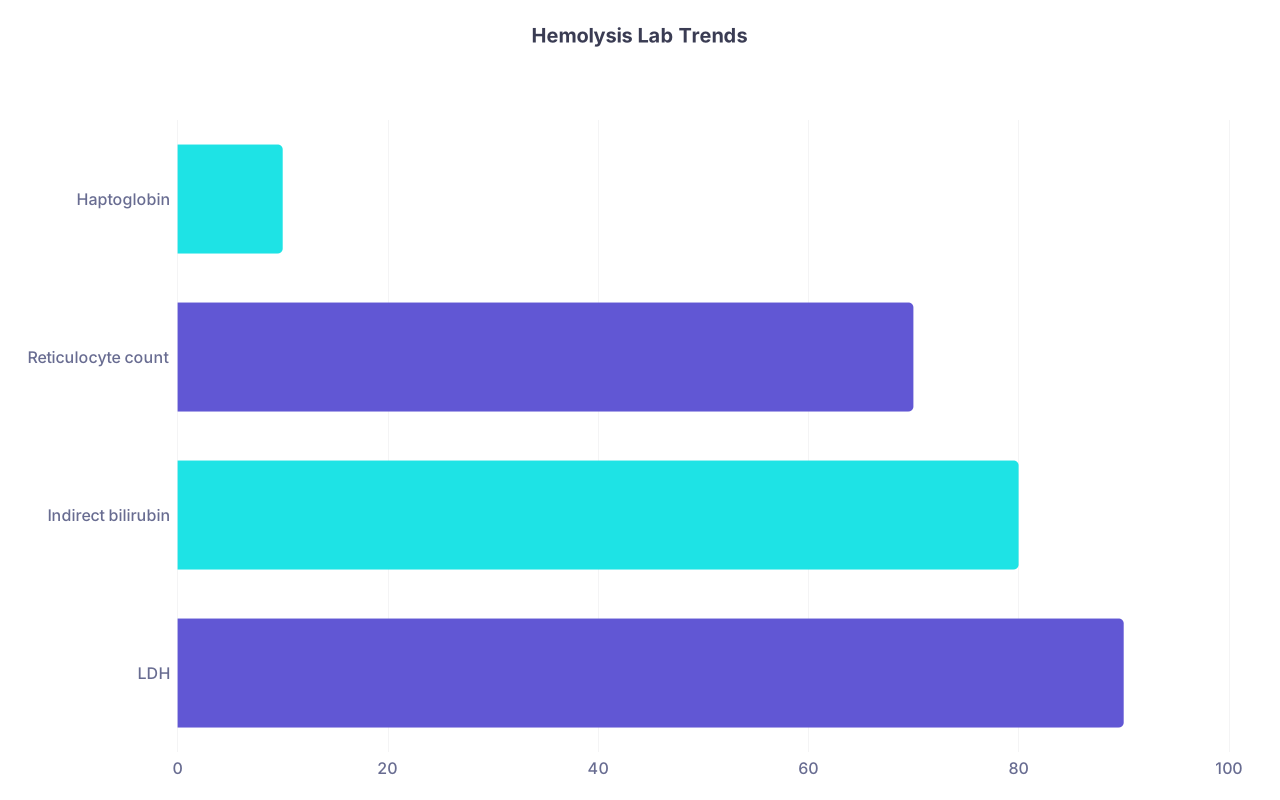
| Category | Value |
|---|---|
| LDH | 90 |
| Indirect bilirubin | 80 |
| Reticulocyte count | 70 |
| Haptoglobin | 10 |
3.4 Differentiating Hemolysis Jaundice from Hepatic Jaundice
On Step 2, this is one of the silent killers.
Hemolysis pattern:
- Elevated unconjugated (indirect) bilirubin
- Normal or mild elevation in AST/ALT and ALP
- Clear hemolysis markers (LDH↑, haptoglobin↓, retics↑)
Hepatic/cholestatic:
- Conjugated (direct) bilirubin
- AST/ALT and/or ALP significantly elevated
- No strong hemolysis pattern
They will absolutely test a scenario like:
- 30-year-old with jaundice, dark urine, anemia, and splenomegaly.
- Labs: AST/ALT mildly elevated, ALP normal, indirect bilirubin high, LDH high, haptoglobin low, retics high.
The wrong answer: “order RUQ ultrasound for biliary obstruction.”
The right answer: evaluate for hemolytic anemia (Coombs test, smear).
4. How Step 2 CK Actually Uses These Lab Panels
You are not answering “what is the ABG?” in a vacuum. The exam uses these lab sets to gate you into management decisions.
Let me show you how the question framing usually looks.
4.1 ABG → Management Pivot
Example scenario:
- 54-year-old man with septic shock, on norepinephrine, hypotensive. ABG:
- pH 7.12
- PaCO₂ 30
- HCO₃⁻ 9
- Lactate 6.0
Your identification: high anion gap metabolic acidosis with appropriate respiratory compensation (PaCO₂ low). Cause → lactic acidosis from shock.
What do they ask?
- “Next best step in management” → aggressive fluid resuscitation and source control, not sodium bicarbonate infusion as first-line.
- If they ask about ventilation strategy, they may want you to avoid over-correcting PaCO₂ in a chronic CO₂ retainer.
They embed the ABG to tempt you with bicarb in severe acidosis. Step 2 expects you to know: you fix the underlying shock first.
4.2 LFT Pattern → Imaging vs Serology vs Biopsy
They love decisions like:
- High ALP + direct hyperbilirubinemia + dilated ducts on ultrasound → ERCP for stone extraction, not biopsy.
- High ALP + pruritus + middle-aged woman, but normal ducts on ultrasound → order antimitochondrial antibodies (PBC workup), not ERCP.
- AST/ALT in the thousands after hypotension → ischemic hepatitis; treat underlying hemodynamics, not antivirals.
The exam is not about “what disease is this?” alone. It is “what is the next best diagnostic or therapeutic step,” keyed off the pattern you recognized.
4.3 Hemolysis Panel → Transfusion, Immunosuppression, or Plasma Exchange
Example:
- 35-year-old woman with fatigue, dark urine, confusion. Labs:
- Hb 7 g/dL
- Platelets 20,000
- Creatinine 2.5
- Schistocytes on smear
- LDH high, haptoglobin low
They might not even say “TTP.” But if you see MAHA + thrombocytopenia + neuro/renal changes, the next step is urgent plasma exchange, not “wait for ADAMTS13” or “platelet transfusion.”
Same with warm AIHA: if they give Coombs-positive hemolytic anemia with spherocytes, healthy bone marrow, and no microangiopathy, first-line is high-dose steroids, not splenectomy or IVIG unless refractory.
5. How to Drill This for Step 2 (Without Wasting Time)
You do not master this by rereading First Aid tables. You master it by forcing yourself to read labs the same way every time.
Here is a simple, ruthless practice structure:
When your Qbank question shows an ABG, stop and verbally run your script:
- pH direction
- Primary process
- Compensation
- Mixed disorder yes/no
When you see LFTs, ask first:
- Hepatocellular vs cholestatic vs isolated bili?
- Acute vs chronic based on magnitude?
When you see anemia with jaundice, immediately check for the hemolysis bundle:
- LDH, indirect bili, haptoglobin, retic count, smear.
If your test is 4–6 weeks away, you should be able to glance at these labs and “feel” the diagnosis in under 10 seconds.
To make this real, spend one evening building your own one-page cheat sheet:
- ABG compensation rules (just the formulas above).
- LFT patterns with 2–3 classic diseases under each.
- Hemolysis labs with 3–4 key etiologies next to each pattern (AIHA, G6PD, TTP/HUS, HS, DIC).
Tape it to the wall above your desk. Review it daily for a week. I have watched MS3s turn a chronic weak spot into a guaranteed strength in less than 7 days by doing exactly that.
With ABGs, LFTs, and hemolysis labs finally demystified, you are past the “I hope I recognize this pattern” stage and into the “I know exactly what this means” stage. The next layer — and the one that really separates high 240s from 260+ — is integrating these labs into multi-system vignettes: liver disease in pregnancy, sepsis with ARDS and DIC, hemolysis in oncology patients on chemo. That is where your pattern recognition gets stress-tested. But that is the next phase in your Step 2 prep, and we will tackle that another day.