Building Confidence for USMLE Step 2: A Comprehensive Guide to Exam Preparation and Mindset
The path to becoming a physician includes several high-stakes milestones, and the United States Medical Licensing Examination (USMLE) Step 2 is one of the most consequential. Step 2—especially Step 2 CK (Clinical Knowledge)—has grown even more important in residency selection since Step 1 transitioned to Pass/Fail. For many programs, your Step 2 score is now a key objective metric in your application.
But beyond scores and percentiles, Step 2 is a test of clinical reasoning, stamina, and psychological resilience. Building genuine confidence for this exam is not about blind optimism; it’s about structured preparation, realistic self-assessment, and a sustainable mindset.
This guide expands on practical, evidence-based strategies to help you strengthen both your knowledge and your mental game, so you can walk into your Step 2 exam feeling prepared, focused, and in control.
Understanding Why USMLE Step 2 Matters for Your Career
Before you design your study strategy, it helps to be very clear on the role Step 2 plays in your trajectory as a physician. That context shapes your goals, timelines, and motivation.
Step 2 CK: Clinical Knowledge and Residency Applications
Currently, Step 2 CK is the primary standardized exam score many residency programs use to:
- Compare applicants from different schools and curricula
- Screen applicants for interview invites (many programs use score cutoffs)
- Assess clinical readiness in the context of your clerkship grades and letters
A strong Step 2 CK score can:
- Compensate, to some extent, for a lower Step 1 (even if Pass only) or weaker preclinical grades
- Strengthen your application for competitive specialties and programs
- Demonstrate upward academic trajectory, which programs value highly
Clinical Competence and Medical Licensing
USMLE Step 2 CK is also designed to evaluate your ability to:
- Apply foundational science in clinical scenarios
- Prioritize diagnostics and management based on patient safety
- Recognize emergencies and the “next best step”
- Practice evidence-based medicine in realistic time constraints
Passing Step 2 is typically required for:
- Advancing to residency (most programs require a passing Step 2 CK before starting)
- Medical licensing in the U.S., in combination with other USMLE steps and requirements
Understanding these stakes doesn’t have to increase anxiety. Instead, use this knowledge to focus your efforts and to remind yourself why disciplined preparation and smart study strategies are worth the investment.
Building a Strategic Step 2 Study Plan that Supports Confidence
Confidence for USMLE Step 2 doesn’t appear suddenly in the final week. It grows from a realistic, structured, and flexible study plan that you deliberately follow over weeks to months.
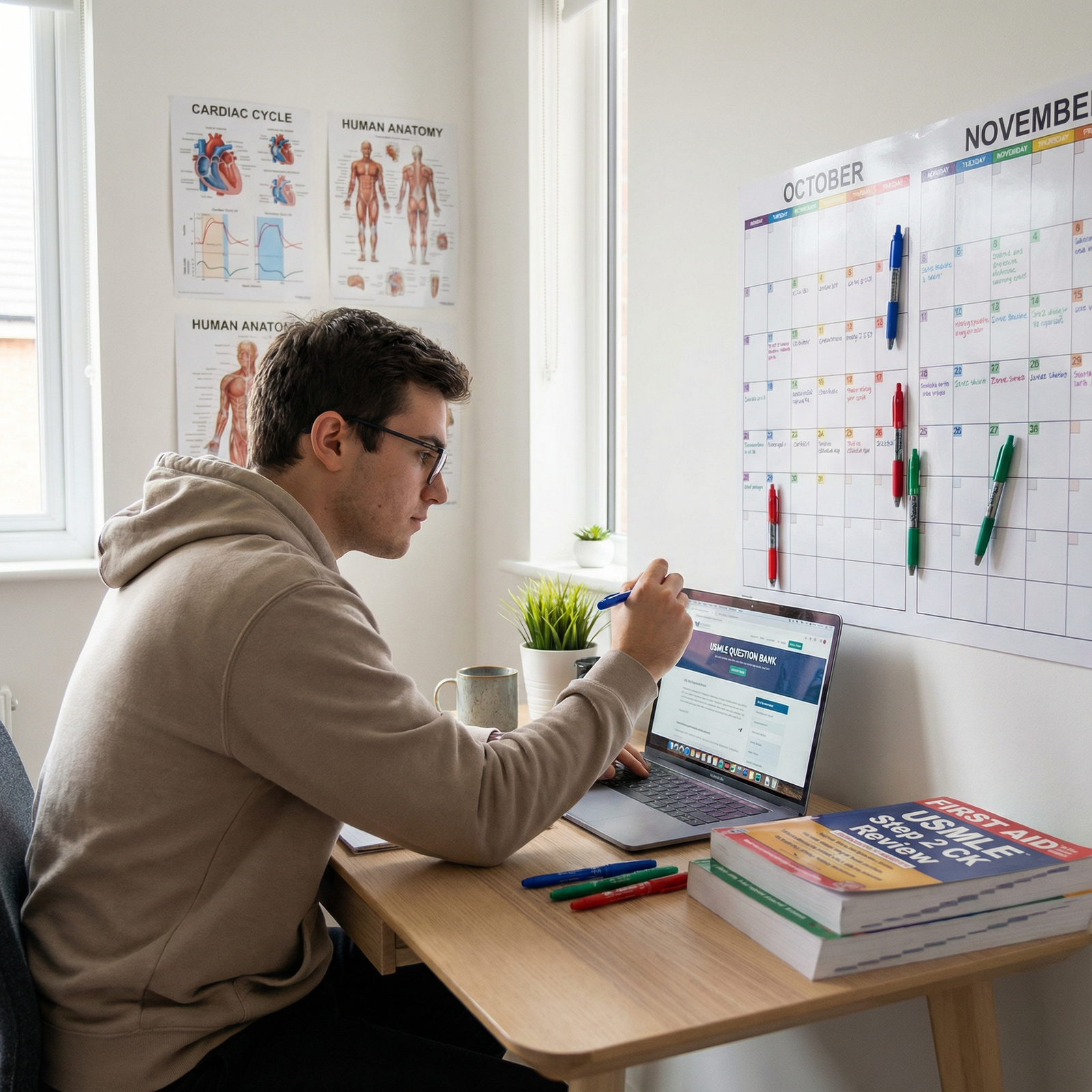
Step 1: Define Your Timeline and Target
Start by working backward from your ideal exam date.
Assess your schedule
- Are you studying during a lighter rotation, on vacation, or in a dedicated study period?
- How many hours per day can you realistically commit without burning out?
Set clear goals
- A realistic score target (e.g., based on specialty competitiveness)
- A content coverage goal (e.g., finishing UWorld once plus incorrects, all NBMEs, and at least one full pass of a review book)
Having a well-defined time frame (e.g., “8 weeks of focused Step 2 prep”) transforms a vague, overwhelming task into a concrete project.
Step 2: Assess Strengths, Weaknesses, and Baseline
Use early data to guide your plan:
- Take a baseline NBME or UWorld self-assessment near the start of your dedicated period.
- Review your clerkship shelf exam performances and note:
- Historically weaker subjects (e.g., OB/GYN, Pediatrics)
- Topics you consistently struggle with (e.g., acid-base, EKGs)
This assessment helps you:
- Allocate more time and question blocks to weaker areas
- Avoid over-studying topics you already know well
- Set realistic short-term goals (e.g., “Increase NBME scores by 10–15 points in 4 weeks”)
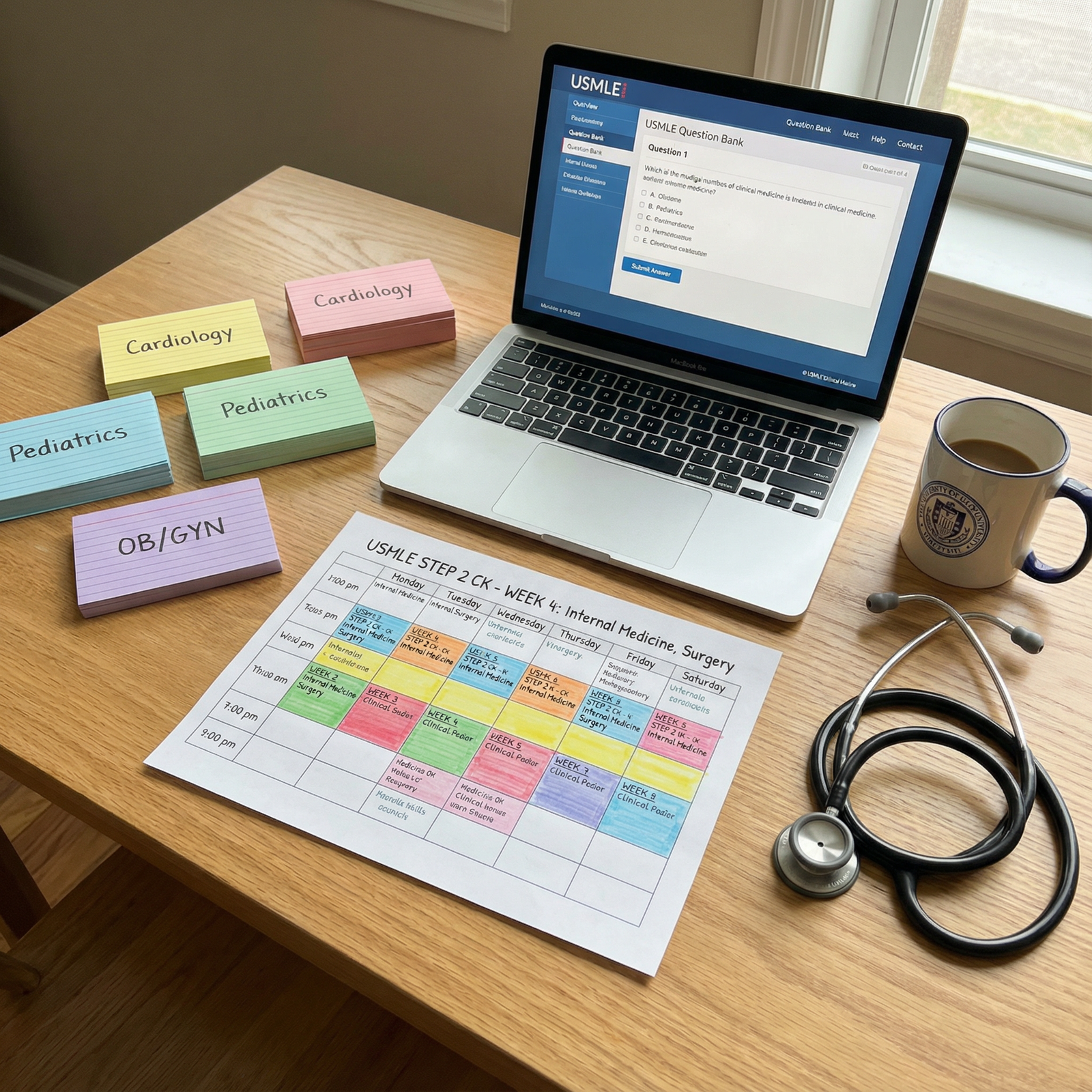
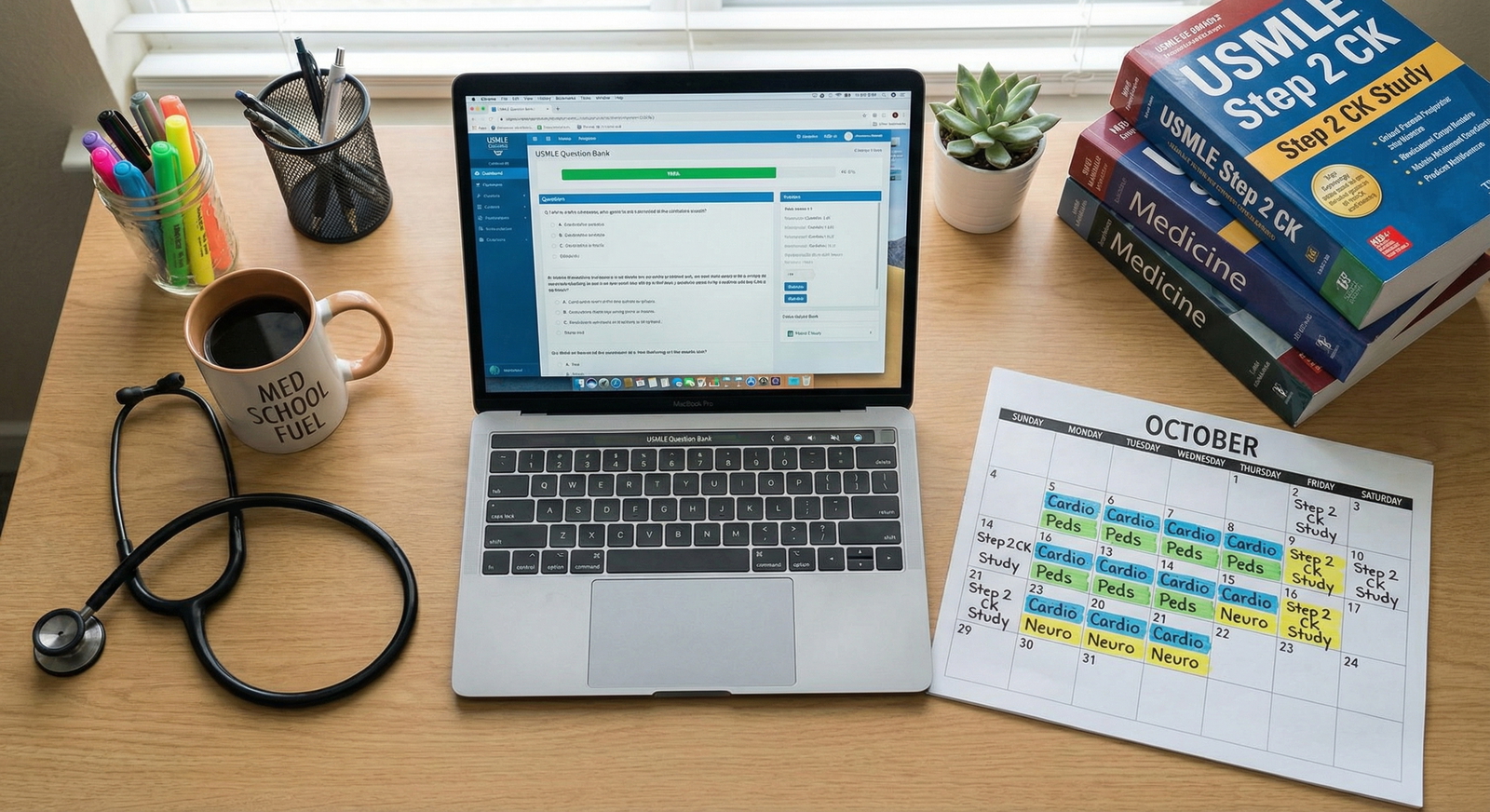
Step 3: Construct a Daily and Weekly Schedule
A structured schedule is one of the strongest confidence-builders because it replaces uncertainty with a clear plan.
A typical dedicated day might include:
- Question blocks: 1–3 timed blocks of 40 questions each (UWorld or similar)
- Review and annotation: 2–3 hours reviewing explanations, taking notes, or tagging cards
- Content review: 1–3 hours using a concise resource (review book or videos)
- Spaced repetition: 30–60 minutes of Anki or flashcards
- Short breaks and physical activity: 10–15 minutes every 60–90 minutes of studying
- Wind-down routine: Time in the evening that is non-medical (to protect your mental health)
Weekly, you might:
- Aim for 200–350 questions depending on your timeline
- Dedicate extra review time to one or two weaker subjects
- Insert one longer practice exam day (NBME or self-assessment) every 1–2 weeks
As you progress, periodically adjust your plan based on practice scores and how you’re feeling. Flexibility is key—rigid plans that ignore fatigue or life demands often backfire.

Choosing High-Yield Study Resources for USMLE Step 2 CK
Not all resources are created equal. Using too many materials can dilute your focus and undermine your confidence. A lean, high-yield resource stack works best.
Core Question Banks and Practice Exams
1. UWorld Step 2 CK
- Widely considered the gold standard for Step 2 prep
- High-yield, board-style questions that mirror exam format and complexity
- Detailed explanations that double as teaching tool and content review
- Strategy:
- Do questions timed and in random mode once you’re comfortable with the interface
- Treat each question as a learning opportunity, not just a score
- Flag or annotate questions you want to revisit
- Consider completing at least one full pass, and if time allows, redoing incorrects
2. NBME Practice Exams (Clinical Mastery Series and Comprehensive)
- Official practice exams that closely match style and difficulty of Step 2 CK
- Provide a predictive score estimate and detailed performance by content domain
- Strategy:
- Take them under real test conditions (timed, minimal interruptions)
- Schedule at least 2–4 NBMEs throughout your prep
- Use performance reports to target your weakest systems/topics during the following week
3. UWorld Self-Assessments (UWSSAs)
- Additional predictive assessments with detailed explanations
- Helpful for tracking progress near the middle and end of your prep
Targeted Content Review: Books and Videos
High-Yield Review Books
- Examples: “First Aid for the USMLE Step 2 CK,” “Step-Up to Medicine,” “Master the Boards”
- Best used as:
- A framework to organize information you’re learning from questions
- A rapid review tool in the last 2–3 weeks
Online Video Resources
- SketchyMedical (for microbiology and pharmacology reinforcement)
- OnlineMedEd or Boards & Beyond (for integrated clinical reasoning)
- Osmosis (for concept reinforcement and visual learning)
Integrate videos strategically:
- Short targeted videos to clarify high-yield but confusing topics
- Use at the beginning of a block (e.g., “Cardiology week”) to build a foundation
Avoid Resource Overload
Confidence erodes when you feel like you’re “behind” on 6–8 different resources. Instead:
- Choose 1 primary Qbank + 1–2 practice exam sources + 1 main review text
- Add videos or flashcards only as needed for weak areas
- Remember: Depth of understanding from a few strong tools beats superficial coverage of many
Using Active Recall and Deliberate Practice to Deepen Knowledge
Knowing that you’ve learned material in a way that will hold under stress is a major source of confidence. Passive reading rarely achieves this. Instead, lean into evidence-based learning strategies.
Active Recall: Forcing Your Brain to Retrieve Information
Active recall means intentionally pulling information from memory rather than just re-reading.
Practical methods:
Spaced repetition flashcards (e.g., Anki)
- Ideal for high-yield facts: diagnostic criteria, risk factors, drug side effects, algorithms
- Commit to a daily review habit, even on busy days
Practice questions as learning tools
- Try to formulate the answer before looking at choices
- After each question, explain to yourself:
- Why the correct option is right
- Why each incorrect choice is wrong
Self-quiz after reading or video
- Close the resource and list everything you remember
- Compare to the source and fill in gaps
This repeated retrieval cements information into long-term memory, making it more accessible under exam pressure.
Deliberate Practice: Focused Improvement on Weak Spots
Deliberate practice is structured, goal-directed practice that targets specific weaknesses.
For USMLE Step 2:
- Use NBME or UWorld performance breakdowns to pinpoint:
- “Cardiovascular system,” “Endocrine,” “OB/GYN,” etc.
- Skill domains like “Diagnosis,” “Next best step in management,” “Prognosis”
Then:
- Schedule system- or topic-focused blocks (e.g., 40 OB/GYN questions + review + 1–2 hours OB/GYN content)
- Keep a “Weak Topics” list (e.g., hyponatremia algorithms, valvular heart diseases, pediatric rashes) and revisit each multiple times
- Teach the topic aloud to a classmate, friend, or even an empty room—explaining concepts forces deeper understanding
Over time, you’ll notice that formerly weak topics start feeling manageable, which directly boosts your confidence.
Simulating the Step 2 Exam: Building Stamina and Reducing Anxiety
USMLE Step 2 CK is a long, cognitively demanding exam—often 8+ hours with multiple blocks. Confidence on test day depends not only on knowledge, but also on familiarity with the process.
Full-Length Practice Exams Under Realistic Conditions
At least 1–2 times before your exam:
- Take a full-length practice exam (NBME/UWSSA) in:
- A quiet environment
- With minimal phone or internet distractions
- Following the actual USMLE break schedule as closely as possible
This helps you:
- Test and refine pacing strategies (e.g., 1 minute per question rule)
- Practice nutrition and hydration planning (when to eat, what to bring)
- Notice when your attention typically dips (often mid-day) so you can plan micro-rest strategies
Time Management Skills
Effective pacing reduces last-minute rushing and panic:
- Aim to finish each block with 5–10 minutes to spare for review
- If stuck on a question:
- Eliminate obvious wrong answers
- Make your best choice
- Flag it and move on—you can revisit if time allows
Train this skill during every question block so it becomes automatic.
Recreating the Testing Environment
In the weeks before your exam:
- Study or take practice blocks in an environment similar to a testing center:
- Quiet, with minimal background noise
- Sitting in a supportive chair, at a desk
- Using earplugs or noise-canceling headphones if that helps
Even small details—such as practicing with the same snacks, water bottle, and timing—can reduce uncertainty and make the real exam feel familiar rather than frightening.
Mindfulness Techniques and Stress Management for Step 2 Success
Confidence for USMLE Step 2 is not just cognitive; it’s emotional. Anxiety, perfectionism, and burnout can sabotage performance even when your knowledge base is strong. Integrating mindfulness techniques and healthy routines into your prep is a high-yield part of exam preparation.
Everyday Mindfulness Techniques for Medical Students
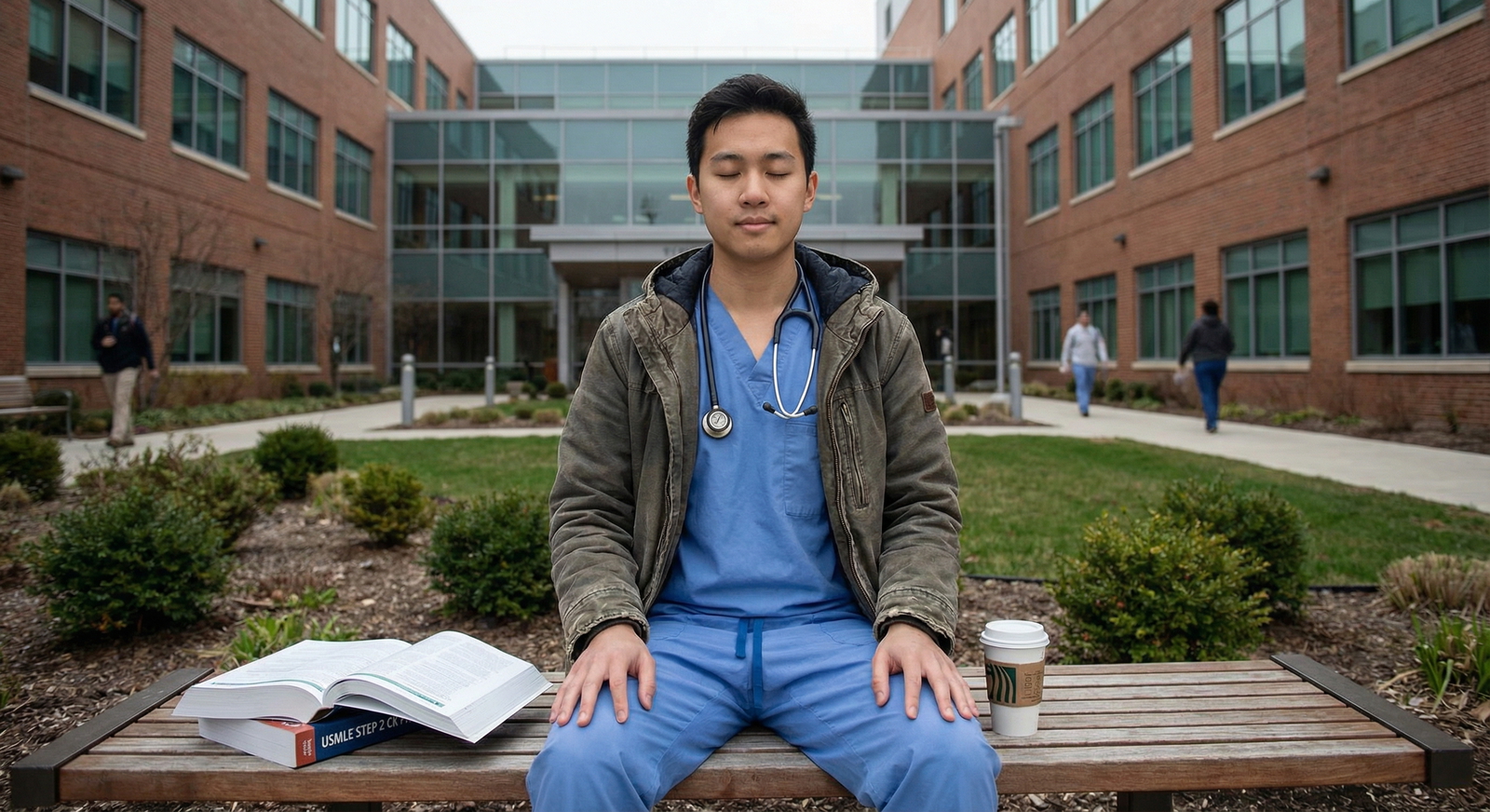
Mindfulness doesn’t have to be mystical or time-consuming. It simply means intentionally paying attention to the present moment with curiosity instead of judgment.
Simple practices:
2–5 minutes of deep breathing before and after study blocks
- Inhale for 4 seconds, hold for 4, exhale for 6–8
- Helps engage the parasympathetic nervous system and reduce physiological arousal
Brief guided meditations once or twice daily
- Use apps like Headspace, Calm, Insight Timer, or free YouTube resources
- Choose short (5–10 minute) sessions if you’re new to meditation
Mindful transitions
- When finishing a long question block, deliberately pause, stretch, and take a few breaths before jumping into review
- This small ritual resets your focus and prevents mental exhaustion
Physical Health Habits That Support Cognitive Performance
Your brain is part of your body; neglecting basic needs undermines learning and confidence.
Prioritize:
Sleep
- Aim for 7–8 hours per night; chronic sleep debt impairs memory, mood, and reasoning
- Avoid all-nighters; they are almost always counterproductive at this stage
Movement
- Even 20–30 minutes of brisk walking, light jogging, or resistance training most days can:
- Improve concentration
- Reduce anxiety and depressive symptoms
- Increase energy
- Even 20–30 minutes of brisk walking, light jogging, or resistance training most days can:
Nutrition and hydration
- Regular meals with protein, complex carbs, and healthy fats
- Avoid extreme caffeine use that disrupts sleep or creates jitters
- Practice your exam-day meal and snack plan during long practice tests
Mental Framing and Self-Talk
How you talk to yourself about Step 2 profoundly affects your confidence.
Unhelpful thoughts might sound like:
- “If I don’t get X score, my career is over.”
- “Everyone else understands this better than I do.”
- “One bad day means I’m not cut out for medicine.”
Reframe these using more realistic, supportive self-talk:
- “This exam is important, but it is one of many data points in my career.”
- “My job is to prepare as effectively as I can, not to be perfect.”
- “I’ve faced challenging exams before and found ways to succeed.”
Writing down these reframes and reading them regularly—especially when stress spikes—can shift your mindset from fear-based to growth-oriented.
Seeking Support: You Don’t Have to Prepare Alone
Highly driven medical students often try to handle Step 2 preparation in isolation, but meaningful support can significantly reduce stress and improve performance.
Study Partners and Groups
Effective collaboration can boost both understanding and morale, if structured well.
Tips:
- Limit group size to 2–4 people
- Set clear goals for each session (e.g., “Review OB hemorrhage algorithms,” “Do and discuss 20 cardiology questions”)
- Avoid letting sessions devolve into venting; schedule a limited “check-in” period at the beginning or end for emotional support
Benefits:
- Teaching others clarifies your own understanding
- Peers can share high-yield mnemonic devices, tables, or resources
- Accountability increases follow-through on study plans
Mentors and Residents
Reach out to:
- Upperclassmen who recently took Step 2
- Residents in your target specialty
Ask about:
- What they wish they had done differently
- How they balanced rotation duties with Step 2 prep
- Their strategies for score jumps or test-day anxiety
Role models who have navigated Step 2 successfully can normalize your fears and offer practical, specialty-specific advice.
Professional Support for Anxiety or Burnout
If anxiety, depression, or burnout symptoms begin to interfere with daily functioning or studying:
- Consider meeting with student wellness services, counseling, or a mental health professional
- Many schools provide confidential, low-cost or free support specifically tailored to medical trainees
Needing help is not a sign of weakness. Addressing mental health proactively is an investment in your long-term success as a physician.

Visualizing Success and Preparing for Exam Day
Visualization is a powerful tool used by elite performers in sports, music, and other high-stakes fields—and it can be just as effective in USMLE Step 2 preparation.
Daily Visualization Practice
Once a day for a few minutes:
- Close your eyes and imagine:
- Waking up on exam day feeling alert and prepared
- Eating a familiar breakfast and heading to the testing center calmly
- Sitting at the computer, reading questions with clear focus
- Encountering a difficult question but staying composed, using logic to narrow it down
- Finishing the last block with steady energy and a sense of completion
Pair this with:
- Positive affirmations, such as:
- “I have prepared thoroughly and I can handle challenging questions.”
- “I can stay calm and focused under pressure.”
- “I don’t need to be perfect to perform well.”
Repeating these thoughts helps your brain form a narrative of capability rather than fear, which can surface automatically under stress.
Final Week and Exam-Day Strategy
In the final 5–7 days:
- Focus on:
- Light review of weak points
- Flashcards and summary tables
- One last practice exam early in the week, not the day before
- Avoid:
- Starting brand-new, dense resources
- Comparing your prep to others’ on social media
In the last 24 hours:
- Do only light review or none at all—trust your preparation
- Prioritize:
- Sleep
- Gentle movement
- Organizing documents, snacks, and transportation to the test center
On exam day:
- Use breathing techniques during sign-in, breaks, and whenever anxiety spikes
- Approach each block as a fresh opportunity; don’t dwell on previous blocks
- Remind yourself periodically: “My job is to do my best with each question in front of me.”
Frequently Asked Questions About USMLE Step 2 Confidence and Preparation
1. How early should I start serious USMLE Step 2 exam preparation?
Ideally, you begin Step 2 preparation during your clinical clerkships, not just during a dedicated study period. Treat each rotation as Step 2 prep by:
- Using a Qbank (e.g., UWorld) alongside your clerkship
- Reviewing key conditions and algorithms as you encounter related patients
- Doing shelf exam preparation with Step 2 in mind
Dedicated prep usually ranges from 4–10 weeks, depending on your baseline and rotation schedule.
2. How many practice questions should I complete before Step 2?
There’s no magic number, but many successful test-takers:
- Complete all of UWorld Step 2 CK once (often ~3,000+ questions)
- Optionally redo incorrects or low-confidence questions
- Use NBME exams and/or UWorld self-assessments (2–4 total)
More important than the number is the quality of review. Fully understanding each question’s explanation yields more benefit than rushing through an extra block.
3. What should I do if my NBME practice scores are lower than I expected?
First, avoid panic—practice scores are data, not destiny. Then:
- Analyze your performance by system and task (diagnosis, management, etc.)
- Create a targeted improvement plan for your weakest 2–3 areas
- Increase question volume and focused review on those topics for 1–2 weeks
- Reassess with another practice exam after you’ve addressed these gaps
If the real exam is close and your scores are far below your target, speak with an advisor or dean about whether adjusting your exam date might be appropriate, balancing timelines, applications, and personal considerations.
4. How can I use mindfulness techniques on the actual test day?
You can incorporate quick, portable mindfulness techniques throughout the exam:
- Before starting each block: Take 3–5 slow, deep breaths, consciously relax your shoulders and jaw
- During a difficult question: Drop your attention briefly to your breathing, then re-engage the problem with fresh focus
- During breaks: Step away from the screen, do a brief body stretch, and notice three things you can see, hear, and feel to ground yourself in the present
These micro-practices can reduce physiological stress and preserve cognitive resources.
5. What if I don’t reach my “dream score” on Step 2? Is my career over?
No single exam defines your entire medical career. While Step 2 is important for residency applications, programs view your application holistically, including:
- Clerkship performance and narrative comments
- Letters of recommendation
- Personal statement and interview performance
- Research, leadership, and service
If your score is lower than you hoped:
- Work with mentors to strategically choose programs and strengthen other aspects of your application
- Emphasize your clinical strengths, work ethic, and growth mindset in interviews and personal statements
Your USMLE Step 2 result is one chapter—not the entire story—of your medical journey.
Preparing for USMLE Step 2 is demanding, but it is also an opportunity to consolidate your clinical knowledge, refine your reasoning, and cultivate resilience. By combining high-yield study strategies, deliberate practice, realistic exam simulations, and proven mindfulness techniques, you can build authentic confidence—not just for test day, but for the challenges of residency and beyond.