
Most students prepare for Step 2 CK completely backward. They cram in the gaps, instead of treating every rotation as scheduled prep. That is why they feel behind by July.
You do not have time to “fit Step 2 in later.” The only way this works is if every block has a job: certain rotations build foundation, others consolidate, a few are pure scoring time. I am going to walk you rotation-by-rotation and month-by-month through that.
Assume this basic structure (you can adapt details):
- Third year: Core clerkships all year
- Fourth year: A few remaining cores, then electives/auditions, then lighter blocks before ERAS
- Goal: Take Step 2 CK between late June and mid‑August of rising M4 year
We will build around that.
Big-Picture Timeline: When Step 2 Fits Into Rotations
At this point you should map your actual school calendar against this skeleton.
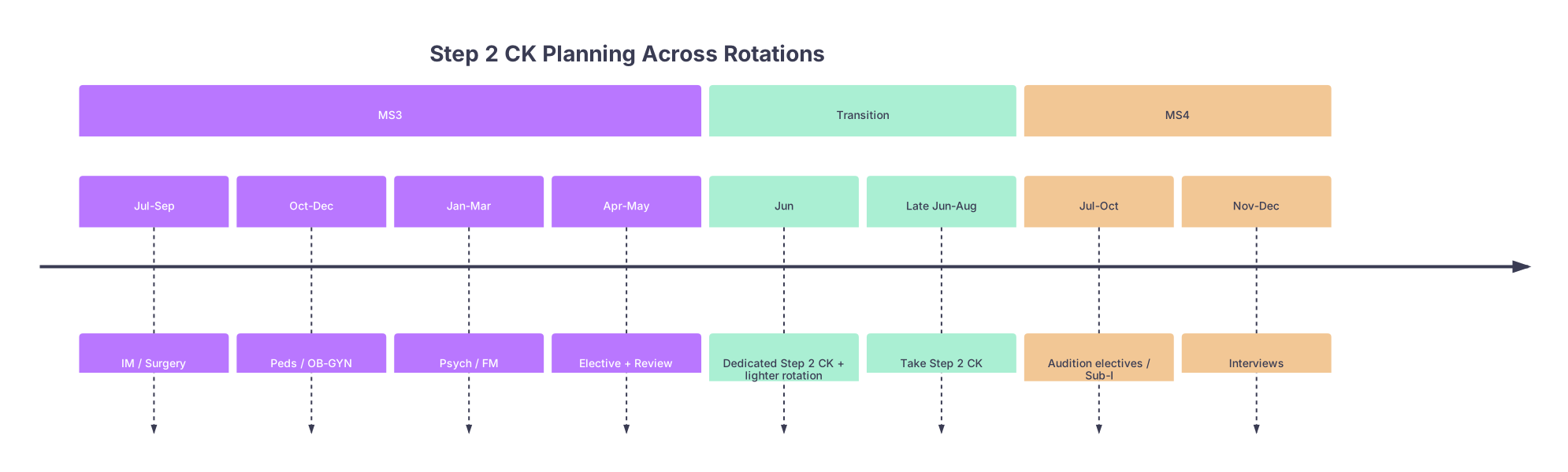
| Period | Event |
|---|---|
| MS3 - Jul-Sep | IM / Surgery |
| MS3 - Oct-Dec | Peds / OB-GYN |
| MS3 - Jan-Mar | Psych / FM |
| MS3 - Apr-May | Elective + Review |
| Transition - Jun | Dedicated Step 2 CK + lighter rotation |
| Transition - Late Jun-Aug | Take Step 2 CK |
| MS4 - Jul-Oct | Audition electives / Sub-I |
| MS4 - Nov-Dec | Interviews |
Here is the strategic breakdown:
- Early heavy rotations (IM, Surgery): Build question stamina and core medicine
- Middle blocks (Peds, OB, Psych, FM): Lock in shelf scores and Step 2 content simultaneously
- Late MS3 + early MS4: Convert “almost ready” into test-ready; then schedule the exam
You are not going to get a perfect schedule. You can get a functional one.
Before Clinical Year Starts: 4–6 Weeks Out
At this point you should set the structure, not grind content.
2–6 weeks before first rotation
Focus:
- Systems and tools, not brute memorization
- Light content review to wake up your Step 1 brain
- Building the daily habits you will maintain on rotations
Weekly goals:
Week −6 to −4:
- Re-learn basic internal medicine frameworks: CHF, COPD, diabetes, sepsis, chest pain, abdominal pain
- Use:
- OnlineMedEd (or similar) for high‑yield IM topics
- One “Step 2 style” resource (e.g., UWorld Step 2, AMBOSS, or Anki deck) just 10–20 questions/day
Week −4 to −2:
- Create your “Step 2 during rotations” template:
- Weekday: 10–20 questions
- Weekend: 20–40 questions + 1–2 hours of review
- Test a few question blocks timed and random to see how long proper review actually takes you
- Create your “Step 2 during rotations” template:
Week −2 to −1:
- Decide and write down:
- Which blocks will be heavy Step 2 push (e.g., lighter rotations, outpatient months)
- Which will be survival mode (e.g., Surgery, Sub‑I, ICU)
- Reserve a realistic Step 2 window in your calendar (and backup week in case of illness)
- Decide and write down:
If you do not plan this now, you will try to “start serious prep” in the middle of Call Week 3. You will fail.
Internal Medicine Rotation: Your Step 2 Foundation Block
This rotation is the backbone of Step 2 CK. Treat it that way.
Rotation length: Usually 6–8 weeks
Main Step 2 role: Build core medicine knowledge + question stamina
At this point you should:
- Make IM your highest Step 2 priority rotation
- Accept that you will be tired; schedule around that reality
Week 1–2 (Adjustment + Baseline):
Target:
- 10–15 Step 2 questions/day (aim for medicine-heavy blocks)
- 1–2 OnlineMedEd (or similar) IM videos per day if commute allows
Routine example:
- Pre‑round: none (protect your sleep)
- During downtime: 5–10 questions on the app (do not review fully yet)
- Evening: Review all questions you did that day + write down 3–5 “must remember” pearls
Week 3–4 (Build Volume):
Increase:
- 15–25 questions/day on weekdays
- 40–50 questions/day on one weekend day
Focus on:
- Cardio, pulm, renal, infectious disease, endocrine, GI
- Use Step 2 Qbank in tutor mixed or medicine only mode
Week 5–6 (Shelf + Step 2 Integration):
- Start aligning:
- Add:
- 1 mini‑SIM test per week:
- 40 timed, mixed questions (medicine‑weighted)
- Review as if it were a mini‑NBME
- 1 mini‑SIM test per week:
If IM is late in third year, you are in better shape for Step 2. If it is early, you must be ruthless about keeping a baseline Qbank habit through the rest of the year.
Surgery Rotation: Survival + Maintain the Floor
Surgery is where Step 2 prep dies for many students. Do not let that happen.
Rotation length: 6–8 weeks
Main Step 2 role: Maintain gains, sharpen acute care, not maximize volume
At this point you should downshift, not stop.
Baseline rule:
- Weekdays: Minimum 10 questions/day, even post‑call
- Weekends: 20–40 questions/day, ideally on medicine and surgery
Week 1–2:
- Focus:
- Do not get destroyed by schedule changes
- Tie questions to real patients (trauma, post‑op fever, SBO, GI bleed)
Week 3–6:
- Strategy:
- Some days you will only manage 5 questions. Fine.
- Compensate on lighter days and weekends.
- Emphasize:
- Shock, fluids, electrolytes, wound infections, acute abdomen
If you are pre‑rounding at 4:30 AM and leaving at 8 PM:
- Kill perfectionism. Your goal here is continuity, not hero numbers.
- 10 questions on your phone in 2 chunks (pre‑sleep + a pocket of downtime) is enough to prevent backslide.
Pediatrics and OB/GYN: Content Blocks That Double for Step 2
These two rotations tend to be more structured, slightly less brutal hours than surgery (though OB nights can be vicious). They are perfect dual‑purpose blocks.
Pediatrics Rotation
Rotation length: 4–6 weeks
Main Step 2 role: Nail peds content that often gets neglected
At this point you should:
- Make Peds weeks your “content specificity” push
Weekly goals:
- 80–120 Qbank questions focused on pediatrics per week
- Weekend: 1 half‑length Step 2‑style practice (40–80 questions, timed)
Key Step 2 themes tied to Peds:
- Vaccines and preventive care
- Developmental milestones and red flags
- Pediatric infections (otitis, meningitis, pneumonia, gastroenteritis)
- Congenital heart disease basics
- Pediatric endocrine (T1DM, CAH, hypothyroidism)
OB/GYN Rotation
Rotation length: 4–6 weeks
Main Step 2 role: Lock in algorithms
OB/GYN on Step 2 is algorithms: fetal tracings, pregnancy complications, bleeding, contraception.
At this point you should:
- Create or borrow 1–2 page summary sheets of:
- Fetal heart rate categories and interventions
- Hypertensive disorders of pregnancy
- First‑trimester bleeding differential
- Postpartum complications
Weekly target:
- 80–120 OB/GYN Qbank questions weekly
- 1 dedicated “OB/GYN + women’s health” timed block on weekends
Psychiatry and Family Medicine: Quiet Power Blocks
These often land later in MS3. They can be deceptively valuable for Step 2 if you exploit them.
Psychiatry Rotation
Rotation length: 4–6 weeks
Main Step 2 role: High yield per unit of time
At this point you should push volume.
- Weekday goal:
- 20–30 questions/day (mixed Step 2, not just psych)
- Weekend:
- 40–60 questions/day
- Use one day for mostly psych, the other for medicine-heavy mixed blocks
Key Step 2 overlap:
- Depression, bipolar, schizophrenia, anxiety, OCD, PTSD
- Substance use disorders and intox/withdrawal
- Capacity, consent, confidentiality, involuntary commitment
Psych is a good time to start integrating ethics/biostats questions as well.
Family Medicine Rotation
FM = outpatient Step 2 in real life. Use it.
Rotation length: 4–6 weeks
Main Step 2 role: Preventive care, chronic disease, ambulatory medicine
At this point you should:
- Start acting like you are in Step 2 “slow ramp‑up”
Weekly structure:
- Week 1–2:
- 20–30 questions/day (mixed, but overweight outpatient: FM, IM, peds, OB)
- Week 3–4+:
- 30–40 questions/day on weekdays
- 80–100 on weekends (can be in two sittings)
Focus content:
- Screening guidelines (cancer, lipids, depression)
- Vaccines across age groups
- Chronic disease management (HTN, T2DM, COPD, asthma)
- Office gyn, contraception, prenatal visits
This is where your Step 2 “feel” really starts to solidify.
Late MS3 / Early MS4: Dedicated‑Lite + Scheduling Step 2
By this point (end of FM/Psych) you should have:
- 40–60% of a main Step 2 Qbank completed
- Solid comfort with IM, Peds, OB, Psych, FM
- A realistic sense of your test‑day stamina
Now you pivot.
8–10 Weeks Before Your Planned Step 2 Date
At this point you should book your exam date if you have not already.
- Choose:
- A 4‑week block with:
- Either a lighter rotation
- Or a non‑audition elective
- A 4‑week block with:
- Reserve:
- 1 week at the end of that block with minimal clinical duties if possible

6–8 Weeks Out: Assessment + Gap Analysis
Take NBME or UWSA:
- Get a baseline score
- Identify weakness clusters: OB, neuro, biostat, etc.
Weekly structure (while on lighter rotation/elective):
- 200–300 Qbank questions/week
- 1 full‑length or half‑length practice test every 2 weeks
4–6 Weeks Out: Volume + Precision
At this point you should be:
- Nearing completion of your primary Qbank (70–90%)
- Reviewing incorrects and marked questions aggressively
Weekly goals (realistic):
- Weekdays:
- 40–60 questions/day
- Weekends:
- 80–120 questions
- Every 1–2 weeks:
- One full practice exam (NBME or UWSA), same start time as your actual exam
Final 2–3 Weeks: Simulate, Consolidate, Protect
You are no longer randomly grinding. You are training.
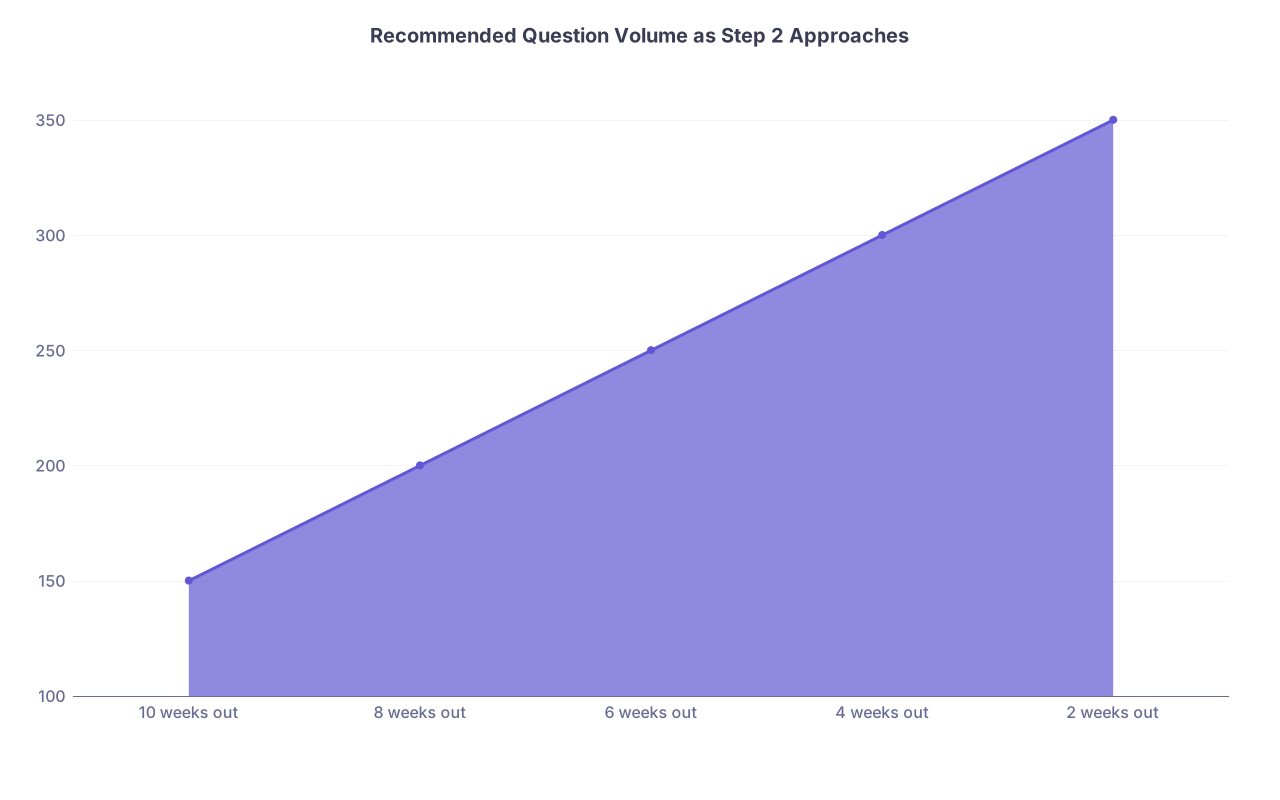
| Category | Value |
|---|---|
| 10 weeks out | 150 |
| 8 weeks out | 200 |
| 6 weeks out | 250 |
| 4 weeks out | 300 |
| 2 weeks out | 350 |
2–3 Weeks Out
At this point you should:
Switch to:
- Mostly mixed, timed blocks
- Deliberate practice on weakest subjects identified from NBMEs
Weekly:
- 2 full‑length simulations (spread out, e.g., Mon + Sat)
- Light review the day after each simulation, not heavy new content
Final Week
Day −7 to −5:
- Shorter blocks (20–40 questions)
- High‑yield cheat sheets:
- OB algorithms
- Peds milestones
- Biostatistics formulas and interpretation
- Emergency management algorithms (ACLS basics, anaphylaxis, sepsis)
Day −4 to −2:
- Minimal new questions, mostly review and light reading
- Fix logistics:
- Prometric site address, route, parking
- Food and timing for breaks
Day −1:
- No questions.
- Quick skim of highest yield one‑pagers only.
- Sleep.
Rotation‑by‑Rotation Snapshot Plan
Here is the condensed “at this point you should” grid.
| Rotation | Daily Q Goal (Avg) | Step 2 Focus Role |
|---|---|---|
| Internal Med | 15–25 | Core knowledge + stamina |
| Surgery | 10–15 | Maintain + acute care |
| Pediatrics | 20–30 | Peds content specificity |
| OB/GYN | 20–30 | Algorithms + women’s health |
| Psychiatry | 20–30 (mixed) | Psych + ethics + volume |
| Family Med | 30–40 | Outpatient + prevention |
Adjusting for Brutal Blocks and Real Life
You will have:
- Night float
- 28‑hour calls
- Random family emergencies
- Days where 0 questions get done
The key is not avoiding disruption. It is redistributing.

Weekly Reality Rule
Every Sunday, look at your upcoming week’s schedule:
- Identify:
- 2 “heavy” days (call/post‑call): accept very low Q numbers
- 3 “medium” days: aim baseline (15–25)
- 2 “light” days/weekend: compensate (40–80)
Total weekly target matters more than daily perfection.
Common Pitfalls (And What To Do Instead)
Pitfall: Saving all Step 2 prep for “dedicated”
Fix: Tie each core rotation to a Step 2 domain and start Qbank early.Pitfall: Doing only subject‑specific shelf questions
Fix: Always mix in at least 25–50% general Step 2 questions weekly.Pitfall: Over‑studying for one shelf and ignoring the rest
Fix: Use shelves to overprepare Step 2 style for that domain, then maintain with mixed blocks later.Pitfall: Letting a brutal block zero out your studying for 6–8 weeks
Fix: Drop the daily target, not the habit. Five questions is infinitely better than none.
Example: 4‑Week Snapshot Leading into Step 2
Assume: Early June test date, on a relatively light outpatient elective.
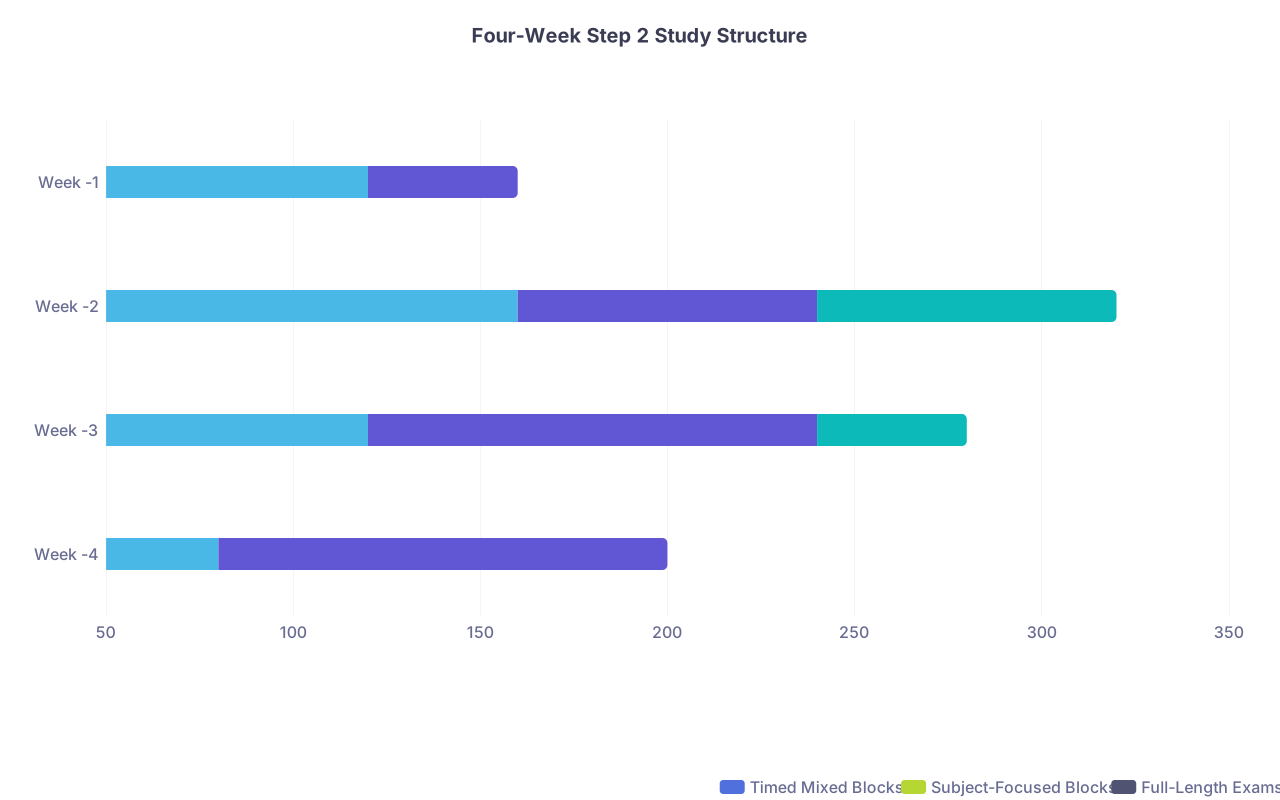
| Category | Timed Mixed Blocks | Subject-Focused Blocks | Full-Length Exams |
|---|---|---|---|
| Week -4 | 80 | 120 | 0 |
| Week -3 | 120 | 120 | 40 |
| Week -2 | 160 | 80 | 80 |
| Week -1 | 120 | 40 | 0 |
- Week −4:
- 40–60 questions/day, mix of subject‑focused + some mixed
- Week −3:
- One full exam; rest timed blocks
- Week −2:
- Another full exam; heavy focus on weaknesses from prior NBMEs
- Week −1:
- Taper, focus on consolidation and rest

FAQ (Exactly 4 Questions)
1. When is the best month to take Step 2 CK if I want it to help my residency application?
The sweet spot for most students is late June to early August of fourth year. That timing gives you:
- Enough core rotation experience to cover the content
- Enough score turnaround time (usually 2–4 weeks) to have your score in before ERAS applications are reviewed.
If your Step 1 was weak or pass/fail and you need Step 2 to “prove” yourself, lean earlier (late June–mid July) so the score is in well before programs start serious file review.
2. How many total Step 2 questions should I aim to complete before the exam?
A reasonable, effective range is 2,000–3,000 questions total across 1–2 Qbanks. For most people:
- 1 full pass of UWorld (or equivalent) is non‑negotiable
- A partial second resource (e.g., AMBOSS, NBME-style blocks) for variety and extra exposure is ideal
If you are doing 150–250 questions/week consistently across MS3 and then 250–350/week in the 6–8 weeks before the exam, you will reach that range without burning out at the end.
3. What if my school schedules my heaviest rotations right before my planned Step 2 date?
Then you adjust the date. Heavy sub‑I or ICU immediately before Step 2 is a setup for a mediocre performance. Two better options:
- Push Step 2 3–4 weeks later and arrange a lighter block or research during that time
- Pull Step 2 a bit earlier and use the last part of MS3 / early MS4 as your main ramp‑up
If neither is possible, reduce expectations for question volume on that heavy rotation and make sure the preceding block is where you push hardest on preparation.
4. How do I balance shelf exam prep versus Step 2 CK prep without duplicating work?
Use shelves as structured Step 2 modules:
- During each rotation, do >50% of your questions in that specialty, but keep 25–50% mixed Step 2 style
- For the week before each shelf, you can tilt to 70–80% subject‑specific to secure the shelf score
All of that still counts for Step 2. The content is overlapping; the difference is how you mix it. The more often you switch to mixed, timed blocks, the smoother the later transition to true Step 2 practice.
Open your calendar right now and label each upcoming rotation with one job: “Build,” “Maintain,” or “Push.” Then, next to each block, write a realistic weekly question target. If you cannot see those numbers on paper, you will not magically hit them in the hospital.