
How to Ace the Clinical Skills Component of USMLE Step 2 CS
The United States Medical Licensing Examination (USMLE) Step 2 Clinical Skills (CS) has historically been a pivotal milestone in medical training. While the formal Step 2 CS exam has been discontinued, the skills it assessed—history-taking, physical examination, clinical reasoning, documentation, and communication—remain central to your success in clerkships, OSCEs, future licensing exams, and residency.
Whether you are preparing for institutional OSCEs, school-based “Step 2 CS–style” assessments, or simply sharpening your clinical skills for residency, the same core principles apply. This guide will help you systematically strengthen those clinical skills so you can excel in any high-stakes clinical skills assessment and, more importantly, in real-world patient care.
Understanding the Clinical Skills Component in Detail
Before you can optimize your exam preparation, you need a clear understanding of what “clinical skills” really encompass in the context of USMLE-style assessments and OSCEs.
Core Competencies Assessed
Most Step 2 CS–style exams and OSCEs evaluate several overlapping domains:
- Patient Interviewing
- Physical Examination Skills
- Clinical Reasoning and Differential Diagnosis
- Communication and Interpersonal Skills
- Professionalism and Ethics
- Documentation (Clinical Encounter Notes)
Let’s briefly define each.
Patient Interviewing
You’re expected to:
- Obtain a focused yet thorough history tailored to the chief complaint
- Use open- and closed-ended questions appropriately
- Clarify timelines (“OPQRST” for pain, for example)
- Explore relevant risk factors, medications, allergies, past medical/surgical history, family history, and social history
- Screen for red-flag symptoms and psychosocial impact
The emphasis is not only what you ask, but how you ask it.
Physical Examination Skills
These exams typically require:
- Targeted physical exams based on the presenting complaint (e.g., focused cardiovascular, respiratory, neuro, abdominal, MSK)
- Correct technique, appropriate draping, and patient comfort
- Logical sequence and efficiency (head-to-toe within a system, not random maneuvers)
- Reporting abnormal and pertinent normal findings accurately
Clinical Reasoning
Clinical reasoning bridges the gap between data and decisions:
- Generating a prioritized, reasonable differential diagnosis
- Linking symptoms and exam findings to each diagnosis
- Selecting appropriate initial diagnostic tests and management steps
- Recognizing emergency conditions or “must-not-miss” diagnoses
Communication Skills
Communication is evaluated explicitly:
- Establishing rapport and trust quickly
- Demonstrating empathy and respect
- Explaining diagnoses, tests, and plans in lay language
- Handling difficult situations: breaking bad news, addressing nonadherence, navigating cultural beliefs, or dealing with angry or anxious patients
- Using shared decision-making and teach-back techniques
Professionalism
You are constantly observed for:
- Respect for patient autonomy and preferences
- Confidentiality and boundaries
- Nonjudgmental attitude (particularly regarding substance use, sexual history, or sensitive topics)
- Honesty about what you do and don’t know
- Appropriate hygiene, attire, and demeanor
Documentation (Clinical Encounter Note)
Your clinical encounter note (CEN) or OSCE note shows:
- A concise, structured write-up of the history and physical
- A prioritized differential with brief supporting reasoning
- Initial diagnostic work-up and management plan
Clear, well-organized documentation demonstrates both your knowledge and your ability to communicate with colleagues.
Strategic Exam Preparation for Clinical Skills Success
1. Master the Exam Format and Expectations
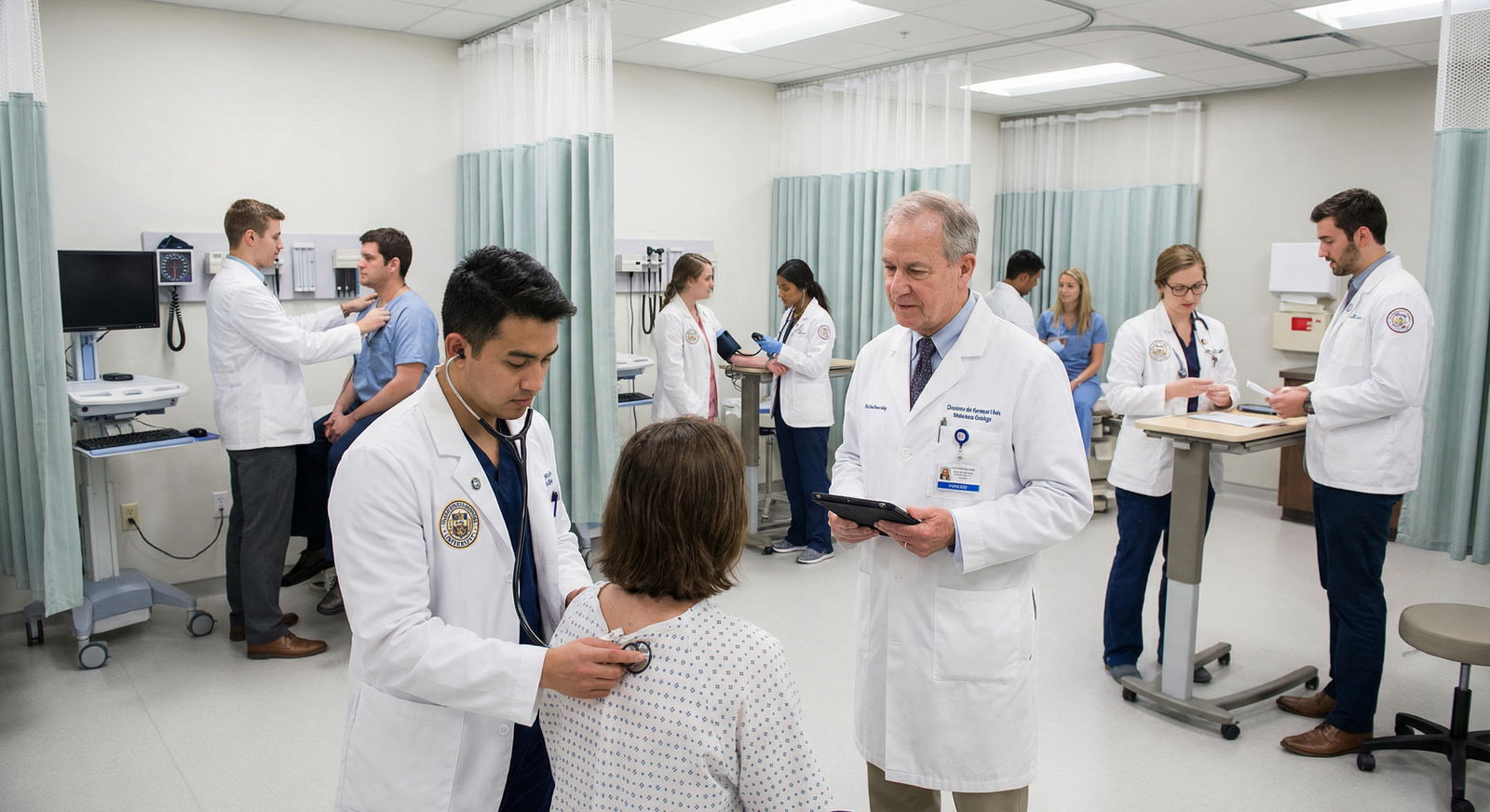
Even though the formal USMLE Step 2 CS is no longer offered, many medical schools and licensing bodies run Step 2 CS–like OSCEs. Understanding their structure reduces anxiety and improves performance.
Know the Station Types
Common station formats include:
- Standard new-patient encounters (history + focused physical)
- Focused follow-up visits (chronic disease management, medication side effects, counseling)
- Communication/counseling stations (smoking cessation, lifestyle modification, risk counseling)
- Ethics/professionalism cases (disclosing an error, handling requests for inappropriate antibiotics, dealing with impaired colleagues)
- Telephone encounters (triage, counseling without physical exam)
- Written or video-based stations (interpretation of findings, differential and management questions)
Ask your school for:
- Blueprints or case lists (systems, common complaint types)
- Scoring rubrics (checklists, global ratings, communication scales)
- Sample encounter notes or grading criteria
Being familiar with the structure allows you to allocate time wisely and anticipate what is being tested in each station.
2. Sharpen History-Taking with Frameworks and Repetition
History-taking is often the highest-yield component—both for exam scoring and clinical accuracy.
Use Systematic Approaches
Adopt a consistent format you can apply under time pressure:
- Chief Complaint (CC) and History of Present Illness (HPI)
- Use mnemonics like OLD CARTS (Onset, Location, Duration, Character, Aggravating, Relieving, Timing, Severity) or OPQRST for pain.
- Relevant Review of Systems (ROS) tailored to chief complaint
- Past Medical History (PMH)
- Past Surgical History (PSH)
- Medications and Allergies
- Family History (FH)
- Social History (SH) (occupation, living situation, tobacco, alcohol, drugs, sexual history, safety, stress)
Integrate Targeted Screening Tools
In appropriate scenarios, use brief, validated tools:
- CAGE or AUDIT-C for alcohol use
- PHQ-2/PHQ-9 for depression
- GAD-7 for anxiety
- Domestic violence/IPV screening when indicated
These tools can be abbreviated for exam settings but demonstrate your awareness of standard clinical practice.
Practice Out Loud, Not Just On Paper
Work with:
- Study partners: Alternate as physician and patient
- Senior students or residents: Ask them to critique your structure and depth
- Simulation centers or standardized patient programs: These best approximate actual exam conditions
Record your sessions (audio/video) and perform brief self-review: Did you cover the essentials? Did you interrupt? Did you use open-ended questions initially?
3. Elevate Your Physical Examination Technique
Your physical exam should be targeted, efficient, and professional.
Prioritize High-Yield Maneuvers
For each common chief complaint, know your must-do maneuvers. For example:
Chest pain
- General appearance and vitals (if available)
- Cardiovascular exam: inspection, palpation, auscultation of all valve areas, peripheral pulses, edema
- Respiratory exam: auscultation, percussion, respiratory effort
- Focused MSK exam of chest wall if indicated
Shortness of breath
- Respiratory exam: inspection, percussion, auscultation (including posterior fields)
- Cardiovascular exam
- Extremities for edema, cyanosis, clubbing
Abdominal pain
- Inspection, auscultation (before palpation), light and deep palpation, rebound, guarding
- Costovertebral angle tenderness
- Special tests when relevant (Murphy’s sign, psoas/obturator for appendicitis)
Make a personal examination checklist by complaint/system and rehearse these sequences until they are automatic.
Demonstrate Respect and Professionalism
During the exam:
- Wash or sanitize your hands at the beginning of each physical exam.
- Explain each step: “I’m going to listen to your heart now; you might feel the stethoscope is a bit cold.”
- Ask permission before sensitive maneuvers.
- Maintain appropriate draping and modesty.
- Observe for non-verbal cues of discomfort and adjust accordingly.
These behaviors are often specifically scored under “interpersonal skills” or “professionalism.”
4. Strengthen Clinical Reasoning and Differential Diagnosis
Your differential diagnosis and plan are where your medical knowledge and reasoning become visible.
Use Structured Differential Mnemonics
Mnemonics help you avoid missing key categories:
- VINDICATE
- Vascular
- Infectious/Inflammatory
- Neoplastic
- Degenerative/Deficiency
- Idiopathic/Iatrogenic
- Congenital
- Autoimmune/Allergic
- Traumatic
- Endocrine/Metabolic
When you see a case, mentally run through relevant categories to generate 3–5 reasonable differentials.
Prioritize and Justify
On your note, don’t just list diagnoses—rank them and support each with evidence:
- Dx1: Appendicitis – RLQ pain, fever, anorexia, rebound tenderness
- Dx2: Gastroenteritis – diffuse abdominal pain, nausea, vomiting, diarrhea, sick contacts
- Dx3: Ovarian torsion – acute onset lower abdominal pain, reproductive age female, no GI symptoms
Brief, evidence-based reasoning shows examiners you can synthesize data logically.
Align Your Workup with the Setting
In an exam, your plan should focus on initial, appropriate tests rather than exhaustive lists:
- Basic labs (CBC, CMP, urinalysis)
- Targeted imaging (e.g., abdominal ultrasound vs CT depending on scenario)
- Critical “don’t-miss” tests (e.g., ECG for chest pain, beta-hCG in reproductive-age females, glucose in altered mental status)
Don’t order unnecessary tests just to appear thorough—many checklists penalize inappropriate or low-yield investigations.
5. Optimize Communication and Bedside Manner
Communication is one of the most heavily weighted domains in clinical skills assessments.
Build Rapport from the First Seconds
A standard opening you can adapt:
- Knock and wait briefly.
- Enter, smile, and maintain eye contact.
- Introduce yourself clearly: “Hello, Ms. Smith, my name is [Name], and I’m a third-year medical student working with the team today.”
- Confirm identity and preferred form of address.
- Ask an open-ended question: “What brings you in today?” or “How can I best help you today?”
These simple steps create a foundation of trust and respect.
Practice Empathic Responses
Use NURSE statements:
- N – Name the emotion: “It sounds like you’re feeling really worried about this.”
- U – Understand: “I can understand why that would be scary.”
- R – Respect: “You’ve done a great job managing this so far.”
- S – Support: “We’ll work together to figure out what’s going on.”
- E – Explore: “Tell me more about what concerns you the most.”
Insert at least one or two explicit empathic statements in every encounter.
Communicate Clearly about Assessment and Plan
At the end of the encounter:
- Summarize: “Let me summarize what I’ve heard to make sure I have it right…”
- Explain your thinking in lay terms: “Based on your symptoms and exam, I’m most concerned about X, but we also need to consider Y and Z.”
- Outline next steps: tests, treatments, and follow-up.
- Invite questions: “What questions do you have for me?”
- Use teach-back: “Just so I know I explained things clearly, could you tell me in your own words what our next steps are?”
These techniques improve both patient satisfaction and exam scores.
6. Develop Robust Time Management Strategies
Clinical skills exams are as much about efficiency as they are about knowledge.
Use a Time Budget for a 15-Minute Encounter
For a 15-minute station (adjust proportionally for other formats):
- 0–2 min: Introduction, chief complaint, open-ended questioning
- 2–8 min: Focused HPI, ROS, PMH/PSH, meds/allergies, FH/SH
- 8–12 min: Focused physical exam
- 12–14 min: Wrap-up, explanation, questions, counseling
- 14–15 min: Confirm understanding, close encounter
Practice with a timer until this rhythm feels natural.
Don’t Chase Every Detail
Avoid getting bogged down in low-yield details:
- Focus on red flags and decision-relevant features.
- Limit ROS to systems relevant to the complaint unless otherwise directed.
- For chronic illnesses, clarify control, complications, and adherence rather than re-taking their entire medical history.
If you notice time is short, prioritize: complete the most critical history questions and at least a core focused physical exam before moving to closure.
7. Write High-Impact Clinical Encounter Notes
Even in OSCEs that don’t mirror USMLE Step 2 CS exactly, documentation is usually tested.
Use a Clear, Structured Format
A typical note might include:
- History: Focused HPI and key PMH/PSH, medications, allergies, relevant FH/SH, and ROS
- Physical Exam: Only relevant systems, clear normal/abnormal findings
- Differential Diagnosis: 3–5 diagnoses, prioritized, each with 1–3 supporting points
- Diagnostic Workup: Appropriate initial tests
- Management/Plan (if required): Immediate treatment, counseling, safety netting
Practice Under Time Constraints
Simulate exam conditions:
- Give yourself 8–10 minutes to write a full note after a standardized 15-minute encounter.
- Use templates resembling your school’s note format.
- Get feedback from peers, residents, or faculty on clarity and depth.
Focus on conciseness and relevance—examiners prefer a well-organized, targeted note over a rambling, exhaustive one.
8. Use High-Yield Resources and Deliberate Practice
Effective exam preparation combines structured study materials with active practice.
Recommended Resources
- “First Aid for the USMLE Step 2 CS” (archival)
- Still highly valuable for case structure, phrases, and note-writing examples.
- School-provided OSCE guides and checklists
- Align directly with how you will be scored.
- Clinical skills videos (e.g., school resources, trusted online medical education platforms)
- Observe expert approaches to history, physical exam, and communication.
- Peer teaching and senior mentorship
- Ask interns/residents how they approached similar exams and what they wish they had done differently.
Build a Deliberate Practice Plan
Instead of “just doing cases,” design your practice to target weaknesses:
- One week: focus on cardiovascular and respiratory complaints
- Another week: abdominal and GU/GYN cases
- Another: neuro and MSK
- Parallel track: difficult communication scenarios (breaking bad news, nonadherent patient, cultural conflict)
After each practice encounter:
- Ask for structured feedback.
- Identify 1–2 specific behaviors to improve (e.g., “State one empathic phrase in each encounter,” “Always summarize before closing”).
- Re-run a similar scenario specifically focusing on those behaviors.
9. Essential Do’s and Don’ts for Clinical Skills Exams
Key Do’s
- Do simulate the real exam environment: Use a timer, wear your white coat, and practice with checklists.
- Do reflect on every clinical encounter during clerkships: Ask yourself what went well and what you would change.
- Do cultivate calmness: A slow, confident demeanor is far better than a rushed, frantic one.
- Do be honest with patients: If you don’t know something, say, “I’m not certain, but I will discuss this with my supervising physician.”
Critical Don’ts
- Don’t neglect core medical knowledge: Weak understanding leads to poor differentials and plans.
- Don’t skip vital questions because of discomfort (e.g., sexual history, substance use, IPV) when clearly relevant.
- Don’t ignore patient cues: If a patient looks distressed, pause and address it; ignoring emotion is often penalized.
- Don’t end abruptly: Always summarize, explain next steps, and ask, “Is there anything else you’d like to discuss today?”
Test Day: Integrating Skills Under Pressure
On the day of your OSCE or Step 2 CS–style exam, your goal is to execute your practiced routines rather than invent new strategies.
Practical Test-Day Tips
- Sleep adequately and maintain your normal caffeine routine to avoid jitters.
- Arrive early, dressed professionally with your ID, stethoscope, and necessary stationery.
- Use pre-encounter time (outside the door) to:
- Read the prompt carefully (setting, patient demographics, chief complaint).
- Sketch a quick mental or written differential and question list.
- Plan which physical exam maneuvers you must perform.
Between stations:
- Briefly decompress and reset—don’t dwell on the previous case.
- Use a simple ritual: deep breath, posture check, quick mental review of introduction and empathy phrases.
Trust your preparation. Most examinees who have practiced systematically find the actual exam feels like “just another OSCE session”—with slightly more nerves, but very familiar tasks.
Frequently Asked Questions (FAQ) About Clinical Skills and Step 2 CS–Style Exams
1. Is USMLE Step 2 CS still required, and why should I care about clinical skills exams now?
The official USMLE Step 2 CS exam has been discontinued, but clinical skills are more important than ever. Medical schools, licensing bodies, and residency programs still rely heavily on:
- Institutional OSCEs and clinical skills exams
- Clerkship evaluations and bedside performance
- Standardized patient encounters and simulation assessments
Strong clinical skills remain crucial for residency applications, letters of recommendation, and ultimately, safe and effective patient care. Preparing as if you were taking Step 2 CS will make you a stronger clinician and a more competitive residency candidate.
2. What are the most high-yield areas to focus on for clinical skills exam preparation?
The highest-yield domains for most Step 2 CS–style exams and OSCEs are:
- Focused history and physical exam tailored to the chief complaint
- Differential diagnosis and initial management
- Communication skills and empathy
- Efficient time management and structured notes
Within content areas, common high-yield chief complaints include:
- Chest pain, shortness of breath, cough
- Abdominal pain, GI bleeding, nausea/vomiting/diarrhea
- Headache, dizziness, weakness, syncope
- Joint pain, back pain, trauma
- Fever, weight loss, fatigue
- Mood and anxiety disorders, substance use concerns
- Women’s health (pelvic pain, vaginal bleeding, pregnancy-related issues)
3. How can international medical graduates (IMGs) or non-native English speakers improve communication and language skills for clinical exams?
For IMGs and non-native English speakers, strong communication skills are absolutely achievable with focused practice:
- Shadow or practice with native speakers: Pay attention to phrasing, tone, and common clinical expressions.
- Record your encounters and listen for clarity, speed, and pronunciation.
- Create and practice standard phrases for common tasks:
- Explaining test results
- Giving instructions for medications
- Expressing empathy and summarizing
- Ask for feedback from peers and mentors specifically on language clarity and patient-centeredness.
- Consider language or communication workshops offered by your institution, especially those geared to medical dialogue.
Examiners are not grading you on accent; they are assessing clarity, empathy, and patient understanding.
4. How are clinical skills exams typically scored?
While specific scoring varies by institution, most clinical skills exams use combinations of:
- Checklists for history and physical exam elements
- Global ratings of interpersonal skills, empathy, organization, and professionalism
- Note-writing rubrics evaluating structure, differential reasoning, and plan
Common scoring domains include:
- Data gathering (history & physical)
- Communication and interpersonal skills
- Clinical reasoning and decision-making
- Professionalism and ethics
- Documentation quality
To maximize your score, obtain and study your institution’s rubrics. Practice with those criteria in mind so your efforts align with what is actually graded.
5. If I perform poorly on an OSCE or clinical skills exam, how should I recover and improve?
A disappointing performance can be discouraging, but it’s also a powerful learning opportunity:
- Request detailed feedback from faculty or examiners if available.
- Identify whether deficits were primarily in:
- Knowledge/content
- Communication and empathy
- Organization and time management
- Physical exam technique
- Documentation
- Create a targeted remediation plan:
- Practice focused cases in your weaker domains.
- Use video review to catch communication or exam technique issues.
- Schedule sessions with standardized patients or mentors for direct observation and feedback.
- Apply your new strategies in real clinical encounters—ask supervisors to explicitly comment on your history, exam, and patient interaction.
Most students improve substantially after one or two cycles of thoughtful reflection and deliberate practice.
By approaching your clinical skills training with the same seriousness and structure you would have brought to USMLE Step 2 CS, you’ll not only excel in OSCEs and institution-based exams, but also enter residency as a confident, patient-centered, and clinically competent physician.