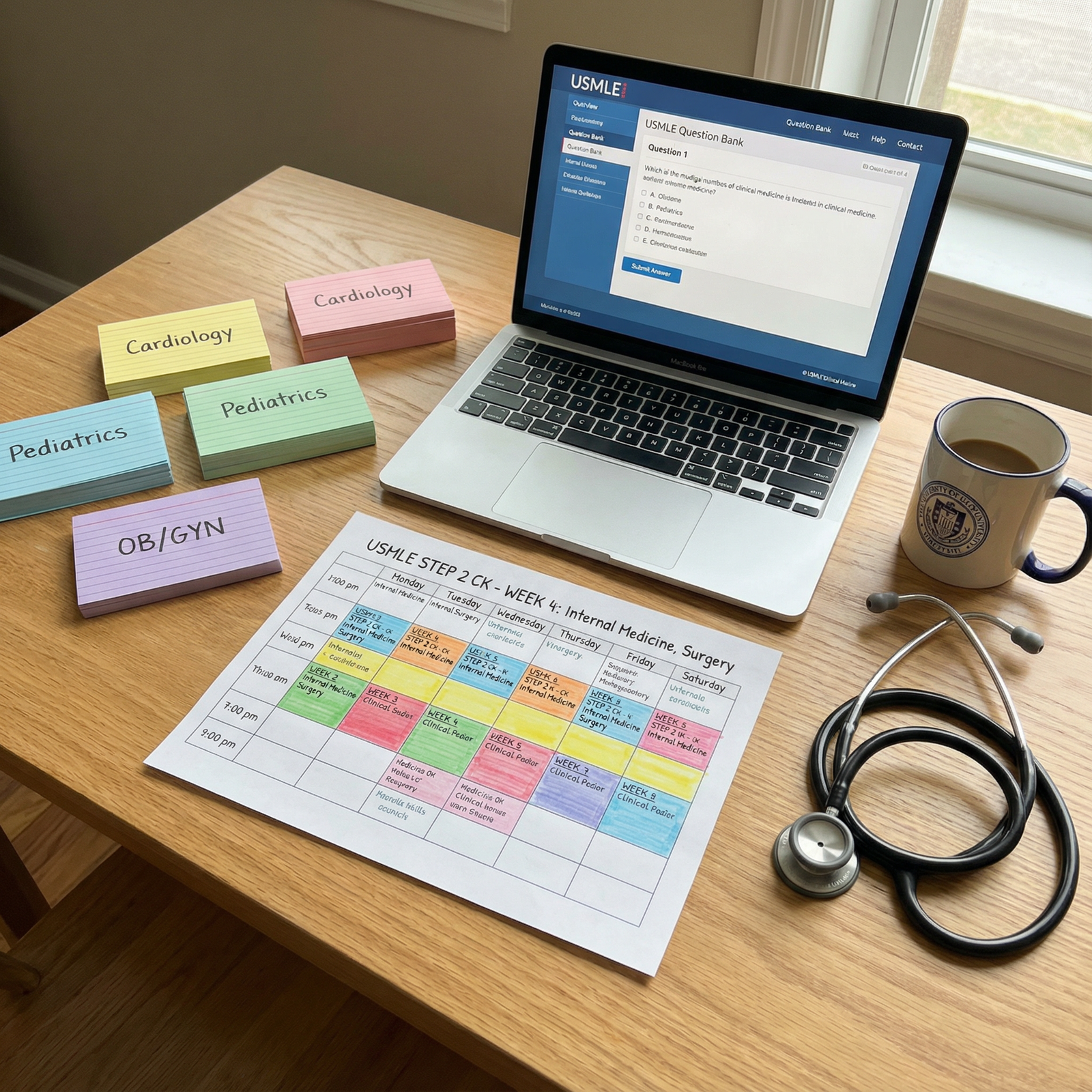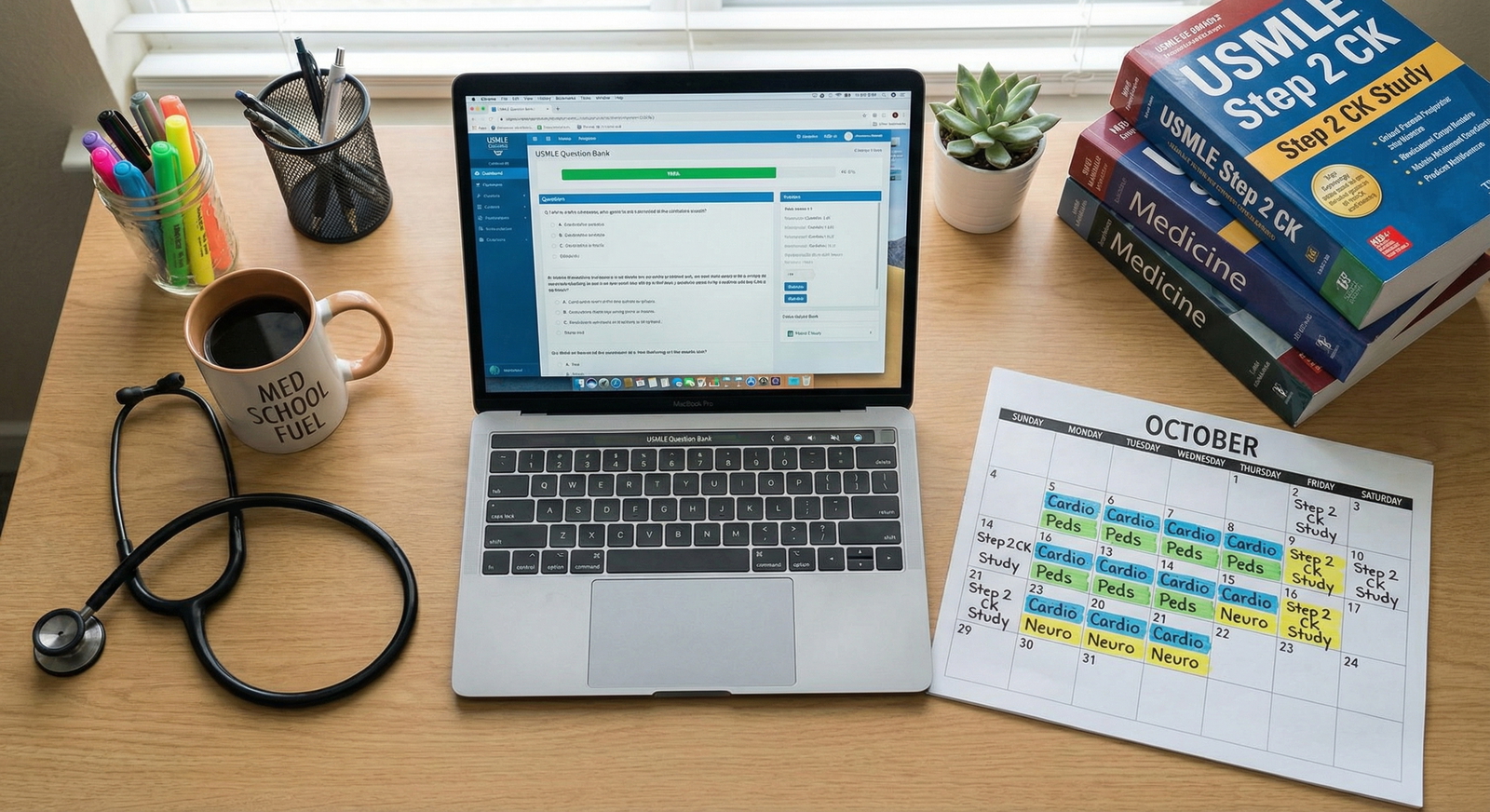
Preparing for Step 2 of the United States Medical Licensing Examination (USMLE) is one of the most consequential phases of medical school. Step 2 CK in particular has become a major factor in residency selection, especially since Step 1 became pass/fail. Strong performance signals to program directors that you have solid clinical knowledge, can synthesize complex information, and are ready for residency training.
This guide expands on the essentials of Step 2 preparation—what you need to know, how to structure your study plan, which resources to use, and how to optimize your performance from the start of third year through exam day.
Note: Step 2 CS (Clinical Skills) has been discontinued. Current Step 2 preparation focuses on Step 2 CK (Clinical Knowledge). Any references to Step 2 CS in older materials are now historical.
Understanding USMLE Step 2 CK and Its Role in Your Career
Before you plan your study strategies, you need a clear understanding of what Step 2 CK is testing and why it matters.
What Step 2 CK Measures
Step 2 CK is a full-day, computer-based exam that evaluates your:
- Clinical knowledge across core disciplines (internal medicine, surgery, pediatrics, OB/GYN, psychiatry, etc.)
- Application of knowledge to real-world clinical scenarios
- Clinical reasoning and decision-making (diagnosis, workup, management)
- Prioritization and patient safety awareness
- Understanding of prognosis, ethics, and health systems issues
Most questions are case-based clinical vignettes. You are expected not just to recall facts, but to:
- Recognize patterns
- Choose appropriate diagnostic tests
- Initiate and adjust management plans
- Avoid harmful or unnecessary interventions
How Step 2 CK Fits into Medical Education and Residency
Step 2 CK is usually taken after completion of core clinical rotations, often late third year or early fourth year. Its importance has increased because:
- Step 1 is now pass/fail, so Step 2 CK is often the primary standardized numerical metric.
- Many residency programs use Step 2 CK to:
- Screen applicants for interviews
- Compare students from different schools
- Assess readiness for their specific specialty (e.g., IM, surgery, EM)
A strong Step 2 CK score can:
- Compensate for a weaker Step 1 or earlier academic struggles
- Strengthen a competitive specialty application
- Provide confidence going into sub-internships and intern year
Building an Effective Step 2 Study Plan
A thoughtful, realistic study plan is the foundation of successful Step 2 preparation.
1. Establish a Strategic Timeline
The ideal timeline will vary, but there are common patterns:
- During third year: Start integrating Step 2-style studying into your clinical rotations (especially medicine, surgery, pediatrics, OB/GYN, and psychiatry).
- Dedicated period: Most students take 4–8 weeks of dedicated study time before the exam.
- 4–5 weeks: Often enough if you did consistent questions during rotations.
- 6–8 weeks: Helpful if your clinical year felt fragmented or your Step 1 foundation is weaker.
Key factors to consider:
- Your prior performance on standardized exams (Step 1, NBME subject exams)
- Upcoming residency application deadlines (especially if you’re applying early)
- Life obligations: research, away rotations, personal responsibilities
Create a backward calendar from your target exam date, mapping:
- Weekly question goals (e.g., 300–400 questions/week)
- Content review blocks (by specialty/system)
- NBME practice exams
- Rest days and buffer periods
2. Allocate Study Time Based on Exam Emphasis
Step 2 CK is weighted toward Internal Medicine and adult care, but you must be competent across all tested disciplines. A practical way to allocate your study time:
Internal Medicine (≈30–40%)
- Cardiovascular, pulmonary, GI, renal, endocrine, rheumatology, infectious disease, heme/onc, neurology
- Emphasis: diagnosis and chronic disease management, inpatient care, interpretation of labs and imaging
Surgery (≈15–20%)
- Preoperative assessment, postoperative complications, trauma, acute abdomen, perioperative management
- Emphasis: when to operate vs. manage medically, emergent triage
Pediatrics (≈10–15%)
- Well-child care, developmental milestones, vaccines, congenital conditions, pediatric emergencies, infectious diseases
- Emphasis: age-specific presentations and management
Obstetrics & Gynecology (≈10–15%)
- Prenatal care, labor and delivery, postpartum care, contraception, gynecologic oncology, abnormal uterine bleeding
- Emphasis: maternal-fetal risks and next best steps in pregnancy complications
Psychiatry (≈5–10%)
- Mood disorders, psychosis, anxiety, substance use, emergencies, capacity and consent
- Emphasis: correct diagnosis and safe medication choices
Family Medicine / Preventive Care / Multisystem (≈10–15%)
- Screening guidelines, health maintenance, geriatrics, chronic disease outpatient management
Other areas (typically integrated)
- Dermatology, radiology, emergency medicine, ethics, quality improvement, biostatistics
Use this as a time budgeting tool, not a rigid rule. If your UWorld or NBME performance shows weak areas (e.g., OB/GYN, biostatistics), intentionally over-allocate time there.

High-Yield Resources for USMLE Step 2 Preparation
There are many resources available, but using a small, curated set deeply is more effective than sampling everything superficially.
1. Question Banks: The Core of Step 2 Prep
Question banks (Qbanks) should be the centerpiece of your Step 2 preparation.
UWorld Step 2 CK
- Widely regarded as the gold standard Qbank
- Robust, exam-style vignettes with detailed explanations and references
- Performance tracking by system and discipline
How to use UWorld effectively:
- Aim to complete 80–100% of the Qbank at least once
- Start in tutor mode early to learn from explanations; switch to timed blocks closer to the exam
- Do 40–80 questions per day during dedicated, depending on your schedule
- Carefully review all explanations, including why wrong answers are wrong
- Annotate key concepts into:
- A master notebook
- A digital document
- Or directly into a concise review resource
Other helpful Qbanks (optional supplements):
- AMBOSS: Strong clinical explanations, good for reinforcing weak areas or after UWorld
- NBME practice forms: Not a Qbank, but official practice exams that closely mirror real test style—vital for score prediction
If time is limited, prioritize finishing UWorld once thoroughly rather than multiple Qbanks superficially.
2. Review Books and Structured Notes
While Step 2 CK is less “textbook-based” than Step 1, concise review references help consolidate knowledge.
Common options:
- “Step-Up to Medicine” – excellent for internal medicine core concepts
- “First Aid for the USMLE Step 2 CK” – broad, high-yield overview across specialties
- OnlineMedEd notes – well-organized, system-based clinical summaries
How to use review texts:
- Skim or selectively read chapters corresponding to your weakest UWorld topics
- Use them to clarify concepts that repeatedly appear in questions
- Avoid trying to “memorize the book” from cover to cover late in your dedicated period
3. Online Video and Lecture Platforms
Video-based learning can be an efficient way to understand and remember clinical concepts:
OnlineMedEd (OME)
- Clear, structured explanations of bread-and-butter clinical topics
- Particularly useful early in third year or as a primer before Qbank work
AMBOSS Articles and Videos
- Excellent for targeted review (e.g., you miss several questions on glomerulonephritis and read the corresponding article)
Sketchy (for Micro and Pharm)
- If you used it for Step 1, it can help reinforce infectious disease management and antibiotics
Use videos strategically:
- To build foundational understanding before diving into questions
- As a break from pure question work during dedicated
- To clarify complex or confusing topics revealed by your practice tests
Study Techniques and Daily Habits That Maximize Retention
How you study matters as much as what you study. Evidence-based learning strategies can drastically improve your Step 2 CK performance.
1. Active Learning Over Passive Review
Avoid simply reading or re-watching videos without engagement. Instead:
Spaced repetition (e.g., Anki)
- Create or use a trusted deck focused on Step 2 clinical knowledge
- Prioritize cards based on missed questions and weak systems
- Do daily reviews, even during busy rotations (15–30 minutes)
Self-testing
- Before checking explanations, commit to an answer and briefly reason it out
- Periodically close your book or screen and try to write out algorithms (e.g., chest pain workup, DKA management)
Teaching others
- Explain tough topics to a peer or even “to yourself out loud”
- Teaching forces clarity and deep understanding
2. Making the Most of Clinical Cases and Vignettes
Because Step 2 CK is almost entirely vignette-based:
- Practice identifying:
- The most likely diagnosis
- The single best next step (often the trickiest part)
- What tests are necessary vs. unnecessary or harmful
- Pay attention to red flag signs and life-threatening conditions:
- E.g., acute chest pain, shortness of breath, altered mental status, sepsis
- Learn to think in algorithms:
- Syncope workup
- Stroke TIA vs. hemorrhagic differentiation
- Pregnancy bleeding by trimester
When reviewing questions:
- Ask yourself: “What clues in the stem led to the correct answer?”
- Note patterns: how diabetes complications present, how different vasculitides appear, common distractors
3. Structuring a High-Yield Day During Dedicated
A sample dedicated-day structure:
Morning
- 2 timed blocks of 40 questions (80 total)
- Brief stretch or walk between blocks
Midday
- Review explanations from Block 1 in detail
- Annotate key points
Afternoon
- Review explanations from Block 2
- Watch 1–2 short videos or read focused articles on weak areas
Evening
- 30–60 minutes of Anki or flashcards
- Light review of notes; plan next day
Adjust volume based on your stamina and baseline. Quality of review is more important than sheer question count.
4. Balancing Studying With Clinical Rotations
During third year:
- Do 10–20 Qbank questions most days, targeted to your current rotation
- Use shelf exam studying to build Step 2 knowledge in parallel
- Keep brief, organized notes of recurring high-yield topics from wards
- After each patient you see, ask:
- “How would this present on a test question?”
- “What’s the next best step in management?”
This integrated approach makes dedicated time more about refinement rather than starting from scratch.
Test Day Strategy, Logistics, and Mindset
You can know the content and still underperform if logistics and test-day strategy are neglected.
1. Simulating the Real Exam Ahead of Time
In the final 2–3 weeks:
- Take at least 2–3 full-length practice exams:
- NBME practice forms (most predictive)
- UWorld self-assessments
- Do them in one sitting, with Step 2-like breaks:
- 7–8 blocks, 40 questions each, timed
- Use results to:
- Identify lagging systems (e.g., OB, peds, psych)
- Adjust your final study priorities
- Build endurance and pacing strategies
2. Pre-Exam Logistics and Preparation
A few days before:
- Confirm:
- Test date, time, and Prometric location
- Required identification and confirmation email
- Plan your:
- Commute (allow extra time for traffic or unexpected delays)
- Meals and snacks (easy-to-digest, familiar foods)
- Hydration and caffeine strategy
The night before:
- Avoid heavy cramming into the late night
- Do light review or a few flashcards if it calms you, then stop
- Set multiple alarms
- Prepare what you’ll wear and bring:
- Comfortable layers
- Approved snacks, water, and any allowed medications
3. Managing Stress and Mental Performance
During the exam:
- Treat each block as a fresh start—don’t dwell on the previous one
- If you get stuck:
- Mark the question
- Make your best guess
- Move on, planning to revisit if time allows
- Use breaks:
- Brief snack and hydration
- Deep breathing or a short walk to reset
In the weeks before the exam, consider:
- Short mindfulness practices (5–10 minutes/day)
- Light exercise (walking, stretching, yoga) to maintain physical and mental resilience
- Sleep hygiene: regular sleep/wake times, avoiding late-night screens

After the Exam: Next Steps and Using Your Score Strategically
Once you’ve completed Step 2 CK, there are a few important follow-ups.
1. Immediately After Test Day
- Expect to feel uncertain—that’s normal. Almost everyone walks out feeling they missed many questions.
- Take at least 1–2 days fully off:
- Rest, reconnect with non-medical parts of your life
- Avoid obsessively replaying questions in your head
2. When Your Score Is Released
When the score report arrives (usually in a few weeks):
- Review your numerical score in the context of:
- Your target specialties (check recent match data and program averages)
- Your Step 1 performance and overall application strength
- Examine your performance profile:
- Note relative strengths and weaknesses by discipline and system
- Use this insight to guide further learning before residency (e.g., shoring up weaker systems before intern year)
3. Integrating Step 2 Into Your Residency Application
For residency applications:
- If your Step 2 score is strong:
- Highlight it in your ERAS application and potentially in your personal statement if it represents a major improvement or comeback
- If your Step 2 score is lower than expected:
- Focus on strengthening other parts of your application: clinical evaluations, letters, research, and a thoughtful personal statement
- Be prepared to contextualize the score if needed (e.g., health or personal challenges), but avoid making excuses
Either way, remember: Step 2 CK is very important—but it is one part of a larger story that includes your clinical performance, professionalism, and fit for a specialty.
Frequently Asked Questions About Step 2 Preparation
1. How long should I study for Step 2 CK, and when should I schedule it?
Most students benefit from 6–8 weeks of focused preparation, particularly if:
- You had gaps in your third-year shelf studying, or
- You want to significantly improve on your Step 1 performance.
Students with strong shelf exam performance and consistent question practice during third year may do well with 4–6 weeks of dedicated time.
In terms of timing:
- Many students take Step 2 late third year or early fourth year, allowing scores to be available before ERAS submissions.
- If applying to a competitive specialty, target having your score in hand before applications open, so programs can see it when selecting interviews.
2. What are the best resources for Step 2 CK preparation?
For most students, a high-yield core set includes:
- Primary Qbank: UWorld Step 2 CK (essential)
- Practice exams: NBME practice forms + UWorld self-assessments
- Conceptual review (as needed):
- OnlineMedEd for foundational overviews
- Step-Up to Medicine or First Aid Step 2 CK for quick reference
- Spaced repetition: Anki or a similar flashcard system to retain high-yield details
If time is limited, prioritize:
- Completing and deeply reviewing UWorld
- Taking at least 2–3 NBME practice tests
- Targeted review of specific weak areas rather than all-encompassing reading
3. How is Step 2 CK different from Step 1 in terms of studying?
Key differences:
- Step 1 is more basic science focused (pathophysiology, pharmacology, biochemistry), whereas Step 2 CK is clinically focused, testing diagnosis and management.
- Step 2 questions are longer clinical vignettes and often ask for the next best step.
- Memorizing lists is less critical; understanding clinical reasoning, algorithms, and guidelines is more important.
Practically, this means:
- Heavier emphasis on Qbanks and case-based learning
- Greater benefit from clinical experience and rotation-based learning
- Less focus on dense basic science texts, more on patient care resources
4. How can I stay motivated and avoid burnout during Step 2 preparation?
To maintain motivation and prevent burnout:
- Set small, achievable daily goals (e.g., “Two blocks and full review” rather than “study all of internal medicine”).
- Use a study schedule that includes:
- Regular short breaks
- 1 lighter day each week if possible
- Mix study modalities:
- Alternate Qbank review with videos, flashcards, or quick concept summaries
- Maintain basic health habits:
- Reasonable sleep
- Regular light exercise
- Time-limited social breaks
If you feel stuck or discouraged:
- Look at improvement in your NBME or Qbank performance over time, not just daily fluctuations.
- Study with a peer occasionally, or briefly review together after doing blocks individually.
- Remind yourself that this exam is a stepping stone toward residency, not the sole definition of your future.
5. What should I do if my practice test scores are lower than I need close to my test date?
If practice scores are consistently below your target:
Analyze, don’t panic:
- Break down performance by system and discipline
- Identify 2–3 major weak areas to focus on
Targeted interventions:
- Revisit foundational videos or concise notes in those weak areas
- Do focused Qbank sets (e.g., 20–40 questions on OB/peds/psych)
- Make or review flashcards specifically about missed concepts
Consider rescheduling:
- If your trajectory is improving but you’re just shy of your goal, you may still be fine.
- If scores are stagnant and far from your target, and you can safely postpone without harming your application timeline, an extra few weeks can make a substantial difference.
Always discuss significant exam timing decisions with:
- A dean or academic advisor
- A trusted mentor in your intended specialty
By approaching Step 2 CK with a structured plan, evidence-based study strategies, and realistic expectations, you can turn this high-stakes exam into an opportunity: to consolidate your clinical knowledge, demonstrate your readiness for residency, and build confidence in your ability to care for patients independently.