Understanding the Format of USMLE Step 3: What Every Examinee Should Know
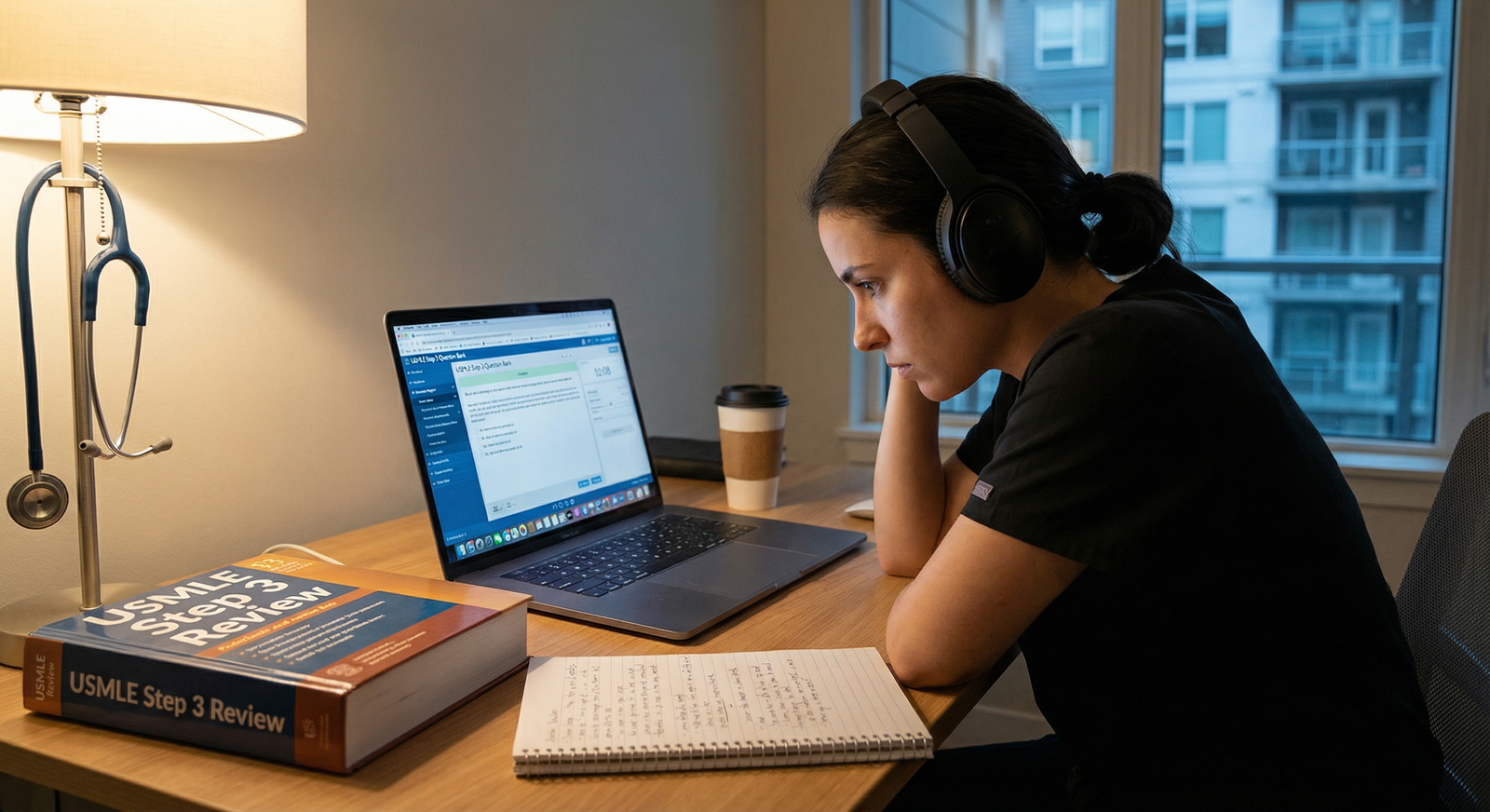
The United States Medical Licensing Examination (USMLE) Step 3 is the final exam in the USMLE sequence and a major milestone in medical licensing. It is designed to assess whether you can apply medical knowledge and clinical skills essential for the unsupervised practice of medicine, with particular emphasis on patient management in ambulatory and inpatient settings.
Unlike Step 1 and Step 2 CK, USMLE Step 3 focuses less on memorization and more on integrated clinical decision-making, long-term management, and systems-based practice. Understanding the exam format in detail is one of the most effective ways to reduce anxiety, plan your studying, and perform at your peak.
This guide breaks down the structure, timing, scoring, and preparation strategies for Step 3, with practical tips tailored to busy residents and international medical graduates.
Overview: What USMLE Step 3 Really Tests
USMLE Step 3 is typically taken during residency or late in medical school (for some programs that allow early sitting). It is often perceived as an exam you can “coast through,” but that attitude can be risky—especially if you are pursuing competitive specialties, fellowships, or visas that may consider your entire USMLE transcript.
Core Purpose of Step 3
Step 3 evaluates your ability to:
- Apply biomedical and clinical science in the context of real patients
- Make safe, evidence-based diagnostic and management decisions
- Prioritize patient safety and cost-effective care
- Manage acute and chronic conditions over time
- Navigate health maintenance, health promotion, and population-based care
In other words, Step 3 asks: Can this physician practice independently and safely, without direct supervision?
Key Differences from Step 1 and Step 2 CK
- More emphasis on management rather than just diagnosis
- Two-day format with different focuses each day
- Inclusion of Computer-based Case Simulations (CCS)—interactive cases that simulate real patient encounters
- Greater focus on ambulatory care, chronic disease management, and systems-based practice
Understanding this conceptual shift is critical for effective exam preparation.
Structure of USMLE Step 3: Two-Day Exam Format
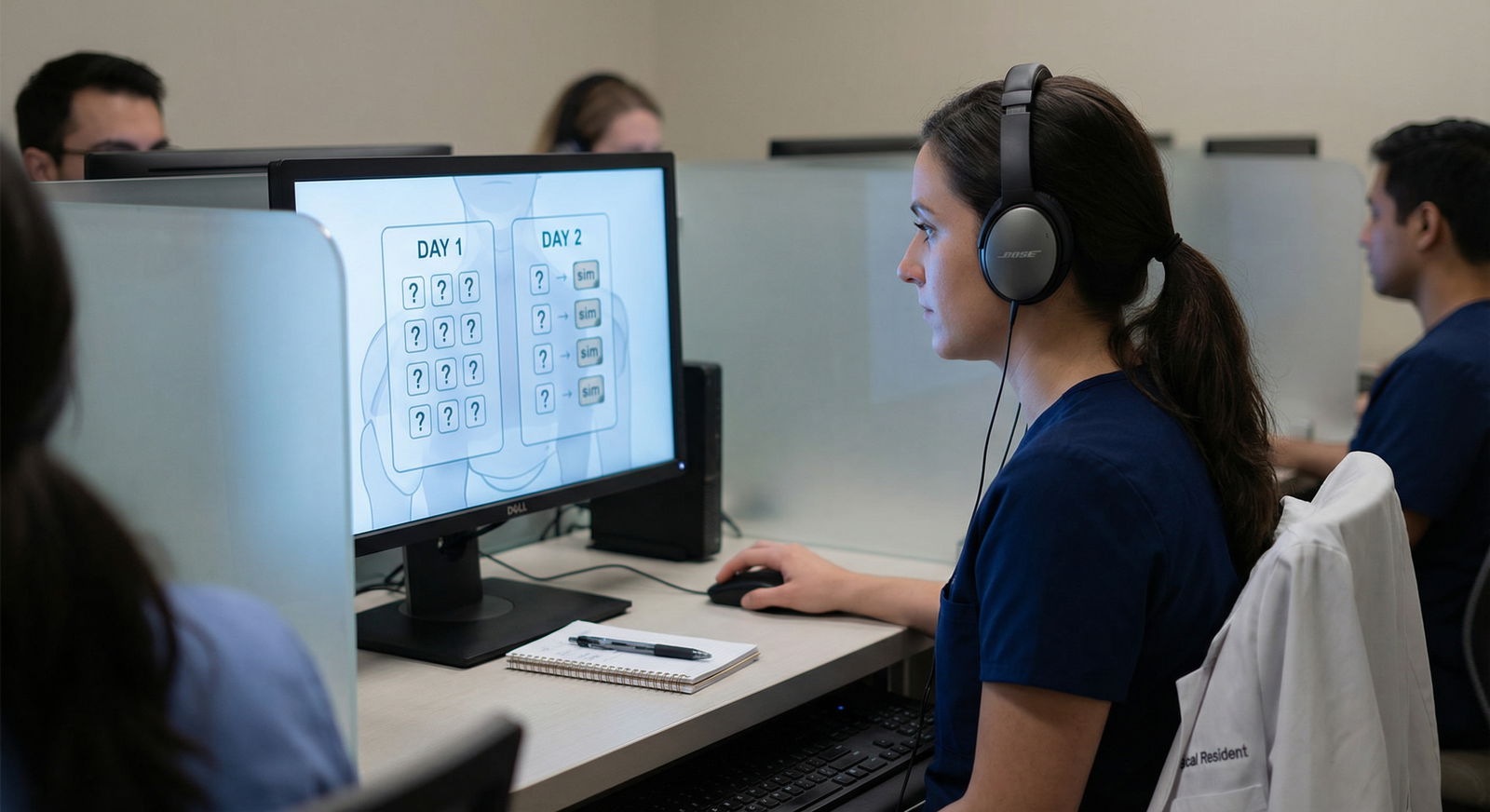
USMLE Step 3 is administered over two consecutive days, each with a different structure and emphasis. Knowing the exact format allows you to train your stamina and practice time management, both of which are crucial to success.
Day 1: Foundations of Independent Practice (FIP)
Day 1 focuses on foundational medical knowledge and how well you apply it within the context of independent clinical practice.
Format and Timing for Day 1
- Question Type: Multiple-Choice Questions (MCQs) only
- Approximate Total Questions: ~233 MCQs
- Blocks: 6 blocks of 38–40 questions each
- Total Testing Time: About 6 hours of testing time
- Total Day Length: Up to 7 hours, including an optional tutorial and breaks
You receive a total pool of break time for the whole day (usually 45 minutes or so, plus any unused tutorial time). You can allocate this break time between blocks as you choose.
Content Emphasis on Day 1
Day 1 emphasizes:
Core medical knowledge across:
- Internal medicine
- Surgery
- Pediatrics
- Obstetrics and gynecology
- Psychiatry
- Emergency medicine and subspecialties
Cross-cutting competencies such as:
- Diagnosis and initial management
- Use and interpretation of diagnostic tests
- Medical ethics and professionalism
- Epidemiology, biostatistics, and population health
This day often feels similar to an advanced Step 2 CK, but the questions may incorporate longer stems, multi-step reasoning, and management nuances.
Example of a Typical Day 1 Question Style
You may see a question that:
- Presents a 45-year-old patient with chest pain, risk factors, and lab results
- Asks not just for the most likely diagnosis, but:
- The next best diagnostic step,
- Or the most appropriate initial management,
- Or the best long-term strategy given a comorbidity profile.
The emphasis is on thinking like a resident nearing independent practice, not like a student recalling isolated facts.
Day 2: Advanced Clinical Medicine (ACM)
Day 2 is more complex and simulates real clinical workflow. It combines traditional MCQs with Computer-based Case Simulations (CCS), where you manage virtual patients in real time.
Format and Timing for Day 2
MCQs:
- ~180 MCQs
- 6 blocks of approximately 30 questions each
- About 6 hours of MCQ testing
CCS Cases:
- Approximately 13 Computer-based Case Simulations
- Total CCS time is around 3 hours
- Each case has a set maximum time in “exam minutes,” but simulated time within the case (e.g., hours, days of clinical time) can advance as you order tests and interventions.
Total Day Length: Up to 9 hours, including breaks
Day 2 is more mentally draining than Day 1 because it demands rapid switching between question styles, sustained concentration, and detailed patient management.
MCQs on Day 2
The MCQs on Day 2 often focus on:
- Longitudinal management of chronic diseases
- Ambulatory care and outpatient follow-up
- Inpatient care, including ICU and ER triage
- Complex clinical decision-making and risk-benefit analysis
- Health maintenance, preventive care, and screening
You may see questions about:
- When to escalate therapy in resistant hypertension
- How to adjust medications in patients with comorbid renal or hepatic disease
- Appropriate cancer screening given detailed patient risk factors
Clinical Case Simulations (CCS): What to Expect
The CCS portion is what truly distinguishes USMLE Step 3 from the earlier exams.
How CCS Cases Work
In CCS, you are presented with a clinical scenario—for example:
A 62-year-old man presents to the ER with shortness of breath and chest pain.
You act as the managing physician, and you can:
- Take a history and perform a physical exam (by selecting options)
- Order diagnostic tests (labs, imaging, EKG, cultures, etc.)
- Initiate treatments (medications, fluids, oxygen, procedures)
- Choose monitoring and follow-up steps
- Determine disposition (admit, discharge, ICU transfer, etc.)
- Advance time to see how the patient responds to your interventions
Each CCS case has:
- A set time limit in exam minutes (often 10–20 minutes of real exam time)
- Internal simulated time (hours to days) that advances as you order tests or treatments
- A flexible endpoint: cases may end early if you manage appropriately and reach the necessary clinical endpoint.
Types of Conditions Commonly Seen
While content is variable, cases often include:
- Acute emergencies (e.g., myocardial infarction, sepsis, acute abdomen)
- Common inpatient problems (e.g., COPD exacerbation, pneumonia, GI bleed)
- Chronic conditions requiring long-term plans (e.g., diabetes, hypertension, depression)
- Obstetric and pediatric presentations
- Preventive care visits and well-child checks
The key is to treat these simulations exactly like real patients: stabilize first, then diagnose, then refine treatment and follow-up.
Scoring of USMLE Step 3: How Your Performance Is Assessed
Understanding how Step 3 is scored can help you prioritize your efforts in exam preparation.
Overall Scoring System
- Step 3 scores are reported as a three-digit score.
- You must pass the exam as a whole; Day 1 and Day 2 are not passed separately.
- However, your performance on each component (Day 1 MCQ, Day 2 MCQ, CCS) contributes to the final composite score.
The minimum passing score is periodically updated by the USMLE program. Always check the official USMLE website for the current passing standard, but aim above the minimum—especially if:
- You are applying to competitive specialties or fellowships
- You are an international medical graduate (IMG) where programs may scrutinize scores
- You want a strong overall licensing profile
Scoring of MCQs
- Each MCQ block is equally weighted.
- There is no penalty for guessing—incorrect answers do not subtract points.
- Leaving questions blank is worse than guessing; always select an answer for every question.
- Questions may vary in difficulty, but the scoring system accounts for this.
Scoring of CCS Cases
The CCS portion uses a multifactorial scoring system that evaluates:
- Appropriateness and timeliness of your actions
- Whether you:
- Recognize and manage life-threatening issues urgently
- Order necessary, high-yield tests (without excessive, harmful, or unnecessary ones)
- Choose correct medications with appropriate dosing and route
- Provide appropriate follow-up, counseling, and preventive care
- The efficiency of your decisions: ordering tests in a logical sequence, not delaying critical interventions
You are not penalized for advancing the simulation clock appropriately. You are penalized for unsafe, harmful, or grossly unnecessary actions, or for failing to act when needed.
How Important Is a High Step 3 Score?
Passing is essential for medical licensing and progression in many residency programs. While individual programs vary in how much they focus on Step 3:
- A solid score can strengthen applications for:
- Competitive fellowships
- Visa renewals or status changes (for IMGs)
- Future job positions or state licensing where full USMLE performance is reviewed
At a minimum, early and successful completion of USMLE Step 3 can relieve a major source of stress during residency.
Strategic Preparation for the USMLE Step 3 Format
Optimizing your exam preparation starts with tailoring your strategy to the Step 3 format and your clinical schedule. Many examinees are residents juggling long hours, so efficiency matters.
1. Review the Official Content Outline and Exam Structure
Start at the USMLE official website:
- Download and study the Step 3 Content Outline and sample materials.
- Identify major content categories: internal medicine, surgery, OB/GYN, pediatrics, psychiatry, preventive medicine, etc.
- Note non-clinical domains often tested:
- Biostatistics and epidemiology
- Quality improvement and patient safety
- Ethics, professionalism, and legal aspects of care
Use this outline as a master checklist to avoid blind spots in your studying.
2. Use Targeted Question Banks for MCQs
Question banks remain the cornerstone of exam preparation for USMLE Step 3.
How to Use Question Banks Effectively
Choose a reputable Step 3–focused question bank with:
- Up-to-date questions
- Detailed explanations and references
- Strong coverage of ambulatory and chronic disease management
Study in timed, exam-like blocks:
- Simulate 38–40 question blocks to mimic Day 1
- Simulate 30-question blocks for Day 2 style
- Practice under pressure to build stamina and pacing.
Review explanations thoroughly:
- Study why each incorrect answer is wrong, not just why the correct answer is right.
- Create brief notes or flashcards for recurring themes (e.g., treatment algorithms for AFib, sepsis bundles).
Mix tutor mode and timed mode:
- Use tutor mode early to build understanding.
- Transition to timed blocks as you approach the exam date.
3. Practice with Full-Length Practice Exams
Identify resources that offer self-assessments or full-length practice exams:
- Use them at least once midway and once near the end of your prep.
- Simulate real testing conditions:
- Same start time as your scheduled exam
- Minimal interruptions
- Same break structure you plan to use
Practice exams help you:
- Refine time management
- Recognize fatigue patterns
- Identify weak content areas for targeted review
4. Master the CCS Format and Software
The CCS component requires both clinical reasoning and technical fluency with the exam interface.

Get Familiar with the CCS Interface Early
- Download and practice with the official CCS practice software from the USMLE website.
- Learn:
- How to order tests and treatments quickly
- How to advance clinical time and interpret results
- Where to find options (e.g., admissions, consults, patient counseling)
Technical fluency prevents you from wasting precious exam time figuring out where things are in the software.
CCS Strategy Tips
Stabilize first:
- In emergencies, prioritize ABCs (airway, breathing, circulation).
- Order oxygen, IV access, cardiac monitor, vital signs, and immediate stabilizing measures early.
Order logical, not excessive, workups:
- Choose tests that will change management.
- Avoid shotgun ordering of expensive or invasive studies “just in case.”
Think through the full encounter:
- Admission vs discharge decisions
- Pain management and DVT prophylaxis
- Counseling on smoking cessation, lifestyle modification, follow-up appointments
Advance time purposefully:
- After ordering tests, advance time to receive results.
- Reassess the patient after interventions (e.g., repeat vitals, physical exam, labs).
Many CCS prep resources offer sample cases with scoring explanations, which can be extremely valuable in understanding what the exam rewards and penalizes.
5. Leverage Clinical Experience and Study Groups
If you are in residency or have recent clinical experience, leverage it strategically.
Reflect on common admissions and clinic visits:
- Chest pain, dyspnea, abdominal pain, altered mental status
- Diabetes follow-up, hypertension management, prenatal care
Discuss complex or interesting cases with peers and seniors:
- Ask how they would approach similar patients.
- Compare their reasoning to what Step 3 typically expects (evidence-based, guideline-driven care).
Study groups can be especially helpful for:
- Reviewing ethics and systems-based questions
- Debating gray-area management decisions
- Practicing mock CCS cases verbally (“What would you order next, and why?”)
6. Create a Realistic Study Schedule
For many examinees—especially residents—time is limited.
- Plan a 6–10 week structured schedule, depending on your baseline and obligations.
- Aim for:
- Regular MCQ practice (e.g., 20–40 questions/day early, increasing later)
- 1–3 CCS practice cases several times per week
- Dedicated time for weak topics (e.g., pediatrics, OB/GYN, ethics, or biostatistics)
Build a flexible schedule that accounts for post-call fatigue and days off, rather than aiming for perfect daily consistency.
Conclusion: Turning Format Knowledge into Step 3 Success
USMLE Step 3 is more than just another exam—it is the final checkpoint before you can be fully licensed for independent medical practice. Its two-day structure, combining MCQs and CCS, tests your clinical knowledge, clinical skills, and real-world decision-making in a way that closely mirrors day-to-day patient care.
By:
- Understanding the exact format and timing of both days
- Practicing extensively with MCQ question banks
- Gaining fluency and confidence with CCS simulations and software
- Leveraging clinical experience and focused review of high-yield topics
you can approach this exam with confidence, not fear.
A thoughtful, structured approach to exam preparation will not only help you pass Step 3—it will refine your clinical reasoning, strengthen your patient management skills, and support your long-term success in medical education and practice.
Frequently Asked Questions About USMLE Step 3
1. What is the current passing score for USMLE Step 3?
The minimum passing score for Step 3 is periodically reviewed and may change over time. You should always verify the current passing standard directly on the official USMLE website or through your residency program’s education office. While knowing the minimum is useful, aim significantly higher, especially if you are:
- Pursuing competitive specialties or fellowships
- An international medical graduate (IMG) whose scores will be carefully reviewed
- Looking to build a strong overall licensing profile
2. How much time do I have for each CCS case?
Most CCS cases provide 10–20 minutes of real exam time per case, although the simulated clinical time may span hours or days. Some cases are shorter “acute” scenarios, while others involve more extended management. Because cases can end early if you have met the required management milestones, efficient and appropriate management can save time.
It is crucial to practice CCS cases in timed conditions so you can develop a natural sense of pacing and learn how much you can safely accomplish in each case.
3. What are the best resources to prepare for USMLE Step 3?
Common high-yield resources for Step 3 include:
- Step 3–specific question banks with MCQs and CCS-style questions
- Official USMLE practice materials and CCS software
- Concise clinical review books or online review courses
- Dedicated CCS practice platforms that simulate the real exam interface
When choosing resources, prioritize updated content, strong coverage of ambulatory and chronic disease management, and robust explanations that build your reasoning, not just your recall.
4. How should I balance studying with residency or other clinical duties?
Balancing medical education with demanding schedules is challenging but manageable with planning:
- Start early—aim for incremental, consistent study over 6–10 weeks, rather than a short, intense cram.
- Use short downtime (e.g., between patients, post-call when alert) for small blocks of questions or quick review.
- Reserve days off or lighter rotations for longer study sessions and full practice blocks.
- Communicate with your program leadership if you need a more compatible schedule around your test date, especially if your visa or promotion depends on timely passage.
5. Can I retake USMLE Step 3 if I fail, and does it hurt my career?
Yes, you can retake Step 3 if you do not pass, but there are limits to how many times and within what time frame you can attempt it. These rules may vary based on state licensing boards and USMLE policies, so always verify current regulations.
A single failure is not necessarily career-ending, but:
- Programs and licensing boards will see it on your record.
- Some competitive specialties or employers may view multiple failures unfavorably.
If you fail:
- Conduct an honest post-exam analysis of your weaknesses (content gaps, CCS inexperience, test anxiety, time management).
- Adjust your prep strategy—more structured studying, CCS practice, or use of different resources.
- Give yourself sufficient time before the next attempt to make meaningful improvements.
By fully understanding the format, expectations, and scoring of USMLE Step 3—and aligning your exam preparation accordingly—you will be far better equipped to succeed on this crucial step toward full medical licensing and independent practice.