
COMLEX Level 3 is not “just a primary care exam.” That line is lazy, misleading, and dangerous if you actually believe it and study accordingly.
You will hear it everywhere: from co-residents on nights, from that one PGY-3 who “barely studied,” from Facebook groups full of bad advice. The myth: “Level 3 is basically all primary care and OMM; if you did okay on Level 2, you’ll be fine.”
The blueprint data does not support that. At all.
Let’s walk through what NBOME actually says they’re testing on COMLEX Level 3, how that differs from Step 3 and Level 2, and what this means for how you should study instead of cramming UTI guidelines and calling it a day.
The “All Primary Care” Myth: Where It Comes From
I know exactly where this myth was born, because I’ve watched it play out in real time.
You’ve got:
- Mostly primary care–oriented CCS-style cases and CDM scenarios
- A heavy focus on outpatient-ish management decisions
- Reputation among interns: “lots of HTN, DM, prenatal care, and OMM”
So someone walks out, remembers the straightforward clinic-style questions (because those are easiest to recall), forgets the weird ICU/sepsis/ortho/OB-on-fire cases, and tells everyone coming behind them: “It’s just primary care.”
Survivorship bias 101.
When you look at the NBOME blueprint, you see a very different picture: a broad, systems-based, multi-specialty exam that just happens to be framed in a “patient management” lens.
Let me show you instead of asking you to trust opinions.
What the COMLEX Level 3 Blueprint Actually Shows
NBOME breaks Level 3 down along two axes:
- Dimension 1 – Patient Presentations (complaints/situations)
- Dimension 2 – Physician Tasks (what you’re doing with the information)
The “it’s all primary care” myth pretends Dimension 1 is basically “family medicine/clinic problems.” The blueprint says otherwise.
Dimension 1: Patient Presentations – Not Just Clinic Cough and Knee Pain
NBOME groups presentations into categories like:
- Community Health and Wellness
- Human Development, Reproduction, and Sexuality
- Nervous System and Mental Health
- Musculoskeletal System
- Respiratory System
- Cardiovascular System
- Gastrointestinal System and Nutritional Health
- Genitourinary and Renal Systems
- Endocrine System and Metabolic Disorders
- Integumentary System
- Immune System and Hematologic Disorders
In other words: the whole body. Every major system. In both inpatient and outpatient flavors.
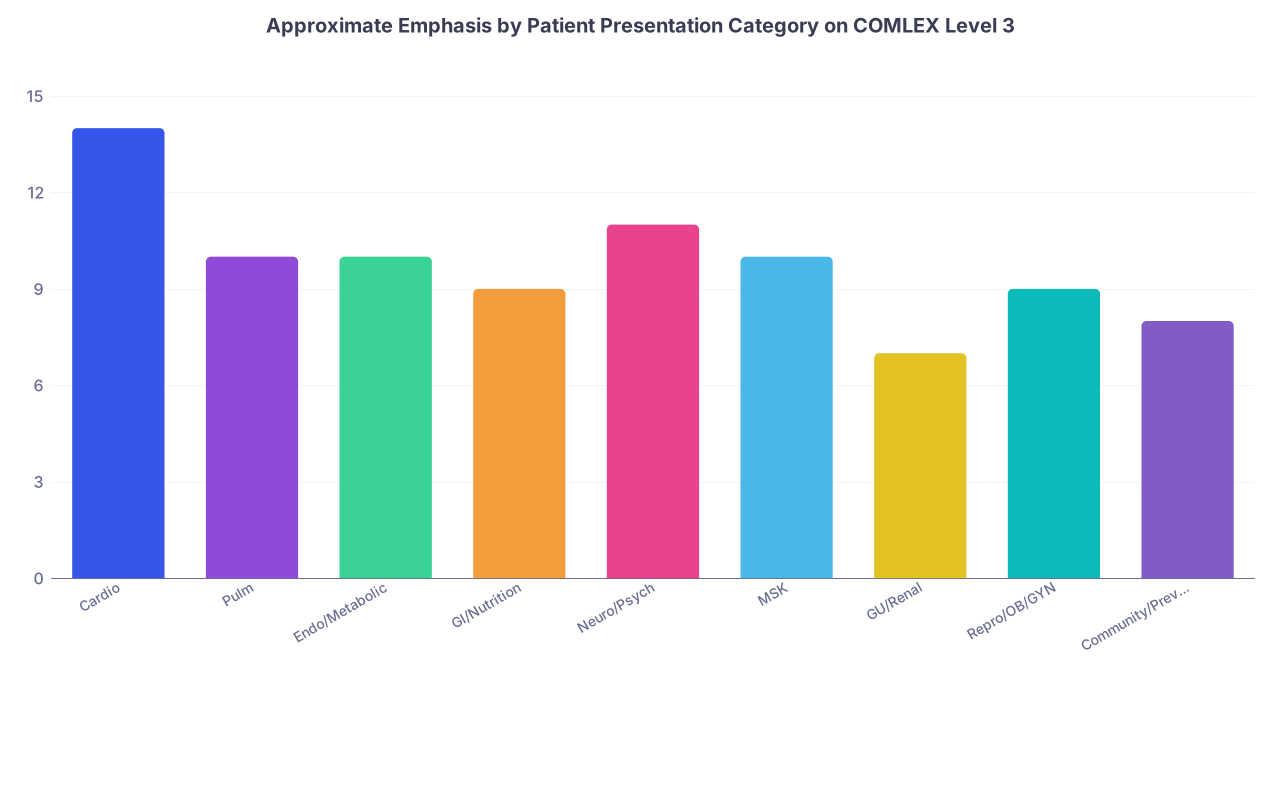
Here’s a simplified view of approximate emphasis you actually see on Level 3-type content (based on NBOME materials plus what shows up repeatedly in common question banks and released content):
| Category | Value |
|---|---|
| Cardio | 14 |
| Pulm | 10 |
| Endo/Metabolic | 10 |
| GI/Nutrition | 9 |
| Neuro/Psych | 11 |
| MSK | 10 |
| GU/Renal | 7 |
| Repro/OB/GYN | 9 |
| Community/Preventive | 8 |
Those numbers aren’t exact NBOME percentages (they don’t publish a nicely tabulated breakdown), but they’re representative of what’s consistently hit:
- Cardiovascular, neuro/psych, MSK, endocrine, and reproductive are not minor players
- OB/GYN is not a side note
- GU/renal, GI, and community health keep showing up
Is hypertension “primary care”? Sure. Is eclampsia in the ICU primary care? No. What about acute cord compression, unstable angina, upper GI bleeds, or septic shock? These are all fair game.
The blueprint assumes you’re an osteopathic physician in residency, not an outpatient FM clerk. That’s a very different skillset.
Dimension 2: What They’re Actually Testing You To Do
This is where people really misunderstand Level 3.
They think: “Level 2 but more outpatient and with OMM.”
NBOME thinks: “Can this person manage patients independently at a resident level?”
Dimension 2 buckets include (summarized):
- Health Promotion / Disease Prevention
- History and Physical / Diagnostic Workup
- Establishing Diagnosis
- Ongoing Management (acute, chronic, inpatient, outpatient)
- Health Care Systems, Ethics, Legal, and Professionalism
- Osteopathic Principles and Manipulative Treatment (OPP/OMM integrated)
On the exam, that means:
- Not just “what’s the diagnosis,” but “what’s the next best step right now with limited resources, and how do you follow this patient over time?”
- Not just “what’s the bug,” but “which antibiotic, what route, how long, and what do you monitor?”
- Not “memorize random OMM factoids,” but “recognize dysfunction patterns, choose an appropriate and safe technique, and know when not to manipulate.”
Compare how “primary care” this really looks when you map it out against what you actually do as a resident.

COMLEX Level 3 vs USMLE Step 3 vs COMLEX Level 2: The Reality
If you want a sanity check, you compare it against two things you probably know or have heard about: Step 3 and COMLEX Level 2-CE.
Here’s a rough, conceptual comparison:
| Aspect | COMLEX Level 2-CE | COMLEX Level 3 | USMLE Step 3 |
|---|---|---|---|
| Training Level Assumed | Senior med student | Resident (early PGY) | Resident (early PGY) |
| Emphasis | Diagnosis & initial management | Ongoing management & systems | Ongoing management & systems |
| OMM/OPP | Moderate, often standalone | Integrated into management | None |
| Primary Care Outpatient Feel | High | High but not exclusive | Moderate-high |
| Inpatient/Acute Care Content | Present but limited depth | More frequent & complex | High, especially in CCS cases |
| Systems/Legal/Ethics | Present | More prominent | Prominent |
COMLEX Level 3 and Step 3 are philosophically similar: “Are you safe and functional as an independent physician?” The wrapping is different (OMM and osteopathic language), but the underlying scope is broad.
So no, Level 3 is not some narrow “family med office only” exam. It’s more like: family med as the base, with flashes of hospital medicine, OB, neuro, EM, psych, and surgery thrown at you when you’re least ready.
Where the Blueprint Hits Hardest (And Where People Get Burned)
From watching who struggles and who coasts, the same pattern repeats: people who assume “all primary care” under-prepare the higher-acuity and specialty corners baked into the blueprint.
Let’s break down a few landmines that are absolutely blueprint-backed.
1. OB/GYN and Peripartum Emergencies
People treat OB like a niche. Level 3 does not.
Blueprint-wise, reproductive health and sexualty shows up in:
- Prenatal visits and routine screening
- High-risk pregnancy (preeclampsia, GDM, multiple gestation)
- Labor management and triage
- Postpartum complications: hemorrhage, infection, mood disorders
Where people get burned:
- Mismanaging severe-range BP in pregnancy
- Hesitating between magnesium vs. antihypertensives vs. delivery
- Not recognizing when C-section is mandatory
- Missing postpartum red flags
Those aren’t optional “maybe one question” topics. They’re recurrent.
2. Neuro/Psych – Beyond “Give an SSRI”
The blueprint includes Nervous System and Mental Health as a major category. That covers:
- Stroke evaluation and acute management
- Status epilepticus protocols
- Delirium vs dementia vs psychosis
- Acute suicidal ideation, medication adjustments, legal hold issues
If you walked into Level 3 expecting “just depression meds and headache workups,” you’ll have a bad time when they throw in anticoagulation decisions after a stroke, or drug–drug interactions in a patient on multiple psych meds.
3. Acute Care / Hospital Medicine
This is where the “all primary care” line is outright dangerous.
I’ve seen people shocked by:
- Septic physiology and resuscitation details (fluids vs pressors, timing of antibiotics)
- Complex multi-morbidity inpatient cases: CHF exacerbation + renal failure + AFib
- Perioperative medicine: anticoagulation bridging, beta blocker continuation, etc.
Remember the blueprint language: ongoing management, systems-based practice, and patient safety. That screams hospitalist-level thinking as much as clinic.
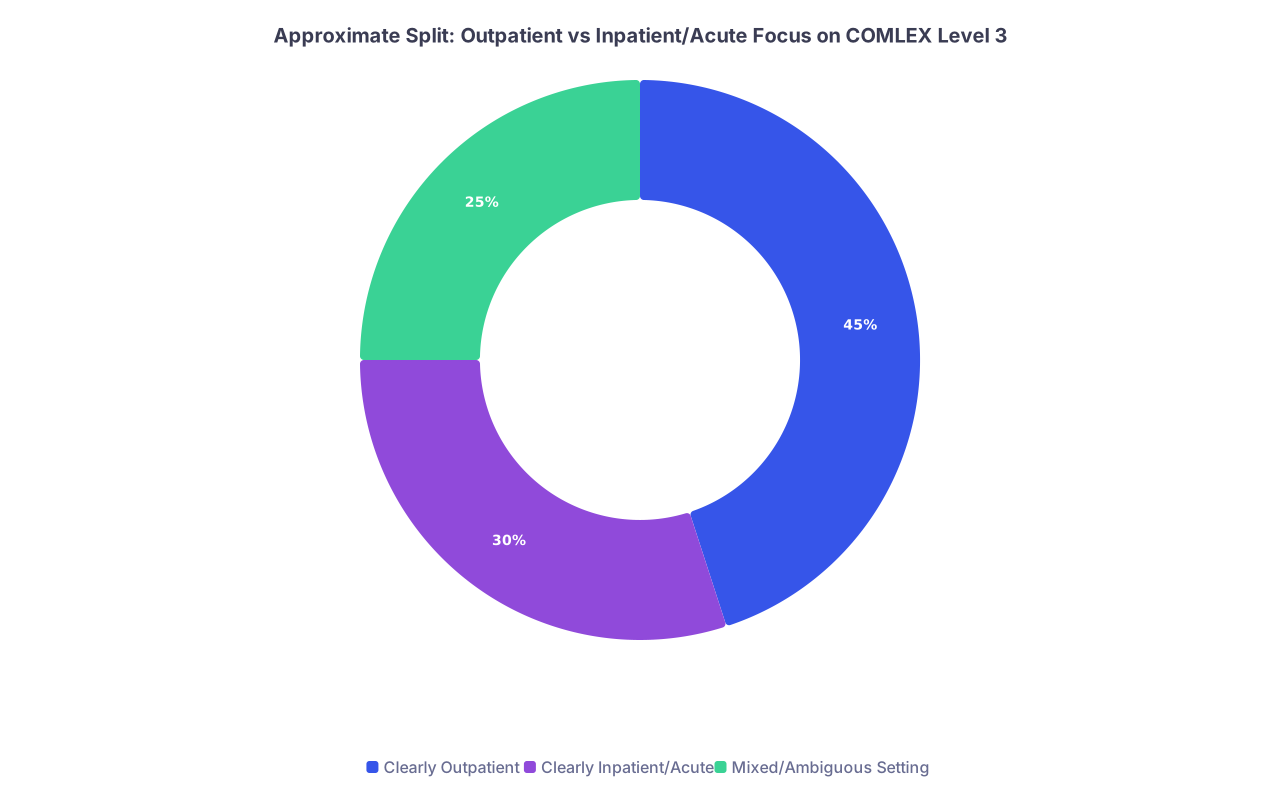
| Category | Value |
|---|---|
| Clearly Outpatient | 45 |
| Clearly Inpatient/Acute | 30 |
| Mixed/Ambiguous Setting | 25 |
Again: not exact published values, but a fair reflection of what repeatedly appears on practice and real exams. A big chunk of questions live in that messy gray zone where you need to think like someone who admits patients, not just refers.
The OMM/OPP Trap: Integrated, Not Isolated
Another misconception: “Level 3 is OMM heavy, so the rest must be lighter.”
Wrong direction.
OMM on Level 3 is often:
- Embedded in case stems (“patient with low back pain, you note L4 somatic dysfunction…”)
- Tested for safety (when not to treat: anticoagulated patient, spinal infection, cauda equina)
- Tested in relation to systems (rib dysfunction and pulmonary disease, lymphatics in infections, etc.)
The exam is not: “Name the axis of sacral torsion for 20 questions.” It’s:
“Can you think like a DO who integrates manipulative medicine appropriately into real-world management?”
So the myth that “it’s all primary care and OMM” is doubly wrong: they’re not swapping out hospital content for OMM. They’re layering OMM on top of the full-body, full-scope blueprint.
If your OMM prep looks like random flashcards of Chapman points but you freeze when figuring out whether to manipulate a patient with metastatic cancer to the spine? That’s a blueprint mismatch.
So How Do You Study, Knowing the Blueprint Reality?
I’ll be blunt. The worst Level 3 prep strategy is:
- Casual pass through one FM-heavy Qbank
- Minimal to no review of OB/neuro/acute care
- Last-minute skim of some OMM PDF
- Blind faith in “it’s easier than Level 2”
That’s how people fail an exam they should pass comfortably.
Here’s a better, blueprint-aligned approach:
Anchor in question banks that mimic the full scope, not just family med. Use a major USMLE Step 3–style Qbank plus a COMLEX-specific resource or smaller bank for OMM integration.
Deliberately hit your blind spots, especially:
- OB triage and severe preeclampsia/eclampsia
- Neuro emergencies and stroke care
- Sepsis and inpatient medicine
- Psych emergencies and safe disposition
Treat OMM as clinical decision-making, not trivia. Practice questions where you:
- Decide if OMM is indicated or contraindicated
- Choose between techniques based on patient condition
- Recognize when OMM is not the priority (e.g., unstable vitals)
Think in “resident mode,” not “student mode.” Every question, ask:
- What would I actually do next in real life?
- What’s safe, guideline-consistent, and cost-conscious?
- What’s my backup if this patient worsens?
You do not need to become an ICU attending or memorize every surgical detail. But you absolutely do need to function across systems and settings.

| Step | Description |
|---|---|
| Step 1 | Review NBOME Blueprint |
| Step 2 | Identify Weak Systems |
| Step 3 | Select Qbanks Covering Full Scope |
| Step 4 | Daily Mixed Blocks: Outpatient + Inpatient |
| Step 5 | Targeted Review: OB, Neuro, Acute Care |
| Step 6 | Integrate OMM as Clinical Tool |
| Step 7 | Timed Practice + Test-Day Simulation |
The Bottom Line: What the Data Actually Says
Strip away the folklore and you’re left with this:
COMLEX Level 3 is system-wide, not primary care–only. The blueprint spans all major organ systems, multiple settings (outpatient, inpatient, emergent), and life stages. Primary care is the frame, not the full picture.
The exam tests resident-level management and systems thinking. It’s not just “spot the diagnosis.” It’s: manage over time, prioritize safety, integrate guidelines, and understand health systems and professionalism.
OMM is integrated, not a free pass. You’re expected to think like an osteopathic physician who can use or withhold OMM appropriately while still handling the same breadth of medicine any early resident faces.
If you study like it is “all primary care,” you’re preparing for an exam that does not exist. Study like a resident who actually has to sign orders and accept pages at 3 a.m., and COMLEX Level 3 becomes exactly what it’s supposed to be: challenging but very passable.