
Most students fail COMLEX Level 3 CCS not because they lack knowledge, but because their first 5 orders are wrong or too slow.
Let me be blunt: if you cannot reflexively fire off the right initial orders in emergency vignettes, you will bleed points even if your differential is perfect. COMLEX Level 3 is ruthless about two things in emergencies:
- Time to critical interventions.
- Whether you touch ABCs before anything else.
We are going to build a “first 5 orders” mental macro you can drop into almost any emergency case. Then I will walk through the high‑yield emergency archetypes that NBOME loves and show you exactly what those first orders should look like.
The COMLEX Level 3 Emergency Mindset
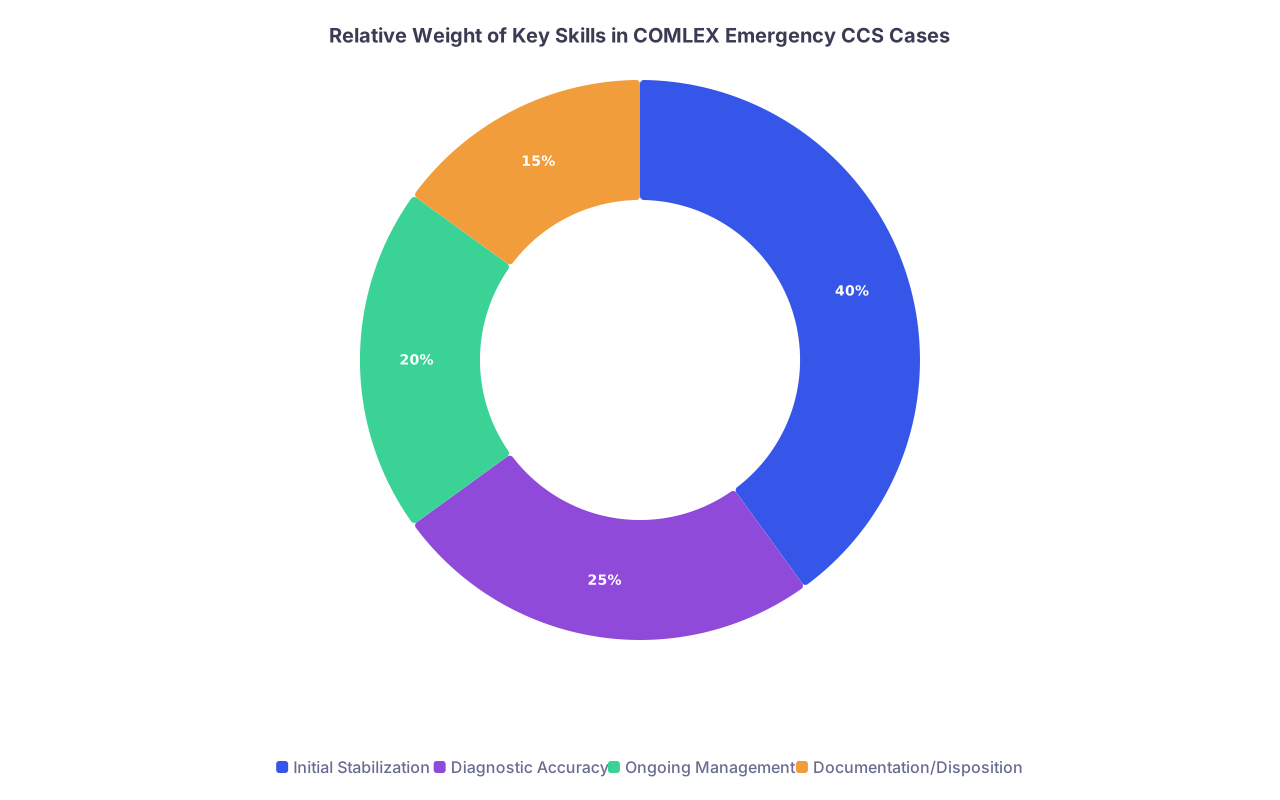
| Category | Value |
|---|---|
| Initial Stabilization | 40 |
| Diagnostic Accuracy | 25 |
| Ongoing Management | 20 |
| Documentation/Disposition | 15 |
On CCS‑style cases (or the interactive cases on COMLEX Level 3), emergencies are basically graded on a “did you panic or did you act like a real PGY‑1?” scale. The software tracks:
- Whether you recognize an emergency based on vitals and opening text.
- How fast you move the clock after starting critical orders.
- Whether you prioritize life‑saving interventions over “cute” labs.
You are not being tested on exotic OMM here. You are being tested on pattern recognition and speed. Your internal script must be:
- Is this unstable?
- If yes, where is the airway, where is the blood pressure, where is the IV access, where is the monitor?
- Only then: what labs/imaging?
You should almost never spend the first 30–60 simulated minutes ordering D‑dimer, ESR, ANA, or “lipid panel” in someone who is hypotensive and altered. That is how people fail.
So we build a playbook.
Universal “First 5 Orders” Framework

| Step | Description |
|---|---|
| Step 1 | Emergency Vignette Opens |
| Step 2 | ABCs + Monitoring + IV Access |
| Step 3 | Focused H&P + Basic Orders |
| Step 4 | Targeted Life-Saving Therapy |
| Step 5 | Critical Labs + Bedside Tests |
| Step 6 | Reassess Vitals & Response |
| Step 7 | Unstable Vitals or Red-Flag Symptoms? |
In real life, you assess before ordering. On the exam, you do both almost simultaneously. For emergency‑type COMLEX Level 3 cases, the first “bundle” usually looks like this:
- Airway / breathing support
- Circulation / access / monitoring
- Focused, immediately actionable diagnostics
Let me make this painfully practical. A generic emergency “first 5 orders” scaffold you can adapt:
- Oxygen – via nasal cannula or non‑rebreather depending on distress
- Cardiac monitor and continuous pulse oximetry
- IV access – “IV access, peripheral x2” + normal saline bolus if hypotensive
- Bedside glucose (point‑of‑care)
- Focused diagnostic or therapeutic order based on the scenario pattern
- e.g., “Aspirin, chewable, 325 mg now” in chest pain
- “Normal saline bolus 20 mL/kg” in septic shock
- “Naloxone IV” in suspected opioid overdose
You will often add EKG and key stat labs immediately as well, but I want your brain to hard‑wire: oxygen, monitor, IV, glucose, then scenario‑specific move.
Now, let us go case by case, because COMLEX will not tell you “this is sepsis.” They will give you a 63‑year‑old with fever, confusion, BP 82/50, HR 120, you are the night float.
Chest Pain: Suspected ACS / MI
This one shows up in different outfits: 58‑year‑old man with substernal pressure, diabetic woman with “epigastric pain,” elderly patient with dyspnea and fatigue. It is all the same game: rule out and treat ACS until proven otherwise.
Pattern Clues
- Chest pain, pressure, tightness, radiating to arm/jaw/back
- Diaphoresis, nausea, dyspnea, anxiety
- Risk factors: age, DM, HTN, HLD, smoking, family history
Your first orders must scream: “I am ruling out MI and not missing time‑dependent therapy.”
First 5–7 orders for suspected ACS (stable vitals):
- Oxygen – nasal cannula if SpO2 < 90–92%
- Cardiac monitor + continuous pulse oximetry
- IV access, peripheral x2
- EKG – STAT
- Aspirin, chewable, 325 mg PO, now
- Sublingual nitroglycerin 0.4 mg q5min x3 PRN chest pain (if BP OK, not right ventricular MI suspected, no PDE5 use)
- Bedside glucose
Then quickly stack:
- Troponin I (or T), CK‑MB
- Basic labs: CBC, BMP, PT/INR, PTT, lipid panel (less urgent), type and screen
- Portable chest X‑ray
If the EKG suggests STEMI, the next “critical moves”:
- Consult cardiology STAT
- Prepare for emergent PCI (door‑to‑balloon < 90 minutes)
- Heparin (unfractionated IV) if no contraindications
- Clopidogrel or other P2Y12 inhibitor if PCI planned
What NBOME watches: how fast did you get aspirin, EKG, and monitoring? If you start ordering “TSH” and “A1c” before those, you are leaving points on the table.
Shock / Sepsis / Hypotension

Shock cases are pure pattern recognition. The most testable flavor is sepsis/septic shock. You do not have time to “slowly trend lactate.” You hit them with the bundle.
Pattern Clues
- Hypotension (SBP < 90) or MAP < 65
- Tachycardia, often fever, altered mental status
- Possible source: pneumonia, UTI, cellulitis, line infection, abdominal pain
- Cool or warm extremities, delayed cap refill
First 5 orders in suspected sepsis/hypotension:
- Oxygen – non‑rebreather mask if respiratory distress; nasal cannula if mild
- Cardiac monitor + continuous pulse oximetry + frequent BP (q5–15 min)
- IV access, peripheral x2 – plus: normal saline (or lactated Ringer) 30 mL/kg bolus
- Bedside glucose
- Broad‑spectrum IV antibiotics – after cultures, but do not delay too long
Simultaneously (rapidly add):
- Blood cultures x2 sets (from different sites)
- CBC with diff, CMP, lactate, coagulation panel
- Urinalysis + urine culture
- Chest X‑ray if respiratory symptoms
- Consider ABG if severe respiratory distress or concern for metabolic acidosis
If hypotension persists after fluid resuscitation:
- Start vasopressors – norepinephrine IV via central line (but do not wait 6 hours)
- ICU consult / admission
- Foley catheter to monitor urine output
On the exam, if you are debating “do I do CT abdomen now or antibiotics now?” the right answer is almost always: stabilize first, broad antibiotics early, imaging soon after if needed. They care about time to fluids and antibiotics.
Acute Dyspnea: Pulmonary Embolism vs COPD vs CHF
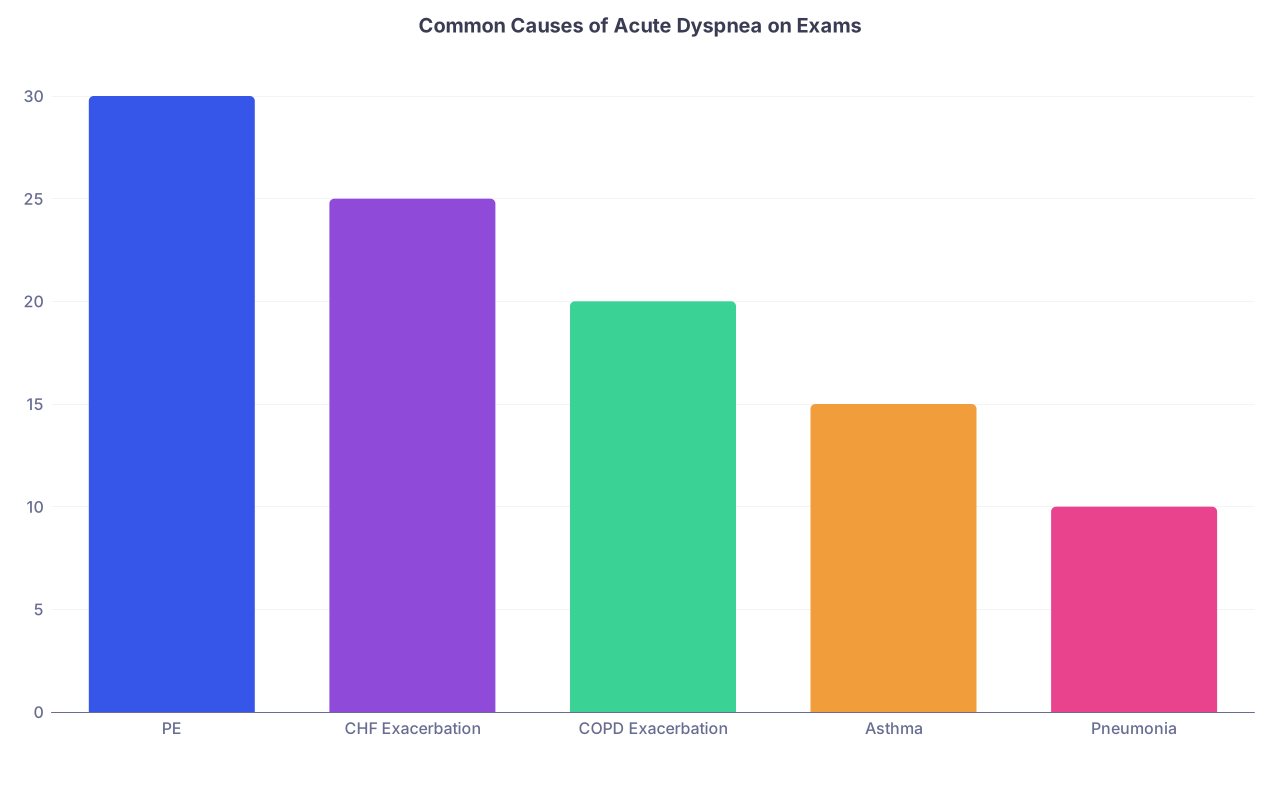
| Category | Value |
|---|---|
| PE | 30 |
| CHF Exacerbation | 25 |
| COPD Exacerbation | 20 |
| Asthma | 15 |
| Pneumonia | 10 |
Dyspnea is another COMLEX favorite. They can flip the diagnosis in small ways, so your first 5 orders must be generic respiratory stabilization, then branch.
Universal Dyspnea “First 5”
- Oxygen – titrate to SpO2 ≥ 92% (88–92% if COPD known)
- Cardiac monitor + continuous pulse oximetry
- IV access, peripheral x2
- EKG – dyspnea can be MI or arrhythmia
- Bedside glucose (especially if altered)
Then quickly add:
- Chest X‑ray
- ABG if severe distress, AMS, or possible CO2 retention
- CBC, BMP, troponin, BNP if CHF suspected
Now, scenario‑specific pivot:
If Pulmonary Embolism suspected
Pattern: pleuritic chest pain, tachycardia, hypoxia, recent surgery/immobilization, cancer, pregnancy.
Next critical orders:
- CT pulmonary angiography (if stable, normal creatinine, not pregnant)
- D‑dimer (if pretest probability low/moderate; but for COMLEX, they often give high pretest)
- If high suspicion and no major contraindication, start anticoagulation:
- IV unfractionated heparin or LMWH
Unstable PE (hypotension, severe hypoxia):
- ICU transfer
- Consider thrombolytics (alteplase) – this should appear early in your management if massive PE pattern
- Echocardiogram if CTA not feasible and patient too unstable
If CHF Exacerbation
Pattern: orthopnea, PND, peripheral edema, crackles, S3 gallop, cardiomegaly on CXR.
Add:
- IV furosemide
- Nitroglycerin IV (if hypertensive, no RV infarct)
- Place patient in upright position
- Strict I/O, Foley catheter
If COPD/Asthma exacerbation
Add quickly:
- Nebulized albuterol + ipratropium (duonebs)
- IV or PO systemic steroids (methylprednisolone or prednisone)
- ABG to monitor CO2 retention in COPD
- Consider noninvasive ventilation (BiPAP) if severe COPD exacerbation
Point: the first 5 orders are nearly identical in every acute dyspnea case. Oxygen. Monitor. IV. EKG. Glucose. You then layer disease‑specific therapy on top.
Altered Mental Status / Unresponsive Patient
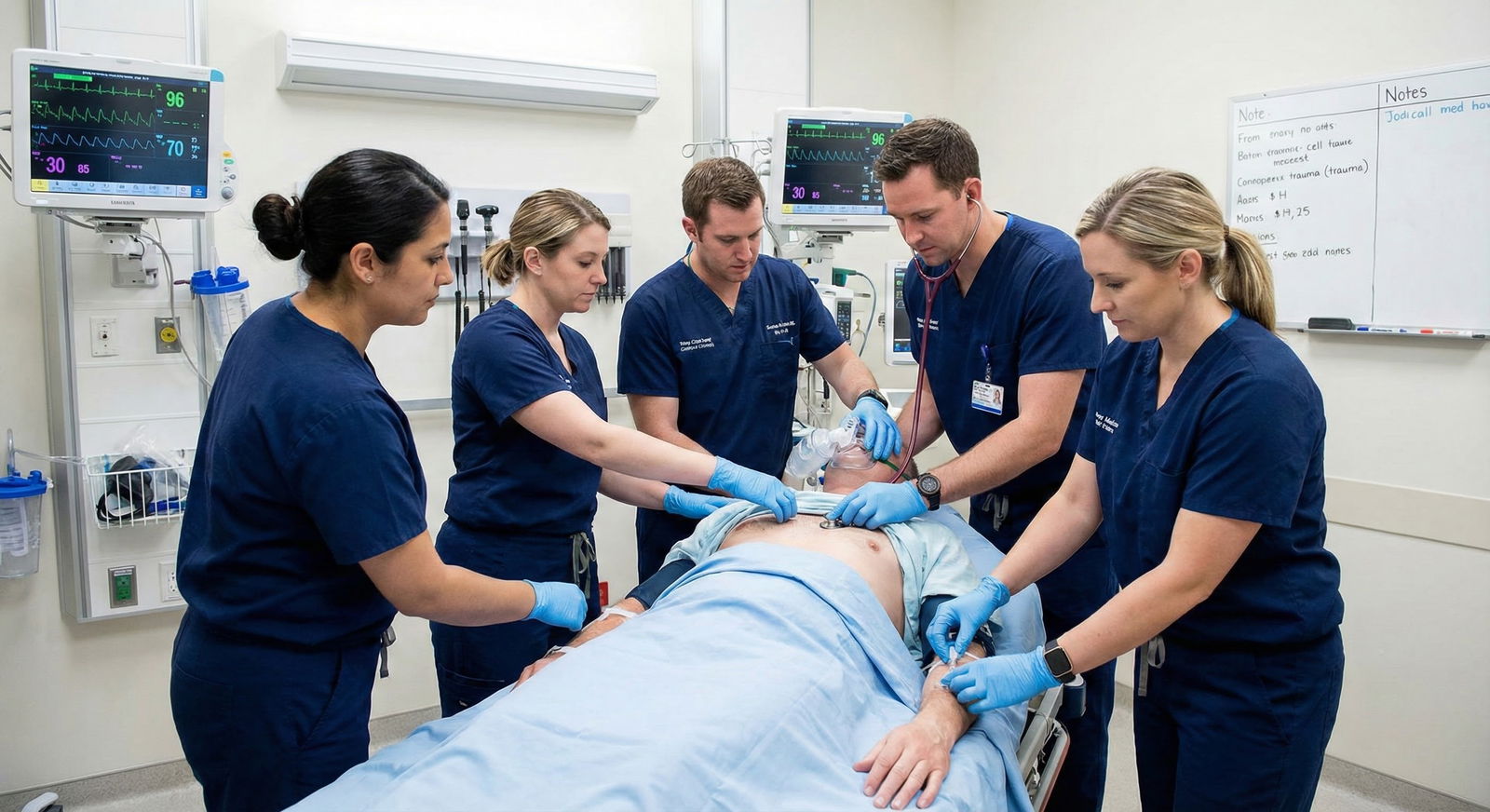
AMS cases can be seizures, strokes, hypoglycemia, intoxication, sepsis, or trauma. The exam does not care if you pick the right one at minute zero. They care that you stabilize and do not miss the immediately reversible causes.
First 5 Orders in Any AMS/Unresponsive Case
- Airway support
- “Airway assessment” and if needed: “Endotracheal intubation”
- Oxygen – non‑rebreather or bag‑valve mask as appropriate
- Cardiac monitor + continuous pulse oximetry + BP monitoring
- IV access, peripheral x2
- Bedside glucose – always
- Thiamine 100 mg IV then dextrose IV if hypoglycemia or suspected alcoholism/malnutrition
After those, you branch:
- Naloxone IV if pinpoint pupils / opioid suspicion
- ABG if unclear respiratory status
- Head CT without contrast if trauma, focal deficits, concern for bleed
- CMP, CBC, toxicology screen, serum osmolality, ethanol level, ammonia, TSH as needed
- Lumbar puncture if meningitis/encephalitis suspected (after CT if needed for safety)
Common exam trap: dextrose before thiamine in chronic alcoholic. In real life the risk is overstated, but COMLEX still expects “thiamine then dextrose” when you have time.
Also, if you see the phrase “unresponsive, snoring respirations, GCS 6” and your first move is “order MRI brain” instead of “intubate,” expect a scoring penalty.
Trauma: Blunt, Penetrating, and Ortho Emergencies
Trauma cases are very algorithmic. Think ATLS. Your first actions must look like primary survey, not “let me order a detailed MRI of the knee.”
Overall Trauma First 5 Orders
Assume this is ED, not outpatient.
- Airway management
- Airway assessment, cervical spine immobilization
- Oxygen via non‑rebreather or intubation if indicated
- Cardiac monitor + continuous pulse oximetry + frequent BP
- IV access, peripheral x2 – start normal saline bolus; consider type and cross
- Bedside glucose
- Focused imaging and labs appropriate to mechanism
- Portable chest X‑ray, pelvis X‑ray, FAST ultrasound
Then stack:
- CBC, type and crossmatch, PT/INR, PTT, CMP, ethanol, pregnancy test in women of childbearing age
- CT scans based on mechanism and exam (CT head, C‑spine, abdomen/pelvis with contrast)
If hypotension unresponsive to fluids:
- Activate massive transfusion protocol (RBCs, FFP, platelets)
- Consult trauma surgery STAT
- Prepare for OR if belly full of blood, positive FAST with instability, etc.
For ortho‑trauma (e.g., open fracture):
- Immobilize the limb, neurovascular assessment
- IV antibiotics (e.g., cefazolin ± gentamicin depending on Gustilo type)
- Tetanus prophylaxis
- Ortho consult
Do not waste your first 20 minutes ordering “vitamin D level” and “DEXA scan” in an open tib‑fib fracture. The exam expects immediate stabilization and infection prevention.
OB/Gyn Emergencies: Ectopic Pregnancy, Pre‑eclampsia, Hemorrhage
NBOME loves OB emergencies on Level 3. People freeze because they are thinking Step 2‑style “what is the diagnosis?” rather than “what keeps this patient alive in the next hour?”
Suspected Ruptured Ectopic
Pattern: reproductive‑age woman, positive pregnancy test or delayed menses, abdominal pain, spotting, maybe hypotension and shoulder pain.
First 5 Orders:
- Oxygen – nasal cannula or non‑rebreather if unstable
- Cardiac monitor + BP monitoring + continuous pulse oximetry
- IV access, peripheral x2 – start normal saline bolus
- Type and crossmatch, CBC, quantitative β‑hCG
- Pelvic ultrasound (transvaginal)
Very unstable?
- Call OB/GYN surgery STAT
- Prepare for emergent laparotomy or laparoscopy
- Blood products if needed
If confirmed ectopic and stable:
- Methotrexate if criteria met (hemodynamically stable, small mass, no fetal cardiac activity, reliable follow‑up)
- Otherwise surgical management
Pre‑eclampsia with Severe Features / Eclampsia
Pattern: pregnant woman >20 weeks, BP elevated, headache, visual changes, RUQ pain, hyperreflexia, seizures.
First 5 Orders:
- Oxygen and left lateral decubitus position
- Cardiac monitor + BP monitoring
- IV access, peripheral x2
- Magnesium sulfate IV loading dose for seizure prophylaxis or treatment
- IV labetalol or hydralazine for severe hypertension (e.g., BP ≥ 160/110)
Then:
- Continuous fetal monitoring
- CBC, CMP, LFTs, uric acid, urine protein
- Prepare for delivery (definitive treatment) – timing depends on gestational age and maternal/fetal status
If eclampsia (seizure):
- Protect airway, oxygen, MgSO4 bolus and infusion, control BP, plan for delivery once stabilized.
Postpartum Hemorrhage
Pattern: after delivery with heavy vaginal bleeding, hypotension, tachycardia, boggy uterus (atony) or retained placenta, lacerations.
First 5:
- Call for help – OB, anesthesia (yes, on the exam you “consult”)
- IV access, peripheral x2 – normal saline bolus
- Uterine massage (bimanual)
- Oxytocin IV
- Type and crossmatch, CBC, coagulation studies
Then escalate:
- Additional uterotonics (methylergonovine, carboprost) unless contraindicated
- Consider uterine tamponade, surgical intervention if unresponsive
- Transfuse packed RBCs as needed
Key COMLEX point: they want uterine massage + oxytocin very early. If you are ordering “pelvic MRI” before touching the uterus, the scoring engine frowns.
Pediatric Emergencies: Croup, Epiglottitis, Anaphylaxis, Dehydration
Pediatrics on Level 3 is usually straightforward but merciless about airway decisions.
Croup
Pattern: 1–3‑year‑old with barking cough, inspiratory stridor, recent URI, worse at night, non‑toxic appearance.
First 5:
- Oxygen as needed (cool mist/humidified if given)
- Cardiac monitor + pulse oximetry
- Dexamethasone oral/IM
- Nebulized racemic epinephrine if moderate to severe stridor at rest
- Reassessment – observe several hours for rebound
Do not rush to intubate a stable croup child. But do not ignore worsening stridor and retractions.
Epiglottitis
Pattern: unvaccinated child, high fever, drooling, tripod position, muffled voice, toxic appearance.
First 5:
- Call anesthesiology and ENT – airway expert team
- Keep child calm – do not force oral exam with tongue depressor
- Prepare for controlled intubation in OR or ICU setting
- Oxygen by blow‑by
- Start IV antibiotics (e.g., ceftriaxone + vancomycin)
The single biggest error: “order lateral neck X‑ray” before securing airway in a clearly unstable child.
Anaphylaxis
Pattern: rapid onset of urticaria, hypotension, bronchospasm, GI symptoms after exposure.
First 5:
- IM epinephrine (0.3–0.5 mg of 1:1000 in adults; weight‑based in peds)
- Oxygen – high‑flow
- Cardiac monitor + BP + pulse oximetry
- IV access, normal saline bolus
- H1 blocker (diphenhydramine), H2 blocker, and corticosteroids IV
Add:
- Nebulized albuterol for bronchospasm
- Epinephrine infusion if refractory hypotension
- Observation for biphasic reaction
Anaphylaxis is one of those cases where giving IM epinephrine early is pure points.
Putting It Together: Pattern‑Based “First 5 Orders” Table
| Scenario Pattern | Core First 5 Orders (Conceptual) |
|---|---|
| Suspected ACS / MI | O2, monitor, IV x2, EKG, aspirin (plus early nitro if appropriate) |
| Septic Shock / Hypotension | O2, monitor, IV x2 + 30 mL/kg fluids, bedside glucose, broad IV abx |
| Acute Dyspnea (PE/CHF/COPD) | O2, monitor, IV, EKG, bedside glucose (then CXR + disease-specific) |
| AMS / Unresponsive | Airway/O2, monitor, IV, bedside glucose, thiamine ± dextrose ± naloxone |
| Trauma (Blunt/Penetrating) | Airway + C-spine, O2, monitor, IV x2 + fluids, bedside glucose, FAST/CXR |
Memorize the pattern. Then adapt the “5th order” to the specific vignette.
How to Practice This Before the Exam
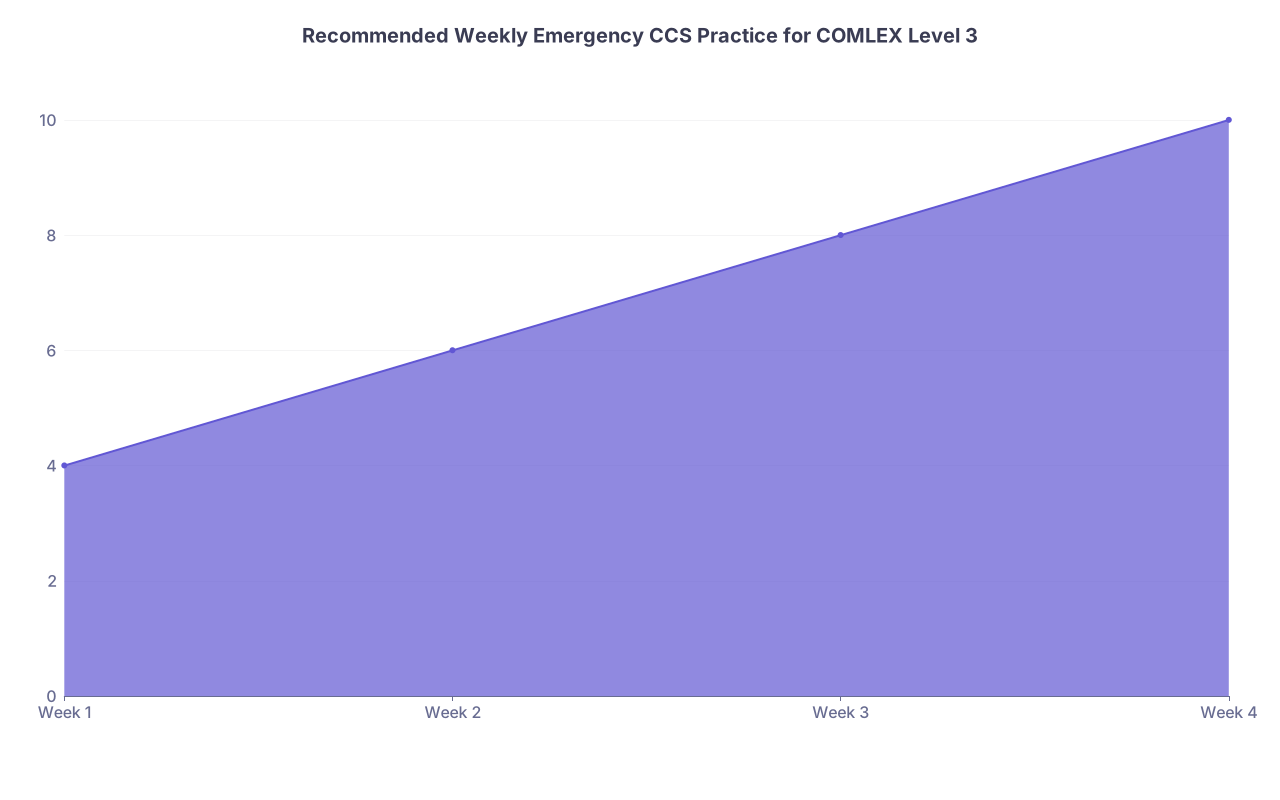
| Category | Value |
|---|---|
| Week 1 | 4 |
| Week 2 | 6 |
| Week 3 | 8 |
| Week 4 | 10 |
You do not engrain this under stress by “reading about it.” You engrain it the same way you learn ACLS: repetition until boring.
Here is a quick system that actually works:
Build 10–15 “flash vignettes” on index cards or a doc.
- One line each: “65‑year‑old man, crushing substernal chest pain, diaphoresis.”
- “32‑year‑old woman, 6 weeks pregnant, severe LLQ pain, BP 86/50.”
For each, force yourself to verbally say the first 5–7 orders in under 15 seconds.
- Do not look at references.
- If you hesitate, rewrite your mental script for that archetype.
Run 1–2 emergency CCS practice cases every other day in whatever question bank or simulator you use.
- Focus less on clever diagnostics.
- Focus more on speed of airway, oxygen, monitor, IV, and key therapeutic move.
After each practice case, ask:
- Were my first 5 orders stabilizing or diagnostic fluff?
- Did I miss a life‑saving medication I should have given within the first 10–15 minutes?
If you tighten that feedback loop for even 2–3 weeks, your emergency performance on COMLEX Level 3 will look like a competent intern, not a hesitant fourth‑year.
Quick Visual: Generic Emergency Command Set

| Step | Description |
|---|---|
| Step 1 | Recognize Emergency Pattern |
| Step 2 | Oxygen Support |
| Step 3 | Cardiac Monitor + Pulse Ox |
| Step 4 | IV Access x2 |
| Step 5 | Bedside Glucose |
| Step 6 | ASA + EKG + Troponin |
| Step 7 | Fluids + Broad IV Abx |
| Step 8 | Thiamine + Dextrose ± Naloxone |
| Step 9 | C-spine + FAST/CXR |
| Step 10 | Scenario Type? |
If you load this decision tree into your brain, your “first 5 orders” stop being a guessing game. They become a reflex.
FAQs
1. How strict is COMLEX Level 3 about the exact sequence of orders in emergencies?
They are not grading micro‑ordering (“did you click monitor before oxygen”), but they heavily weight early life‑saving actions. If your first 10–15 simulated minutes are spent on ESR, viral panels, and CTs while the patient is hypotensive and unmonitored, you will lose points. Think in bundles: oxygen + monitor + IV + key therapy within the opening minutes.
2. Should I always order oxygen even if the vignette gives a normal SpO2?
In most acute emergency presentations (chest pain, dyspnea, trauma, shock), low‑flow oxygen is a safe and expected move. If the patient is clearly stable and outpatient, you do not need it. But for ED emergencies, err on the side of giving oxygen early. It signals that you are treating this as potentially unstable. Just avoid overdoing it in known CO2 retainers unless they are truly hypoxic.
3. How do I balance stabilizing the patient with getting a diagnosis quickly?
Stabilization wins. Always. You can and should order diagnostics right after you secure ABCs and basic monitoring. You do not get extra credit for “fastest CT in the world” if the patient is still hypotensive and unmonitored. The ideal sequence is: stabilization bundle → focused, high‑yield diagnostics → ongoing reassessment → disposition.
4. Is there any role for OMM or osteopathic‑specific orders in emergencies on Level 3?
Not as first‑line in true emergencies. You might see OMM in subacute back pain, pneumonia with rib dysfunction, or post‑op ileus. But for shock, MI, severe dyspnea, trauma, stroke, etc., your first orders are the same hard allopathic medicine everyone practices: airway, oxygen, IV, monitor, drugs that keep people alive. Do not waste your initial emergency orders on OMM; it looks unserious to the scoring algorithm.
5. What is the single most common mistake students make with emergency CCS cases?
They “go fishing” with labs and imaging before stabilizing the patient. Ordering troponin, CT, or MRI before oxygen, monitor, IV fluids/pressors, or first‑line medications is the classic error. The second mistake is under‑treating—giving half‑measures in septic shock, delaying epinephrine in anaphylaxis, or not intubating when the vignette is screaming for airway protection. Treat the computer case like a real crashing patient, not a multiple‑choice question stem.
Key points to walk away with:
- Hard‑wire a generic emergency macro: oxygen, monitor, IV, bedside glucose, then scenario‑specific critical move.
- For each high‑yield archetype (ACS, sepsis, dyspnea, AMS, trauma, OB emergencies), memorize a tight, specific “first 5 orders” sequence.
- Practice under time pressure until those orders are automatic; COMLEX Level 3 rewards reflexive, life‑saving behavior, not elegant but delayed diagnostics.