
COMLEX Level 3 is “clinic-flavored,” but it is not real outpatient practice. If you treat it like real clinic, you will get some questions wrong.
Let me be blunt: COMLEX Level 3 tests outpatient-style decision making under artificial constraints. It looks like clinic. It feels like clinic. But it still rewards test-taking behavior more than authentic, nuanced, real-world medicine.
You have to know where they match and where they diverge.
1. What COMLEX Level 3 Is Actually Trying To Test
COMLEX-USA Level 3 is pitched as: “Can this new DO function safely as an unsupervised generalist?” Not “Can they bill 99214s all day?” and not “Can they run a complex academic clinic?”
What NBOME really wants to see you do:
- Recognize common, bread-and-butter outpatient problems
- Avoid unsafe decisions (missed emergencies, bad drug choices, dangerous omissions)
- Use standard guidelines (USPSTF, JNC, ADA, GOLD, GINA, etc.) in a clean, test-friendly way
- Integrate OMT in a way that sounds like you actually know what you’re doing
- Manage longitudinal issues (chronic disease, follow-up intervals, preventive care)
That’s the intent. But the execution is exam-world, not clinic-world.
, Social barriers](https://cdn.residencyadvisor.com/images/articles_svg/chart-comlex-level-3-focus-vs-real-outpatient-practice-8527.svg "COMLEX Level 3 Focus vs Real Outpatient Practice")
| Category | Value |
|---|---|
| Guideline use | 90 |
| Rare emergencies | 70 |
| Insurance/billing | 5 |
| [OMT usage](https://residencyadvisor.com/resources/usmle-step3-prep/myth-vs-reality-how-much-omm-is-actually-on-comlex-level-3) | 60 |
| Social barriers | 25 |
Interpretation (roughly):
- Heavy emphasis: guidelines, some acute/emergent stuff, OMT
- Almost no emphasis: billing, prior auth, financial barriers
- Underweighted: messy social reality
2. How Similar Is It To Real Outpatient Practice?
Short answer: conceptually similar, operationally different.
Where COMLEX Level 3 feels like clinic
These parts are surprisingly close to what you actually see as a resident in continuity clinic:
- Hypertension, diabetes, hyperlipidemia, COPD/asthma, depression/anxiety, back pain
- Well-child visits, prenatal care, contraception, menopause
- Screening and preventive care (Pap, colon cancer screening, mammograms, vaccines)
- Follow-up intervals and stepwise therapy adjustments
Example:
56-year-old with T2DM, A1c 8.9% on metformin. Question: “What’s the next best step in management?” That’s your Tuesday morning.
You’ll also see:
- “Return visit” style vignettes: medication side effects, incomplete response, lab follow-up
- Multiple problems in a single visit: BP uncontrolled, wants a refill, needs vaccines
That tracks with real outpatient life pretty well.
Where it diverges from actual clinic
This is where people who “just practice like real life” get burned.
No billing, no coding, no prior auth hell
- You do not pick CPT codes.
- Almost never deal with “insurance won’t cover this inhaler, now what?”
- Cost considerations are cartoonishly simplified: “Choose generic” and move on.
Patients are oddly compliant and available
- They show up when asked.
- They do labs when you order them.
- They rarely say, “I can’t take time off work for a colonoscopy.”
Guidelines are cleaner than reality
- COMLEX wants textbook answers, not “the attending down the hall prefers….”
- Example: For ASCVD risk and statins, they want straight ACC/AHA logic, not “well, he’s 74 and frail so maybe we skip…”
Risk tolerance is different
- Real you might watch a stable incidental pulmonary nodule and arrange imaging in a month after shared decision-making.
- COMLEX you will often be rewarded for imaging now, referring now, ruling out now.
- Exam tends to punish “wait and see” when there’s any real risk on the table.
OMT is overrepresented
- Real outpatient clinics: OMT usage depends heavily on specialty and setting (and many DOs barely use it during residency).
- Exam world: OMT is sprinkled into many MSK, respiratory, pregnancy, and pediatric scenarios.
- They want you to know when to choose it, when to avoid it, and what techniques match which findings.
3. The CCS-Style Cases vs Real Outpatient Workflow
The case simulations are where people expect “real-life clinic” and get disappointed.
How CCS-style outpatient cases compare to reality
On COMLEX Level 3, interactive cases may simulate:
- A patient in clinic with a chronic issue
- Phone follow-ups
- Lab and imaging result management over time
You’ll order:
- Labs, imaging
- Medications
- Consults/referrals
- Follow-up intervals
But here’s the problem: the interface doesn’t behave like Epic, Cerner, or Athena. It behaves like “1990s test engine pretending to be an EMR.”

| Step | Description |
|---|---|
| Step 1 | Initial visit |
| Step 2 | History & PE |
| Step 3 | Send to ED / Admit |
| Step 4 | Order tests & meds |
| Step 5 | Set follow-up interval |
| Step 6 | Review new results |
| Step 7 | Routine follow-up |
| Step 8 | Adjust meds / repeat tests |
| Step 9 | Emergent issue? |
| Step 10 | Controlled / at goal? |
What’s similar:
- Thinking in sequences: initial plan → follow-up → adjust → re-check.
- Using guideline-based follow-up intervals.
- Juggling multiple chronic conditions.
What’s not:
- No phone calls from pharmacy.
- No portal messages from anxious patients at 2 AM.
- No “patient left before labs, now what?” scenarios.
Real clinic is chaos. CCScases are structured puzzles.
4. Key Places Where COMLEX Level 3 Is Less Realistic
This is where the exam-world diverges pretty hard from what you actually do in continuity clinic.
1. Over-testing and over-imaging
You’ll notice:
- Low threshold for imaging neck pain, persistent cough, hematuria, etc.
- Frequent push toward “rule it out now” versus watchful waiting.
In real life, a lot of attendings are more conservative. Insurance pushes back. Patients push back. But exam scoring won’t.
So you calibrate: “What’s the safest answer that fits standard guidelines?” Not “What’s the cheapest/most realistic answer?”
2. Neat, single diagnosis bias
COMLEX questions usually have:
- One main diagnosis, maybe two.
- Clean lab findings pointing toward a specific answer.
Actual clinic:
- Back pain + depression + unemployment + opioid use + child at home with special needs.
- Labs are messy. People don’t tell you symptoms in neat bullet points.
On the exam, there’s usually a “right story” buried in the stem. You’re rewarded for spotting clean patterns, not wrangling complex human chaos.
3. Limited psychosocial and resource constraints
Yes, you’ll see:
- Domestic violence
- Substance use disorder
- Some socioeconomic issues
But you rarely see:
- “Can’t pay for insulin; what’s your second-best option?”
- “Lives 3 hours from nearest imaging center; what’s realistic follow-up?”
Real-world outpatient medicine is chained to cost, transport, health literacy, and family dynamics. COMLEX nods at these, then mostly ignores them when scoring.
5. How To Use Real-Life Outpatient Experience To Your Advantage
You can absolutely use your clinic experience, but you must filter it.
Anchor to guidelines, not “what my attending likes”
If your attending says:
- “I always get an MRI for chronic low back pain before PT.”
- “I don’t bother with spirometry, we just treat empirically.”
That might be their style. It is not the exam’s style.
For Level 3, you default to:
- First-line conservative therapies
- Proven, guideline-backed workups
- Avoiding unnecessary imaging unless red flags
Think “safe, guideline-clean, and slightly aggressive” with risk
Examples:
- New onset chest pain in clinic? Exam wants EKG, maybe ED transfer, not “Just schedule a stress test next week.”
- Bright red blood per rectum in a 60-year-old? They want colonoscopy, not “Let’s trial hemorrhoid cream first.”
When in doubt: choose safety over convenience.
6. OMT: The Big “This Is Not Real Practice For Me” Gap
If your residency clinic doesn’t use much OMT, COMLEX Level 3 will feel foreign here. Too bad. They still expect you to know it.
Where it does reflect some real-world DO practice:
- MSK pain (low back, neck, rib dysfunction)
- Pregnancy-related back/pelvic pain
- Some respiratory issues in kids (rib raising, lymphatic techniques)
Where it’s over-weighted compared to most residencies:
- Frequency of OMT-focused vignettes
- Granular technique choice (HVLA vs ME vs FPR vs BLT)
- Classic exam-style somatic dysfunction descriptions
Treat this like a separate content domain, not something clinic will teach you by osmosis.
7. So How Should You Actually Study, Given This Gap?
Here’s the practical framework I’d use:
Base your approach on real outpatient logic, but run it through an “exam filter.”
Ask: “What would a reasonable, guideline-driven generalist do here with no insurance drama?”Target these content buckets hard:
- Hypertension (including pregnancy), diabetes, lipids
- COPD/asthma (stepwise therapy), OSA
- Depression/anxiety, substance use, basic psych emergencies
- Common MSK problems + OMT basics
- OB: prenatal care schedule, labs, GDM screening, HTN in pregnancy
- Peds: vaccines, growth/development red flags, common rashes, fever workups
- Preventive care by age and risk category
Practice CCS-style cases specifically.
Don’t assume clinic alone will carry you. Learn the interface and the pacing.Do a few question blocks thinking explicitly: “What’s the test-world answer, not what my clinic did last week?”
You’ll catch mismatches quickly.

8. COMLEX Level 3 vs Real Life: Quick Comparison Table
| Aspect | COMLEX Level 3 | Real Outpatient Practice |
|---|---|---|
| Main focus | Safety, guidelines, OMT, broad FM/IM | Patient complexity, logistics, continuity |
| Use of guidelines | Strict, textbook | Modified by patient, system, and logistics |
| OMT frequency | High | Variable, often low outside OMM clinics |
| Cost/insurance factors | Minimal | Constant and often dominant |
| Risk tolerance | Low, favors early testing/referral | Balanced with resources and patient preference |
| Documentation/billing | Not tested | Central to daily work |

9. How Different Specialties Experience This
Not all residents feel the disconnect equally.
Family Med / IM prelim / Transitional year:
Level 3 feels closest to your actual day job. Still more OMT than you use, but the outpatient chronic disease focus will feel familiar.EM, anesthesia, surgery, radiology:
You’ll feel the gap more. Outpatient continuity and preventive care are less of your reality, but they’re central on Level 3. You cannot wing these off residency alone; you must review.Psych:
You’ll crush the psych/behavioral sections, but preventive medicine, OB, and peds will feel rusty. The exam expects generalist knowledge, not subspecialty tunnel vision.
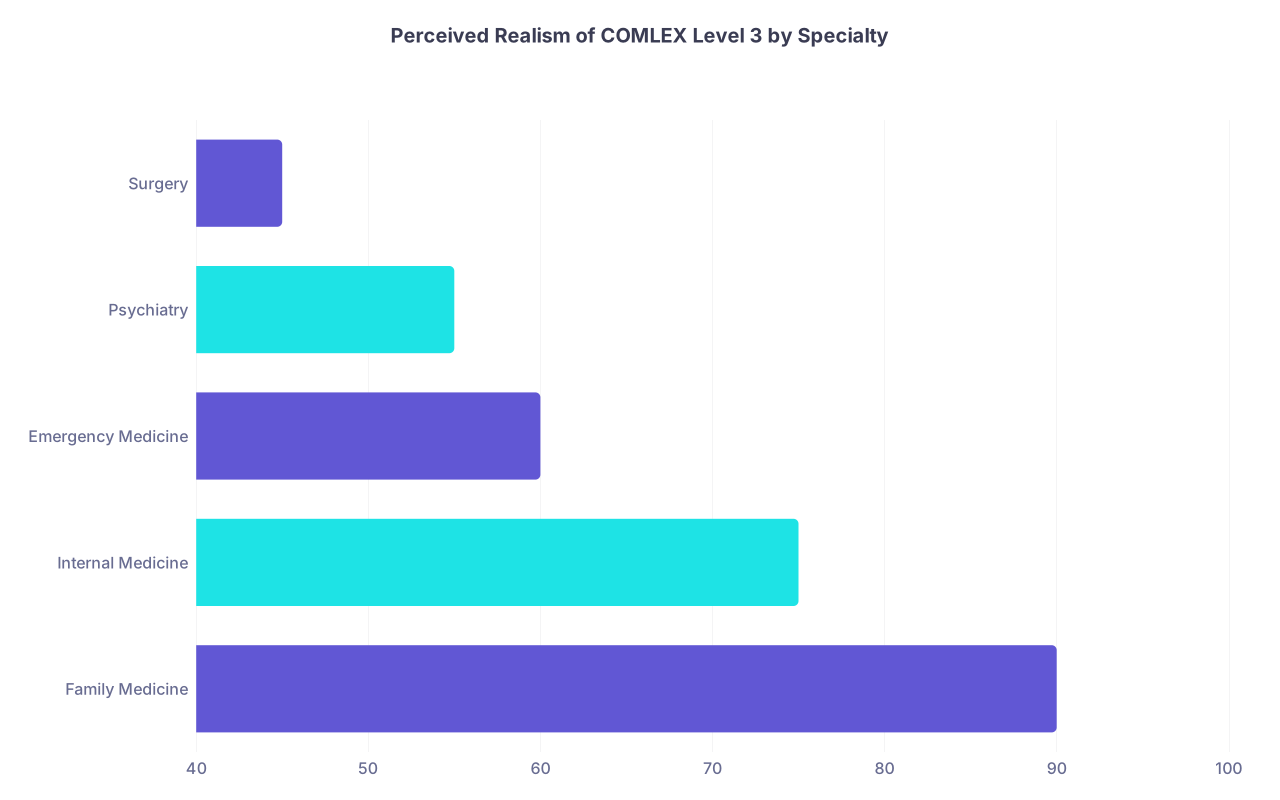
| Category | Value |
|---|---|
| Family Medicine | 90 |
| Internal Medicine | 75 |
| Emergency Medicine | 60 |
| Psychiatry | 55 |
| Surgery | 45 |
10. Bottom Line: How Similar Is It, Really?
If I had to put numbers to it:
- Roughly 60–70% of COMLEX Level 3 outpatient content feels like real-life clinic problems.
- Maybe 30–40% is exam-ified: over-simplified, over-guidelined, over-OMT, under-logistics.
So you do this:
- Use your clinic instincts to understand presentations and general management.
- Override your “real life” compromises with cleaner, safer, more guideline-heavy choices when answering.
- Remember you’re being tested as a generalist DO, not as “PGY-2 in X specialty at Y hospital.”
If you walk into Level 3 thinking “I’ll just do what I do in clinic,” you’ll miss points.
If you walk in thinking “I’ll use my clinic experience, but I’ll answer like a guideline-obsessed safety officer with an OMT hobby,” you’re right where NBOME wants you.
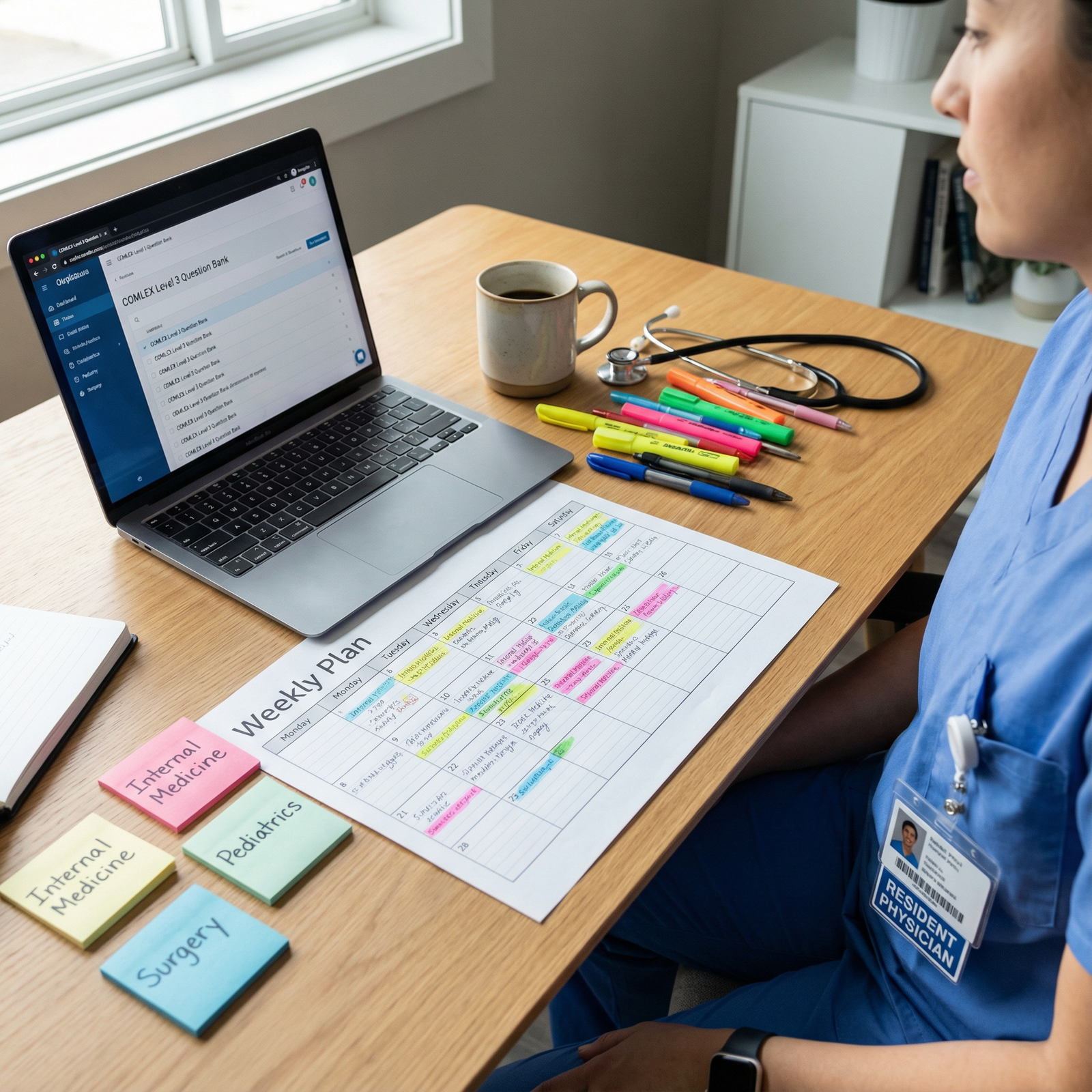
FAQ (Exactly 6 Questions)
1. Is COMLEX Level 3 more outpatient-focused than COMLEX Level 2 CE?
Yes. Level 3 leans harder into longitudinal management, follow-up intervals, chronic disease control, and preventive care. Level 2 CE is more about recognizing diagnoses and initial management across all settings. Level 3 wants to know if you can “own” a patient over time, especially in the outpatient world.
2. Can I rely on my residency clinic experience alone to pass Level 3?
Not safely. Clinic gives you pattern recognition and comfort with common problems, but it does not automatically give you guideline-precise answers, CCS interface familiarity, or OMT coverage. Residents who “just rely on real practice” often underperform, especially on preventive care and OMT-heavy questions.
3. How much OMT do I really need to know for Level 3 if I never use it in clinic?
Enough to: recognize classic somatic dysfunction patterns, pick appropriate techniques, and identify contraindications. You don’t need to be an OMM fellow, but you do need a solid, test-level understanding of MSK, rib, pelvic, and some cranial/respiratory applications. Skipping OMT entirely is a bad idea on Level 3.
4. Does Level 3 test things like documentation, coding, or prior authorizations?
Not in any meaningful way. You are not picking CPT codes or writing full clinic notes. You also rarely handle prior auth or detailed cost constraints. That’s a major disconnect from real outpatient work, where those can dominate your day.
5. How “aggressive” should I be with testing and referrals compared to real clinic?
More aggressive than a cost-conscious real-world clinic, but not reckless. If there’s a reasonable risk of serious disease, COMLEX tends to reward earlier imaging, earlier referral, or a lower threshold for sending to the ED. When in doubt, think: “What would keep me out of court if this went badly?”
6. What’s the most efficient way to prepare if I’m already in residency and busy?
Three moves: first, do focused question blocks (UWorld Step 3 + a COMLEX-specific Qbank) with an eye toward outpatient and preventive care. Second, run through a short, targeted OMT review resource. Third, spend several sessions on CCS-style cases so the interface doesn’t slow you down. Use your clinic days to reinforce patterns, but your evenings to sharpen guideline-based answers.
Key takeaways: COMLEX Level 3 looks like outpatient clinic but obeys exam logic, not real-world logistics. Use your real-life experience, then layer guidelines, safety-first decisions, and OMT knowledge on top.