
The horror stories about OMM on COMLEX Level 3 are wildly exaggerated.
I hear the same script from DO students every year: “Level 3 is all OMM and obscure osteopathic philosophy. I have to relearn every Chapman’s point and memorize all the cranial strain patterns or I’m dead.”
No. You are not. And the people telling you that usually have one thing in common: they have not actually looked at the data or paid attention to what the current exam really tests.
Let’s dismantle this cleanly.
The Big Myth: “COMLEX Level 3 Is Packed with OMM”
The dominant myth is simple and wrong: that Level 3 is this OMM-heavy beast where half the exam is sacral torsions and cranial dysfunctions.
Reality: OMM is present, yes. Important, yes. Dominant, no.
NBOME does not publish exact percent breakdowns the way NBME does for USMLE, but between:
- NBOME’s own blueprint language
- What we see from thousands of student debriefs
- Commercial question bank distributions
you get a pretty consistent picture.
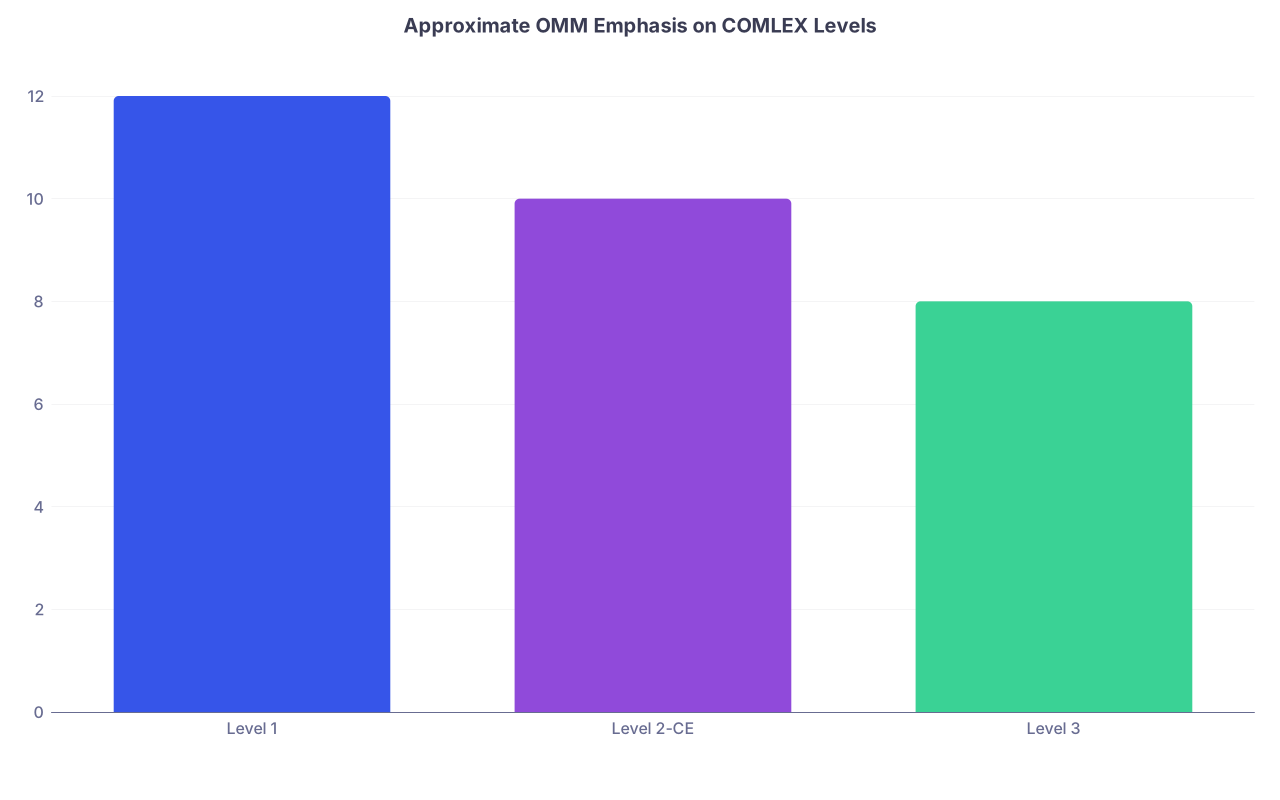
| Category | Value |
|---|---|
| Level 1 | 12 |
| Level 2-CE | 10 |
| Level 3 | 8 |
Those numbers aren’t official, but they are realistic ballpark: OMM-type content is usually under 10% of the total exam on Level 3, often closer to 5–8% in modern forms.
Does that mean you can blow it off? No. Because:
- A small percentage on a very long exam still equals a decent chunk of questions.
- Many of your misses will cluster in OMM if you neglect it.
- Some items blend OMM with general management and can be easy points if you’re not clueless.
But Level 3 is not secretly an OMM exam pretending to be a general licensure test. It’s a general clinical exam with an osteopathic flavor. There’s a difference.
What “OMM on Level 3” Actually Looks Like
Here’s where people get tripped up. They’re studying Level 3 like it’s an OPP lab practical. Wrong approach.
The exam does not care if you can perfectly diagnose a right-on-right versus left-on-right sacral torsion while your classmate manipulates the pelvis as a SP. It cares whether you can think like a practicing DO in clinic or hospital.
So what shows up?
1. Clinical integration, not lab trivia
Most OMM questions on Level 3 look like regular medicine questions with an osteopathic twist.
You’ll see things like:
- A pregnant patient with low back pain → when would you use OMT, which techniques are appropriate/contraindicated, what are red flags that mean “no OMT, get imaging or other eval first”?
- A patient with COPD and rib dysfunction → which techniques help improve chest wall motion and lymphatic flow?
- A hospitalized post-op patient → can you use OMT, and if so, which gentle techniques, and what is contraindicated?
Notice the pattern. It’s “You’re an attending DO; what do you do with your hands and your brain?” Not “What’s the exact position for a type I group dysfunction of T5–T9?”
I have seen that classic structural-diagnosis stuff pop up occasionally, but way less often than students fear.
2. Broad OMM principles over micro-technical details
Level 3 loves principles:
- Sympathetic vs parasympathetic levels and their clinical implications
- How OMT can affect pain, autonomics, lymphatics, respiratory function
- Contraindications (absolute vs relative) for specific techniques
- When OMT is appropriate versus when it delays needed medical/surgical care
If you understand why you’d choose rib raising in one case and thoracic HVLA in another, you’re in better shape than someone who memorized every sacral axis diagram but cannot tell you when not to touch a patient.

3. Technique selection, not technique choreography
COMLEX Level 3 is not testing whether you remember every step of Spencer’s technique. It’s testing:
- Which technique is safest for an osteoporotic elderly patient with shoulder pain?
- Which technique is best for acute muscle spasm vs chronic postural strain?
- Which approach is appropriate in the ICU vs outpatient clinic vs pregnancy?
They care about your clinical judgment with OMT, not your hands positioning down to the centimeter.
How Much OMM Compared to Everything Else?
The other big misunderstanding is relative weight. Students behave like they’re walking into an exam that’s 50% OMM and 50% medicine. That’s just fantasy.
Here’s a rough comparison based on what’s been consistent across multiple years of debriefs and Qbanks:
| Content Area | Approximate Emphasis |
|---|---|
| General Medicine | Very High |
| Emergency/Urgent | High |
| OB/GYN | Moderate-High |
| Pediatrics | Moderate |
| Psychiatry | Moderate |
| OMM/OPP | Low-Moderate |
If you completely ignore OMM, you might sacrifice 5–10% of your exam. That’s dumb, but survivable for a high-scorer with strong medicine.
If you obsess over minutiae of OMM and neglect inpatient medicine, OB emergencies, and peds, you’re playing the game backward. That’s how people fail.
I’ve seen the same pattern multiple times: Students who score in the 550+ range on Level 2-CE and then panic-study cranial, Chapmans, and sacral for Level 3 while barely touching CCS-style cases or complex management scenarios. They come out feeling blindsided—not by OMM, but by adult medicine they haven’t thought about in a year.
The Stuff You Can Safely De-Prioritize
This is the contrarian part you probably want most: what not to spend 30 hours on.
I won’t say “never shows up” because NBOME can always toss curveballs. But based on volume and frequency, some OMM rabbit holes are historically terrible ROI for Level 3:
Obscure Chapman’s points
Knowing the high-yield, commonly tested ones (cardiac, pulmonary, colon, appendix) is reasonable. Mastering every square centimeter of the torso? Overkill.Hyper-detailed cranial strain pattern gymnastics
You should know what cranial OMT is generally used for (e.g., headaches, some pediatric issues), broad strain patterns, and safety issues. But agonizing over every subtle pattern with axis direction and named dysfunctions provides poor payoff for Level 3.Memorizing every classic structural-diagnosis nuance
Sacral torsions, L5 mechanics, exact Fryette’s rule descriptions—helpful conceptually, but Level 3 is not a lab practical. It’s not COMLEX Level 1 redux. You need enough to recognize major patterns, not to pass an OPP OSCE.Esoteric philosophy quotes
The “4 tenets of osteopathic medicine” are fair game. Memorizing old-school osteopathic rhetoric or obscure historical details is not.
I’ve watched far too many people lose whole weekends to these low-yield corners because someone on Reddit swore they saw three cranial questions and a barrage of Chapman’s. You’re hearing anecdote, not aggregate reality.
The Stuff You Absolutely Should Know Cold
If you want to be efficient and rational, focus your OMM prep on areas that keep showing up in modern exams and align with the clinical nature of Level 3.
1. Autonomics and viscerosomatic reflexes
Unsexy but high-yield. You should quickly recall:
- Sympathetic levels for major organs (heart, lungs, GI segments, kidneys, bladder, uterus, etc.)
- Where you’d see viscerosomatic changes in common conditions
- Parasympathetic innervation patterns (vagus vs pelvic splanchnics) and how OMT might affect them
These questions are often easy points if you’re not fumbling through T1–L2 in your head for 90 seconds.
2. Appropriate use of OMT in real clinical contexts
Think like an attending:
- Chronic low back pain → when to add OMT, when to image, when to suspect red-flag pathology that makes OMT unsafe
- Post-op patient with ileus → which gentle techniques might help stimulate bowel function (and when they’re contraindicated)
- COPD/pneumonia patients → lymphatic and rib-related techniques that improve ventilation and secretion clearance
These are “DO in the wild” questions. They’re not trying to trick you. They’re checking if you incorporate OMT rationally, not magically.
3. Contraindications and safety
Huge. The single most testable thing in any procedural specialty is: when should you not do it?
Classic patterns:
- HVLA in osteoporosis, bone metastases, severe RA with cervical involvement, acute fractures
- Excessive cervical manipulation in patients with vertebral artery disease, severe carotid disease, or neurologic deficits
- Lymphatic techniques in cases of untreated cancer, acute DVT, or severe congestive failure (depending on the specific technique)
You don’t need 50 flashcards of every contraindication nuance—but you do need to not be dangerous.
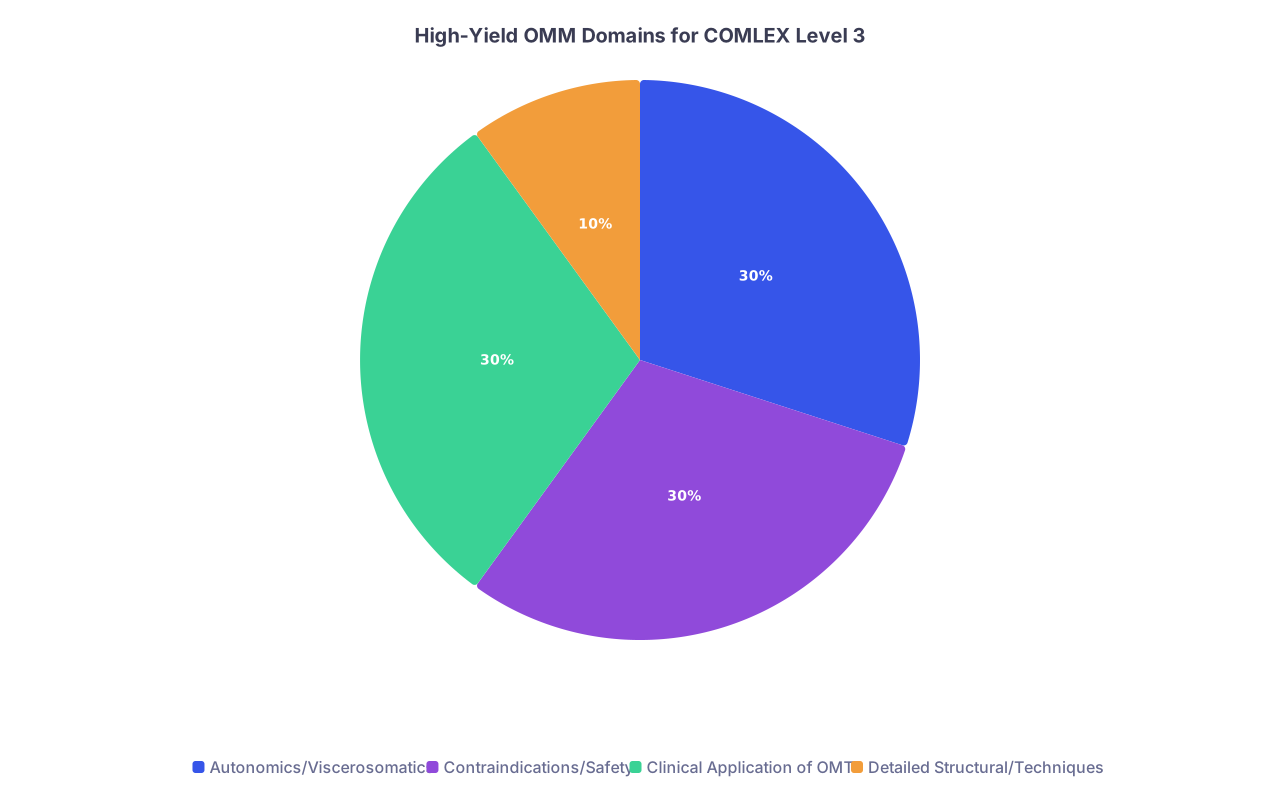
| Category | Value |
|---|---|
| Autonomics/Viscerosomatics | 30 |
| Contraindications/Safety | 30 |
| Clinical Application of OMT | 30 |
| Detailed Structural/Techniques | 10 |
4. Gentle techniques for sick patients
Level 3 loves inpatient, ICU, perioperative settings. So you should know broad classes of techniques that are “gentle and safe” vs “forceful and risky.”
Think:
- Muscle energy
- Counterstrain
- Myofascial release
- Balanced ligamentous tension
vs - HVLA in fragile, unstable, or post-op patients
You don’t need step-by-step technique scripts—only enough to choose the right category.
How COMLEX Level 3 Actually Feels on Test Day
Two practical realities I see over and over from people who just took it:
- The test feels much more like a messy, slightly disorganized USMLE Step 3 than like a big OMM shelf.
- When they review their performance mentally, what haunts them is not OMM. It’s the complex medicine: ICU ventilator management, OB triage decisions, psych med side effects, vague constitutional symptoms in adults.
I’ve also seen students report something like this mix:
- “I probably saw maybe 1–3 clearly OMM-based questions per block.”
- “Most of them were ‘which technique is best’ or ‘is OMT appropriate here.’”
- “There were a few autonomic/viscerosomatic questions but nothing insane.”
That’s consistent with the 5–10% ballpark. Enough to matter. Not enough to justify turning your prep into an OPP bootcamp at the expense of core medicine.

| Step | Description |
|---|---|
| Step 1 | Start Level 3 Prep |
| Step 2 | Allocate ~10-15% time to OMM refresh |
| Step 3 | Focus majority on medicine/core topics |
| Step 4 | Targeted OMM: autonomics, safety, clinical use |
| Step 5 | Integrate OMM questions into mixed blocks |
| Step 6 | Practice CCS/case-style scenarios |
| Step 7 | Refine weak areas in final 1-2 weeks |
| Step 8 | How strong is your general medicine? |
Boards-Style Efficiency: How to Actually Study OMM for Level 3
You want a rational, high-yield way to handle OMM without letting it eat your schedule. Here’s a simple, adult strategy:
- Spend a couple of focused sessions (we’re talking hours, not weeks) reviewing autonomic levels, viscerosomatic reflexes, and broad OMT indications.
- Run through a concise OMM review resource targeted to boards (not your first-year OPP binder, not some 500-page manual full of still images and philosophy quotes).
- Do a pass of an OMM-heavy question block (COMBANK/TrueLearn or similar) and actually review explanations. Notice what’s asked repeatedly versus what appears once in 500 questions. That’s your yield signal.
- In the last week, do a quick “safety sweep”: contraindications, gentle vs forceful techniques, and when not to touch the patient but manage medically/surgically instead.

The rest of your time? Medicine. Adult inpatient, outpatient, OB, peds, psych, emergencies, ethical/legal, and case-based management. That’s what carries your score.
The Reality, Summed Up
Strip away the hype, and you’re left with this:
- COMLEX Level 3 is not an OMM exam in disguise. OMM is a minority of the content—important, but nowhere near dominant.
- The exam cares about clinically applied, safe, rational use of OMT far more than about obscure structural trivia. Autonomics, safety, and indications are the highest yield.
- The smartest strategy is not to ignore OMM or to obsess over it, but to treat it like a 5–10% slice of a long, medicine-heavy exam—and study accordingly.