
You are not “too busy” to pass Step 3. You’re just using a med student study plan on a resident schedule—and that does not work.
Let me be blunt: if you’re an internal medicine resident pulling 60–80 hour inpatient weeks and trying to “find time” for Step 3, you will never find it. You have to engineer it. The good news? Step 3 is absolutely passable—and even scorable—in your situation if you stop pretending you have free afternoons and start building a resident-realistic plan.
This is the playbook for IM residents with brutal inpatient schedules who still need to get Step 3 done.
1. First Reality Check: Timing, Risk, and What You’re Up Against
If you’re in a heavy inpatient IM program, your Step 3 problem usually looks like one of these:
- You’re PGY-1 with Step 3 required before PGY-2 or early PGY-3.
- You’re PGY-2 who pushed it off and now credentialing, moonlighting, or fellowship apps are looming.
- You’ve failed once and now have anxiety layered on top of exhaustion.
Let’s ground this in how residents actually pass Step 3 under heavy loads.
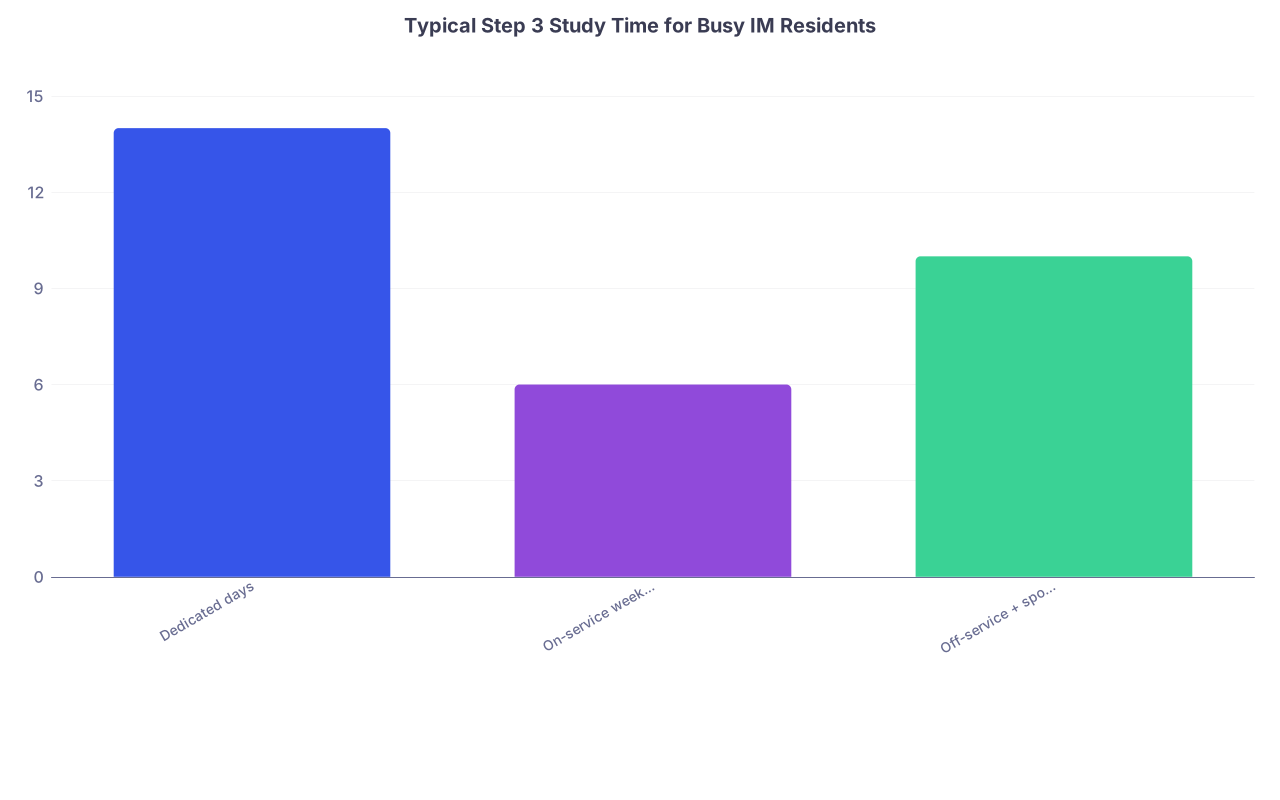
| Category | Value |
|---|---|
| Dedicated days | 14 |
| On-service weeks only | 6 |
| Off-service + sporadic | 10 |
Most IM residents I’ve seen do one of three things:
- Crush it in a 2–3 week “semi-dedicated” window between blocks (best).
- Drag it out for 2–3 months, squeezing 30–60 minutes most days on service, plus a few light weekends (works, but painful).
- Procrastinate until credentialing/fellowship forces a panic schedule (misery).
(See also: If Your Contract Requires Step 3 by PGY2: A Survival Game Plan for detailed strategies.)
Here’s the non-negotiable:
You must know your deadline. Not vibes. Not “sometime PGY-2.” Call GME, talk to your PD, check your contract. Then:
- Work backward 8–12 weeks from that date.
- Identify 1–2 lighter blocks (clinic, electives, research, consults).
- Lock down exact exam days for Day 1 and Day 2 on Prometric. Do not wait “until you’re ready.”
If Your Schedule Is Pure Chaos
You still have anchor points:
- Post-call mornings (you’re free, but tired).
- Weekend golden days (those rare “not-on-call” Saturdays).
- Between-block days when handoffs happen.
Those become your high-yield Step 3 days. You build everything around them.
2. Build a Realistic Study Framework (Resident-Grade, Not Instagram-Grade)
Forget “6 hours a day” nonsense. You’re going to live in three modes:

Mode 1: On-Service Heavy Inpatient Weeks
These are your admit-fest rotations: wards, ICU, night float, ED-heavy blocks.
Your realistic goals:
- 20–25 questions/day, max.
- 4–5 days per week.
- Light reading only if your brain is still online.
What this looks like concretely:
- 10–15 questions early AM before sign-out if you’re a morning person.
- Or 10–15 questions after sign-out with dinner if you’re a night person.
- Another 5–10 questions scattered in “micro-moments” (see below).
You are not going to do full, timed blocks every day on these weeks. That’s fine. You’re playing a volume and consistency game, not a perfection game.
Mode 2: Lighter Rotations (Clinic, Electives, Consults)
This is where you make real progress.
- Target: 40–60 questions/day, 4–5 days/week.
- Add: 20–30 minutes of CCS practice every other day.
- Use: 1 weekend day for a 2-block “mini exam” (timed, exam-like).
On clinic-heavy days you probably have:
- A predictable lunch.
- Some buffer between patients.
- Fewer overnight calls.
That’s gold. Use it.
Mode 3: “Anchor Days” (Post-Call, Between Blocks, Random Free Days)
These are your Step 3 “power days.”
- One post-call or golden weekend day = at least 2 timed blocks (about 80 questions).
- Add 2–3 CCS cases.
- Short content review only from missed questions.
Plan them like this:
- Morning: Block 1 (timed), full review.
- Afternoon: Block 2 (timed), quick review.
- Evening: CCS practice (2–3 cases only, not marathon).
If you string together 4–6 anchor days over 6–8 weeks, you can turn a chaotic schedule into a passing performance.
3. Picking Resources That Actually Work on a Resident Schedule
Residents do not have time for resource tourism. You get one primary Qbank, one CCS program, and maybe one light reference.
| Purpose | Top Choice | Backup / Optional |
|---|---|---|
| Main Qbank | UWorld Step 3 | Amboss |
| CCS Practice | CCS Cases (UWorld or CCS-only software) | NBME practice cases |
| Rapid Content Gaps | OnlineMedEd or Step Up sections | UW notes / Anki |
Qbank Strategy
Use UWorld Step 3 if at all possible. You don’t need 100% completion if your schedule is brutal; you do need:
- 70–80% of the bank done with careful review, or
- 60–70% done plus strong clinical experience and a focused final stretch.
Settings:
- Start with tutor mode when you’re post-call or tired.
- Use timed mode on anchor days to train for exam stamina.
- Always mixed blocks, not system-only, after your first 300–400 questions.
CCS Strategy (Low Time, High Yield)
Most IM residents underestimate CCS until it punches them on Day 2. Do not be that person.
Your minimalist CCS plan:
- Total: ~40–50 cases.
- Distribution:
- 10–15 “interactive” cases with full management.
- 25–35 “read-only” / review-style cases to see patterns.
Focus on:
- Chest pain, SOB, stroke, sepsis, DKA, GI bleed.
- OB/GYN emergencies and prenatal care.
- Peds fever, respiratory cases, dehydration.
- Common outpatient adult issues (DM, HTN, depression, hypothyroid).
4. Micro-Studying Without Burning Yourself Out
You’re on wards. Your day is nonstop. How do you squeeze in anything without losing your mind?
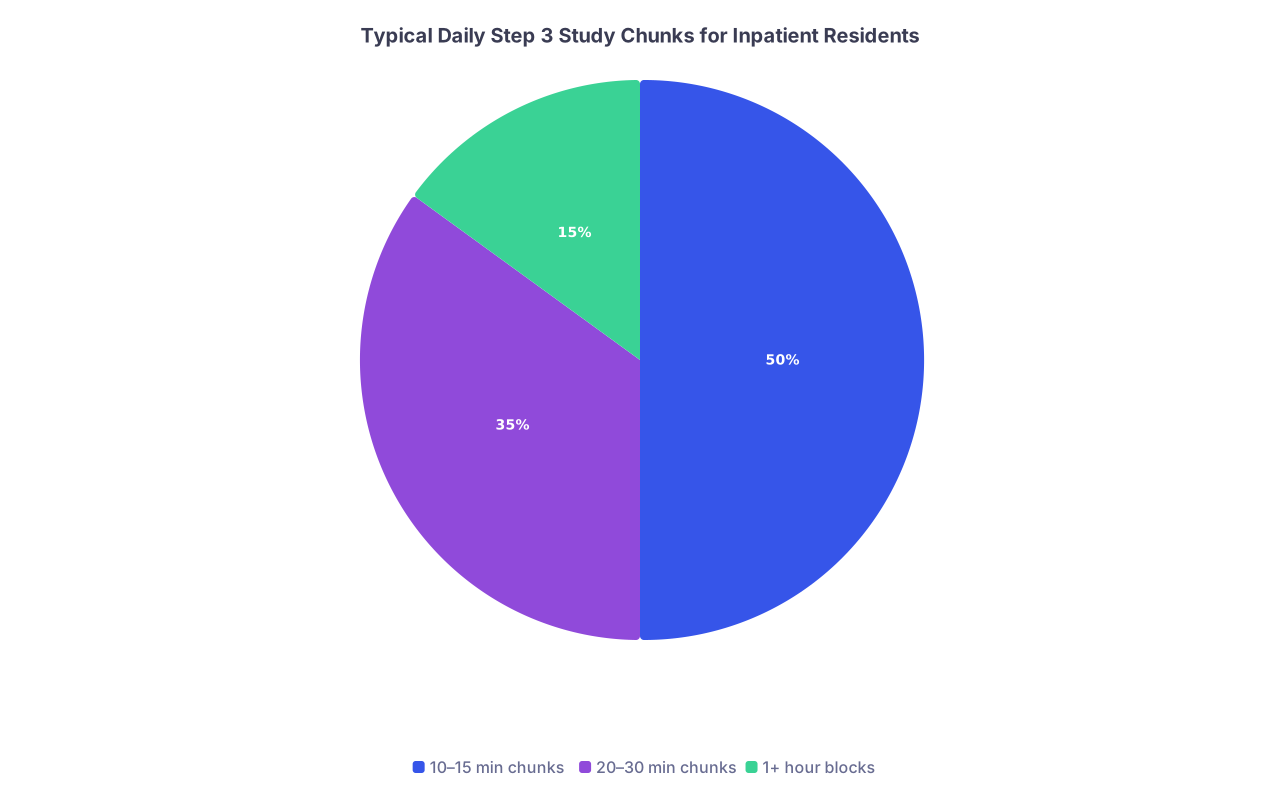
| Category | Value |
|---|---|
| 10–15 min chunks | 50 |
| 20–30 min chunks | 35 |
| 1+ hour blocks | 15 |
Use Micro-Moments
Places you can sneak 3–5 questions:
- Waiting for CT/MRI calls back.
- Between pages during night float lulls.
- While your attending is “just finishing this note” for 20 minutes.
- When sign-out is delayed and you’re already prepped.
Rules for micro-moments:
- Use tutor mode, untimed.
- Cap at 5 questions in one sitting.
- Focus on reading the explanations, not just getting through items.
Turn Real Patients Into Step 3 Reps
You’re already seeing the material. Leverage it.
- You admit a DKA patient → that night or next day, do 5–10 DKA/electrolyte questions.
- You staff a TIA → do stroke/TIA questions.
- Your attending grills you on syncope → tonight’s mini block includes syncope.
This does two things:
- Cements knowledge (better memory when tied to a real patient).
- Lowers anxiety, because you start seeing Step 3 as “stuff I do every day.”
5. Sample Study Plans for Specific IM Resident Situations
Let’s get brutally practical. Here’s how I’d script your weeks.
Scenario A: PGY-1, On Wards, Exam in 10 Weeks
You’re on a Q3–4 call schedule, nights coming up, clinic half-day.
Weeks 1–6 (on heavier blocks):
- Weekdays:
- 10–15 Qs pre- or post-call (tutor mode).
- 10 Qs tied to real patients (electrolytes, infections, CHF, etc.).
- Weekends:
- One day off completely.
- One day: 20–30 Qs + 1–2 CCS cases.
Weeks 7–9 (lighter block / clinic):
- 40–50 Qs/day, 4 days/week (mix of timed and tutor).
- 3–4 CCS cases/week.
- One “mini exam” each weekend: 2 timed blocks back-to-back.
Week 10 (exam week):
- Early week: 2–3 blocks spread out + CCS review.
- Two days before each exam day: 20–25 light Qs + skim notes.
- Day before: no heavy studying, maybe 10 low-stress Qs max, prep logistics, sleep.
Scenario B: PGY-2, Fellowship Apps Coming, Only Evenings Free
You’re outpatient heavy but emotionally fried from two years of training.
Mon–Thu (routine):
- 30–35 questions nightly:
- First 20 timed (build speed).
- Last 10–15 tutor mode, focus on weak areas.
- Short 10–15 min review of cumulative “wrong answers” list once/week.
Fri:
- Take off or do 10–15 questions only if you have the bandwidth.
Sat or Sun (pick one):
- 2 full blocks timed (80 Qs) + review.
- 2–3 CCS cases.
Other day: full rest or pure life admin (laundry, groceries, actual human time).
Scenario C: You Failed Step 3 Once, Now On Heavy IM Service
You can’t just redo what you did before. You need structure and confidence repair.

| Step | Description |
|---|---|
| Step 1 | Get Score Report |
| Step 2 | Identify Weak Categories |
| Step 3 | Pick Single Qbank + CCS |
| Step 4 | Rebuild Baseline: 300 Qs |
| Step 5 | NBME/Practice Exam |
| Step 6 | Schedule Exam Dates |
| Step 7 | Intensify: More Blocks + CCS Focus |
| Step 8 | Maintain 40-60 Qs/Day + CCS Until Exam |
| Step 9 | Above Passing Range? |
Concrete changes:
- Start every session with 5–10 questions just from previously weak areas (peds, OB, psych, etc.).
- Increase CCS volume (especially if your prior Day 2 was the problem).
- Do at least one practice exam (NBME or UWorld self-assessment) 3–4 weeks before test day.
- If your practice scores are borderline, do not panic-extend indefinitely. Add:
- More timed blocks.
- Structured review of every missed question with a “why did I miss this?” notebook.
6. Day 1 vs Day 2: What to Emphasize When You’re Short on Time
Step 3 is really two different exams jammed together.

Day 1 (Foundations of Independent Practice)
More classic multiple-choice, broader content, more “Step 2 flavored”:
You should prioritize:
- Pharmacology safety (dosing, contraindications, pregnancy categories).
- Test-taking discipline: don’t change right answers out of fatigue.
- Bread-and-butter IM: CHF, COPD, PNA, ACS, AFib, AKI, cirrhosis.
- Psych, OB, and peds to at least a solid “not a disaster” level.
Your resident advantage:
- You see these diseases every day. Most Day 1 questions are variations on “what’s the next best step” in management, workup, or safety.
Day 2 (Advanced Clinical Medicine + CCS)
Where people under-prepare:
- Longer day, more fatigue.
- CCS counts more than most residents think.
Your bare-minimum Day 2 prep:
- Know the flow: stabilize (ABCs, monitors), then orders (labs, imaging, meds), then re-assess.
- Remember to:
- Admit / transfer level of care appropriately.
- Advance the clock when appropriate.
- Order preventive measures (DVT prophylaxis, vaccines, counseling).
Your resident advantage:
- You already know how to manage sepsis, NSTEMI, stroke, DKA. You just need to adapt it to the software’s expectations and remember little things (like ordering bedside glucose checks).
7. Survival Tactics: Protecting Your Brain and Sanity
You’re not a full-time exam robot. You’re a resident responsible for living patients. That mental load matters.
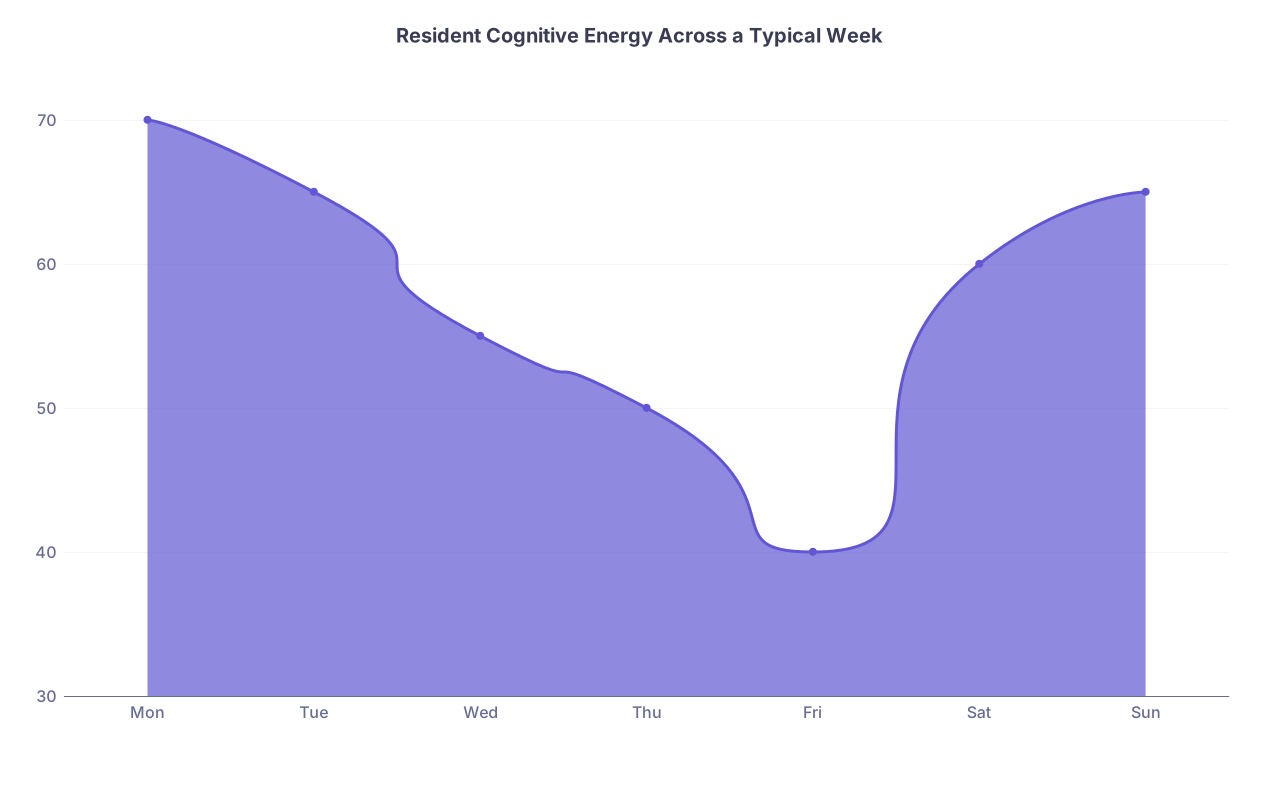
| Category | Value |
|---|---|
| Mon | 70 |
| Tue | 65 |
| Wed | 55 |
| Thu | 50 |
| Fri | 40 |
| Sat | 60 |
| Sun | 65 |
You need to respect your cognitive budget.
Hard Boundaries to Set
- Absolute minimum sleep: 5–5.5 hours on worst days, 7+ on off days.
- No Step 3 after meltdown shifts (Code Blue + death + family meeting). You’re not absorbing anything; you’re just torturing yourself.
- One real day off/week from Step 3. Counterintuitive, but it helps you sustain 6–10 weeks.
Quick Recovery Moves
On days you’re fried but guilty:
- Do 5–10 questions in tutor mode and just read the explanations.
- Or watch 1 short video on a weak topic (e.g., OnlineMedEd heart failure).
- Then stop. You get more from 20 minutes of focused work than 90 minutes of zoning out in front of questions you won’t remember.
8. Exam Week: How to Not Sabotage Yourself
Two big resident mistakes:
- Treating the exam like a 28-hour call shift and “powering through.”
- Ignoring logistics, then losing points to dumb preventable stuff.

The Week Before
- Stop adding new resources. You’re now in consolidation mode.
- Keep doing 1–2 blocks/day, mostly timed, plus light CCS.
- Two days before each day:
- 1 block max + CCS review.
- Sleep priority over extra studying.
The Day Before
- Confirm:
- Test center location and parking.
- Required ID.
- Snack and water plan.
- Very light review only:
- Quick skim of your “high-yield misses” notebook.
- Maybe 5–10 questions if it calms you, otherwise none.
- Aim for baseline anxiety, not no anxiety. You’re going to be nervous. That’s normal.
During the Exam
- Use breaks aggressively:
- Short break each block to reset (even 2–3 minutes).
- Longer lunch break in the middle.
- Do not chase perfect. Your realistic goal as a resident with limited prep:
- Solidly above pass, not 260.
- If you bomb a block (or feel like you did), mentally write it off and reset. You’re judged on the whole exam, not one block.
FAQ (Exactly 3 Questions)
1. I’m on a brutal ICU month and my exam is in 3 weeks. Should I postpone?
If you’re doing almost zero questions right now and haven’t touched CCS, yes—if your program and licensing timeline allow it, push it back 4–6 weeks and use that time wisely. If you’ve already done 800–1000 questions and some CCS, you might not need to postpone; instead, protect 2–3 anchor days before the test and tighten up your weak spots.
2. How many total questions do I actually need to do to feel safe?
For a busy IM resident, a realistic target is 1200–1600 questions with thoughtful review, not just clicking. If you’ve got very strong clinical foundations and decent Step 2 performance, you might be fine closer to 1000–1200, especially if your CCS prep is competent. Below ~800 with scattered review is where I start to worry, unless you’re an outlier.
3. Is it worth using vacation for Step 3, or should I save it?
If your program is strict about deadlines, or you’ve already failed once, using 5–7 days of vacation to create a pseudo-dedicated stretch can be the difference between passing and dragging this out another year. For a first-timer with decent Step 2 and ongoing light studying, I’d try to avoid burning a full vacation block purely for studying and instead steal anchor days around lighter rotations. But if Step 3 is actively blocking credentialing, moonlighting, or fellowship, yes—sacrifice the vacation, clear it, and move on.
Key Takeaways:
You’re not failing Step 3 because you’re in IM with heavy inpatient loads; you’re failing it if you pretend you have a student schedule. Build a three-mode plan (heavy weeks, lighter rotations, anchor days), commit to one main Qbank + CCS, and protect your cognitive energy like it’s a limited resource—because it is.