
What if the thing that actually delays your Step 3 is not the exam itself—but a stupid registration mistake you made three months earlier and didn’t catch?
Let me be blunt: Step 3 is not just “that last USMLE exam.” It’s paperwork traps, deadline landmines, and scheduling rules that are absolutely unforgiving. Residents screw this up constantly, then find themselves begging GME, emailing FSMB, and rearranging call schedules because of a form they rushed through half-awake post-call.
You do not want to be that person.
Let’s walk through the Step 3 registration mistakes that cost residents money, time, vacation days, and—occasionally—their visa or promotion timeline. And how you avoid them.
1. Misunderstanding Eligibility: “I Thought I Was Automatically Allowed”
The first expensive error starts before you even click register: assuming you’re eligible just because you’re an intern or PGY-2.
States have different Step 3 requirements. Some require:
- A certain number of post-graduate training months
- ECFMG certification (for IMGs)
- Specific GME-approved training
- Completion of Step 2 CS (for older grads) or certain status confirmations
And the killer: you often register through one state’s medical board even if you’re training somewhere else.

The common screw-ups:
- Applying through a state that requires more months of training than you have.
- Not noticing that your chosen jurisdiction won’t accept your training program (yes, this happens with non-ACGME or transitional setups).
- IMGs assuming that ECFMG certification is enough, without checking if additional documents are required by that state.
Here’s the difference in how states can trap you:
| State (Example) | PG Training Required | Special Notes |
|---|---|---|
| State A | 0–3 months | Allows early PGY-1 applicants |
| State B | 6 months | Requires verification from GME |
| State C | 12 months | Only ACGME programs accepted |
| State D | 12 months | Extra form for IMGs |
| State E | 0 months | But stricter ID/documentation |
This is illustrative, not your actual state rules. You need to read your actual jurisdiction’s PDF, not assume, not ask a co-intern who “heard…”
The mistake pattern I’ve seen:
Resident registers through State X because a friend did. One month later: “Application rejected—insufficient training.” Now they’re behind, have to reapply through another state, and their carefully planned December testing window is gone.
How to avoid this:
- Start at the FSMB Step 3 site, then click through to your jurisdiction’s official eligibility page.
- Confirm:
- Required months of PG training
- Whether your current program and level meet that standard
- Any extra IMG requirements
- If you’re IMG or in a non-standard pathway, email or call the board before you apply. Not after they reject you.
Don’t gamble your eligibility. The boards don’t care that your PD “thought it would be fine.”
2. Picking the Wrong Testing Window: Vacation and Call Disaster
The next mistake is deceptively simple: choosing the wrong 90-day eligibility period.
Residents often:
- Pick the earliest possible window because they’re anxious to “get it over with”
- Completely ignore rotation schedules, holidays, or known busy blocks
- Forget that two separate test days have to fit comfortably into that time
Then what happens?
They get stuck taking Step 3:
- During ICU
- While on night float
- The week they’re on a 6-day stretch
- Or worse, after their eligibility expires and they pay all over again
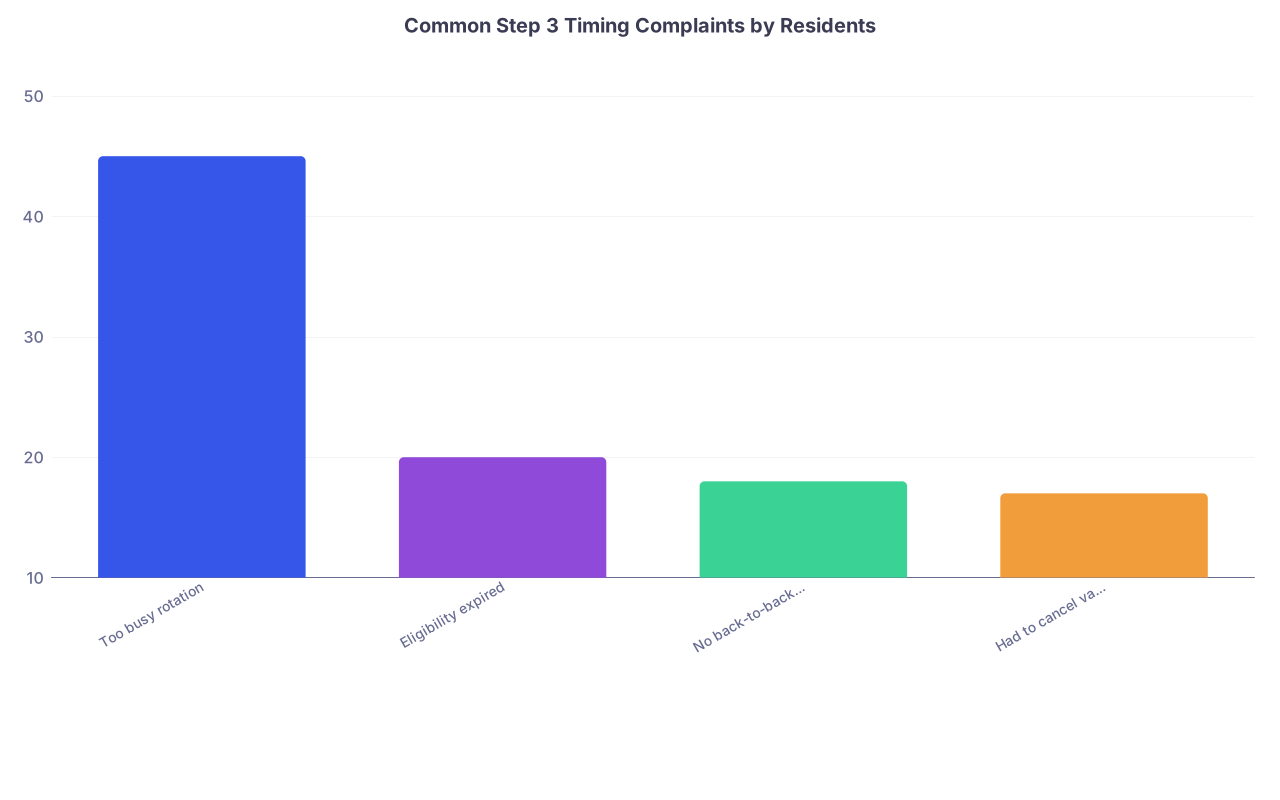
| Category | Value |
|---|---|
| Too busy rotation | 45 |
| Eligibility expired | 20 |
| No back-to-back days | 18 |
| Had to cancel vacation | 17 |
I’ve heard versions of this many times:
“I scheduled the window before block assignments came out. Of course I landed in ICU. I did question banks post-call and walked into Day 1 half-dead.”
That’s self-sabotage.
Here’s the smarter sequence:
- Wait until your program releases rotation schedules for the year or at least the next 6–9 months.
- Identify realistic windows:
- Lighter rotations
- Electives where your attending actually gives you space
- Avoiding maternity/paternity leave, major life events, and board review courses
- Build in buffer:
- Assume something will go wrong. Illness. Family issue. Schedule shift.
- Choose a window where you can reschedule once without disaster.
The subtle mistake: Relying on “I’ll just study whenever I can” instead of being honest about which rotations leave you with an actual brain after 6 p.m.
If your program has a “Step 3-friendly” block that many residents use, grab it early. If you’re the one who waits, you’ll be stuck taking it in MICU while everyone else is off clinic.
3. Underestimating Prometric Scheduling: The “No Available Dates” Shock
Residents often think: “I’ll register now and schedule later. There’ll be spots.” That’s how they get burned.
Step 3 requires two separate days at Prometric. In popular cities and during popular months (December, January, post-July orientation), those seats vanish early.
I’ve seen this play out:
- Resident picks a September–November eligibility period.
- They remember to schedule in mid-September.
- Prometric shows: nothing decent. One date is during a 24-hour call. The other is back-to-back with a night shift. Or both days end up weeks apart and horribly timed.
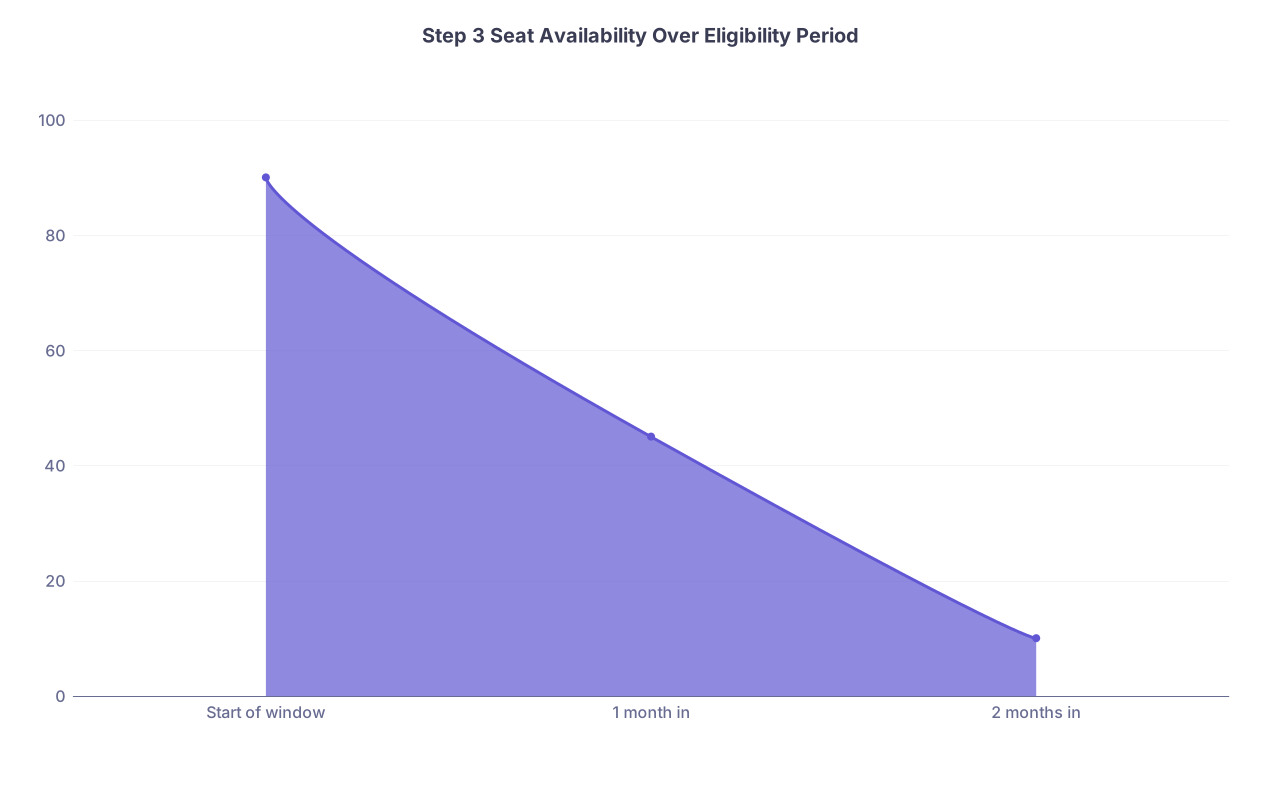
| Category | Value |
|---|---|
| Start of window | 90 |
| 1 month in | 45 |
| 2 months in | 10 |
Again, that chart is conceptual, not your exact numbers. But the trend is real.
The hidden mistake is this: even once you have a 90-day eligibility window, you still have to fight for decent Prometric slots. And nobody reserves them for residents.
To avoid this mess:
- As soon as you get your scheduling permit, book both days immediately.
- Try for:
- Same week, ideally.
- Not on your first day off after a brutal stretch.
- Not the day before a 28-hour call.
- If you can’t find good dates locally:
- Be willing to drive to a nearby city.
- Decide early if an extra 2–3 hours of driving is better than testing half-brain-dead.
The dumbest mistake? Waiting until the final month of your eligibility period and discovering there are no workable days left. Then paying rescheduling/extension fees or losing your entire fee.
4. Messing Up Name, ID, and Documentation: Getting Turned Away at the Door
This one feels bureaucratic until you’re the one standing at Prometric, being told you can’t sit for the exam.
Your Step 3 registration name must exactly match the name on the ID you plan to bring. Not “sort of.” Not “they’ll understand.” Exact.
Common traps:
- Not updating your ID after marriage, divorce, or name change, then registering with the new name.
- Registering with a preferred name instead of your legal name on your passport/driver’s license.
- IMGs using one order of names on ECFMG records and a different one on their passport.

The painful scenario:
Resident shows up for Day 1. The first name and last name are reversed or spelled differently. Prometric staff says no. Resident argues. Staff shrugs. Policy is policy.
You lose that test day. You may forfeit fees. You may need a whole new permit or eligibility period. And then you get to go explain this to your PD.
Avoid this by:
- Checking:
- The exact spelling and order of your name on your primary ID
- What’s on your ECFMG/FSMB records
- Making them match before you apply.
- If there’s any discrepancy, email FSMB to fix it ahead of time.
Also, do not show up with:
- Expired ID
- Temporary paper driver’s license with no photo
- Only one form of ID when the center requires a specific type (check the Prometric and FSMB instructions)
Don’t assume “they’ll make an exception.” They won’t.
5. Ignoring Program and Visa Requirements: Creating a Career-Level Problem
Here’s where residents get blindsided.
Step 3 isn’t just “another exam.” For many of you, it’s tied to:
- Promotion to PGY-2 or PGY-3
- Contract renewal
- Visa maintenance (especially J-1, H-1B scenarios)
- State licensing timelines for moonlighting or full license

The mistake I see constantly:
Residents assume, “I’ll just take Step 3 sometime during PGY-2” without checking the fine print of:
- Their GME contract
- Visa paperwork
- Future licensing plans
Then they discover:
- Their program requires Step 3 passed before PGY-3 start.
- Their visa case needs Step 3 by a specific deadline.
- Their dream state for future job or fellowship expects an early full license—so they needed Step 3 much earlier.
So they’re now:
- Cramming Step 3 during a horrible rotation.
- Begging for schedule favors.
- Or in some cases, risking renewal delays.
Use this simple process:
- Ask your PD or coordinator:
- “By when do I need to pass Step 3 to stay on track for promotion and visa?”
- If you’re IMG/visa:
- Clarify with your institution’s international office too, not just your co-fellow’s memory.
- Work backward from that critical date by at least 3–6 months:
- That’s your latest safe testing window.
- Then add more buffer if you’re not a strong test-taker.
Don’t back yourself into a corner where one bad test day threatens your visa status or promotion.
6. Underestimating Cost, Refund Rules, and Rescheduling Fees
The exam itself is expensive. That’s obvious. What residents underestimate are the penalty fees around it.
You pay to:
- Register
- Potentially change your Prometric dates
- Possibly extend or reapply if you let your eligibility window expire
- Re-take if you fail
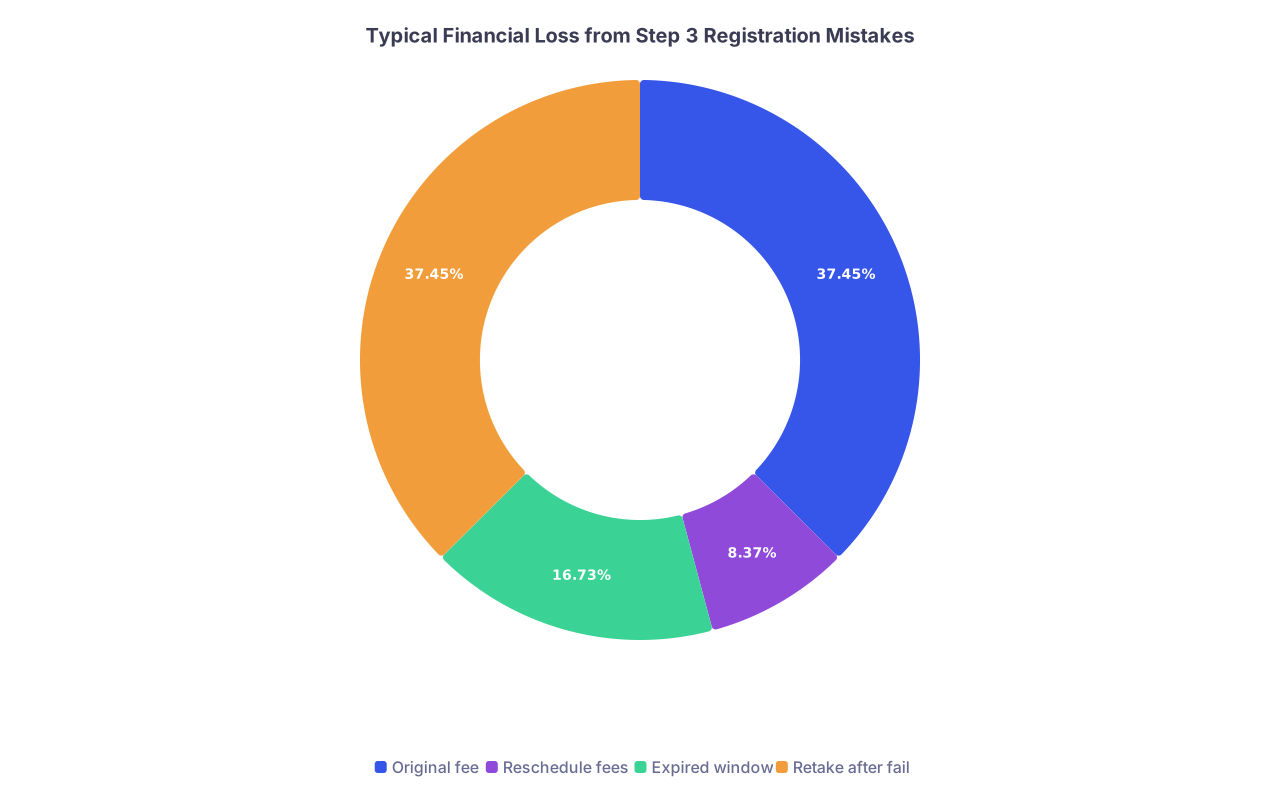
| Category | Value |
|---|---|
| Original fee | 895 |
| Reschedule fees | 200 |
| Expired window | 400 |
| Retake after fail | 895 |
Again, concept values, not exact. But the proportions are not far off from some residents I’ve seen blow hundreds on mistakes.
Here’s how people accidentally set money on fire:
- They choose an eligibility period that clashes with critical rotations, then pay multiple rescheduling fees.
- They forget to schedule, run out the clock, and the entire eligibility period expires.
- They assume they can partially refund the exam if “something comes up.” (You usually can’t.)
- They don’t realize how soon they need to cancel or reschedule to avoid full or partial fee loss.
You need to sit down one evening and actually read:
- FSMB’s official Step 3 registration, reschedule, and refund policies.
- The Prometric reschedule/cancel rules for Step 3 specifically (it’s not always like other exams).
Then you plan as if:
- You will definitely incur at most one reschedule (give yourself that leeway).
- Letting your eligibility expire is simply not an option.
If money is tight—and for most residents, it is—you cannot afford to be casual about dates and deadlines.
7. Registering Before You’re Realistically Ready: False Optimism, Real Consequences
Another very common mistake: registering way too early because of anxiety, peer pressure, or a well-meaning attending saying, “Just sign up, you’ll be fine.”
Then the reality of intern year or PGY-2 hits.
You discover:
- You haven’t finished a single Qbank.
- You’re doing questions on your phone between pages and pretending that counts.
- You’re exhausted and resentful every time you open UWorld.
But your exam dates are locked in, the window is shrinking, and you’re thinking, “I’ll just wing it. Everyone says Step 3 is easy.”
Terrible plan.

I’ve seen residents fail Step 3 not because they’re not smart, but because they treated scheduling as “commitment to study” instead of “confirmation that I’m close to ready.”
The smart sequence is:
- Start studying early with low pressure.
- Complete a large portion of a question bank (or two).
- Take at least one practice exam or self-assessment.
- Once you’re in a reasonable scoring range—and your life isn’t chaos—then lock in Step 3 dates.
Don’t register as an aspirational move. Register when you can actually carve out enough energy and time to prepare. Otherwise you risk either failing or shredding your wellbeing on top of already brutal residency.
8. Treating Registration as a Solo Project: Not Looping in Your Program
Final big mistake: doing all your Step 3 registration decisions in a vacuum and then telling your program after the fact.
That’s how you end up:
- With exam days that conflict with mandatory conferences.
- Scheduled for Step 3 during your program’s in-service exam or site visit.
- Taking both test days on “golden” weekend coverage days your chiefs were counting on.
Your PD and chief residents have a birds-eye view of:
- When most residents take Step 3 successfully
- Which rotations are realistically “light”
- What internal rules exist around time off for exams
Use them.
Bad pattern I’ve watched:
Intern signs up for Step 3 on two random weekdays during a busy service. Tells chiefs two weeks in advance. Chiefs are annoyed, coverage doesn’t exist, and the resident gets a reputation for not being a team player.
Better approach:
- Before choosing your eligibility window, ask:
- “Which blocks are usually best for Step 3 in our program?”
- Before scheduling actual test dates:
- Clear them with your chiefs/coordinator.
- Make sure any needed days off (for travel or recovery) are requested early and documented.
You’re not just avoiding drama—you’re buying yourself peace of mind. You don’t want to be checking your phone for messages about angry attendings while you’re in the middle of CCS cases.
9. The Quick Reality Check: A Safe Step 3 Registration Checklist
To make this concrete, here’s what a non-disastrous registration process looks like in practice.
You should be able to honestly say “yes” to each of these:
- I’ve confirmed eligibility with the specific state/jurisdiction I’m applying through.
- My name and ID fully match what my FSMB record will show.
- I know my program’s and visa’s latest acceptable date for a passing Step 3 score.
- I’ve matched my eligibility window with low to moderate rotations, not ICU or night float.
- I scheduled both test days immediately after getting my permit and checked for realistic travel.
- I’ve read the reschedule, refund, and expiration policies and won’t be surprised by fees.
- I looped in my PD/chiefs/coordinator before finalizing dates.
- I have a study plan already in progress, not just dreams and anxiety.
If you can’t check several of those yet, you’re about to make one of the mistakes residents usually catch too late.
2–3 Things You Really Need to Remember
Eligibility and timing will hurt you more than the content if you’re careless. Check your state rules, program expectations, and rotation schedule before you give anyone your credit card number.
Don’t treat registration as a motivational trick. Sign up when your name, documents, study progress, and rotation calendar are all aligned, not when you’re panicking.
Nothing about Step 3 logistics is flexible just because you’re busy. Prometric, FSMB, and your visa don’t care that you’re post-call. Do the boring paperwork work carefully now so you’re not dealing with an expensive disaster later.