
The most dangerous Step 3 mistake is not a bad score. It is taking the exam at the wrong time.
You can recover from a mediocre score. You cannot easily recover from failing because you scheduled Step 3 in the middle of nights, ICU, wedding season, a new baby, or two moves in three weeks. I have watched smart, capable residents do exactly that. Same pattern every year: “I just need to get it over with” turns into “I’m retaking it and explaining a fail in every interview.”
You are not just scheduling a test. You are scheduling the hardest 2-day cognitive marathon of residency around the most chaotic years of your life. If you underestimate that, you will pay for it.
Let’s talk about the traps before you step into them.
1. The Myth of “I’ll Just Knock Out Step 3 Early”
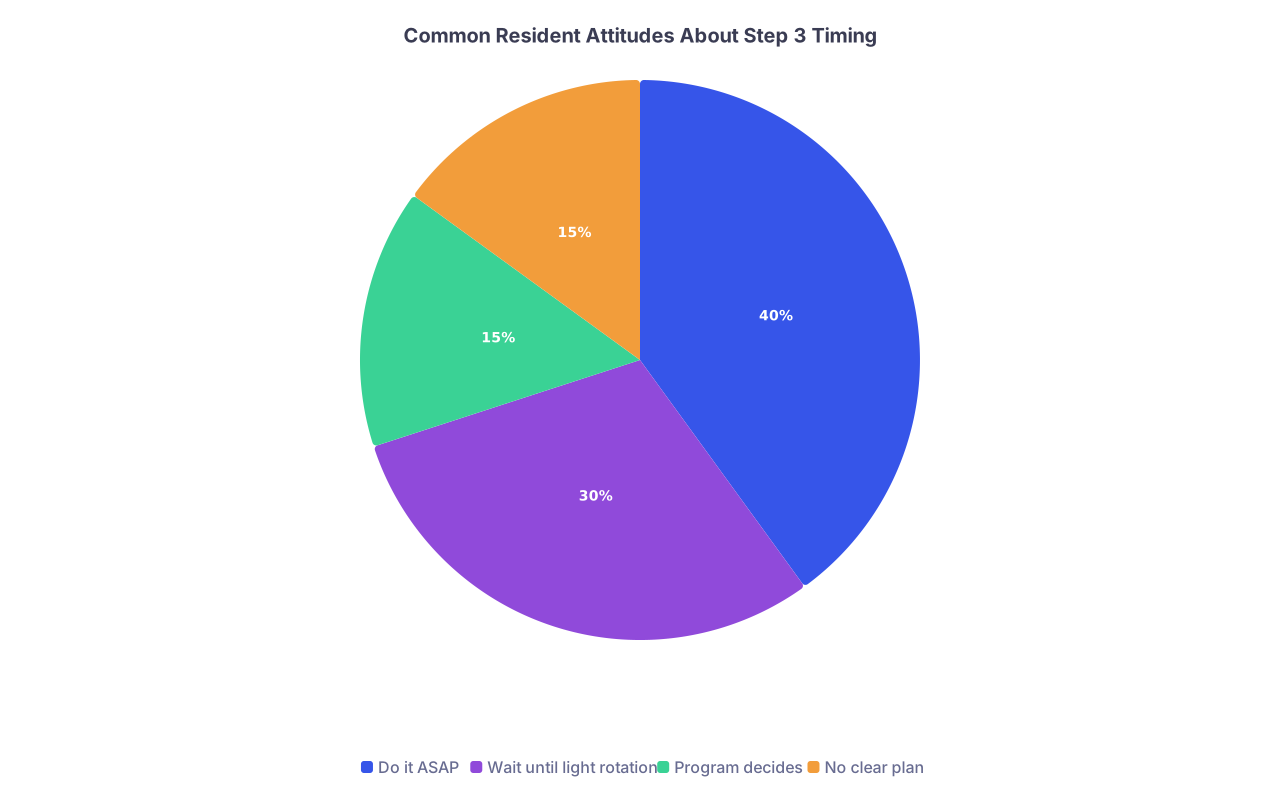
| Category | Value |
|---|---|
| Do it ASAP | 40 |
| Wait until light rotation | 30 |
| Program decides | 15 |
| No clear plan | 15 |
The first big mistake is speed worship. The cult of “earliest is best.”
You have probably heard all of this:
- “Take it intern year before you forget everything.”
- “Programs like when you’re done early.”
- “Just rip off the band-aid.”
That logic sounds efficient. It is also how residents:
- Fail Step 3 during their busiest blocks
- Score far below their Step 1/2 level
- Burn out for months for no good reason
Intern-Year Trap: “I’ll Take It Before January”
Here is what actually happens when you jam Step 3 into early intern year:
You are still figuring out:
- How to write orders without panic
- How to preround without missing half your patients
- How to present to an attending who terrifies everyone on the team
Your bandwidth is shot:
- 12–16 hour days
- New EMR system
- Random night float blocks
And then you add:
- 3–4 hours of daily studying you do not really have
- Two full days off service that you must beg for
- The pressure of a licensing exam with real consequences
If you are:
- Frequently post-call and barely coherent
- Intellectually exhausted and emotionally drained
- Still adjusting to a new city/hospital
Then "taking it early" is not a flex. It is self-sabotage.
I have watched interns schedule Step 3 during:
- Their first ICU month
- A brutal Q3 call general surgery rotation
- A ward block with a malignant attending
They all said the same thing afterward: “I didn’t realize how dead I would be.”
Rule: Early is not automatically better. Smart timing is better.
2. Ignoring Rotation Intensity: The “Any Month Is Fine” Lie

| Step | Description |
|---|---|
| Step 1 | Choose Step 3 Window |
| Step 2 | Wait until schedule released |
| Step 3 | Do NOT schedule Step 3 |
| Step 4 | Confirm days off & study plan |
| Step 5 | Book exam |
| Step 6 | Know rotation schedule? |
| Step 7 | Heavy vs Light month? |
Another common error: treating all rotations as equivalent study environments.
They are not.
Rotations That Usually Kill Step 3 Prep
Do not schedule Step 3 in the middle of:
- ICU / CCU months
- Night float
- Trauma surgery / busy general surgery
- OB nights at a high-volume center
- ED at a place that floods you with patients
On these rotations you will:
- Eat at odd hours
- Sleep like a raccoon in a dumpster
- Spend spare time just trying to feel human
Step 3 is a long exam:
- Day 1: ~7 hours of test time
- Day 2: ~9 hours with CCS cases
If you walk in sleep-deprived and half sick because your schedule has been punishing for weeks, your score will reflect that. Your CCS performance especially will fall apart when your brain is cooked.
“But My Program Only Gives Days Off During X Rotation”
Here is the quiet disaster scenario:
- Program says: “You can only take Step 3 off during night float / ICU / a particular month.”
- You accept that as law.
- You schedule anyway.
- You crash.
Push back. Talk to your chief residents and program director. Say clearly:
- “I do not feel Step 3 during ICU is safe for my performance or for my patients afterward.”
- “I would like to request a different block with post-call-free days before or after test days.”
You might not get the perfect setup. But residents who challenge bad timing often get at least a better compromise.
Rule: If your rotation would scare you to drive long distance after a shift, it is a terrible time to schedule Step 3.
3. Underestimating Life Logistics: Weddings, Moves, Babies, and Boards

Residents do this all the time: they pretend life does not exist outside the hospital and the test center calendar.
So they book Step 3:
- One week after a cross-country move
- Two weeks before their own wedding
- Right after visa renewal travel
- During the same month as specialty in-training exams
- While dealing with major family illness
Then they wonder why their Qbank scores flatline.
The Triple-Load Problem
Three loads you must consider:
- Clinical load – your rotation, call schedule, notes, consults.
- Cognitive load – learning new material, consolidating clinical reasoning.
- Emotional/logistical load – moves, finances, relationships, family needs.
Most residents only respect #1. They ignore #2 and #3. That is how you end up:
- Moving apartments the weekend before your exam
- Flying across time zones just days before test day
- Arguing with your partner nightly because you are never mentally present
Your Step 3 score is not determined only by how many UWorld questions you did. It is hammered by chronic strain from everything else.
Rule: If you are in the middle of a major life event, do not also schedule Step 3 “to get it out of the way.” You are setting yourself up for a retake.
4. Misjudging Prep Time: “I’ll Just Study After Work”
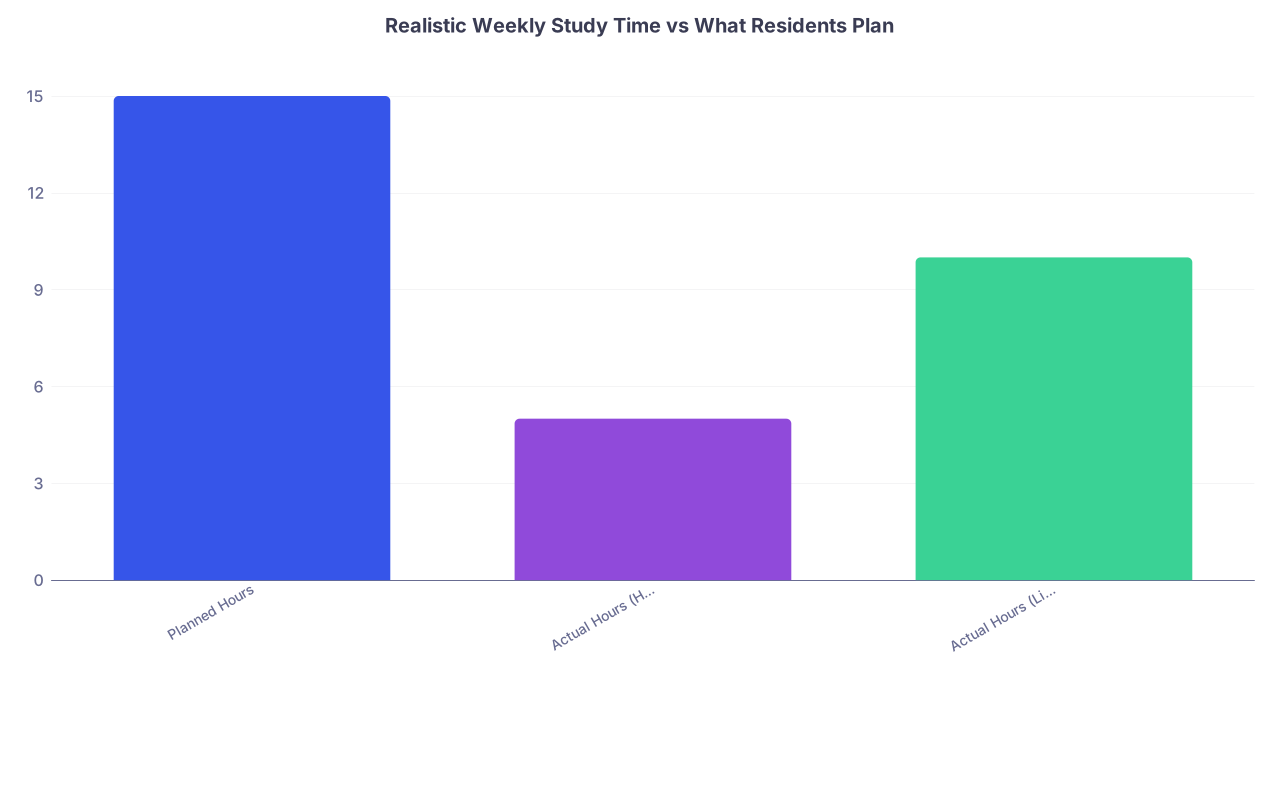
| Category | Value |
|---|---|
| Planned Hours | 15 |
| Actual Hours (Heavy Block) | 5 |
| Actual Hours (Light Block) | 10 |
The classic fantasy:
“I’ll do UWorld after work. Two blocks a day. Easy.”
Reality:
- Admissions.
- Discharges.
- Pages.
- Family drama.
- You are home at 8:30 pm staring at your wall.
You cannot brute-force Step 3 prep into a schedule that is already overflowing. The mistake is not just underestimating how tired you will be, but overestimating how efficiently you can study when tired.
Common Time Miscalculations
Residents often:
- Count post-call days as “full study days” (they are not)
- Assume weekend energy will be high (call, social obligations, pure exhaustion say otherwise)
- Ignore commuting time and sign-out delays
- Forget charting that bleeds into evenings
What actually happens:
- That “2 blocks per day” becomes:
- 1 block on a good day
- 0.5 block rushed between pager alerts
- 0 blocks on call days
So you drag out prep for 2–3 months with inconsistent studying. That is one of the fastest ways to feel like nothing is sticking.
Minimum Reasonable Prep Conditions
You are much safer if:
- You have at least:
- 4–6 weeks of real prep time
- 8–10 hrs/week during busier weeks, 12–15 hrs/week during lighter weeks
- You schedule test dates when:
- You have at least 3–4 relatively free days within 10 days of the exam
- Call is minimized in the week leading up to each exam day
If you cannot carve out that kind of space in your schedule before your program’s deadline, your problem is not motivation. It is bad timing and bad planning.
Rule: If your prep plan requires a fantasy version of you who is never tired and never behind on notes, the plan is bad. Fix the timing.
5. Ignoring Program and Licensing Deadlines Until It Is Almost Too Late
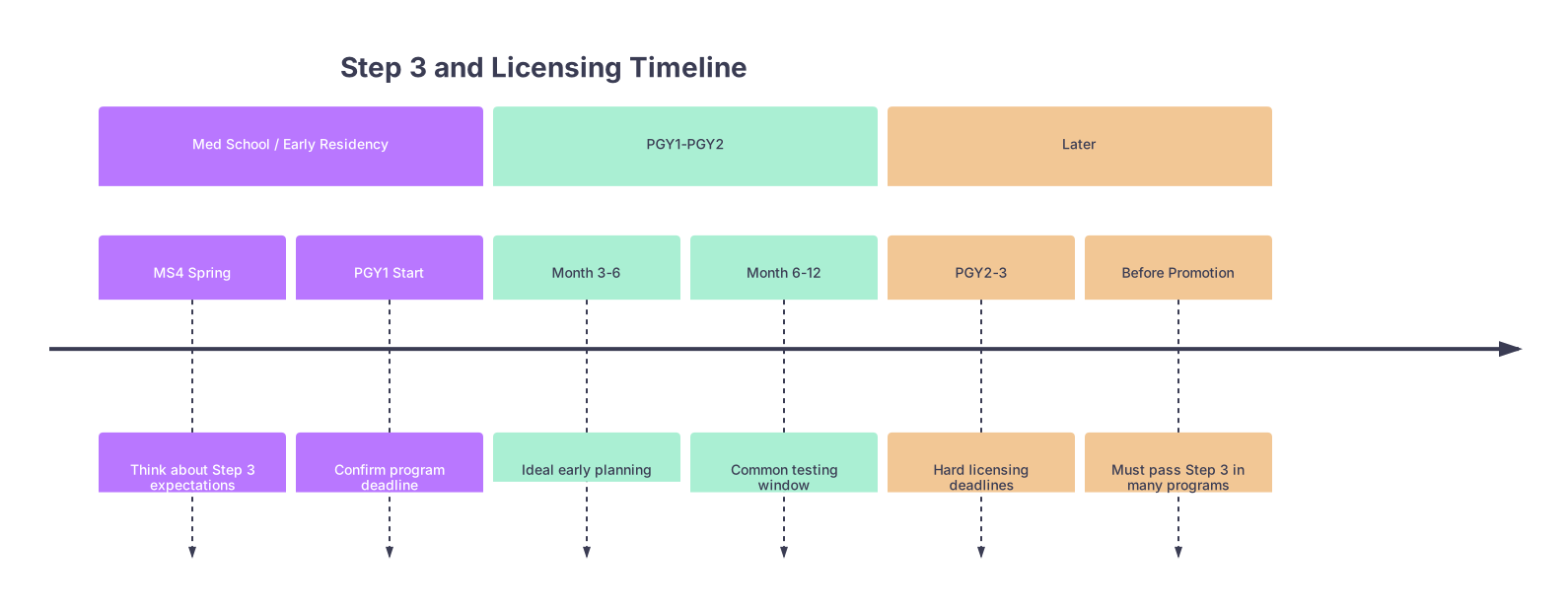
| Period | Event |
|---|---|
| Med School / Early Residency - MS4 Spring | Think about Step 3 expectations |
| Med School / Early Residency - PGY1 Start | Confirm program deadline |
| PGY1-PGY2 - Month 3-6 | Ideal early planning |
| PGY1-PGY2 - Month 6-12 | Common testing window |
| Later - PGY2-3 | Hard licensing deadlines |
| Later - Before Promotion | Must pass Step 3 in many programs |
On the other side of the spectrum are the procrastinators. They ignore Step 3 so completely that deadlines sneak up and force them into terrible timing.
Typical pattern:
- “My program said ‘sometime by end of PGY2,’ so I’m comfortable.”
- Suddenly it is month 10 of PGY2.
- The only free test slots are in the middle of:
- Night float
- Interviews
- Vacation travel already booked
On top of that:
- Some states require Step 3 for:
- Full licensure
- Moonlighting approval
- Certain visa processes
- Some programs require a passing Step 3 by:
- End of PGY1 or PGY2 for promotion
If you discover those details late, you will:
- Take Step 3 earlier than ideal
- Or take it in a brutal month
- Or both
All because you did not ask basic questions at the start.
Questions You Should Have Answered Early
Within your first few months of residency, you should know:
- By when does my program require a passing Step 3?
- By when does my state require Step 3 for full license?
- What months does my program typically allow Step 3 days off?
- Are there internal “recommended” windows by specialty/PGY year?
Write those dates down. Then work backward to schedule a saner window.
Rule: Do not let external deadlines push you into a last-minute, high-risk testing window. Know them early and plan around them.
6. Misaligning Clinical Experience and Exam Demands

Another less obvious mistake: taking Step 3 either too clinically early or too clinically late relative to what the exam actually tests.
Step 3 is not Step 2 with extra questions. It expects:
- Outpatient management
- Longitudinal follow-up decisions
- Initial management in ED/acute settings
- Practical, guideline-based choices
If you take it:
- Before you have done much continuity clinic
- Before you have handled enough triage / floor-level decisions
- Before you are comfortable with bread-and-butter primary care
You are relying purely on book knowledge, not pattern recognition from being the one actually putting in the orders.
Conversely, if you:
- Delay too long past your core IM / FM / Peds-heavy training
- Spend a full year in mostly subspecialty or procedural rotations
- Drift away from multi-system thinking
You forget the high-yield, broad stuff that Step 3 loves.
The Sweet Spot
For many residents, the best window is:
- After you have:
- 6–12 months of real residency under your belt
- Done at least some primary care clinic and ward months
- Before you:
- Get swallowed by fellowship apps, board exams, and big leadership roles
This is why many people aim for:
- Late PGY1 or early/mid PGY2 for IM/FM
- PGY1 for some prelims who want it out of the way before applying advanced positions (but carefully chosen months)
Rule: Do not schedule Step 3 at a time when your clinical exposure and the test content are badly out of sync. You will feel that mismatch on every CCS case.
7. Picking Test Days Without Respecting Recovery and Stamina
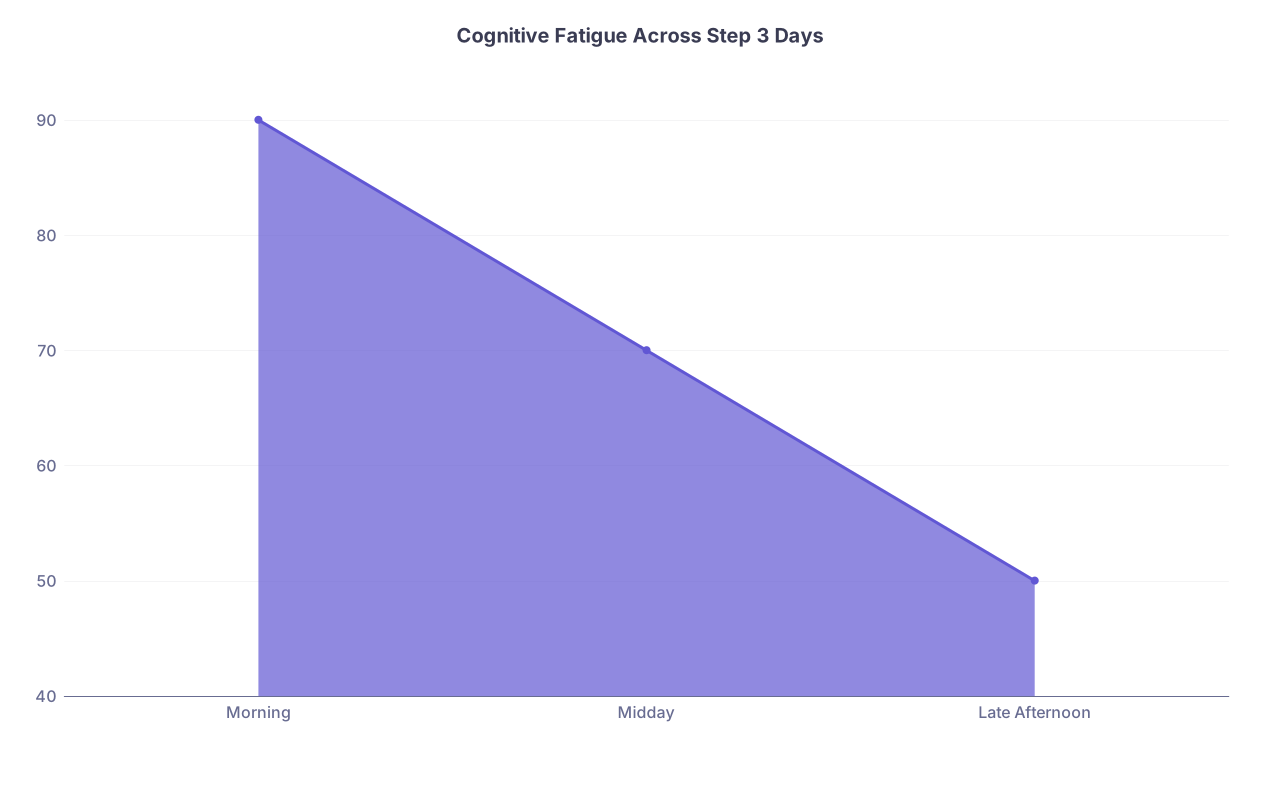
| Category | Value |
|---|---|
| Morning | 90 |
| Midday | 70 |
| Late Afternoon | 50 |
Step 3 is not one day. It is two high-intensity days.
People make two big timing mistakes with the individual days:
Scheduling Day 1 or Day 2 right after call
- “I get off at 8 am; I’ll nap and then…”
Wrong. That is a direct path to mental sludge.
- “I get off at 8 am; I’ll nap and then…”
Stacking the days back-to-back without honest reflection
- Some can handle it, many cannot.
- Especially dangerous if you are already strung out from rotations.
Non-Negotiables for Test Days
For both days, you should fight for:
- No call the night before
- No evening clinic or mandatory conference right after
- Reasonable sleep window (not “I’ll just push through”)
Do not:
- Take Day 1 while post-call
- Treat Day 2 like “just CCS, less important”
- Book an early flight or long drive right after Day 2
I have seen people drag themselves into Day 2 after:
- Fighting with scheduling about last-minute coverage
- Running to the testing center on 4 hours of sleep
- Dealing with child-care chaos right before walking in
Their performance drops sharply. They know it the second the cases start timing out.
Rule: You schedule Step 3 test days the way you would schedule a major surgery on yourself: not around call, not after an all-nighter, not squeezed between major commitments.
8. Red Flags Your Step 3 Timing Is Bad (And How to Fix It)

Here is a quick diagnostic. If any of these are true, your Step 3 timing is probably a problem:
Red flags:
- You picked the date before seeing your full rotation schedule.
- Your test falls:
- During ICU, nights, ED, or heavy surgery
- Within 7 days of a major move, wedding, or international trip
- You are counting post-call days as “primary study days.”
- You are still below your target Qbank performance two weeks before the exam, but your schedule has no slack.
- Your program deadline is within 4–6 weeks, and you have not started serious prep.
What to do if you see yourself in this list:
Re-examine the calendar with brutal honesty.
Mark:- Call days
- Conferences
- Travel
- Major personal commitments
Ask: Can I realistically carve 10–15 hours/week to study in the 4–6 weeks before this date?
If no, move the date or negotiate rotation swaps.Talk to your chief or PD now, not later.
Phrase it as:- “I want to take Step 3 once, and take it well. I’m worried this current schedule sets me up for failure because of [specific reasons]. Can we adjust my test window or rotation choice to make this safer?”
Be willing to reschedule early, not last minute.
Eating a reschedule fee is cheaper than a fail and a retake, plus the added anxiety and explanation you now owe fellowship programs or employers.
Quick Comparison: Smart vs Risky Step 3 Timing
| Scenario | Risk Level |
|---|---|
| Light clinic month, no call week before, 2–3 prior ward blocks | Low |
| ICU month with Q2 call, test mid-rotation | Very High |
| 3 weeks after moving across country with no major travel | Moderate |
| Week after international trip and jet lag | High |
| PGY1 late spring after several IM rotations | Low–Moderate |
FAQs
1. When is the earliest I should realistically take Step 3?
Not just when you are eligible, but when you are ready. For most people, that means:
- At least several months into residency
- After you have seen enough bread-and-butter inpatient and some outpatient medicine
Taking it in your first couple of months just to be “done” is usually a bad idea unless your rotation is extremely light and you are truly prepared from prior studying.
2. Is it a big mistake to take Step 3 during nights if that is the only time my program gives?
Yes, it usually is. Night float wrecks your sleep, mood, and cognitive stamina. If nights are the only “allowed” time, push back: ask for split days off, alternative blocks, or at least schedule the test at the end of nights with a few days to reset your schedule beforehand. Do not accept a high-risk setup without at least attempting to renegotiate.
3. I am an IMG and need Step 3 for visa/licensing—should I rush it?
Rushing for visa or licensing reasons is understandable but dangerous. The answer is not “delay indefinitely”; it is:
- Know your exact deadlines.
- Work backward to create a realistic prep window.
- Prioritize choosing a functional rotation month, even if it means earlier than ideal, over blindly rushing into your most brutal block just to make a date.
4. How close should my studying be to the test date?
Your most intensive studying should be in the 4–6 weeks before the exam. If there is a huge gap (for example, you did most of UWorld 3–4 months before and then got slammed with rotations), your knowledge decays. Try to align your highest Qbank volume and CCS practice near your exam, not six months before.
5. If I feel underprepared two weeks before my test, should I reschedule?
If:
- Your Qbank performance is consistently low for your goals, and
- Your upcoming schedule does not allow a significant increase in study time,
then yes, rescheduling is usually safer. If you see a realistic path to intensive studying in the next two weeks (light rotation, multiple days off, strong daily focus), you might salvage it. But do not stubbornly keep the date “just to get it over with” if all objective signs say you are not ready.
Open your calendar right now. Circle your tentative Step 3 window. Then mark every call, ICU, move, trip, and major life event in that range. If the exam date sits in the middle of a minefield, do not wait—fix the timing before it fixes your score.