
It’s 4:12 a.m. You just finished admitting a septic patient, chased down a missing CT read, and signed three stat orders. You finally sit down in the dim workroom, pull up UWorld and tell yourself, “I’ll just do 20 questions before sign-out. Gotta use the time.”
By question 7, you’ve reread the same stem three times. You flag “review later” for the fifth time in a row. You catch yourself clicking random answers just to see the explanation.
This is the moment people lie to themselves.
You call it “grinding” or “hustling.” I call it what it is: sabotaging your Step 3 prep in slow motion.
Let me be blunt: cramming between night shifts is one of the fastest ways to turn Step 3 from a manageable exam into a miserable, risky obstacle. Not because you are lazy. Because your brain is not a machine, and Step 3 punishes fake studying more than almost anything else.
Let’s walk through the mistakes people make here—and how you can avoid joining them.
Mistake #1: Treating Night-Shift Brain Like Normal Brain
On paper, night float looks like “free study time”:
- “Days are lighter, fewer attendings watching.”
- “I’ll have downtimes between admissions.”
- “I’m stuck here anyway, might as well grind questions.”
Reality check: your cognitive function on nights is not the same as on days. Not even close.
What actually happens to your brain on nights
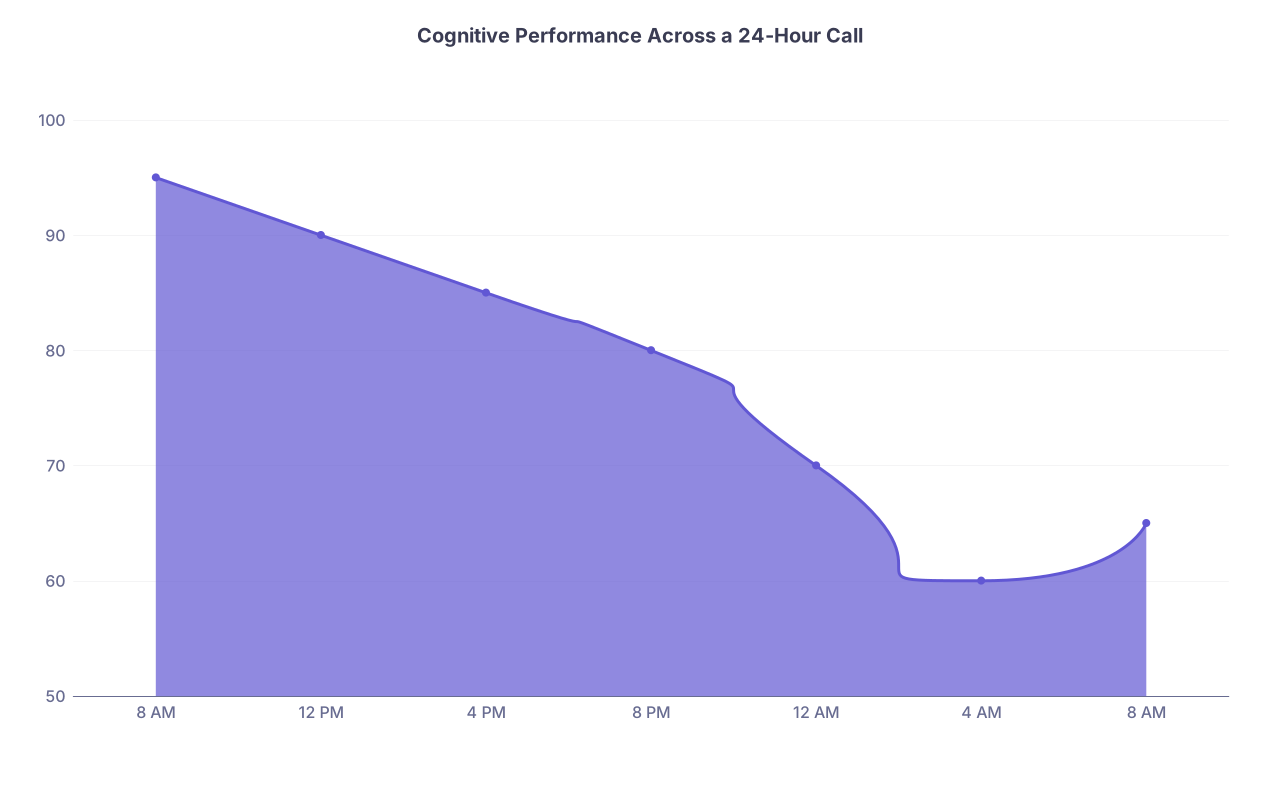
Let me cut through the fluffy talk about “circadian rhythm” and give you what matters: your brain at 3 a.m. is dumber at:
- Working memory (holding details from long vignettes)
- Executive function (analyzing, planning, weighing options)
- Attention and vigilance (staying locked into a long question)
- Decision-making (avoiding impulsive, “this sounds right” choices)
That’s not a character flaw. That’s biology.
| Category | Value |
|---|---|
| 8 AM | 95 |
| 12 PM | 90 |
| 4 PM | 85 |
| 8 PM | 80 |
| 12 AM | 70 |
| 4 AM | 60 |
| 8 AM | 65 |
If you’re trying to handle 2-block CCS cases or 38-question UWorld blocks with a brain running at 60–70% capacity, you’re not “hardcore.” You’re practicing getting questions wrong in the exact format you’ll see on test day.
You build habits when you’re tired:
- Skimming stems instead of reading carefully
- Guessing before fully analyzing
- Missing key data buried in labs or time courses
- Clicking through CCS cases just to reach the endpoint
Then you carry those same micro-habits into the actual exam.
Do not confuse effort with effective effort. Two half-dead hours of questions at 3 a.m. are worth less than 25 focused minutes when you’re actually awake.
Mistake #2: Confusing “Time Spent” With “Learning”
I’ve watched residents proudly say, “I did 80 questions during call last night.” Then you look closer at the pattern:
- 3–5 min per question block because they’re constantly interrupted
- Explanations barely read
- No notes, no Anki, no consolidation
- Questions repeated later because “I don’t remember doing this one”
That isn’t studying. That’s Step 3 cosplay.
Here’s the trap: you feel productive because:
- UWorld “questions done” count is ticking up
- Your tracker app is filling blue bars
- You’re telling co-residents, “Yeah, I’m grinding nights”
But knowledge-wise, you’re not building much. Worse—you’re training yourself to interact with questions in a shallow, rushed way.
Let me be clear: Step 3 is not just about getting through a question bank. It’s about:
- Deep pattern recognition
- Understanding management sequences, not just picking one drug
- Internalizing guidelines, not memorizing trivia
That type of learning needs:
- Focused reading
- Time to digest explanations
- Occasional going back to core resources
- Sleep—because that’s when memory consolidates
Night-shift bursts destroy all of that.
Mistake #3: Ignoring How Bad Sleep Debt Wrecks Retention
You already know sleep matters. You probably quoted the memory-formation lecture for Step 1 at some point.
And yet, people still do this:
- Work 5–7 nights in a row
- Flip back to days on post-call
- Try to “squeeze in” blocks on post-call “before I crash”
- Use caffeine to patch everything
Then they’re confused why nothing sticks.
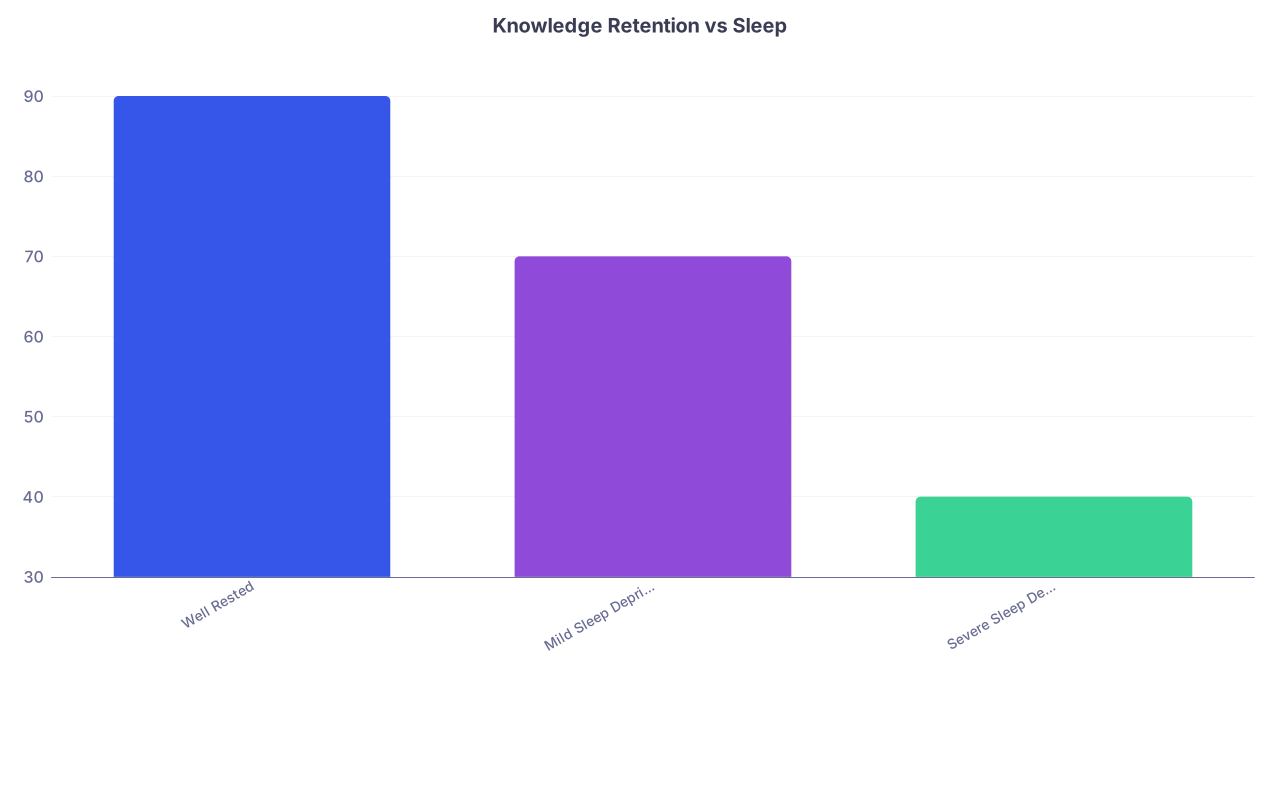
Here’s the ugly truth: if you are chronically sleep-deprived, your brain can’t hold onto new information. You might feel like you understood the explanation in the moment, but 3 days later?
Gone.
| Category | Value |
|---|---|
| Well Rested | 90 |
| Mild Sleep Deprivation | 70 |
| Severe Sleep Deprivation | 40 |
That 40% retention under severe sleep deprivation? That’s generous in real life, especially with rotating schedules.
So if your Step 3 plan is “I’ll do questions every night shift and on post-call,” your actual plan is:
“I’ll repeatedly teach my brain new stuff when it’s least able to store it and then be surprised when my scores don’t improve.”
Not a strategy. A slow-motion train wreck.
Mistake #4: Using Step 3 Studying to Cope With Guilt
This one’s touchy, but it’s real.
A lot of residents study on nights not because it’s the best time—but because they feel guilty when they are not constantly doing something “productive.”
I’ve heard all of this:
- “If I’m just sitting here, I should be doing questions.”
- “Everyone else seems to be doing UWorld on nights. I can’t fall behind.”
- “I’m already behind on my block goals; this is my only time.”
So they open UWorld instead of:
- Eating an actual meal
- Lying down for a 40-minute nap
- Calling family
- Just sitting quietly for 10 minutes
And then they call it “dedication.” It’s not. It’s fear and guilt wearing a productivity mask.
The mistake here is psychological: tying your worth to constant academic output. That’s how you end up burned out, resentful, and still underprepared.
If you feel the urge to open UWorld at 3 a.m. just because “I shouldn’t be resting,” that’s a red flag, not a flex.
Mistake #5: Forgetting What Step 3 Actually Tests
People underestimate Step 3 because it’s “the easy one.”
So they approach it with tired-brain strategies:
- Random single questions while the pager goes off
- CCS “practice” while multitasking
- Reading explanations half-focused, with music/podcasts/TV on
But Step 3 is cruel in a specific way: it’s less about raw recall and more about running mental simulations:
- Which test first?
- What do you do if that test is normal?
- When do you admit vs discharge?
- Do you call OB now or in 4 hours?
- What’s your first-line, second-line, backup plan?
That kind of stepwise thinking gets shredded when your frontal lobe is barely online.
CCS especially punishes fatigue. Those simulations demand:
- Planning a sequence (labs, imaging, consults, diet, DVT ppx, level of care)
- Watching the time jumps
- Not forgetting basic things under pressure (vitals, pregnancy test, EKG)
Trying to “get good at CCS” at 5 a.m. during a lull isn’t heroic. You’re just rehearsing missing details.
Mistake #6: Building a Plan That Requires Night-Shift Cramming
This is the hidden structural mistake: designing your Step 3 schedule in a way that only “works” if you use nights for major studying.
Here’s what that looks like:
- “I’ll do 40 questions on days off and 40 per night shift.”
- “I’ll crush CCS mostly on my night float month.”
- “I’ll finish UWorld by X date if I use nights hard.”
If your plan falls apart the moment nights get busy, sick calls happen, or you get floated, it was a bad plan from the start.
I’ve watched residents go into the last 2–3 weeks before Step 3 with:
- 30–50% of UWorld still undone
- CCS barely touched
- Constant whiplash from rotating nights/days
- Panic booking last-minute dates
Most of them said the same thing:
“I thought I’d get more done on nights.”
You cannot build a plan that depends on unpredictable, low-quality time and then be shocked when you’re behind.
Mistake #7: Using Nights for New Learning Instead of Light Review
I’m not saying you must never open anything Step-3-related on a night shift. I’m saying do not rely on nights for heavy lifting:
- New topics you’ve never seen
- Dense explanations you actually need to understand
- Long, back-to-back blocks where engagement matters
- CCS practice that requires mental bandwidth
If you must touch Step 3 on a night block, it should be:
- Low-intensity and flexible
- Easy to pause and resume
- Focused on reinforcing, not discovering
Better night-shift options (if you’re reasonably awake and things are quiet):
- Skim marked questions’ explanations you already saw
- Review very short Anki decks you’ve pre-made
- Read quick, high-yield topic summaries (5–10 min chunks)
- Watch a short CCS walk-through video—not actively simulating cases
That way you’re not pretending to do “deep work” with a brain that’s running on fumes.
A Better Way to Time Your Step 3 Prep Around Nights
You’re not getting rid of night shifts. So the question is: how do you prep around them intelligently instead of trying to brute-force through them?
Step 1: Protect your true high-value times
Identify when you’re actually functional:
- Post-nights day 2–3 once you’ve mostly flipped back
- Days off that are not immediately post-call
- Late mornings/early afternoons on lighter rotations
Those are your heavy-duty slots:
- Full 38–40 question blocks with review
- CCS practice sessions
- Learning new material, not just re-reading
You aim for consistency, not heroics.
Step 2: Treat night weeks as “maintenance,” not “growth”
During a string of nights:
- Drop your expectations
- Plan for less and call it a win
- Shift from “gaining new” to “keeping warm”
Example of a realistic night week plan:
- 0–1 small blocks (10–15 questions) per off-day, done awake
- Light review on shift only if you feel decent and work is quiet
- Zero guilt if you choose sleep over studying that week
That keeps your Step 3 prep from dying without pretending you’re making big gains.
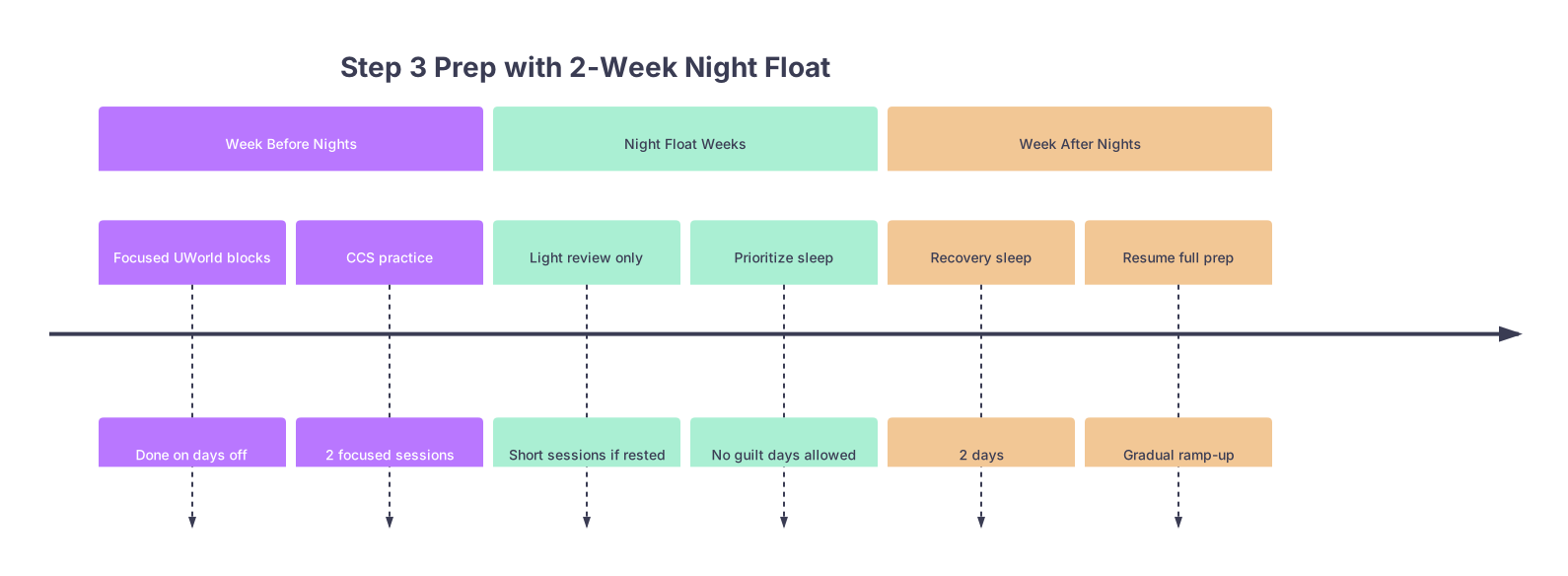
Step 3: Front-load and back-load effort around night blocks
Before a night float stretch (1–2 weeks):
- Slightly increase your studying in the week before
- Tackle harder topics and CCS when rested
- Accept that nights will be slower
After a night float stretch:
- Give yourself 1–2 days to sleep and normalize
- Then ramp back thoughtfully
- Don’t immediately try to “catch up 300 questions” in 48 hours—that’s how burnout and careless learning happen
| Period | Event |
|---|---|
| Week Before Nights - Focused UWorld blocks | Done on days off |
| Week Before Nights - CCS practice | 2 focused sessions |
| Night Float Weeks - Light review only | Short sessions if rested |
| Night Float Weeks - Prioritize sleep | No guilt days allowed |
| Week After Nights - Recovery sleep | 2 days |
| Week After Nights - Resume full prep | Gradual ramp-up |
Mistake #8: Not Being Honest With Yourself About Quality
You know when your studying is garbage. You can feel it:
- You can’t explain to yourself why the right answer is right
- You forget the explanation 20 minutes later
- You’re rereading sentences with zero comprehension
- You’re impulse-clicking just to get through the block
But instead of calling it and going to sleep, you keep pushing because:
- “I already started the block; might as well finish.”
- “I don’t want to be soft.”
- “Something is better than nothing.”
No. Sometimes “nothing” (i.e., sleep) is clearly better than fake studying that only deepens your mental fatigue.
If you’re catching yourself making these moves on nights:
- Clicking “Show Answer” after 10 seconds
- Skimming explanation and thinking “Yeah, yeah, I know this”
- Telling yourself you’ll “revisit later” but never tracking it
That’s your cue to stop. You’ve crossed the line from productive to performative.
Mistake #9: Letting Culture Push You Into Bad Habits
Residency culture glorifies suffering. You know this. There’s always that one person:
- “I did UWorld every night on MICU.”
- “I finished my whole bank during nights.”
- “I studied 3–4 hours after every shift.”
Let me translate some of those:
- “I clicked through a lot of questions at low quality.”
- “I sacrificed my sleep, relationship, and mental health for a test that could have been handled more sanely.”
- “I’m humble-bragging because that’s how I feel valuable here.”
Do not let other people’s masochism set your standard.
Your job is not to impress co-residents with how much you grind. Your job is:
- Keep patients safe
- Pass Step 3 with a comfortable margin
- Stay sane enough to still want this career in 5 years
People wildly overreport how well they function on no sleep. They also conveniently fail to mention their near-misses, their panic two weeks before Step 3, or the quiet relief when the score report comes back just over the passing cut.
You don’t need to copy their bad process to get their barely-good-enough outcome.
What To Do Instead: A Simple, Non-Self-Destructive Step 3 Approach
Let me give you something concrete. Say you have Step 3 in 8–10 weeks and a 2-week night float in the middle.
Here’s a saner outline.
| Phase | Focus |
|---|---|
| Weeks 1–3 (pre-nights) | Heavy UWorld + start CCS |
| Weeks 4–5 (night float) | Maintenance only, light review |
| Weeks 6–8 (post-nights) | Finish UWorld + targeted CCS |
What this looks like in practice:
Weeks 1–3 (pre-nights)
- 1 full timed block (38–40 Qs) on most off-days
- Thorough explanation review, notes, or flashcards
- 2 CCS practice sessions per week (simulator or cases)
Weeks 4–5 (during nights)
- On off-days:
- Shorter blocks (10–15 Qs), untimed, focused review
- Only if you’re decently rested
- On nights:
- Optional: review old notes, light cards, or marked explanations
- No guilt if you do zero Step 3 some nights and just sleep
Weeks 6–8 (after nights)
- Resume fuller blocks
- Finish remaining UWorld
- Hit weak areas with targeted review
- Deliberate CCS work when actually awake
This plan doesn’t rely on fantasy “I’ll be super productive on nights.” It assumes reality:
- Nights will vary from dead to brutal
- Your brain will not be at 100% regardless
- Sleep debt will linger for a week or two
You’re working with your physiology, not against it.
The Bottom Line: Night-Shift Cramming Is a False Shortcut
Let me say it cleanly:
- Cramming Step 3 between night-shift admissions feels productive.
- It satisfies your guilt and panic.
- It almost always backfires.
You pay the price in:
- Poor retention
- Bad habits with question approach
- CCS sloppiness
- Burnout creeping in just when you need focus the most
You don’t get bonus points for suffering more than necessary. The exam doesn’t care whether you did your questions at 2 p.m. at a coffee shop or half-asleep at 4 a.m. in a call room. It only cares what’s actually in your head and how fast you can use it.
So stop pretending your night-shift zombie brain is the right tool for your most important prep.
One Specific Step You Can Take Today
Open your calendar right now and find your next night-float or night-shift block. Then do two things:
- Draw a clear box around that period and label it: “MAINTENANCE ONLY – NO HEAVY STUDY.”
- In the week before that block, schedule at least two real Step 3 sessions (full blocks + serious review) on days you’re awake.
Lock that in.
If you plan for nights to be low-yield and protect your real study time outside them, you’ll stop making the classic mistake: counting exhausted, low-quality cram sessions as “prep” and then wondering why your Step 3 performance doesn’t match your effort.