
The worst Step 3 mistake is not under-studying. It is scheduling the exam at the wrong time in your rotation calendar.
You can be well prepared and still get crushed if you sit for Step 3 in the middle of nights, a brutal ICU month, or a relocation week. I have watched smart residents do exactly that. They did fine on Step 1 and Step 2… and then got blindsided by Step 3 because their timing was reckless.
Let us fix that. Chronologically. Month by month, then week by week.
Big-Picture Timeline: When Step 3 Fits Into Training
At this stage you should stop thinking about “How many weeks do I need?” and start with “Where does Step 3 actually belong in my PGY1–PGY2 calendar?”
For most people, the smartest windows are:
- Late PGY1: After you survive your steepest learning curve but before life explodes with PGY2 responsibilities.
- Early–mid PGY2: After some real-world experience and before fellowship applications (if applicable).
Here is the 10,000‑foot view.
| Timing Window | Often Best For | Risk Level |
|---|---|---|
| Early PGY1 (Jul–Sep) | Rarely recommended | High |
| Mid PGY1 (Oct–Jan) | IM, Peds, FM, Psychiatry | Medium |
| Late PGY1 (Feb–Jun) | Most specialties | Low |
| Early PGY2 (Jul–Oct) | Surgery, OB/GYN, competitive specialties | Low–Medium |
| Late PGY2+ | Only if required late | High |
At this point (MS4 → PGY1 Spring) you should…
- Confirm your residency’s Step 3 deadline:
- Some programs: by end of PGY1.
- Others: by mid‑PGY2.
- A few: no hard internal deadline, but visas or boards may impose one.
- Ask your chief or program coordinator which months are “lighter” for your intern year.
- Look at state license requirements if you will need an unrestricted license early (moonlighting, locums, etc.).
If you are still in MS4, do not schedule Step 3 during medical school. You are not getting extra points for speed. You are just trading away real clinical experience that makes Step 3 easier.
Month‑by‑Month: Ideal Windows vs Landmines
Now we get practical. You build your plan around your rotation calendar.
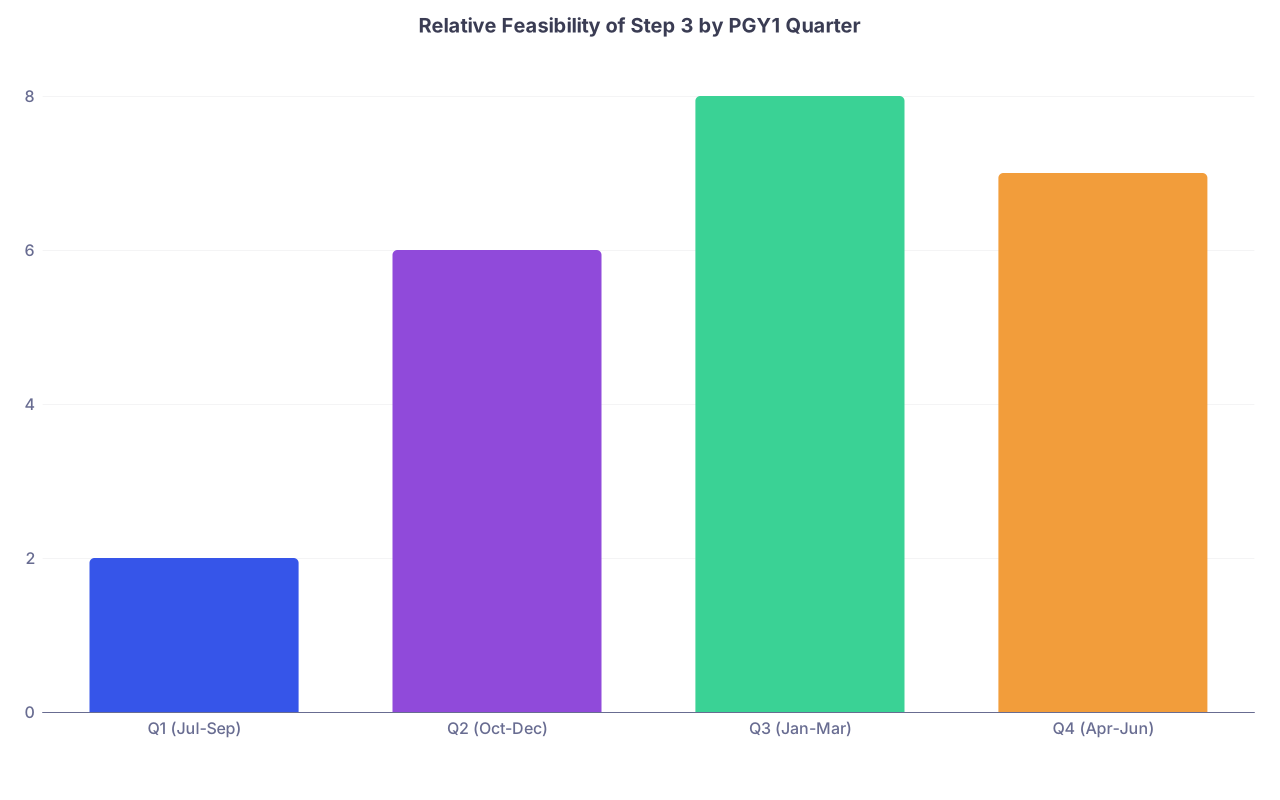
| Category | Value |
|---|---|
| Q1 (Jul-Sep) | 2 |
| Q2 (Oct-Dec) | 6 |
| Q3 (Jan-Mar) | 8 |
| Q4 (Apr-Jun) | 7 |
(Scale 1–10: higher is better for Step 3.)
PGY1 Q1 (July–September): Do not be a hero
You are:
- Learning EMR basics.
- Trying not to miss sepsis.
- Figuring out where the bathrooms are.
This is the worst time to schedule Step 3 unless:
- Your program requires it unreasonably early.
- You are repeating residency and already extremely comfortable clinically.
At this point you should:
- Do nothing formal for Step 3 except:
- Save cases you find interesting.
- Notice common inpatient problems (DKA, CHF, COPD, sepsis, alcohol withdrawal).
- Keep a simple running note on your phone: “Step 3 Pearls” with 1‑line reminders.
Avoid scheduling Step 3 in:
- Your first ward month.
- Your first ICU month.
- Any month where you are still calling seniors for every Tylenol order.
PGY1 Q2 (October–December): First realistic window (for some)
You now:
- Know the EMR.
- Can manage routine patients with less supervision.
- Are slightly less overwhelmed.
If your program wants Step 3 done by end of PGY1, this is your first sane block.
Better months for Step 3:
- Outpatient clinic blocks with predictable hours.
- Consult months with lighter call.
- Electives with 8‑5 schedules and limited weekends.
Months to avoid:
- MICU/SICU
- Night float
- Inpatient surgery or trauma with 5–6 days of call
- Any rotation where you are pre-rounding before 5 a.m.
At this point you should:
- Pick a target month for the exam, not an exact date.
- Roughly map a 6–8 week prep window leading into that month.
PGY1 Q3–Q4 (January–June): The Sweet Spot for Most Residents
This is where you want to live if possible.
You are more efficient. You have seen hundreds of bread‑and‑butter cases. You have enough stamina to do work plus a couple hours of study.

Choosing the Month
Rank your options like this:
Elective or outpatient month
- Clinic 8–5, minimal weekend work.
- Predictable schedule → ideal for 4–6 weeks of daily questions + CCS practice.
Lighter inpatient month
- Floors with decent staffing, reasonable calls.
- No nights. No ICU. No trauma.
Vacation month adjacent
- Example: Take Step 3 Monday–Tuesday, then start a week of vacation Wednesday.
- Or do the reverse: vacation first, exam at the end when your brain is fresher.
Avoid scheduling during:
- ICU, ED, nights, trauma, obstetric heavy call.
- Any block that historically burns people out at your program. Ask seniors: they will tell you.
At this point you should:
- Lock in a 4–6 week study block on your calendar:
- Example: Study from Feb 1 – Mar 15.
- Test dates: Mar 16 (Day 1) and Mar 18 (Day 2).
- Request any needed days off or clinic schedule tweaks well in advance.
PGY2 and Beyond: When Late Is Too Late
If you did not take Step 3 during PGY1, you can still do this smoothly. But pressure ramps up.
Early PGY2 (July–October): Second strong window
Good for:
- Surgeons and OB/GYN residents who had a chaotic PGY1.
- Anyone whose program’s official deadline is “by mid‑PGY2.”
- People applying to competitive fellowships who want Step 3 done before ERAS.
Bad for:
- Residents stepping into chief‑style responsibilities or new leadership roles.
- Anyone rotating through high‑acuity specialty blocks for the first time.
At this point you should:
- Reserve one of your lighter PGY2 months for Step 3:
- Ambulatory IM month.
- Psych or elective.
- Research month (if your time is truly your own).
Mid/Late PGY2 and PGY3: The risk zone
You are now juggling:
- Supervisory roles.
- Fellows or boards prep.
- Life outside work that actually matters (partners, kids, mortgages).
Waiting this long is usually a mistake unless visa timing, licensing, or delayed match forced you into it.
If you are here anyway:
- Aim for your chillest rotation of the year.
- Avoid exam dates:
- 2–3 weeks before big in‑service exams.
- When you are on service with a notoriously demanding attending.
- During major life events (wedding, moving, new baby).
Week‑by‑Week: Building a Realistic Step 3 Study Plan Around Rotations
Once your month is chosen, the real work is crafting a schedule that fits your rotation type.
Think in 4–6 week blocks.
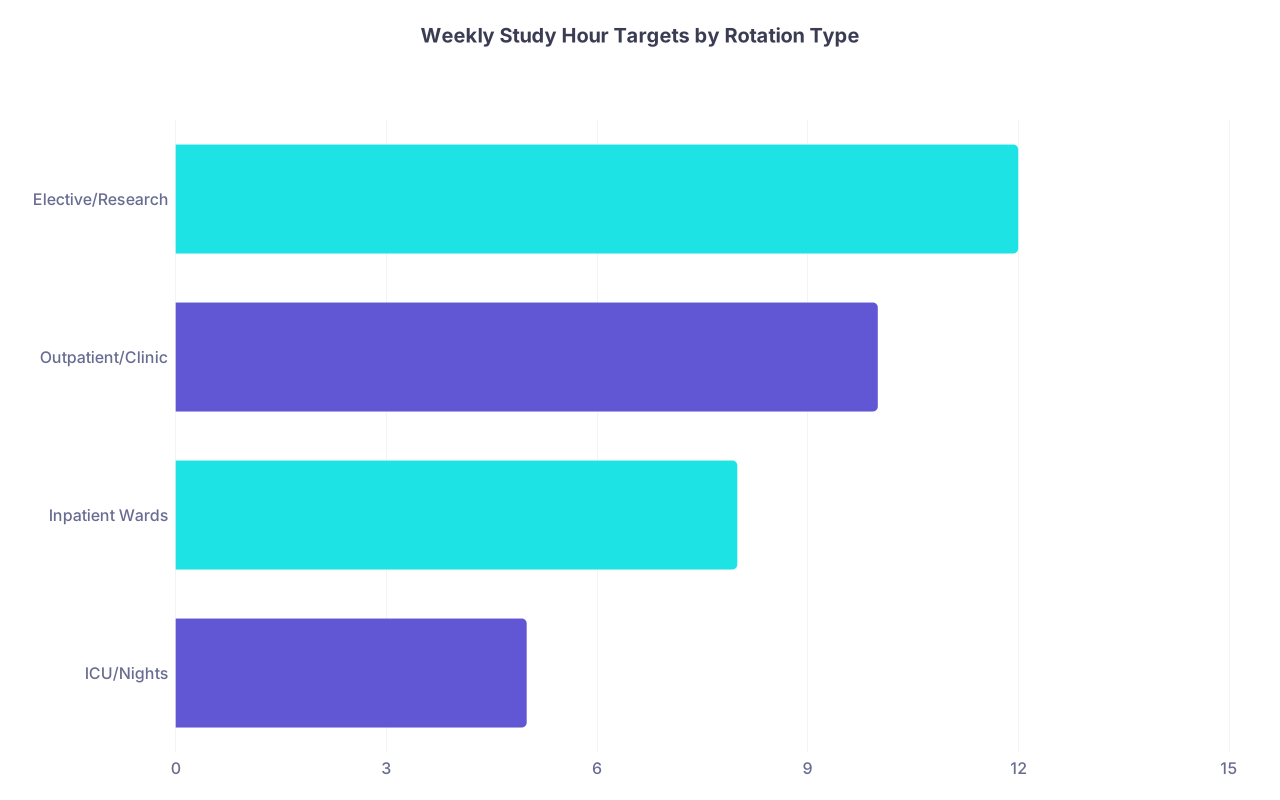
| Category | Value |
|---|---|
| ICU/Nights | 5 |
| Inpatient Wards | 8 |
| Outpatient/Clinic | 10 |
| Elective/Research | 12 |
If you are on outpatient / elective: 4–5 weeks
Goal: 10–12 hours per week.
At this point (5 weeks before exam) you should:
Week −5: Warm‑up and assessment
- Buy / access:
- UWorld Step 3 QBank.
- A dedicated CCS practice tool (or at least UWorld CCS cases).
- Do:
- 10–15 questions per day, 5–6 days per week (mixed blocks).
- Review explanations the same day.
- 1–2 CCS cases per week just to get used to the interface.
Week −4 to −3: Core grind
- 20 questions per day on weekdays.
- 30–40 questions per day one weekend day.
- 3–4 CCS cases per week, full timed mode.
- As you see topics in clinic (e.g., uncontrolled DM, asthma exacerbation), mentally “Step 3 them”:
- What is first‑line?
- What labs/imaging are necessary vs useless?
Week −2: Simulation and refinement
- Aim to have 70–80% of QBank done.
- Do at least one simulated full test day:
- 6–7 blocks back‑to‑back with short breaks.
- Daily:
- 2–3 CCS cases.
- 1 shorter question block just to keep pace.
Week −1: Taper, do not cram
- Light review of weak systems (OB, peds, psych are common blind spots).
- 1–2 CCS cases daily.
- One more half‑day simulation if you can tolerate it.
- Last 48 hours:
- Only light review and CCS interface familiarity.
- Sleep. Hydrate. Be boring.
If you are on inpatient wards: 5–6 weeks
Goal: 7–8 hours per week.
At this point (6 weeks before exam) you should:
Week −6 to −4: Slow steady build
- 10–12 questions per day, 5 days per week.
- One longer session on a golden weekend if you get it (20–30 questions).
- 1–2 CCS cases per week.
Week −3: Increase intensity
- 15–20 questions per day on days off / lighter days.
- Shorter blocks (10–15 questions) on call days.
- 2–3 CCS cases per week.
Week −2: Targeted push
- Focus on:
- Peds, OB, outpatient scenarios (stuff you do not see much inpatient).
- Ethics, biostats, quality improvement questions.
- Keep one day per week mostly free from studying to avoid burnout.
Week −1: Protect your sleep
- Shift to:
- 10–15 questions daily.
- 1–2 CCS cases every other day.
- No late‑night marathons after long shifts. Your brain will not consolidate anything.
If you are on ICU / nights / brutal rotations: Do not test here
If Step 3 is during this block anyway (because of deadlines or bad luck), then:
- Cut expectations:
- 5 hours per week might be all you manage.
- Switch to survival mode:
- 10 questions on post‑call days.
- Audio review or light reading on commutes.
- Most of the “real” prep must happen before this month begins.
Day‑by‑Day: How to Use the Actual Exam Days
Step 3 is two separate days within a 14‑day window. Treat them strategically.

| Step | Description |
|---|---|
| Step 1 | Schedule Day 1 |
| Step 2 | 6-8 Days Later: Day 2 |
| Step 3 | Day 1: MCQ Focus |
| Step 4 | Light Review Days 2-3 |
| Step 5 | CCS Intensive Days 4-6 |
| Step 6 | Rest Day Before Day 2 |
At this point (when scheduling dates) you should…
- Book Day 1 (mostly MCQs) earlier in the week (Mon–Wed).
- Book Day 2 (CCS + MCQs) 5–8 days later.
- Avoid:
- Doing both days back‑to‑back unless your schedule is perfect and light (rare).
- Big call shifts immediately before or after either exam day.
Day 1 week: How to structure it
Day 1 (exam)
- Wake at your usual workday time. Not earlier.
- Eat the same breakfast you use before early rounds. Do not experiment.
- Use breaks intentionally:
- Short 5–7 minute breaks between blocks.
- One longer 15–20 minute break for food mid‑day.
Day 2–3 after Day 1
- Do:
- 10–15 CCS cases over 2–3 days (timed).
- Review the Step 3 CCS strategy (orders first, then refine).
- Do not:
- Rebuild a giant question schedule.
- Panic about missed MCQs from Day 1. That damage is done.
Days 4–6 after Day 1
- 1–2 blocks of MCQs per day just to stay in rhythm.
- Keep practicing CCS with attention to:
- Time management.
- Advancing the clock appropriately.
- Safety orders (fluids, vitals, monitoring) on every case.
Day Before Day 2
- One or two short CCS cases just to keep the muscle memory.
- Close everything by mid‑afternoon.
- Walk, stretch, sleep.
Rotations to Avoid for Step 3 (Non‑Negotiable List)
You want to stack the deck. Certain blocks are just bad bets.

Avoid scheduling Step 3 during:
ICU (any flavor)
- Unpredictable nights.
- Emotional intensity.
- Constant interruptions. Your brain is mush.
Night float blocks
- Reversed circadian rhythm.
- Hard to find a Prometric slot that does not wreck your sleep schedule.
Heavy call rotations
- Trauma surgery, OB with Q2–3 call, certain subspecialty consults.
- The post‑call day is not a magic free day. You are wrecked.
First month in any new high‑stakes role
- First time as senior resident.
- First time leading a team in a new hospital system.
Transition months
- Moving to a new city or starting at a new site.
- Visa renewal trips, weddings, newborn arrival.
If you find yourself needing to schedule Step 3 in one of these anyway, your problem is not study strategy. It is planning. Fix the calendar first.
Common Timing Traps (And How to Dodge Them)
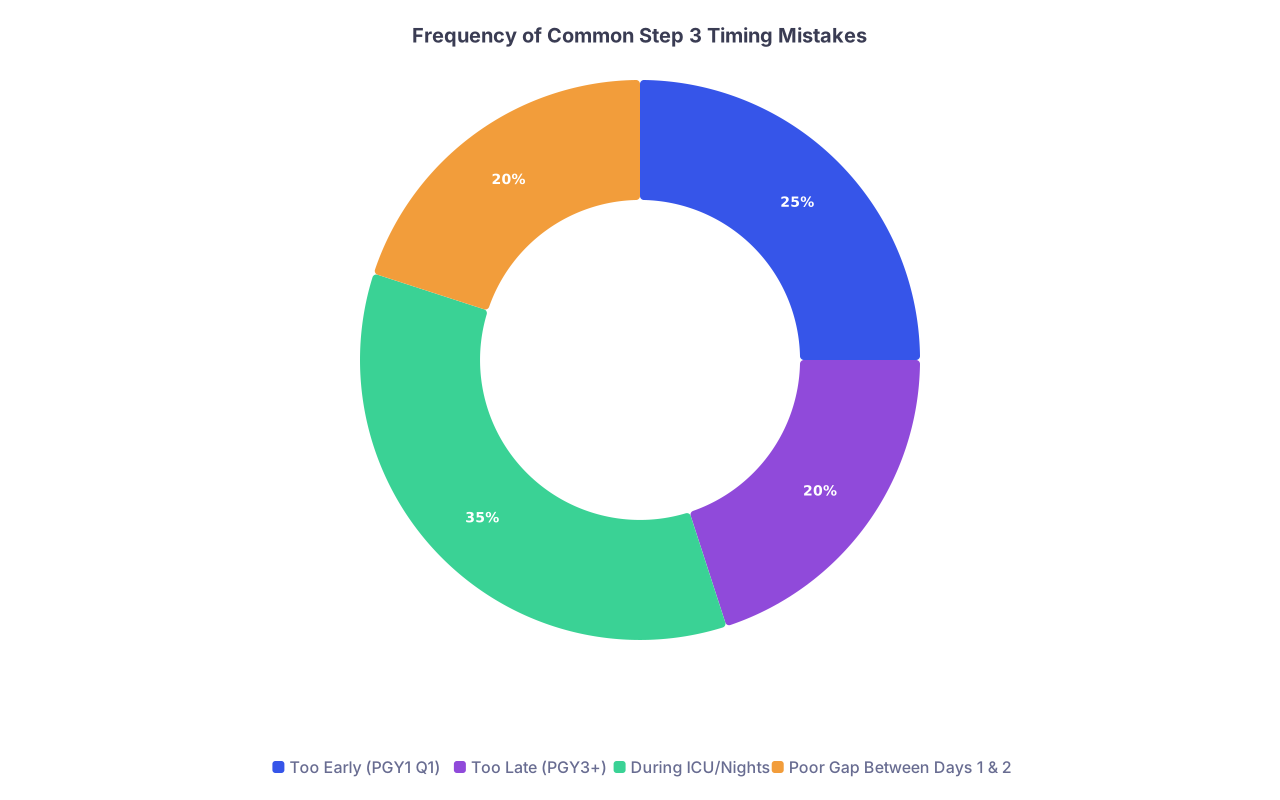
| Category | Value |
|---|---|
| Too Early (PGY1 Q1) | 25 |
| Too Late (PGY3+) | 20 |
| During ICU/Nights | 35 |
| Poor Gap Between Days 1 & 2 | 20 |
These are the patterns I see repeatedly:
“I will just knock it out early in intern year.”
- Translation: “I will tank my score and be miserable.”
- Fix: Earliest realistic is mid‑PGY1 with a light rotation and 4–6 weeks of prep.
“I will study hard during ICU and be battle‑hardened.”
- No, you will sleep whenever you can and forget what you read.
- Fix: Use ICU to collect clinical intuition, not to cram QBank.
“I will schedule both days back‑to‑back to be efficient.”
- Works for <10% of people with very controlled schedules.
- Fix: Separate the days by 5–8 days; focus on CCS between them.
“I will wait until fellowship interviews are over.”
- You end up with Step 3 + interview travel + service responsibilities all at once.
- Fix: Plan Step 3 before peak interview season if you are fellowship‑bound.
Quick Specialty‑Specific Notes

These are patterns, not iron laws, but they are usually right.
Internal Medicine / Pediatrics / Family Medicine
- Best: Late PGY1 or early PGY2 during clinic/electives.
- Avoid: Back‑to‑back ward months or ICU stretches.
General Surgery / Surgical Subspecialties
- Best: Research month, elective with limited call, or lighter PGY2 clinic block.
- Avoid: Trauma services, transplant, major operative months.
OB/GYN
- Best: Gyn clinic months, research blocks, or elective rotations.
- Avoid: L&D heavy call and night float.
Psychiatry
- Best: Outpatient psych, consult‑liaison months with predictable hours.
- Watch out: Night float, ED psych, or inpatient units with chronic understaffing.
Minimalist Checklist: When to Schedule vs When to Avoid
At this point you should be able to answer these yes/no questions.
Schedule Step 3 if:
- You have:
- 4–6 weeks on a relatively light or predictable rotation.
- Ability to carve out 7–12 study hours per week.
- You are not:
- Starting a brand‑new role that month.
- In the middle of major life chaos.
- You can:
- Separate Day 1 and Day 2 by 5–8 days.
- Take at least one lighter day before each exam day.
Avoid scheduling if:
- You are in ICU / nights / trauma / OB‑call.
- Your only prep plan is “I will do questions when I am less tired.”
- You are counting on post‑call days as your main study time.
- You have not opened a QBank yet and the exam is <4 weeks away.
FAQ (Exactly 4 Questions)
1. How long should I study for Step 3 if I did well on Step 1 and Step 2?
Plan for 4–6 weeks of consistent work, even with strong prior scores. That usually means 2000–2500 QBank questions plus 30–40 CCS cases. High scorers can sometimes compress this into 3–4 intense weeks on an easy rotation, but I rarely recommend less than a month unless your clinical reasoning is exceptionally sharp and your schedule is extremely light.
2. Is there any benefit to taking Step 3 very early in PGY1?
Almost never. You lack systems knowledge, real‑world pattern recognition, and time. Programs do not reward speed; they want a pass and preferably a solid score. The only exceptions: repeat residents or those whose visa or licensing situation requires a drastically early Step 3. Even then, I still try to push them to mid‑PGY1 at the earliest.
3. Should I use vacation weeks as my main study time or right before the exam?
Use vacation strategically, not desperately. Ideally: do most of your studying while on a light rotation, then place 3–5 vacation days just before Day 1 or between Day 1 and Day 2. Those days are for full‑length simulations, CCS immersion, and rest. Using all of your vacation for a last‑minute cram week is usually less effective and more miserable.
4. What if my schedule changes last‑minute and ruins my carefully planned Step 3 window?
Then you treat Step 3 like a clinical problem. Reassess quickly. If your new rotation is heavy (ICU, nights, high‑call) and the exam is >3 weeks out, strongly consider rescheduling to a later light rotation. The fee is annoying, but failing Step 3 is much more costly. If you are inside a 2‑week window and cannot move it, reduce your study goals to maintain sleep and focus: fewer questions, more targeted review, and absolutely no all‑nighters.
Open your residency schedule right now, month by month, and mark three blocks: green (ideal for Step 3), yellow (possible but tight), and red (never). Your next move is simple: choose a green month, anchor a test window there, and protect it ruthlessly.