The most common Step 3 mistake happens in the final 24 hours, not during the exam. People treat it like another study day instead of a performance day.
You are not cramming. You are staging a controlled 36‑hour operation around protecting your brain, your body, and your timing. Here’s exactly what to do—down to the hour.
24 HOURS BEFORE STEP 3: THE AFTERNOON RESET (T‑24 to T‑18)
At this point, you should be done with serious content learning. If you’re opening UWorld explanations for the first time, that’s not “high‑yield,” that’s panic.
T‑24 to T‑22 hours before exam
(For an 8:00 a.m. exam, this is roughly 8:00–10:00 a.m. the day before.)
Your goals here: finalize logistics, cap your studying, and set your sleep schedule.
Confirm logistics (20–30 minutes)
Sit down and actually walk through the day:- Check:
- Test center address
- Parking/transport plan
- Check‑in time (usually 30 minutes early)
- Required IDs (name must match ERAS/permit exactly)
- Print or pull up your appointment confirmation.
- Look up traffic patterns for your exam time on Google Maps or similar.
If you discover something broken now (driver’s license missing, permit not printing, construction on your route), you still have time to fix it.
- Check:
Build your physical “exam kit” (20–30 minutes)
Lay it out, do not trust “I’ll remember in the morning.”Pack a small clear bag with:
- ID (primary and a backup if you have it)
- Exam permit (printed, even if “not required”)
- Wallet
- Simple snacks:
- 1–2 granola/protein bars
- Nuts or trail mix
- One non‑messy fruit (apple/banana) if you tolerate it
- Drinks:
- Water bottle (many centers require you leave it in locker)
- Optional: coffee/tea in a disposable cup for pre‑exam only
- Earplugs (if allowed at your center; they often provide theirs only)
- Light sweater/zip‑up (rooms can be fridge‑cold)
What you don’t bring:
- New supplements or energy drinks you’ve never used
- Massive meals
- Study textbooks, binders, and your entire life’s notes
Define your last bit of “light” review (60–90 minutes)
This is the only focused study block I’d allow the day before.You should:
- Skim your shortest personal notes:
- CCS common orders list
- Top 20–30 “gimme” management steps (e.g., chest pain → ECG, aspirin, O2)
- High‑frequency emergency algorithms (e.g., ACLS basics)
- Maybe do:
- 5–10 untimed CCS interface walk‑throughs (if you’re still awkward with the software)
- Or glance through 10–15 previously missed MCQs quickly, only to recognize patterns (do not deep‑read explanations)
At this point, you should not:
- Start new question blocks
- Do full timed sets “just to see”
- Open new resources or “that CCS PDF my co‑resident just sent”
- Skim your shortest personal notes:
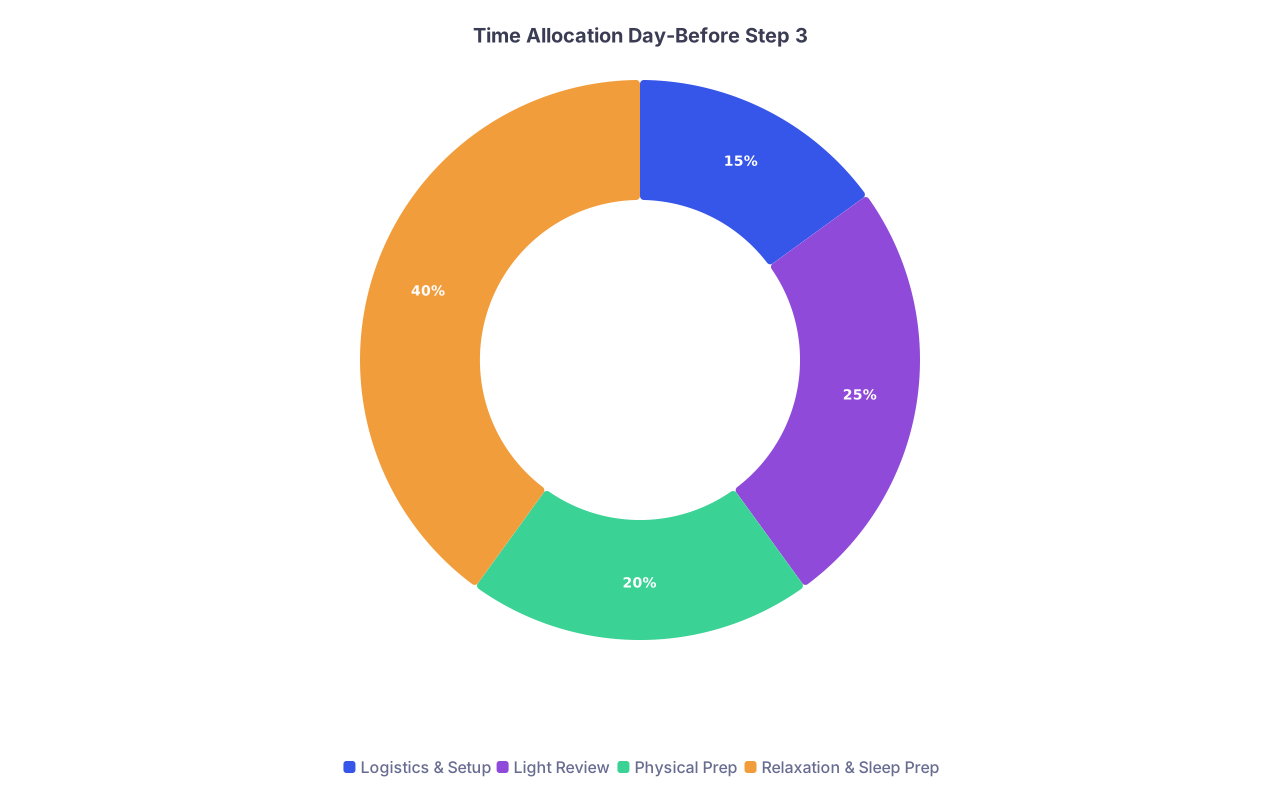
| Category | Value |
|---|---|
| Logistics & Setup | 15 |
| Light Review | 25 |
| Physical Prep | 20 |
| Relaxation & Sleep Prep | 40 |
LATE AFTERNOON & EARLY EVENING: WIND‑DOWN MODE (T‑18 to T‑12)
At this point, you should be transitioning out of exam brain.
T‑18 to T‑16 hours before exam
(For an 8:00 a.m. exam, about 2:00–4:00 p.m. the day before.)
Stop serious studying (hard stop)
Pick a time. Write it down. Example: “No more studying after 3:30 p.m.”When that time hits:
- Close UWorld
- Close AMBOSS or notes
- Turn off notifications for any med student/resident group chats debating Step 3
If you ignore this and keep grinding, you’ll just trade 3–4 questions of possible gain for 20 questions’ worth of fatigue.
Do a body reset (30–45 minutes)
You’ve probably been hunched over a laptop for weeks. That’s not how you want to show up tomorrow.Simple options:
- 20–30 minute walk outside
- Light stretching or yoga video (keep your heart rate down)
- Easy body‑weight mobility: neck rolls, shoulder circles, hip flexor stretch
Do not:
- Decide today is the day for a new HIIT routine
- Crush a heavy lifting session that will leave you sore and sleep‑disrupted
T‑16 to T‑14 hours before exam
(4:00–6:00 p.m.)
Early, predictable dinner (30–45 minutes)
Eat like it’s a normal, slightly boring weeknight.Aim for:
- Moderate carbs
- Lean protein
- Low‑grease, low‑spice, low‑fiber if your stomach is sensitive
Example:
- Grilled chicken or tofu
- Rice or pasta
- Cooked vegetables
Avoid:
- Huge portions “so I won’t be hungry tomorrow”
- Brand‑new restaurants, takeout roulette, “I’ll just try this new spicy ramen place”
Set your alarm strategy (10–15 minutes)
Yes, this is its own item because I’ve watched residents destroy this.You need:
- Two alarms:
- Primary: phone alarm
- Backup: physical alarm clock or roommate/partner call
- Alarm time that gives you:
- 90 minutes from wake to walking out the door
- Extra 30–40 minutes buffer for unexpected delays
Example for an 8:00 a.m. exam starting 30 minutes away:
- Wake: 5:45–6:00 a.m.
- Leave: 6:45–7:00 a.m.
Do a quick mental run: wake → shower → light breakfast → commute → arrival 25–30 minutes early.
- Two alarms:
NIGHT BEFORE: LOCKING DOWN SLEEP (T‑12 to T‑8)
This is where many people sabotage themselves with last‑minute “productivity.”
T‑12 to T‑10 hours before exam
(8:00–10:00 p.m. the night before.)
Create a strict “no‑input” window (60–90 minutes before bed)
No more:- Med Twitter
- Fresh Step 3 Reddit horror stories
- Group chat panic “what do I do if I forget CCS orders”
Replace with low‑stimulation activities:
- Slow TV show you’ve seen before
- Light reading (non‑medical)
- Short phone call with someone calming, not someone who raises your heart rate
Prepare your morning environment (15–20 minutes)
Before you sleep, set up so your future half‑awake self has zero decisions.Lay out:
- Clothes (comfortable layers, nothing brand‑new or fussy)
- Keys, wallet, ID, exam kit by the door
- Simple breakfast plan (oatmeal packet, yogurt, or whatever you’re used to)
Put your phone:
- Close enough to hear
- Far enough you need to sit up to turn off the alarm
Sleep plan (actual, realistic)
Here’s the truth: you might not sleep well. That’s fine. You don’t need 9 perfect hours; you need functional rest.
Guidelines:
- Aim to be in bed 8–8.5 hours before your wake time.
- If you usually use melatonin or another sleep aid, use your normal dose and timing.
- Do not try a brand‑new sedating medication the night before a licensing exam.
If you’re lying awake:
- After ~20–30 minutes, get up briefly.
- Sit somewhere dim, read something boring, sip water.
- Go back to bed once drowsy again.
Don’t clock‑watch. Staring at 12:47 → 1:18 → 1:44 is a great way to guarantee you feel terrible.
MORNING OF STEP 3: EXECUTION MODE (T‑2.5 to T‑0)
At this point, you should be done making decisions. You are just running the script you set up.
T‑2.5 hours before exam start
(For 8:00 a.m., around 5:30 a.m.–5:45 a.m.)
- Wake up and hydrate (15 minutes)
When the alarm goes off:
- Sit up fully
- Turn on a light
- Drink a glass of water
No snooze. You’ve had weeks to prepare; don’t compress your morning into chaos now.
- Light movement + shower (20–30 minutes)
Keep it simple:
- Quick shower to wake up
- 3–5 minutes of stretching while coffee brews or after you dress
- Aim to feel loose, not sweaty
T‑2 hours before exam start
(6:00–6:15 a.m.)
- Morning fuel: predictable and light (15–20 minutes)
Eat something your stomach has seen a hundred times.
Good options:
- Oatmeal + banana
- Toast + peanut butter
- Yogurt + fruit
Add:
- Coffee/tea in your normal amount
- Do not double your usual caffeine “for extra focus” (I’ve watched that end in shaky hands and bathroom emergencies)
If you’re not a breakfast person:
- Eat at least a small snack now and plan a real snack for your first break.
T‑1.5 hours before exam start
(6:30–6:45 a.m.)
- Final micro‑review (optional, 10–15 minutes)
This is optional and must stay short.
Acceptable:
- Glance at:
- A 1–2 page CCS orders cheat sheet
- 10–15 lines of “first steps” management for common presentations (MI, stroke, sepsis, pregnant trauma)
Not acceptable:
- Opening UWorld
- Starting new CCS practice cases
- Reading long explanations aloud in your car
If this makes you more anxious, skip it entirely.
T‑1.25 to T‑1 hour before exam start
(6:45–7:00 a.m.)
- Leave with buffer time
You want to arrive 25–30 minutes early, not “exactly on time if all lights are green.”
Before you walk out:
- Recheck:
- ID
- Exam permit
- Wallet/keys
- Snacks and water
If you’re commuting by train/public transit:
- Take a train earlier than you think you need.
- You’d rather sit outside the center scrolling mindlessly than sprint up the stairs sweating.
AT THE TEST CENTER: CHECK‑IN TO FIRST QUESTION
Here’s where things start to feel real. Good. That’s what you trained for.
- Check in with calm, not speed
On arrival:
- Use the restroom first
- Then check in, follow their process
- Lock up your bag, phone, smartwatch—whatever they don’t allow
While waiting to be called:
- Don’t open new material
- Don’t start swapping war stories with another anxious resident about their worst NBME
Instead:
- Close your eyes for 1–2 minutes
- Do 3 slow breaths:
- In for 4 seconds
- Hold for 4
- Out for 6
- Set your break strategy before Block 1
You’ll have a fixed pool of break time. You should already have a default break plan in mind as you sit down.
| After Block | Action | Break Length (min) |
|---|---|---|
| 1 | Quick pause | 3–5 |
| 2 | Snack + WC | 8–10 |
| 3 | Stretch | 5–7 |
| 4 | Short pause | 3–5 |
| 5 | Snack + WC | 8–10 |
You’ll adjust based on how you feel, but don’t wing it block‑to‑block. Start with a plan, then modify.
DURING THE EXAM: IN‑BLOCK & BETWEEN‑BLOCK HABITS
You can’t change your knowledge today. You can absolutely change how much of it you access.
In‑block behavior
At this point, you should be operating on patterns, not perfectionism.
- First pass discipline
For each question:
- Read stem → identify the stage: diagnosis? work‑up? management? counseling?
- Eliminate obvious wrong answers quickly
- If stuck after ~60–75 seconds:
- Pick best guess
- Mark it
- Move on
Your rule: No question gets to sabotage the others.
- Time checks
Quick rule of thumb for a 38–40 question block (60 minutes):
- At 15 minutes: should be around Q10
- At 30 minutes: around Q20
- At 45 minutes: around Q30
If you’re behind:
- Speed up on easy/medium questions
- Avoid reading the entire stem three times looking for one word
Between‑block behavior
- Micro‑recovery every break
Every time you step out:
- Bathroom if needed
- Small sip of water
- One or two bites of snack on longer breaks
Then:
- Stretch: neck, shoulders, wrists
- 3 slow breaths before going back in
Do not:
- Rehash previous questions
- Try to calculate your score as you go
- Call/text friends complaining about a weird CCS prompt
Your entire job is preserving attention for the next block, not litigating the last one.
SPECIFIC CCS‑RELATED CHECKS (MORNING OF & FIRST CCS BLOCK)
Step 3’s CCS cases trigger panic because of the interface, not the medicine. You manage this by scripting your behavior.
- Before your first CCS case (mentally rehearse 60 seconds)
Quietly run through:
- Upon opening case:
- Quickly note: age, sex, setting (ED/clinic/ward)
- Vitals: sick vs stable?
- First action buckets:
- ABCs if unstable
- Monitoring: pulse ox, cardiac monitor, BP, IV access
- Pain control when appropriate
- Diagnostics:
- Labs, imaging, key tests for that presentation
- Disposition:
- Admit vs observe vs discharge
You don’t need every detail pre‑memorized; you just need the order of thinking.
- During CCS breaks
If you have a gap before CCS:
- Do not open a CCS walkthrough on your phone
- Trust your previous practice
Use breaks to reset your eyes and your body, not to cram a new orders list you’ll just confuse.
PUTTING IT ALL TOGETHER: A SIMPLE 24‑HOUR TIMELINE
Here’s the whole thing in one chronological snapshot.

| Period | Event |
|---|---|
| Morning Before (T-24 to T-18) - 08 | 00 Confirm logistics & pack exam kit |
| Morning Before (T-24 to T-18) - 09 | 00 Light, targeted review only |
| Afternoon (T-18 to T-12) - 14 | 00 Hard stop on studying |
| Afternoon (T-18 to T-12) - 14 | 30 Light walk or stretching |
| Afternoon (T-18 to T-12) - 17 | 00 Early, predictable dinner |
| Afternoon (T-18 to T-12) - 18 | 00 Set alarms and morning plan |
| Night (T-12 to T-8) - 20 | 00 No-input, low-stimulation period |
| Night (T-12 to T-8) - 21 | 00 Lay out clothes & exam items |
| Night (T-12 to T-8) - 22 | 00 In bed, sleep routine |
| Morning Of (T-2.5 to T-0) - 05 | 45 Wake, hydrate, light stretch |
| Morning Of (T-2.5 to T-0) - 06 | 15 Simple breakfast, normal caffeine |
| Morning Of (T-2.5 to T-0) - 06 | 45 Optional micro-review |
| Morning Of (T-2.5 to T-0) - 07 | 00 Leave with buffer time |
| Morning Of (T-2.5 to T-0) - 07 | 30 Arrive, check in, short breathing reset |
Final 3 Things To Keep In Your Head
- You’re not cramming; you’re protecting performance. The last 24 hours are about logistics, energy, and sleep—not squeezing in one more block.
- Script the day. Then follow the script. Alarms, commute, meals, breaks, CCS approach—decide once, execute once.
- No single question decides your score. Keep moving, keep your breaks tight and intentional, and preserve your brain for the full day.