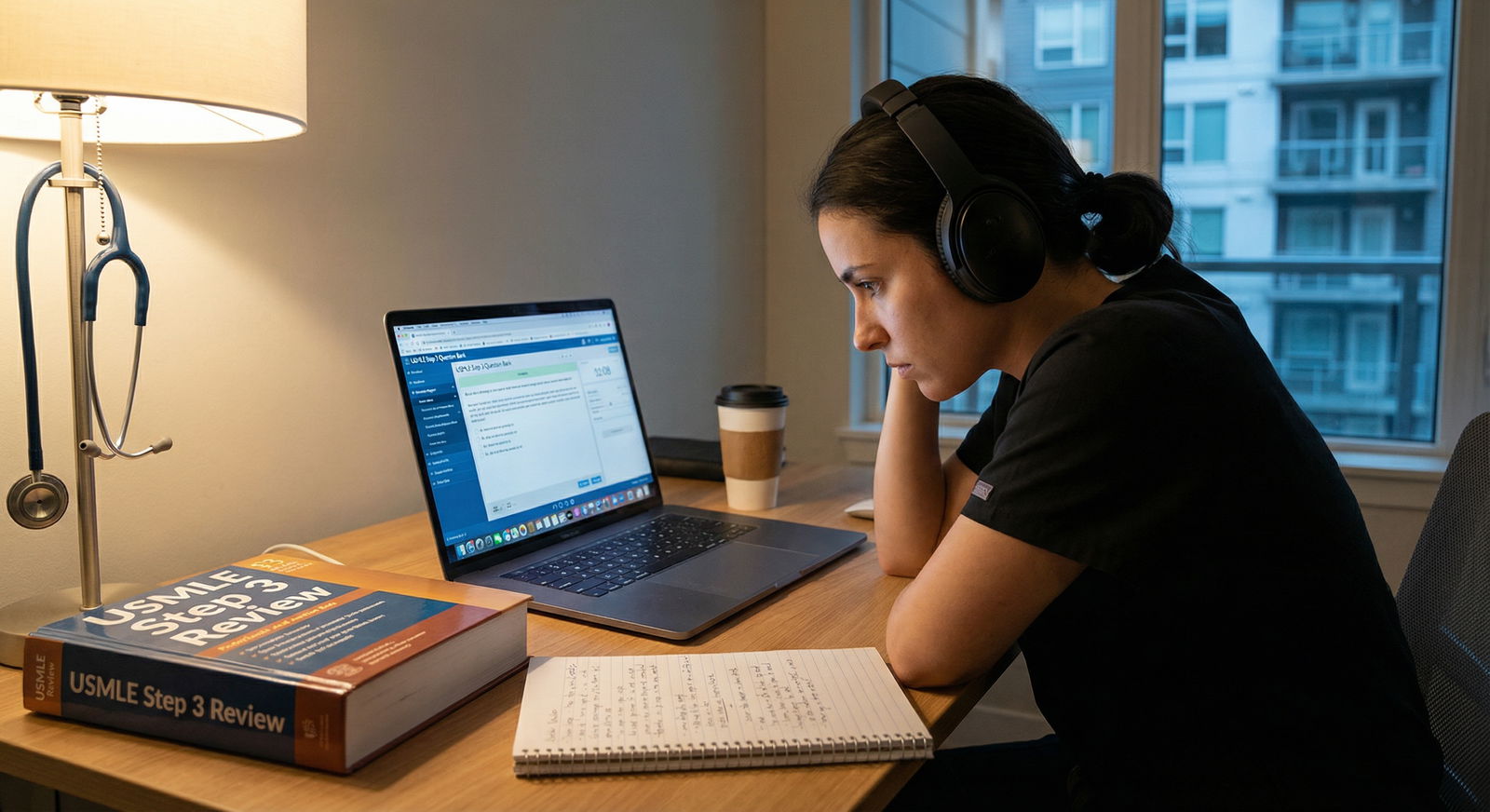
The worst Step 3 study schedules ignore call. They treat you like a full‑time student with evenings free. You are not. You are a resident on Q4 call, and your plan has to respect that—or it will collapse by week two.
Here’s the blunt truth: on Q4 call, Step 3 is a logistics problem first and a knowledge problem second. If you get the timing and structure right, average residents pass comfortably. If you get it wrong, you’ll “study” for three months and still walk in underprepared.
I’ll walk you week‑by‑week and then day‑by‑day so you always know: at this point, you should be doing X.
Big Picture: 8-Week Plan Built Around Q4 Call
First, anchor the whole thing. Assume:
- Q4 call (every 4th night in-house or heavy home call)
- 8 weeks total prep
- Mix of wards + clinic, fairly typical IM/FM/psych/peds style schedule
- Goal: pass solidly, not chase a 270 unicorn
If you’ve got more time, you can stretch this. If you’ve got less, you’ll compress—but the structure stays the same.
Your non‑negotiables
By test day, you should have:
- Finished ~1,200–1,600 MCQs (UWorld or similar), with review
- Done at least 15–20 CCS cases in the real software
- Simulated each test day once (Day 1 style, Day 2 style)
- Slept a real 7 hours the night before each exam day
- Re‑read full medicine textbooks
- Memorize minutiae of every zebra
- Build perfect Anki empires from scratch
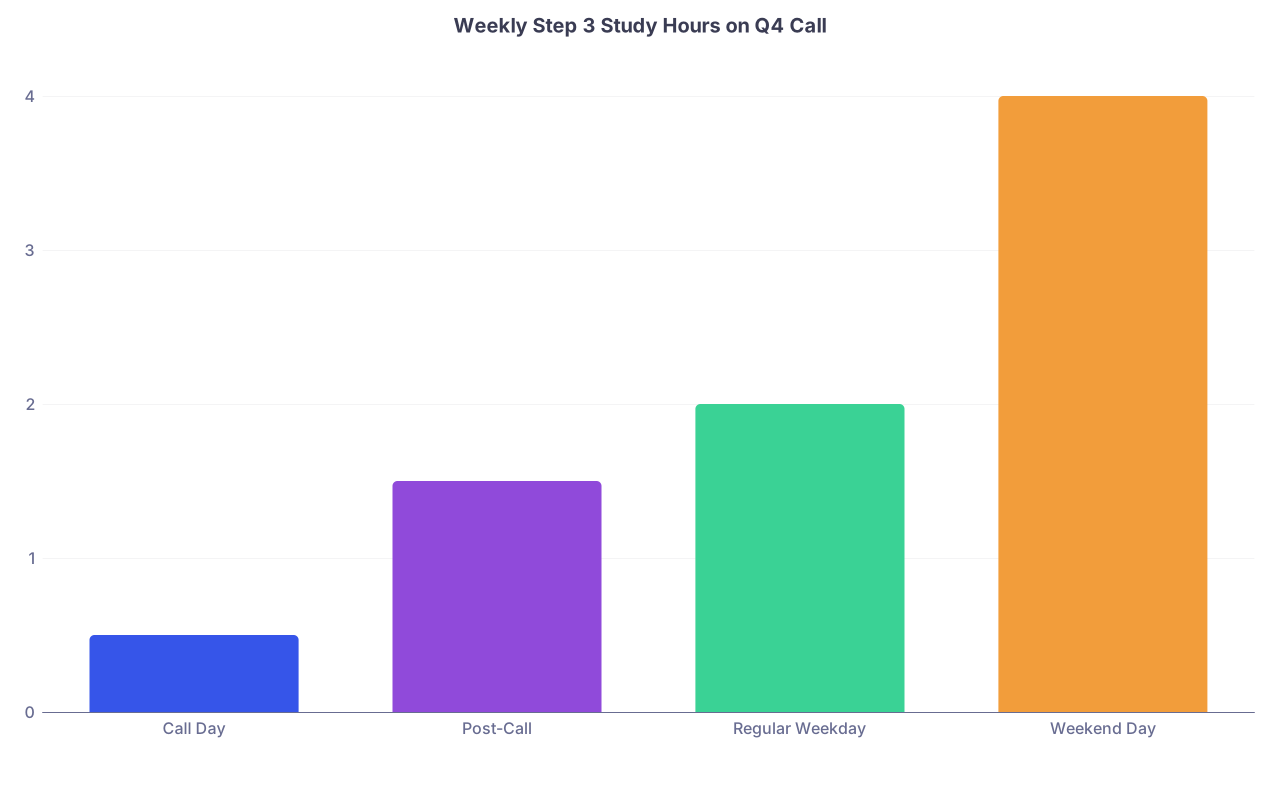
Here’s what the time commitment actually looks like for most Q4 residents:
| Category | Value |
|---|---|
| Call Day | 0.5 |
| Post-Call | 1.5 |
| Regular Weekday | 2 |
| Weekend Day | 4 |
You’re not going to study 4 hours on a post‑call day. Stop pretending. Plan for realistic hours instead of fantasy.
Phase 1 (Weeks 1–2): Stabilize Your Routine and Start Questions
You’re not “grinding” yet. You’re building a machine that can survive Q4 call.
Week 1: Baseline and Systems Check
At this point you should:
- Lock in your exam date (about 6–8 weeks out).
- Choose ONE main Qbank and stick with it (usually UWorld).
- Install the CCS software and open it at least once so it’s not foreign later.
Target for Week 1
- Question target: 20–25 questions on workdays, 40–50 on free weekend days
- Total: ~150 questions this week + 1–2 CCS intro cases
Day-by-day template (Week 1)
Regular non‑call weekday
- Pre‑round/early morning (15–20 min):
- Do 5 untimed questions on your phone, mixed or by system.
- After work (45–60 min):
- Do 15–20 timed questions (random, 38–40 min block).
- Spend equal or more time reviewing explanations.
- Bedtime (optional, 10 min):
- Quickly skim 3–5 marked questions or notes.
Call day
- Before call (15–20 min):
- 5–10 questions, untimed.
- On call:
- Ignore Step 3 unless it’s truly dead. If you get a gap:
- Do 5 questions as a “micro‑set” at a computer.
- Expect 0.5–1 hour max.
- Ignore Step 3 unless it’s truly dead. If you get a gap:
Post‑call day
- Sleep first.
- Evening (45–60 min max):
- 10–15 low‑stakes questions + light review.
- This is not a high‑performance day.
Weekend day off
- Morning (prime time, 2 hours):
- 30–40 timed questions (1–2 blocks) + review.
- Afternoon (optional, 1 hour):
- Review marked questions or start 1 CCS tutorial case.
Week 2: Tighten Question Habits
By now you’ve had at least 2–3 calls. The pattern is real.
At this point you should:
- Have completed ~250–300 total questions.
- Recognize your 3–4 weakest areas (e.g., OB, derm, biostats, neuro).
Target for Week 2
- On‑service weekdays: 25–30 questions + review
- Weekend: 60–80 questions across both days
- Start 2–3 real CCS cases (just practice flow; don’t obsess yet)
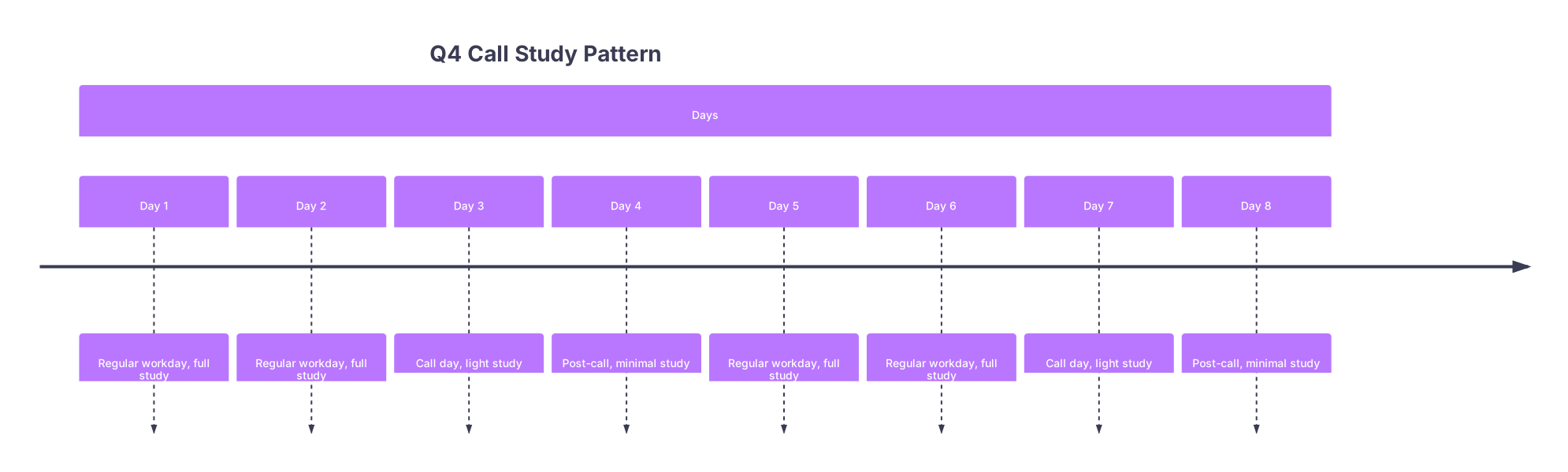
On Q4 call, your life has a rhythm. Use it:
| Period | Event |
|---|---|
| Days - Day 1 | Regular workday, full study |
| Days - Day 2 | Regular workday, full study |
| Days - Day 3 | Call day, light study |
| Days - Day 4 | Post-call, minimal study |
| Days - Day 5 | Regular workday, full study |
| Days - Day 6 | Regular workday, full study |
| Days - Day 7 | Call day, light study |
| Days - Day 8 | Post-call, minimal study |
On “full study” days, aim for your maximum (2+ hours). On “call/post‑call” days, protect sleep and do the bare minimum just to keep your brain engaged.
Phase 2 (Weeks 3–5): Heavy Question Phase + CCS Integration
This is the main grind. You’ve proven you can fit Step 3 into your Q4 life. Now you ramp.
Weeks 3–4: Build Volume, Still Respecting Call
At this point you should:
- Have 400–500 questions completed.
- Have 5+ CCS cases done in practice mode.
- Know which content areas embarrass you.
Weekly targets (Weeks 3–4)
- Total questions/week: 220–260
- 30/day on 4 “good” days
- 10–15 on 2 post‑call days
- 40–50 on one weekend day
- CCS: 2–3 cases per week
Day structure on a “good” weekday (not call, not post‑call)
Morning (20–30 min):
- 5–10 untimed questions (weak subject focus).
- Quick glance at 2–3 previous misses.
Evening (90–120 min):
- Block 1: 20 timed questions (mixed, normal pace).
- Review: Go through every explanation you got wrong + half you got right.
- Optional Block 2 (light): 10–15 questions if you’re not exhausted.
The review is where you learn. If you’re blazing through questions and barely reading explanations, you’re doing it wrong.
Week 5: First Full‑Length Sim Day + CCS Focus
By now, most residents feel either:
- Quietly confident they can pass
- Mildly panicked that they’re “behind”
Both are normal. The fix is the same: simulate.
At this point you should:
- Have 700–900 questions completed.
- Have done 10–12 CCS cases.
- Schedule a mock Day 1 this week or weekend.
How to do a Mock Day 1 (single off day)
- Morning:
- 4 consecutive blocks of 30–40 questions (UWorld random timed).
- Use real Step 3 timing (60 min blocks, short breaks).
- Afternoon:
- Review 2 blocks deeply.
- Note patterns of fatigue and content gaps.
Do not study heavily the night before your mock day. Treat it like a real exam day: light notes at most, normal sleep.
Phase 3 (Weeks 6–7): Targeted Weakness + Day 2 Style Practice
Now the volume base is built. Time to get specific and to practice the mixed reality of MCQs + CCS in one sitting.
Week 6: Fix the Holes
At this point you should:
- Have 1,000+ questions under your belt.
- Know your weakest 2–3 sections by name and pain (e.g., OB triage, stats, ophtho).
Weekly plan (Week 6)
- Questions: 180–220
- Still mostly mixed, but bias toward your weak systems.
- CCS: 3–4 cases, now paying attention to:
- Timing (advance clock actively)
- Orders at minute 0 vs. later
- When to move patient locations

How to run a CCS practice session (60–90 min)
- 1 warm‑up: Review a completed case’s critique.
- 1–2 new cases in interactive mode:
- Force yourself to type orders as if you’re on the floor.
- Practice checking labs/imaging at reasonable intervals.
- Short reflection:
- What did you forget? (monitoring orders, counseling, vaccinations?)
- Add a tiny checklist from each case (e.g., “New diabetic admit: fingersticks + dietitian + foot exam”).
Week 7: Mock Day 2 + Blend MCQ + CCS
This week you rehearse the thing that surprises most residents: mental whiplash from MCQs to CCS.
At this point you should:
- Have 1,200–1,400 questions completed total.
- Feel reasonably comfortable inside the CCS interface.
Mock Day 2 (pick your best weekend day)
Morning:
- 3 blocks of 30–40 timed questions (about 3 hours including short breaks).
Midday break:
- 30–60 minutes to decompress, snack, short walk.
Afternoon:
- 4–6 CCS cases back‑to‑back.
- Try to:
- Start each case with a clear initial step (ABC, vitals, IV, O2, monitor).
- Advance time consciously (no sitting at “0:00” for 15 minutes).
- Disposition appropriately (don’t leave MI in clinic, etc.).
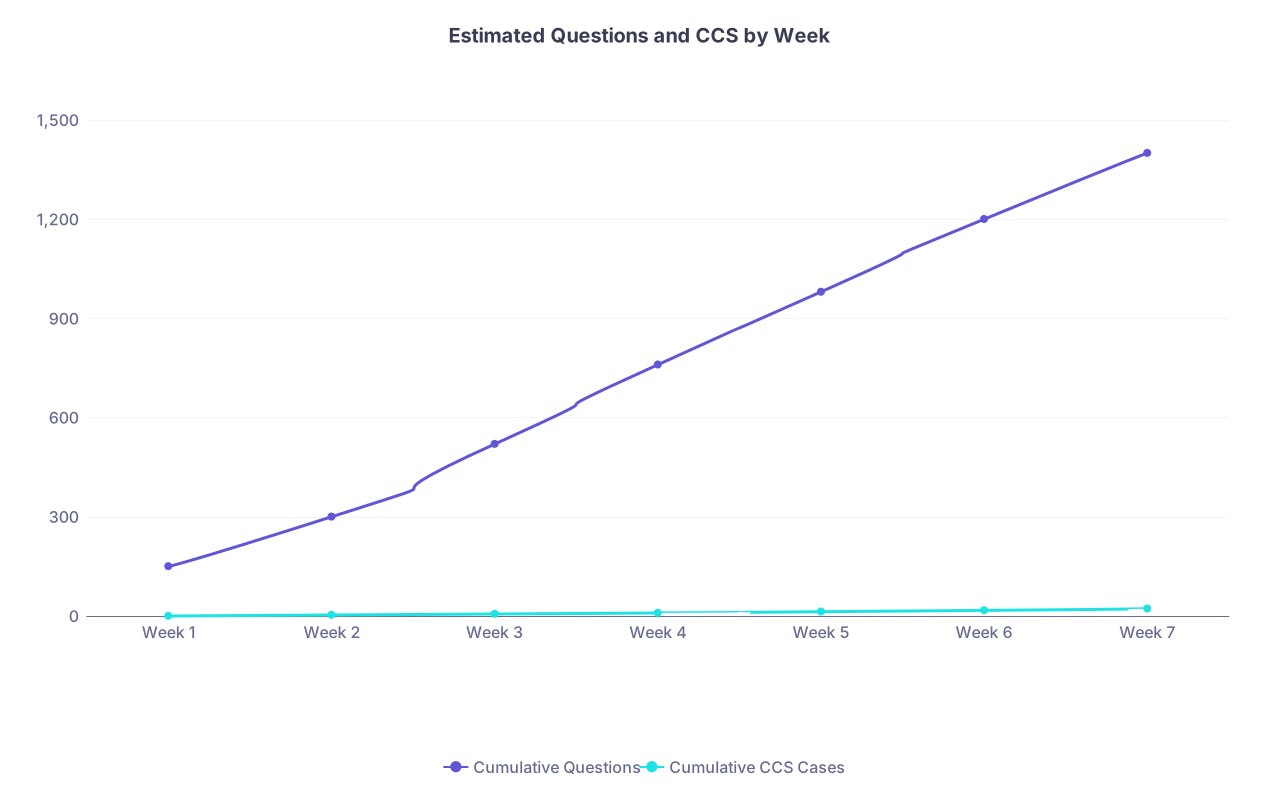
You’re not trying to perfectly mimic the exact USMLE distribution; you’re training your brain to shift modes and maintain focus over several hours.
| Category | Cumulative Questions | Cumulative CCS Cases |
|---|---|---|
| Week 1 | 150 | 0 |
| Week 2 | 300 | 3 |
| Week 3 | 520 | 6 |
| Week 4 | 760 | 9 |
| Week 5 | 980 | 13 |
| Week 6 | 1200 | 17 |
| Week 7 | 1400 | 22 |
Final Phase (Week 8): Taper, Review, and Protect Sleep
This is where a lot of residents panic and try to triple their workload. Do not do that. You’re on Q4 call; if you blow your sleep now, your performance will drop more than any extra 100 questions could fix.
At this point you should:
- Be 7–10 days from your exam dates.
- Have ~1,400–1,600 questions done.
- Have completed 15–25 CCS cases.
- Know your absolute weakest topics.
Week 8 structure
- Light questions: 15–20/day (mostly review / incorrects).
- CCS: 2–3 cases early in the week, then stop 3–4 days before exam.
- Content review: Short, focused bursts on:
- Biostats/ethics algorithms
- OB emergencies, peds growth/vaccines
- Common outpatient management (DM, HTN, asthma)
You’re polishing, not rebuilding.
The 5 Days Before Day 1
Let’s be precise.
Day ‑5 and ‑4 (both non‑call if possible)
- 20–30 mixed questions/day.
- 1–2 CCS cases total (not per day).
- Quick reference sheets for:
- Vaccination schedule
- Common antibiotics + dosages
- Hypertensive urgency vs. emergency management
- Bedtime: normal.
Day ‑3
- If you’re on call: bare minimum.
- 5–10 “easy” questions pre‑call.
- No heroics overnight.
- If not on call:
- 20 questions.
- Light review of biostats and ethics.
- Stop studying 2 hours before bed.
Day ‑2 (ideally post‑call or lighter day)
- Zero CCS.
- 10–15 questions max, then close the Qbank.
- Prepare logistics:
- Test permit printed
- Route to test center
- Snacks, water, layers
- Hard stop: no studying after dinner.
Day ‑1 (day before Day 1 exam)
- No new content.
- Maybe:
- Skim 1 page of key notes.
- Glance at your biostats flowchart.
- Do something mindless in the evening.
- Go to bed early enough to get a full 7–8 hours.

Micro‑Schedules: What Each Day Type Should Look Like
Q4 call means your days are not interchangeable. Stop pretending they are.
Here’s how your daily plan changes with each type of day:
| Day Type | Questions Target | CCS Cases | Focus |
|---|---|---|---|
| Regular | 25–35 | 0–1/week | Full blocks + deep review |
| Call | 5–15 | 0 | Maintenance only |
| Post-call | 10–15 | 0 | Light, low-stress review |
| Weekend | 40–60 | 2–3 | Volume + CCS practice |
Regular Workday (non‑call)
Morning (15–20 min):
- 5–10 questions on your phone.
- Pick a single theme (e.g., OB triage).
Evening (60–90 min):
- 20 timed mixed questions.
- Review each wrong answer:
- What was the diagnosis?
- What was the next best step?
- Any guideline pearls?
If you still have juice:
- 5–10 incorrects or marked questions.
Call Day
You are not a hero.
Morning (10–15 min):
- 5 easy warm‑up questions or skim yesterday’s mistakes.
Before call starts:
- If there’s a gap, 5–10 questions, untimed.
On call:
- Only touch Step 3 if you’re truly idle and not exhausted.
- If you do: tiny 5‑question bursts only.
Post‑Call Day
Rule: Sleep > Questions > Anything else.
Afternoon/evening (30–45 min max):
- 10–15 questions, low stakes.
- You can even use tutor mode.
- Don’t draw big conclusions from your performance; your brain is mush.
Weekend Day Off
This is when you actually move numbers.
Morning (2–3 hours total including breaks):
- 2 blocks of 20 mixed questions, timed.
- Deep review.
Afternoon (60–90 min):
- 1–2 CCS cases.
- Short list of “never forget” items from each.
Practical Guardrails So This Actually Works
I’ve watched residents crash and burn with beautiful schedules that didn’t survive real life. Here’s how you keep this one alive.
1. Build a Missed‑Day Policy Up Front
You will miss days. Code blues, sick days, brutal call—whatever.
Your rule:
- If you miss a regular day → don’t double the next day. Add +5 questions for the next 3 “good” days.
- If you miss an entire weekend → absorb it, extend your total study window by 3–4 days if needed.
Overcorrecting is why people burn out week 3.
2. Protect Energy More Than Time
A tired PGY‑2 staring at a Qbank at midnight is not “studying.” You’re torturing yourself.
Basic non‑negotiables:
- No starting new blocks after 10 pm (pick your own cutoff, but stick to it).
- On days when you’re clearly fried:
- Do 5–10 easy questions in tutor mode.
- Read 3 explanation pages well.
- Stop.
You keep the habit alive but don’t drive yourself into the ground.
3. Use Service to Your Advantage
On wards/clinic you’ll see Step 3 topics walking around all day. Use that.
Examples:
- New CHF admission?
- Later that day, do 5 CHF questions.
- OB triage consult you don’t fully get?
- That night, do 5 pregnancy/OB questions.
That’s how you turn “I saw this today and felt dumb” into “I will never miss this again.”

Quick Recap: What You Should Have Done by When
Here’s the entire 8‑week Q4‑compatible plan in one line per phase:
- By end of Week 2: Routine established, ~250–300 questions done, CCS software not terrifying.
- By end of Week 4: ~750 questions, 8–10 CCS cases, question‑review rhythm locked in.
- By end of Week 6: ~1,200 questions, 15+ CCS cases, one mock Day 1 completed.
- By end of Week 7: ~1,400 questions, 20+ CCS cases, one mock Day 2 style day done.
- Week 8: Light review, targeted clean‑up, protect sleep, zero last‑minute panic marathons.
If you’re roughly on those rails, even with Q4 call, you’re on track. You don’t need perfection. You need a schedule that survives your real life, hits ~1,400+ questions, gives you 20+ CCS reps, and leaves you rested enough to think on test day.
Keep your eye on three things:
- Consistency over hero days – small daily effort beats rare huge pushes.
- Deep review over raw volume – you pass Step 3 by understanding patterns, not just clicking.
- Sleep as a strategy, not a luxury – especially in the final week, rest will raise your score more than any extra 50 questions.
Follow the timeline, respect your call schedule, and you’ll walk into Step 3 tired but ready—and that’s exactly good enough.