
You don’t need a separate COMLEX Level 3 Q-bank. But skipping it is a calculated risk—and for some people, it’s a bad one.
Let me cut through the noise: most osteopathic residents pass Level 3 using a USMLE Step 3–style Q-bank plus a smaller amount of COMLEX-specific practice. You do not need to buy every shiny “COMLEX-only” product. But if you completely ignore COMLEX-style questions and OMT, you’re playing with fire.
Here’s how to decide what you actually need—without wasting money or time you don’t have.
Step 1: Understand What COMLEX Level 3 Really Tests
COMLEX Level 3 isn’t “just Step 3 with OMT”. That’s the lazy description people throw around. It’s close, but it misses some big differences.
What Level 3 actually is:
- A 2-day computer exam
- Heavy on clinical decision-making and outpatient management
- Still true to the osteopathic lens (OMT, whole-person care, prevention, primary care)
- More vague, wordy, and “least wrong answer” than the relatively crisp USMLE style
Where it overlaps Step 3:
- Common conditions, inpatient/outpatient, ED triage, meds, monitoring
- CCS-style thinking (not the software, but the “what do you do next?” reasoning)
- Same general level: resident-in-training, not med student
Where it’s different:
- OMT questions (diagnosis and treatment, not how to physically perform it)
- Primary care / broad FM bias
- A different test “voice”—NBOME loves “safest”, “most appropriate”, “most cost-effective” language and community health framing
So if you use only a USMLE-style bank, you’re training in the right content neighborhood but the wrong accent. That’s fixable—but you have to be conscious about it.
Step 2: What a Good Level 3 Study Plan Actually Needs
Forget products for a second. Think components. A solid Level 3 prep usually needs:
- A large bank of high-quality clinical vignettes
- Targeted OMT + COMLEX-style exposure
- A quick review of management algorithms & guidelines (especially outpatient)
- Enough repetition to lock in pattern recognition
Where these usually come from:
- Most of #1 comes from UWorld Step 3 or AMBOSS Step 3
- #2 comes from a small COMLEX-specific Q-bank or question set
- #3 & #4 can be covered by your main bank + short review notes
Now the real question: do you need a full, separate COMLEX-only Q-bank just for #2?
Often no.
If you already have or plan to buy a major Step 3 bank, adding a smaller COMLEX resource or a focused set of COMLEX questions is usually smarter than paying for two full giant banks.
Step 3: The Only Three Scenarios That Matter
You don’t need 20 edge cases. You’re probably one of these three.
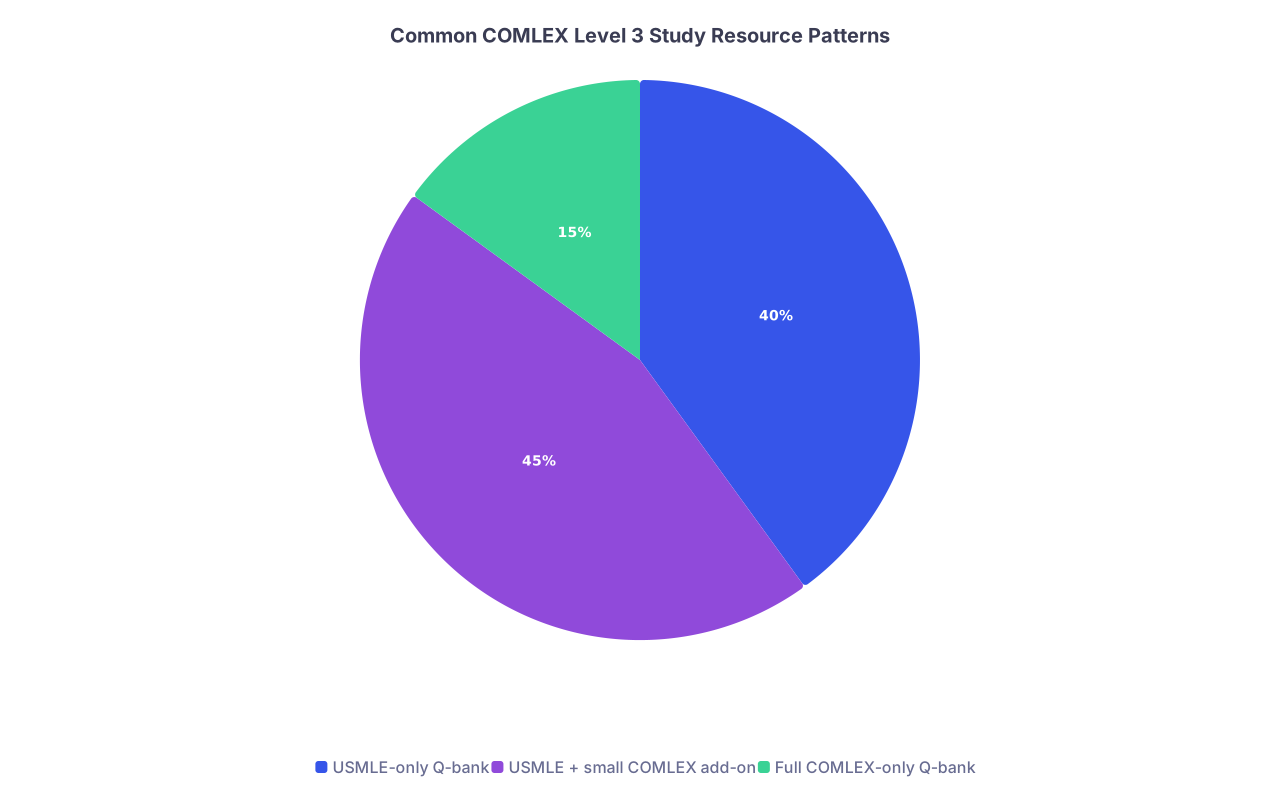
| Category | Value |
|---|---|
| USMLE-only Q-bank | 40 |
| USMLE + small COMLEX add-on | 45 |
| Full COMLEX-only Q-bank | 15 |
Scenario 1: “I’m decent at tests, passed Levels 1/2 easily, and I’m already using UWorld/AMBOSS”
You:
- Passed Level 1/2 without drama
- Took (and passed) Step 1/2 or used USMLE-style Q-banks before
- Are in a busy residency and don’t have 300 extra hours to burn
For you, a separate full-size COMLEX Level 3 bank is usually overkill.
What I’d do:
- Use UWorld Step 3 or AMBOSS as your primary bank
- Add a small COMLEX-specific resource (e.g., TrueLearn COMLEX L3 questions, Comquest, or NBOME practice questions)
- Do 500–800 COMLEX-style questions max to adjust to the style and cover OMT
Why this works: your test-taking foundation is fine; you just need to “translate” to NBOME style and patch the OMT hole.
Scenario 2: “I barely survived COMLEX 1/2 or failed once”
You:
- Struggled with COMLEX-style wording
- Maybe failed or barely passed Level 1 or 2
- Don’t trust your instincts when NBOME starts playing word games
For you, ignoring COMLEX-specific questions is a bad idea.
What I’d do:
- Still use one big USMLE-style bank for core content and reasoning
- On top of that, get a more robust COMLEX-specific Q-bank (not just 100–200 sample questions)
- Aim for at least 1,200–1,500 COMLEX-style questions, even if you don’t finish every last one
You’re not just learning medicine here. You’re relearning how NBOME expects you to think. That takes reps.
Scenario 3: “I never bought a USMLE-style bank and only want to pass COMLEX Level 3 once”
You:
- Didn’t take USMLE or don’t care about Step 3
- Want the cheapest, minimal path to “pass and move on”
- Have decent clinical skills but limited time and budget
For you, a single, good COMLEX Level 3 bank might be enough.
But here’s the tradeoff: COMLEX-only banks often have:
- Less polished explanations
- Less consistent difficulty
- Less breadth than UWorld/AMBOSS for management details
You can pass this way, but your clinical reasoning muscle won’t be trained as well as if you did a USMLE-style bank. If your residency is relatively cushy and your clinical exposure is weaker, I’d still lean toward UWorld/AMBOSS plus a smaller COMLEX add-on.
Step 4: How Big a Q-Bank Do You Actually Need?
Let’s talk numbers. Not marketing.
For most Level 3 takers, a reasonable total is:
- 1,500–2,000 USMLE-style Step 3 questions, plus
- 400–1,000 COMLEX-specific questions
That’s enough to:
- See every major condition a few times
- Learn NBOME’s phrasing and trap patterns
- Cover the OMT basics repeatedly
If you’re trying to be efficient as a resident:
| Profile | USMLE-Style Qs | COMLEX-Style Qs |
|---|---|---|
| Strong tester | 1,500 | 400–600 |
| Average, first-time taker | 1,800–2,000 | 600–800 |
| Prior COMLEX struggle/fail | 2,000+ | 1,000+ |
You do not need both UWorld Step 3, AMBOSS Step 3, and a full 2,000-question COMLEX-bank. That’s how people burn out.
Step 5: What About OMT? Can I Skip the OMM Stuff?
You can’t skip OMT entirely. You just can’t.
But you also don’t need to drown in it.
Here’s the minimalist but safe approach:
- Use a short OMT review (a 50–100 page PDF, or a slim OMT book, or a focused OMM video series).
- Do at least 150–200 OMT questions spread across sacrum, lumbar, ribs, innominate, cervical, Chapman points, autonomics.
- Focus less on how to actually do the maneuvers, more on:
- Diagnosing dysfunction from exam findings
- Knowing first-line techniques for specific regions/patient types
- Understanding when OMT is contraindicated
Most residents I’ve seen fail Level 3 don’t fail because they didn’t memorize some rare viscerosomatic reflex. They fail because:
- They misread primary-care-style questions
- They don’t pick the safest/least invasive option
- They never learned to think in COMLEX’s “whole person / primary care / prevention” language
OMT is a chunk of points you shouldn’t just hand away, though. A small COMLEX Q-bank is great for drilling that.
Step 6: How to Blend USMLE and COMLEX Resources Without Losing Your Mind
Here’s a simple 6–8 week plan that actually works for most residents:
Rough structure:
- Early: USMLE-style bank heavy
- Middle: Mixed blocks (USMLE + COMLEX)
- Final 2 weeks: Mostly COMLEX-style, timed, with strong OMT emphasis
You’re letting USMLE questions teach you medicine and reasoning, and COMLEX questions teach you language and style.
Step 7: How to Decide in 10 Minutes Whether You Need a Separate COMLEX Q-Bank
If you’re still torn, do this:
- Grab a free NBOME Level 3 practice test or any free COMLEX-style sample questions online.
- Sit down and do one full block (40–50 questions) in timed mode.
- Review your performance honestly:
- Did the questions feel alien, or just slightly annoying?
- Were you missing questions for knowledge reasons or style / wording reasons?
- How many OMT questions did you just flat-out guess?
Now decide:
If you’re scoring close to where you’d be happy on the real thing, and the style just feels a bit off:
→ USMLE bank + small COMLEX add-on is fine.If the style feels brutal, and you’re missing tons of “which of the following is the MOST appropriate initial step?” type questions:
→ You need more substantial COMLEX-style practice, not just a handful of sample questions.
Quick Reality Check on “Do I Need a Separate Q-Bank?”
Here’s the blunt truth:
- You don’t need two giant, full-priced Q-banks (USMLE + full COMLEX) unless you struggled badly on earlier exams.
- You do need some COMLEX-specific exposure—even strong test-takers get burned by the style if they walk in cold.
- If you’re only going to buy one premium product, UWorld or AMBOSS Step 3 gives you more bang clinically, and you can layer cheaper COMLEX practice on top.
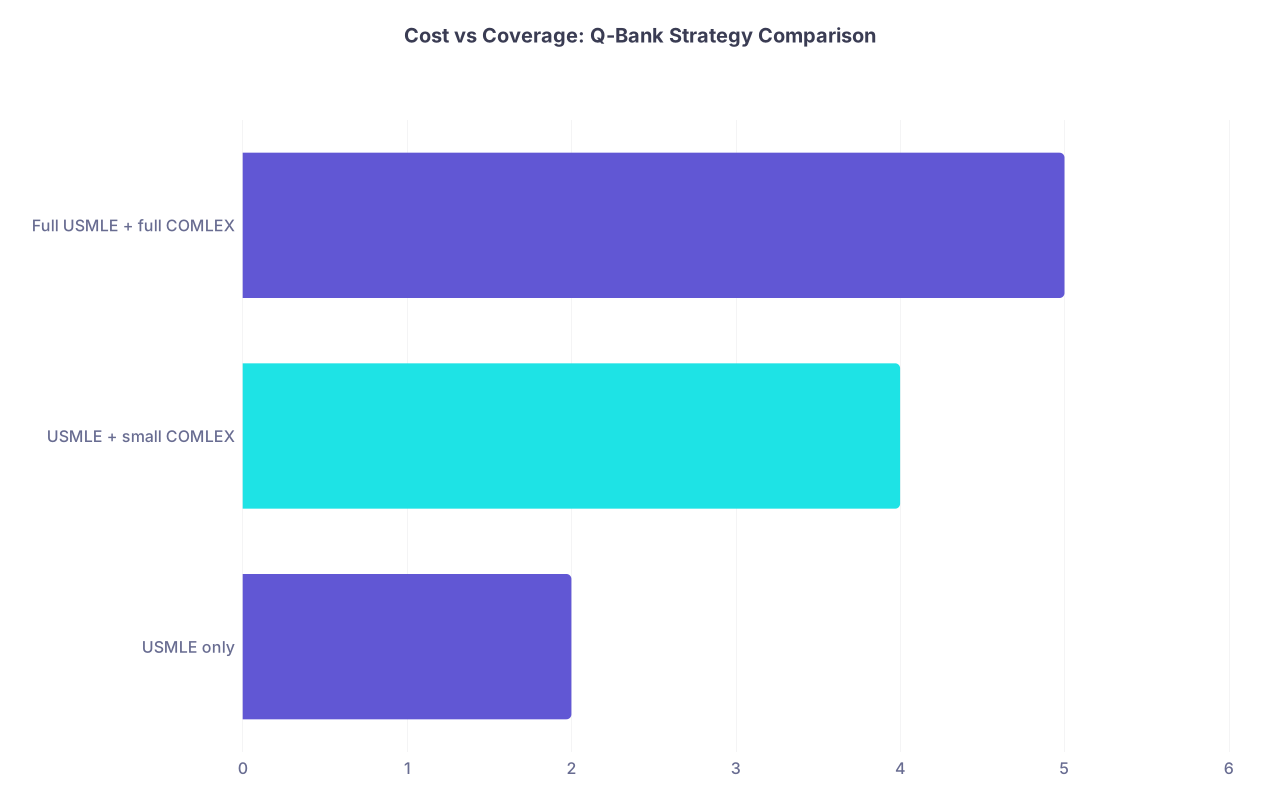
| Category | Value |
|---|---|
| USMLE only | 2 |
| USMLE + small COMLEX | 4 |
| Full USMLE + full COMLEX | 5 |
(Think of that as a 1–5 “coverage vs cost” score, not dollars. The middle option wins for most people.)
Visualizing a Balanced Study Mix
One more way to see it:
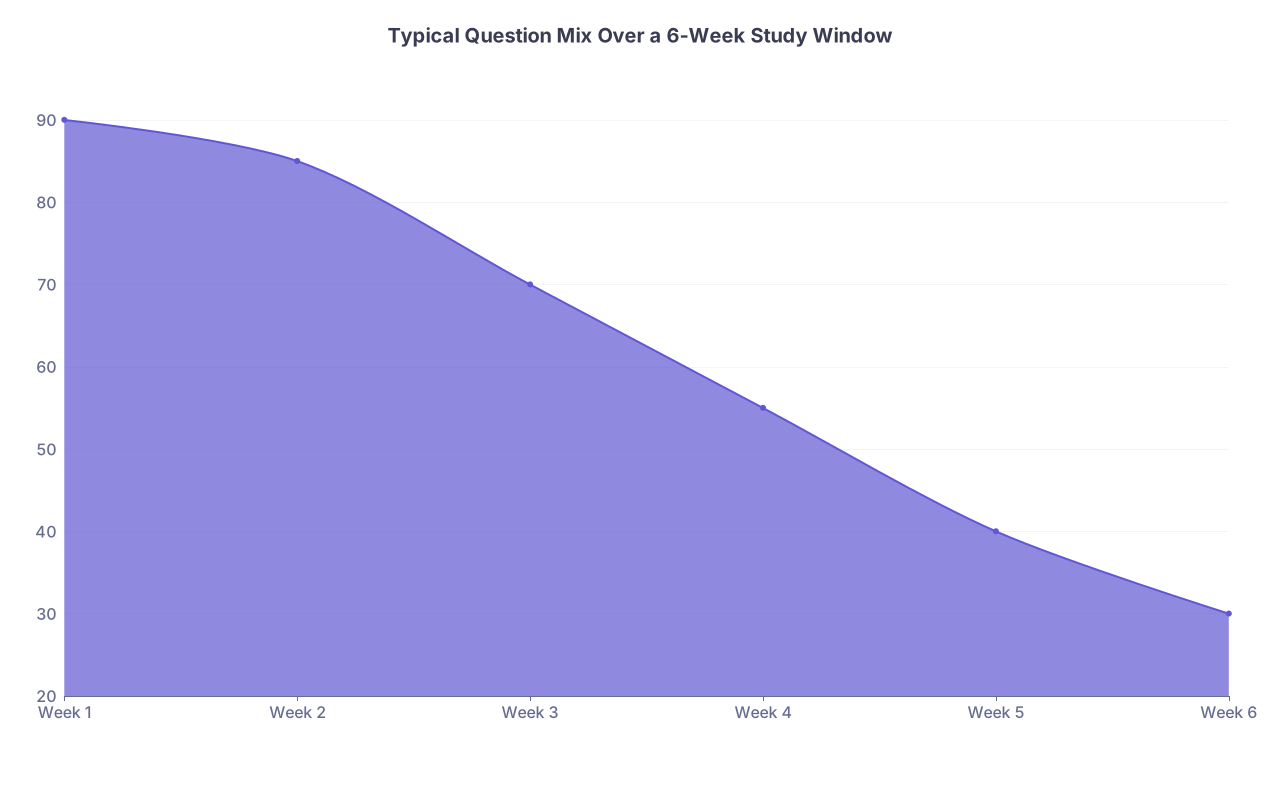
| Category | Value |
|---|---|
| Week 1 | 90 |
| Week 2 | 85 |
| Week 3 | 70 |
| Week 4 | 55 |
| Week 5 | 40 |
| Week 6 | 30 |
(Think: proportion of USMLE-style questions decreasing as COMLEX-style questions ramp up.)
Then add this mental overlay:

You start “USMLE-heavy” and finish “COMLEX-heavy.” That’s the pattern that tends to pass.
FAQs: COMLEX Level 3 and Q-Banks (Exactly 7)

1. Can I pass COMLEX Level 3 using only UWorld Step 3?
Yes, people do it every year. But it’s not what I’d recommend. If you go UWorld-only:
- Make sure your Level 1/2 performance was solid
- Spend at least a few evenings with free COMLEX questions and an OMT summary
- Accept that you’re taking on extra risk from unfamiliar style and OMT gaps
If your residency depends on passing on the first try, I wouldn’t gamble with UWorld-only.
2. Is there any “must-have” COMLEX Level 3 Q-bank?
No single resource is magically essential. The big players (TrueLearn, Comquest, etc.) all have pros and cons. What matters more:
- Question volume: at least 400–600 COMLEX-style questions
- Reasonable explanations that actually teach you how NBOME thinks
- Enough OMT to see the patterns across body regions
Don’t waste time chasing the “perfect” Q-bank. Pick one, commit, and move on.
3. How much time should I spend on OMT specifically?
If you’re rusty (and most residents are), plan:
- 1–2 focused days early in your study period to re-learn high-yield OMT concepts
- Then 15–20 OMT questions a few times per week
- One more tight OMT review in the last 5–7 days
You’re aiming for functional literacy, not OMT board examiner level.
4. Do I need to do questions in timed mode?
Yes—eventually. Start however you need to in the first 1–2 weeks (tutor mode is fine), but by the last 2 weeks:
- Do full timed blocks (40+ questions) most days
- Aim to finish each block with at least 5–7 minutes left
- Review why you changed answers—NBOME loves to punish second-guessing
You don’t want time pressure to be a new experience on test day.
5. Is AMBOSS Step 3 enough instead of UWorld?
AMBOSS Step 3 is absolutely strong enough as a primary bank. It’s:
- Slightly more “dense” and reading-heavy
- Great for management details and quick lookup
- Comparable or sometimes better than UWorld for breadth
If you’re already comfortable with AMBOSS and like their style, you don’t need UWorld plus AMBOSS. Pick one and pair it with COMLEX-specific practice.
6. How do I handle being a busy resident and studying?
Be realistic. For most PGY1/PGY2s:
- Aim for 20–40 questions per day, not 80
- Use dead time on wards (pre-round downtime, post-call) to review missed questions
- Don’t do massive 6-hour cram sessions after 28-hour calls; your retention will be trash
Consistency beats heroics. A smaller, steady daily question count for 6–8 weeks will serve you better than one miserable week of 300 questions/day.
7. What are the red flags that I need more COMLEX-specific practice before test day?
Pay attention if:
- You’re consistently missing “which is the MOST appropriate next step?” style questions even when you know the disease
- OMT questions feel like pure guesswork
- Your NBOME practice or COMLEX bank percent-correct is lagging 10–15% below where you were on USMLE-style questions
Those are signs you need another 400–600 COMLEX-style questions and a sharper focus on how NBOME frames risk, cost, and primary care follow-up.
Bottom line: You probably don’t need a full, separate COMLEX Level 3 Q-bank in addition to a major Step 3 bank—but you absolutely need some COMLEX-style reps and OMT review. Use UWorld or AMBOSS as your clinical backbone, layer on a smaller COMLEX resource, and shift your question mix toward COMLEX style as you get closer to test day. That’s the balance that gets you through Level 3 without wrecking your life.