
What actually hurts your Step 3 score more: missing MCQs or botching the CCS cases?
Let me answer that straight: MCQs still carry more total weight, but CCS matters enough that you cannot treat it like an afterthought. If you ignore CCS, you handicap yourself. If you’re solid on CCS and only “okay” on MCQs, you can absolutely still land a strong passing score.
Let’s break it down like someone who’s actually taken this thing and watched co-residents scramble afterward.
The Real Weight: CCS vs MCQs on Step 3
Step 3 has two main scored components:
- Multiple-choice questions (MCQs)
- Computer-based case simulations (CCS)
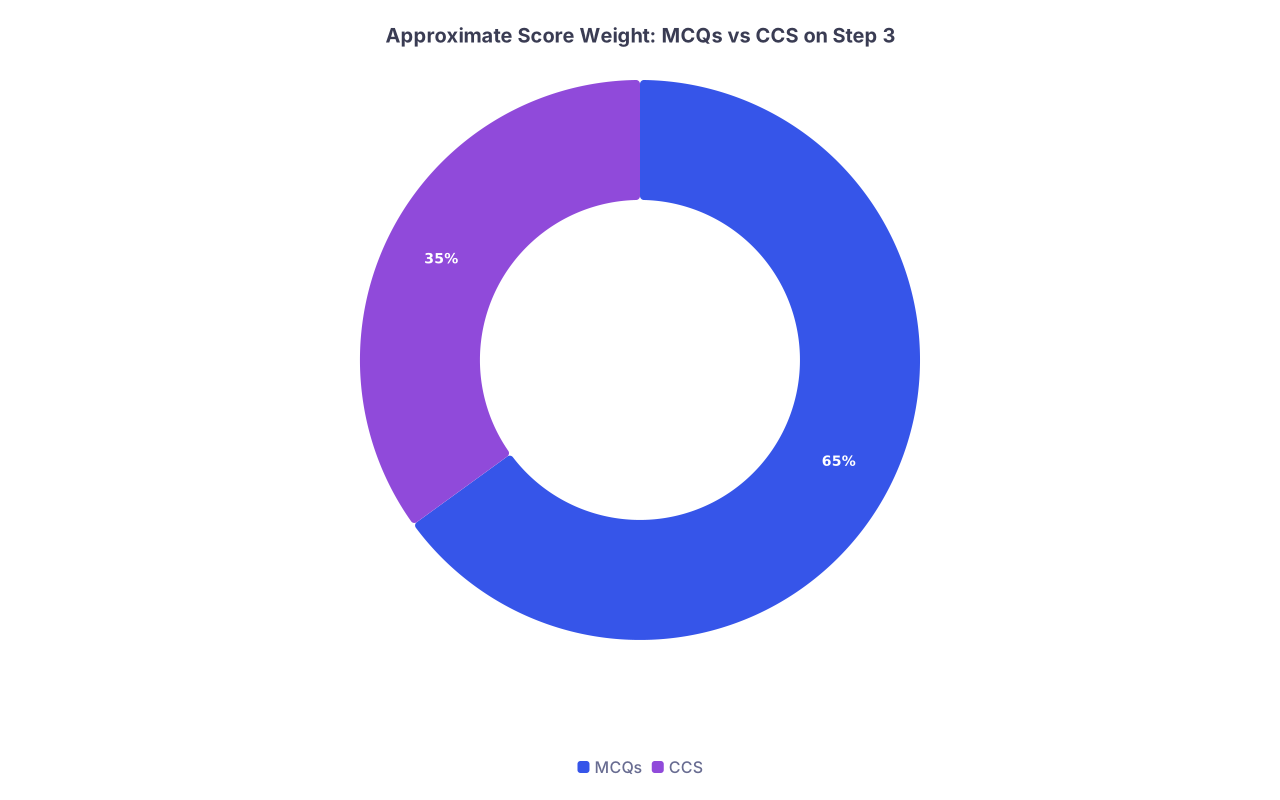
The NBME doesn’t publish an exact percentage split, but based on available data, practice score correlations, and what I’ve seen from dozens of residents:
- MCQs: roughly 60–70% of your score
- CCS: roughly 30–40% of your score
So no, CCS is not “just a small part.” It’s closer to one-third of your score. That’s huge.
Here’s the key point:
- You can’t “CCS your way” out of terrible MCQ performance.
- But strong CCS performance absolutely rescues a borderline MCQ performance.
| Category | Value |
|---|---|
| MCQs | 65 |
| CCS | 35 |
If you want a simple hierarchy:
- Priority #1: Don’t bomb the MCQs.
- Priority #2: Don’t be clueless on CCS.
- Priority #3: Once you’re solid on MCQs, CCS is the best “ROI” bump you can add.
How Step 3 Is Structured (And Where CCS Fits)
You can’t talk about importance without knowing when and how this stuff shows up.
Day 1 (Foundations of Independent Practice – FIP):
- All MCQs (no CCS)
- Longer, more Step 2-ish: biostats, ethics, ambulatory, public health
Day 2 (Advanced Clinical Medicine – ACM):
- MCQ blocks plus CCS
- CCS is only on Day 2, at the end

| Step | Description |
|---|---|
| Step 1 | Day 1: FIP |
| Step 2 | MCQ Blocks Only |
| Step 3 | End Day 1 |
| Step 4 | Day 2: ACM |
| Step 5 | MCQ Blocks |
| Step 6 | CCS Cases |
| Step 7 | End Day 2 |
Why that matters:
- If you’re exhausted and mentally cooked by the time CCS starts, your performance tanks.
- People underestimate just how much timing and workflow matter in CCS, not just “knowing the right answers.”
So the question becomes less “Is CCS important?” and more “Can I afford to throw away 30–40% of my score on the most fatigue-prone part of the exam?”
No. You can’t.
How CCS Scores You (And Why It Feels So Weird)
MCQs are obvious: get it right, get credit.
CCS is sneakier. Each case measures:
- How quickly you move toward the correct diagnosis
- Whether you order the key tests and avoid dumb or harmful ones
- Whether you start appropriate treatment and supportive care
- Whether you manage the patient over time: follow-up orders, monitoring, changes as results come in
You’re not graded on style. You’re graded on impact on patient outcome.
Common misconceptions that hurt people:
“If I know the diagnosis, I’m fine.”
Wrong. You can know it’s DKA and still mismanage fluids, forget electrolytes, or never transfer to ICU.“If I order more, I’ll be safer.”
Wrong. Ordering a CT head, CT abd/pelvis, MRI, and a V/Q on a clearly healthy young patient with simple costochondritis? You’re wasting time and money and can get dinged.“If the case ends early, I failed.”
Not always. Early termination often means you stabilized the patient quickly and the case is done. That can be good.
CCS rewards:
- Early life-saving actions (ABCs, O2, IV, monitor, EKG when needed)
- Timely, high-yield tests (CXR for pneumonia, troponins for chest pain, UA for UTI)
- Correct initial therapy (antibiotics, anticoagulation, insulin, fluids, etc.)
- Safety-focused choices (NPO, admit level, ICU vs floor, telemetry)
What Happens if You Ignore CCS?
I’ve watched a few patterns:
The “MCQ Warrior” who barely looks at CCS
- Great UWorld MCQ stats, decent Day 1
- Goes into CCS blind, confuses interface, forgets to advance time, orders almost nothing or way too much
- Result: Barely passes or surprisingly low Step 3 score they can’t explain
The “I Just Need to Pass” intern who half-asses everything
- Average MCQ performance
- Minimal CCS prep
- Ends up with borderline performance in both sections = real risk of failing
The “Average on MCQs, Solid on CCS” candidate
- Their MCQ performance is meh
- They put in focused work to learn the CCS interface and algorithms
- They pass comfortably and often overshoot the score they expected
I’ve literally heard: “I think CCS saved me” from residents who felt lukewarm about Day 1 and Day 2 MCQs.
So: CCS isn’t optional padding. It’s leverage.
How Much Time Should You Spend on CCS Prep?
Here’s the balance that works for most people with normal schedules (interns, busy residents, late M4s):
If you have 4–6 weeks of part-time prep:
- 70–80% of study time → MCQs (UWorld, biostats, ethics)
- 20–30% of study time → CCS (practice cases + reviewing strategies)
If you have 2–3 weeks:
- Still protect at least ~20% of your time for CCS
- That might mean: MCQs on weekdays, CCS practice on 2–3 evenings or a weekend block
| Total Prep Time | MCQs Focus | CCS Focus |
|---|---|---|
| 2 weeks | ~80% | ~20% |
| 4 weeks | ~70–75% | ~25–30% |
| 6+ weeks | ~65–70% | ~30–35% |
If you’re already strong on MCQs (coming straight off Step 2 with fresh knowledge), you can afford closer to 30–35% CCS.
Bottom line:
If CCS prep is zero or “I’ll just watch one video the night before,” you’re doing it wrong.
MCQs vs CCS: How They Test You Differently
They’re not redundant. They hit different skills.
MCQs test:
- Disease knowledge
- Guidelines
- Differential diagnosis
- Risk factors and next best step in a single moment
CCS tests:
- How you think over time
- Workflow and priority setting
- Can you manage a patient from presentation → stabilization → disposition?
Here’s the practical difference:
- MCQ version: “A 54-year-old male presents with chest pain… What’s the next best step?” → Pick one option.
- CCS version: Same guy, but now you must:
- Order EKG, troponin, CXR, labs
- Put him on O2, ASA, nitrates (if no contraindications), maybe morphine, maybe heparin
- Decide: Telemetry vs ICU; cath vs stress test vs observation
- Handle serial troponins, repeat EKGs, new symptoms, complications
You can kind of guess your way through a tough MCQ.
You cannot guess your way through a 20-minute ACS CCS case.

How To Make CCS Work For You (Not Against You)
You don’t need to be perfect on CCS. You just need to be:
- Familiar with the interface
- Solid on high-yield patterns
- Safe and systematic
Here’s a simple CCS game plan that works:
Learn the interface early
- Use the official NBME Step 3 CCS tutorial cases
- Practice: how to enter orders, change location (ER → floor → ICU), advance time, call consults
- Don’t discover this on test day. That’s amateur hour.
Memorize a few core “opening moves” based on setting
- ER unstable: ABCs → O2 → IV → monitor → EKG → immediate interventions
- ER stable: focused history, physical, key labs + imaging, pain control
- Clinic: targeted workup, screening, follow-up intervals, lifestyle counseling
Respect supportive care
- Vital signs, O2, IV access, pain meds, antiemetics, fluids, NPO if surgery possible
- These are cheap points that people skip because they’re too focused on “fancy” orders
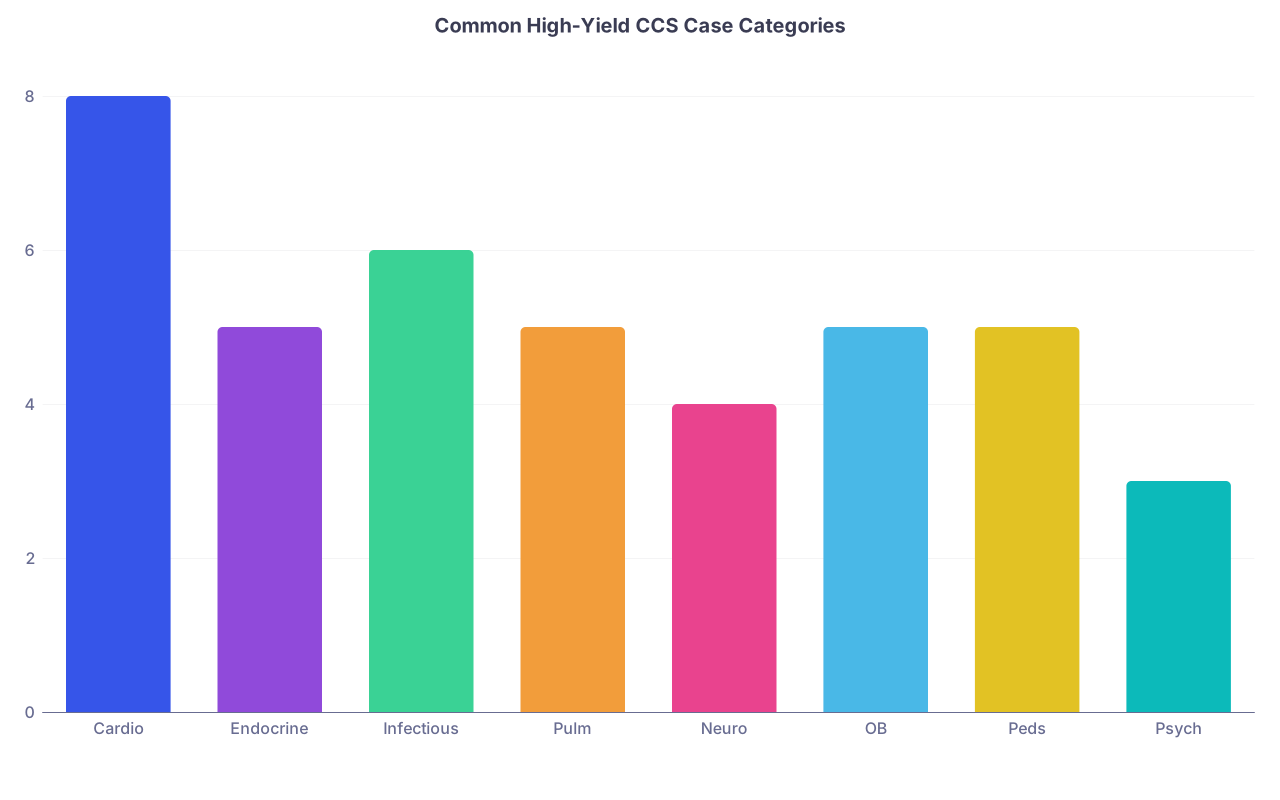
Understand common high-yield CCS topics
The exam loves:- Chest pain / MI
- DKA / HHS
- Sepsis
- COPD/asthma exacerbation
- Stroke / TIA
- Prenatal care, labor issues, postpartum complications
- Pediatric fever, bronchiolitis, dehydration
- Psych emergencies (suicidality)
You don’t need to see 200 practice cases.
You do need to see enough cases to recognize patterns and flow.
| Category | Value |
|---|---|
| Cardio | 8 |
| Endocrine | 5 |
| Infectious | 6 |
| Pulm | 5 |
| Neuro | 4 |
| OB | 5 |
| Peds | 5 |
| Psych | 3 |
(Values here are relative emphasis, not exact counts—but that’s roughly the pattern people report.)
- Use UWorld CCS (or similar) actively
Don’t just watch the explanation. Run the interactive cases yourself, then compare what you did to the “ideal” solution. That contrast is where the learning happens.
How Bad CCS Performance Affects Your Overall Score
Let’s make this less abstract.
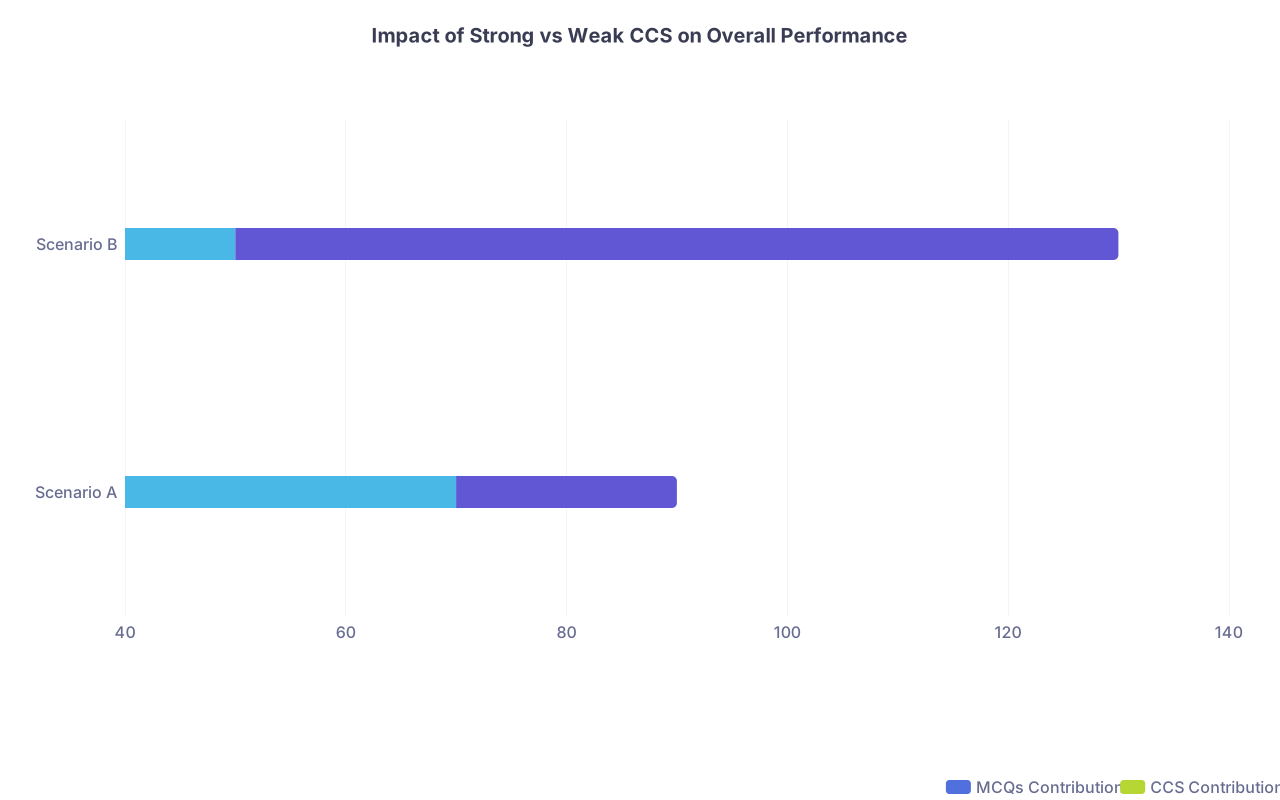
Imagine this rough scoring model (numbers are just for illustration, not actual USMLE metrics):
- Overall score = 65% MCQ + 35% CCS
Scenario A:
- MCQ performance: 70th percentile
- CCS performance: 20th percentile
- Combined = mediocre, possibly barely above passing depending how it maps
Scenario B:
- MCQ performance: 50th percentile
- CCS performance: 80th percentile
- Combined = pretty solid overall performance, probably a comfortably passing score
| Category | MCQs Contribution | CCS Contribution |
|---|---|---|
| Scenario A | 70 | 20 |
| Scenario B | 50 | 80 |
The point: being a rockstar in one section can partly compensate for being average in the other. Being weak in both is how people fail.
And yes, people fail Step 3. Usually because:
- They didn’t respect how different Step 3 content is from Step 2
- They didn’t review biostats/ethics enough
- They blew off CCS
- They tried to cram the whole thing in one week of half-distracted study during wards
Don’t be that person.
Where CCS Ranks for Different Goals
Different people care about Step 3 for different reasons. So I’ll be blunt about priorities.
If your goal is: “Just pass and move on”
- MCQs: essential
- CCS: guardrail. It can save a shaky MCQ day or sink it. You still need to take it seriously, but you don’t need perfection.
If your goal is: “Score decently for fellowship / licensing / personal pride”
- CCS: absolutely matters. A strong CCS performance can push your score from “meh” to “solid” without doubling MCQ study time.
If your goal is: “Maximize score for competitive fellowships”
(Think cards, GI, heme/onc from a mid-tier IM program)
- You can’t ignore any piece.
- Strong CCS can be your edge because many applicants undertrain there.
Concrete Takeaways: How Important Is CCS Compared to MCQs?
Here’s the short version you can actually act on:
- MCQs carry more weight than CCS, but CCS is still roughly one-third of your score.
- You can’t neglect CCS and expect your MCQs to fix everything.
- For a pass: decent MCQs + competent CCS.
- For a strong score: solid MCQs + deliberate CCS practice.
- CCS is the highest-yield “late-stage” study investment once your MCQ prep is reasonably on track.

FAQ: CCS vs MCQs on Step 3
1. Can I pass Step 3 with strong CCS but weak MCQs?
Unlikely. MCQs still make up the majority of your score. Strong CCS can help and may pull a borderline MCQ performance over the line, but if your MCQs are truly terrible, CCS won’t fully rescue you. Think of CCS as a powerful booster, not a substitute.
2. How many CCS cases should I practice before Step 3?
For most people: around 20–30 well-done cases is enough. But they need to be done properly—interactive practice, followed by carefully reviewing the ideal order set and management steps. It’s better to deeply understand 20 cases than to skim 60.
3. Do I need a separate CCS-only resource, or is UWorld enough?
UWorld CCS + the official NBME CCS practice is enough for the vast majority of people. If you actually work through those cases and learn the patterns, you don’t need some fancy extra CCS course. Most “extra” CCS products are overkill or redundant.
4. How close is UWorld CCS to the real exam?
Pretty close in logic and content, slightly different in interface feel. The real CCS cases are often a bit more straightforward if you know the core patterns. The key is using the official NBME CCS tutorial first so you’re not surprised by the actual layout and controls on test day.
5. When during prep should I start CCS practice?
Don’t save it for the night before. Start in the second half of your prep. Example: if you’re studying 4 weeks, spend the first 1–2 weeks mostly on MCQs while watching 1–2 CCS walkthroughs, then the last 2 weeks mix in regular CCS practice (a few cases every few days). That way, CCS skills are fresh when you take Day 2.
Key points to leave with:
- MCQs matter more, but CCS is roughly one-third of your Step 3 score—ignoring it is a mistake.
- You don’t need to be perfect at CCS; you need to be familiar with the interface and solid on high-yield patterns.
- A balanced plan—mostly MCQs, but 20–30% of your time on CCS—gives you the safest path to both passing and scoring well.