
Most people get complex polypharmacy questions on Step 3 wrong for the same reason: they chase the diagnosis and ignore the drugs that are quietly killing the patient.
Let me break this down specifically.
Step 3 polypharmacy questions are not random drug trivia. They are pattern-recognition traps built around a few high‑yield interactions, contraindications, and “never do this” combinations. If you approach them like a Clinical Pharmacology pop quiz, you will bleed points. If you approach them like a risk–benefit, “what is the single safest next move?” exercise, you start winning.
The Real Game: What Step 3 Is Actually Testing
Step 3 is not asking: “Do you know every CYP interaction from memory?”
It is asking three narrower questions:
- Can you recognize when medications, together, are more dangerous than the disease?
- Can you pick the one rational change that reduces risk without destabilizing the whole regimen?
- Can you prioritize organ systems: kidney, liver, heart, CNS – in that order of harm when multiple meds are involved?
You are being evaluated as a future PGY‑1 on night float. The patient in 3B is on 15 meds, creatinine doubled, and the nurse wants to give oxycodone on top of clonazepam and diphenhydramine. What do you do?
Step 3 questions simulate that exact scenario. They bury it inside a long vignette with chronic disease, a new problem, and a multiple‑choice graveyard of tempting but wrong adjustments.
Core Framework: A 5‑Step Polypharmacy Checklist
If you do not have a rigid mental checklist, you will get lost. Use this sequence every time you see more than 5 meds in a stem.
- Identify the organ at risk (kidney, liver, heart rhythm, CNS, bleeding).
- Flag “never or almost-never” combinations.
- Check dose and indication creep (multiple drugs doing the same job poorly).
- Ask: “What can I safely stop, or what should I not start?”
- Pick the answer that lowers risk with the least disruption to disease control.
Let me spell this out with the actual Step‑3‑relevant content.
1. Renal Function and Nephrotoxic Clusters
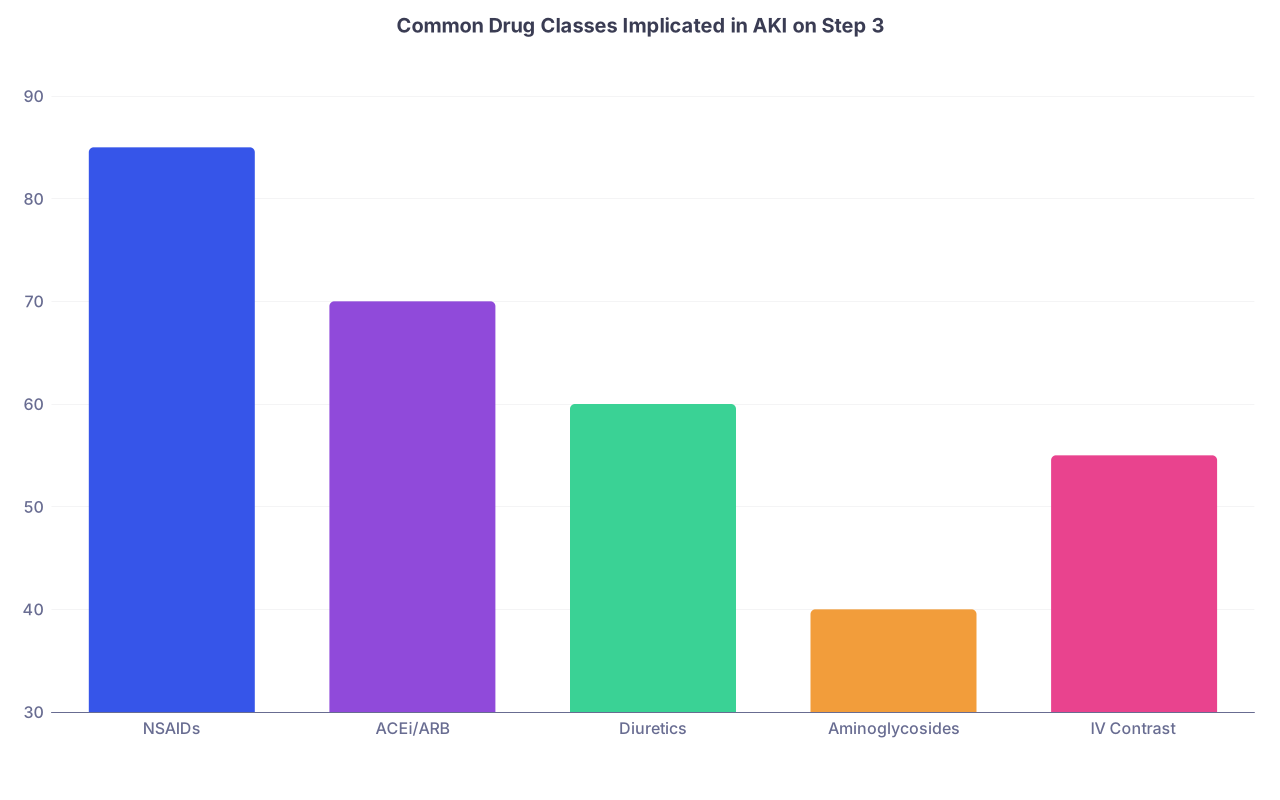
The worst polypharmacy questions nearly always hide acute kidney injury (AKI) or progressive CKD behind a crowd of meds.
High‑yield nephrotoxic combinations
Here are the ones that show up again and again:
ACE inhibitor or ARB + NSAID + diuretic
Classic “triple whammy” → prerenal AKI / ATN.ACE inhibitor/ARB + spironolactone + potassium supplement
Hyperkalemia waiting to happen, especially with CKD or diabetes.Aminoglycoside (gentamicin) + vancomycin + any underlying CKD or hypotension
Those kidneys are done.
A typical Step 3 vignette:
60‑year‑old with diabetic nephropathy (baseline Cr 1.8) admitted with cellulitis. Med list: lisinopril, HCTZ, ibuprofen PRN, metformin, spironolactone, recently started TMP‑SMX for UTI. Now Cr 3.4, K⁺ 5.9, mild hypotension.
Choices:
- Give more IV fluids
- Stop ibuprofen and TMP‑SMX, hold spironolactone, give IV calcium + insulin–glucose
- Switch lisinopril to losartan
- Start sodium bicarbonate infusion only
- Emergent dialysis
The rational polypharmacy move: recognize multiple kidney and potassium insults piled together: ACEi + K‑sparing diuretic + TMP‑SMX + NSAID on a CKD background. You do immediate hyperkalemia management and you stop the offending drugs.
Not “adjust lisinopril”. Not “just give fluids”.
Metformin and renal function
They love this one.
Metformin is fine in stable CKD but must be stopped in:
- Acute kidney injury
- Sepsis / hypoxia
- Before IV contrast in high‑risk patients
The polypharmacy spin: you are not just spotting metformin. You are noticing:
- Metformin + ACEi + NSAID + dehydration = bad combination
You hold metformin and the nephrotoxins when the patient gets hypotensive or septic. That is what they want.
| Category | Value |
|---|---|
| NSAIDs | 85 |
| ACEi/ARB | 70 |
| Diuretics | 60 |
| Aminoglycosides | 40 |
| IV Contrast | 55 |
2. Cardiac Risk: QT, Arrhythmias, and Rate Control Stacking
Step 3 writers are obsessed with two big cardiac themes in polypharmacy:
- QT prolongation → torsades risk
- Double or triple dipping on rate/BP lowering drugs → bradycardia, heart block, hypotension
QT‑prolonging “stew”
Stop trying to memorize the entire CredibleMeds database. On Step 3 you mainly see these QT culprits:
- Antiarrhythmics: sotalol, dofetilide, amiodarone (less so but still), procainamide
- Antipsychotics: haloperidol, ziprasidone, quetiapine
- Antidepressants: citalopram, escitalopram, TCAs
- Macrolides: azithromycin, clarithromycin
- Fluoroquinolones: levofloxacin, moxifloxacin
- Others: methadone, ondansetron in higher doses / IV
The question structure:
Middle‑aged woman with depression, chronic nausea, and pneumonia:
- On citalopram, quetiapine, methadone for chronic pain
- Now started on azithromycin for CAP
- EKG: QTc 520 ms. Stable vitals.
What next?
They will offer:
- Switch citalopram to sertraline
- Continue all meds and repeat EKG in 3 days
- Stop azithromycin and use ceftriaxone + doxycycline
- Stop quetiapine and methadone immediately
Rational approach: count the QT bombs. Citalopram + quetiapine + methadone + azithro. Pneumonia still needs treatment. The most rational immediate fix with preserved efficacy: change the antibiotic to a non‑QT agent and strongly consider switching citalopram to sertraline. But the “single best next step” is usually changing the newly added QT drug that pushed her over the edge.
Rate and blood pressure stacking
Another big theme: patients on beta‑blockers who get piled with:
- Non‑DHP CCBs: verapamil, diltiazem
- Digoxin
- Clonidine
- Amiodarone (synergistic bradycardia)
Typical stem:
Elderly man with AF on: metoprolol, digoxin. New diagnosis of stable angina. Someone wants to start diltiazem for rate control and angina relief. He has HR 52, BP 100/60.
Correct move: do not stack another rate‑slowing drug. Use long‑acting nitrate or ranolazine, or adjust existing regimen. Starting diltiazem would be wrong.
Step 3 wants you to think: “How many drugs are trying to slow the AV node?” If it is two or more and the vitals are marginal, you probably need to stop or avoid one, not add another.
3. CNS Depression and Serotonin: Quiet Killers in the Med List
This is where people get tripped up because the presentation is vague: confusion, falls, “not themselves”.
Sedation and respiratory depression
Classic offenders:
- Opioids (especially with dose escalation)
- Benzodiazepines
- First‑generation antihistamines (diphenhydramine, hydroxyzine)
- Gabapentinoids (gabapentin, pregabalin)
- Muscle relaxants (cyclobenzaprine, carisoprodol)
- Sedating antipsychotics
Polypharmacy question structure:
75‑year‑old in a SNF, history of COPD, chronic back pain, anxiety, insomnia. Meds:
- Oxycodone ER + PRN
- Clonazepam
- Trazodone at night
- Diphenhydramine PRN sleep
- Gabapentin
Now brought in for confusion, shallow breathing, frequent falls.
Choices:
- CT head to evaluate subdural
- Add haloperidol for agitation
- Discontinue clonazepam and diphenhydramine; reduce opioid dose; monitor closely
- Add rivastigmine for suspected dementia
The rational polypharmacy move: recognize CNS depressant overload. You de‑escalate: stop benzo + anticholinergic + maybe lower opioid rather than adding more sedatives.
Serotonin syndrome setups
Step 3 will give you:
- SSRI or SNRI + linezolid
- SSRI/SNRI + MAOI (or within washout period)
- SSRI/SNRI + triptan (less common but can show up)
- Multiple serotonergic agents in a psych patient: SSRI + tramadol + dextromethorphan + St. John’s wort
Pattern: agitation, hyperreflexia, clonus, diaphoresis, diarrhea, elevated temp.
Key point: the question is often “Which med should be discontinued?” They do not want “give cyproheptadine” as much as they want you to identify the dangerous combination you just created (e.g., starting linezolid in a patient on sertraline).

4. Bleeding, Thrombosis, and the Anticoagulation Minefield
Polypharmacy questions around anticoagulation almost always revolve around:
- Too much anticoagulation (stacking)
- Wrong anticoagulant for renal function
- Failure to bridge or unnecessary bridging
- Drug–drug interactions that spike INR
Stacking anticoagulants and antiplatelets
Step 3 loves the “triple therapy” overkill.
Think:
- Warfarin + aspirin + clopidogrel
- DOAC + aspirin + NSAID
- Warfarin + DOAC overlap incorrectly
Example structure:
Patient with AF on apixaban develops unstable angina, gets a stent, discharged on:
- Apixaban
- Aspirin
- Clopidogrel
Now returns with GI bleed. Question: What to change?
Rational answer: de‑escalate antithrombotic therapy. If high bleed risk, they expect you to limit to the minimum necessary (often OAC + a single antiplatelet depending on context, but the key is: triple therapy is excessive long‑term and should be shortened or avoided).
Warfarin interactions
You are not memorizing everything, but recognize patterns:
- Increased INR / bleeding: TMP‑SMX, metronidazole, azole antifungals, amiodarone
- Decreased INR: rifampin, carbamazepine, phenytoin, St. John’s wort
Question type: Stable INR patient on warfarin gets started on TMP‑SMX for UTI. Correct move? Reduce warfarin dose and monitor INR more frequently, or choose a different antibiotic when possible. If the question is “what is the cause of this elevated INR and bleeding?” you point to the new interacting drug.
DOACs and CKD
Big one: many DOACs require dose adjustment or are contraindicated in severe CKD.
So a 78‑year‑old with GFR 20 on full‑dose rivaroxaban is a problem. They may give you a bleeding episode and ask what to change: the rational answer is to switch to warfarin with INR monitoring or adjust per eGFR.
| Scenario | Key Error |
|---|---|
| AF + stent on OAC + ASA + clopidogrel | Prolonged triple therapy |
| Warfarin + TMP-SMX | INR spike, bleeding |
| Warfarin + rifampin | INR drop, clot risk |
| DOAC in severe CKD | Accumulation, bleeding |
| DOAC + NSAID | Increased GI bleed risk |
5. Endocrine and Metabolic Collisions
This category is quieter but shows up consistently.
Diabetes meds and comorbidities
High‑yield combinations:
Beta‑blockers + insulin or sulfonylureas
Masked hypoglycemia. They love to test that the adrenergic warning signs are blunted.Thiazides, high‑dose glucocorticoids, atypical antipsychotics
All worsen glycemic control. The question becomes: “Why is his A1c worse despite adherence?” Answer: You added prednisone or olanzapine.SGLT2 inhibitors
Risk of euglycemic DKA, especially when stacked with insulin changes, low‑carb diets, surgery, or dehydration. The right call might be to hold SGLT2 inhibitors during acute illness or preoperatively.Metformin in acute illness / renal or hepatic compromise
Already mentioned, but again: multiple organ hits + metformin = lactic acidosis risk.
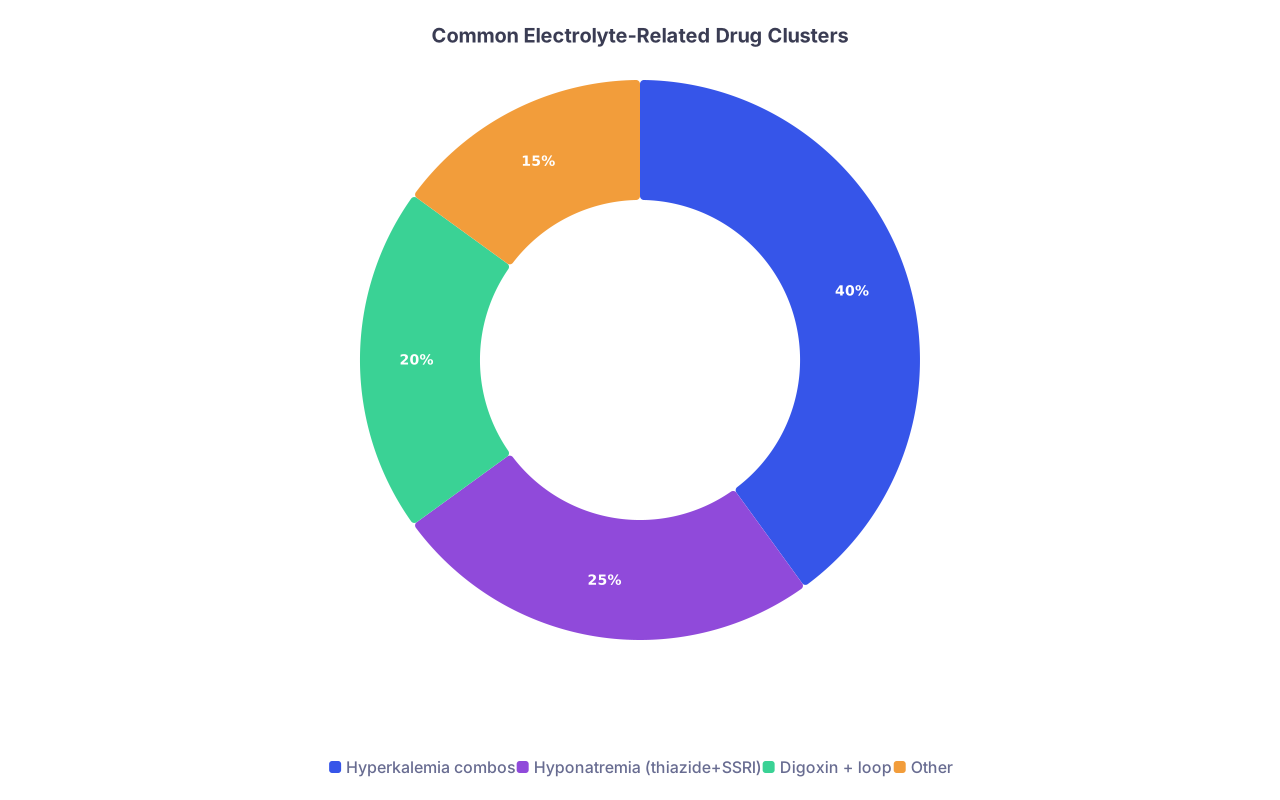
Electrolyte‑related clusters
Classic:
- Thiazide + SSRI in elderly → hyponatremia, confusion, falls
- ACEi/ARB + K‑sparing diuretics + TMP‑SMX → hyperkalemia
- Loop diuretic + digoxin + poor oral intake → hypokalemia and digoxin toxicity
You are expected to see digoxin toxicity (nausea, visual changes, arrhythmias) and link it to the polypharmacy‑induced electrolyte imbalance rather than just blaming digoxin “randomly”.
| Category | Value |
|---|---|
| Hyperkalemia combos | 40 |
| Hyponatremia (thiazide+SSRI) | 25 |
| Digoxin + loop | 20 |
| Other | 15 |
6. Geriatrics: Less Is Usually More
Geriatric polypharmacy questions are basically Beers Criteria in disguise, but Step 3 does not care if you name the guideline. They care that you stop doing dumb things to frail older adults.
High‑yield bad actors in the elderly:
- Anticholinergics: diphenhydramine, oxybutynin, TCAs, some antipsychotics
- Long‑acting benzodiazepines: diazepam, chlordiazepoxide
- Muscle relaxants: cyclobenzaprine
- Sliding scale insulin without basal in a nursing home patient
- Multiple overlapping CNS depressants
Common stem:
82‑year‑old woman with dementia and falls, on:
- Oxybutynin for overactive bladder
- Amitriptyline for neuropathic pain
- Diphenhydramine PRN sleep
- Lorazepam PRN anxiety
Now more confused and incontinent.
They will ask either:
- “Best next step in management?”
- Or: “Which medication change is most likely to improve her condition?”
Correct Step 3 move: deprescribe anticholinergics and sedatives, switch to safer alternatives (e.g., mirabegron, gabapentin, trazodone at low dose, or nonpharmacologic measures).
The trick is: they often throw in one medication that is actually doing something necessary (e.g., SSRI for major depression). You must distinguish:
- Deprescribing targets (anticholinergics, unnecessary benzos)
- Meds you should leave alone unless there is a clear adverse effect
7. Antibiotics and Drug Interaction Traps
Antibiotics are one of the most common “new” meds added in Step 3 vignettes, and they often serve as the interaction trigger.
Patterns you should automatically check:
Macrolides (especially clarithromycin)
- QT prolongation
- CYP interactions (e.g., with statins, warfarin)
Fluoroquinolones
- QT prolongation
- Tendon rupture risk with steroids (elderly, transplant patients)
- Cation binding (decreased absorption with antacids, iron)
TMP‑SMX
- Hyperkalemia with ACEi/ARB, spironolactone
- Increased warfarin levels (INR up)
Linezolid
- Serotonin syndrome with SSRIs/SNRIs, MAOIs, certain opioids
Model question: Patient on simvastatin and warfarin gets started on clarithromycin. A week later, myalgias and INR 4.5. What is going on? Polypharmacy answer: statin toxicity + warfarin interaction due to clarithromycin. Rational management: hold simvastatin, adjust warfarin, consider alternative antibiotic not interacting via CYP3A4.
8. Rational Approach to the Question Stem: How to Work It in Real Time
Let me walk you through the mental workflow I use on these questions. This is where your points come from.
Step A: Scan the vitals, then the meds, before getting lost in the story
Most students read the entire vignette then glance at meds. Backwards.
Do this:
- Glance at vitals and key labs.
- Scan the med list quickly, circle:
- Anticoagulants / antiplatelets
- Psychoactive meds
- Cardio drugs (beta‑blockers, CCBs, antiarrhythmics)
- Diabetes and renal‑relevant meds
- Then read the story.
You will start seeing the patient differently: “This is a meds problem until proven otherwise.”
Step B: Identify the “new” addition or recent change
The test loves:
- “Recently started on…”
- “Dose was increased last week…”
- “New prescription from dentist/urgent care/another provider…”
Highlight that. That is usually the fuse.
Step C: Name the predominant problem in one word
Examples: “Bleeding.” “Bradycardia.” “Confusion.” “AKI.” “Torsades risk.”
Once you name it, you ask: “Which meds on this list can plausibly worsen or cause this problem?”
Step D: Remove or avoid, do not blindly add
These vignettes are almost never asking you to add yet another drug to treat the side effect of 10 others. The right answer is usually:
- Stop or hold the offending agent(s).
- Substitute a safer alternative.
- Adjust dose in renal or hepatic impairment.
Only then treat symptoms or complications. But if your answer does not acknowledge the med list, it is probably wrong.
9. How to Study Polypharmacy Efficiently for Step 3
You do not need a pharmacology fellowship. You need targeted pattern learning.
Here is a focused plan:
Create a one‑page “Do Not Combine” sheet
Columns for:- Hyperkalemia clusters
- QT clusters
- Serotonin clusters
- Sedation/respiratory depression clusters
- Anticoagulant/antiplatelet stacking
During UWorld, every time you miss a polypharmacy question, rewrite the pattern, not the individual drug. For example:
- “Any new SSRI + linezolid = bad”
- “Any ACEi/ARB + K‑sparing + TMP‑SMX in CKD = hyperkalemia risk”
Practice reading med lists first.
For a week, force yourself: on every question with >5 meds, pause and annotate before reading the bulk of the stem.Do 1–2 dedicated passes through geriatric and cardiovascular pharmacology.
That is where most high‑yield combinations live.

| Step | Description |
|---|---|
| Step 1 | See long med list |
| Step 2 | Scan vitals & labs |
| Step 3 | Highlight high-risk drugs |
| Step 4 | Identify new or changed meds |
| Step 5 | Name primary clinical problem |
| Step 6 | Match problem to offending drugs |
| Step 7 | Choose safest single change |
FAQs
1. Do I really need to memorize specific CYP450 pathways for Step 3 polypharmacy?
No. Step 3 does not reward granular enzyme memorization. It rewards pattern recognition of a short list of clinically obvious interactions: warfarin with TMP‑SMX or azoles, statins with strong macrolides, linezolid with SSRIs, rifampin reducing levels of lots of chronic meds. If you find yourself studying detailed CYP tables, you are wasting time that should go to practice questions and core patterns.
2. How do I handle polypharmacy questions when I am running out of time on a block?
When rushed, strip the question down mercilessly. Look at vitals, creatinine, meds, and the last 2–3 lines of the stem. Ask: “Is this a bleeding, kidney, CNS, cardiac, or metabolic problem?” Then target the obvious offender or dangerous new combo. A reasonably educated guess using this mental shortcut is almost always better than a random pick after reading every sentence slowly.
3. Are Beers Criteria essential to know for Step 3?
You do not need to recite Beers Criteria, but you must recognize the usual suspects in older adults: anticholinergics, long‑acting benzos, muscle relaxants, sliding‑scale insulin, and heavy sedative stacking. If the patient is over 65, falling, confused, or newly incontinent, your first instinct should be “What can I deprescribe?” rather than “What new med can I add?”
4. How can I tell when Step 3 wants me to treat a condition vs fix the meds causing it?
Watch the timeline and severity. If the problem started soon after a med change, and the patient is stable enough that you have time to think, the answer is usually to remove or adjust offending drugs. If the patient is crashing (e.g., massive bleed, severe hyperkalemia with ECG changes), you first stabilize with emergent therapy but you still must identify and stop the culprit drugs. The best answers often combine both: acute stabilization + rational de‑escalation of harmful meds.
If you remember nothing else, remember this:
Most complex polypharmacy questions are not about knowing more drugs. They are about thinking like a cautious intern on the night shift: scan the list, find the dangerous cluster, and make the single safest change that prevents your patient from spiraling.