
Most people study for Step 3 like it is another “diagnose-this-zebra” test. That is exactly why they get crushed by chronic disease questions.
Step 3 is not mainly about rare diagnoses. It is about whether you can run a primary care clinic and manage chronic disease without hurting people. The examiners are not subtle about this. Hypertension. Diabetes. COPD. CKD. Heart failure. Depression. These drive a huge chunk of the ambulatory cases and CCS cases that decide your score.
Let me break this down specifically, the way I wish someone had done for me before I sat for it.
How Step 3 Actually Tests Chronic Disease (Not What You Think)
Most students over-prepare for hospital-based, high-drama emergencies and under-prepare for the boring realities of outpatient medicine. Step 3 flips that priority.
Step 3 will test chronic disease in three main formats:
- Multiple-choice questions (MCQs) – often “next best step in management” in stable, outpatient contexts.
- CCS (computer-based case simulations) – longitudinal care over months/years compressed into minutes.
- Mixed acute-on-chronic scenarios – COPD exacerbation in a smoker with uncontrolled diabetes; HF decompensation in someone with CKD and anemia.
The trap: they are not asking “What is the diagnosis?” anymore. They are asking:
- Did you start appropriate first-line therapy?
- Did you titrate it to goal?
- Did you screen for complications?
- Did you respect contraindications and comorbidities?
- Did you cue appropriate follow-up and monitoring?
, Psychiatry, Other](https://cdn.residencyadvisor.com/images/articles_svg/chart-typical-content-emphasis-on-step-3-1003.svg "Typical Content Emphasis on Step 3")
| Category | Value |
|---|---|
| Chronic Disease Management | 40 |
| Acute Care/Emergencies | 25 |
| [Pediatrics/OB/GYN](https://residencyadvisor.com/resources/usmle-step3-prep/ob-and-newborn-cases-on-step-3-algorithms-you-must-internalize) | 15 |
| Psychiatry | 10 |
| Other | 10 |
If your Step 3 prep has been mainly UWorld question stems without pausing to build disease-specific algorithms, you are playing this game on hard mode.
Let us build the algorithms.
Hypertension: The Exam’s Favorite “Simple” Disease
Hypertension is Step 3’s benchmark for whether you understand outpatient medicine. The examiners expect you to treat it algorithmically and consistently.
What they actually test
- When to treat
- What to start
- How far to push the BP goal
- What to do when numbers are not at goal
- How comorbidities change your choices
If you remember nothing else: they care less about a single BP number and more about your pattern of care over time.
Core numbers and thresholds
- Normal: <120 / <80
- Elevated: 120–129 / <80
- Stage 1 HTN: 130–139 or 80–89
- Stage 2 HTN: ≥140 or ≥90
On the exam, for a confirmed diagnosis of hypertension (2–3 separate readings):
- Uncomplicated Stage 1 and low ASCVD risk: lifestyle first; follow-up in about 3 months.
- Stage 1 with high ASCVD risk or Stage 2: start pharmacologic treatment + lifestyle.
First-line drugs – and when to use which
The Step 3 lens is heavily guideline-driven. A simple frame:
- Non-Black patient, no CKD: thiazide, ACE inhibitor, ARB, or CCB – all ok.
- Black patient, no CKD: thiazide or CCB.
- Any race, CKD with proteinuria: ACE inhibitor (or ARB if ACE intolerant).
And then they layer on comorbidities:
- Diabetes with albuminuria: ACE inhibitor/ARB.
- CAD / prior MI: beta-blocker plus ACE inhibitor/ARB.
- Heart failure with reduced EF: ACE inhibitor/ARB/ARNI + beta-blocker (specific ones) + mineralocorticoid receptor antagonist, as tolerated.
The biggest Step 3 mistake in HTN questions: ignoring the comorbidity that clearly points to a preferred agent.
Example you will see:
- 56-year-old Black man, BP 152/94 on repeat, creatinine normal, no proteinuria, no CAD, no HF, no diabetes. You pick HCTZ or amlodipine, not lisinopril.
Another classic:
- 48-year-old woman with type 2 diabetes, microalbuminuria, BP 138/88. She is not “just borderline.” You treat because of diabetes and albuminuria and you choose an ACE inhibitor or ARB, not a thiazide monotherapy.
Step-by-step management sequence
The exam wants escalation, not one magic drug choice:
- Confirm diagnosis – multiple visits, no acute pain/sickness driving BP up.
- Lifestyle: weight loss, low-sodium diet (DASH), exercise, alcohol moderation, smoking cessation advice.
- Start 1 agent (or 2 in Stage 2 or clearly high-risk).
- Re-check BP in 1 month.
- Not at goal? Titrate up or add second agent with complementary mechanism.
- Once controlled, follow-up every 3–6 months, monitor electrolytes, creatinine, side effects.
On CCS, if you treat HTN once and never re-check, you are throwing points away. Order “BP check in clinic” or “follow-up in 1 month” explicitly.
Diabetes Mellitus: Where People Bleed Points Quietly
If Step 3 had a mascot, it would be a middle-aged patient with type 2 diabetes, hypertension, hyperlipidemia, obesity, and mild CKD. That patient shows up in MCQs and CCS relentlessly.
You are not just treating glucose. You are managing risk and complications.
Diagnosis and goals
Diagnostic cutoffs (they will still test them):
- A1c ≥ 6.5%
- Fasting plasma glucose ≥ 126 mg/dL
- 2-hour OGTT ≥ 200 mg/dL
- Random glucose ≥ 200 mg/dL with classic symptoms
Glycemic targets (non-pregnant adults):
- Typical A1c goal: <7%
- Less stringent (frail, comorbidities, limited life expectancy): maybe <8%
Step 3 angle: they love showing you an A1c going from 9.5 → 7.8 and asking whether to intensify therapy further. The answer often depends on age, comorbidities, hypoglycemia risk.
First-line and escalation
On exam world, unless contraindicated:
- First-line: Metformin.
Contraindications they expect you to know: eGFR < 30, severe liver disease, unstable HF or tissue hypoxia high enough to predispose to lactic acidosis.
Then come add-ons, and here is where Step 3 has modernized:
- Established ASCVD (MI, stroke, PAD): add SGLT2 inhibitor (empagliflozin, canagliflozin) or GLP-1 agonist (liraglutide, semaglutide).
- HF or CKD: SGLT2 inhibitor strongly preferred.
- Desire for weight loss: GLP-1 agonist or SGLT2 inhibitor is favored.
- Cost issues: sulfonylurea (but watch hypoglycemia).
Insulin intensification:
- Basal insulin added if A1c very high (often >10%) or patient symptomatic (polyuria, weight loss, ketonuria, evidence of catabolism).
- Basal-bolus regimens in type 1 or very uncontrolled type 2.
The exam punishes insulin-phobia. If someone’s A1c is 12% on maximal oral therapy, the answer is not “add sitagliptin.” You start insulin.
Comprehensive care, not just glucose
This is where Step 3 separates people who know “diabetes” from people who know diabetic care.
For every patient with type 2 diabetes, think of a checklist. On MCQ and CCS, the question is often “What do you do next?” and the right move is one of these:
- Blood pressure: goal usually <130/80 if tolerated.
- Lipids: high-intensity statin if 40–75 years with diabetes; moderate if 20–39 with risk factors.
- Antiplatelet: aspirin for secondary prevention or very high ASCVD risk.
- Kidney: annual urine albumin-to-creatinine ratio, serum creatinine/eGFR. ACE/ARB if albuminuric.
- Eyes: annual dilated eye exam.
- Feet: yearly monofilament exam; teach daily foot inspection; podiatry for deformities.
- Vaccines: influenza yearly, pneumococcal per schedule, hepatitis B if <60 (and often >60 with risks).
- Smoking cessation aggressively.
| Domain | Typical Goal/Action |
|---|---|
| A1c | <7% (individualize) |
| Blood pressure | <130/80 mmHg if tolerated |
| LDL-C | High-intensity statin (most 40–75) |
| Albuminuria | ACE/ARB if micro/macroalbuminuria |
| Eye exam | Yearly dilated retinal exam |
You will absolutely see CCS cases where you gain points by adding these orders over time, even when the sugar is reasonably controlled.
Heart Failure: Chronic, Not Just Flash Pulmonary Edema
Plenty of people train for Step 3’s HF questions by memorizing “give IV furosemide, nitrates, noninvasive ventilation.” That is acute care. Day one of intern year stuff.
Step 3 wants chronic heart failure management. Especially HFrEF (reduced EF).
HFrEF core therapies (this is tested aggressively)
For symptomatic HFrEF (EF ≤40%):
- ACE inhibitor or ARB (or ARNI like sacubitril/valsartan if already on ACE/ARB and still symptomatic)
- Evidence-based beta-blocker: metoprolol succinate, bisoprolol, or carvedilol – not any random beta-blocker
- Mineralocorticoid receptor antagonist (spironolactone or eplerenone) if NYHA II–IV and creatinine/eGFR and potassium allow
- SGLT2 inhibitor (dapagliflozin, empagliflozin) – newer but now standard
Diuretics are for symptom control (volume overload), not mortality benefit. Step 3 expects you to know this hierarchy.
On a CCS case of a stable patient in clinic with EF 30% and minimal symptoms:
Wrong move: Increase furosemide dose and call it a day.
Right move: Make sure they are on ACE/ARB or ARNI + appropriate beta-blocker + MRA ± SGLT2 inhibitor, with dose titration toward target as tolerated, then adjust diuretic for symptoms.
Devices and advanced considerations
They will sprinkle in higher-order questions:
- ICD placement: EF ≤35%, ischemic or nonischemic cardiomyopathy, symptomatic (NYHA II–III), on optimal medical therapy for at least 3 months.
- CRT: EF ≤35%, LBBB with QRS ≥150 ms, symptomatic on meds.
If you are missing that they have EF 25%, normal sinus rhythm, LBBB with QRS 160 ms and are still on only metoprolol and furosemide, the “next best step” is not to add an ARB. It is CRT referral.
COPD and Asthma: Stepwise Means Stepwise
Respiratory chronic disease on Step 3 is not about fancy pulmonary function testing tricks. It is about using the stepwise pharmacologic ladder correctly and not doing something stupid in a smoker with COPD.
COPD: the big picture
They will test GOLD-ish patterns without hammering you on exact categories.
Key management items:
- All symptomatic COPD: short-acting bronchodilator PRN (SABA or SAMA).
- Persistent symptoms: move to long-acting bronchodilators: LABA, LAMA, or both.
- ICS use: added in those with frequent exacerbations or high eosinophils, but remember ICS increase pneumonia risk in COPD.
Three exam patterns:
- Stable COPD, still symptomatic on SABA alone → Add LABA or LAMA.
- Multiple exacerbations per year despite LABA/LAMA → Add ICS or triple therapy (LABA+LAMA+ICS).
- Smoker with COPD → Smoking cessation counseling and pharmacotherapy (varenicline, bupropion, NRT) is almost always the best next step if not yet addressed.
Chronic non-pharmacologic must-do’s:
- Annual influenza vaccine.
- Pneumococcal vaccination per guidelines.
- Pulmonary rehab if moderate-to-severe disease.
- Oxygen therapy if chronic hypoxemia (PaO2 ≤55 mmHg or SaO2 ≤88%, or ≤59 with pulmonary hypertension/polycythemia).
On CCS, ordering “smoking cessation counseling” and “nicotine patch” adds points even if it is not the explicit question.
Asthma: ICS are not optional
For asthma, the key is that inhaled corticosteroids are the backbone for persistent asthma. Step 3 will not be kind if you leave a patient on SABA alone for frequent symptoms.
Pattern you will see:
- Symptoms >2 days/week, or nighttime awakenings >2 times/month → persistent asthma → ICS required.
Escalation roughly:
- Step 2: Low-dose ICS
- Step 3: Low-dose ICS + LABA (or medium ICS)
- Step 4: Medium-dose ICS + LABA
- ± Leukotriene receptor antagonist (montelukast) as add-on
Rescue: SABA. And they love to ask about inhaler technique and adherence.
CKD, Lipids, and “Background” Chronic Disease You Cannot Ignore
Some chronic conditions rarely headline the question stem but quietly drive the correct answer.
Chronic kidney disease
CKD shows up as:
- eGFR trends
- Microalbuminuria in diabetics
- “Creatinine has slowly risen over 3 years”
On Step 3, your job:
- Use ACE/ARB for proteinuric CKD.
- Adjust meds for eGFR (metformin, DOACs, certain antibiotics, allopurinol).
- Avoid nephrotoxins (NSAIDs, IV contrast without reason).
- Address bone-mineral issues, anemia, and BP goals if they go that deep (less common on Step 3).
Huge recurring theme: do not give NSAIDs to the patient with HTN + CKD + diabetes and back pain. Use acetaminophen, topical agents, or tramadol, depending on context.
Lipids and statins
Hyperlipidemia is not glamorous so students ignore it. Step 3 does not.
You must know:
- Any patient with clinical ASCVD → high-intensity statin.
- Diabetes + age 40–75 → at least moderate-intensity statin, usually high-intensity depending on risk.
- LDL ≥190 → high-intensity statin regardless of calculated risk.
Do not ever “start fish oil” instead of a statin in someone with LDL 170 and prior MI. That is the kind of answer choice they include to test whether you actually practice evidence-based medicine or you just chase numbers.
Integrating Mental Health into Chronic Disease Questions
Step 3 integrates depression, anxiety, and alcohol/tobacco use into chronic disease management constantly. You miss a lot of points if you treat chronic physical disease and ignore the obvious mental health flag in the vignette.
Example patterns:
- Diabetic with worsening A1c, missing appointments, PHQ-9 >15. Best next step may be to start an SSRI and refer to therapy, not to switch metformin to a sulfonylurea.
- COPD patient still smoking 2 packs/day, “I have tried to quit many times.” Next step: varenicline or bupropion + counseling, not “increase ICS dose.”
A reasonable mental health reflex:
- Screen depression (PHQ-9), anxiety (GAD-7), alcohol use (AUDIT-C) when behavior around chronic disease is clearly deteriorating.
- Treat moderate-severe depression with SSRI + therapy. Avoid bupropion in seizure, eating disorder; avoid TCAs in suicidal or cardiac risk.
- For substance use, brief intervention, motivational interviewing, and meds (naltrexone, acamprosate for alcohol) where appropriate.
CCS Strategy: Chronic Disease Is Where You Quietly Build Points
Most people think CCS is about catching dramatic diagnoses. In reality, half your score on many cases comes from routine chronic disease maintenance steps.
Here is how you should think about chronic disease in CCS:
1. Establish the baseline completely
Imagine the common case: “52-year-old man with fatigue, known HTN and diabetes.”
Before you do anything heroic, you should:
- Confirm meds, adherence, allergies.
- Order basic labs: CMP, CBC, fasting lipid panel, A1c (if diabetic), urinary albumin/creatinine, TSH if needed.
- Confirm vitals trend: BP, weight, BMI.
If the case is ambulatory, you often have months or years of simulated time. Use it.
2. Hit every applicable preventive and chronic care measure
On every follow-up visit, ask yourself:
- Do they smoke? → cessation orders.
- Are vaccines updated? → flu, pneumococcal, shingles, COVID where appropriate.
- Diabetic? → eye exam, foot exam, ACE/ARB if albuminuric, statin.
- HTN? → adjust meds to hit BP goal over several visits.
- CKD? → ACE/ARB for proteinuria, avoid NSAIDs and contrast unless absolutely necessary.
- HF? → get them on guideline-directed medical therapy at target doses if possible.

| Step | Description |
|---|---|
| Step 1 | Initial Visit |
| Step 2 | Confirm Diagnosis & Baseline Labs |
| Step 3 | Start/Optimize First-line Therapy |
| Step 4 | Schedule Follow-up in 1-3 Months |
| Step 5 | Adjust Medications & Add Missing Classes |
| Step 6 | Maintain & Monitor |
| Step 7 | Address Preventive Care & Comorbidities |
| Step 8 | At Goal? |
3. Use time advancement deliberately
New learners click “advance time” blindly. That wastes chances.
Pattern that works:
- Start meds and orders.
- Advance 2–4 weeks for titration if drug effect timing matters (BP control, antidepressant effect).
- Re-check labs when the effect should be evident (e.g., BMP after ACE/ARB, A1c in 3 months).
- Advance 3 months for chronic disease follow-up; then adjust again.
The software rewards this pattern of rational follow-up.
4. Never ignore a chronic disease just because the chief complaint is acute
Common Step 3 trick:
- 60-year-old with COPD and CHF presents with cellulitis.
- You treat the cellulitis appropriately.
- But you miss the fact that his BP is consistently 160/96, no ACE/ARB, overweight, current smoker, no statin, no vaccines ordered.
The best answers are multi-layered:
- Acute: IV antibiotics, then oral.
- Chronic: start ACE inhibitor, statin, smoking cessation, schedule follow-up, update vaccines.
That is how you move a “borderline pass” case to a strong performance.
Time-Saving Algorithms You Should Have Memorized
You will not have time during the exam to debate internally every management step. You want pocket algorithms burned into your brain.
Here are a few I have seen matter over and over.
Hypertension quick algorithm
- Confirm HTN → Lifestyle ± meds.
- CKD with proteinuria or diabetes with albuminuria → ACE/ARB first.
- Black patient, no CKD → Thiazide or CCB.
- Stage 2 or very high BP → Two drugs.
- Re-check in 1 month → Adjust dose / add second drug.
- Once controlled → 3–6 month visits.
Type 2 diabetes intensification algorithm
- A1c <7 with metformin → Continue, address lifestyle, yearly monitoring.
- A1c 7–9 on metformin → Add SGLT2 or GLP-1 (esp. with ASCVD/CKD/HF); or sulfonylurea if cost issue.
- A1c ≥10 or symptomatic → Start basal insulin ± continue metformin.
- A1c still uncontrolled on basal → Add prandial insulin.
HF HFrEF algorithm
- EF ≤40, symptomatic → ACE/ARB (then ARNI when indicated) + evidence-based beta-blocker.
- Still symptomatic, labs ok → Add spironolactone/eplerenone.
- HF with CKD or as comorbidity → Add SGLT2 inhibitor.
- Persistent symptoms, wide LBBB, EF ≤35 → Consider CRT/ICD.
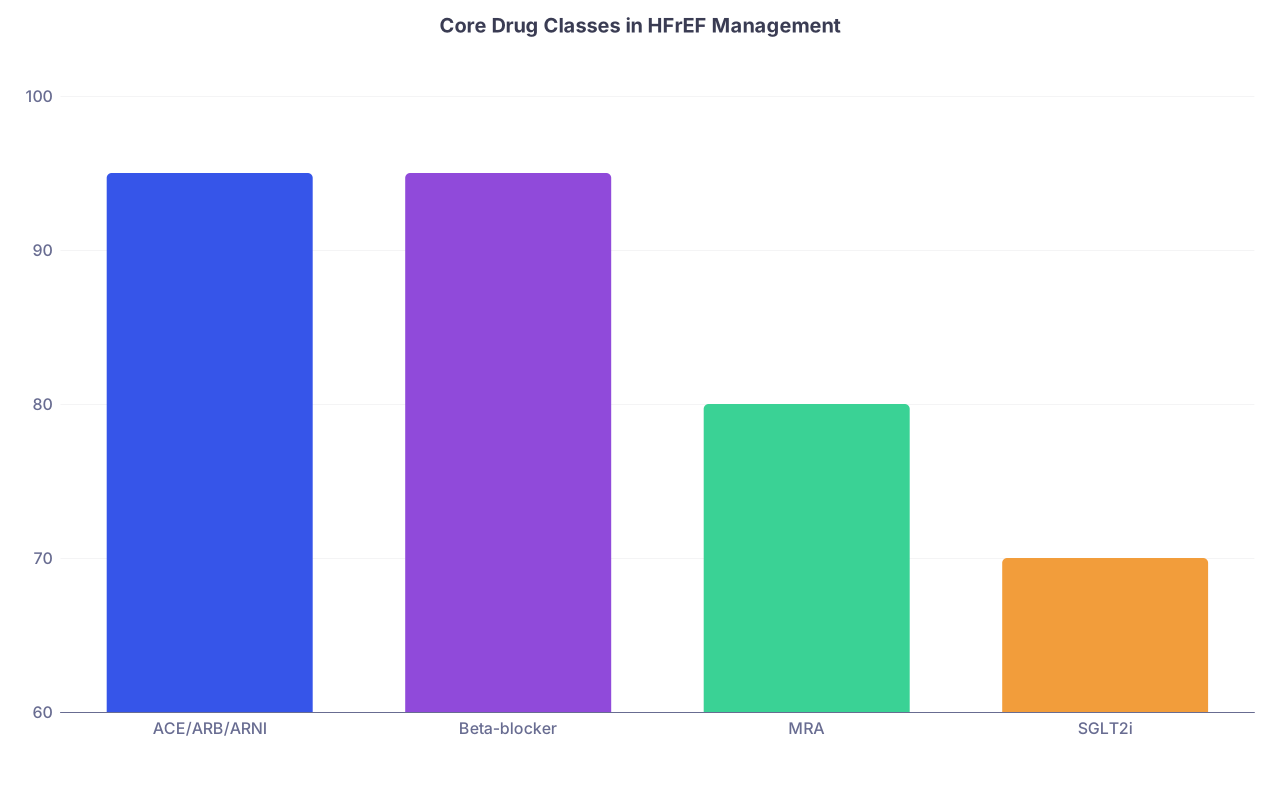
| Category | Value |
|---|---|
| ACE/ARB/ARNI | 95 |
| Beta-blocker | 95 |
| MRA | 80 |
| SGLT2i | 70 |
(The percentages here reflect how often you should be thinking about these for symptomatic HFrEF patients on the exam, not literal prevalence.)
COPD ladder
- PRN SABA → persistent symptoms → LABA or LAMA.
- Continued exacerbations → dual LABA+LAMA.
- Frequent exacerbations/ high eos → add ICS (triple therapy).
- Any smoker → smoking cessation meds + counseling.
- Chronic hypoxia → Home O2.
How to Practice for This – Not Just Read About It
Reading guidelines is not enough. You need to train the exact skill Step 3 is testing: sequential decision-making over time.
Three practical things that work:
Build disease-specific note templates.
When reviewing UWorld questions, do not just read the explanation. On a separate sheet or document, write:- “HTN: If A → B; if B fails → C”
- “DM: If A1c X on metformin → add Y; if CKD → prefer Z”
You are building reflex pathways.
Do UWorld and CCS with a chronic disease checklist in your head.
Every time you see HTN/DM/HF/COPD in a case, even if it is not the main problem, ask:- Are meds optimized?
- Have I addressed comorbid risk (statin, ACE/ARB, smoking, vaccines)?
- Am I scheduling appropriate follow-up?
Simulate a full “primary care visit” on a blank patient.
Sit down and imagine a 58-year-old man with:- HTN, DM2, COPD (still smoking), BMI 32, LDL 150. Write out, from scratch, what you would do at this visit and what you would schedule for follow-up. Then compare to guidelines. This is exactly what Step 3 is trying to test.
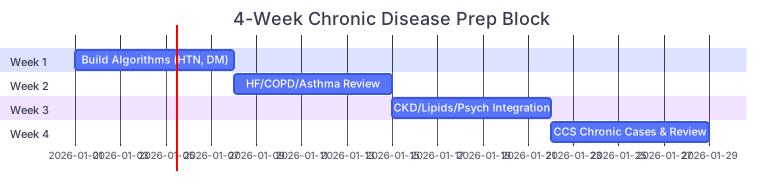
| Task | Details |
|---|---|
| Week 1: Build Algorithms (HTN, DM) | a1, 2026-01-01, 7d |
| Week 2: HF/COPD/Asthma Review | a2, 2026-01-08, 7d |
| Week 3: CKD/Lipids/Psych Integration | a3, 2026-01-15, 7d |
| Week 4: CCS Chronic Cases & Review | a4, 2026-01-22, 7d |
Final Thoughts: What Actually Moves Your Step 3 Score
You do not ace chronic disease questions on Step 3 by memorizing obscure trials. You do it by thinking like a half-competent outpatient intern who sees patterns and follows through.
If you remember three things from all of this, make them these:
Step 3 rewards complete, longitudinal care. Not just “start a blood pressure pill,” but titrate, re-check, monitor labs, and address lipids, smoking, vaccines, and mental health in the same patient.
Chronic disease questions pivot on comorbidities. The right antihypertensive, antidiabetic agent, or HF drug class depends on CKD, ASCVD, HF, age, and risk. Train yourself to see those clues instantly.
CCS is free points if you treat chronic disease systematically. Every order that reflects real-world primary care practice—statin, ACE/ARB, screening labs, vaccines, smoking cessation—pushes your case score up, even if it is not the “headline” of the case.
Master these, and chronic disease stops being a minefield on Step 3. It becomes where you quietly separate yourself from the median.