
The common advice about taking Step 3 before residency is lazy and often wrong.
You’ve probably heard some version of this: “If you can take Step 3 before intern year, do it. It’ll make residency easier and help you match into fellowship.” That sounds smart. It’s also mostly nonsense for 90% of people.
Let’s strip this down to what actually matters: data, policy, and real-world consequences. Not vibes. Not Reddit panic.
What Step 3 Actually Is (and What It Isn’t)
Step 3 is not a “harder Step 2.” It’s a different exam with a different purpose.
Step 1: Can you handle the basic science.
Step 2 CK: Can you apply clinical knowledge.
Step 3: Can you function as an unsupervised general physician on paper without getting sued into oblivion.
It’s two days, heavy on management, longitudinal thinking, and patient safety. Day 2 has those CCS cases everyone pretends they’ll “get to later.”
Here’s the first myth:
“Step 3 is easiest when you’re closest to Step 2, so take it right after med school.”
Wrong for most people.
On Step 3 you’re not being tested on “What’s the diagnosis?” nearly as much as “What’s your next best step, and what happens six months from now?” The nuance in diabetes titration, heart failure meds, prenatal care, post-op complications, and risk management comes from residency, not your last med school rotation.
Pre-residency, your exposure to outpatient medicine, long-term follow-up, and real decision-making is usually shallow. You’ve seen it. But you haven’t owned it.
That matters.
The One Reason Step 3 Timing Even Became a Thing: Visa and Licensing Rules
The Step 3-before-residency obsession didn’t come out of nowhere. It mostly comes from a few specific realities:
Visa and H‑1B issues for IMGs
Many programs and states require Step 3 early for H‑1B sponsorship. For some international grads, no Step 3 = no job. For them, pre-residency Step 3 is not a strategy. It’s survival.State licensing quirks
Some states require Step 3 within a certain time window (7 years from Step 1, for example). A few programs encourage early Step 3 so residents can get a full license faster and moonlight. That’s not “it’ll make you a stronger applicant.” That’s “we’d like you to bill.”People misunderstanding correlation
Programs who brag “all our interns finish Step 3 by the end of PGY-1” are often just recruiting residents who were strong to begin with. These residents don’t magically become better because they rushed Step 3. They were better candidates already.
So yes, for some people, taking Step 3 early is absolutely rational. But that’s driven by immigration law and licensing timelines—not secret academic advantage.
What the Data Actually Shows (Not What People Claim)
There isn’t a massive RCT of “Step 3 before vs after intern year.” But we do have:
- NRMP program director surveys
- Correlations between Step scores and fellowship match
- State and institutional policies
- Outcome trends from internal program data (the stuff you hear in hallways, not brochures)
Let’s be blunt:
- Most program directors do not care when you take Step 3 as long as you pass by their deadline.
- A high Step 3 rarely rescues a weak Step 2 CK for competitive specialties.
- Failing Step 3 early hurts you more than a perfectly average Step 3 taken later.
Here’s the rough landscape:
| Specialty Type | Step 3 Timing Importance | What They Actually Care About More |
|---|---|---|
| Primary Care (IM, FM, Peds) | Low–Moderate | Step 2 CK, interviews, fit |
| Competitive Med (Cards path IM, Derm, Rads) | Low | Step 1/2, research, letters |
| Surgical Specialties | Very Low | OR performance, letters, Step 2 |
| IMGs Needing H‑1B | High | Step 3 completion, visa logistics |
| Moonlighting-heavy programs | Moderate | Step 3 by mid-PGY1 for billing |
You’ll notice what’s missing: “Everyone benefits from taking Step 3 before residency.” Because they don’t.
The Real Tradeoffs of Taking Step 3 Before Residency
Here’s what actually happens when people jam Step 3 into that pre-residency gap.
1. You’re Studying with the Worst Brain You’ve Had in Years
You just finished:
- Step 2
- Sub-Is / audition rotations
- Rank list stress
- Graduation logistics
Then someone tells you: “Use your only real break for the next 3–4 years to study 6–8 hours a day for Step 3.”
That’s how you end up half-assing it. You do 40% of a Qbank, skim a few review resources, tell yourself “Step 3 is easy,” sit for the exam, and get an unimpressive score or, worse, a near-miss.
I’ve seen more than one person score below their Step 2 CK after “rushing to get it over with.” Programs notice that trajectory. They’re not dumb.
2. You Lose the Chance to Study with Context
During intern year, when you see:
- uncontrolled DM2 being adjusted over months
- an unstable angina patient going cath vs medical management
- a COPD exacerbation that keeps bouncing back
you’re literally living Step 3 material. You see the downstream effects of your decisions. You see the complications.
Pre-residency, most of that is abstract. You memorize guidelines. But you don’t actually own the decision process. And Step 3 is all about decision-making.
Ironically, for many people, the exam actually feels easier a few months into residency—once they stop repeating “what’s the single best next test” and instead start thinking like someone who will be sued if they miss a PE.
| Category | Value |
|---|---|
| Before Residency | 15 |
| PGY1 | 60 |
| PGY2 or later | 25 |
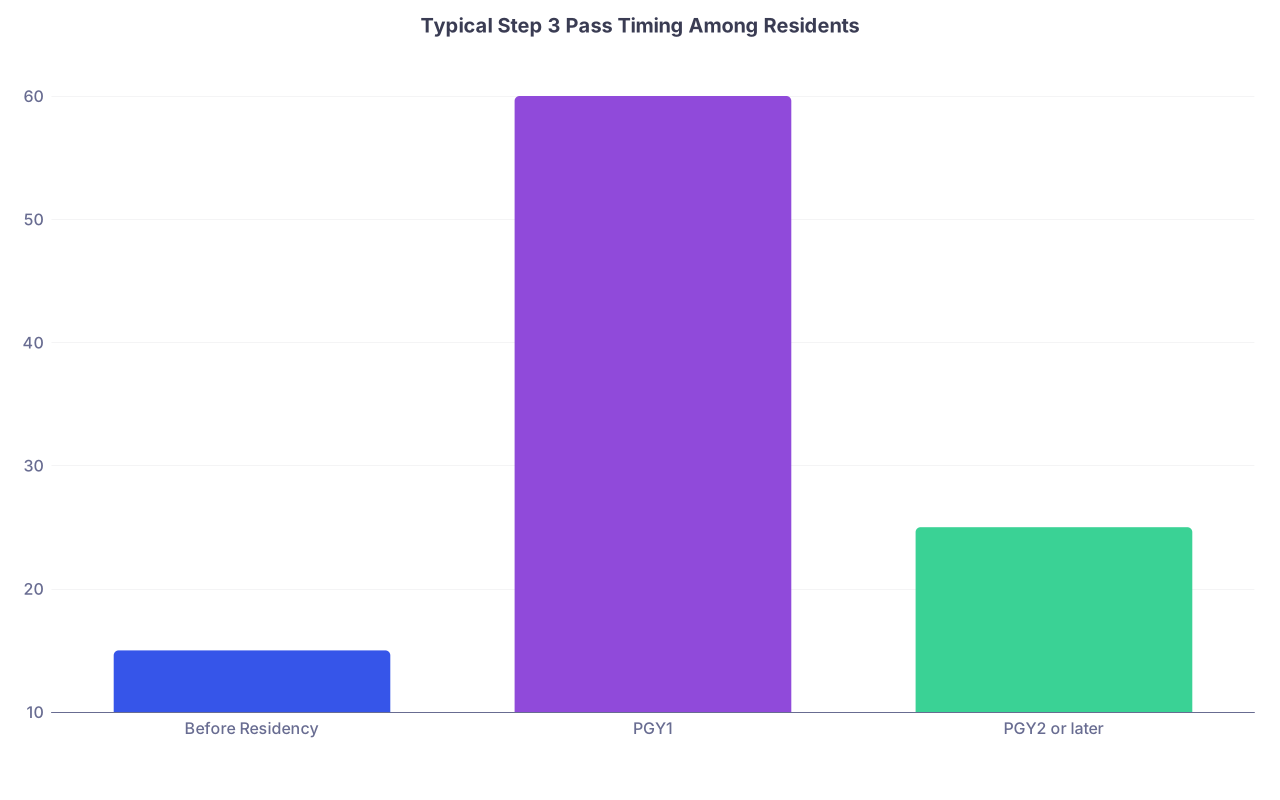
Most residents pass Step 3 during PGY1. Programs are built around that reality for a reason.
The Biggest Myth: “Step 3 Before Residency Makes You More Competitive”
Let me be very clear:
If you’re already matched, having Step 3 done before residency almost never changes your competitive standing for fellowship or future jobs. What matters is that you pass it reasonably early and don’t fail.
Fellowship directors are not sitting there saying, “This candidate took Step 3 before PGY1—clearly superior.” They’re looking at:
- Your performance in residency (evaluations, in-training exams)
- Letters of recommendation
- Research and productivity
- How you handle cases in conference
I’ve heard fellowship directors say, out loud, “I skim Step 3 to make sure they passed. That’s it.” If you think you’re going to brute-force yourself into cardiology by cramming a 250 on Step 3 in April before you graduate, you’re lying to yourself.
The only timing-related advantage that sometimes matters is for weak Step 2 CK applicants who later crush Step 3. But that only helps if:
- You’re applying for fellowship in a field that even glances at Step 3 scores (not all do), and
- The score is significantly better, not just “similar but earlier.”
And again—doing that before residency isn’t the win. It’s the improvement that matters, whenever it happens.
When Taking Step 3 Before Residency Actually Makes Sense
Now the contrarian thing here is not “Never take Step 3 early.” The contrarian thing is: only take it early when it solves a real problem.
Concrete situations where pre-residency Step 3 is smart:
You’re an IMG needing H‑1B or state licensing tied to Step 3
If your offer letter or GME office clearly says you need Step 3 for visa or licensing reasons early in PGY1—and your country logistics are messy—it can be rational to knock it out before moving.Your program explicitly expects it done by a brutal deadline
Some residencies (especially in certain states) push for Step 3 completion by, say, December of PGY1, while simultaneously throwing you into 80-hour ICU blocks. If they’ve told you flat-out that schedule will be hell, and you know you’re bad at multitasking, taking it in that pre-start window is defensible.You have a genuine, realistic study window
Not “I have 10 days between a friends’ trip and moving.” I mean 4–6 uninterrupted weeks where you’re not moving, not planning a wedding, not fixing visa paperwork, and not emotionally fried. Almost no one has this. A few do.You are truly fresh, strong from Step 2 CK, and highly self-disciplined
If you just scored 250+ on Step 2 CK, you’re still in exam shape, and you can honestly commit to a full Qbank and CCS in those weeks, fine. Pre-residency may be low stress for you. That’s a narrow group, but they exist.
In those very specific scenarios, pre-residency Step 3 can be rational. Not magical. Just rational.

| Step | Description |
|---|---|
| Step 1 | Matched to Residency |
| Step 2 | Strong case for pre-residency Step 3 |
| Step 3 | Consider pre-residency if real study time exists |
| Step 4 | Optional pre-residency Step 3 |
| Step 5 | Take during PGY1 after some clinical experience |
| Step 6 | IMG needing H-1B or early license? |
| Step 7 | Program requires Step 3 by early PGY1 and schedule is brutal? |
| Step 8 | Have 4-6 solid weeks and strong Step 2 CK? |
If you land in H, that’s not “you failed the hustle.” That’s the default sensible path.
The Hidden Risks No One Talks About
People talk a lot about the “peace of mind” of finishing Step 3 early. They don’t talk enough about the landmines.
Risk #1: Failing Early
A Step 3 failure before residency start follows you into orientation. That’s a horrible power dynamic. You walk in branded “at risk” before you’ve written a single note.
Programs take that seriously. They’ll monitor you more closely, may limit moonlighting opportunities later, and sometimes put you on formal remediation plans. If you were a borderline applicant to begin with, it amplifies every doubt.
Would you rather take that hit after you’ve already shown you’re dependable on the wards, or before you know how the cafeteria works?
Risk #2: Wasting Your Only Real Break
You won’t get another stretch of unclaimed time like the pre-residency gap for years. Burning it on rushed Step 3 prep when you don’t need to is a questionable trade-off.
Mental recovery is not optional. Plenty of burned-out interns wish they’d taken two weeks to be human instead of forcing themselves through a half-hearted question block every night in May.
Risk #3: Studying the Wrong Way
Pre-residency Step 3 prep skews toward memorizing guidelines without clinical intuition. People over-read, under-practice, and ignore CCS. They study like it’s Step 2 CK Part II, not a management exam.
By contrast, a PGY1 who sees septic patients every day and practices Step 3 questions is building pattern recognition and triage instincts. Same hours, very different quality.

How to Time Step 3 Like an Adult, Not a Panicked M4
Here’s the non-glamorous, actually rational approach:
Anchor on your program’s requirements, not rumors
Email the program coordinator or PD’s office. Ask directly:- “By when are interns expected to have Step 3 done?”
- “Any residents in recent years had issues with timing?”
That answer matters far more than what some anonymous poster insisted on in a forum.
Be honest about your capacity and trajectory
If Step 2 CK almost broke you, why do you believe pre-residency Step 3 will be smoother? It will be the same brain. Just more tired.Use early residency to your advantage
Many people do best taking Step 3:- After 3–6 months of wards
- On a lighter elective or ambulatory block
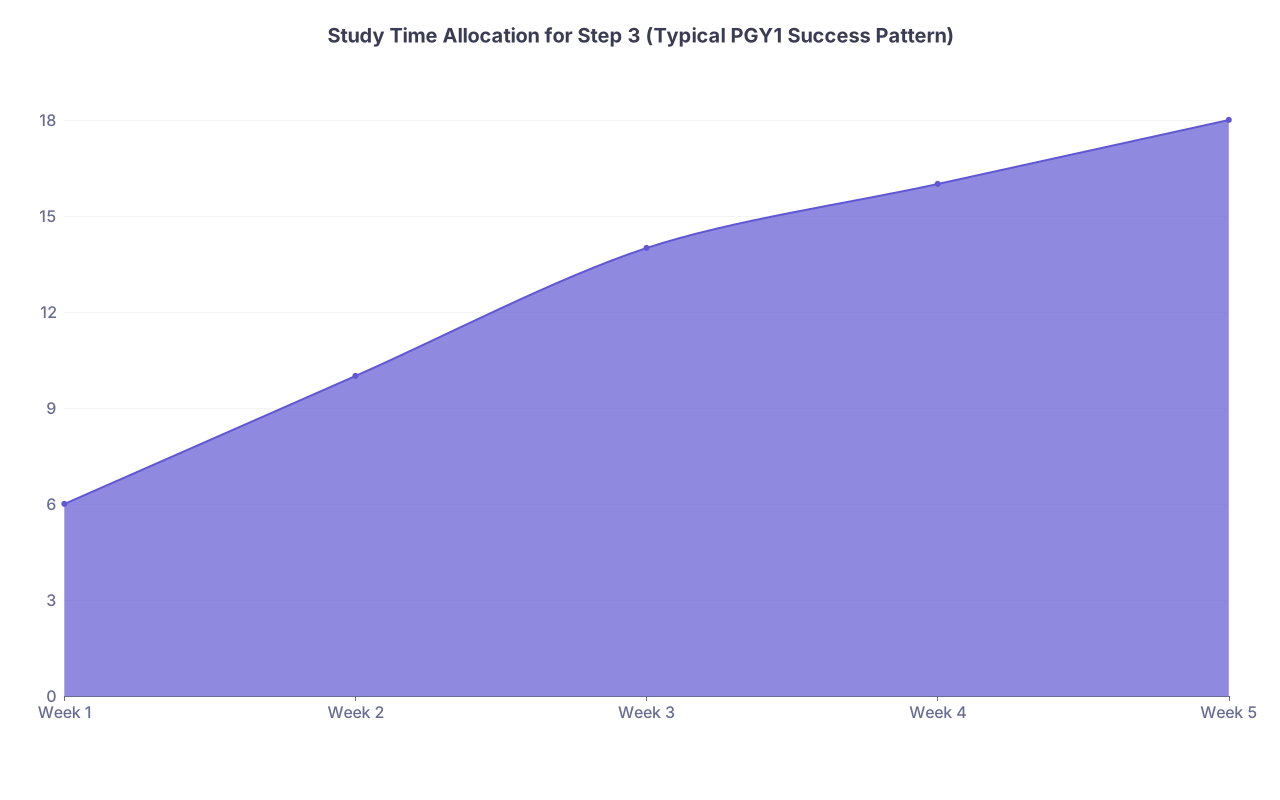
- With 4–6 weeks of steady, sane studying (1–2 hours on weekdays, more on weekends)
Treat Step 3 as a pass-first exam
You are not building your academic legacy with this test. You’re clearing a regulatory hurdle. You want “solid pass, no drama,” not “heroic score, catastrophic failure risk.”
| Category | Value |
|---|---|
| Week 1 | 6 |
| Week 2 | 10 |
| Week 3 | 14 |
| Week 4 | 16 |
| Week 5 | 18 |
Notice the shape: gradual increase, not a massive 40-hour cram week that melts your brain.
So, What’s the Actual Truth?
Let me cut through the noise.
Step 3 before residency is helpful only for a minority: IMGs with visa or licensing constraints, residents in very demanding programs with early Step 3 deadlines, or exceptionally strong, well-rested test-takers with real time to study. For everyone else, it’s optional at best and a distraction at worst.
Programs and fellowships care far more that you pass Step 3 on time than when you took it. You don’t get a medal for finishing early. You do get a problem if you fail or keep punting it past their deadlines.
Your residency performance will define your career more than Step 3 timing ever will. If pre-residency Step 3 prep steals your only recovery window and you start PGY1 already mentally cooked, that’s a bad trade.
If you want a rule of thumb:
Unless you have a clear, external requirement or a truly strong rational case, take Step 3 after you’ve been a doctor for a few months. Not because you’re lazy. Because by then, you’ll finally know what the exam is actually asking you to be.
And that—despite all the noise—is how you play this game like an adult, not a myth-chasing applicant.