
Passing Step 3 is not your golden ticket to an easy visa or a hassle‑free state license. It is one checkbox in a system that has a lot more boxes than most applicants realize.
I keep seeing the same pattern: students whispering in the library, “Once I pass Step 3, the visa part is easier, right?” Or residents saying, “I’ll just knock out Step 3 before applying for a license and that should solve most of it.” That belief is widespread. It is also wrong.
Let’s dismantle this properly.
The Myth: “Step 3 Clears the Way”
The myth goes like this:
- For visas: If you pass Step 3, programs are more comfortable sponsoring an H‑1B, and immigration “looks more favorably” on you.
- For licenses: State medical boards just want to see that you passed Step 3; once that’s done, the rest is paperwork.
Reality: Step 3 is necessary in some scenarios. It is rarely sufficient.
For visas, the bottleneck is federal immigration law and institutional policy, not your Step 3 status. For state licenses, the bottleneck is state-specific rules, documentation, and your training history, not just whether you squeaked past a three‑digit score threshold.
Let’s split this into the two big domains: visas and state licenses.
Step 3 and Visas: Helpful, Sometimes Required, But Not the Main Gatekeeper
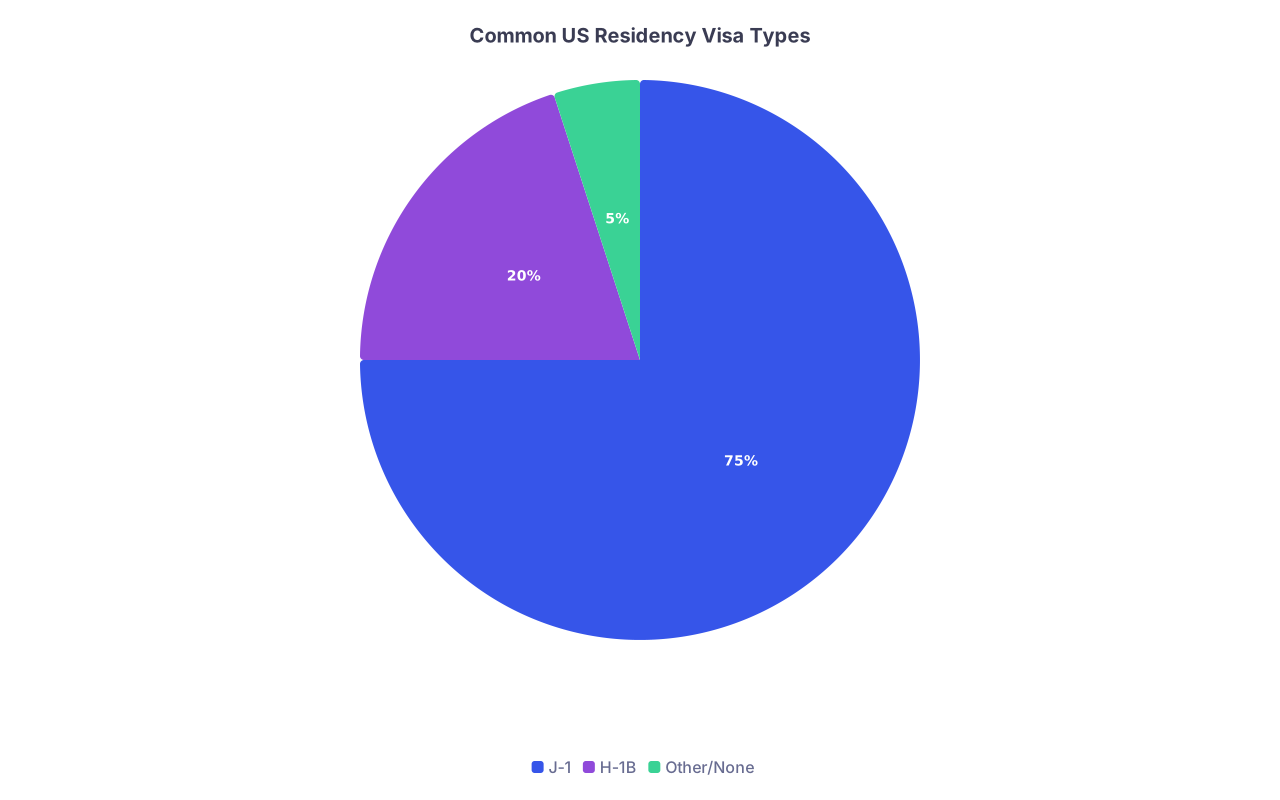
| Category | Value |
|---|---|
| J-1 | 75 |
| H-1B | 20 |
| Other/None | 5 |
J‑1 vs H‑1B: Where Step 3 Actually Matters
Here’s the basic structure:
- J‑1 clinical visa: Sponsored by ECFMG. Step 3 is not required for the visa. You need USMLE Steps 1 and 2 CK, ECMFG certification, and a training contract.
- H‑1B for residency/fellowship: Governed by USCIS. Here, Step 3 is a legal requirement for a clinical H‑1B physician in most cases.
So for H‑1B, yes, Step 3 is mandatory. But that doesn’t mean “if I pass Step 3, the H‑1B will be smooth.”
Things that derail H‑1Bs for residents far more often than Step 3:
- Institutional policy: Many programs simply do not sponsor H‑1Bs, regardless of your Step 3 status.
- Cap issues: Being subject to the H‑1B cap vs cap‑exempt (university/affiliated institutions) can kill or complicate a petition.
- Timing: Passing Step 3 in March when your program needed it documented by January is a classic self‑own.
- Prior immigration history: Overstays, violations, prior denials, or complex history overshadow your score report.
I’ve seen applicants with 240+ Step 3 scores get no H‑1B because the institution changed policy. I’ve also seen someone with a barely passing score get an H‑1B approved effortlessly because the university’s legal office was experienced, paperwork was clean, and timing was right.
“Step 3 Helps Me Get a Visa” – Half True, Half Wishful Thinking
There are three separate levels at play:
Program willingness to sponsor
Some programs say, “We only consider H‑1Bs if Step 3 is already passed.” That’s their internal filter to reduce immigration risk. For them, no Step 3 = no H‑1B consideration. Passing Step 3 lets you enter the conversation but doesn't guarantee anything.Immigration eligibility
For a clinical H‑1B, USCIS expects a passed Step 3. If you do not have it, you’re basically ineligible for that specific petition type. Once you have it, you’re eligible—not approved. USCIS still looks at the position, institution, wages, classification, prior status, and mistakes in the petition.Consular processing / stamping
Even with an approved petition and Step 3, a consular officer can still refuse to issue a visa stamp for security, administrative, or prior‑history reasons.
You see the pattern: Step 3 is just one gate out of several.

Where Step 3 Actually Changes the Game (A Bit)
Here’s where passing Step 3 really does matter in a serious way for visas:
- H‑1B vs J‑1 choice: If you want to avoid the J‑1 two‑year home requirement and go for H‑1B, Step 3 is non‑negotiable. Many programs won’t even start the H‑1B process for you without it.
- Post‑residency jobs in the US: Some employers hiring on H‑1B for attending roles like to see Step 3 done early, because by that point you’re already licensed (or license‑eligible) and the risk profile is lower.
- Timing cushion: Passing Step 3 earlier means one fewer variable in a process loaded with variables. It eliminates one future excuse for a delay or denial.
But none of that equals “guaranteed smooth visa.”
You can do everything right—Step 3 passed, perfect documentation—and still hit:
- Administrative processing (221g) delays at the embassy.
- An institutional blanket policy change on visas.
- A consular officer who doesn’t like something about your prior travel/immigration history.
The myth is seductive because Step 3 feels tangible. You can study for it. You can control it. Visas are messy, opaque, and subject to politics. So people cling to “if I just pass Step 3, it will sort itself out.” That is emotional coping, not strategy.
Step 3 and State Licenses: Necessary, But Far from Sufficient
Let’s switch to state medical licenses.
Some residents honestly believe: “Once I pass Step 3, I should be ready to get a license anywhere, right?” That’s not how state boards think.
Most state medical boards care about:
- Your medical school (accredited? on their approved list?).
- Your postgraduate training (how many years, where, ACGME‑accredited or not).
- Your exam history (Step 1, 2 CK, 3, attempts, time limits).
- Red flags (gaps, professionalism issues, malpractice, criminal history).
- Documentation consistency.
Step 3 sits in the “exam history” bucket. That’s all.
| State | Min US Training | Step Time Limit | Attempts per Step | Step 3 Required for Temporary License? |
|---|---|---|---|---|
| New York | 1 year | None | 3 | No |
| Texas | 1 year (IMG 3) | 7 years total | 3 | Often Yes |
| California | 1 year (IMG 3) | 10 years | 4 | Often Yes |
| Florida | 2 years (IMG 2) | 7 years total | 5 | Yes |
| Illinois | 1 year (IMG 2) | 10 years | 6 | Sometimes No |
(Some details evolve, but the pattern stays: Step 3 is just one parameter.)
How Step 3 Can Still Block You
Passing Step 3 itself is not the only exam variable. Boards look at:
- How many attempts you took.
- How many total years you spent between first Step and last Step.
- Whether you had any score irregularities or USMLE investigations.
Common traps:
- Someone took 8+ years from Step 1 to Step 3. Several states have a 7‑year limit (with occasional exceptions). Result: They are technically “passed” but barred from certain states.
- Multiple failures. A state may limit you to 3 attempts per Step. If you failed Step 1 twice and Step 2 CK twice, some states will not license you, even with a Step 3 pass on the first try.
- Disciplinary history with USMLE or an ethics investigation. A board will care more about that than your eventual pass.
So no, the scoreboard does not reset to zero just because you finally got a passing Step 3 result.
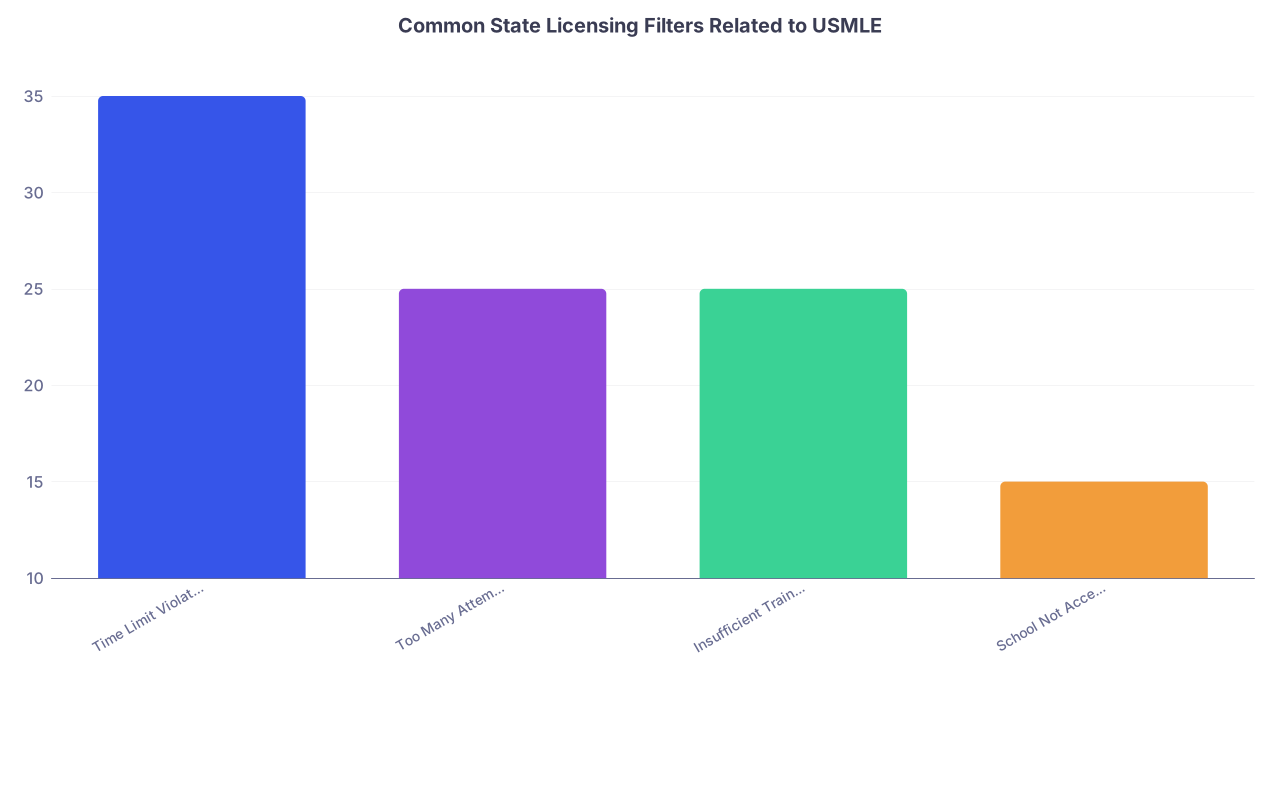
| Category | Value |
|---|---|
| Time Limit Violations | 35 |
| Too Many Attempts | 25 |
| Insufficient Training Years | 25 |
| School Not Accepted | 15 |
The Bigger Bottleneck: Training, Not Step 3
For international grads especially, the real licensing wall is usually training:
- Some states require 3 years of ACGME‑accredited training for IMGs, even for a full license.
- Others require specific types of training (no credit for non‑ACGME or certain foreign fellowships).
- There are states that flat‑out don’t recognize certain international schools.
You can have Step 3 done early in PGY‑1 and still be ineligible for a full license for years because you simply don’t meet the training requirements yet.
I’ve watched residents panic about Step 3 timing while completely ignoring that they’re matching into a one‑year prelim program with no guaranteed categorical spot. That’s how you end up with a passed Step 3 and no completed residency. Which is almost worthless from a licensing standpoint.
Where Step 3 Does Help With Licensing
Now for the nuance. There are ways Step 3 can make your life easier with boards—if you use it strategically.
1. Early Temporary Licenses
Some states offer:
- Training licenses (house staff licenses)
- Temporary licenses
- Limited permits
A passed Step 3 can sometimes speed or simplify those, especially when:
- Your institution wants you to moonlight.
- You’re starting fellowship in a state that wants you to have full or nearly full licensure early.
- You’re moving between states and one board is slow; having Step 3 already done removes one variable.
But again, this is about removing friction, not unlocking a “fast track” that doesn’t exist.
2. Portability Between States
Once you:
- Have completed enough training for one state’s full license, and
- Have passed Step 3 within their time/attempt limits,
you’re in a much better position to apply elsewhere. Many states will look at the fact another US state has already issued you a full license and relax a bit (they still do their due diligence, but you’re lower risk).
Here, Step 3 is part of a package: “board‑certified or board‑eligible + full license elsewhere + clean record.” That combination is what makes your life smoother.
Step 3 alone? Not so much.

Common Miscalculations Students and Residents Make
I’ve seen the same mistakes repeat across cohorts.
Mistake 1: Taking Step 3 Too Late for Visa Strategy
People tell themselves, “I’ll focus on intern year, then do Step 3 at the end.” Sounds reasonable. Until:
- Their program only sponsors J‑1 unless you already have Step 3.
- Or their institution’s legal team says they need Step 3 results in hand by a certain date to file H‑1B timely.
- Or they need Step 3 to get a state training license, and the board is backed up.
By the time they realize it, deadlines are blown. Step 3 didn’t fail them. Their planning did.
Mistake 2: Overestimating the Impact of a High Step 3 Score
A 240+ Step 3 won’t fix:
- A shaky immigration history.
- A non‑ACGME training background that a board doesn’t accept.
- A medical school that’s on a state’s “not approved” list.
- Multiple exam failures earlier in the USMLE sequence.
Program directors and boards are not obsessing over your Step 3 score. They want “pass” and no drama. That’s it.
Mistake 3: Ignoring State‑Specific Rules Until It’s Too Late
Residents will apply for a job in State X and only then discover:
- A 7‑year USMLE completion limit they violated.
- A requirement for 3 years of training when they only have 2.
- A foreign school exclusion.
They passed all the USMLEs, including Step 3, and still can’t get licensed there. Because they never checked the rules until the contract stage.

| Step | Description |
|---|---|
| Step 1 | Pass Step 1 & 2 CK |
| Step 2 | Match into Residency |
| Step 3 | J-1 |
| Step 4 | H-1B |
| Step 5 | H-1B Not Possible |
| Step 6 | H-1B Petition Filed |
| Step 7 | Residency Training |
| Step 8 | Complete Required Training Years |
| Step 9 | License Denied/Delayed |
| Step 10 | State License Granted |
| Step 11 | Visa Type? |
| Step 12 | Step 3 Passed Before Filing? |
| Step 13 | Meet State Rules? |
So What Should You Actually Do With Step 3?
You’re not powerless here. You just need to stop believing in magical thinking.
Treat Step 3 as a strategic prerequisite, not a solution.
It enables:- H‑1B eligibility for residency/fellowship in many places.
- Earlier licensing in some states.
- Less friction with credentialing later.
It does not override institution policy, state law, or immigration problems.
Build a timeline backwards from your goals.
Want H‑1B for PGY‑1? You likely need Step 3 done before contract signing or soon after Match, depending on program policy.
Want to work in a particular state? Read that state board’s rules in MS3–MS4, not as a PGY‑3 scrambling for a job.Stop fixating on Step 3 as your “immigration plan.”
Your immigration plan is about:- Which visa you’ll use (J‑1 vs H‑1B vs others).
- Waiver options if you take a J‑1.
- Institutional policies at places you target.
- Long‑term goals (fellowship, academic vs community practice, geography).
Step 3 is just a box you need checked within that plan.

FAQs
1. If I pass Step 3 before residency, will more programs offer me H‑1B instead of J‑1?
You’ll be more eligible for H‑1B, but you will not suddenly convert J‑1‑only programs into H‑1B sponsors. Programs and hospitals decide visa policies based on legal risk, cost, and HR strategy—not your individual score report. Where it does help is with programs that say, “We occasionally do H‑1Bs, but only for applicants who already passed Step 3.” For those, early Step 3 is a real advantage. For everyone else, it changes nothing.
2. Can passing Step 3 overcome a long gap between Step 1 and Step 2 for licensing?
Usually no. State time limits are about the total duration between first and last USMLE step. If a state has a 7‑year limit and you took 9 years from Step 1 to Step 3, you’re outside their rule whether you aced Step 3 or not. Some boards offer exceptions for people who completed certain long residencies or dual degrees (like MD‑PhD), but that’s about your overall path, not your Step 3 performance.
3. Is there any situation where delaying Step 3 is actually smarter?
Yes. If you are barely surviving intern year, struggling clinically, and at risk of failing Step 3 because you’re exhausted and underprepared, taking it just to “help visas and licenses” can backfire. A failure stays on your record forever and can hurt both licensing flexibility and competitiveness. For some people, taking Step 3 after they’ve stabilized clinically, even if that’s a bit later, is safer than trying to force it into a chaotic PGY‑1 year just for a theoretical visa advantage.
Key points to walk away with:
Step 3 is a requirement, not a magic key. It opens some doors but doesn’t unlock the whole system. Visas are driven by federal rules and institutional policy; licenses are driven by state law and your full training and exam history, not just that one pass. Use Step 3 strategically—early enough to support your goals, but without the illusion that it guarantees smooth sailing.