
What happens when you’ve matched, quit your job, told your family—and the consulate refuses your J‑1 visa because of a tiny error on your DS‑2019?
I’ve watched that story play out. More than once. Same pattern every time: “We thought ECFMG/HR handled all of it. We just signed where they told us.” That blind trust is how IMGs get burned.
If you’re an international medical graduate heading into residency on a J‑1, the DS‑2019 is not a form. It’s a landmine field. And too many smart people treat it like a plane ticket: just a document that “shows up” when it’s time to travel.
Do not make that mistake.
Below are the DS‑2019 errors IMGs routinely overlook—until it’s late June, orientation is in 5 days, and their future is in the hands of a consular officer with a red stamp.
1. Treating the DS‑2019 as “Just Paperwork” Instead of Your Legal Lifeline
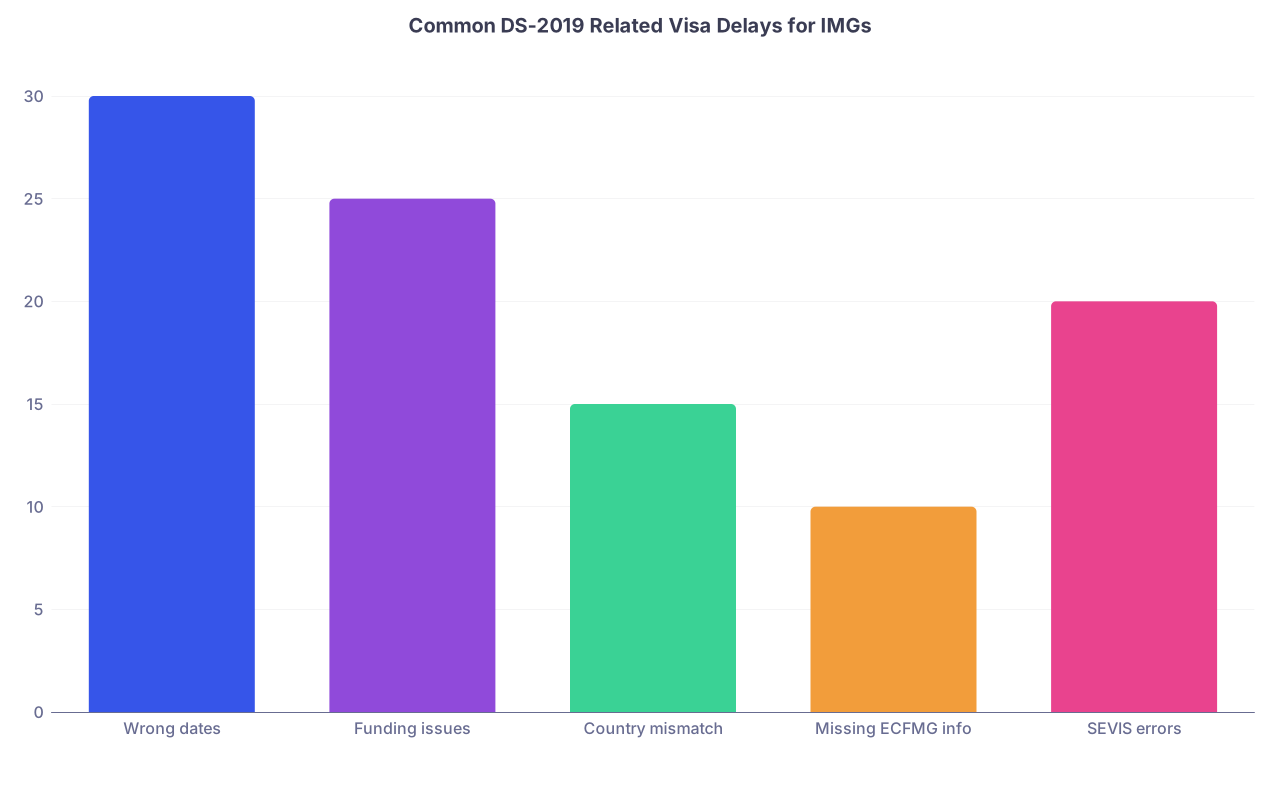
| Category | Value |
|---|---|
| Wrong dates | 30 |
| Funding issues | 25 |
| Country mismatch | 15 |
| Missing ECFMG info | 10 |
| SEVIS errors | 20 |
Here’s the first big error: believing the DS‑2019 is “handled by the program” so you don’t need to understand it.
That’s how you end up with:
- Wrong start date that makes you miss orientation
- Funding details that don’t match your actual contract
- Incorrect category that makes moonlighting or research impossible
- A consular officer looking at your form and quietly deciding: Nope
Let me be blunt:
For a J‑1 resident, your DS‑2019 is more important than your contract. You can technically start work with a delayed contract. You cannot legally stand in the hospital as a resident without a valid DS‑2019 + J‑1 stamp.
At minimum, you need to personally verify every DS‑2019 you ever receive for:
- Accuracy of personal data
- Category and program fields
- Dates (start, end, and travel windows)
- Sponsoring organization (ECFMG)
- Funding amounts and sources
If you haven’t read your DS‑2019 line by line, you’re already making the first mistake.
2. Name, Passport, and SEVIS Mismatches That Kill Visas at the Window
This one is brutal because it feels “small.”
Your DS‑2019 must match:
- Your current, valid passport
- Your SEVIS record
- Your visa application (DS‑160)
- Your previous US immigration records (if any)
Common ways people sabotage themselves:
Name Order Differences
- Passport: “SURNAME: KHAN” “GIVEN NAMES: ALI REHMAN”
- DS‑2019: “ALI KHAN”
- DS‑160: “REHMAN ALI KHAN”
To you, it’s the same person. To a consular officer, it’s three identities and a red flag.
Missing Diacritics / Extra Spaces
Accents, hyphens, and spacing matter. If your passport says “GARCÍA-LOPEZ” and the DS‑2019 says “GARCIA LOPEZ,” that’s technically different. Sometimes they ignore it. Sometimes they don’t. You don’t want your future riding on “sometimes.”Changed Passport Mid-Process
You renew your passport after your DS‑2019 is issued and then show up at the interview with a new number and different expiration date that no document reflects.
Result: delays, administrative processing, or a request for a corrected DS‑2019.
What to do instead:
- Use exactly the name format in your passport for every single field on all immigration forms. No “preferred” order. No Westernizing the name.
- If your passport is expiring during residency, renew before the DS‑2019 is issued for PGY‑1, or at least tell ECFMG and your program.
- As soon as your DS‑2019 draft is ready (some programs send a scan before printing), scrutinize it like you’re being paid to find mistakes.
If you notice a mismatch and think, “I’m sure it’s fine,” stop. That thought is how people lose months in “administrative processing.”
3. Start and End Dates That Silently Wreck Your Training Timeline

| Step | Description |
|---|---|
| Step 1 | Program sends DS-2019 draft |
| Step 2 | Resident doesnt check dates |
| Step 3 | Visa interview close to start date |
| Step 4 | Administrative delay or 221g |
| Step 5 | Miss orientation or first day |
| Step 6 | Program considers rescinding offer |
One of the most common, and most devastating, DS‑2019 issues: incorrect or dangerously tight dates.
Typical problems:
Start date too early
DS‑2019 starts on June 15, but GME orientation is July 1. Now you’ve burned legal status time for no reason, and if your visa interview gets delayed, you may need a new DS‑2019.Start date too late
DS‑2019 says July 15, but the program needs you July 1. They either scramble to fix it or start grumbling about “unreliable visa issues,” which you do not want attached to your name.End date too short
Three-year internal medicine program, but end date only covers 2 years 11 months. You assume they’ll “fix it later.” Sometimes they do. Sometimes they realize too late and you’re stuck with a weird immigration gap right before graduation.No arrival buffer
Your DS‑2019 starts July 1, your interview is June 27, and administrative processing takes 10 days. Now what? You’re neither in the US nor legally allowed to start on time.
Minimum safety rules:
- Aim to have your visa issued at least 2–4 weeks before DS‑2019 start. Not the interview—actual visa in your passport.
- Check that your DS‑2019 start date aligns with orientation, not just the contract.
- For multi-year programs, verify that year-to-year renewals will line up with your training calendar (this matters a lot in PGY‑3/PGY‑4 transitions).
If a date looks off, do not assume “they know what they’re doing.” HR offices handle dozens of residents across multiple visa types. They absolutely make mistakes.
4. Funding Details That Don’t Match Reality (and Trigger Scrutiny)

The DS‑2019 isn’t just about identity and dates. It also declares how you’re financially supported in the US.
Common funding errors:
Wrong salary amount
DS‑2019 lists $50,000. Contract says $61,000. Or vice versa. Consular officer might ask, “Which is it?” If your answer is confusion, that’s not good.Missing outside support
You’re getting partial support from a home government, family, or scholarship. It’s not listed. That can look like you can’t support yourself properly.Fake or inflated funding
I’ve seen people ask the hospital to “just put a higher number so the consulate is happy.” That’s one of those ideas that sounds clever at 2 a.m. and looks like fraud at the embassy window.
Why this matters:
- J‑1 requires evidence of sufficient financial support
- Consular officers do compare contract, DS‑2019, and your verbal answers
- Discrepancies can lead to 221(g) delays or even suspicion of misrepresentation
Your job:
- Compare line by line: DS‑2019 funding section vs. contract vs. any additional funding letters.
- If you have personal or family funds being counted, be ready with:
- Bank statements
- Sponsorship letters (with clear language and signatures)
- Ask ECFMG/HR to correct even “small” dollar differences. If questioned, “Our HR didn’t update the form” is not a professional answer.
5. Not Understanding the 2‑Year Home Residency Requirement Until PGY‑3
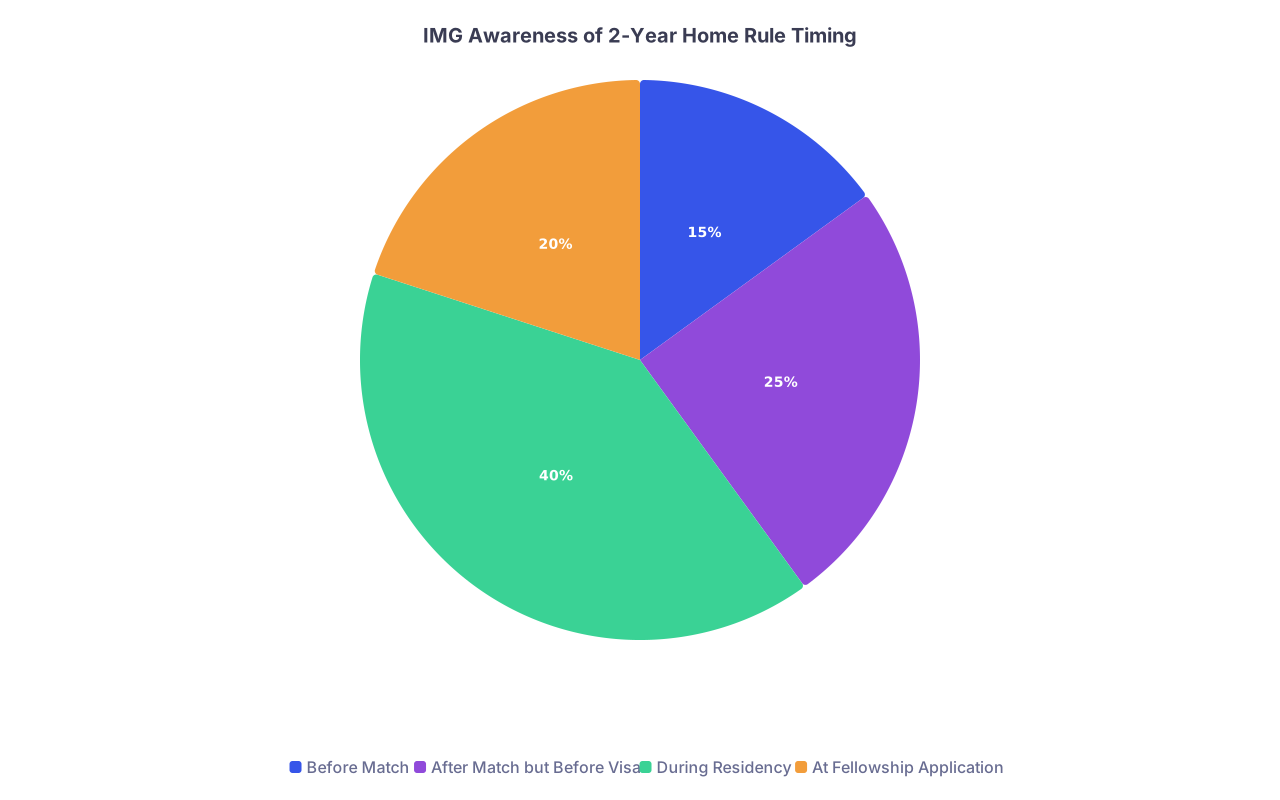
| Category | Value |
|---|---|
| Before Match | 15 |
| After Match but Before Visa | 25 |
| During Residency | 40 |
| At Fellowship Application | 20 |
This isn’t technically a “printing error,” but it’s a DS‑2019 trap that wrecks plans later: ignoring the 2‑year home residency requirement (212(e)) that’s tied to many J‑1s.
I’ve had IMGs tell me in PGY‑3:
“No one told me I had to go home for 2 years or get a waiver. I thought I could just switch to H‑1B for fellowship.”
That’s how dreams of “big academic cardiology at a top US program” die.
DS‑2019 problems around the 2‑year rule:
- You never check whether 212(e) applies on your initial visa stamp and DS‑2019.
- You assume all J‑1s have the same rules. They don’t. But most IMGs do end up 212(e) subject because of government sponsorship or skills lists.
- You make career, fellowship, or green card plans that are impossible without either:
- Going home for 2 years, or
- Getting a J‑1 waiver (hard, time-sensitive, and competitive)
What you should do early:
- Look at both your visa foil (stamp in passport) and your first DS‑2019. Is there a note about “212(e) applies”?
- If unclear, request an Advisory Opinion from the US Department of State early in residency, not in PGY‑4 when you’re trying to sign a job contract.
- Discuss with mentors and immigration counsel:
- J‑1 waiver options (Conrad 30, hardship, persecution, federal programs)
- Whether going for H‑1B from the start would have been smarter for your specialty goals
The mistake: shrugging and saying, “I’ll figure it out later.” Later comes faster than you think.
6. Ignoring DS‑2019 Renewals and Gaps Once You’re Already in Training
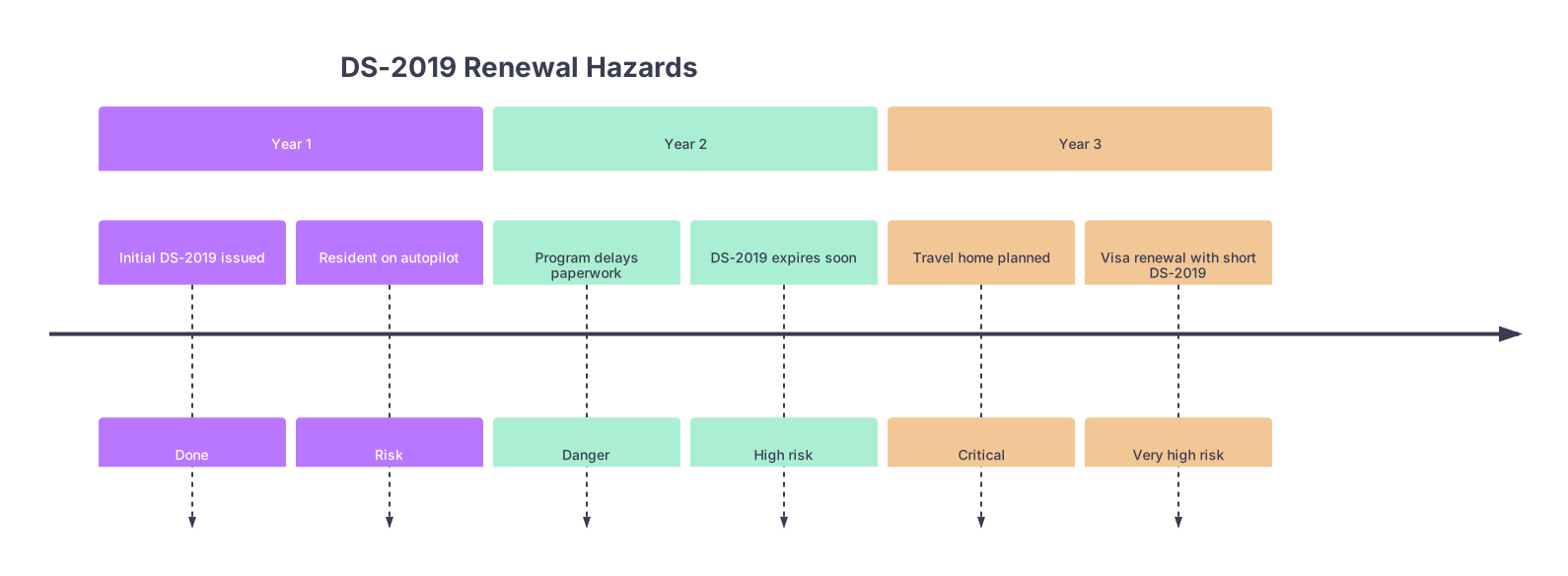
| Period | Event |
|---|---|
| Year 1 - Initial DS-2019 issued | Done |
| Year 1 - Resident on autopilot | Risk |
| Year 2 - Program delays paperwork | Danger |
| Year 2 - DS-2019 expires soon | High risk |
| Year 3 - Travel home planned | Critical |
| Year 3 - Visa renewal with short DS-2019 | Very high risk |
People pay obsessive attention to their first DS‑2019, then get lazy. “Renewals are automatic.” No, they’re not. They’re just more likely to be sloppy.
Renewal mistakes I’ve seen:
Gap between DS‑2019 end and new start
Even one day of unauthorized stay can become a problem for:- Future visas
- Status changes
- Certain immigration benefits
Late renewal near expiration
Your DS‑2019 expires June 30. HR sends the new one to ECFMG on June 20. If anything goes wrong, you may technically fall out of status.Traveling while renewal is pending
You leave the US with a DS‑2019 that expires soon, expecting the new one to be ready when you’re abroad. Then it’s delayed. Now you’re stuck outside, unable to re-enter for work.
Your survival checklist each year:
- Know the expiration date of your current DS‑2019. Not approximately. Exactly.
- Ask your GME office 3–4 months before expiration about renewal timeline.
- Do not book international travel close to DS‑2019 expiration or while a new issuance is uncertain.
- Each time you receive a renewed DS‑2019, check:
- Dates
- Program/specialty
- Funding
- SEVIS number continuity
You’re the one who suffers if they screw up, not them.
7. Sloppy Travel Signatures and Re-Entry Planning

The DS‑2019 isn’t just for the embassy. It also controls your ability to leave and re-enter the US.
Two big travel-related errors:
Missing or expired travel validation
- The travel authorization (usually by ECFMG) on page 1 (or back, depending on version) is typically valid for up to 1 year.
- Residents assume: “I have a J‑1 visa, I’m fine.”
- Then CBP at the airport asks why their DS‑2019 has no valid travel signature.
Outcome ranges from secondary inspection to being refused entry.
Ignoring the combo of visa + DS‑2019 validity
You look only at your visa expiration date and forget that:- Both visa and DS‑2019 must be valid for re-entry for ongoing training, and
- The shortest validity between them is effectively your practical deadline.
Travel rules to tattoo into your brain:
- Before any international travel, check:
- J‑1 visa validity
- DS‑2019 program end date
- Travel validation signature date (usually must be within last 12 months)
- If anything looks close to expiring during your trip:
- Either move the trip
- Or fix the documents before you leave
Do not assume the CBP officer “will understand.” Their job isn’t to solve your paperwork. Their job is to enforce it.
8. Trusting Everyone Else to Catch Errors You Haven’t Even Looked For
| Person/Office | How Carefully They Check | What They Prioritize |
|---|---|---|
| You (the IMG) | Varies wildly | Often just dates, if anything |
| GME / HR coordinator | Medium | Start date, funding, position |
| ECFMG | High but not perfect | Compliance, SEVIS, categories |
| Consular officer | High, but fast | Consistency & red flags |
| CBP officer at entry | High, but selective | Status validity, travel details |
The quiet assumption behind most DS‑2019 disasters: “If something was wrong, ECFMG or the consulate would have caught it.”
No. They catch some things. Not all.
Places everyone drops the ball:
- HR uses a template from last year and forgets to update a field.
- ECFMG staff processes dozens of cases a day and doesn’t notice that your program length seems short for neurology.
- Consular officer is rushing and doesn’t realize that the funding numbers conflict with your contract—until your next visa renewal, when someone slower and stricter flags it.
- You never bothered to understand how any of this fits together.
Let me be direct:
If you’re the one whose career depends on that form, you’re the one who should know it best.
Concrete habits to avoid being blindsided:
- Keep a personal folder (digital and physical) with:
- Every DS‑2019 you’ve ever had
- Copies of all contracts/offers
- All visa stamps and I‑94 history
- Create your own DS‑2019 checklist:
- Name, DOB, citizenship, passport number
- SEVIS number
- Program sponsor (ECFMG)
- Start/end dates
- Position/field (e.g., “Resident – Internal Medicine”)
- Funding amounts and sources
- Travel signature date (once in the US)
Once per year, sit down for 30 minutes and review everything. Boring? Yes. But far less painful than explaining to a new employer why you have a mysterious 11‑day status gap.
9. Letting DS‑2019 Problems Derail the Match and Onboarding Timeline
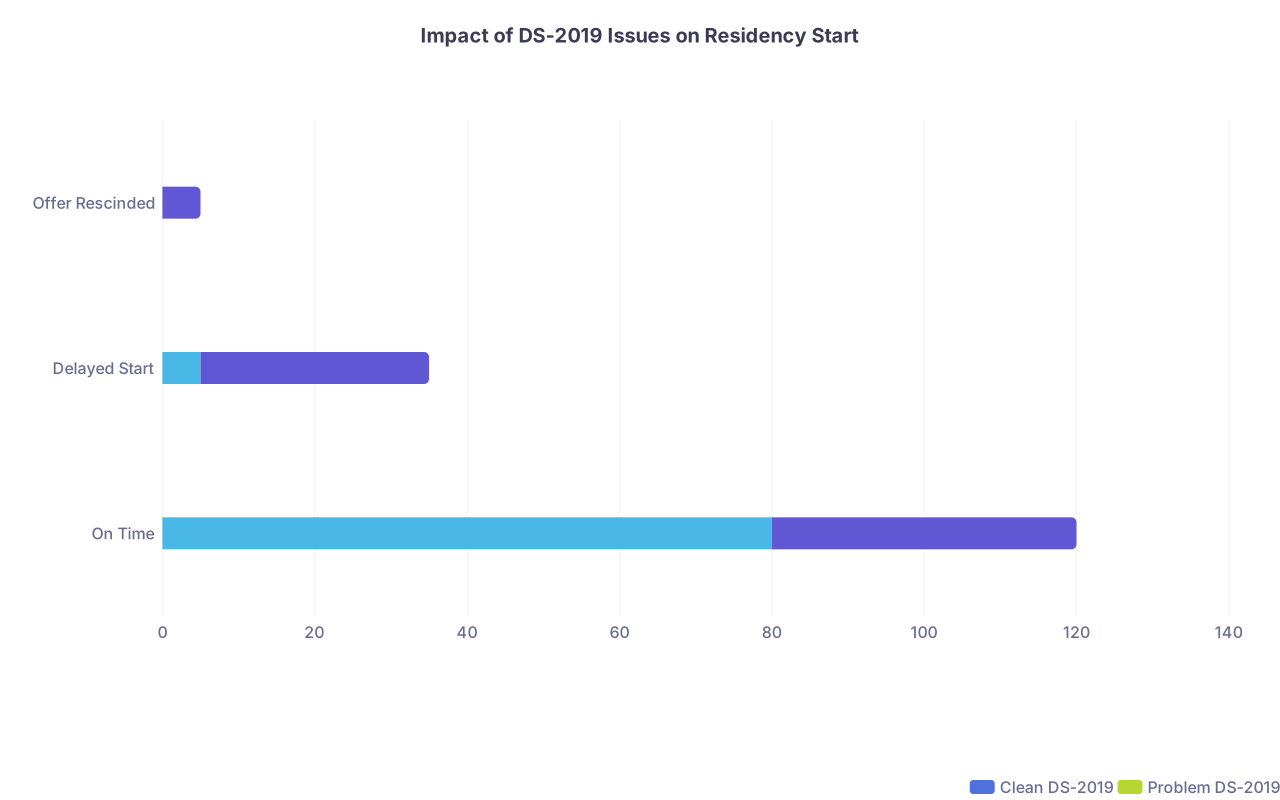
| Category | Clean DS-2019 | Problem DS-2019 |
|---|---|---|
| On Time | 80 | 40 |
| Delayed Start | 5 | 30 |
| Offer Rescinded | 0 | 5 |
You’re in the critical phase: Residency Match and Applications. This is where DS‑2019 screwups are most lethal.
Real things I’ve seen:
- An IMG matched to a solid community program. DS‑2019 issued late. Consulate delay. Program, under pressure from service needs, rescinds offer and calls the next person on the rank list.
- Someone who didn’t disclose prior US visa denials on the DS‑160, but their SEVIS + old DS‑2019 records painted a different picture. Result: long administrative processing and a very nervous program director.
- A resident whose DS‑2019 named the wrong hospital campus in a large system. CBP nearly refused entry because the I‑94 destination didn’t match the DS‑2019 program location.
Key mistake: thinking programs have unlimited patience for immigration chaos. They don’t. Some will fight for you. Some will quietly move on.
To protect yourself during this phase:
- As soon as you match, ask the GME office:
- Who handles J‑1 sponsorship paperwork?
- What documents they need from you, and by when
- Approximate DS‑2019 issuance timeline
- Stay on top of every email from ECFMG and HR. Don’t let anything sit unread “for later.”
- If you see a problem on your DS‑2019, flag it immediately, clearly, and politely. Don’t wait “until my visa interview” to mention that your birth date is wrong.
You’re not being annoying. You’re being responsible.
FAQs
1. My DS‑2019 has a small typo in my address but everything else is correct. Do I really need it fixed?
If it’s only your foreign address and everything else (name, passport number, birth date, program details, dates, funding) is perfect, most consulates will ignore it. But if the typo involves city, country, or something that conflicts with your passport or previous visas, get it corrected. Any inconsistency that could later look like deception or identity confusion isn’t worth leaving in place.
2. Can I start residency if my DS‑2019 is issued but my passport doesn’t have the J‑1 visa yet?
No. Having a DS‑2019 isn’t permission to work. It’s permission to apply for the J‑1. You must have:
- A valid J‑1 visa stamp in your passport
- A valid DS‑2019 for that program
- An I‑94 showing J‑1 status, D/S, tied to your SEVIS record
Starting “while it’s processing” is how people end up with unauthorized work that haunts them for years.
3. I’m already in the US on a different status. Do DS‑2019 errors still matter as much if I’m doing a change of status instead of consular processing?
Yes. The USCIS officer evaluating your change of status looks at the same fields a consular officer would. Wrong dates, funding inconsistencies, or mismatched personal data can delay or derail a COS request. Also, if you ever leave and re-enter, consular officers will examine those same DS‑2019s. Sloppiness now becomes liability later.
4. Who should I contact first if I find an error on my DS‑2019: my program or ECFMG?
Start with your program’s GME/HR office. They are the ones coordinating with ECFMG and have the authority to request corrections. Explain the error precisely (quote the incorrect line and the correct version) and ask them to forward it to ECFMG. Only contact ECFMG directly if your program is unresponsive or tells you to do so—but most of the time, going through GME is faster and cleaner.
Key points to walk away with:
- The DS‑2019 is not a form to “sign and forget.” It’s your legal lifeline—treat it that way.
- Tiny mismatches (names, dates, funding, signatures) can have huge consequences—check every line, every year.
- No one will care about your DS‑2019 as much as you should. Own it, monitor it, and don’t assume others will catch the mistakes that can cost you your residency.