
Women residents should never have to downplay family plans in interviews. But many still do. And sometimes, strategically, they choose to. That’s the ethical and practical mess you’re standing in.
Let me be blunt: the fact you’re even asking this means the system is failing you, not the other way around. Programs aren’t supposed to discriminate on the basis of pregnancy, fertility plans, or parental status. Legally, they can’t. In real life, bias happens every single year.
So the real question isn’t “is it right?” You already know it isn’t.
The real question is: how do you protect yourself, your career, and your integrity when interviewers cross the line?
Here’s the answer you’re looking for.
1. The Ethical Bottom Line: Who’s Actually Wrong Here?
Let’s start with the core principle:
You are not ethically obligated to share your reproductive plans with a residency program. Period.
A few key truths:
- Programs are legally prohibited (in the US and many other countries) from using pregnancy or family status in hiring or selection decisions.
- Asking about your family plans is at best inappropriate, and at worst illegal discrimination.
- Protecting yourself from potential bias is not dishonesty; it’s self-defense in an unequal system.
Ethically, where do I land?
- Lying about objective facts (e.g., “I am not pregnant” when you are) is more problematic.
- Choosing not to disclose, redirecting, or answering in general terms about “work–life balance” is not unethical.
- You do not have a moral duty to help a biased program screen you out.
If a faculty member thinks, “She’s 29, she’ll probably have a kid in residency,” and then quietly ranks you lower, that’s their ethical failure, not yours.
So no, you’re not a bad person if you strategically downplay family plans in an environment that still punishes women for being human.
2. What’s Legal vs. What Actually Happens
Let’s separate law from reality so you aren’t making decisions based on fantasy.
What the rules say (U.S. context, but similar themes elsewhere)
- Title VII and the Pregnancy Discrimination Act protect against discrimination based on pregnancy, childbirth, or related conditions.
- Programs should not ask:
- “Are you planning to have kids during residency?”
- “Are you pregnant?”
- “Do you have childcare arranged?”
- “Are you married / do you have a partner?”
But you and I both know these questions haven’t magically disappeared.
What actually happens in interviews
I’ve seen (and heard about) questions like:
- “You’re married — do you plan to start a family soon?”
- “How would you handle pregnancy during residency?”
- “Do you think motherhood and surgery are compatible?”
- “We’re a small program; multiple maternity leaves would really hurt the schedule. How do you see yourself fitting in?”
These are not hypothetical. Residents repeat them in the workroom every year.
So yes, the law is technically on your side. But enforcement is weak, retaliation is real, and you’re not applying for a random job — you’re applying for a multi-year training position that will control your schedule, evaluations, and letters.
That’s why many women do something uncomfortable: they manage the bias instead of challenging it head-on at the moment.
3. The Real Risk: How Much Does Pregnancy Actually “Hurt” You?
You need a clear-eyed risk calculation, not vibes.
Here’s what actually raises red flags for some programs (whether they admit it or not):
- Small programs with minimal backup coverage
- Procedural or surgical specialties with rigid case minimums and call needs
- Places with a history of poor support for parental leave (you can sniff this out on interview day)
But the perception of risk is often exaggerated and deeply gendered.
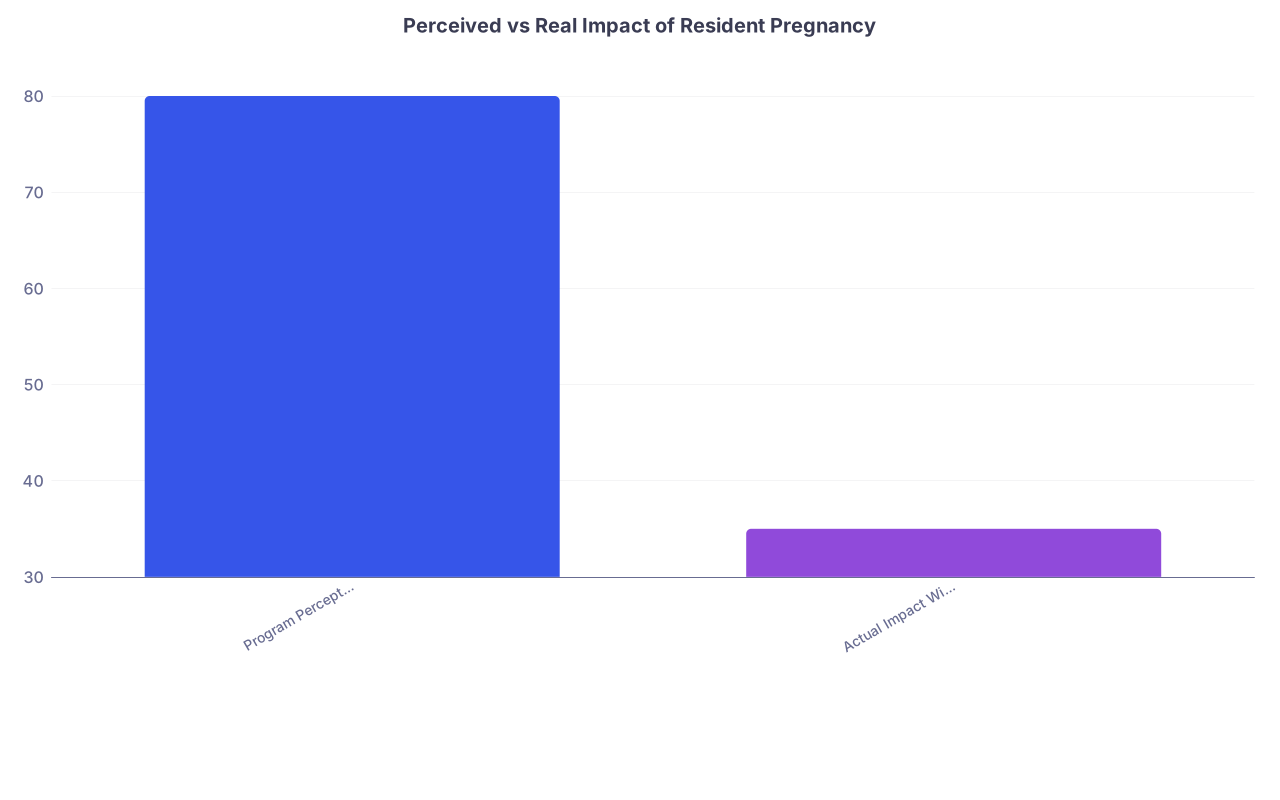
| Category | Value |
|---|---|
| Program Perception | 80 |
| Actual Impact With Good Planning | 35 |
In decent programs with reasonable backup systems:
- The actual patient care and scheduling impact of one pregnancy in a residency class is manageable.
- Good leadership spreads coverage, plans ahead, and treats it like any other temporary leave (illness, surgery, family emergency).
If a program frames resident pregnancy as catastrophic, that’s a culture problem. Not a you problem.
So: yes, choosing to fully disclose your immediate pregnancy plans may affect your rank at certain programs. But that’s exactly why many women decide to be vague or deflect — to avoid paying the price of someone else’s bias.
4. Strategy: How To Respond When They Ask (or You Want To Share)
Let’s get specific. You’re in the chair. Someone crosses the line. What do you do?
Here are the three main strategies residents use, each with pros and cons.
Strategy 1: Redirect and Generalize (Most Common, Ethically Clean)
Use this if you want to protect yourself without directly calling out the question.
Example questions and responses:
Question: “Do you plan to have kids during residency?”
You: “Long term I definitely value family, but my priority right now is finding a program where I can thrive clinically and contribute as a reliable team member. Could you tell me more about how your program supports residents’ well-being and life outside the hospital?”
Or:
You: “Family is important to me, like it is to a lot of people, but I don’t have specific timelines I’m planning around right now. What I can say is I’m fully committed to the demands of this residency and I’ve always managed my responsibilities reliably.”
Why this works:
- You don’t answer the illegal question directly.
- You demonstrate maturity, commitment, and professionalism.
- You shift the focus back onto program culture — where it belongs.
Ethically: this is solid. You’re not lying; you’re refusing to cooperate with discrimination.
Strategy 2: Selective Disclosure (When You Want Control of the Narrative)
This is where you choose what to share, on your terms.
Common uses:
- You’re already pregnant and showing or will be by July.
- You need specific accommodations (high-risk pregnancy, IVF schedule, single parent logistics).
- You’d rather filter out unsupportive programs early.
Example:
You (proactive, not in response to a question):
“I want to share something because transparency matters to me. I’m currently pregnant and due in [month]. I’ve thought carefully about how this will intersect with residency and I’ve already mapped out a coverage and return plan that keeps me fully engaged with the program’s requirements. I’d love to hear how you’ve supported pregnant residents in the past.”
Now you’ve:
- Shown you’re not naïve about the impact.
- Forced them to discuss structure, not speculation.
- Given yourself a litmus test of their values.
Downside: yes, some programs will quietly dock you. Upside: you probably don’t want to train there anyway.
Strategy 3: Full Deflection or Mild Dishonesty (The Gray Zone)
This is the one nobody likes to talk about, but lots of people use.
Example:
Question: “Are you planning on having children during residency?”
Responses along the gray spectrum:
- Soft deflection: “I don’t have specific plans during residency. My focus is on training and becoming the best physician I can.”
- Harder version that borders on misleading if you do have plans: “No, that’s not something I’m planning during residency.”
Here’s my stance:
- You’re absolutely within your rights to refuse to answer, redirect, or stay vague.
- Deliberate, explicit falsehood about a current pregnancy feels ethically different to me than non-disclosure of future plans.
- But I still put most of the moral weight on the program asking the question in the first place.
If you’re wrestling with this, ask yourself:
- “If this were any other health condition (e.g., a planned surgery next year), would I feel obligated to answer with full specificity in an interview?”
- “Am I okay if this later comes up and I have to deal with the awkwardness of having answered differently before?”
5. How To Size Up a Program’s Culture Around Women and Families
This is where you should be aggressive. Not timid.
You don’t need to disclose your plans to find out how they treat pregnant residents and parents. You just need to ask better questions.
Here are smart, targeted questions that put the spotlight where it belongs:
- “How many residents in the last five years have taken parental leave? How was coverage handled?”
- “Do you have written policies about parental leave for residents? Are they easily accessible?”
- “How have residents with young children been supported in meeting their training requirements and call obligations?”
- “Are there female faculty or residents who’ve gone through pregnancy during training here? How did that go?”
Watch how they answer:
- Vague responses like “We’re flexible, we figure it out as we go.”
- Jokes about “baby booms” wrecking the schedule.
- Visible discomfort or defensiveness.
- “We haven’t really had that come up.” (In 2026? That’s code for: no one felt safe doing it here.)
Green-ish flags:
- Specific examples of recent resident pregnancies and how the program handled coverage.
- Clear mention of written policies, not just verbal promises.
- Faculty or chief residents readily willing to talk about these issues.

| Step | Description |
|---|---|
| Step 1 | Ask about parental leave |
| Step 2 | Ask for examples |
| Step 3 | Flag as concern |
| Step 4 | Ask how it went |
| Step 5 | Why none? |
| Step 6 | Decide if culture fits |
| Step 7 | Clear answers? |
| Step 8 | Recent resident parents? |
Use this intel to decide where you’d actually feel safe training — whether or not you disclose anything.
6. Practical Decision Framework: Should You Downplay or Not?
Here’s how to think through your specific situation.
| Scenario | Recommended Approach |
|---|---|
| Not pregnant, no fixed timeline | Redirect and generalize; don’t volunteer details |
| Actively trying / IVF in next 1–2 years | Use general language, focus on reliability and planning |
| Already pregnant before rank list | Strongly consider selective disclosure at programs you rank highly |
| High-risk pregnancy / major expected needs | Selective disclosure so you can assess real support |
| Small, rigid program you’re unsure about | Ask pointed culture questions; probably avoid disclosure |
And a simple rule of thumb:
- If disclosing lets you realistically evaluate whether you’ll be safe and supported, it might be worth it.
- If disclosing only exposes you to bias with no real benefit, protect yourself.
No one gets to demand “radical transparency” from you in an environment that still punishes women for being transparent.
7. How To Stay Ethically Grounded While Protecting Yourself
You’re in medicine. You care about integrity. That’s why this feels uncomfortable.
A few anchors to keep you oriented:
- You owe patients honesty about their care. You don’t owe programs full access to your reproductive timelines.
- Confidential health and family planning information is exactly that: confidential.
- You can be a deeply ethical physician and still refuse to cooperate with discriminatory questioning.
If this still feels morally messy, write down:
- What your line is. Maybe: “I won’t lie about being currently pregnant, but I won’t share or commit to any future family timeline.”
- What your priorities are. Maybe: “I need a program that supports pregnancy and parenthood; if they’ll penalize me for that, I don’t want to be there.”
You’re allowed to optimize for both your career and your life. That’s not selfish. It’s sane.
8. What You Can Do Today
Before you close this tab, do one thing:
Write out 3 scripted answers to illegal or intrusive family-planning questions that you’d be comfortable using — one redirect, one vague/general, and one that includes selective disclosure if you choose it.
Practice them out loud once.
That way, if someone crosses the line in an interview, you’re not improvising under stress. You’re executing a plan.
FAQ: Women, Residency Interviews, and Family Plans
Is it legal for residency interviewers to ask about pregnancy or family plans?
In most places, including the US, it’s not. Questions about pregnancy, fertility plans, marital status, or childcare can fall under prohibited discrimination areas (sex, pregnancy, family status). But enforcement is weak, and many applicants choose not to challenge it in real time because they fear retaliation or subtle ranking penalties.If I’m already pregnant, do I have to tell programs during interviews?
No. You’re not required to disclose pregnancy during interviews or ranking. That said, if you’ll be visibly pregnant at the start of residency or need substantial scheduling changes right away, many applicants choose to selectively disclose to programs they’re serious about, so they can assess support and make realistic plans. It’s a strategic choice, not a legal obligation.Will pregnancy or maternity leave hurt my chances of matching or graduating on time?
It can complicate scheduling, but it shouldn’t ruin your career. In well-run programs, residents take parental leave, adjust rotations, and still graduate on time or with a minimal extension. The bigger risk isn’t logistics; it’s unsupportive culture. Your job in interviews is to figure out which programs actually have a track record of handling this well.What should I say if someone directly asks, “Are you planning to have children during residency?”
Use a practiced redirect. For example: “Family is important to me, but I don’t have specific timelines I’m planning around. Right now, my focus is on becoming an excellent physician and being a reliable team member. Could you tell me how your program approaches resident well-being and life outside the hospital?” You’re under no obligation to give a yes/no answer.Is it dishonest to avoid talking about my plan to get pregnant in PGY2?
No. Future family planning is private. You’re not required to map out your reproductive timeline for an employer. Ethically, I’d separate “not disclosing private future plans” from lying about a present fact (like a known pregnancy). Protecting your privacy in the face of potential bias is not the same as being deceptive about your professional abilities.How can I tell if a program is actually supportive of residents with families?
Ask targeted questions: “How many residents have taken parental leave recently?” “How was coverage handled?” “Are there written policies?” “Can I speak with a resident who’s taken leave or has young kids?” Watch for specifics, comfort discussing it, and real examples. Vague answers, jokes, or visible discomfort are red flags.Should I ever bring up my family plans proactively in an interview?
Only if there’s a clear strategic benefit for you. For example, if you’re already pregnant, starting IVF that will definitely affect scheduling, or you strongly value a program’s culture around parents and want to have an honest conversation. Don’t disclose “to be nice” or “transparent” if it only exposes you to bias and gives you nothing useful in return.
Now, take 10 minutes, open a blank doc, and script those three responses to intrusive questions. Future-you, sitting in that interview chair, will be very glad you did.