
You’re sitting in a small conference room with frosted glass walls, cheap coffee in front of you, and an “updated” contract on the table. The chair of your department says, “This is standard for everyone,” and the HR rep smiles that bland, rehearsed smile. Your heart’s pounding, your brain is screaming that something about this is off, but your mouth says: “Okay, thank you so much for the opportunity.”
That moment? Every senior woman physician you look up to has either lived it—or watched another woman get steamrolled by it.
Let me tell you what they wish you knew, but rarely say out loud. What they talk about privately in group texts, at the back of grand rounds, over wine at conferences. The stuff that doesn’t make it into the “Women in Medicine Leadership” panels because it’s a bit too blunt, a bit too real.
1. The First Lie: “We Treat Everyone the Same”
Senior female physicians will tell you this quietly, usually after the official meeting is over and the door is half-closed.
No, they do not treat everyone the same in negotiations. Not even close.
Here’s the pattern that repeats across academic centers, community hospitals, and private groups:
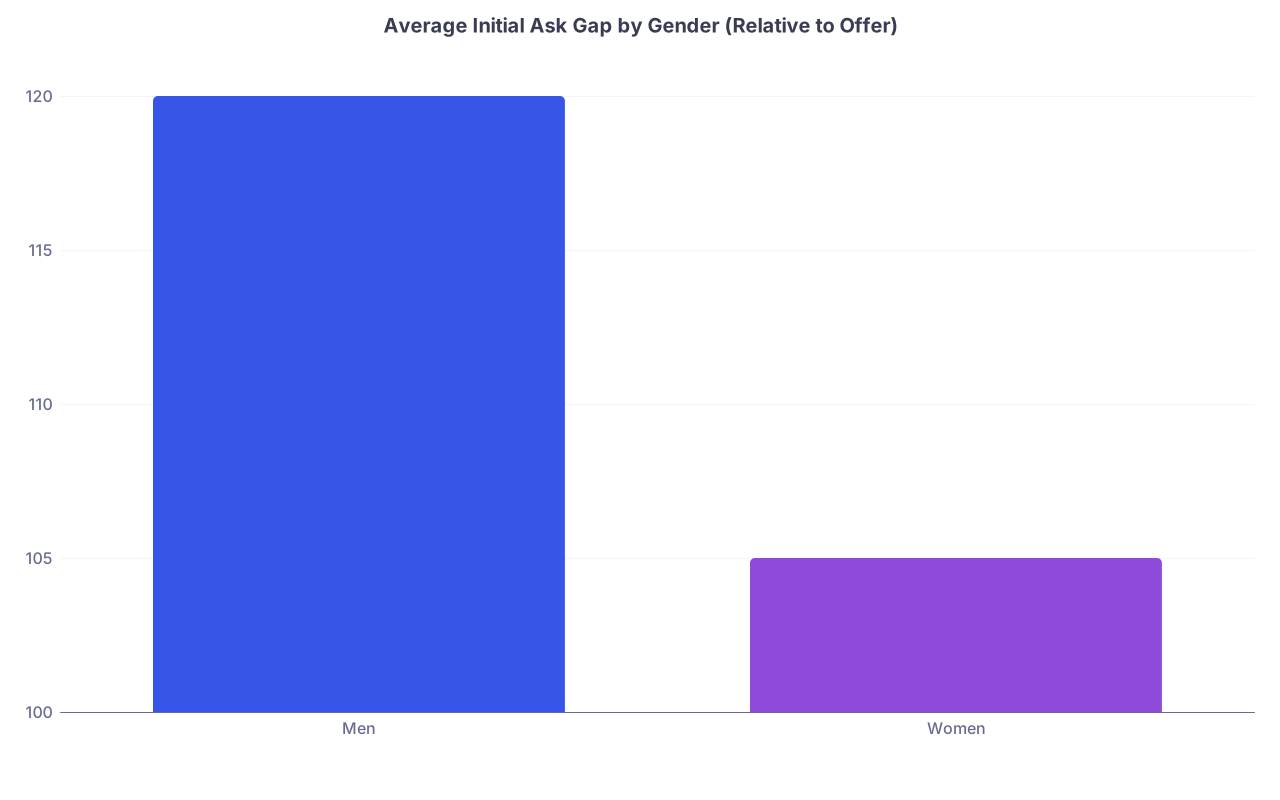
- Men ask for more—often 20–30% more—right out of the gate.
- Men are more likely to negotiate every component: base salary, RVU thresholds, call, protected time, titles, CME, relocation, non-compete clauses.
- Women, especially early-career, are more likely to:
- Accept “standard package”
- Be grateful instead of skeptical
- Ask for “what’s fair” instead of “what’s possible”
And institutions bank on that. They count on your reluctance.
I’ve sat in meetings where leadership literally said, “Offer X; if he pushes, we can go up to Y.” You know what they say about women? “She’ll probably be happy with X. She really wants to be here.”
That last line—“she really wants to be here”—is the tell. The more emotionally invested you seem, the more they assume you’ll accept less.
| Category | Value |
|---|---|
| Men | 120 |
| Women | 105 |
Translation of that chart: when a man is offered 100, he often asks for 120+. When a woman is offered 100, she might ask for 105—or not at all.
Senior women know this because they’ve watched their male colleagues with the same CV walk out with 30–50K more, better call schedules, and earlier promotions, simply because they asked and didn’t apologize for it.
2. You’re Being Evaluated Before You Even Enter the Room
Negotiation doesn’t start when you get the contract. It starts the moment they decide you’re “promising.”
Here’s what actually happens behind the scenes once you’re on their radar:
- The chair, division chief, and admin already have a “number” for you based on:
- Your gender
- Your perceived “gratefulness”
- Your willingness to move cities
- How “flexible” you’ve been during the interview process
- They talk in code:
- “She’d be a great team player” often means “She’ll accept less without drama.”
- “He knows his worth” somehow translates to “We’ll have to sweeten the pot.”
- “She really loves teaching and mentoring” means “We can buy her off with a vague ‘academic’ title instead of money.”
By the time the contract hits your inbox, your “negotiating range” has already been mentally set. Not by some neutral algorithm. By humans with biases.
Senior female physicians wish someone had told them: your behavior during interviews is part of the negotiation. The way you respond when they say, “We’re still working out the exact salary range” is data for them. If you smile and say, “Oh that’s fine, I trust you,” they file that away.
The alternative senior women use now: “I’m excited about this possibility. To make good decisions on my end, I’ll need a clear sense of the salary range and structure. What range are you targeting for this role?”
You don’t wait passively. You probe—calmly, early, and often.
3. “Likeable” Is a Currency—But You Don’t Spend It How You Think
Here’s the part everyone dances around in public talks: women are judged more harshly when they negotiate. That’s real. But the conclusion people draw from that—“So don’t push too hard”—is lazy.
What senior women have learned the hard way is this: you do not buy long-term safety with short-term likeability.
You might buy a few months of people describing you as “easy to work with.” Then you’ll discover:
- You’re making 40K less than the guy two doors down.
- You have two more clinics per week “because you’re so good with patients.”
- You’re the default person for extra committees, wellness projects, and every “can you just help with this one thing?” task that mysteriously doesn’t show up on your evals or your paycheck.
You will still be criticized. Just for different reasons.
The women who make it to full professor, to division chief, to CMO level? They figure out how to hold two truths at the same time:
- You must be perceived as collaborative, not combative.
- You must still ask for what you want in clear, specific, unapologetic language.
The trick is tone and framing, not silence.
Instead of: “I was hoping maybe I could get a little bit more salary if that’s possible?” They say: “Given my fellowship training, the local market data, and the committee leadership you’re asking of me, I’d be comfortable signing at a base of 280K with 0.8 clinical FTE and 0.2 protected time. How close can we get to that?”
Notice the difference. Same woman. Same person. One version signals permission-seeking; the other signals a professional making a business decision.

4. The Numbers Game: They Expect You Not to Know
Senior female physicians eventually figure out one grim reality: men walk in with numbers. Women walk in with feelings.
Guess who gets the better deal.
Behind the scenes, this is how male candidates often show up:
- “My current base is 260K with a 30K bonus. I’d need to see at least 290K base plus RVU upside for a move to be worth it.”
- “At X hospital across town, their junior faculty in this specialty are starting at 275K with 0.1–0.2 protected time. Where does your structure land relative to that?”
- “I’ve been offered 20K in relocation by another system. Can you match or improve that?”
Women often show up like this:
- “I don’t want to be greedy.”
- “I’m just happy to be here.”
- “I don’t know what the normal range is…”
Let me be blunt: senior women wish someone had looked them in the eye during residency and said, “You are running a business with your labor. Find out what your product is worth.”
Use MGMA data. Talk to alumni who actually tell you their numbers. Ask male co-residents what they’re being offered. Don’t just compare to “other women in your class.” That’s how the gap persists.
| Item | How It Quietly Hurts You |
|---|---|
| Call schedule | More nights/weekends for the same pay |
| Protected time | Stalled promotion, no time for academic output |
| Non-clinical roles | Extra work under vague “leadership” labels |
| Non-compete clause | Traps you geographically and lowers your leverage |
| RVU thresholds | Forces unsafe volume to hit “target” |
Senior women now negotiate beyond salary:
- “For this amount of call and this panel size, I’d need 0.2 protected time clearly written into the contract.”
- “I will not sign a contract with a non-compete longer than 12 months or wider than 10–15 miles. Let’s adjust that language.”
- “If you want me leading this QI initiative, I need it recognized as X% FTE and reflected in my compensation or promotion criteria.”
That last part—“write it into the contract”—is the thing they wish you’d tattoo on your arm. If it’s not in writing, it does not exist.
5. The “Grateful Trap” and How It’s Used Against Women
Women are trained from childhood to be grateful for opportunities. Medicine then doubles down on it.
You’ve heard the lines:
- “This is a very competitive position.”
- “We usually don’t open up slots like this.”
- “You’re really lucky; a lot of people wanted this job.”
Senior women will tell you exactly what those lines are: psychological leverage. They are not compliments. They are control mechanisms.
Because a “grateful” physician:
- Doesn’t ask to see the full compensation structure.
- Accepts vague answers around salary bands.
- Takes on “just one more” committee or clinic because “they’ve been so good to me.”
Here’s what the senior women learned the hard way: you can be professionally appreciative and still negotiate like a peer.
Language they use now:
- “I appreciate the offer and I’m excited by the role. I do need to make sure the terms are aligned with my responsibilities and the local market.”
- “I value this opportunity; that’s exactly why I want to get the structure right from the start so we’re both set up for a long-term fit.”
- “I’m glad you see a good match. Let’s talk through compensation, FTE, and call in more detail so I can make an informed decision.”
Notice the consistent theme: appreciation without submission.
| Category | Value |
|---|---|
| Year 1 | 0 |
| Year 3 | 30000 |
| Year 5 | 75000 |
| Year 8 | 130000 |
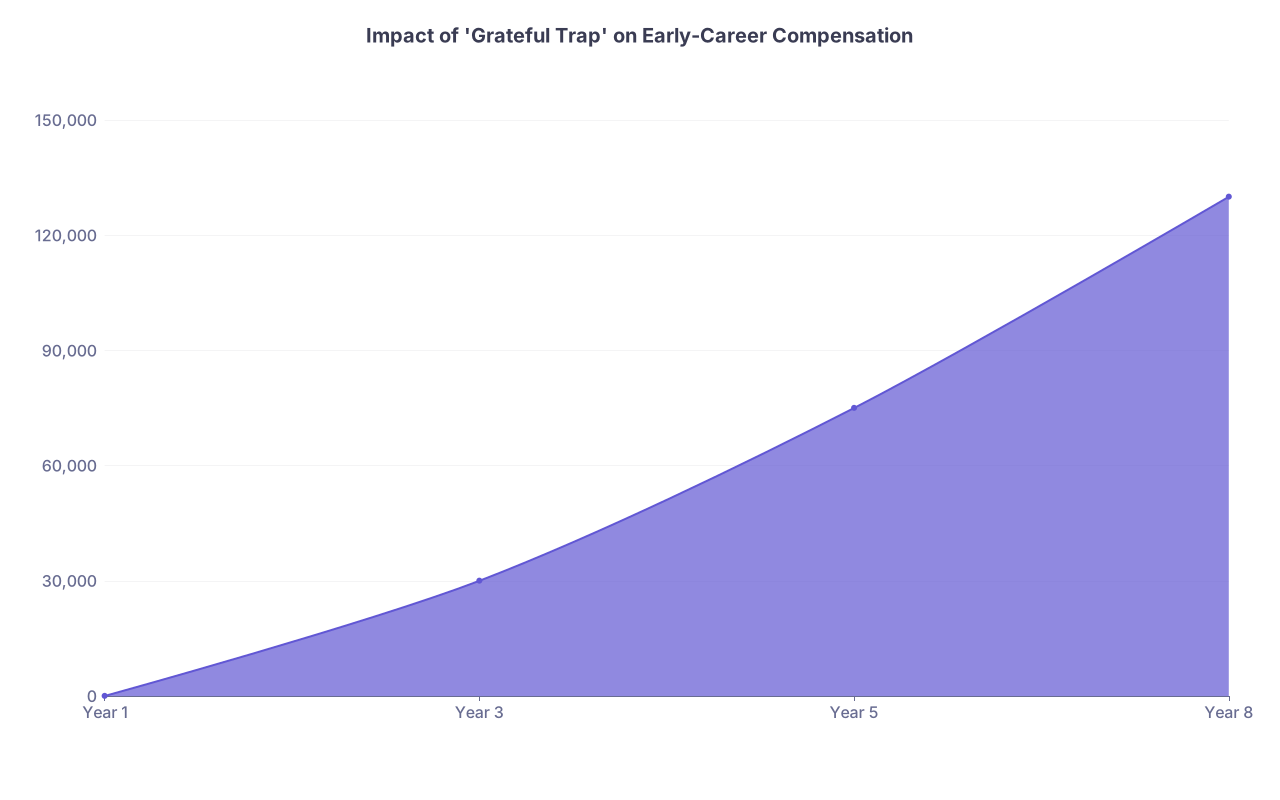
That “area under the curve” effect? It’s real. A 20–30K underpayment in year one grows into six figures of lost income within a few years once raises and bonuses are percentage-based.
6. You Are Not Negotiating Against Them. You’re Negotiating With the Future You.
You’re not just fighting over a number this year. You’re setting the baseline for:
- Future raises (usually a percentage of your base)
- Future promotions (anchored to your initial title/FTE)
- Future “comparisons” to peers (“She started at X, so…”)
- Your ability to say “no” later without fear
Senior women often confess something quietly: “I wish I’d been braver at the beginning. I spent years digging out of that initial compromise.”
What they mean is this: once you start low, your whole narrative in that institution becomes “the cheap, reliable workhorse.” That reputation is incredibly hard to shake.
They wish you understood that early discomfort in negotiation buys you years of sanity and autonomy down the road.
So when you feel that lump in your throat as you say, “I was expecting a base closer to 300K given my training and the call burden,” remember: you are doing that for the 45-year-old you who’s sick of missing her kid’s concerts and being “the flexible one.”
| Period | Event |
|---|---|
| Early Career - First offer signed | Entry salary, FTE, call defined |
| Early Career - Year 1-2 | Reputation as team player or pushover set |
| Mid Career - Year 3-5 | Raises and titles anchored to first deal |
| Mid Career - Year 5-7 | Leadership roles offered, often without pay |
| Late Career - Year 8-10 | Promotion and compensation gap becomes obvious |
| Late Career - Year 10+ | Either leverage to change things or trapped by past deals |
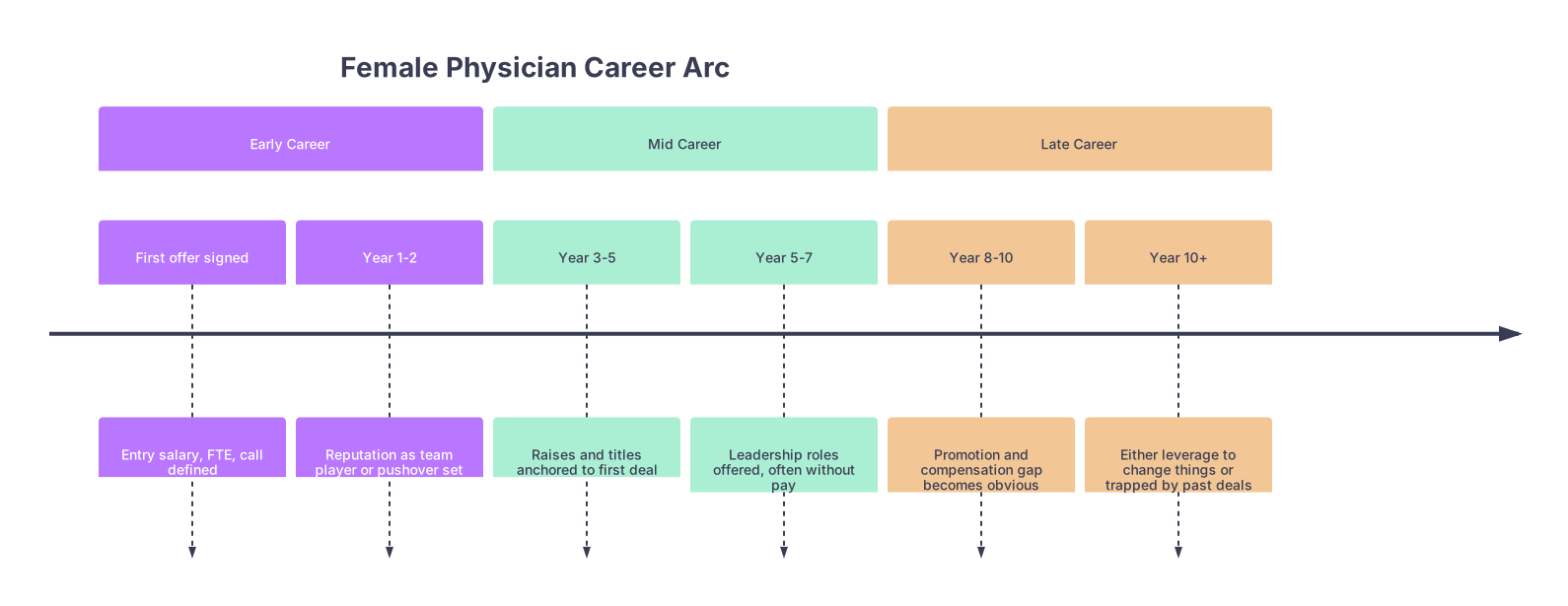
The senior women who look content in their 40s and 50s? They weren’t “lucky.” They tolerated a few tense conversations early, so they didn’t spend decades resentful.
7. You Don’t Need to Be an Expert. You Need a Script and a Spine.
Nobody is born knowing how to negotiate a medical contract. The senior women you admire didn’t either. They patched it together from watching others, getting burned, and asking blunt questions later in their careers.
They wish you knew you don’t need to be perfect. You just need a few core moves.
Here’s how it actually sounds behind closed doors when they’re doing it well:
They ask for time—always. “Thank you for the offer. I’m excited about the opportunity. I’ll need a few days to review the details and think through the numbers. When would you like to hear back by?”
They put the ball back in the institution’s court. “Given my [training/experience/market data], what flexibility do you have on base salary and protected time?”
They make a clear counter instead of vague wishes. “If we can get the base to 285K with 0.2 protected time and clarify that call is 1:6 max, I’d feel very good about signing.”
They shut up after asking. This one is huge. They don’t over-explain, apologize, or keep talking to fill the silence. They let the other side respond.
You want one brutally honest piece of advice senior women give off the record? Practice your ask out loud. Not once. Ten, twenty times. In the car. In front of a mirror. With a friend. So when the moment comes, the words are muscle memory, not panic improvisation.

8. Ethics, Guilt, and the Lie That “Good Doctors Don’t Care About Money”
Let’s talk about the moral guilt trip, because this is where women get hit harder.
You will hear:
- “We’re all sacrificing here.”
- “We’re a mission-driven institution.”
- “Our margins are really tight this year.”
Funny how those lines show up right before you’re supposed to sign.
Senior women want you to understand: caring about fair pay is not a moral failure. Underpaying physicians while building new wings and paying executives seven figures? That’s a moral failure.
Here’s the ethical truth they land on:
- When you accept significantly less than market value, you normalize underpayment for every woman who comes after you.
- When you allow “we’re a family here” to substitute for contract clarity, you invite exploitation disguised as collegiality.
- When you never question inequities, you collude—silently—in their continuation.
Saying, “I need compensation that reflects my training, workload, and the local market” is not greed. It’s professional responsibility.
And this is exactly what the senior women wish you internalized: you are not supposed to subsidize the system with your silence and your burnout.
FAQs
1. Won’t they think I’m difficult if I negotiate too much?
They might think you’re “assertive.” Good. Difficult is code for “has boundaries I have to respect.” The goal isn’t to be loved. It’s to be respected and fairly compensated. A reasonable, data-based negotiation will not cost you a good job. If a place punishes you for asking basic questions, that’s a giant red flag—not a place you want to build a career.
2. What if they say “This offer is final—no room to negotiate”?
Sometimes that’s true. Most of the time, it’s partially true and partially a test. You respond with: “I understand if the base is fixed. Are there levers on protected time, sign-on, relocation, CME, or call structure?” If everything is “completely fixed,” ask yourself why they’re so rigid in a relationship they claim to want long term.
3. How do I find out what’s actually fair for my specialty and region?
You do not guess. You ask alumni, co-residents, and especially the men what they’re being offered. You look at MGMA or other compensation data (even ranges are helpful). You talk to recruiters. Then you pick a number that’s in the upper-middle of that range for your training level—not the bottom. And you build your ask from there.
Key points, since you’ve read this far:
- They do not treat everyone the same; men normalize asking, women are trained to be grateful. Break that pattern.
- You’re not negotiating a single year’s salary—you’re setting your entire trajectory. Future you is counting on present you to be a little uncomfortable now.
- Asking for clear, fair terms is not greed; it’s how you protect yourself and the women coming up behind you.