
It’s January. You just saw two pink lines. You’re on q4 call, your next rotation is trauma nights, and your chief just texted the new schedule for July. You keep staring at your phone thinking one thing:
“When do I tell them?”
You’re not alone. I’ve watched students whisper about this between OR cases, residents cry in call rooms, fellows Google FMLA during sign-out. The decision to disclose pregnancy in medicine is never just about “sharing happy news.” It’s about grades, evaluations, program culture, visas, board eligibility, childcare, reputations, and frankly, survival.
So let’s stop pretending it’s simple and walk it chronologically: med school → residency → fellowship. At each phase, I’ll give you a practical, time-based guide:
- What to think about the moment you find out
- What you should do by each trimester
- Who to tell first (and who can wait)
- How to time it around rotations, contracts, and exams
No fluff. Just the timeline.
Big Picture Timeline: How Pregnancy Intersects with Training
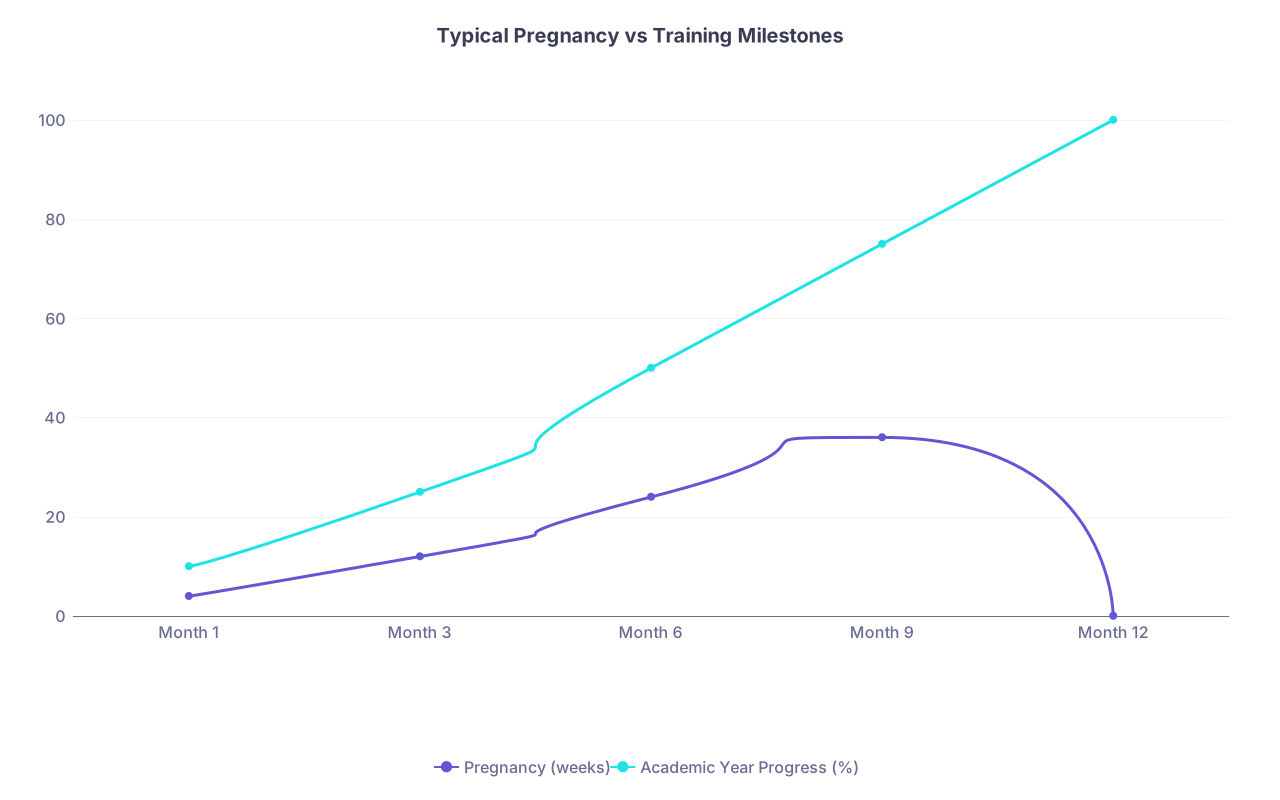
| Category | Pregnancy (weeks) | Academic Year Progress (%) |
|---|---|---|
| Month 1 | 4 | 10 |
| Month 3 | 12 | 25 |
| Month 6 | 24 | 50 |
| Month 9 | 36 | 75 |
| Month 12 | 0 | 100 |
In medicine, you are not just pregnant. You’re pregnant inside a rigid calendar:
- Academic year: July–June
- Rotation blocks: 2–12 weeks
- Board exams: often fixed windows
- Contract deadlines: late fall/winter of the year before
So the core question isn’t just “When should I disclose?”
It’s: “At this point in my year and my pregnancy, what’s my smartest move?”
Let’s start from the top.
Medical School: From “Two Pink Lines” to Match List
You’re a med student. Your leverage is limited, but your risk of retaliation is a bit lower than in residency. Still, grades, letters, and clerkship comments are very real.
Week 0–4: Just Found Out
At this point you should tell no one at your school or hospital unless you must for safety.
Focus on:
- Confirming the pregnancy and due date
- Reviewing your upcoming schedule: Step exam, core clerkships, away rotations, sub-Is, interview season
- Quietly reading your school’s policies on:
- Leaves of absence
- Clerkship requirements
- Attendance/absence policies
If you’re on a heavy exposure rotation (interventional radiology, chemo, certain infectious disease settings), talk to Student Health or Occupational Health without naming supervisors yet. You can say, “I’m newly pregnant and want to confirm what I should avoid.”
Weeks 8–12: End of First Trimester
By this point, nausea and fatigue are real. Evaluations start to notice “not very enthusiastic,” “leaves early,” “seems distracted.” At this point you should decide:
- Do I need accommodations for:
- More frequent bathroom breaks
- Food/fluid access
- Avoiding overnight call or heavy lifting (if your OB recommends it)
Who to tell first:
Student Affairs / Dean of Students
- They’re your buffer.
- They can document pregnancy, outline leave options, and quietly shuffle rotations when possible.
Rotation director (not necessarily every attending)
- Timing: ideally at the start of a new clerkship block, not mid-rotation, unless symptoms are severe.
- Script: “I wanted to let you know that I’m approximately X weeks pregnant. I’m committed to the rotation and would like to discuss any adjustments that are typical for pregnant students—especially around overnight call and certain exposures.”
Do you have to tell classmates? No. Tell the ones you trust. Rumors spread fast. You decide whether that helps or hurts.
Second Trimester (Weeks 13–27): Showing + Scheduling
At this point you should:
- Lock in key dates:
- Due date vs. exam windows
- Away rotations or sub-Is (if you’re M3 going into M4)
If your due date overlaps:
Core clerkships:
- Talk to Student Affairs at least 2–3 months ahead.
- Ask: “Can we front-load lighter rotations or shift this core to after delivery?”
Step 1 / Step 2 CK:
- If your test date is late third trimester or early postpartum, consider moving it. I’ve watched students try to sit Step 2 four weeks postpartum and crash.
- Aim: 2nd trimester or 3–6 months postpartum with real childcare support.
Disclosing more broadly:
- By mid–second trimester, it’s usually obvious. If you’re on surgery or EM and still haven’t told people, it starts to look odd.
- At the start of each new rotation: tell the clerkship coordinator and site director. Attendings can be told selectively.
Third Trimester (Weeks 28–Delivery): Concrete Planning
At this point you should have:
- A written plan with Student Affairs:
- Last day on rotations before delivery
- When you’re officially on leave
- When and how you’ll make up missed time
- How your MSPE/Dean’s Letter will describe any extension or gap
Tell:
- All relevant rotation leads about your likely last working day.
- If your due date is close to interview season (late fall), talk with your faculty advisor:
- Can some interviews be virtual?
- Is it smarter to apply this cycle or push a year?
Do not wait until 36 weeks to tell your school you might need 6 weeks off. That’s how you end up redoing clerkships you could have rearranged earlier.
Residency: Where Disclosure Timing Feels High-Stakes
Now it’s real. Paycheck, health insurance, evaluation power, board-eligibility requirements. This is where people panic the most.
Before Pregnancy / While Trying
If you’re even thinking about pregnancy in the next year, at this point you should quietly:
- Read:
- Your program’s parental leave policy
- Your institution’s HR/family leave policy
- Your specialty board’s time-in-training requirements
| Specialty | Allowed Time Off per Year | Notes |
|---|---|---|
| Internal Medicine | ~1 month | Includes vacation + sick |
| General Surgery | ~4–6 weeks | Above that often adds training |
| OB/GYN | ~6 weeks | Program-dependent |
| Anesthesiology | ~5–6 weeks | Check ABA policy |
Why now? Because sometimes you can plan to deliver in a “better” block of the year (electives instead of ICUs), and sometimes you absolutely cannot. But if you never look, you’re flying blind.
Positive Test: Weeks 4–8
You just found out. At this point you should:
Tell no one at work yet, unless:
- You’re in a genuinely unsafe environment for early pregnancy (heavy radiation, chemo, etc.). In that case, talk to Employee Health or GME office, not your attending first.
Double-check:
- Due date relative to:
- ICU months
- Off-service rotators (e.g., surgical intern on OB)
- Board exam timing
- Year-end “must complete by” dates
- Due date relative to:
Write down three rough “windows”:
- When you’ll probably be visibly pregnant
- When you’d like to work your heaviest rotations
- When you’d like to be out on leave
You’re not promising anything. You’re just getting clarity for yourself.
Weeks 10–14: First Trimester Ending
This is the decision window.
At this point you should tell your program if:
- You’re in a small program where schedules are tight (e.g., 3 residents per class)
- Your due date falls in a critical rotation that needs reassigning
- You’re vomiting between cases and your chief is starting to ask questions
Who to tell first:
- Program Director (PD)
- Optionally Associate PD or Chief Resident (depending on culture)
How soon? My honest recommendation:
- Most residents should disclose to PD somewhere between 10–16 weeks.
- Earlier (8–10 weeks) if you’re in a highly scheduled surgical or procedural residency where future rotations need reshuffling.
- Later (closer to 16 weeks) if you’re uncertain about continuing the pregnancy and don’t need immediate accommodations.
Script I’ve seen work well:
“I wanted to let you know that I’m pregnant, about X weeks, with a due date around [date]. I’m very committed to completing my training on time if possible and doing this in a way that works for the team. I’d like to talk through how this affects rotations and leave given our board requirements.”
You are not asking for permission to be pregnant. You’re collaborating on logistics.
Second Trimester: 14–28 Weeks – The Scheduling Phase
By now your PD and chiefs know. At this point you should:
Sit down with whoever makes the schedule (often chief) and map:
Which blocks you’ll be:
- Pre-leave
- On leave
- Postpartum and maybe sleep-deprived
How your:
- Vacation time
- Sick days
- Any institutional parental leave
will be combined.

| Step | Description |
|---|---|
| Step 1 | Positive test |
| Step 2 | Check board rules |
| Step 3 | Estimate due date vs rotations |
| Step 4 | Tell PD at 10-16 weeks |
| Step 5 | Tell PD by 16-20 weeks |
| Step 6 | Plan leave and coverage |
| Step 7 | Confirm in writing with GME |
| Step 8 | Need schedule changes? |
Push for specifics in writing:
- Start/stop dates of leave
- Whether training needs extension
- How this affects eligibility to sit for boards
Ask GME/HR:
- “How many weeks are paid, how many unpaid?”
- “Will my benefits continue during unpaid time?”
You should also decide when to tell:
- Co-residents: usually once PD/chiefs know and a rough plan exists.
- Attendings: some you tell directly, others you let come to their own conclusion when they see your belly.
Third Trimester: 28 Weeks to Delivery
At this point you should:
Nail down:
- Last working day (with some wiggle room if you deliver early)
- Who covers your clinics, OR cases, longitudinal responsibilities
- How your call will be redistributed
Confirm postpartum:
- Official return date
- Pumping accommodations:
- Where
- When
- Who covers you during those 15–20 minutes
- Any restrictions your OB anticipates (e.g., no 28-hour calls immediately on return)
Do not rely on “We’ll figure it out when you’re back.” That is code for “You will suffer quietly and we’ll shrug.”
Fellowship: High Stakes, Smaller Teams, More Politics
Fellowship is tricky. You’re more autonomous, but each missing body hits harder, especially in small programs (think 1–3 fellows per year).
There are two big disclosure questions in fellowship:
- During application/interview season
- After you’ve matched / started
During Fellowship Interviews: Tell or Don’t Tell?
If you’re already pregnant during fellowship interviews, the ethics get noisy.
Legally:
- Programs are not supposed to ask.
- You’re not obligated to disclose.
Practically:
- If you’ll be visibly pregnant on day one of fellowship and need leave within the first year, hiding it at interviews may blow up later in trust and logistics.
My stance:
If due date is before fellowship starts:
- You don’t need to say anything during interviews. Focus on childcare and support at home.
If due date is within the first 6–9 months of fellowship:
- I’d strongly consider mentioning it after you have an offer or post-Match, not during initial interviews.
- Exception: micro-specialty fellowships with only one fellow where early leave would really strain coverage—then selective, honest disclosure during later stages can preserve relationships.
After Matching, Before Start Date
If you match and you’re already pregnant (or become pregnant before day 1), at this point you should:
- Tell your future PD somewhere between 12–20 weeks gestation, or as soon as:
- Travel plans, visas, or licensing might be affected
- They’re finalizing the first-year rotation schedule
Email is fine to request a meeting, but do the main disclosure by video/phone or in person.
Goal of that meeting:
- Align leave plans with:
- ABMS/board rules for that specialty
- Institutional policies
- Visa rules if you’re an international grad
You want to avoid Day 1 surprises for everyone.
Pregnant During Fellowship (After Starting)
Timeline is basically residency, but with more attention to:
- Procedural competency requirements
- Case minimums and log numbers
- Job hunting if this overlaps with your final year
At this point you should:
First trimester (0–12 weeks):
- Decide if you’ll be job hunting while pregnant or postpartum.
- Read:
- Fellowship manual
- Board certification case / time requirements
Weeks 10–16:
- Tell PD, earlier if:
- Your fellowship is heavily procedural (cardiology, GI, interventional…) and you’re concerned about radiation or call
- Your absence would leave a solo fellow covering everything
Frame the discussion around maintaining your competence and completing training on time, not around apologizing for inconveniencing people.
Second trimester:
- Map your heaviest months (e.g., cath lab, ICU, transplant call) earlier or postpartum, leaving your actual due date for lighter or research blocks where possible.
Third trimester:
- Lock down maternity leave, clarify:
- Job start date if you’ve already signed an attending contract
- Whether you need to delay boards or extend fellowship
- How references/letters will describe any extension (short and factual is fine)
Quick “When to Disclose” Snapshot
| Stage | To School/Program Director | To Peers/Colleagues |
|---|---|---|
| Med School | 10–14 weeks or before major blocks | When showing or when helpful |
| Residency | 10–16 weeks (earlier if schedule rigid) | After PD/chiefs informed |
| Fellowship | 12–20 weeks (or post-offer if still interviewing) | Once leave plan is outlined |
Not rules. But a solid starting framework.
How to Protect Yourself Ethically Without Being Naive
A few blunt points:
- Do not rely on verbal promises. Get leave, schedule changes, and training extensions in email or official documentation.
- Do not let anyone guilt you into skipping prenatal care, pumping, or medically-indicated restrictions “for the team.” That’s not teamwork; that’s exploitation.
- Do understand that colleagues will feel stress about coverage. They’re allowed to have feelings. They’re not allowed to retaliate or harass you.
- Do remember: you’re not seeking special treatment. You’re seeking standard, lawful support for a very normal human event.
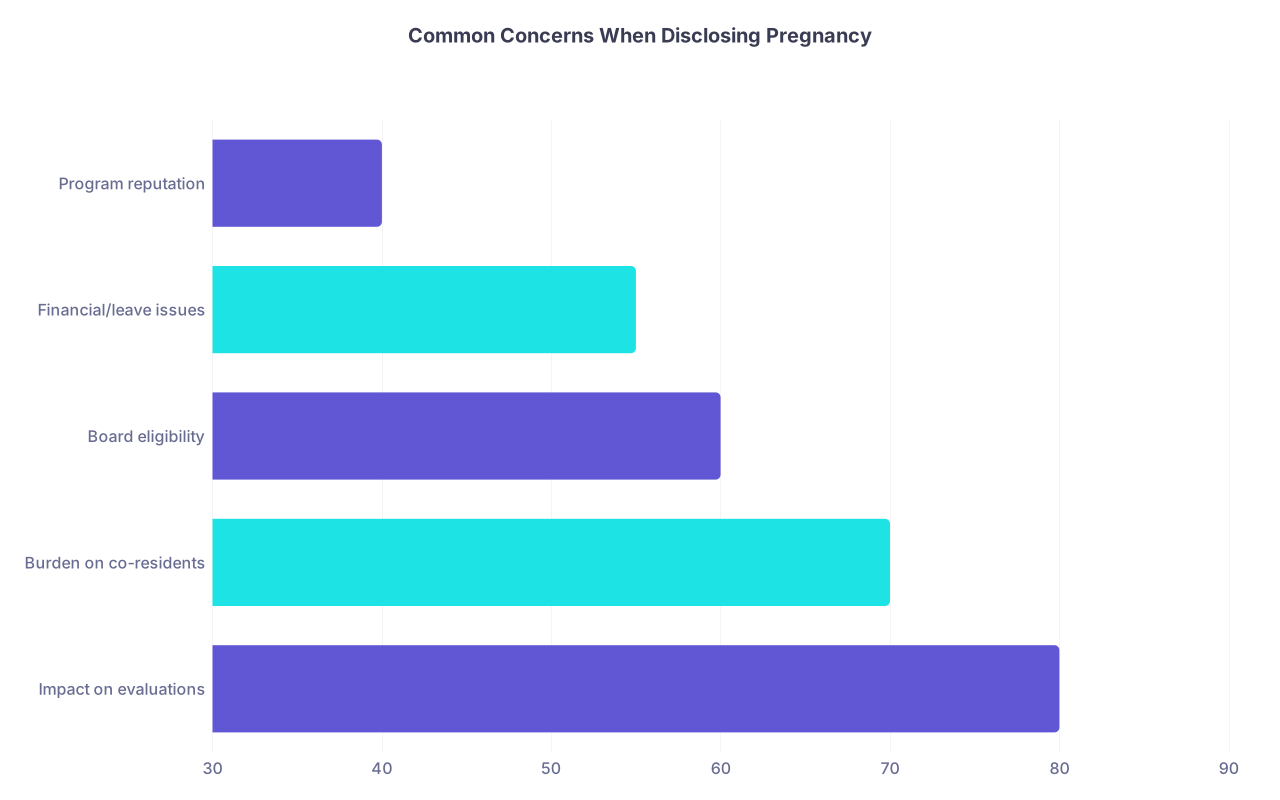
| Category | Value |
|---|---|
| Impact on evaluations | 80 |
| Burden on co-residents | 70 |
| Board eligibility | 60 |
| Financial/leave issues | 55 |
| Program reputation | 40 |
If your gut says your PD will punish you for being pregnant, document everything and loop in:
- GME office
- HR
- Sometimes: your school’s ombudsperson or a trusted faculty mentor not in your evaluation chain
You’re allowed to protect yourself.
FAQs
1. Is it ever okay to not disclose pregnancy until the third trimester?
Rarely, and usually it backfires. The only scenarios where waiting that long might be reasonable:
- You’re in med school on a non-clinical or research block with no schedule impact, and you’ll be on leave starting right at delivery.
- You had prior pregnancy losses and chose to delay, but then time slipped and now you’re 24–26 weeks.
In residency and fellowship, waiting beyond ~20 weeks usually creates more resentment because schedules and coverage can’t be adjusted thoughtfully. Programs do better when they have time to plan.
2. Should I disclose pregnancy during residency or fellowship interviews?
Most of the time: no, you are not obligated to, and it can invite illegal or biased behavior, even from “nice” people.
Possible exception:
- You’re applying to a tiny fellowship (1 fellow per year) and are already far along, with a due date early in the fellowship year. In that niche context, disclosing late in the interview process—once they’ve shown strong interest—may preserve trust. But that’s strategy, not obligation.
If you’re not yet pregnant but hope to be during training, do not bring it up in interviews. That’s a thought crime, not a disclosure requirement.
3. What if my PD reacts badly when I disclose?
Document. Immediately after the conversation, email a short recap:
“Thank you for meeting with me today about my pregnancy and anticipated due date of [date]. As we discussed, I’ll continue on [rotations] and we’ll explore options for leave and coverage consistent with [institution] policy and [board] requirements.”
If they:
- Threaten your spot
- Suggest you’re “letting down the team” for needing leave
- Push you to delay prenatal care, pumping, or follow-up
Loop in:
- GME office
- HR
- A trusted faculty member outside your direct hierarchy
You’re in a profession that talks nonstop about “burnout” and “wellness.” They don’t get to abandon those values the second you’re pregnant.
Key takeaways:
- Time disclosure around both gestational age and training calendar—10–16 weeks is the usual sweet spot for telling programs.
- Tell the right people in the right order: central support (Student Affairs/GME/PD) before random attendings.
- Get every agreement about leave and schedule in writing, and protect both your health and your board eligibility with the same level of seriousness.