
Grit is wildly overrated as a cure for burnout. In medicine, we’ve turned “grit” into a moral badge. That’s not resilience. That’s self-harm with good PR.
Let me be blunt: the psychology data does not support the fantasy that if you just dig deeper, care more, and push harder, you’ll outrun burnout. In fact, in the wrong environment, higher grit can increase your risk of burning out and staying in toxic situations longer than is rational.
You’ve been sold a half-truth. Let’s dismantle it.
The Cult of Grit in Medicine
Somewhere between your white coat ceremony and your third overnight admitting 18 patients, grit became the answer to everything.
You have:
- No time to eat during a 28‑hour call? Be more resilient.
- EMR clicks eating your soul? Practice gratitude.
- Six new quality metrics this month? “Lean in.”
I’ve sat in wellness sessions where attendings told residents, “You’re all here because you’re gritty. That’s what will get you through.” Yeah. That’s also what keeps people silently drowning instead of calling for a life raft.
The core problem: we’ve taken a concept that was moderately useful in education research and inflated it into some magical burnout vaccine. The actual data is less glamorous and more inconvenient.
Grit is not the opposite of burnout. And it’s not armor against bad systems.
What Grit Actually Is (and Is Not)
Angela Duckworth popularized “grit” as passion + perseverance for long‑term goals. It’s measured by the Grit Scale, which asks how consistent you are with goals and how likely you are to keep going in the face of setbacks.
Sounds good on paper. But psychology research has dissected it pretty hard over the last decade.
Here’s what tends to show up across large studies:
- Grit overlaps heavily with basic conscientiousness (a standard personality trait). In some meta‑analyses, once you control for conscientiousness, grit barely adds anything new.
- Grit explains a tiny fraction of performance differences. A 2017 meta‑analysis in Journal of Personality and Social Psychology found grit accounted for around 3–4% of variance in performance outcomes. Not nothing. But not destiny.
- The “perseverance” part of grit matters more than “consistency of interests.” Translation: sticking with hard tasks has some benefit; never changing your mind is less useful.
Where this becomes dangerous is when medicine treats grit as a moral quality: good residents are gritty, bad residents “lack resilience.” That framing is lazy—and scientifically weak.
The Hidden Dark Side of Grit
The grittier you are, the more likely you’ll:
- Stay too long in harmful contexts
- Ignore mounting warning signs
- Personalize systemic failure as your own weakness
There’s a term for this: maladaptive persistence. Psychology doesn’t romanticize it. We see it in gamblers chasing losses, entrepreneurs sinking years into clearly doomed ventures, and yes, clinicians staying in chronically abusive training environments because “I’m not a quitter.”
That’s not strength. That’s misapplied effort.
What the Burnout Data Actually Shows
Now let’s pull in the burnout side. The old narrative says: weak individuals burn out; resilient ones adapt. The data says otherwise.
Burnout—emotional exhaustion, depersonalization, and reduced sense of accomplishment—is strongly tied to work environment, not individual grit levels.
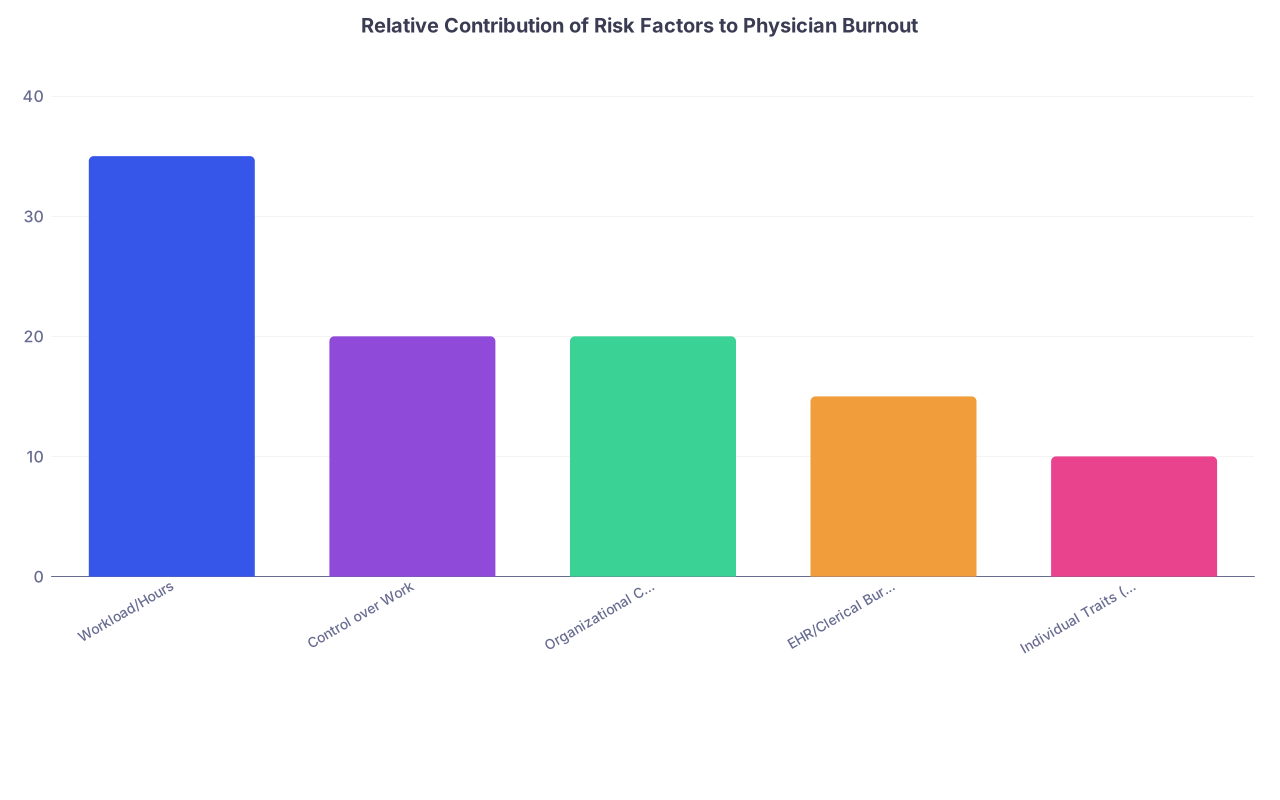
Some of the better‑designed studies on physicians and trainees show patterns like this:
| Category | Value |
|---|---|
| Workload/Hours | 35 |
| Control over Work | 20 |
| Organizational Culture | 20 |
| EHR/Clerical Burden | 15 |
| Individual Traits (incl. grit) | 10 |
No, those aren’t exact numbers from one magical paper; they reflect what multiple systematic reviews converge on: the big levers are structural. Hours. Control. Culture. Bureaucratic nonsense. Individual traits—including grit—play a role, but they’re not the main show.
Major reviews in The Lancet, JAMA, and the National Academy of Medicine all point the same direction: system-level issues drive burnout far more than individual “weakness.”
When institutions respond to burnout by teaching more “resilience workshops” while leaving staffing, documentation burden, and toxic leadership untouched, they’re not following the data. They’re doing PR.
High Grit, High Burnout? Yes, That Happens.
Here’s where it gets uncomfortable for the grit-is-king crowd.
Studies of residents and physicians have found:
- High conscientiousness is positively associated with burnout in excessively demanding environments. The more you care and push, the more depleted you become when the work is unrelenting and misaligned with your values.
- Perfectionistic strivings and overcommitment correlate with emotional exhaustion, even in people who are “highly resilient” by conventional scales.
- People with strong achievement orientation (which strongly overlaps with grit) are more prone to ignoring early warning signs: sleep disruption, cynicism, emotional numbing.
In other words: the traits that help you get into medicine can backfire spectacularly inside a broken system. You don’t become immune to burnout by caring more. You become a better fuel source.
The “Grit Trap”: When Persistence Becomes Self-Destruction
I’ve watched this play out:
PGY‑2, medicine, 80–90 hour weeks in reality, though the timesheet fiction says 70. Already waking with dread. Charting until midnight. Chief tells them, “We’ve all been there. You just have to grind through; it gets better as an attending.”
They believe this. Because they fought like hell to get here. They’re gritty.
So they:
- Stop exercising because “I’ll get back to it after this rotation.”
- Support co-residents more than they support themselves.
- Take on extra committee work because they “don’t want to let the program down.”
Six months later, they’re not just tired. They’re detached. Numb. Saying things about patients they don’t recognize as their own voice.
That’s not because they lacked grit. It’s because grit trapped them in a sunk-cost loop. The more they had already sacrificed, the harder it became to admit: “This setup is not survivable long-term without serious changes.”
Psychology has language for this:
- Sunk cost fallacy: “I’ve already put so much in, I can’t step back now.”
- Escalation of commitment: doubling down when evidence says pull back.
- Identity fusion with role: “If I can’t handle this, I’m not the kind of doctor I thought I was.”
Grit, misdirected, amplifies all three.
What Actually Buffers Against Burnout (Spoiler: It’s Not Just Toughing It Out)
Let’s stop pretending this is about willpower. Here’s what shows consistent protective effects in the literature.
1. Control and Autonomy
Being able to say no, adjust your schedule, and shape your work matters more than your internal “toughness” score.
| Factor | Relative Impact |
|---|---|
| Schedule control | High |
| Reasonable workload | High |
| Supportive leadership | High |
| Peer support | Moderate–High |
| Grit / resilience | Low–Moderate |
Workers with higher perceived control over their time and tasks have dramatically lower burnout, even with the same raw workload. This is Job Demands–Resources theory 101: high demands can be sustainable if resources (support, control, recovery time) are adequate.
In medicine, we routinely spike demands while stripping resources.
2. Values Alignment (Moral Injury vs “Weakness”)
A lot of what’s labeled “burnout” in medicine is actually moral injury. You know what good care looks like. The system blocks you from providing it. That chronic dissonance is corrosive.
The psychologist Christina Maslach, who helped define burnout, has repeatedly emphasized the mismatch between person and job—especially value conflicts—as central. Not your lack of grit.
High-grit clinicians are often more vulnerable to moral injury because they care deeply and refuse to emotionally check out. Until they have to.
3. Real Recovery, Not “Wellness Theater”
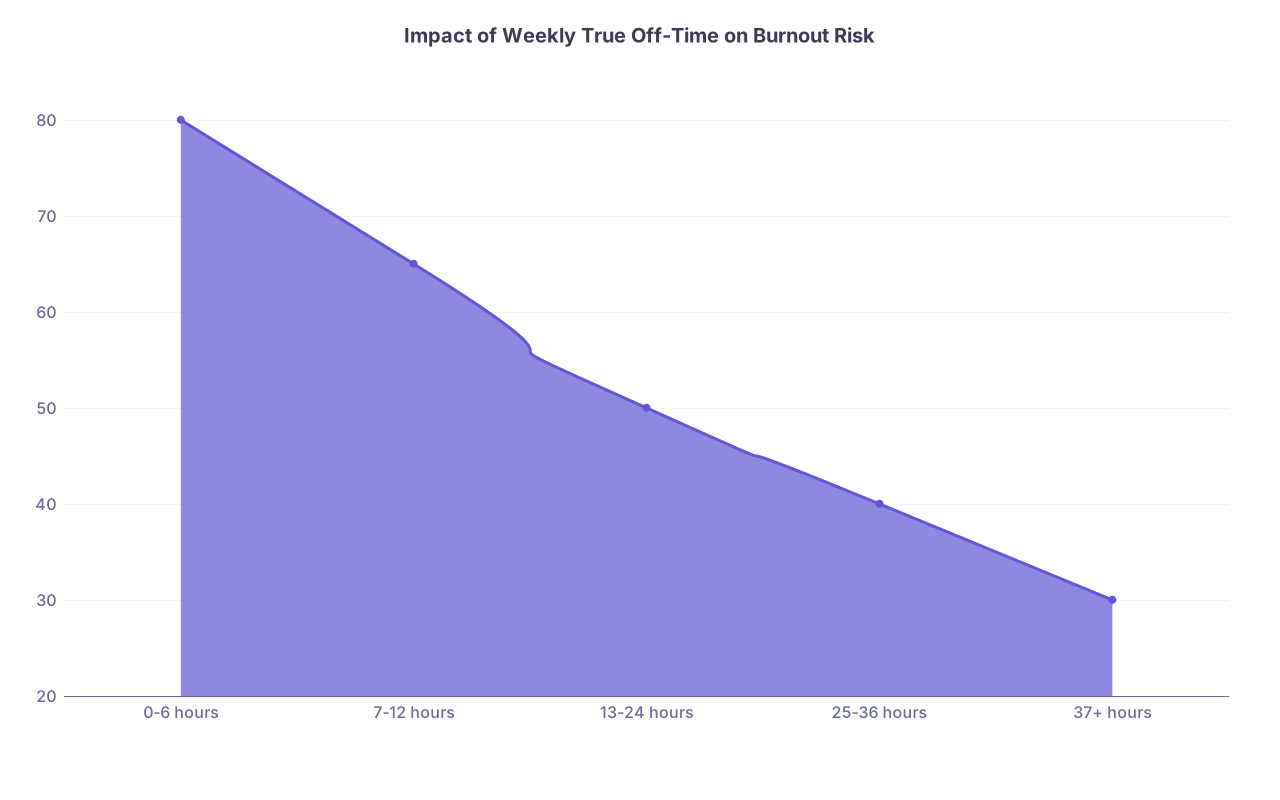
You can’t out-meditate a 1:24 call schedule forever. There’s strong evidence that recovery time—actual psychological detachment from work, adequate sleep, time for non-medical identity—is a major predictor of long-term sustainability.
| Category | Value |
|---|---|
| 0-6 hours | 80 |
| 7-12 hours | 65 |
| 13-24 hours | 50 |
| 25-36 hours | 40 |
| 37+ hours | 30 |
Notice what’s not on that chart: “Attended mandated resilience seminar.”
Speaking of which…
The Resilience Industry vs. Reality
Hospitals hire consultants to run mindfulness workshops, then leave staffing ratios unchanged. That’s not medicine. That’s optics.
Evidence-based takes:
- Individual-level interventions (mindfulness, CBT skills, peer support groups) can modestly reduce burnout symptoms. Useful? Yes. Sufficient? No.
- Organization-level interventions (adjusting schedules, reducing non-physician work, improving leadership) typically show larger and more durable effect sizes.
I’ve seen programs force residents to attend “wellness half-days” that end up being extra meetings or “team-building” while their notes pile up. That’s not wellness. That’s unpaid overtime wrapped in soft language.

| Step | Description |
|---|---|
| Step 1 | High Burnout Scores |
| Step 2 | Offer Mindfulness App |
| Step 3 | Wellness Lecture Series |
| Step 4 | Redesign Workflows |
| Step 5 | No Real Change |
| Step 6 | Reduced Burnout |
| Step 7 | Leadership Response |
The courage move is E: redesign work. Grit does not substitute for that.
How to Use Grit Without Letting It Use You
So do you throw grit out completely? No. You stop worshipping it and start putting guardrails around it.
Think of grit as a tool, not an identity. Sometimes you need it. Sometimes you need to drop it.
Ask the Right Question: “Is This Worth Persisting At?”
High achievers are trained to ask, “Can I push through this?” and almost always answer yes. Wrong question.
The better question, backed by decision science, is: “Given the costs and likely outcomes, is this wise to push through?”
That applies to:
- A toxic rotation where feedback is demeaning, not educational
- A research project with endless scope creep and no realistic endpoint
- A committee role that exists mostly to produce reports no one reads
Grit tells you, “Don’t quit.” Wisdom sometimes says, “Walk away while you still have something left.”
Set Hard Lines Before You’re Exhausted
When you’re already cooked, you’ll rationalize anything. Decide in advance what you won’t tolerate.
That might look like:
- “If I’m consistently not sleeping more than 5 hours for >2 weeks, I re-evaluate and ask for schedule changes.”
- “If I start dreading every single shift and feeling emotionally numb, I talk to someone outside my program about options.”
This isn’t theoretical. I’ve watched the few residents who survive brutal environments with their sanity intact do exactly this—quiet internal red lines. And they keep them.

| Step | Description |
|---|---|
| Step 1 | Notice Exhaustion |
| Step 2 | Adjust Habits |
| Step 3 | Change Schedule or Tasks |
| Step 4 | Escalate, Seek Support, Consider Exit |
| Step 5 | Pattern > 2 weeks? |
| Step 6 | Within My Control? |
Grit would tell you to stay at A indefinitely. That’s the trap.
Diversify Your Identity
People whose entire identity is “I’m a doctor and I can handle anything” break harder when they finally hit something they can’t.
The burnout literature is pretty clear: people with multiple sources of meaning—family, hobbies, community, faith, creative work—are more protected. Not because they’re grittier. Because their self-worth isn’t fully held hostage by their job.
Grit in training + zero life outside medicine = brittle foundation.
When It Is About You (And When It’s Not)
Let me draw one critical line, because the pendulum can swing too far.
Sometimes your patterns do matter: if you chronically overcommit, never say no, carry everyone else’s workload, or tie your moral worth to being endlessly available, that’s not just “the system.” That’s your part of the dance.
But those patterns usually formed in response to systems that rewarded self-erasure. Grading schemes, honors, letters, “top performer” labels—they all condition you to ignore your limits.
So yes:
- Learn to set boundaries.
- Learn to say, “No, that’s not sustainable.”
- Learn to recognize when you’re forcing yourself forward on fumes.
Just don’t fall for the lie that your failure to be endlessly gritty is the problem. The research does not support that story.
Sometimes the bravest and healthiest move is what over-gritty people fear most: stop. Step back. Change course.

The Ethics of Pushing Grit in a Broken System
We’re supposedly in the “medical ethics” lane here, so let’s stop pretending this is neutral.
When institutions preach grit and resilience while refusing to fix known structural drivers of burnout, that’s not just bad psychology. It’s ethically suspect.
It shifts responsibility downward:
- From unsafe staffing → to “coping skills”
- From abusive behavior → to “thick skin”
- From moral injury → to “mindset issues”
You don’t need a PhD in ethics to see the problem.
In any other context, telling harmed people that the solution is to tolerate more harm would be obvious victim-blaming. Medicine wraps it in inspirational quotes and wellness pamphlets.
You can absolutely work on your own patterns. You should. But don’t let anyone convince you that a lack of grit is why a 1:40 ratio of nurse to psych patients is untenable, or why a clinic schedule with 20 complex visits in a day leaves you shattered.
That’s not about individual resilience. That’s about design.

Use the Data, Not the Myth
Let me land this cleanly.
Grit is not a universal good. It’s a tool. Helpful for long-term mastery, dangerous when it keeps you in environments or roles that are fundamentally misaligned or exploitative.
Burnout is primarily a systems problem, not a personal grit deficit. Workload, control, culture, and moral injury are the big predictors. The psychology and occupational health data align on this.
Real professionalism includes knowing when not to persist. Ethically and psychologically, sometimes the correct move is to set a hard boundary, reduce your effort, or leave altogether—even if your training has conditioned you to see that as “quitting.”
If you want a phrase to replace the cult of grit, use this instead: wise persistence. Persist where the goal is worthy, the environment is at least somewhat fixable, and your humanity doesn’t have to be collateral damage.
Everything else? That’s not resilience. That’s just slow-motion self-destruction with a pretty label.