
47% of residents in “wellness curriculum” programs still meet criteria for burnout.
So no, slapping “Schwartz Rounds” and a quarterly resilience workshop on your schedule hasn’t magically fixed anything.
The question you’re actually asking — usually under your breath between pages and sign-out — is this: are wellness curricula anything more than institutional PR and accreditation box-checking?
Let’s put numbers to the cynicism and see what actually holds up.
What Wellness Curricula Are Supposed To Do — And What They Actually Do
Most wellness curricula promise some combination of reduced burnout, improved mental health, better professionalism, and ethical decision-making under stress.
The classic package looks like this:
- Mindfulness or “resilience” workshops
- Scheduled wellness half-days
- Reflection groups or Balint/Schwartz rounds
- Access to therapy/employee assistance programs
- Wellness committees and “champions”
On paper, some of this sounds reasonable. In practice, you’ve probably seen the more common version: a noon conference on “Wellness and Self-Care” scheduled right in the middle of a 28‑hour call cycle, followed by pizza.
Here’s what the data actually shows.
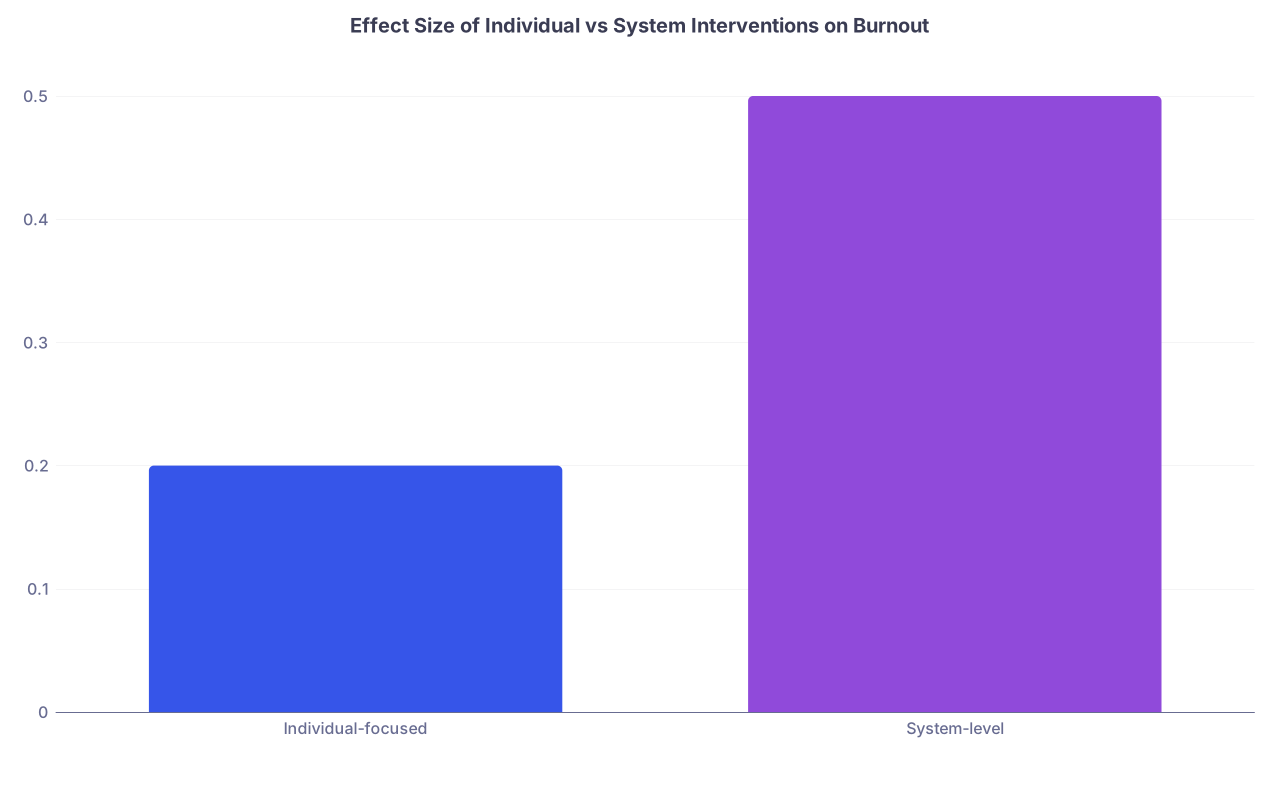
Meta-analyses of physician wellness interventions repeatedly find something uncomfortable for hospital leadership: individual-focused programs (mindfulness, CBT-style workshops, yoga classes) produce small, often short-lived improvements in distress and burnout scores. System-level changes (work hours, staffing, workflow, autonomy) produce bigger, more durable effects.
But guess which are cheaper and easier to advertise in a brochure?
| Category | Value |
|---|---|
| Individual-focused | 0.2 |
| System-level | 0.5 |
That rough comparison mirrors what multiple systematic reviews report: small effect sizes (around 0.2) for individual strategies, moderate for institutional or structural changes. Not zero. Just modest.
So are wellness curricula useless? Not exactly. Are most current versions wildly oversold and badly targeted? Yes.
Burnout Is Mostly a System Problem. Wellness Curricula Are Mostly Individual Solutions.
This mismatch is the core myth.
Programs act like burnout is a personal resilience deficit. Data say otherwise.
Large studies (think >7,000 physicians) consistently identify the same major predictors of burnout:
- Workload and hours
- Lack of control/autonomy over schedule and clinical decisions
- Inefficient workflows and EMR burden
- Conflicting values (professional ethics vs productivity metrics)
- Poor leadership and toxic culture
None of those are fixed by teaching residents to meditate between 22 consults.
When the Mayo Clinic looked at drivers of burnout, they showed variations of burnout risk of more than 30–40 percentage points between different work units within the same organization. Not because one group forgot to download a mindfulness app, but because local leadership, staffing, and culture were different.
That’s the dirty secret: where you work and who runs it matter a lot more than whether your program has a “formal wellness curriculum.”
And yet, a lot of wellness programming doubles down on the idea that you, personally, need to be more resilient. The implicit message: if you’re suffering, you’re not using the tools we gave you.
Which is ethically gross.
What Actually Works: Evidence That Some Wellness Efforts Aren’t Lip Service
Now for the part that won’t make you roll your eyes.
There are wellness-related interventions with decent data behind them. They just don’t look like what’s usually branded as “wellness curriculum.”
1. Duty Hour and Workload Changes
No, the ACGME duty hour reforms didn’t cure burnout. But programs that actually staff to make them real — rather than doing “compliance theater” — show less burnout and fewer safety issues.
For example, ICU models that cap patient load per resident and add an extra night-float or advanced practice provider shift tend to report lower emotional exhaustion and fewer major adverse events. Not magical. Just better.
2. Schedule Control and Flexibility
Every large occupational health study you read says the same thing: schedule control is a huge predictor of well-being.
In residency, this looks like:
- Genuine say in rotation selection
- Ability to swap calls without bureaucratic warfare
- Remote or asynchronous work for certain tasks (charting, didactics) when appropriate
Programs that piloted flexible scheduling (e.g., giving residents some choice over when to use their guaranteed days off, or real-time adjustment after overnight admissions spikes) have shown measurable improvements in satisfaction and reduced reported burnout, even when total hours didn’t dramatically change.
3. Fixing EMR and Workflow Garbage
You want a wellness intervention that actually moves the needle? Strip 30 minutes of useless clicks from each resident’s day.
Hospitals that implemented scribes, standardized note templates, or eliminated redundant documentation requirements saw small but meaningful gains in both efficiency and well-being. It’s not sexy. It doesn’t fit easily in a glossy “wellness” brochure. But you feel it.
4. Protected, Actually Protected Time
A “wellness afternoon” that gets swallowed by pages and discharges is a joke.
But a few programs have done the harder thing: insulated protected time with backup coverage. One internal medicine program evaluated a “wellness half-day” pilot where resident coverage was explicitly handed off and attending staffing adjusted. Residents used time for appointments, exercise, or literally just sleep.
Outcomes? High utilization, strong resident endorsement, modest but real drops in self-reported emotional exhaustion. That’s a wellness curriculum structure that works, because it respects reality: you can’t “self-care” while your pager is exploding.
Where Wellness Curricula Do Help (If Done Like Adults, Not Like Summer Camp)
Let’s give credit where it’s due. Several components of wellness curricula have moderate evidence when they’re implemented like serious training rather than checkbox fluff.
Peer Support and Reflection Spaces
Balint groups, Schwartz Rounds, peer debriefs — these are not inherently nonsense. When they’re safe, optional, and run by people who know what they’re doing, they can:
- Reduce isolation
- Normalize moral distress and doubts
- Surface ethical conflicts before they turn into full-blown cynicism
There’s literature showing small to moderate improvements in empathy and reduced depersonalization with well-run Balint-style groups and facilitated reflection.
Key words: well-run, psychologically safe, not forced performance.
Sitting in a room listening to someone from HR read a script about “our culture of caring” while you’re on post-call? That’s theater. A small group of residents and one trusted attending grappling with a bad outcome or ethically messy case? That’s different.
Skills Training: Not “Be Happy,” But “Here’s How To Survive”
Where wellness curricula stop preaching and start teaching, they get more respectable. Programs that include:
- Practical strategies for conflict with seniors/attendings
- How to say no safely
- Concrete CBT-style tools for catastrophizing and rumination
- Training on recognizing early signs of depression/PTSD and seeking help
…have better outcomes than generic positivity talks. Some randomized studies of brief CBT-based workshops for residents show improvements in depressive symptoms and stress over several months. Not revolutionary, but real.
Ethics and Wellness Are Not Separate Topics
Working against your values constantly is its own kind of burnout — moral injury is not just a buzzword.
Curricula that explicitly connect ethics and wellness — for instance, discussing moral distress around resource allocation, rushed consent, or discharging unsafe patients — can reduce that “it’s just me” shame.
Medical ethics education that pretends stress and burnout don’t exist is dishonest. Wellness education that ignores the ethical stakes of your work is shallow. The two belong together.
Where Wellness Curricula Become Pure Lip Service (And Sometimes Harmful)
You know these. You’ve probably sat through them.
A few patterns mark the truly useless (or counterproductive) versions.
1. Blaming Individuals For System Failures
Any session that basically says, “You need better coping strategies for 80‑hour weeks, chaotic cross-coverage, and constant understaffing” is gaslighting in a cardigan.
The evidence is clear: individual resilience has limits. Past a certain threshold of workload and chaos, no amount of deep breathing offsets it. Programs that ignore system drivers but expand individual wellness curricula send one message: fix yourself, not the job.
2. Mandatory Vulnerability in Unsafe Rooms
Forced “sharing circles” with eval-power people in the room are a disaster. I’ve watched programs require residents to “reflect on a time you felt overwhelmed or failed” in a group that included their APD. Then act shocked when nobody talks honestly.
Psych safety is not a poster. It’s whether speaking honestly can hurt you. Residents aren’t stupid. They do that calculus instantly.
Poorly designed reflection can actually increase distress if it dredges up trauma without support or follow-up resources.
3. Wellness as Brand, Not Practice
The classic signs:
- A wellness logo and tagline
- A “Wellness Week” with free smoothies and yoga, while schedules remain brutal
- An email campaign with mindfulness quotes, but no changes to staffing or charting burden
When residents see this with no corresponding structural change, trust drops. And once a wellness initiative is perceived as PR, even good-faith parts of it lose credibility.
How To Tell If Your Program’s Wellness Efforts Are Real Or Cosmetic
You do not need a randomized trial to sniff this out. A few quick stress tests:
| Dimension | Genuine Effort | Cosmetic Effort |
|---|---|---|
| Schedule Impact | Real changes to hours/workload | Extra meetings added to same load |
| Coverage | Backup provided for “protected” time | Pager still on, work piles up |
| Resident Input | Residents help design and revise | Top-down, prepackaged program |
| Response to Feedback | Willing to cut what is not working | “We hear you” but nothing changes |
| Focus | System + individual | Almost entirely on individual |
If wellness is “one more thing added to my plate,” it’s already failed.
If wellness is used to justify not fixing staffing, call schedules, or EMR burden (“but we gave you wellness tools!”), it’s ethically backwards.
Practical Takeaways: How To Use the System Without Being Used By It
You’re one person in a big machine. You’re not going to single-handedly redesign duty hours. But you’re not powerless either.
A few grounded moves that align with the evidence:
Use what’s actually useful. If there’s a CBT-based workshop that gives you tools for sleep, thought spirals, or conflict — go. If there’s a peer group that genuinely feels safe — show up. Individual skills aren’t useless; they’re just not sufficient.
Name the system issues explicitly. When asked for feedback, tie your distress to modifiable structures: “The biggest contributor to burnout on this rotation is X (e.g., no cap, redundant documentation, inflexible post-call demands).” Be concrete, not vague.
Push for protected time with coverage. Any wellness time that doesn’t come with clear coverage is fake. Say it plainly.
Treat ethics and wellness as linked. If you’re constantly pressured into choices that feel wrong, that’s not a personal coping failure. That’s moral distress. Name it, document it, bring it into ethics conferences and wellness spaces that are safe.
| Category | Value |
|---|---|
| Workload/hours | 35 |
| EMR/administrative tasks | 25 |
| Lack of control | 20 |
| Value conflicts | 15 |
| Personal resilience | 5 |
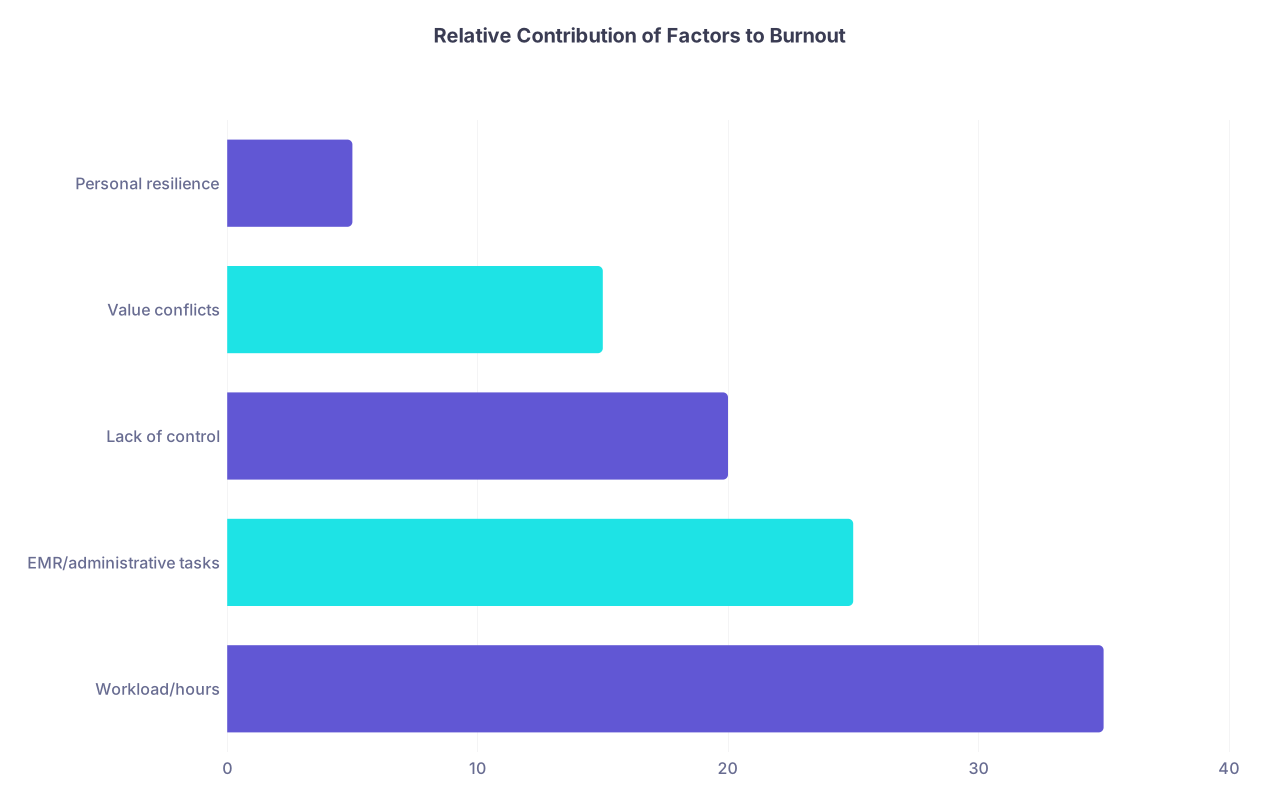
Those percentages are approximate, but they line up with what multi-factor studies and large surveys keep finding: the lion’s share is structural, not about individual fragility.
The Ethical Dimension: When “Wellness” Becomes a Moral Problem
Category-wise, you’re in “personal development and medical ethics.” These are not two separate conversations.
There’s a quiet ethical failing when an institution:
- Profits from overwork and understaffing
- Publicly advertises “care for caregivers”
- Then channels distress back onto individuals (“Do more self-care”)
That gap between stated values and lived reality is exactly what produces moral injury. Not just being tired — feeling betrayed by a system that says one thing and does another.
Genuine wellness work is ethical work: aligning structures with stated values, not just publishing them on a website.
That means:
- Transparent discussion of trade-offs (coverage vs education vs cost)
- Shared decision-making around schedules and workload
- Acknowledging that some distress is a rational response to unreasonable conditions, not pathology to be meditated away

So, Are Wellness Curricula Useless Lip Service?
Some are. Some are worse than useless because they obscure the real problems.
But the evidence cuts both ways:
- Individual-focused wellness programs: modest, short-term help, especially when they teach concrete coping skills and are voluntary.
- System-level changes to workload, schedule, EMR, staffing, and culture: larger and more durable impact on burnout and ethical practice.
- The best outcomes come when both are addressed together, and when “wellness” is measured not by slogans, but by whether your day-to-day life actually becomes more humane and ethically sustainable.
If your program’s wellness efforts don’t touch your hours, workload, or autonomy, they’re probably 70–80% lip service.
If they start there — and then add real support for your psychological and ethical development — that’s not wellness theater. That’s what the data actually supports.