
The biggest mistake physicians make when pivoting into consulting is drifting instead of executing a plan. You do not “network your way” into this. You calendar your way into it.
You’ve got 90 days. Here’s exactly what to do, and when.
Overall 90-Day Structure
Before we drill down, zoom out. Your 90 days break cleanly into three phases:
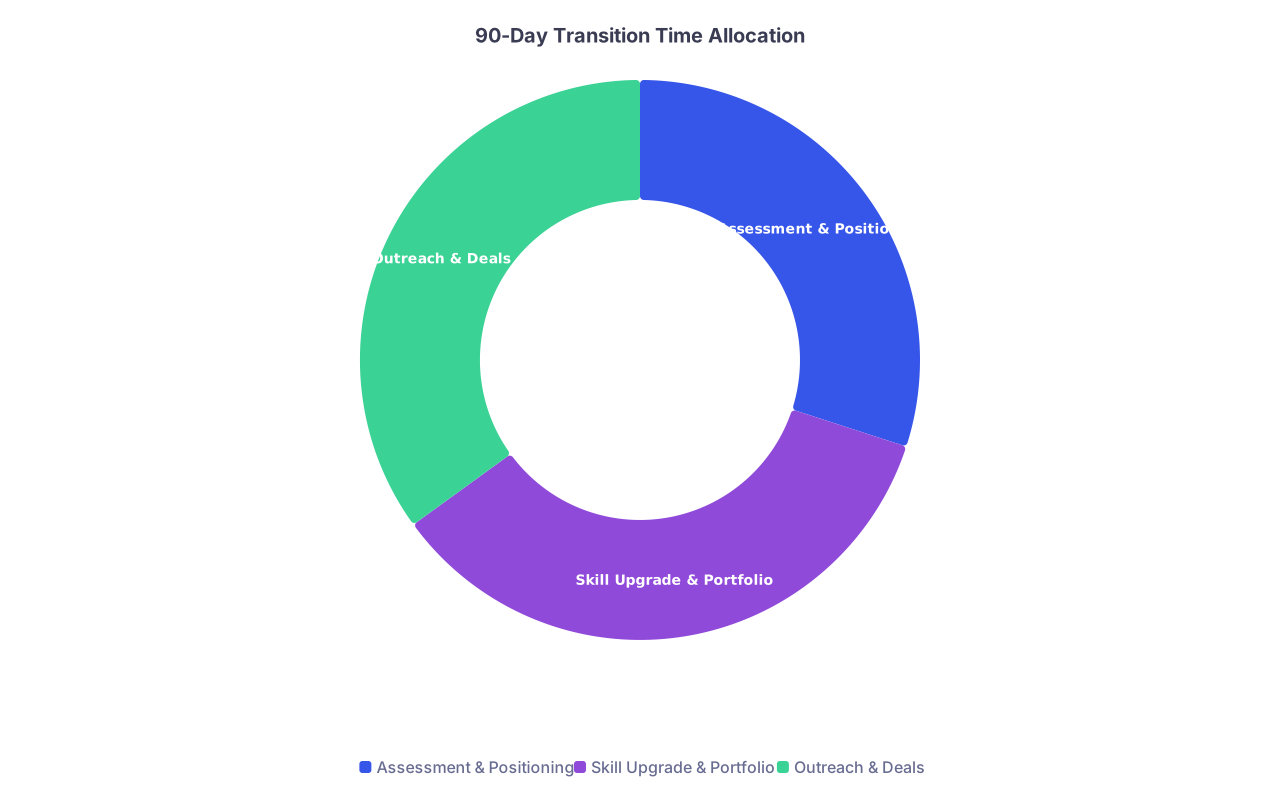
| Category | Value |
|---|---|
| Assessment & Positioning | 30 |
| Skill Upgrade & Portfolio | 35 |
| Outreach & Deals | 35 |
Days 1–30 – Assessment & Positioning
- Decide your consulting lane
- Build a credible narrative and basic brand
- Clean up your professional footprint
Days 31–60 – Skills, Portfolio & Soft Launch
- Acquire the minimum consulting toolkit
- Create proof-of-value (case examples, mini-projects)
- Start “safe” outreach and test your pitch
Days 61–90 – Aggressive Outreach & First Deals
- Systematic outreach and interviews
- Negotiate at least 1–2 paid engagements
- Decide your post-90-day path (side consulting vs full exit)
You’re going to treat this like an ICU admission: serial assessments, scheduled interventions, clear endpoints.
Days 1–30: Decide What Kind of Consultant You Are
At this point you should stop saying “I want to do consulting” and start saying, “I help X types of clients solve Y expensive problem.”
Week 1: Reality Check and Direction
Day 1–2: Hard constraints
Sit down with a blank sheet and answer without romance:
- How many hours/week can you realistically commit in the next 90 days?
20 hours/week → you can pursue a more aggressive pivot
- 5–10 hours/week → you’re building a side consulting track first
- Financial runway (post-tax, post-expenses) in months.
- Non-negotiables:
- Geographical (must stay in current city?)
- Call responsibilities / clinical FTE you can’t drop short-term
- Visa/immigration status if relevant
If you don’t know your runway number, you’re not ready to quit anything.
Day 3–4: Pick a consulting domain, not a fantasy
You are not “McKinsey consultant” by default. That route exists but is narrow and slow.
Your fastest, most realistic entry points as an attending:
- Healthcare operations / quality consulting
- Improving throughput, decreasing LOS, redesigning clinics
- Digital health / health tech
- Clinical product advisor, workflow design, clinical safety
- Medical education & content
- Building CME, curriculum, expert content, guideline translation
- Life sciences / pharma
- Advisory boards, KOL roles, clinical trial design input
- Med-legal / expert witness
- Case review, deposition support (specialties like EM, neurosurg, OB especially)
Pick one primary lane and maybe one secondary. If your LinkedIn headline says “Clinician | Educator | Consultant | Innovator | Leader,” you look lost.
Day 5–7: Map your “offerable problems”
Clients don’t buy your CV. They buy outcomes.
Make a list of 3–5 problems you’ve actually solved that have a financial or operational impact:
- “Reduced time-to-discharge in our unit by X% after redesigning rounds”
- “Led rollout of a new EMR order set that cut medication errors”
- “Designed a telehealth workflow that increased visit volume by 30%”
Turn each into a 3-line mini-case. You’ll reuse these everywhere.
Week 2: Build Your Consulting Identity
At this point you should stop hiding behind your hospital bio and start looking like a consultant in public.
Day 8–10: Clean LinkedIn and CV
LinkedIn is not optional. Clients and recruiters live there.
- New headline (example):
- Bad: “Board-certified internist passionate about quality improvement”
- Better: “Hospital medicine physician helping community hospitals cut LOS and readmissions”
- About section: 3 short paragraphs:
- Who you are (clinical cred)
- What problems you solve (specific)
- Who you work with (types of orgs)
- Move consulting-relevant experiences up:
- QI committee leadership
- EMR optimization work
- Telehealth program design
- Clinical trials, pharma collaborations
Day 11–13: Two basic positioning documents
You need:
- 1–page “consultant CV”
- Problem → Action → Result bullets, not “responsible for.”
- Simple 1–2 page capability summary
- Sections:
- Who I work with (hospital size, tech stage)
- Typical problems I address
- Example past projects / outcomes
- Contact info
- Sections:
No logos, no fluff. You’re aiming for “clean and serious,” not “startup brochure.”
Day 14: Decide your rate baseline
Do this once so you stop guessing on the phone.
| Type of Work | Common Range (USD) |
|---|---|
| Hourly advisory | $200–$400/hr |
| Day rate (on-site/remote) | $2,000–$4,000/day |
| Fixed mini-project | $5,000–$15,000 |
| Ongoing retainer | $3,000–$10,000/mo |
You’ll refine this later, but pick your “walk away” hourly now (e.g., “I will not accept under $200/hr”).
Week 3: Market Intelligence and Target List
At this point you should stop “researching endlessly” and start building a concrete target list.
Day 15–17: Identify your buyer types
Who actually signs or influences consulting agreements for your lane?
- Hospital: CMO, VP Quality, Service line director
- Health tech: CMO, Head of Product, Clinical strategy lead
- Pharma: Medical director, TA lead, MSL management
- Med-legal: Attorneys at plaintiff/defense firms, case managers
Make 3–5 archetypes for your lane. Know their job titles.
Day 18–21: Build a 50–100 company list
You’re going to build a spreadsheet. Yes, an actual one.
Columns:
- Organization name
- Type (community hospital, Series B startup, Big Pharma, etc.)
- Geography
- Size (beds, employees, funding stage)
- Key contact names / titles
- Warm connection? (Y/N, who)
- Last contact date
- Status (Not Contacted / In Conversation / Proposal / Won / Lost)
Sources:
- LinkedIn search by industry
- AngelList / Crunchbase (for startups)
- Local hospital systems and regional networks
- Past collaborators, EMR vendors, device reps, pharma contacts
Aim:
- 20–30 realistic near-term targets
- 20–30 stretch or “aspirational” targets
Week 4: Minimum Viable Public Presence
You’re not building a massive brand in 90 days. You’re building enough for someone to Google you and feel safe wiring money.
Day 22–24: Simple website or focused landing page
You can use Squarespace, Wix, or a basic one-page site.
Must contain:
- Clear headline: “I help [type of org] achieve [result]”
- Short bio paragraph (clinical + consulting angle)
- 3–4 bullet “ways I work with clients”
- One or two anonymized mini-case blurbs
- Contact form and email
Skip the blog for now. It becomes a graveyard if you only post once.
Day 25–27: Seed content and proof of expertise
You need 3–5 visible pieces to prove you’re not making this up:
- A short LinkedIn article: “3 EMR Design Mistakes That Cost Hospitals Millions”
- A 5–7 slide mini-deck about a quality project (de-identified)
- A short Loom video (unlisted or public) walking through a workflow improvement

You’re not writing a textbook. You’re showing you can think like a consultant.
Day 28–30: Soft announcement
Tell the world, but in a measured way.
- Update your LinkedIn headline and About
- Optional: Post a short announcement:
- “After 10 years in [specialty], I’m now working with [type of clients] to improve [results]. If your team is working on X, happy to talk.”
- Direct message a focused set of 10–15 trusted contacts:
- Former chiefs, medical directors, rep contacts, ex-co-residents now in industry
Your goal isn’t instant contracts. It’s planting seeds and normalizing your new identity.
Days 31–60: Skill Upgrade, Portfolio, and Soft Launch
Now you stop “preparing to prepare” and start building marketable assets.
Week 5: Basic Consulting Toolkit
At this point you should be acting like a consultant, not just a physician with opinions.
Day 31–33: Learn the language (light, focused)
You do not need an MBA. You do need to be fluent enough.
Pick 1–2 short, high-yield resources and actually finish them:
- A compact course on:
- Healthcare operations or process improvement (Lean/Six Sigma overview)
- Product management (if going into digital health)
- Market access or HEOR basics (if heading toward pharma)
Your filter:
- If it takes >15–20 hours, skip it. You’re still a clinician; you don’t have that bandwidth.
Day 34–35: Build 2–3 “offer packages”
Stop selling hours. Start selling outcomes in structured bundles.
Examples:
- Hospital ops package
- “30-day readmission reduction sprint”
- Includes:
- 3 stakeholder interviews
- Data review
- Current-state process map
- 3–5 prioritized interventions with owner roles
- Health tech product advisor package
- “Clinical workflow validation and risk scan”
- Includes:
- Product walkthrough
- Risk/edge case identification
- Clinical safety recommendations
- 1–2 feedback calls with product & engineering
Each package: 1–page description, outcomes, timeline, ballpark fee band.
Day 36–37: Contract + basic templates
You need:
- Simple consulting agreement (run by a lawyer; don’t DIY the legalese)
- Invoice template
- Short slide template in your style (3–4 key layouts)
Once you have these, everything feels more real.
Day 38–42: Mock project #1
Pick one problem you’ve solved clinically. Treat it like a paid project:
- Write a 1-page “client brief”
- Draft a few slides showing:
- Problem framing
- Baseline metrics
- Interventions
- Results
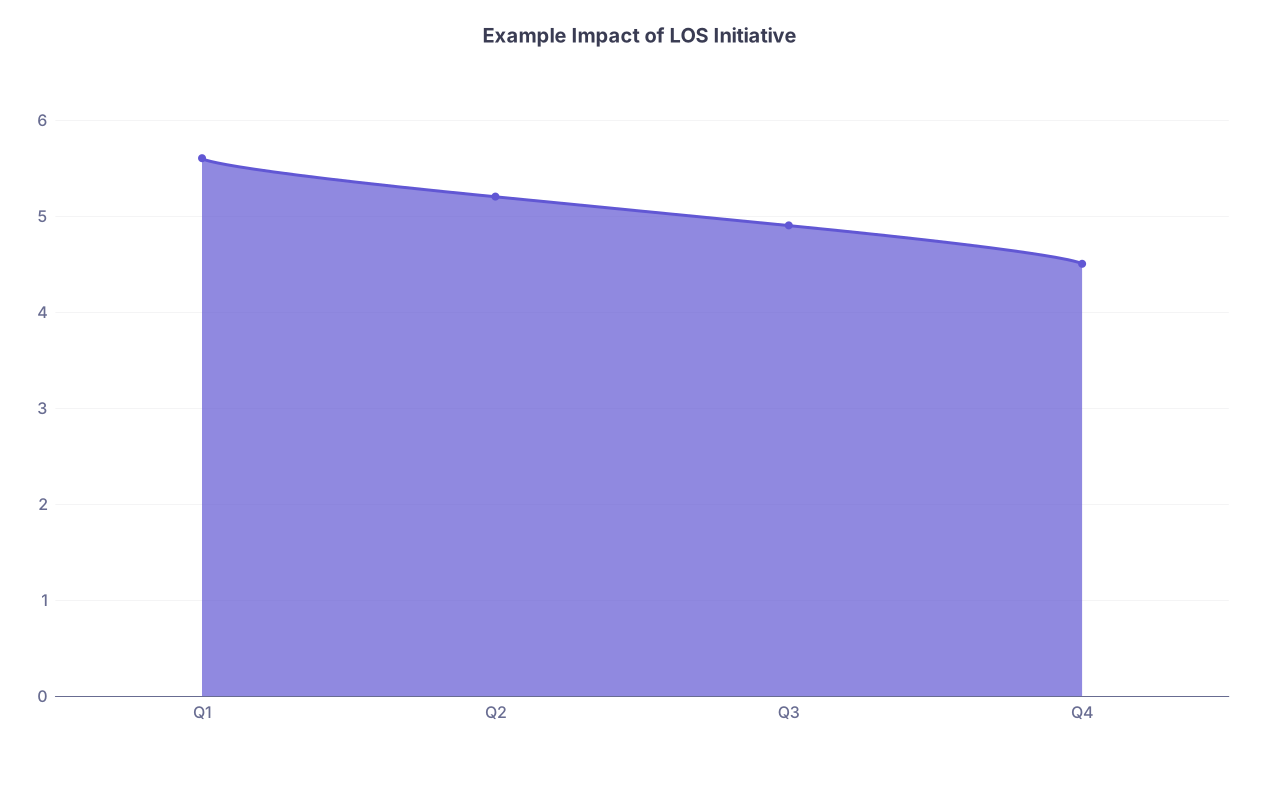
| Category | Value |
|---|---|
| Q1 | 5.6 |
| Q2 | 5.2 |
| Q3 | 4.9 |
| Q4 | 4.5 |
This becomes:
- Portfolio piece
- Talking point in calls
- Confidence builder that you can “do consulting work” formally
Week 6: Controlled Outreach and Feedback Loop
At this point you should start talking to actual buyers, not just reading about them.
Day 43–45: Script your core messages
You need 3 scripts:
- Short intro email / DM (warm connection)
- 3–4 sentences, referencing shared history and how you can help.
- Cold outreach message
- Slightly more detailed problem statement and quick ask for a 15-min call.
- 15-minute discovery call outline
- Questions to ask:
- “What’s the most expensive or frustrating operational issue on your plate right now?”
- “What have you already tried?”
- “If this were fixed in 6 months, what would be different?”
- Questions to ask:
Do not monologue about your CV. Extract pain.
Day 46–49: “Friendly fire” conversations (10–15 calls)
Start with people who won’t hire you but will give you truth:
- Former co-residents now in admin roles
- Friendly CMO, department chiefs, clinic managers
- Existing vendor reps you trust
Goal of each call:
- Validate your problem framing
- Ask what they’d pay, or whether they do pay consultants
- Ask what job titles own your type of problem
After every 3–4 calls, adjust:
- Your packages
- Your wording
- Your target buyer titles
Day 50–52: Tighten your pitch based on what you heard
Common problems you’ll spot:
- You’re too general (“I improve quality and operations” = meaningless)
- You’re pitching too big (“system-wide redesign” when they want “can you help us fix this pilot”)
- You’re not connecting to money (“this reduces LOS by 0.5 days, which equals $X/year freed capacity”)
Rewrite:
- Website copy
- LinkedIn About
- Package descriptions
Day 53–56: Start light offers to warm network
Choose 5–10 organizations where you have some connection.
Offer low-risk, time-boxed engagements, not vague “consulting.”
Examples:
- “Happy to do a 2-week focused scan of your discharge processes and give you a prioritized list of fixes.”
- “I can spend 3 half-days with your product team reviewing your clinical workflows for safety and adoption barriers.”
Price these on the lower end of your range, but not free. Free = not taken seriously.
Day 57–60: Review and recalibrate
End of Day 60 you should have:
- 10–20 real conversations
- 1–3 serious leads
- A better sense of which lane is responding
If you have nothing but “This is interesting,” your offer is still fuzzy. Fix that now, not at Day 90.
Days 61–90: Aggressive Outreach and First Paid Work
Now comes the uncomfortable part. You’ll either start generating revenue or prove that you’re still playing at it.
Week 9: Scale Outreach Like It’s a Job
At this point you should treat outreach as a clinical shift on your schedule, not an afterthought.
Day 61–63: Block your calendar
Minimum if you’re serious:
- 3 outreach blocks/week, 60–90 minutes each
- 1 follow-up/admin block/week, 60 minutes
- 1 content/portfolio block/week, 60 minutes
Put them on the calendar. Treat them like OR time.
Day 64–67: Execute targeted outreach
You’re now going into your spreadsheet and actually working it:
- Contact 5–10 new people per outreach block
- Mix of warm intros and cold contacts
- Log:
- Date
- Method (email, LinkedIn, phone)
- Outcome
- Next step
Aim for 30–50 new touches over 2 weeks. Most will ignore you. This is normal.

Day 68–70: Discovery calls & early proposals
For anyone who shows interest:
- Run your 15-min discovery script
- If there’s a fit, propose a scoped pilot:
- Clearly defined deliverables
- 2–6 week duration
- Fixed fee
Then send a short 2–3 page proposal:
- Problem summary in their words
- Your approach
- Deliverables & timeline
- Fee & payment terms
Week 10: Land Your First Engagement
At this point you should have at least one real proposal out. If not, you’re avoiding sales conversations.
Day 71–73: Negotiate like a professional, not a resident
Expect pushback on:
- Price
- Scope
- Timeline
Hold your ground on price more than scope. It’s fine to shrink the project; it’s dangerous to crater your rate.
Tactics:
- “We can do a lighter version focused only on X for $Y.”
- “If you want ongoing support calls, that would be a separate retainer after this initial project.”
Day 74–77: Close & onboard fast
When someone says yes:
- Send the contract same or next day
- Get a deposit invoice out immediately (commonly 30–50% upfront)
- Schedule a kick-off call
Deliver a simple kick-off agenda:
- Objectives
- Stakeholders
- Data needed
- Communication plan
First impression here matters more than in clinic. People actually remember their first consultant.
Day 78–80: Start delivering & document everything
As you run the project:
- Capture baseline metrics (even rough ones)
- Take screenshots of anonymized artifacts (roadmaps, process maps)
- Keep a “consulting journal” of:
- Problems encountered
- Your interventions
- Early wins
These become future case studies and marketing ammo.
Week 11–12: Decide Your Ongoing Path
The last 10 days are about decisions, not fantasies.
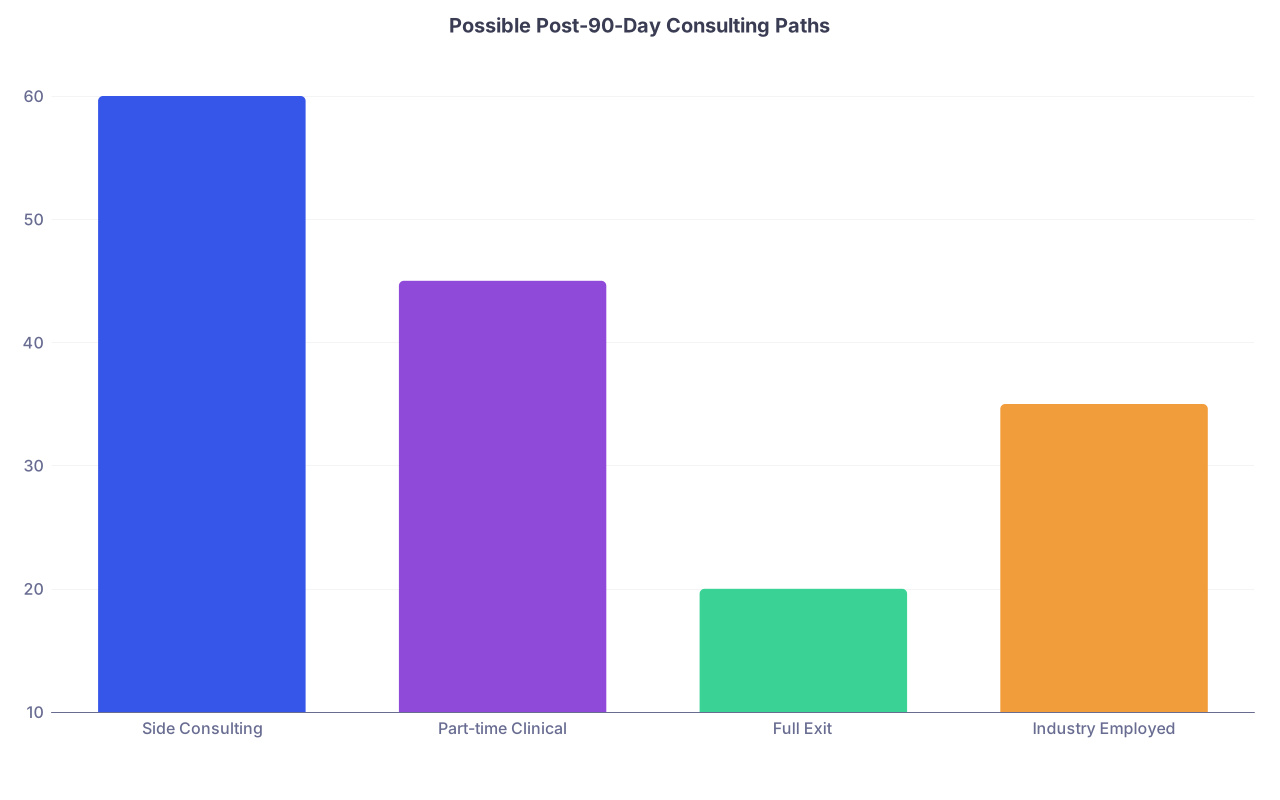
| Category | Value |
|---|---|
| Side Consulting | 60 |
| Part-time Clinical | 45 |
| Full Exit | 20 |
| Industry Employed | 35 |
(Values here are illustrative likelihoods I see in real transitions, not a survey.)
Day 81–84: Evaluate your traction honestly
Look at 3 things:
- Pipeline:
- How many active conversations?
- How many proposals out?
- Revenue:
- Any money actually paid or committed?
- Energy:
- Are you energized or drained by this work?
If after 90 days you have:
- 1–2 paid engagements or
- A strong, warm pipeline and clear hunger for your offer
…then you have signal. Not proof, but enough to justify continued building.
If you have zero paid work and only vague “let’s stay in touch,” you’re either:
- Too vague in your offer
- Targeting the wrong buyers
- Not doing enough outreach
(Yes, it’s usually one of those three. Not that “consulting is impossible.”)
Day 85–87: Choose a post-90-day model
Realistic options:
- Side consulting (5–10 hrs/week)
- Keep full clinical role, refine your consulting business slowly.
- 50/50 split
- Negotiate down to 0.5–0.7 FTE clinically.
- Aim for 1–2 decent consulting projects/quarter.
- Aggressive consulting track
- Reduce clinical significantly if your runway and spouse/financials allow.
- Treat consulting like a startup: 20–30+ hours/week.
Day 88–89: Formalize your next 6 months
Whatever model you choose, document:
- Revenue target (monthly or per project)
- Skills to acquire (and specific courses / books, not “learn business”)
- Clinical FTE commitment
Create a simple 6-month Gantt-like plan:
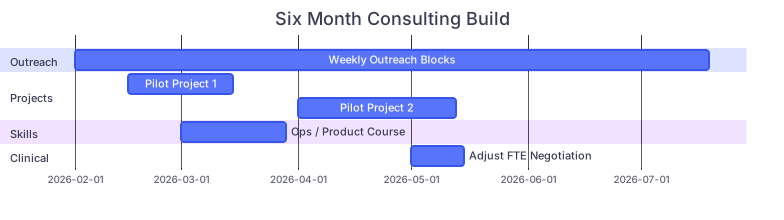
| Task | Details |
|---|---|
| Outreach: Weekly Outreach Blocks | a1, 2026-02-01, 24w |
| Projects: Pilot Project 1 | b1, 2026-02-15, 4w |
| Projects: Pilot Project 2 | b2, 2026-04-01, 6w |
| Skills: Ops / Product Course | c1, 2026-03-01, 4w |
| Clinical: Adjust FTE Negotiation | d1, 2026-05-01, 2w |
This is the difference between “I sort of do some consulting sometimes” and “I’m building a second career on purpose.”
Day 90: Debrief yourself
Final step:
- Write a 1–2 page reflection:
- What surprised you about this world?
- What do people actually want from you?
- Where did you waste time?
- What did you enjoy enough to do for years?
No one else will do this assessment for you. In medicine, you get feedback constantly. In consulting, silence is the default. You have to generate your own data.
Key Takeaways
- You’re not “becoming a consultant”; you’re committing to solving a specific, expensive problem for a specific buyer—and you’re building everything in this 90-day plan around that.
- Outreach and real conversations beat endless courses and logo-collecting; by Day 60 you should have talked to at least 20 potential buyers, even if it’s uncomfortable.
- Your 90-day goal isn’t to replace your attending salary; it’s to land your first real engagements, prove demand, and choose a deliberate path forward instead of drifting.