
The fantasy that you’ll “just start medical writing when things calm down” is why most clinicians never earn a cent from their words. You don’t need more ideas. You need a six‑month, time‑boxed plan that ends with someone actually paying you.
Below is that plan.
Six months. One clear outcome: you’ve invoiced at least one client for medical writing work.
Big Picture: Your Six-Month Roadmap
At this point, you need to see the whole arc. Here’s the high‑level breakdown before we go month‑by‑month.
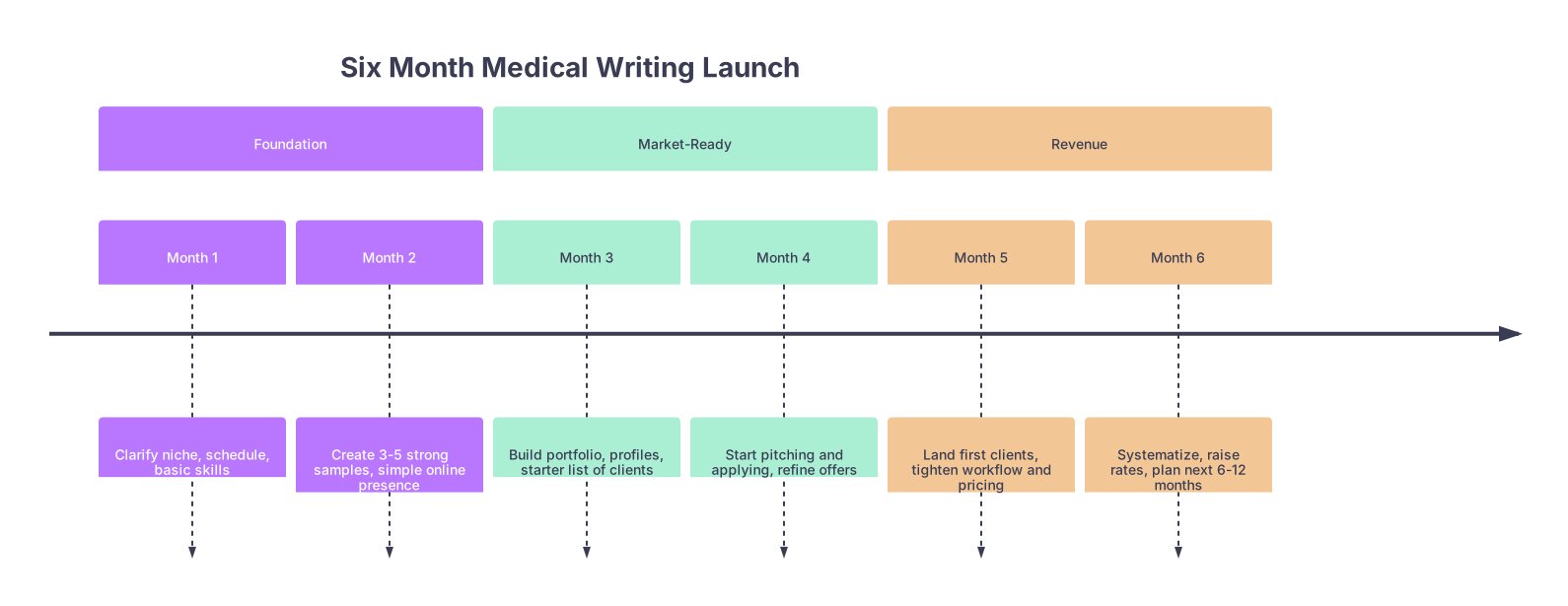
| Period | Event |
|---|---|
| Foundation - Month 1 | Clarify niche, schedule, basic skills |
| Foundation - Month 2 | Create 3-5 strong samples, simple online presence |
| Market-Ready - Month 3 | Build portfolio, profiles, starter list of clients |
| Market-Ready - Month 4 | Start pitching and applying, refine offers |
| Revenue - Month 5 | Land first clients, tighten workflow and pricing |
| Revenue - Month 6 | Systematize, raise rates, plan next 6-12 months |
At a glance:
| Month | Main Goal | Output by End of Month |
|---|---|---|
| 1 | Choose niche & schedule | Niche statement, weekly writing slots |
| 2 | Build samples | 3–5 polished writing pieces |
| 3 | Build presence | Portfolio page + optimized profiles |
| 4 | Start selling | 30–50 targeted pitches sent |
| 5 | Deliver paid work | 1–3 paying clients, testimonials |
| 6 | Systematize & scale | Higher rates, repeatable process |
Now let’s go step‑by‑step.
Month 1 – Position Yourself Like a Professional, Not a Hobbyist
The mistake here is “dabbling”: reading about medical writing, maybe watching a webinar, and writing nothing. You do the opposite.
Week 1: Decide Your Niche and Constraints
At this point, your only job is to decide what kind of medical writer you’re becoming and how much time you’ll actually commit.
Define your constraints (reality check)
- Clinical schedule: nights? call? variable shifts?
- Realistic weekly writing time: 3, 5, or 8 hours? Pick a number, not a vibe.
- Non‑negotiables: family time, sleep, exercise.
Block writing slots on your calendar as if they’re clinic sessions. Because they are.
Pick a niche that matches your background and appetite
You’re not “a medical writer.” You’re a:
- Cardiology fellow who writes patient‑friendly content for cardiology clinics
- EM attending who writes continuing education modules and board‑style questions
- PharmD who writes regulatory‑compliant drug monographs
- IM resident who writes SEO blog posts for telemedicine startups
General rule: start where your clinical knowledge and your credibility are highest.
If you need a push, choose from this short list and move on:
- Patient education & health blogs – clinics, hospitals, health sites
- B2B / healthcare marketing – digital health, devices, pharma marketing
- Continuing education / board‑review – Qbanks, CME companies
- Regulatory / med affairs (harder entry) – needs prior experience but high‑paying
Write a one‑sentence niche statement:
“I help [who] with [what] so they can [result] using my background in [your specialty].”
Week 2: Study the Market, Not More Theory
At this point, you should stop googling “what is medical writing” and start reading what actual paying work looks like.
During 2–3 short sessions this week:
- Collect 10–15 real examples in your niche:
- Blog posts on WebMD, Mayo Clinic, Cleveland Clinic
- Articles on UpToDate/Medscape style (for tone ideas)
- Copy on digital health startup landing pages
- CME module intros, Qbank explanations (AMBOSS, UWorld style)
- Write down:
- Typical word counts
- Tone (layperson? clinician? executive?)
- Use of references
- How they explain risk/benefit and uncertainty
You’re reverse‑engineering the exam you’re going to be graded on.
Week 3: Skill Sprint – One Core Format
You don’t need a course. You need reps.
Pick one core deliverable you’ll sell first. Examples:
- 1,000‑word patient education article
- 800‑word clinical blog for HCPs
- 10 board‑style questions with explanations
- 2‑page marketing one‑pager for a digital health app
Then:
- Write two rough drafts this week in that format.
- Use a simple checklist:
- Clear title with a promise
- Accurate, recent references (PubMed, guidelines)
- No jargon without explanation for lay content
- Short paragraphs, headings, bullets
- Explicit calls to action if it’s marketing copy
You will hate these drafts. That’s fine. You are building the muscle.
Week 4: Create Your “Launch Plan” Document
By the end of Month 1, you need one document you can open every writing session that tells you what to do next.
Include:
- Your niche statement
- Your weekly writing schedule (days, times, locations)
- The one service format you’re starting with
- A simple 6‑month income goal:
- Example: “By Month 6, earn $500/month from writing.”
- A rough rate target:
- Example for blogs: $0.20/word as a starting goal, even if you begin lower
Print it. Tape it above your desk. No vision boards, just this.
Month 2 – Build 3–5 Serious Writing Samples
At this point, you don’t need a logo. You need proof.
Week 5–6: Draft and Polish Your First Portfolio Pieces
Goal: 3 solid portfolio samples by the end of Week 6, on track for 5 by month’s end.
Structure your weeks like this:
- Session 1: Outline a new piece
- Session 2: Draft (no editing)
- Session 3: Revise an older draft
Types of samples to prioritize:
- If you want patient‑facing blogs:
- “Understanding Atrial Fibrillation: Symptoms, Risks, and Treatment Options”
- “Type 2 Diabetes and Diet: What Actually Matters”
- If you want HCP/education content:
- “Updates in Heart Failure Management: 2022–2024”
- 10 high‑quality board‑style questions in your specialty
- If you want marketing/B2B:
- A mock landing page for a telehealth startup
- A case study: “How Remote BP Monitoring Reduced Readmissions”
You’re aiming for:
- Clear, scannable structure
- Solid referencing
- A consistent voice (serious but readable)
Week 7: Reality Check and External Feedback
At this point, you need one other human to tear your writing apart.
Options:
- Trusted colleague who reads a lot
- Another resident/fellow already doing side writing
- Online writing community with healthcare folks (LinkedIn groups, Slack communities)
Ask for specific feedback:
- “Where did you get bored or confused?”
- “Does this feel accurate and current?”
- “Would you trust this on your site?”
You are not asking, “Is this good?” That’s useless.
Week 8: Basic Online Presence – Keep It Minimal
You do not need a fancy site. You do need somewhere to send people.
Choose one:
- A one‑page Carrd or Wix site
- A simple Notion or Google Doc portfolio with share link
- A LinkedIn profile with a “Featured” section linking to PDFs/Docs
Minimum content:
- 1–2 sentence bio:
- “I’m an internal medicine resident with experience in cardiology and telemedicine. I write patient‑friendly and clinician‑oriented content that’s accurate, current, and actually readable.”
- Your niche and services:
- “[x]-word patient education articles”
- “Special interest in [conditions/procedures].”
- Links or PDFs of 3–5 samples
That’s it. If you’ve spent more than 4–5 hours on “your website,” you’re procrastinating.
Month 3 – Build a Portfolio and Put Yourself Where Clients Look
Now you have proof. Month 3 is about visibility and packaging.
Week 9: Tighten Your Offer
At this point you should define exactly what someone can pay you for.
Examples:
- “1,200‑word patient education article with 5–8 recent references – $150 (intro rate)”
- “Set of 10 board‑style questions with 200–300 word explanations – $200”
- “2‑page marketing one‑pager for a digital health product – starting at $250”
Do not overcomplicate pricing. You’ll adjust after you see the market response.
Week 10: Optimize LinkedIn (Yes, Really)
I’ve watched more clinicians land clients through LinkedIn than any other single channel.
Actions this week:
- Change your headline from “PGY-2 Internal Medicine Resident”
to “Internal Medicine Resident | Medical Writer – Patient and Clinician Education Content” - About section:
- 3–5 sentences on your background
- 2–3 sentences on who you help and how
- 1 clear “Call me if you need…” line
- Add “Medical Writer (Freelance)” as a role with:
- Services
- Your email/contact
- Use “Featured” to pin:
- Your best 2–3 samples
- Your portfolio link

Week 11: Build Presence Where Work Is Posted
Now you set up on platforms where specific, paid medical writing gigs actually appear.
Suggested combo:
- Upwork – lots of noise, but consistent health content demand
- Specialized boards:
- AMWA job board
- HMP Global, Medscape Careers, Healthline careers for contract roles
- Healthcare marketing agencies – many “always looking for writers” pages
Set up profiles that:
- Lead with your clinical credentials
- List your niche topics
- Show 2–3 samples directly in the platform if possible
You are not expecting Upwork to make you rich. You’re using it as a training ground.
Week 12: Build Your First Prospect List (25–40 Targets)
At this point, you move from “available” to “proactive.”
Make a simple spreadsheet with:
- Column A: Company/site name
- Column B: Website/contact page
- Column C: Contact person (editor, content manager, marketing director)
- Column D: Email or LinkedIn
- Column E: Type (health site, clinic, startup, agency, CME, Qbank)
Targets to include:
- Local clinics and hospital departments with outdated patient education pages
- Regional health systems with active blogs
- Specialty societies with newsletters, blogs, or patient info pages
- Startups in your specialty area (telehealth, remote monitoring, apps)
- Education/Qbank/CME companies
Goal: 25–40 names by the end of Month 3. You’re building your hunting ground.
Month 4 – Start Pitching and Applying Like You Mean It
This is where most people stall. They keep “improving the portfolio” and never ask for work. You won’t.
Week 13: Craft 2–3 Outreach Templates
At this point, you create simple, short messages you can customize.
- Cold email to clinics/hospitals
Subject: Cardiology content help
Hi [Name],
I’m a [cardiology fellow / internal medicine resident with a focus on cardiology] and a medical writer. I noticed your patient education pages on [topic] are a bit out of date and could probably be clearer for patients.
I write patient‑friendly, evidence‑based articles and handouts on [conditions/procedures]. Here are a couple of samples:
– [Link 1]
– [Link 2]If you’re updating materials this year, I’d be happy to help with a trial piece.
Best,
[Name, credentials]
[LinkedIn]
- Message to digital health/startups
Subject: Medical content for [Company]
Hi [Name],
I’m a [specialty] physician and freelance medical writer. I help digital health companies create accurate, readable content for patients and clinicians.
I saw your work on [feature/blog/product]. If you ever need help with [user education, clinical explainer content, clinical review of materials], I’d be glad to send over a couple of ideas tailored to your users.
Here are some samples of my writing:
– [Link 1]
– [Link 2]Best,
[Name]
Keep it short. No paragraphs about your passion for medicine.
Week 14–15: Volume and Consistency – 5–10 Touches per Week
At this point you should:
- Send 5–10 targeted messages each week:
- 3–5 cold emails to your spreadsheet list
- 2–3 Upwork/proboard applications for relevant gigs
- 1–2 LinkedIn connection messages to content/marketing leads
Track:
- Date
- Who
- Type of outreach
- Response (Y/N)
- Next follow‑up date
Expect:
- Response rate of 10–20%
- Actual paying opportunities at 2–5% of outreach (early on)
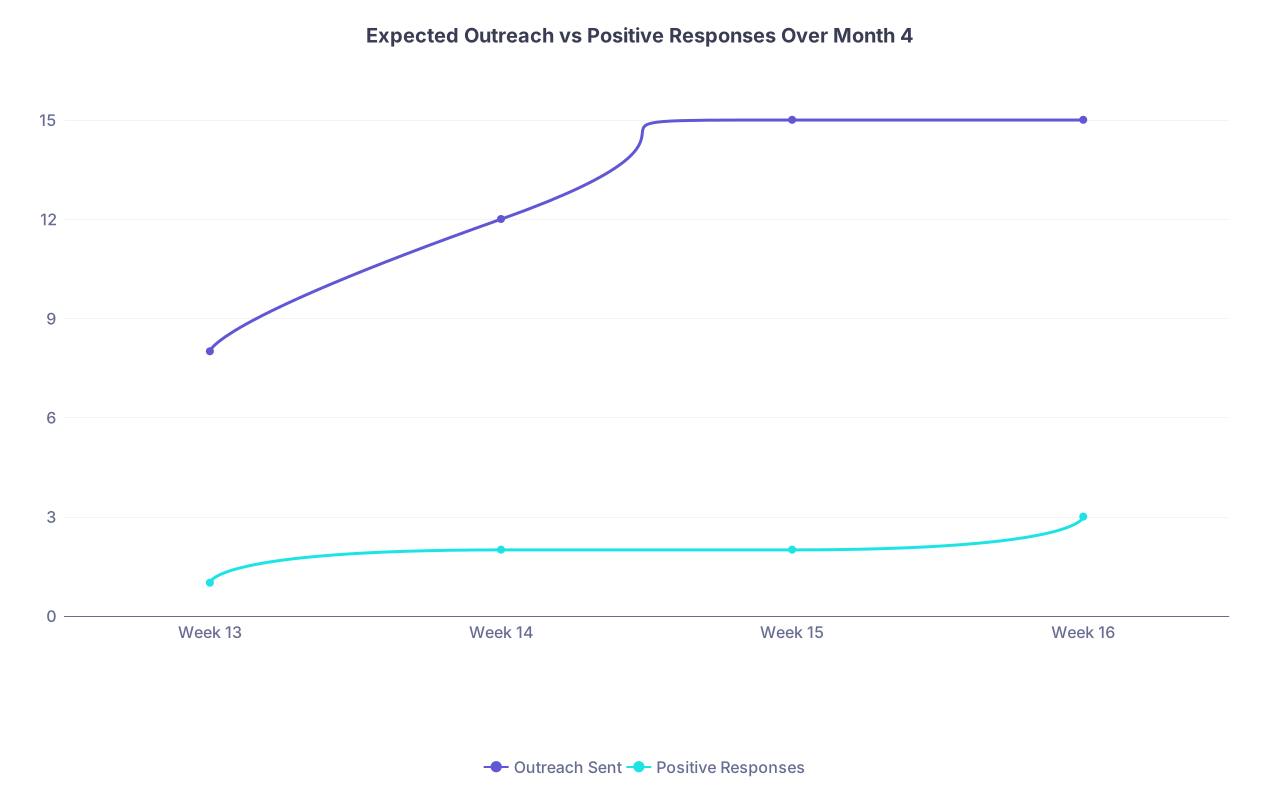
| Category | Outreach Sent | Positive Responses |
|---|---|---|
| Week 13 | 8 | 1 |
| Week 14 | 12 | 2 |
| Week 15 | 15 | 2 |
| Week 16 | 15 | 3 |
Week 16: Prepare to Actually Onboard a Client
You’re not waiting until they say yes to figure out process.
Set up:
- A simple rate sheet (internal, not sent blindly):
- Example: Blog posts: $0.15–0.25/word
Qbank questions: $15–25/question
- Example: Blog posts: $0.15–0.25/word
- A one‑page “working with me” doc:
- Turnaround times (e.g., 5–7 days per 1,000‑word article)
- Number of revisions included (1–2)
- How you prefer to communicate (email, shared doc)
- A simple invoice template (Word/Sheets or a free tool like Wave)
Now when someone says “Can you write X?”, you look like you’ve done this before.
Month 5 – Land and Deliver Your First Paid Work
This month is about getting money to change hands. Even small amounts.
Week 17–18: Convert Opportunities into Actual Projects
At this point, you’ll see some mix of:
- Tiny content mills waving $20/article
- Reasonable clinics or businesses wanting to “try you out”
- One or two low‑ball offers that insult you
My opinion:
- For the first 1–2 projects, you can accept below‑target rates if:
- Client is legit and non‑toxic
- You get permission to use the piece in your portfolio
- They’re likely to have recurring work
- But don’t go insultingly low ($10 for 1,000 words) unless you’re truly desperate for practice. It breeds resentment and burnout.
When scoping your first project, clarify in writing:
- Topic
- Word count / number of questions / type of asset
- Deadline
- Rate
- Payment timing (on delivery? net 30?)
If the client is small, ask for 50% upfront. If that feels too aggressive, at least get the agreement in email.
Week 19: Deliver, Then Polish Your Process
Your first project will feel like it takes forever. This is normal.
Process each piece like this:
- Outline and get quick client sign‑off if possible.
- Draft without editing.
- Do one heavy edit focused on:
- Structure
- Accuracy
- Clarity
- Do a final pass for:
- Jargon
- Typos
- References formatted reasonably
Track your actual time spent. You’re building your internal “hours per project” database.
After delivery, ask two simple questions:
- “Was this what you were expecting?”
- “Is there anything you’d want different next time?”
This feedback will improve your second and third gig more than any online course.

Week 20: Capture Proof – Testimonials and Clips
At this point, you leverage every scrap of evidence.
Ask happy clients for:
- One‑line testimonial:
- “Dr. X delivered accurate, well‑referenced content on a tight timeline. We’ll work with them again.”
- Permission to:
- Link to the published piece
- Or host the PDF as a private portfolio sample if content is gated
Update:
- Your LinkedIn “Experience” with specific clients/projects
- Your portfolio with:
- “Published in [Site]” or “Client: [Type of company, anonymized if needed]”
This is how you escape the “no experience” trap.
Month 6 – Systematize and Start Acting Like a Real Business
Month 6 is where this stops being a random side hustle and becomes a predictable side career.
Week 21: Review the First 5 Months Like an M&M
At this point, pull data:
- Total outreach count
- Total responses
- Total projects
- Total revenue
- Actual hours spent writing
Make a simple table for yourself:
| Metric | Value Example |
|---|---|
| Outreach Sent | 60 |
| Positive Responses | 10 |
| Projects Completed | 4 |
| Total Revenue | $650 |
| Hours Spent | 35 |
Now ask:
- Which outreach channels actually worked? (LinkedIn? Cold email? Upwork?)
- Which types of work paid best per hour?
- Which did you enjoy enough to keep doing?
Be ruthless. If clinics ghost you and startups respond, double down there.
Week 22: Standardize Your Workflow
Turn chaos into checklists. A minimal setup:
- Project intake checklist
- Topic agreed
- Audience defined
- Word count
- References needed? Provided?
- Deadline confirmed
- Writing workflow checklist
- Outline approved (if needed)
- Draft done
- Self‑edit pass
- References inserted
- Submitted
- Post‑project checklist
- Invoice sent
- Testimonial requested
- Portfolio updated
- Next‑work conversation (“Do you have more coming up?”)
You’ll shave 30–40% of wasted time just by not reinventing the wheel each project.
Week 23: Adjust Rates and Reposition
At this point, you should not be charging the same as Month 2 you.
If you’ve:
- Delivered at least 3–5 pieces
- Met deadlines
- Gotten positive feedback
Then:
- Raise your floor rates by 20–50% for new clients
- Example: Blogs from $0.12/word → $0.18/word
- Qbank questions from $15 → $22/question
- For existing clients:
- Consider a smaller increase, but still move up after a few projects
You’re still probably under market. That’s fine. You’re positioning upward.
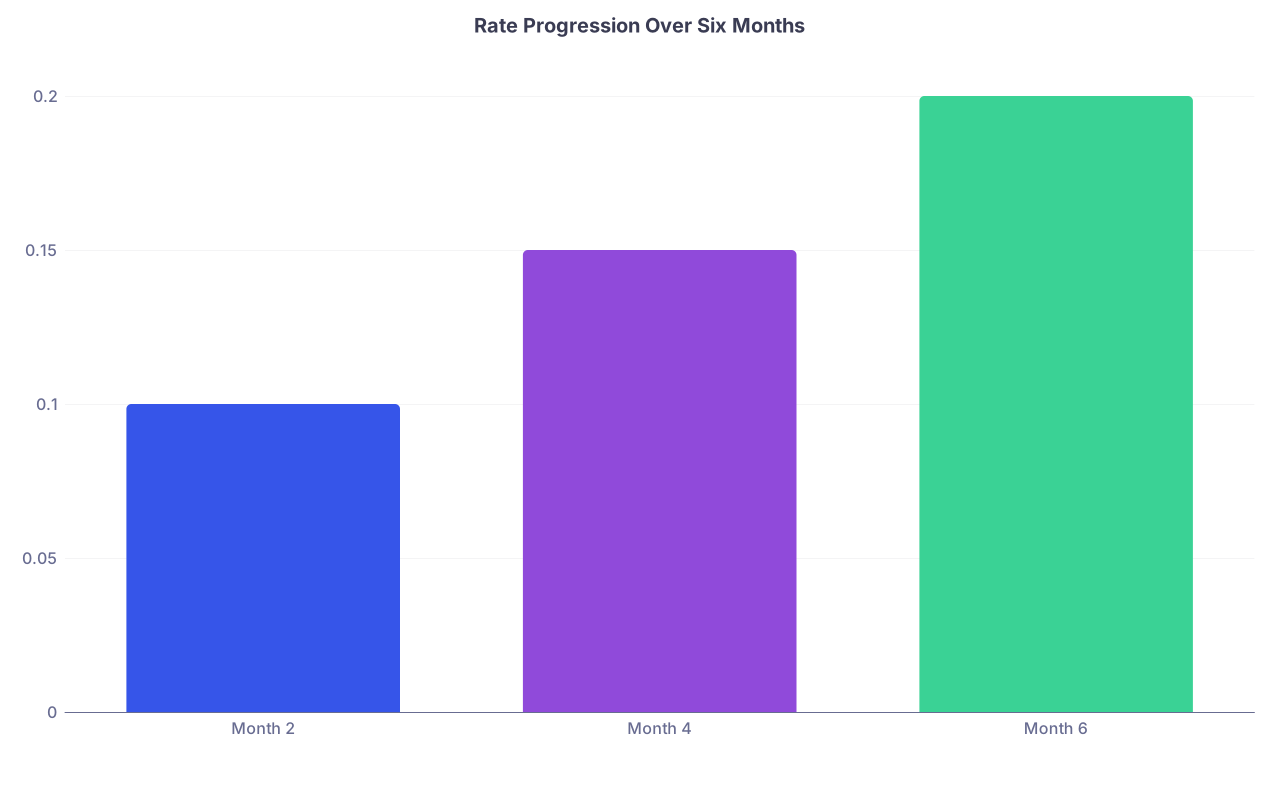
| Category | Value |
|---|---|
| Month 2 | 0.1 |
| Month 4 | 0.15 |
| Month 6 | 0.2 |
Week 24: Decide the Next 6–12 Months
This is where you stop drifting and choose a direction.
Choose one of these dominant paths:
- Keep it as a small, steady side income
- Aim for $500–$1,000/month
- 1–2 recurring clients
- 4–8 hours/week
- Grow into a serious parallel career
- Target $2,000–$3,000+/month
- Build relationships with agencies, bigger companies
- Maybe reduce clinical FTE later
- Pivot toward a specific long‑term niche
- Regulatory/med affairs
- CME/education
- Health tech content strategy
Based on that, set three concrete goals for the next 6 months. Example:
- “Reach $1,500/month in writing income.”
- “Sign one ongoing monthly retainer client.”
- “Phase out all clients paying under $0.15/word.”
Then build a weekly habit list to match:
- X outreach messages per week
- Y hours of writing
- Z hours for learning a higher‑value niche (e.g., med affairs)

Final Thoughts: What Actually Matters Over These Six Months
- Output beats perfection. Five decent samples and three paying clients will beat any polished website with zero work history.
- Proactive outreach wins. The people who get paid are the ones who send consistent, targeted messages, not the ones endlessly “improving” their LinkedIn.
- You are allowed to start small. Your first invoice might be $75. That’s fine. It’s proof that your knowledge can earn money outside the hospital. From there, you iterate and raise the bar.