
It is January 2nd. Your clinic schedule is full, inbox is overflowing, and between refill requests you catch yourself scrolling a medical affairs job posting for the fourth time this week. You are not “burned out enough to quit tomorrow,” but you know you will not be in clinic five years from now. You want out. And pharma looks like the next chapter.
Here is the problem: most physicians treat this like a two-week decision. It is not. If you are serious about leaving clinical practice for the pharmaceutical industry, you are on a 12‑month clock whether you realize it or not.
I am going to walk you month-by-month through what that year should look like.
Months 12–10: Reality Check and Direction Setting
At this point you should not be applying yet. You should be deciding what kind of pharma career you are actually aiming at.
Common physician entry points:
- Medical Affairs (most common; “bridge” role)
- Clinical Development / Clinical Research (trial design, protocol work)
- Safety / Pharmacovigilance
- HEOR / outcomes, if you have the background
- Strategy / consulting-style roles (rarer entry)
| Role Type | Typical Title | Clinical FTE Possible | Key Skill Focus |
|---|---|---|---|
| Medical Affairs | Medical Director | Sometimes | Communication |
| Clinical Development | Clinical Scientist | Rare | Trial design |
| Drug Safety | Safety Physician | Rare | Risk assessment |
| MSL | Medical Science Liaison | No | Field relationships |
| HEOR | Associate Director HEOR | No | Data & economics |
Month 12: Decide “Why Pharma” and “How Far Out”
At month 12, you should:
Clarify how “out” of clinical you want to be.
- 0% clinical: full pivot. You must plan for:
- Loss of clinical income
- Licensure maintenance without active practice
- 10–20% clinical: you want one clinic day or urgent care shift.
- Unknown: fine, but write down what you are not willing to do any more (nights, call, procedures).
- 0% clinical: full pivot. You must plan for:
Pick 1–2 target role families. Stop saying “something in pharma.” By the end of this month you should be able to complete this sentence in one line:
- “I am targeting entry-level medical affairs / clinical development / safety roles at mid-to-large pharma or biotechs in oncology / immunology / CV / etc.”
Audit your current profile. Pull up your CV. Be brutally honest:
- Do you have:
- Any research?
- Any trial involvement (even as sub-I or site PI)?
- Any speaking/teaching that could pass as “scientific communication”?
- Any leadership or committee roles that sound like “cross-functional collaboration”?
Mark every experience that can be “translated” into:
- Evidence generation
- Data interpretation
- Communication to non-physicians
- Working with industry (investigator meetings, advisory boards, etc.)
- Do you have:
At this point you should not tell your chief you are leaving. Yet.
Months 9–8: Market Scan and “Pharma Fluency”
You have a direction. Now you need to stop sounding like a clinician who has never left the hospital.
Month 9: Learn How Pharma Actually Works
Your job this month is language and structure.
Learn basic drug development pipeline. If you cannot describe:
- Preclinical → Phase 1 → 2 → 3 → 4
- Difference between Clinical Development vs Medical Affairs …you are not ready to talk to anyone serious.
Spend focused time:
- 2–3 pharma career books or guides
- A structured online course on drug development or medical affairs (short, reputable, not fluff)
- Company pipeline pages (Novartis, BMS, Amgen) — read them like you read UpToDate.
Translate your clinical life into pharma language. For example:
- “Clinic” → “customer-facing environment”
- “Resident teaching” → “scientific education”
- “Tumor board participation” → “cross-functional evidence review”
Rewrite one page of your CV in pharma vocabulary, just for yourself.
Start your anonymous data collection.
- Search job boards: “Medical Director, Medical Affairs”, “Clinical Scientist MD”, “Safety Physician”
- Gather 15–20 job descriptions into one document
- Highlight:
- Repeated phrases
- Required vs preferred experience
- Specific tools (Veeva, MedDRA, etc.)
You are not tailoring your application yet. You are building your mental model of the target.
Month 8: Light Networking, Zero Ask
This is where most physicians flail. They go straight to: “Can you get me a job?”
At month 8, you should:
Quietly clean up your LinkedIn.
- Professional photo (not white coat with stethoscope, if you can avoid it—aim for neutral leadership look)
- Headline:
“Board-certified [specialty] physician | [Disease area, e.g., Oncology] | Clinical researcher interested in medical affairs and clinical development” - About section:
- 3–4 bullet points translating your experience
- One line that signals interest in industry without “I want to leave medicine yesterday.”
Start “listening” on LinkedIn.
- Follow:
- 10–15 medical directors in your therapeutic area
- 5–10 pharma companies you could realistically join
- Recruiters who actually place MDs (not random agency spam)
- Follow:
Request 3–5 low-stakes informational calls. Goal: understand day-to-day reality of 2–3 roles, not ask for a job.
- Target:
- Former residents from your program now in pharma
- A local MSL you met at a conference
- Script:
- Who you are
- Why you are curious
- Ask for 15–20 minutes, Zoom or phone, no agenda beyond learning
- Target:
At this point you should only be listening and asking questions. You are building a map.
Months 7–6: Skill Gaps and Strategy
Now you know what these jobs look like. You also know where you are weak.
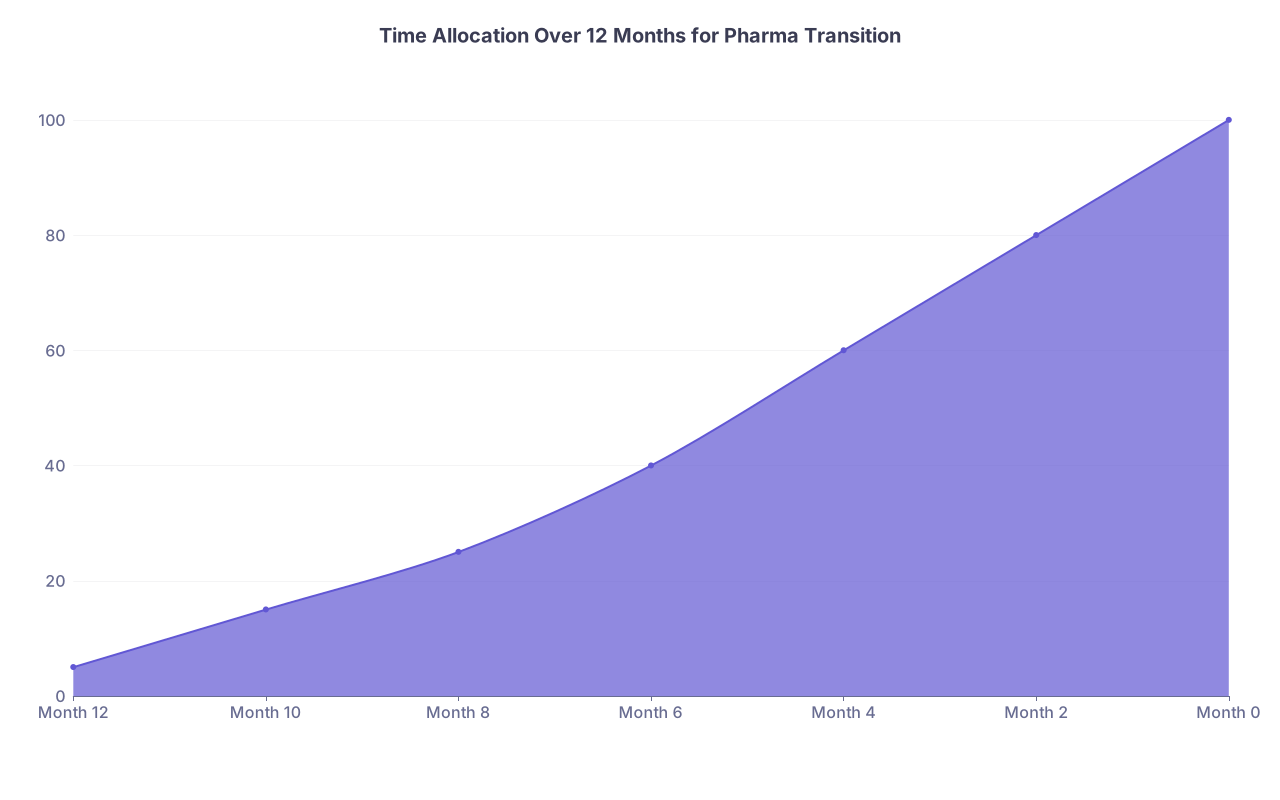
| Category | Value |
|---|---|
| Month 12 | 5 |
| Month 10 | 15 |
| Month 8 | 25 |
| Month 6 | 40 |
| Month 4 | 60 |
| Month 2 | 80 |
| Month 0 | 100 |
Month 7: Patch Obvious Gaps
There are a few common physician deficits I see repeatedly:
- No understanding of metrics / KPIs
- Weak written communication outside clinical notes
- No proof you can work in a non-hierarchical, matrixed environment
At month 7, you should:
Choose 1–2 credibility boosters. Not a second residency. Small, focused things:
- A drug development / medical affairs course (8–12 weeks max)
- Participation in an ongoing trial at your institution; volunteer as sub-investigator or join the trial team meetings
- Write or co-author:
- A review article
- A poster for an upcoming conference
- A clinical protocol or QI project with clear methods and outcomes
Intentionally collect stories. You need 6–8 concrete examples that show:
- Cross-functional collaboration
- Handling conflict with non-physicians
- Educating different audiences (patients, nurses, administrators)
- Interpreting ambiguous data and making a recommendation
Start jotting these in a document. Bullet form is fine.
Month 6: Decide Your Exit Economics
By six months out, you should stop pretending money is not a factor.
Define your minimum acceptable compensation. Typical first-year base salary ranges for US physicians entering pharma (very rough, total comp can exceed this):
Approximate Base Salary Ranges for Entry Pharma Roles (US) Role Typical Range (USD) Medical Affairs Director 220k–280k Clinical Scientist (MD) 200k–260k Safety Physician 210k–270k MSL (physician) 180k–230k Decide:
- What is your absolute “no go” number?
- How much bonus / equity will matter to you?
Run a 12–18 month budget scenario. Assume:
- 3–6 months to first offer (can be faster, but plan for longer)
- Possible relocation or commute
- CME and license costs that your hospital currently covers
If the numbers do not work, fix it now:
- Extra shifts short-term
- Cut discretionary spending
- Build a “transition fund” equal to 3–6 months of living expenses
By the end of month 6 you should know: “I can accept a pharma job at X, and I can survive Y months of uncertainty.”
Months 5–4: Positioning and Quiet Rebranding
Now we start pivoting from “exploring” to “preparing to be a candidate.”
Month 5: Rewrite Your CV and Build a “Pharma Version”
At month 5, you should have two versions of your professional story:
Clinical CV (for your current institution). You keep this updated for:
- Promotions
- Credentialing
- Locums backup plans
Industry CV (2 pages, max 3). Changes:
- Summary at the top:
- 3–4 lines: specialty, years in practice, therapeutic area focus, trial / research / teaching highlights
- Rearrange sections:
- Relevant industry-facing experience and research before residency details
- Bullet points focus on:
- Outcomes and impact (“Improved trial enrollment by 20% through site process redesign”)
- Cross-functional work
- Data interpretation, not just volume
- Summary at the top:
Strip out:
- Every committee and talk that does not support your target narrative
- Page-long lists of community lectures from 8 years ago
Month 4: LinkedIn Goes from Passive to Active
At month 4, you should:
Optimize your LinkedIn for search. Insert specific keywords in:
- Headline: “Oncologist | Clinical researcher | Medical Affairs and Drug Development”
- About: words like “clinical trials”, “evidence generation”, “KOL engagement”, “cross-functional teams”
- Experience: match the language you saw across those 15–20 job descriptions
Post selectively, once or twice a month. Types of posts that help:
- Short commentary (3–4 lines) on a new trial in your disease area, framed like a medical affairs person, not a purely clinical one
- Summary of your (public) research or quality project with a translational spin
Deepen networking with a real ask. Reach back to the 3–5 people you spoke to earlier:
- Share that you are planning a transition within the next year
- Ask:
- “What roles do you think I am best aligned for?”
- “Would you be comfortable reviewing my CV from a pharma perspective?”
You are now on the radar, but still not telling your department.
Months 3–2: Application Sprint and Department Strategy
This is where the clock speeds up. At this point you should be actively applying.
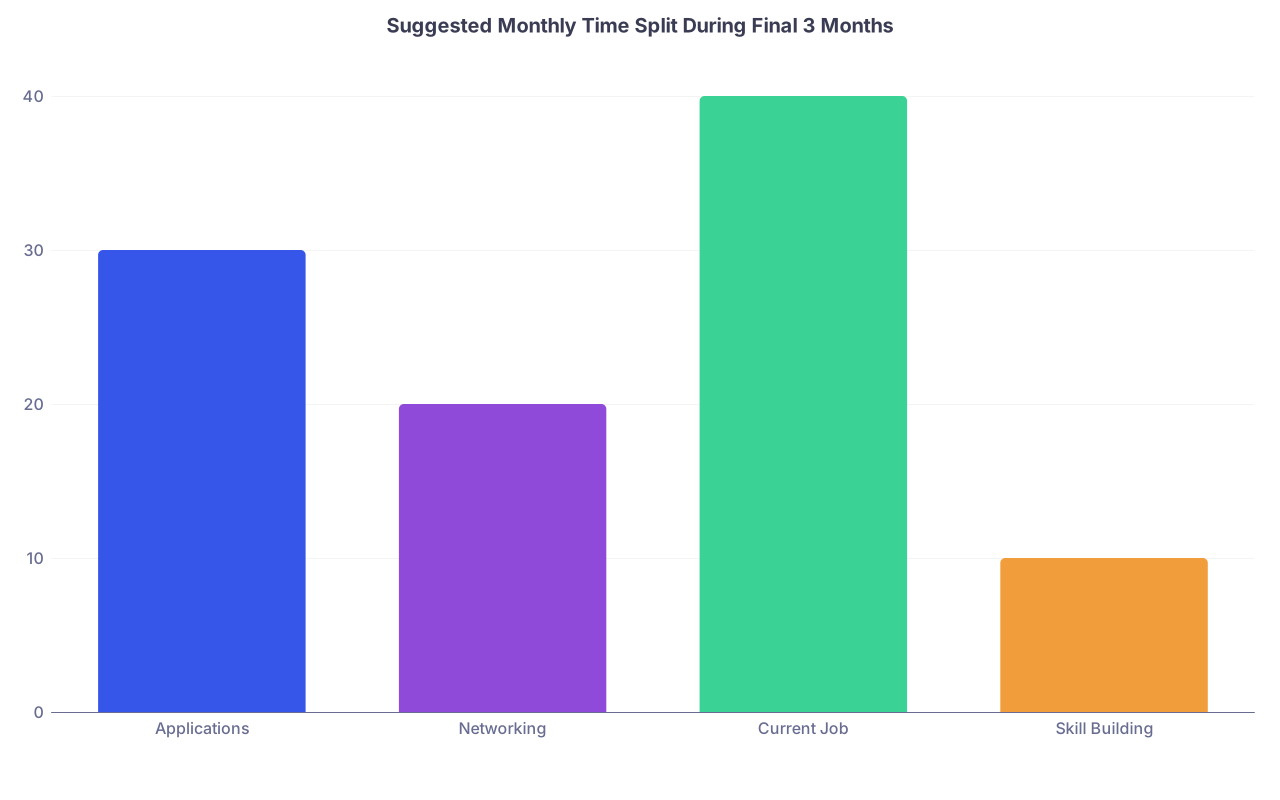
| Category | Value |
|---|---|
| Applications | 30 |
| Networking | 20 |
| Current Job | 40 |
| Skill Building | 10 |
Month 3: Start Applying Strategically
If you wait until you are “totally ready,” you will miss cycles.
At month 3, you should:
Target 5–10 companies, not 200. Focus on:
- Your therapeutic area
- Geographic reality (onsite / hybrid requirements)
- Companies who have hired physicians with similar backgrounds (check LinkedIn)
Send 5–8 tailored applications per month. “Tailored” means:
- Your CV uses similar phrasing to the job description (without copying)
- Your short cover note (or email to recruiter/hiring manager) directly connects:
- Your disease area experience
- Your cross-functional examples
- Your interest in that company’s pipeline or product
Leverage referrals, but respect people’s reputations. When someone seems warm:
- Ask: “Would you be comfortable referring me for [specific role link] if after reviewing my CV you think I am a reasonable fit?” Not: “Can you refer me to anything?”
Month 2: Prepare for Interviews and Plan Your Official Exit
You cannot wing pharma interviews the way you wing clinic small talk. You will sound like a clinician who has not done their homework.
At month 2, you should:
Script your core stories. Have 8–10 robust stories ready for:
- A time you influenced without authority
- A time you changed your position based on new data
- Managing a difficult stakeholder (administrator, surgeon, patient)
- Handling conflicting priorities (clinic vs research vs teaching)
Use the STAR or similar structure briefly. Then practice out loud.
Learn the most common pharma interview themes. Expect questions like:
- “Why pharma and why now?”
- “How will you handle leaving patient care?”
- “Tell me about a scientific project you led end-to-end.”
- “How do you handle working with commercial partners while maintaining compliance?”
Decide your disclosure strategy at work. At some point you must tell someone at your institution. Do not blindside:
- Program director / department chief
- Key colleagues who cover your patients
Rough timing:
- Do not tell them at first screen
- Strongly consider telling them once:
- You have had at least one serious interview (not just a recruiter screen)
- You are moving to panel or finalist rounds
You are now balancing two jobs: your current one, and your upcoming search. Expect some frayed edges.
Month 1 to Final Offer: Exit Execution
You have interviews progressing. Maybe you have an offer pending. This last stretch determines whether you leave cleanly or in chaos.
Month 1: Offer Negotiation and Transition Plan
At month 1, you should:
Negotiate like a colleague, not a desperate escapee.
- Discuss:
- Base salary
- Target bonus
- Equity or RSUs (for biotechs, this matters)
- Sign-on bonus (especially if you are losing a hospital bonus or facing a non-compete gap)
- Clarify:
- Travel expectations
- Hybrid vs fully remote
- On-call equivalents (safety roles, especially)
- Discuss:
Write a structured exit plan for your department. Before you even give notice, sketch:
- Patient panel handoff strategy
- How to wrap up or transition research / QI projects
- Coverage for call, clinics, procedures between notice and last day
When you meet your chief:
- Present it.
- It signals professionalism and protects relationships you may need later.
Confirm licensure and board maintenance plan. Decide:
- Are you keeping a part-time clinical role?
- Will your new employer cover CME and license fees?
- What volume of clinical work you need to maintain for board certification (if you care to keep it active).
Final 2–4 Weeks: Hand-Off and Identity Shift
At this point you should be firmly in execution mode.
Communicate clearly with patients and staff (within institution rules).
- Simple, neutral explanation:
- “I am moving into a new role in the pharmaceutical industry focused on [disease area].”
- Avoid venting about the system on your way out. People remember.
- Simple, neutral explanation:
Hand over institutional knowledge.
- Create brief docs:
- “How I run [clinic/process]” for colleagues
- Open loops for ongoing projects: who owns what after you leave
- Create brief docs:
Mentally detach from the pager. This sounds vague. It is not.
- Stop checking the EHR after your last day
- Remove hospital email from your phone
- Do one symbolic action: put your white coat away, not draped on an office chair you no longer own
You are now on the other side of the 12‑month clock.
Optional: What This Looks Like Compressed
Some of you will try to cram this into 3–6 months. It can be done. It is just messy.
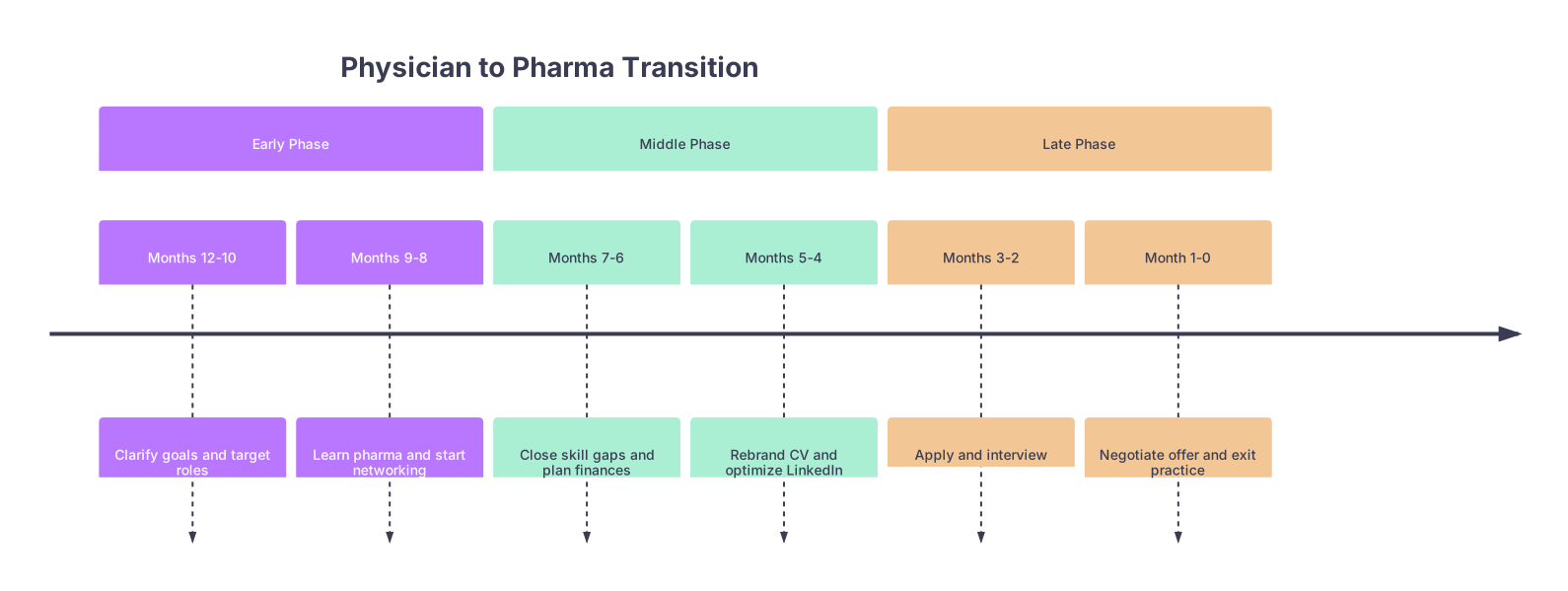
| Period | Event |
|---|---|
| Early Phase - Months 12-10 | Clarify goals and target roles |
| Early Phase - Months 9-8 | Learn pharma and start networking |
| Middle Phase - Months 7-6 | Close skill gaps and plan finances |
| Middle Phase - Months 5-4 | Rebrand CV and optimize LinkedIn |
| Late Phase - Months 3-2 | Apply and interview |
| Late Phase - Month 1-0 | Negotiate offer and exit practice |
If you are under time pressure:
- Merge Months 12–9 into 4–6 weeks of intense learning + networking
- Compress skill gap work and CV rewrite into 1–2 months
But do not skip: - Financial planning
- Interview prep
- An actual exit plan for your patients and colleagues
Those are the pieces that come back to bite you.
Three Things to Remember
- Leaving clinical practice for pharma is not a weekend decision. Treat it like a 12‑month project with phases, not a fluke opportunity.
- At each stage, your job shifts: from exploring, to signaling, to applying, to exiting cleanly. Do the right work at the right time or you will spin your wheels.
- Relationships and reputation follow you. How you leave your patients and colleagues matters just as much as how you show up to your first day in pharma.