
Burned Out in Residency: Options to Explore Non-Clinical Paths Early
What if you already know halfway through residency that you do not want to do this for the next 30 years—but you’ve got $300k in debt and no idea what else a doctor can actually do?
You are not the only one. And no, the answer is not “just hang in there, it gets better” or “maybe you’re just tired.” Sometimes you’re not “just tired.” Sometimes you’re fundamentally misaligned with clinical work, with the lifestyle, or with the entire training structure.
Let me walk through what to do if you’re in that place—while you’re still in residency—and how to explore non‑clinical paths without blowing up your life.
Step 1: Get Clear On Your Situation (Without Panicking)
Before jumping to “I’m quitting,” you need a very blunt snapshot of where you actually are.
Ask yourself three concrete questions:
Am I burned out from this program or from clinical medicine in general?
Example: Are you miserable only on trauma nights at a malignant surgery program… but actually like outpatient continuity clinic and talking to patients? That’s different from feeling dread every time you walk into any patient room.How much time and money do I have to work with?
- Months left in residency/fellowship
- Savings (if any)
- Required notice period if you leave
- Visa status if you’re an IMG on J‑1/H‑1B (critical)
What do I actually enjoy doing during the day?
Not “what should I enjoy as a physician.” What you actually like.- Writing?
- Teaching interns and students?
- Building spreadsheets for QI?
- Working with data/EMR reports?
- Explaining complex things simply?
Make a one-page “reality sheet” with:
- Training level and specialty
- Contract end date
- Debt load and minimum monthly payments
- Savings / financial runway
- Top 3 things you hate about current work
- Top 3 things you do like (even small things)
This isn’t therapy. It’s triage. You need to know whether you’re trying to escape a toxic program, a mis-fit specialty, or clinical medicine entirely.
Step 2: Quietly Open the Door to Non-Clinical Work
You do not need to announce anything to your PD to start exploring non-clinical options. In fact, you shouldn’t. Not yet.
You have three parallel goals:
- Learn what non-clinical careers realistically exist.
- Test what you actually enjoy and can be good at.
- Start building a tiny but real track record outside the hospital.
The Realistic Non-Clinical Buckets
Here’s a simplified map. These are real paths residents have actually taken:
| Path Type | Entry-Friendliness | Time to First Income | Uses MD Heavily? |
|---|---|---|---|
| Medical writing | High | 1-3 months | Moderate |
| Clinical research ops | Medium | 3-9 months | High |
| Pharma/Med Affairs | Medium-Low | 6-18 months | High |
| Health tech/product | Medium | 6-18 months | Medium |
| Consulting | Medium-Low | 6-18 months | Low-Medium |
Now, while still in residency, your priority is exploration with low risk and low time cost. That means:
- 5–10 hours per week max (or you will blow up your training or your mental health)
- Projects you can pause or walk away from
- No expensive degrees or long certs (no, you do not need another $60k MPH right now)
Step 3: Low-Risk Ways to Test Non-Clinical Work While In Training
This is where you move from “reading about non-clinical careers” to actually doing things that look like them.
1. Medical Writing & Content Work
If you’re even half decent with words, this is the easiest on‑ramp.
What you can do as a resident:
- Write patient education articles for online health platforms
- Write board-review style questions (lots of companies hire residents for this)
- Ghostwrite blog posts for physicians or health startups
- Edit or review clinical content for accuracy
Where to find this stuff:
Look up “medical writer – physician” or “question writer – USMLE/board prep” on:
- Indeed
- Company sites like AMBOSS, Osmosis, BoardVitals, etc.
Cold email small health sites:
- Subject: “Resident physician available for part-time medical content review/writing”
- Attach a 1-page CV and one short writing sample (even a de-identified patient handout you made)
What this gives you:
- Proof you can deliver on non-clinical work
- Money (not huge, but real)
- A portfolio you can later show to health tech, education companies, or content roles
Time cost: 2–4 hours/week, ramping up as you want.
2. Clinical Research & Operations (Outside Just Publishing Papers)
You might already be doing “research,” but I’m talking about something more operational: running trials, coordinating studies, understanding how protocols become real life.
Ways to get started:
- Ask research faculty: “Can I help with trial coordination or protocol operations instead of only data crunching?”
- Get exposure to:
- IRB submissions
- Study workflows
- Monitoring visits
- Data capture systems (e.g., REDCap, Medidata)
Why it matters:
- Research operations → entry to CROs (Contract Research Organizations), pharma clinical operations, medical affairs, regulatory roles
- These roles pay reasonably well and value MDs who understand hospital reality.
If your program doesn’t have real trials, look at:
- Regional academic centers needing part-time sub-investigators or co-investigators
- Industry-sponsored trials at your hospital (find the coordinator, they know everyone)
Time cost: Variable, but you can usually carve out some of your “research elective” time to focus on the operational side.
3. Health Tech & Product Exposure
No, you don’t need to code. But if you like fixing broken systems, building better workflows, or complaining about the EMR… this is for you.
Inside your hospital:
- Join or create a QI project that involves:
- EMR build changes
- Data dashboards
- Process redesign
- Make sure your name is on at least one deliverable:
- A new order set
- A dashboard
- A protocol that got implemented
Outside the hospital:
- Go to health tech meetups or virtual events
- Follow 5–10 health tech startups on LinkedIn
- Reach out to 2–3 founders or product managers with short messages:
- “I’m an internal medicine PGY-2 interested in clinical workflow and usability. Happy to give feedback or do a user interview if that’s useful.”
What this gets you:
- Real-world language of product, UX, and implementation
- People who later say, “We actually worked with this resident, they were sharp and helpful.”
Time cost: 1–3 hours/week, plus occasional deeper bursts during lighter rotations.
4. Consulting & Strategy Lite (Without Joining McKinsey Tomorrow)
Full-time consulting from residency is a jump. But you can test the waters.
Tactical options:
Join hospital-level committees:
- Throughput
- Readmissions
- EHR optimization
- Value-based care
Offer to do applied projects:
- “Can I help analyze our readmission data and present a short summary?”
- “Can I map out the steps from ED to floor admission and identify bottlenecks?”
This gives you:
- Basic consulting toolkit: problem definition, data pull, basic analysis, slides, verbal summary
- Stories for later interviews with consulting firms or strategy roles at health systems/companies.
If you’re really into this, do 1–2 case interview practice sessions monthly with friends or online groups—not 10 hours/week. You’re testing fit, not prepping for MBB yet.
5. Teaching, Education, and Academic Adjacent Paths
If your only joy is teaching interns, med students, or explaining things clearly… pay attention.
Micro-steps:
Build one really good teaching session (30–60 minutes), turn it into:
- A polished slide deck
- A handout
- A short quiz or question set
Ask to give it:
- At morning report
- During clerkship teaching
- At a nearby community hospital
Scoot toward:
- Medical education fellowships
- Curriculum development roles
- Ed-tech companies (lectures, courses, Qbank content)
You don’t need to commit to academia forever. But med-ed skills transfer directly to content, instructional design, and some health-tech roles.
Step 4: Protect Your License, Reputation, and Options
You’re burned out, maybe angry, maybe done. That’s fine. Just don’t trash your future out of frustration.
Do Not:
- Rage quit mid-call, mid-shift, or via email.
- Tell everyone on the team, “I’m out of medicine anyway.” Word travels. Fast.
- Blow off duty-hour documentation, charts, or professionalism—those records follow you.
Do:
- Maintain minimum professional standards in clinical work until the day you leave.
- Get copies of:
- Procedure logs
- Case logs
- Rotation evaluations
- Any certificates or CME
- Keep malpractice and board eligibility in mind. Even if you go non-clinical, a clean record is leverage and safety.
If you’re thinking seriously about leaving residency early or not finishing:
- Read your contract carefully for:
- Notice period
- Repayment clauses for signing bonuses or relocation
- Quietly talk to:
- A trusted senior attending outside your chain of command
- A physician coach who has helped people transition out
- If you’re on a visa: an immigration lawyer before you do anything
Step 5: Start Building a Non-Clinical “Mini-CV” Now
You need something that does not scream “Only identity = PGY-3 Internal Medicine.”
Think of a one-page version of you that shows direction. For example:
- “Resident physician + medical writer”
- “PGY-2 with clinical research operations experience”
- “Emergency medicine resident involved in health tech QI project and EMR workflow redesign”
Practical steps:
Create a normal CV and a one-page non-clinical resume.
Add:
- Freelance or part-time roles (medical writing, consulting, etc.)
- Projects with results:
- “Co-led QI project reducing discharge delays by 15% over 6 months”
- “Developed 50+ USMLE-style questions for commercial Qbank”
- “Served as clinical advisor for early-stage digital health app (user feedback, workflow testing)”
Update LinkedIn:
- Headline that reflects both:
- “Internal Medicine Resident | Medical Writer & Clinical Content Consultant”
- 2–3 bullet points under each role with outcomes, not just duties.
- Headline that reflects both:
This is what lets a hiring manager in pharma, tech, or consulting say, “Okay, this is not just a burned-out resident. This is someone already halfway in our world.”
Step 6: Time, Energy, and Sanity Management
You’re already exhausted. So you have to be ruthless.
Here’s what works in reality, not fantasy:
Pick one exploratory lane for 3–6 months.
- Example: medical writing only.
- Or: health tech/QI projects only.
- Stop trying to sample five careers at once.
Choose rotations where you’ll explore:
- Electives
- Research blocks
- Outpatient lighter months
- Night float months usually = bad time (don’t do it to yourself).
Hard cap:
- 5–8 hours per week on non-clinical projects during heavy months
- 10–12 hours per week max during light months or vacation
Watch for the trap of swapping one form of burnout for another. If your “future career exploration” has you more stressed than residency, you’re doing it wrong.
Step 7: When You’re Actually Ready To Pivot
There are three main transition points:
During residency, but staying clinical for now
- You explore non-clinical work, build experience, and then negotiate or design a future hybrid clinical/non-clinical role (e.g., 0.6 FTE clinical + 0.4 industry/consulting/writing).
Right after residency (no fellowship)
- You finish, get board-eligible, and move directly into a non-clinical job or hybrid role.
- Your story: “I completed training, discovered my strengths in X, and now I’m applying my clinical background to Y in a non-clinical capacity.”
Leaving residency early
- Higher risk, but not insane if done with planning.
- More plausible if:
- You’re in later years and clearly clinically competent
- You have some non-clinical track record already
- You’re okay possibly never being board-certified
If you seriously want to leave early, the sequence usually looks like this:

| Step | Description |
|---|---|
| Step 1 | Burned out in residency |
| Step 2 | Clarify finances and timeline |
| Step 3 | Explore non clinical options quietly |
| Step 4 | Build small track record 3 to 6 months |
| Step 5 | Network and apply to targeted roles |
| Step 6 | Review contract and visa issues |
| Step 7 | Plan exit timing |
| Step 8 | Formal conversation with PD |
| Step 9 | Transition to new role |
| Step 10 | Offer in hand? |
Do not walk away with no plan, no savings, and no alternative income path. That’s how people end up stuck, ashamed, and scrambling.
Common Non-Clinical Directions and What They Really Look Like
Here’s a quick reality snapshot, not brochure language.
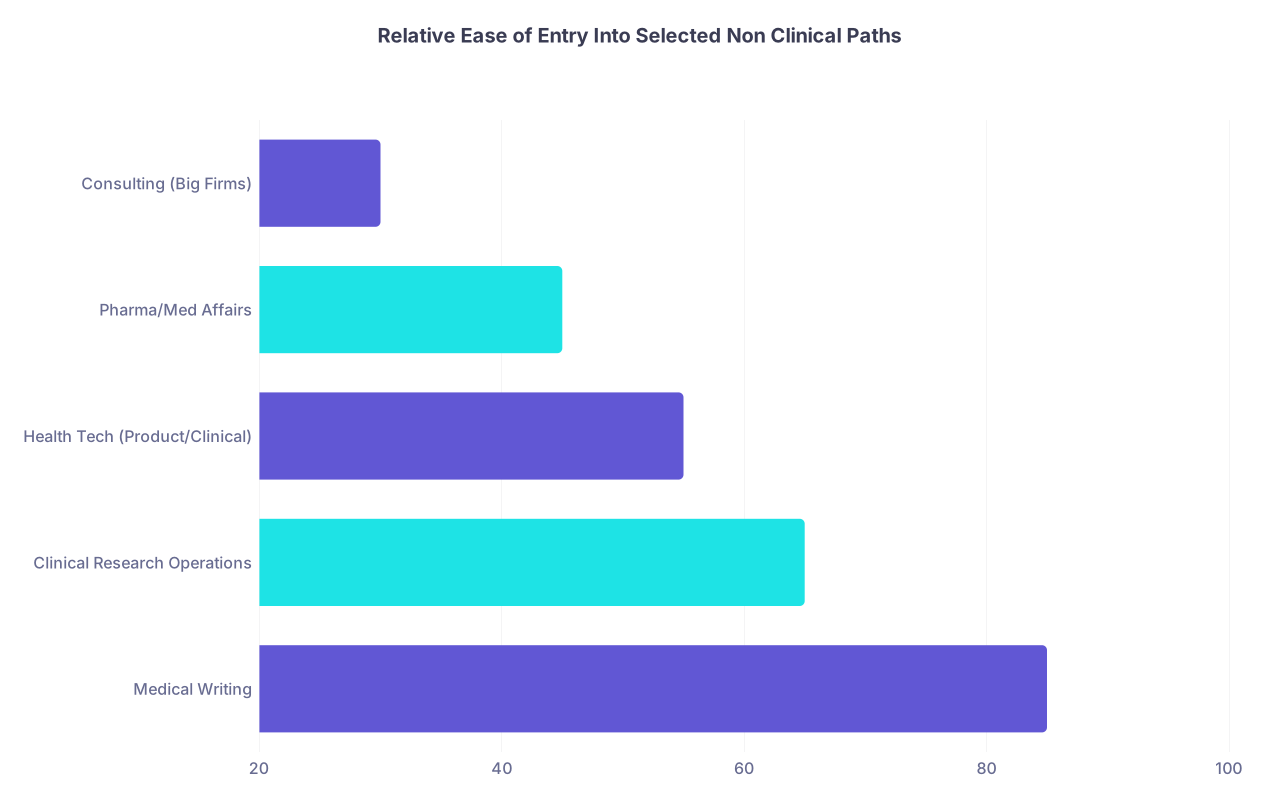
| Category | Value |
|---|---|
| Medical Writing | 85 |
| Clinical Research Operations | 65 |
| Health Tech (Product/Clinical) | 55 |
| Pharma/Med Affairs | 45 |
| Consulting (Big Firms) | 30 |
Interpretation: higher number = easier early entry from residency.
Medical Writing / Content
- Pros: Quick to start, fully remote possible, flexible.
- Cons: Pay starts modest, lots of mediocre gigs, you need to learn basic business boundaries.
- Good for: People who like explaining, structuring ideas, and working alone.
Clinical Research & Pharma Ops/Med Affairs
- Pros: Well-paid, stable, uses your MD heavily.
- Cons: Corporate culture, lots of meetings, can be politics-heavy.
- Good for: People who like structured work, documentation, and cross-functional teams.
Health Tech / Product / Clinical Strategy
- Pros: Fast-paced, creative, real impact on systems, often remote/hybrid.
- Cons: Ambiguity, shifting priorities, sometimes unstable startups.
- Good for: People who like problem-solving, systems, and can tolerate chaos.
Consulting
- Pros: Strong salary, big-brand credibility, broad exposure.
- Cons: Travel (sometimes still), long hours, intense performance culture.
- Good for: People who like structured problem-solving, presentations, and can play the corporate game.
A Simple 6-Month Exploration Plan (While Still in Residency)
Let’s put this into something you can actually follow.
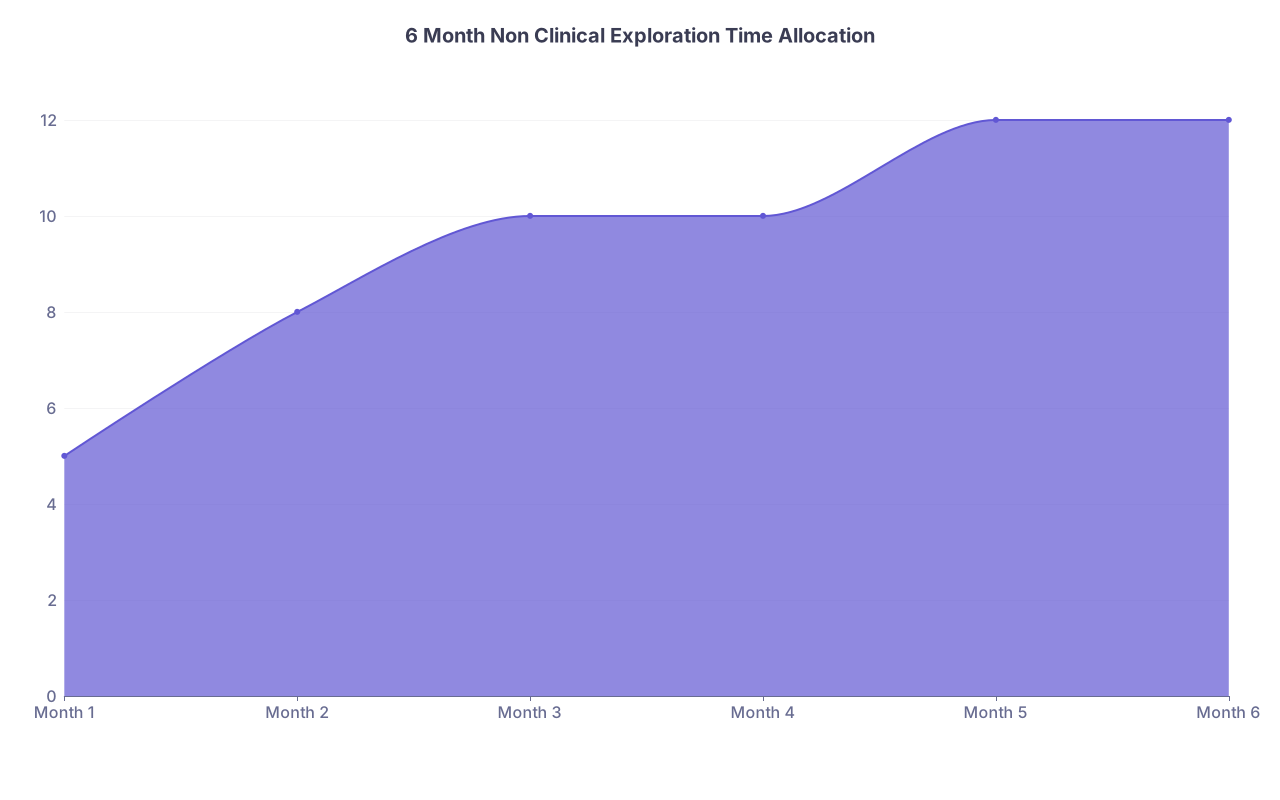
| Category | Value |
|---|---|
| Month 1 | 5 |
| Month 2 | 8 |
| Month 3 | 10 |
| Month 4 | 10 |
| Month 5 | 12 |
| Month 6 | 12 |
Hours per week focused on non-clinical exploration.
Example plan:
Months 1–2: Reality + Exposure
- Write reality sheet
- Pick one lane to test (say, medical writing)
- Create a LinkedIn profile that doesn’t look like a ghost
- Apply to 5–10 tiny gigs or offer to write/review 1–2 pieces for free for a trusted connection
- Join one QI / operations / tech-related project at your hospital (if possible)
Months 3–4: Proof of Concept
- Complete 2–5 small projects (articles, questions, QI tasks)
- Ask for written feedback or testimonials
- Refine what you liked vs hated about each
- Talk to 3 people actually working full-time in that lane (15–20 min calls, focused)
Months 5–6: Decision Point
- Decide:
- Keep exploring same lane more deeply
- Switch to another lane
- Realize you actually want a hybrid clinical/non-clinical career, not to leave medicine entirely
By the end of 6 months, you should have:
- 1–2 real, external non-clinical deliverables
- A much clearer sense of what your days could look like outside the hospital
- Enough insight to make a non-panicked decision about your future
Quick Visual: Residency vs Non-Clinical Role Stress Mix
Just to reset expectations—these paths don’t erase stress, they change its flavor.
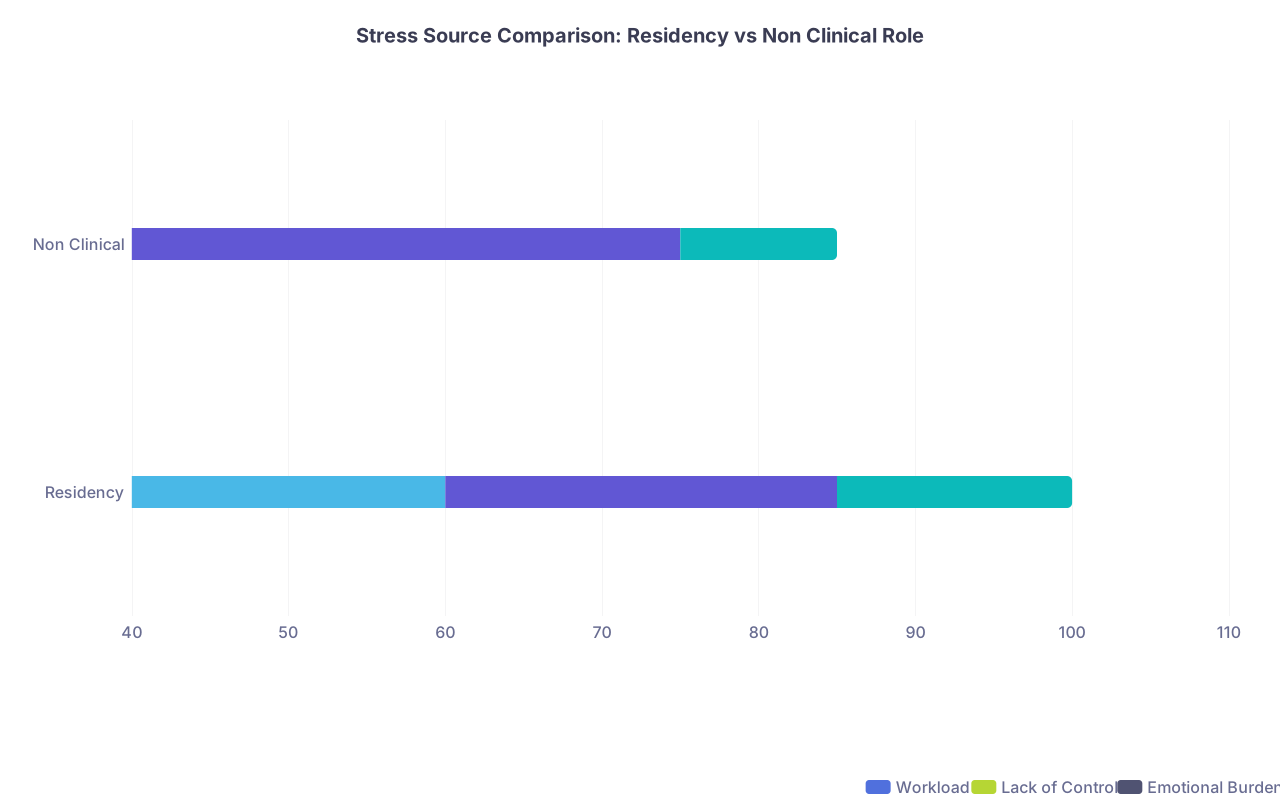
| Category | Workload | Lack of Control | Emotional Burden |
|---|---|---|---|
| Residency | 60 | 25 | 15 |
| Non Clinical | 40 | 35 | 10 |
You’re trading high emotional load and chaotic hours for more controlled but politically and cognitively heavy work. Know what you’re signing up for.
FAQ (Exactly 3 Questions)
1. Is it “wasting” my MD if I go non-clinical this early?
No. The idea that an MD only has value in the exam room is narrow and outdated. Pharma, tech, payors, education, and policy desperately need people who actually know what it’s like to admit a crashing patient at 3 a.m. You’ll use your training differently—through systems, products, content, or strategy—but it’s still using it.
2. Should I finish residency before leaving, no matter what?
Usually yes, but not always. Finishing gives you board eligibility, more credibility, and a fallback. But if the cost to your mental health or safety is too high, or your path is clearly non-clinical and time-sensitive (e.g., a strong offer in hand), leaving early can be rational. The key: don’t leave impulsively. Have a signed offer or a clear income path, reviewed contract, and a realistic budget.
3. Do I need another degree (MBA, MPH, etc.) to get a non-clinical job?
Not to start. Degrees are often used to procrastinate real action. You can absolutely land roles in writing, research ops, health tech, or even some pharma and consulting roles with your MD and actual project experience. If later you hit a ceiling that a degree would solve—and you know exactly why you want it—then consider it. But not as step one.
Key points:
- You can explore non-clinical options quietly during residency with small, targeted projects—without burning everything down.
- Pick one lane at a time, build a mini track record, and protect your license and reputation while you figure this out.
- Don’t let shame or sunk cost trap you. You’re allowed to decide that your future in medicine looks different from what you imagined in M1.