
The medical profession massively undersells how many doctors quietly leave face‑to‑face clinical work and never come back.
If you’re asking “Which alternative medical careers offer the most remote flexibility?” you’re already halfway out the door. Let’s treat this like what it is: a career pivot decision, not a hobby search.
Below I’ll lay out the remote‑friendliest paths, how “remote” they actually are, what skills you need, and the trade‑offs that people only admit privately.
The Remote Flexibility Spectrum (Reality Check)
Not all “remote” roles are created equal. Some are fully asynchronous from anywhere. Others are “you’re home, but chained to a schedule and metrics.”
Here’s the basic hierarchy from most to least flexible (on average):
| Career Path | Remote Flexibility | Schedule Control |
|---|---|---|
| Medical writing/communications | Very High | Very High |
| Non-clinical consulting | High | Moderate–High |
| Health tech / digital health roles | High | Moderate |
| Utilization review / chart review | High | Low–Moderate |
| Telehealth (direct care) | Moderate | Low–Moderate |
| Medical education (online) | Moderate | Moderate–High |
Now let’s go through the major categories where former clinicians and medically trained folks actually land.
1. Utilization Review & Chart Review: Remote, Stable, Rigid
If your priority is: “I want a paycheck, benefits, and zero patient crises,” utilization review (UR) and chart review should be on your radar.
What it is
You’re paid to review medical records and decide things like:
- Is this admission/length of stay/procedure medically necessary?
- Does this meet criteria for inpatient vs observation?
- Does this complex case align with policy/guidelines?
Common employers: health insurance companies, Medicare contractors, disability insurers, workers’ comp carriers, third‑party review organizations.
How remote is it?
For physicians, NPs, and PAs: often 100% remote once you’re trained. Some places require:
- Initial on‑site training for a week or two, then home forever.
- East Coast/West Coast hours, but still from your living room.
Flexibility downside: schedules can be rigid. You might have to be logged in 8–5, no “I’ll work from midnight to 8 a.m. instead” flexibility at most places.
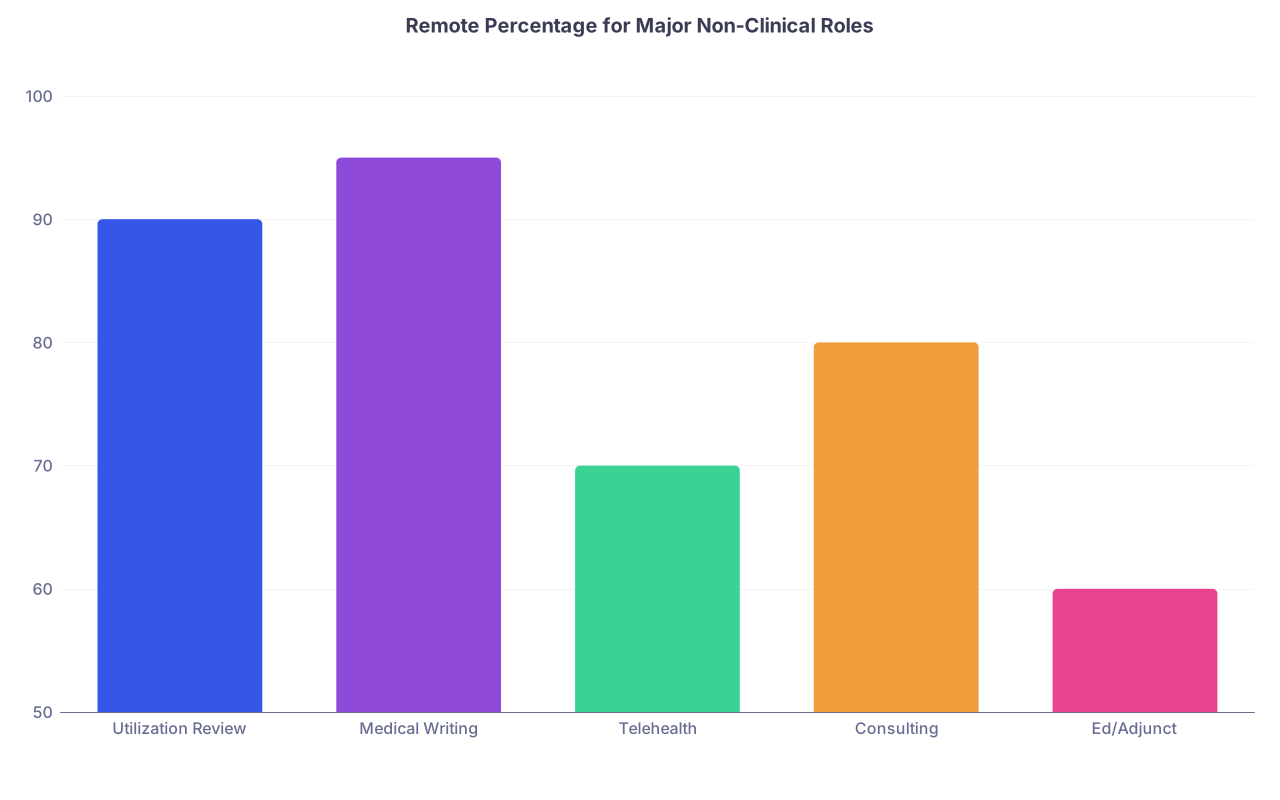
| Category | Value |
|---|---|
| Utilization Review | 90 |
| Medical Writing | 95 |
| Telehealth | 70 |
| Consulting | 80 |
| Ed/Adjunct | 60 |
Pros
- Very predictable.
- Fully remote options are common.
- Low stress compared with frontline care.
- Your medical training is directly valued.
Cons
- Repetitive.
- Production metrics: X charts per hour, Y decisions per day.
- Can feel like “the enemy” if you trained in hospital medicine.
- Limited schedule creativity (it’s remote 9–5, not “whenever”).
Who does well here
- Hospitalists, internists, family med, EM physicians who are burned out but detail‑oriented.
- NPs and PAs with strong inpatient or complex outpatient background.
- People who can tolerate policies and checklists without losing their mind.
If you want remote and stable more than “creative and flexible,” UR is one of the top options.
2. Medical Writing & Communications: Maximum Freedom, No Pager
If you want true flexibility — location + schedule — medical writing and related communications work are at the top of the pile.
What it is
You’re paid to turn complex medical concepts into understandable content:
- CME materials, clinical monographs
- Regulatory documents, clinical trial summaries
- Patient education content for health systems or startups
- Marketing copy (yes, ethically done) for pharma or devices
- Health journalism, blogs, ghostwriting for clinicians
This can be W‑2 employee work, but many people prefer freelance or contract.
How remote is it?
Essentially 100% remote. Companies hiring medical writers frequently don’t care where you live as long as you meet deadlines and can attend scheduled virtual meetings.
I’ve seen people do this from:
- US suburbs
- Rural towns with mediocre internet
- Europe/Asia while technically “US employed” with some time‑zone juggling
Pros
- Top of the list for schedule flexibility. You can often work early morning, late night, weekends—whatever fits.
- Deep medical knowledge is a competitive advantage.
- Scales up or down with your life (parenting, travel, side gigs).
- Clear output: you send work, you get paid.
Cons
- Feast‑or‑famine if you’re purely freelance, especially early.
- You must write well and fast. No way around it.
- You’re a knowledge worker now, not “Doctor in the room.” Identity shift is real.
- You’ll need to learn basic business skills: pricing, contracts, client management.

Who does well here
- People who like explaining medicine and already write decently (teaching notes, patient handouts, presentations).
- Clinicians tired of chaos but not tired of thinking.
- Anyone comfortable being evaluated on output, not credentials alone.
If your top requirement is: “I want to work from anywhere, at odd hours, with zero call,” this is arguably the most flexible alternative medical career.
3. Telehealth & Virtual Clinical Care: Remote, But Still Clinical
Telehealth is what many burned‑out clinicians first imagine. It is remote. It is not always flexible.
What it is
- Synchronous video or phone visits
- Asynchronous care (store‑and‑forward, e‑visits, messaging)
- Often high‑volume, protocol‑driven: urgent care, mental health, chronic disease follow‑up, sexual health, weight management.
Employers: virtual‑first startups, health systems with telehealth lines, national tele‑urgent‑care platforms.
How remote is it?
Location: often fully remote within a country or handful of states where you’re licensed.
Schedule: very mixed.
- Some platforms let you self‑schedule your hours and just log in when you want.
- Others are essentially shift work: “You’re on 8–2 and we track your response time.”
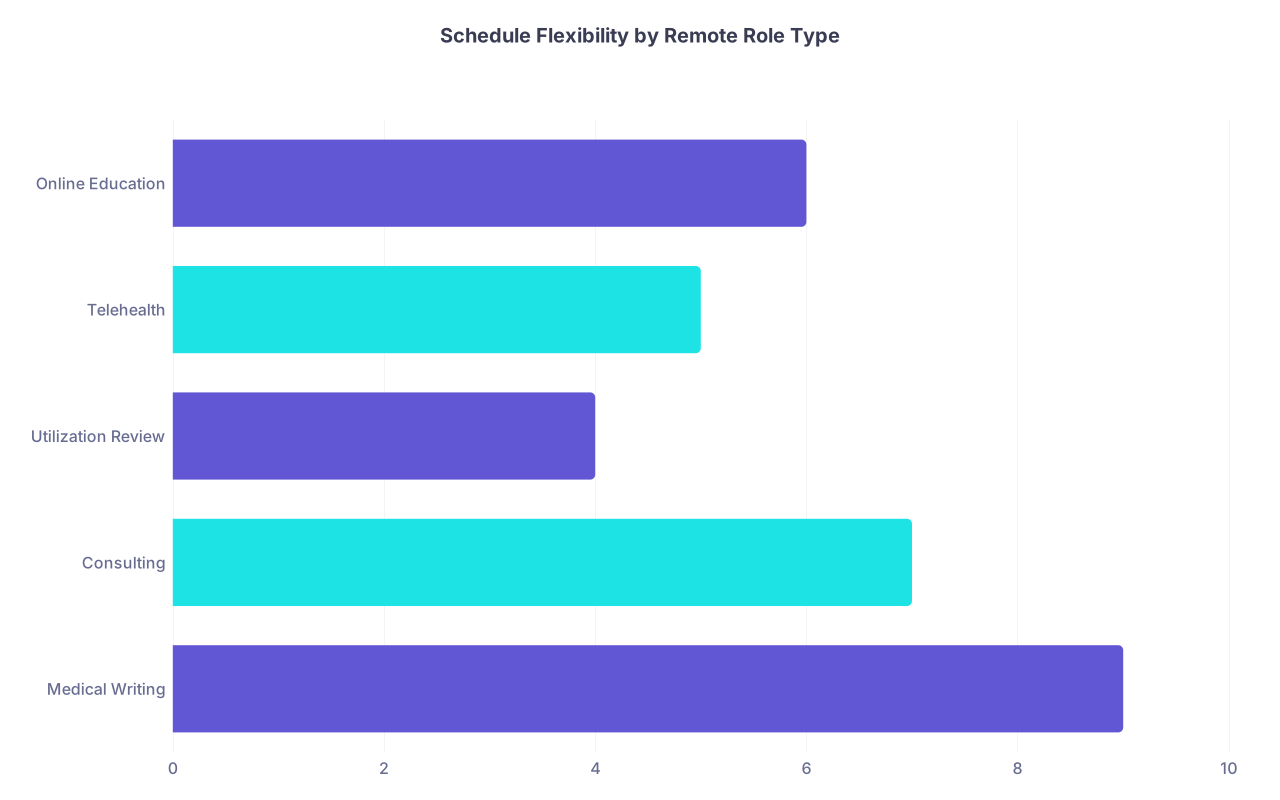
| Category | Value |
|---|---|
| Medical Writing | 9 |
| Consulting | 7 |
| Utilization Review | 4 |
| Telehealth | 5 |
| Online Education | 6 |
(Scale 1–10, higher = more schedule control)
Pros
- You still “use your license” and maintain clinical identity.
- Remote as long as your internet is stable.
- Many part‑time or per‑diem options.
- Can be a bridge job while you build something else (writing, consulting).
Cons
- Metrics, metrics, metrics: call times, patient satisfaction, prescriptions.
- Can still be draining; some platforms push volume hard.
- Licensing and telehealth regulations can be a headache (multi‑state, DEA rules for controlled substances).
- Less schedule control than people hope; plenty of evenings/weekends.
Who does well here
- Primary care, EM, urgent care, psych, and some specialty clinicians who can handle high‑volume, quick decisions.
- People who still like patient interaction but want out of the physical clinic/hospital grind.
If you want remote but still clinical, telehealth is usually step one. Just don’t lie to yourself that it’s pure freedom—because it isn’t.
4. Non‑Clinical Consulting: Remote, High Impact, Moderate Control
“Consulting” covers a lot of ground, from Big 4 strategy firms to niche advisory roles with startups.
What it is
You’re paid for your judgment and domain expertise:
- Strategy consulting (McKinsey, BCG, Bain, LEK) in healthcare.
- Boutique firms specializing in health systems, pharma, devices.
- Independent consultant to digital health startups, clinics, payers.
- Advisory board roles, clinical workflow design, product fit consulting.
How remote is it?
Many consulting roles became hybrid or fully remote, especially post‑COVID. But client work still sets boundaries:
- You’ll have Zoom meetings at certain times.
- Some clients want occasional in‑person workshops or site visits (1–4 times a year).
- Travel is down from the old “Monday–Thursday on the road”, but not always zero.
Where you do gain flexibility is where you live and long‑term scheduling. Many consultants batch intense client weeks with quieter periods.

| Step | Description |
|---|---|
| Step 1 | Initial Client Call |
| Step 2 | Define Problem |
| Step 3 | Data and Stakeholder Interviews |
| Step 4 | Analysis and Recommendations |
| Step 5 | Present Plan |
| Step 6 | Implementation Support |
Pros
- Intellectually interesting, lots of variety.
- Remote‑first opportunities, especially with global or tech‑focused firms.
- Your clinical credibility actually matters.
- Compensation can be strong after you prove yourself.
Cons
- Deadlines and client expectations can kill flexibility during crunch times.
- Steep learning curve: slides, Excel, financial models, strategy frameworks.
- Less predictable day‑to‑day than UR or writing.
Who does well here
- People who like systems thinking more than one‑on‑one care.
- Clinicians who enjoyed QI projects, operations, or committee work.
- Comfortable with business language and ambiguity.
If you want remote, high‑leverage work and you can tolerate some structured hours, consulting is a strong candidate.
5. Health Tech & Digital Health Roles: Product, Ops, Strategy
Digital health startups are full of ex‑clinicians. The good ones know that to build something useful, they need actual medical minds in the room.
Common roles
- Clinical product manager (help design features, clinical logic, user flows).
- Medical director or clinical lead (ensure safety, quality, clinical protocols).
- Clinical operations (design workflows, optimize clinician experience).
- Safety/pharmacovigilance roles in tech‑enabled pharma.
These are typically full‑time employee roles.
How remote is it?
A lot of health tech is now “remote‑first” or “remote‑friendly.” What that usually means in practice:
- You work from home.
- You’re on Slack/Teams a lot.
- Core hours exist (e.g., 10–3 Eastern), meetings sprinkled throughout.
You can’t just disappear for three days and work at 2 a.m. forever. But you also aren’t commuting or doing nights and weekends unless you choose a dysfunctional company.

Pros
- Fully remote is common.
- You shape tools that affect thousands of patients and clinicians.
- Your clinical context is genuinely valuable.
Cons
- Startups can be chaotic. Priorities shift weekly.
- You’re in business now: roadmaps, KPIs, stakeholders.
- Less schedule flexibility than pure freelance work.
Who does well here
- Clinicians who like tech, tinkering with EMRs, improving workflows.
- People who enjoy cross‑functional work with engineers, designers, and execs.
- Those willing to trade some schedule control for interesting projects and salary stability.
6. Online Medical Education & Content: Moderately Flexible, Very Remote
If you’ve ever used an online question bank or watched a Step/Boards video, there’s a clinician or educator on the back end.
What it is
- Creating and recording video lectures.
- Writing exam questions and explanations.
- Curriculum design for online programs (NP schools, health science degrees).
- Running or teaching in virtual CME, bootcamps, or coaching programs.
You can be an employee, contractor, or build your own platform.
How remote is it?
Location: usually 100% remote.
Schedule:
- Content creation is very flexible; you work when you want.
- Live teaching, webinars, or coaching lock you into specific times.
- Academic programs may expect availability for student office hours or grading timelines.
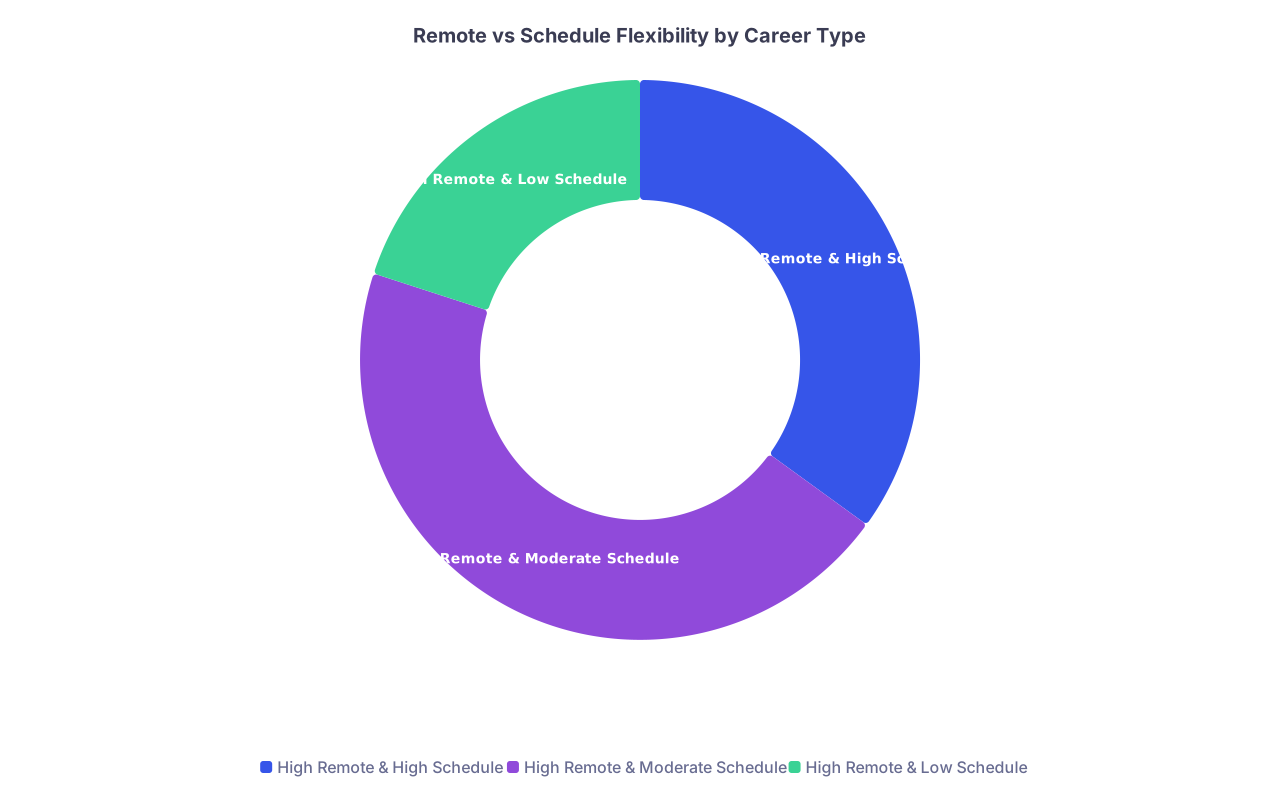
| Category | Value |
|---|---|
| High Remote & High Schedule | 35 |
| High Remote & Moderate Schedule | 45 |
| High Remote & Low Schedule | 20 |
(Approximate distribution across major alternative careers)
Pros
- Very aligned with medical background.
- Often fun if you already like teaching.
- Can pair nicely with another remote role (e.g., half‑time UR + content creation).
Cons
- Academic pay can be underwhelming.
- Adjunct roles are often part‑time, no benefits.
- You need to be comfortable on camera or at least writing clearly.
Who does well here
- People who enjoyed precepting, lecturing, or tutoring.
- Clinicians who already informally teach residents, students, or patients and want to formalize that.
7. Less Common but Very Flexible: Niche and Solo Paths
There are other remote‑friendly paths that are smaller but worth mentioning:
Expert witness / medico‑legal review
Typically remote chart review plus occasional travel for depositions or court. High hourly rates, but unpredictable flow and steep learning curve.Independent coaching/consulting for patients or clinicians
Chronic disease coaching, lifestyle medicine, physician coaching, burnout coaching. Very flexible, but you’re building your own business. No guaranteed income.Entrepreneurship (courses, apps, membership communities)
Ultimate flexibility long term, absolute lack of stability at the start. People underestimate how long it takes to replace a clinician salary here.

These paths win on autonomy and location independence, but they’re not quick fixes.
How to Choose: A Simple Decision Framework
Here’s how I’d structure the decision, bluntly.
Step 1: Rank these three in order of importance for you
- Maximum location flexibility (live anywhere, travel whenever)
- Schedule flexibility (control when you work)
- Income stability (predictable paycheck and benefits)
You don’t get all three at 10/10.
Step 2: Map your priorities to realistic options
If you want location + schedule flexibility and can tolerate income volatility:
Start with medical writing, freelance education content, or building a niche coaching/consulting practice.If you want location + income stability, and can live with some schedule rigidity:
Look hard at utilization review, health tech/Dx startup roles, or telehealth with set shifts.If you want high impact + remote + decent schedule control:
Consider non‑clinical consulting or health tech product/clinical lead roles.
Step 3: Run a low‑risk experiment
Do NOT quit cold without testing.
- Pick 1–2 paths that match your priorities.
- Take a small, real project in that area:
- one freelance writing job
- one consulting call
- part‑time telehealth shifts
- Pay attention to: energy after the work, not just the money.

| Step | Description |
|---|---|
| Step 1 | Clinical Work |
| Step 2 | Try Writing or Content |
| Step 3 | Try UR or Telehealth |
| Step 4 | Try Consulting or Health Tech |
| Step 5 | Test Small Projects |
| Step 6 | Evaluate Fit and Scale Up |
| Step 7 | Primary Goal |
That feedback loop matters more than any generic advice.
Two Hard Truths and a Clear Takeaway
“Remote” ≠ “Free.”
Most alternative medical careers are remote but still have meetings, metrics, and responsibilities. True “work whenever, wherever” is mostly in freelance/independent roles like medical writing, solo consulting, and entrepreneurship.You’re trading one kind of stress for another.
You might escape night shifts and angry families, but you’ll meet deadlines, corporate politics, and sometimes loneliness. That’s normal. It doesn’t mean you chose wrong; it just means work is still work.
If you want a simple rule of thumb:
- For maximum remote flexibility: prioritize medical writing/communications, independent consulting, and online content/education.
- For remote with a steady paycheck: look to utilization review, telehealth, and health‑tech product/clinical roles.
Pick the path that best matches your tolerance for risk, your appetite for learning new skills, and how badly you want to control not just where you work, but when.