
You’re on night float, it’s 2:30 a.m., and you’ve just finished your third admission for DKA. The attending is great, the team is fine, but in the back of your head a quiet question keeps looping:
“Do I really want to do this for the next 30 years? Or is there something else I could do with my MD?”
If pharma has started popping up in your searches, in whispers from senior residents, or in “alternative careers” panels, this is for you.
Let me be blunt: pharma is not a consolation prize for people who “couldn’t hack” clinical medicine. It’s also not a magical escape hatch where you instantly make double the money and work 9–5 doing “interesting strategy things.”
It’s a different industry with its own rules, timelines, politics, and rewards. Sometimes amazing. Sometimes soul‑sucking. Often both.
Here’s the decision framework you actually need.
1. What “Pharma” Careers for Doctors Really Look Like
“Pharma” is vague. You need to understand the actual roles MDs do.
The three most common entry points for physicians:
- Medical Affairs
- Clinical Development (Clinical Research)
- Safety/Pharmacovigilance
There are others (HEOR, regulatory, medical communications, health tech partnerships), but these are the core.

Medical Affairs
This is where most residents and early‑career docs land.
Core work:
- Become the “disease and product expert” inside the company
- Educate external physicians (Key Opinion Leaders) non‑promotionally
- Help design and support investigator‑initiated trials, advisory boards
- Answer complex medical questions from clinicians and internal teams
- Translate science into slide decks, talking points, training materials
Titles you’ll see: Medical Science Liaison (MSL), Associate Medical Director, Medical Director.
Reality check:
You’re not “seeing patients through a different lens.” You’re doing a lot of Zoom calls, slide reviews, evidence summaries, and internal strategy meetings. You need to enjoy talking about data… a lot.
Clinical Development
This is the drug development engine room.
Core work:
- Design and refine clinical trial protocols
- Define endpoints, inclusion/exclusion criteria
- Work with statisticians, regulatory, operations
- Interpret trial data and write study reports
- Interact with health authorities (FDA, EMA, etc.)
Titles: Clinical Scientist, Associate Medical Director, Clinical Development Physician, Global Program Head (later).
Reality check:
This is for you if you genuinely like trial design, reading actual study reports (not just abstracts), and thinking in terms of multi‑year programs, not single patient encounters.
Safety / Pharmacovigilance
Risk‑focused, detail‑oriented work.
Core work:
- Review adverse event reports from trials and post‑marketing
- Decide on seriousness, relatedness, signal detection
- Support risk management plans and labeling changes
- Interact with regulators on safety issues
Titles: Safety Physician, Pharmacovigilance Physician, Risk Management Physician.
Reality check:
Much more “desk medicine” than anything else. Great if you’re detail‑obsessed and like pattern recognition and regulatory thinking. Not great if you’d die of boredom reading case reports all day.
2. Who Is a Good Fit for Pharma vs Who Will Hate It
Let me save you a few years of misery: personality and values fit matter more than your Step score here.
You’re likely a good fit for pharma if you:
- Like systems more than single encounters
- Enjoy writing, editing, and discussing data without getting tired of it
- Don’t need a lot of direct affirmation from patients
- Can tolerate meetings. Lots of meetings. Some pointless.
- Are okay with decisions taking weeks to months through layers of approvals
- Have at least a baseline level of political awareness (you notice power dynamics)
- Like cross‑functional work (marketing, regulatory, legal, statistics, operations)
You’ll probably be miserable if you:
- Need the fast feedback loop of “I did X and the patient got better”
- Hate corporate jargon, PowerPoints, and “stakeholder alignment”
- Want clear, linear career paths with transparent criteria
- Get frustrated when legal and regulatory say “no” to your great idea
- Need full autonomy over your schedule and tasks
- Can’t stomach the idea that commercial interests are always in the room, even when not stated
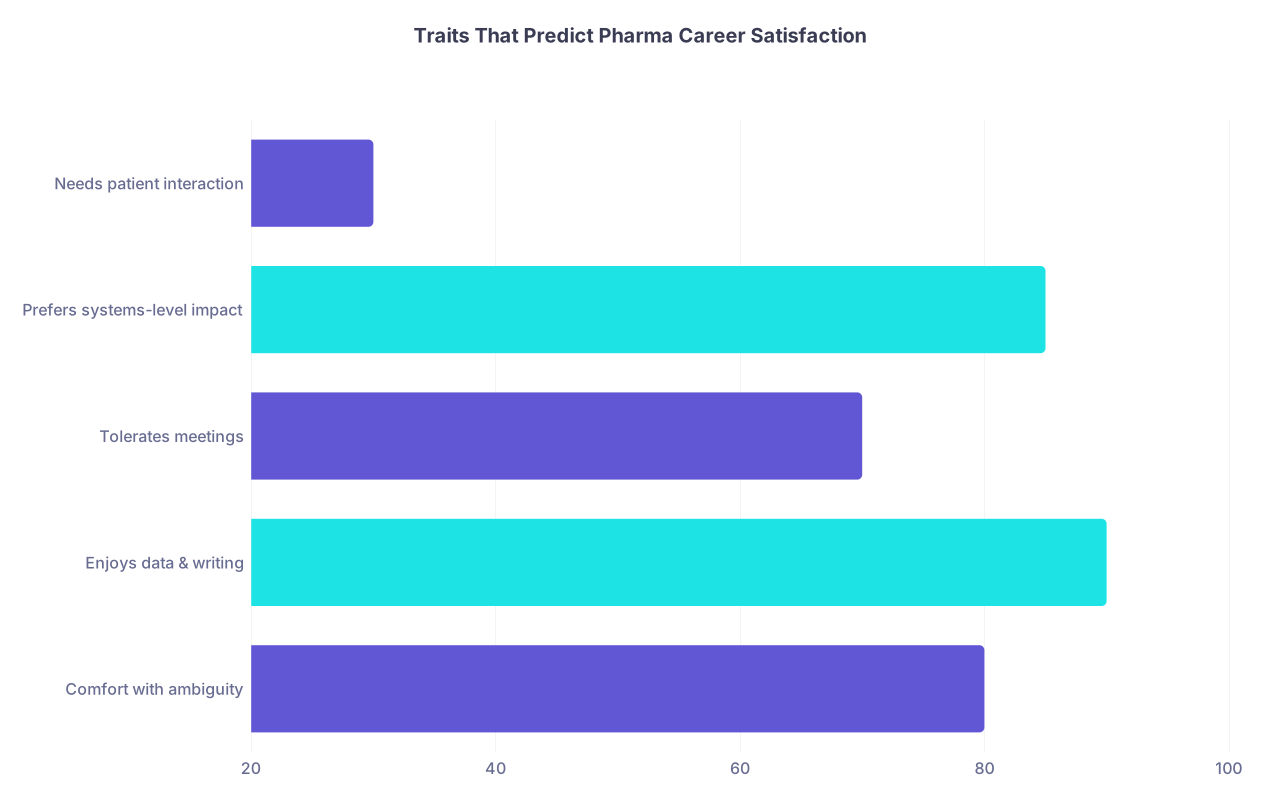
| Category | Value |
|---|---|
| Comfort with ambiguity | 80 |
| Enjoys data & writing | 90 |
| Tolerates meetings | 70 |
| Prefers systems-level impact | 85 |
| Needs patient interaction | 30 |
Translation: if you loved evidence-based journal club, enjoyed QI projects more than call nights, and get a weird joy from rewriting a paragraph until it’s perfect, pharma might fit you very well.
If what keeps you going on surgery is the OR adrenaline and patient gratitude letters, you’ll probably feel empty in a corporate role.
3. Training, Timing, and Credentials: When Can You Jump?
Big question: “Do I need to finish residency to go into pharma?”
Short version: finished residency helps a lot, but you can get in earlier. It just changes what doors open.
| Stage | Realistic Entry Roles | Pros | Cons |
|---|---|---|---|
| Med student (no PhD) | Internships, research assistant | Early exposure | Not a real decision point yet |
| MD only, no residency | Very rare, mostly research roles | Possible at small biotechs, startups | Limited credibility, narrow options |
| Partial residency (PGY1-2) | MSL, junior safety roles (rare) | Faster exit from clinical | Competitive, weaker profile |
| Completed residency | MSL, Medical Affairs, Safety, Dev | Strongest entry point | Delayed transition |
| Fellowship + board cert | Higher entry grade, niche roles | Specialized therapeutic area expertise | More training time before jumping |
My take
If you’re early in residency, absolutely miserable, and sure you don’t want to practice clinically long‑term? It’s reasonable to explore earlier.
But if you can grind to at least complete residency and become board‑eligible, do it. You’ll:
- Have more credibility with external KOLs
- Command higher starting titles and salary
- Have a safer fallback if pharma isn’t what you expected
A PhD or strong research background helps most for clinical development roles. For medical affairs, solid clinical training plus the ability to communicate clearly often matters more.
4. Day‑to‑Day: What Life Actually Looks Like
Strip away the LinkedIn fluff. What’s an average week like?
Typical Medical Affairs Week (Medical Director)
- Multiple internal meetings: brand strategy, medical/marketing alignment, launch planning
- Review and approve medical materials (slides, brochures, talking points) for accuracy and compliance
- Prepare and deliver presentations for advisory boards or internal training
- Call or visit 2–8 external KOLs to discuss data or upcoming trials
- Email grind: answer questions from sales, marketing, regulatory, global teams
Travel: depends on company and role, but 10–40% is common in field-heavy roles (MSLs). More senior or office‑based roles can be mostly remote/hybrid.
Hours: Usually 45–55 hours/week. Can spike around major meetings, data releases, or regulatory events. But yes, generally more predictable than residency.
Typical Clinical Development Week (Clinical Scientist / Dev Physician)
- Work with statisticians on analysis plans
- Meet with CROs and trial sites about recruitment, protocol adherence
- Review patient profiles, adverse events, SAEs
- Draft sections of clinical study reports, protocols, amendments
- Prepare materials for regulatory submissions or health authority meetings
This is more project‑based. You’re living inside a few protocols and timelines that span years.
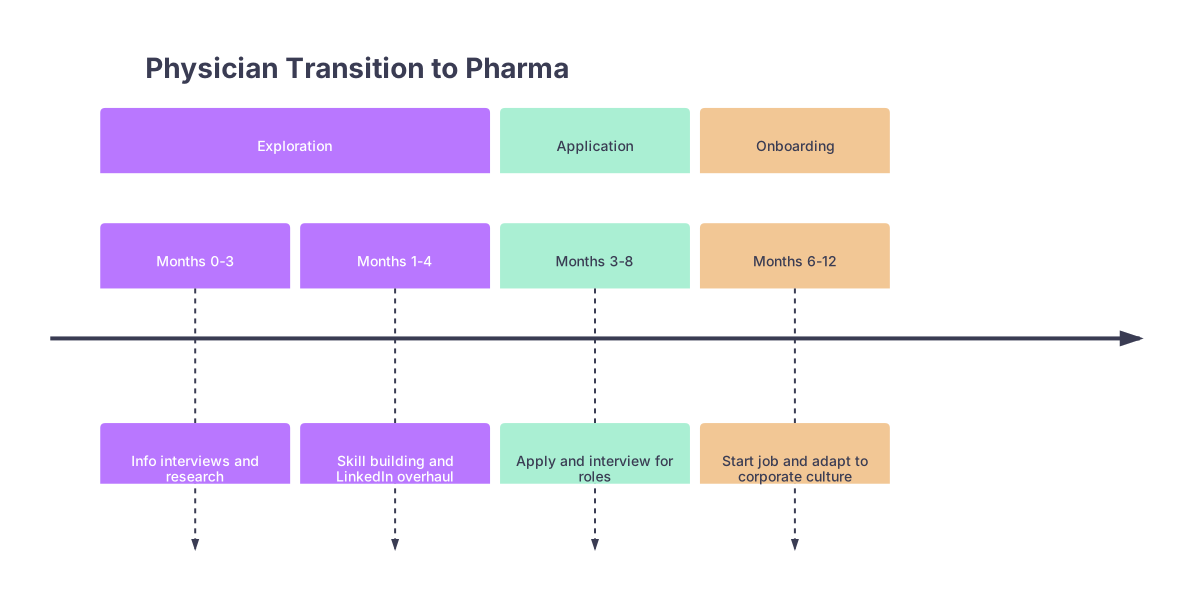
| Period | Event |
|---|---|
| Exploration - Months 0-3 | Info interviews and research |
| Exploration - Months 1-4 | Skill building and LinkedIn overhaul |
| Application - Months 3-8 | Apply and interview for roles |
| Onboarding - Months 6-12 | Start job and adapt to corporate culture |
5. Pros and Cons vs Clinical Medicine
Here’s the part everyone really cares about: is it “better” than staying clinical?
It depends what you value. Let’s be specific.
Biggest Advantages of Pharma for Doctors
Scale of impact
You can influence treatments that reach thousands or millions of patients. If you care about changing guidelines or bringing a new therapy to market, pharma is one of the most direct routes.Lifestyle and predictability
Normal-ish hours. Nights and weekends are rare and usually planned. You’re not carrying a pager for crashing patients.Compensation
Base salary often higher than academic medicine and many primary care roles, especially in industry‑heavy regions. Bonus and stock can be substantial at senior levels.Intellectual environment
You’re surrounded by smart people from different backgrounds (PhDs, MBAs, statisticians, regulatory experts). It stretches a different part of your brain.Geographic flexibility (sometimes)
Remote and hybrid options have expanded. Some roles still require proximity to hubs (Boston, Bay Area, NJ, Basel, etc.), but not all.
Biggest Downsides (That People Don’t Talk About Enough)
You lose direct patient care
That relationship, that identity, that “I helped this person” feeling. Many people don’t realize how much they’ll miss it until it’s gone.Corporate risk and instability
Reorgs, site closures, leadership shake‑ups, pipeline failures. You can be doing great work and still lose your job because a phase 3 trial tanked.Politics and bureaucracy
Decisions aren’t purely scientific. They’re commercial, legal, regulatory, and reputational. You will lose battles where the science is on your side.Golden handcuffs
Once you’re a few years in, with industry salary and stock, it gets harder psychologically and financially to change course.Ethical discomfort
You’re part of a profit‑driven system. Even at the most ethical companies, there are moments where the business goals and what you feel is “best” in an abstract sense don’t perfectly align.
6. How to Test the Waters Before You Jump
Don’t guess. Run small experiments while you’re still in training.
Concrete things you can do:
Research rotations or electives
Industry‑sponsored trials at your institution, T32 programs, CTSA‑linked clinical research rotations. Watch how the sponsor interacts with investigators.Summer or short internships (for med students)
Rare but possible at larger companies for MD/PhD or research‑oriented students.Get close to your institution’s clinical trial ecosystem
Work with the clinical research office, help with protocol development, write sections of IRB submissions, help with data analysis.Talk to actual pharma physicians
Not just the shiny conference speakers. LinkedIn is full of Medical Directors who were in your exact shoes five years ago. Ask for 20‑minute conversations and be blunt with your questions.Present posters, write reviews
Anything that shows you can think, write, and present about data is a plus.
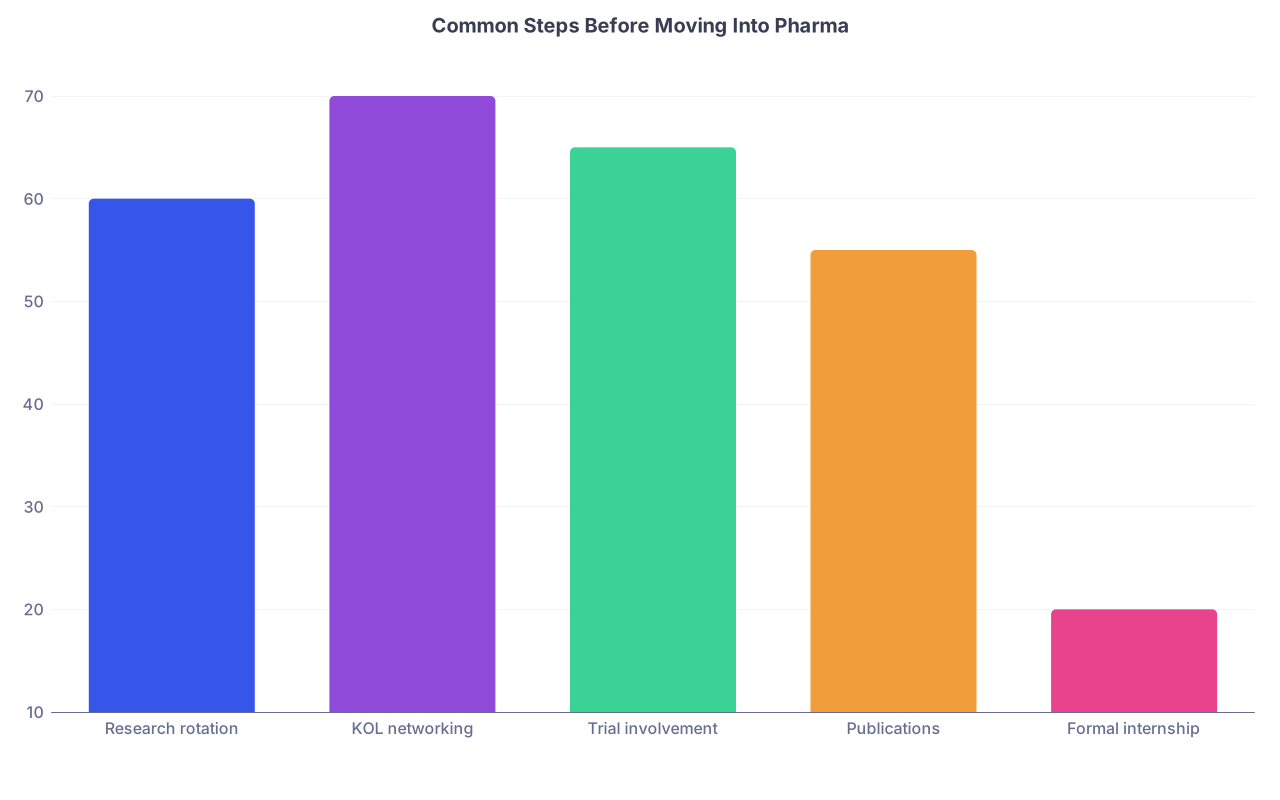
| Category | Value |
|---|---|
| Research rotation | 60 |
| KOL networking | 70 |
| Trial involvement | 65 |
| Publications | 55 |
| Formal internship | 20 |
7. A Simple Decision Framework: Should You Aim for Pharma?
Here’s a blunt checklist. If you answer “yes” to most of these, pharma is worth seriously pursuing.
- Do you feel more energized by reading and discussing studies than by direct patient encounters?
- Do you like the idea of working on one disease area in depth for several years?
- Can you handle slower feedback loops and decisions by committee?
- Are you willing to learn “corporate” as a language: slides, KPIs, cross‑functional politics?
- Would you be okay never billing another E/M code again?
And equally important:
- Are you ready to let go of the identity of “I am a clinician” as your primary professional label?
Some people do hybrid roles (0.2–0.3 FTE clinic, 0.7–0.8 industry), but those are more common once you’re established.
If that last question makes your stomach drop, you might be better in academic medicine with strong industry collaboration rather than jumping fully to pharma.
FAQ (Exactly 5 Questions)
1. Do I need a PhD to work in pharma as a physician?
No. An MD with completed residency is more than enough for many roles, especially in medical affairs and safety. A PhD helps mostly for highly technical clinical development and research leadership roles. Strong clinical experience plus a good scientific track record (publications, trials, serious research experience) can substitute very well for a PhD.
2. Is it possible to go back to clinical practice after working in pharma?
Yes, but the longer you’re out, the harder it gets. If you maintain your license, CME, and board certification, returning to outpatient practice is very doable within the first few years. Returning to high‑acuity or procedural specialties becomes harder over time and may require refresher training or a supportive group willing to invest in re‑entry. Don’t assume you can “easily” bounce back after 10 years away.
3. How competitive are entry‑level pharma roles for physicians?
Quite competitive, especially for locations like Boston, San Francisco, and big‑name companies. You’re competing with other MDs, MD/PhDs, and sometimes experienced PhDs for the same associate medical director or clinical scientist roles. Having relevant experience—clinical trials, publications, subspecialty expertise, genuine interest in the therapeutic area—matters a lot. This isn’t a backup plan you casually wander into.
4. Can international medical graduates (IMGs) get pharma jobs in the US or Europe?
Yes, IMGs can and do. But you’ll face the usual visa and sponsorship hurdles, and some companies prefer or require local licensure or board certification for certain roles. Having US or EU residency training, publications, and solid communication skills is key. For non‑US‑based IMGs, working in the pharma industry in your home or training country, then transitioning to a global role, is a common path.
5. What’s the single best thing I can do during training if I’m even mildly interested in pharma?
Get genuine exposure to clinical research and talk to at least five physicians currently in pharma. Help with a clinical trial, write or co‑author a paper or review article in a therapeutic area that interests you, and start building a small network of industry physicians on LinkedIn. That combination—real trial experience, visible scholarship, and real contacts—will tell you more in 6–12 months than any amount of abstract Googling.
Key points: pharma can be an excellent path if you care about data, systems, and large‑scale impact more than individual patient encounters; completing residency gives you much better leverage and options; and you should test your interest with real research and real conversations long before you sign a corporate contract.