
The usual advice about “10 years of clinical experience before going to industry” is outdated—and often flat‑out wrong.
If you’re asking how many years of clinical experience you should have before moving into pharma, medtech, health tech, consulting, or other non‑clinical roles, here’s the blunt answer:
- For most industry roles, 2–5 years of solid, full-time clinical experience after training is enough.
- More than 7–10 years is not automatically better—and can actually make transitioning harder in some sectors.
- Zero years is possible in specific paths (e.g., informatics fellowships, some start‑ups, research‑heavy roles), but you’ll pay a credibility tax.
Now let’s get specific and stop talking in vague generalities.
The Real Answer: It Depends What “Industry” You Mean
“Industry” is too broad. A hospital-employed CMIO is not the same as a pharma MSL, or a Series B digital health startup, or McKinsey Healthcare.
Different sectors value clinical experience differently.
| Sector / Role Type | Common Range (Post-Training) |
|---|---|
| Pharma – MSL / Medical Advisor | 2–5 years |
| Medtech / Devices – Clinical | 2–5 years |
| Health Tech / Startups | 0–5 years |
| Hospital Admin / Population Health | 3–7 years |
| Big Consulting (MBB, etc.) | 0–3 years |
| Biotech / Translational Research | 0–5 years |
Those are not hard rules. They’re what I keep seeing in actual CVs of people who successfully made the jump.
A Simple Framework: What You Actually Need Before Leaving
Forget years for a second. Think in terms of capabilities and credibility. You’re ready to move when you can check three boxes:
You’ve completed your core clinical training
That usually means:- Finished residency (and fellowship if your specialty requires it to be credible, e.g., cards, heme/onc).
- Board‑eligible or board‑certified.
Leaving before finishing training is almost always a bad trade unless you have a very specific, high‑leverage path (e.g., strong data science background, funded startup, or moving into a non‑physician tech role and you are 100% done with clinical practice).
You’ve had enough real-world patient exposure to understand patterns
Not just “I did residency.” I mean:- Managed your own panel or service.
- Seen how care actually breaks under time pressure, EMR chaos, insurance nonsense.
- Dealt with outcomes, not just admissions.
For most people, this is about 2–3 years post‑training.
You’ve gained some non‑clinical leverage
Example:- Research/publications in a relevant area
- Quality improvement or leadership roles
- Experience with guidelines, pathways, or formulary decisions
- Product, informatics, or data work
If you have those three, the exact number of years matters a lot less than people claim.
By Role Type: How Many Years Actually Make Sense?
1. Pharma (MSL, Medical Affairs, Safety, HEOR)
This is where people get hung up on “you must have 10+ years.” No.
Typical sweet spot: 2–5 years post‑training
Good timing:
- You’ve practiced independently long enough to be taken seriously by KOLs.
- You understand real prescribing behavior and what actually drives choice.
- You’re not so entrenched that you can’t relocate, travel, or learn an entirely different corporate culture.
When >7–10 years helps:
- Very senior roles (medical director, TA head, VP).
- You’re a true KOL with publications, guideline roles, or widely recognized expertise.
When too much experience hurts:
- You’ve been in a narrow private practice box for 15–20 years with minimal research or QI.
- You look like someone who might struggle with corporate matrixed environments and rapid change.
2. Medtech / Devices (Clinical Specialist, Medical Affairs, Strategy)
Devices like cardiology, orthopedics, interventional fields often love 2–7 years:
- For clinical specialists / FAS roles: 2–5 years is usually enough.
- For medical directors or strategy: 5–10+ years is common, but you need more than “I used the device”—they want clinical plus business/research/innovation exposure.
If you come from procedure-heavy fields (cards, IR, ortho, anesthesia), 3–5 years of robust case volume is often the right point to pivot. Earlier and you look green. Much later and they may question why you’d walk away from high clinical income.
3. Health Tech / Digital Health / Startups
This is the wild west.
Range: 0–5 years is very common.
Patterns I see work:
- Resident/fellow with strong technical background (coding, data science, product) → joins as clinician‑informaticist or product person straight out.
- 2–3 years as attending → joins Series A/B company as clinical lead, SME, or medical director.
- Later‑career physicians (10+ years) → usually in CMO / advisory roles, if they bring networks, brand, or a niche expertise.
Here, skill fit beats years:
- Do you understand product cycles, user research, and metrics?
- Can you translate messy clinical workflows into product requirements?
- Are you comfortable with risk, ambiguity, and lack of structure?
If you’re early in your clinical career and you’re genuinely interested in tech, you don’t need to “serve 10 clinical years” first. Two to four years of honest, full‑throttle clinical practice gives you enough context to be useful.
4. Hospital Administration, Quality, Population Health
For formal leadership roles (CMO, quality director, population health lead), 3–7 years is typical for entry to mid-level leadership.
Why that range works:
- You’ve seen enough cycles, policy changes, and system failures.
- You’ve hopefully had chances to lead: committees, QI projects, guideline work.
- You’re still close enough to the bedside to be credible with frontline staff.
More than 10–15 years can still be fine—but you must show leadership progression, not “just” volume.
5. Big Consulting (McKinsey, BCG, Bain, etc.)
Here, clinical years are often a nice‑to‑have, not a requirement.
Common paths:
- Fresh grad MD/DO with zero residency: yes, people do this, especially with strong academic or business backgrounds.
- 1–3 years of residency or attending: gives you real-world insight and maturity.
- 10+ years, full career clinician: less common, but possible when paired with clear leadership and operations impact.
Sweet spot if you actually care about being a doctor at all: finish residency, practice 1–3 years, then consider consulting. That way, you can return to clinical if you hate it, and your MD doesn’t become purely theoretical.
The Hidden Tradeoffs by Waiting Longer
Everyone loves to say, “I’ll do 10–15 years, then go to industry if I burn out.” Reality is less kind.
Here’s what actually happens when you delay too long:
- You get financially trapped. Big house, kids in private school, two car payments. Walking into a lower‑paying entry‑industry job becomes almost impossible mentally, even if it’s strategically smart.
- Your learning curve tolerance shrinks. You’re used to being competent and efficient. Going back to “new grad” status in a corporate setting is painful.
- You look less flexible on paper. Recruiters sometimes whisper: “Will they adapt to fast‑moving environments, or are they too set in their ways?”
None of that means you shouldn’t transition at 45 or 55. People do it successfully all the time. But if industry is your likely destination, blindly accumulating “more years” without adding strategic skills is a mistake.
Good vs Bad Reasons to Accumulate More Clinical Years
Let me be blunt.
Good reasons to stay longer in clinical practice before pivoting:
- You genuinely enjoy patient care and are not sure you want to leave it.
- You’re building a niche (e.g., heart failure, IBD, multiple myeloma) and plan to use that specificity in industry.
- You’re intentionally taking leadership roles, QI, research, or informatics to strengthen your profile.
- You’re paying down high‑interest debt to give yourself flexibility.
Bad reasons:
- “I heard I need at least 10 years or no one will respect me.”
- “I’m scared to be a beginner again.”
- “I’ll think about it after I’m completely burned out.”
Your goal is not to maximize years; it’s to maximize transferable value.
How to Decide Your Personal “Right Number”
Here’s a simple decision track. Don’t overcomplicate it.

| Step | Description |
|---|---|
| Step 1 | Finished Training? |
| Step 2 | Finish Residency or Fellowship |
| Step 3 | Practiced 2+ Years? |
| Step 4 | Stay Clinical 1-2 More Years |
| Step 5 | Have Nonclinical Leverage? |
| Step 6 | Get Projects - QI, Research, Leadership |
| Step 7 | Start Targeted Industry Networking |
| Step 8 | Apply for Entry or Mid-Level Roles |
If you’re:
- In training: Finish it. Get your board eligibility. Use this time to build research, QI, informatics, or business skills that align with where you want to go.
- 0–2 years out: Focus on becoming a competent clinician and pick 1–2 non‑clinical projects with real outcomes.
- 2–5 years out: This is prime time to explore industry roles seriously.
- 5–10+ years out: Stop waiting for the “perfect” moment. Focus on making your experience legible to industry—leadership, outcomes, systems improvement—not just years and RVUs.
How Recruiters Actually Look at Your Experience
Recruiters and hiring managers do not sit around counting your exact years. They look for evidence of three things:
Clinical credibility
- Completed training, board status.
- Real independent practice.
- For specialty‑linked roles: alignment between your specialty and their therapeutic area.
Strategic or translational thinking
- Have you done anything beyond “see one, do one, bill one”?
- QI, pathway development, EMR optimization, clinical trials, committees, peer‑reviewed work.
Adaptability and communication
- Can you talk to non‑clinicians without jargon?
- Can you handle ambiguity, matrixed decision‑making, and corporate pace?
Years are just a proxy. If you give them better, clearer evidence, the raw number matters less.
A Quick Reality Check: If You’re Thinking About Leaving Very Early
Can you go to industry with:
- No residency? Yes, but usually not as “physician” roles. You’ll be competing more as a generic advanced degree holder, and it’s much harder to go back.
- Finished residency, 0–1 years as attending? Possible, especially in tech, consulting, or methodologic/research roles. Credibility with frontline clinicians may be weaker, but not fatal.
- Mid‑residency? Only if you’re truly intending to leave clinical medicine and have a strong alternative (e.g., data science, CS background, startup with traction). For most people, it’s better to finish.
Visual Snapshot: Clinical Years vs Common Pivot Points
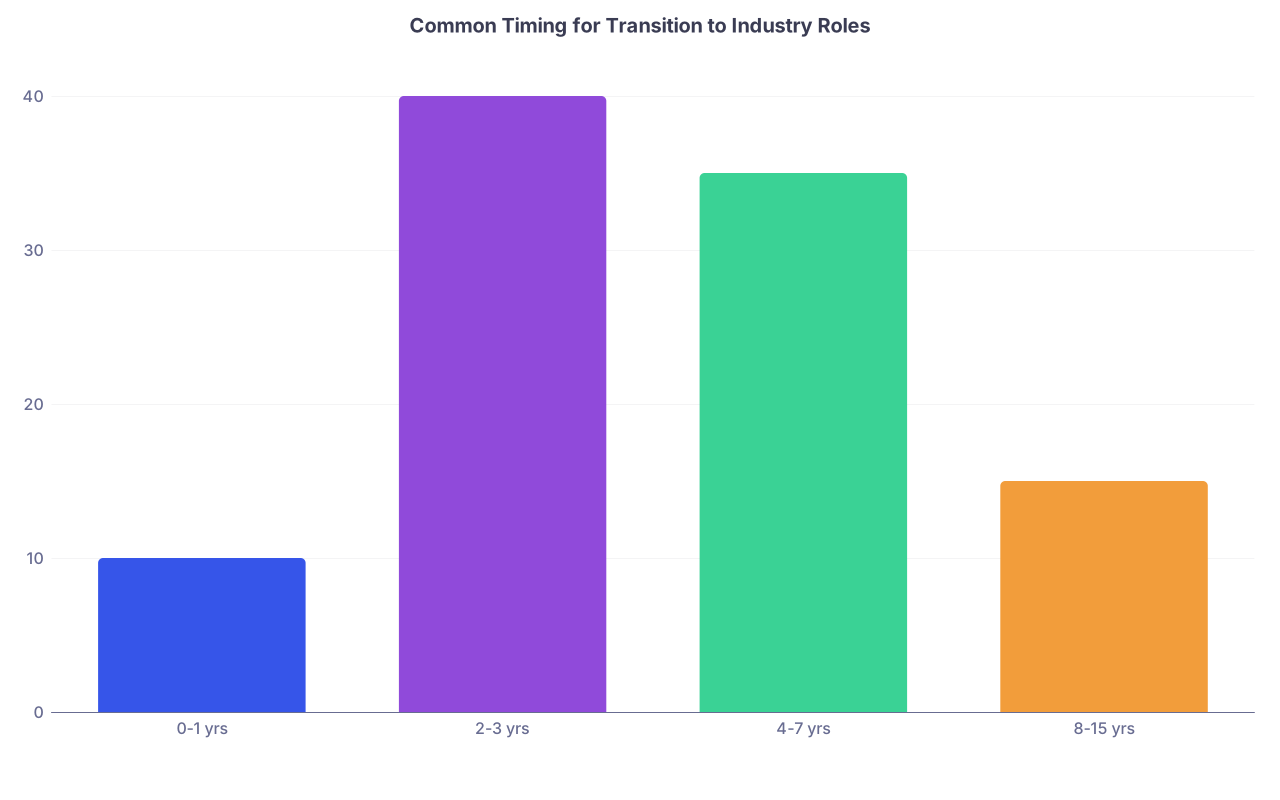
| Category | Value |
|---|---|
| 0-1 yrs | 10 |
| 2-3 yrs | 40 |
| 4-7 yrs | 35 |
| 8-15 yrs | 15 |
The “2–7 years” window is where most successful transitions cluster. Before that, you’re often too green. After that, it still works—but you’ll need to be more intentional.
How to Use Your Next 12–24 Months
If you know industry is in your future but you’re not there yet, use the next year or two intentionally:
- Pick 1–2 aligned projects: clinical trials, guideline committee, QI initiative, EMR optimization, or informatics.
- Document outcomes: not “worked on committee” but “reduced 30‑day readmissions by 8%” or “implemented new pathway across 3 hospitals.”
- Build relationships: talk to MSLs who visit, vendor reps, or your hospital’s informatics/IT, or admin leaders.
- Learn the language: basic health economics, regulatory concepts, clinical trial phases, or product development—depending on your target sector.
That prep is worth far more than simply saying, “I worked 5 extra years.”

Key Takeaways
- There is no magic number, but for most physicians, 2–5 years of post‑training clinical practice plus meaningful non‑clinical projects is enough for a strong industry transition.
- More years are not automatically better. Focus on building leverage—niche expertise, leadership, QI, research, informatics, or product skills.
- If you’re already past the “ideal” window, stop stockpiling years and start making your story legible to industry now.
FAQ (Exactly 7 Questions)
1. Is it a mistake to leave clinical medicine after only 2–3 years?
Not necessarily. If you’ve completed training, practiced independently, and built some non‑clinical leverage (research, QI, leadership, informatics, product work), 2–3 years can be an excellent time to transition. You still have fresh clinical credibility and you’re early enough in your career that you can adapt, move, and re‑skill without feeling locked in. The mistake is leaving with no real clinical grounding and no transferable skills; leaving after a few solid years is fine.
2. Will industry pay less than clinical work early in my career?
Often yes, especially if you’re in a high‑earning specialty. Early industry roles—MSL, junior medical affairs, clinical specialist, junior medical director—may pay less total cash than a busy proceduralist or even a well‑compensated hospitalist. However, comp can be comparable to many primary care/specialist roles, especially once you factor in bonus, equity, and benefits. Over time, senior industry roles can out‑earn average clinicians. But if your ONLY goal is short‑term highest salary, staying in clinical longer usually wins.
3. Can I go back to clinical work after a few years in industry?
Yes, but it gets harder the longer you are out. If you leave after 2–5 years of practice and stay connected (part‑time clinic, locums, telemedicine, or CME + occasional shifts), returning is very feasible. If you’re completely out of practice for 7–10+ years, re-entry may require refresher programs and some employers will hesitate. If maintaining the option matters to you, keep a small clinical footprint for as long as possible.
4. Do I need publications or a PhD to get a pharma or medtech job?
No, not for many entry‑level or mid‑level roles. They help, but they are not mandatory. What you absolutely need is clear subject matter expertise and the ability to discuss evidence, guidelines, and real‑world practice patterns. One or two solid clinical research projects, QI initiatives with measurable outcomes, or guideline work can substitute for formal higher degrees in many roles. For more research‑heavy or HEOR roles, advanced degrees do matter more.
5. I’m a PGY‑2 and miserable. Should I quit and go straight to industry?
Usually no. Unless you have a very strong alternative (coding/data skills, prior industry experience, startup with traction), quitting mid‑residency locks you into a narrower, less flexible set of options and makes returning to clinical work difficult. A much better move, in most cases, is to finish residency, then practice independently for at least 1–2 years while building non‑clinical experience on the side. You’ll have far more leverage and optionality.
6. Does specialty matter for how many years I need?
Yes, a bit. For fields tightly linked to industry needs (oncology, cardiology, rheumatology, neurology, ID), even 2–3 strong years after fellowship can be compelling. For broader fields (internal medicine, family med, EM), your years matter less than what you did with them—leadership, QI, population health work, or tech/product involvement. Proceduralists often sit in a gray zone: they give up high income when they move, so it’s more about personal priorities than any industry minimum.
7. I’m 15+ years into practice. Is it too late to move to industry?
No, but you need to be strategic. At that stage, hiring managers expect either clear leadership (medical director, CMO, department chief) or deep niche expertise (true KOL, trialist, guideline author, recognized national speaker). You’re unlikely to be hired as a basic entry‑level MSL with 20 years in practice and no other differentiator. Focus on roles that value your seniority—medical director/VP in pharma or medtech, CMO roles in health systems or startups, advisory and strategic positions—and make your leadership and impact front and center in your CV and story.
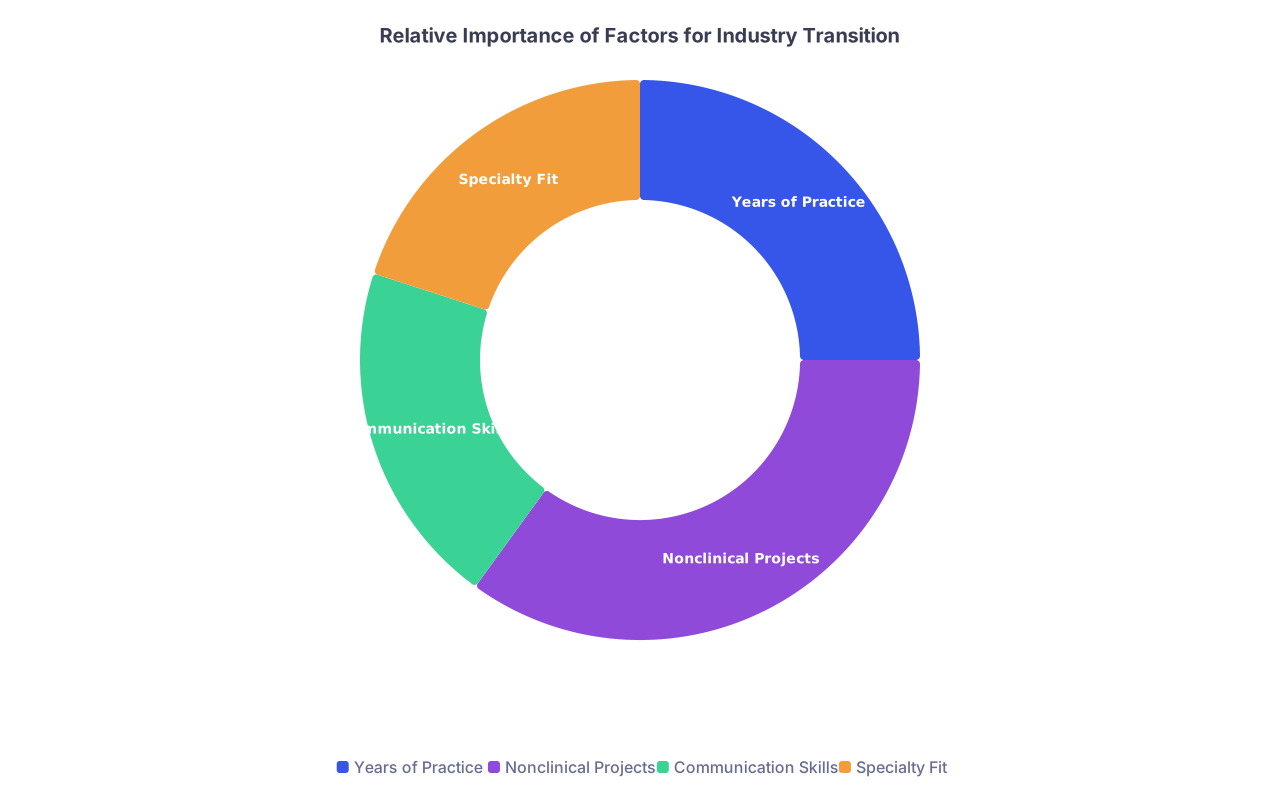
| Category | Value |
|---|---|
| Years of Practice | 25 |
| Nonclinical Projects | 35 |
| Communication Skills | 20 |
| Specialty Fit | 20 |