

The biggest mistake new attendings make is treating relocation like a weekend project instead of a year-long operation.
You are not just moving apartments. You are moving licensure, credentialing, insurance, loans, benefits, reputation, family, and your nervous system. If you start 3 months out, you are already behind.
Here is the 12‑month countdown I give residents when they ask me how to relocate smartly as a new attending. Month by month. Then week by week at the end. Follow this and you will avoid the worst disasters.
12–9 Months Out: Define Your Target and Gather Intel
At this point you should not be on Zillow. You should be clarifying where and why.
Month 12: Career and Location First, Real Estate Later
Focus: Strategy, not logistics.
Clarify what you actually want from your first attending job:
- Academic vs community vs hybrid
- Procedural volume vs lifestyle
- Research/teaching expectations
- Call structure and backup support (who covers you when you are buried?)
Decide your geographic buckets:
- Region(s) you will realistically accept
- States where you already have ties (family, med school, undergrad)
- States with reasonable licensing timelines (hint: California is not fast)
Start a simple tracking spreadsheet:
- Columns: City, State, Institution, Specialty need, Contact, Notes, Pros/Cons, Compensation ballpark
- Add one column for “Red flags” (high turnover, toxic leadership, chaos EMR, etc.)
Talk to people who already work there:
- Residents who matched there
- Fellows who rotated there
- Former co‑residents now in that region
- Ask blunt questions:
- “How many people left in the last 2 years?”
- “How does administration respond when something goes wrong?”
- “Would you sign your same contract again?”
You are building a short list of places before you ever worry about moving trucks.

Month 11: Understand Cost of Living and Compensation
At this point you should be comparing reality, not vibes.
Pick 5–10 likely cities and run numbers:
- Use cost of living calculators comparing your current city to each target
- Look at:
- Median rent / mortgage
- Property taxes
- State income tax
- Childcare costs
- Commute times
Cross-check compensation:
- MGMA / AMGA data if you can get it
- Online physician compensation reports (Doximity, Medscape—imperfect but directionally helpful)
- Talk to recent grads in your specialty:
- “What did you get as base + bonus?”
- “What would you accept as the minimum to live comfortably in ___ city?”
Build a basic financial model:
- Your likely take‑home monthly income (after taxes and retirement)
- Estimated monthly expenses in each city (housing, loans, childcare, transportation, etc.)
- Identify which locations are fantasy vs feasible
This is when some people realize their “dream” city pays like a hobby and their actual life would be better somewhere less flashy.
Month 10: Start the Job Hunt in Earnest
Now you move from theory to applications.
Clean up your CV:
- One clear page per 5–7 years of experience
- Remove fluff (every poster from MS1 does not matter)
- Keep it structured: Education, Training, Licensure, Experience, Research, Teaching, Leadership
Draft a generic but strong cover email you can adjust:
- Who you are
- Training background
- Specific interests (e.g., inpatient ID with transplant exposure, or outpatient general cards with imaging)
- One sentence naming why their region / institution
Start outreach:
- Message division chiefs or department chairs directly (short, respectful email)
- Use the hospital HR/physician recruitment portals, but do not rely on them
- Attend specialty‑specific career fairs or virtual job sessions
Track responses by week in your spreadsheet.
You want first conversations happening by 9–10 months out, not 4–5.
9–6 Months Out: Contracts, Licensure, and the Point of No Return
This block is where people get burned. At this point you should be treating the move like a complex project with legal and bureaucratic landmines.
Month 9: Interview Rounds and Site Visits
Focus: Fit and red flags.
Schedule initial interviews (Zoom/Teams usually):
- Clarify:
- FTE expectations (clinical hours, sessions per week)
- Call model
- Support staff (schedulers, MAs, APPs, scribes)
- EMR used and how templates / order sets are handled
- Clarify:
For places that seem promising, push for onsite visits:
- Non-negotiable:
- Meet another junior attending who joined in last 1–3 years
- See actual clinic / OR / ward spaces
- Ask for a sense of daily patient volumes
- Use your time wisely:
- Morning: formal interviews
- Afternoon: shadow or walk-through, plus informal conversations
- Non-negotiable:
Immediately after each visit, write down:
- 3 things that felt good
- 3 things that felt off
- Your gut reaction on a 1–10 scale
You are trying to avoid “rose-colored-tour-syndrome” after a free dinner.
Month 8: Negotiating Your First Contract
This is where new attendings either set themselves up or chain themselves to misery.
At this point you should:
- Get the offer in writing, even if it is a term sheet first.
- Hire a physician contract attorney. Not your uncle who does real estate law. A real one.
- Focus your negotiation on:
- Base salary and bonus structure
- Call requirements (number of nights/weekends, in-house vs home call)
- RVU or productivity benchmarks (are they even realistic?)
- Non‑compete radius and duration
- Tail coverage for malpractice (who pays when you leave?)
- Sign‑on bonus and relocation assistance size and payout timing
| Item | Better for You |
|---|---|
| Malpractice | Occurrence or employer-paid tail |
| Non-compete | Short duration, small radius, clear carve-outs |
| Call | Written limits and backup coverage defined |
| Bonus | Transparent metrics and realistic thresholds |
| Relocation | Paid directly to you, not only to vendors |
If a place refuses to clarify basics in writing, that is not “just how things are done here.” That is a warning.
Month 7: State Licensure and Credentialing Start
You should assume licensure and hospital credentialing will take longer than they promise.
As soon as you sign:
- Start the state medical license application immediately.
- Some states are fast (2–3 months), some are glacial (6+ months).
Collect documents:
- Medical school diploma
- Residency/fellowship completion letters
- Step/Board score reports
- Current licenses (if any)
- Reference letters if required by the state board
Ask your future employer:
- Will they help with licensure fees?
- Do they have a dedicated credentialing team?
- What is their realistic timeline from “signed offer” to “privileges granted”?
Start hospital credentialing packets:
- These are annoying and repetitive
- Block a half‑day and just grind through them
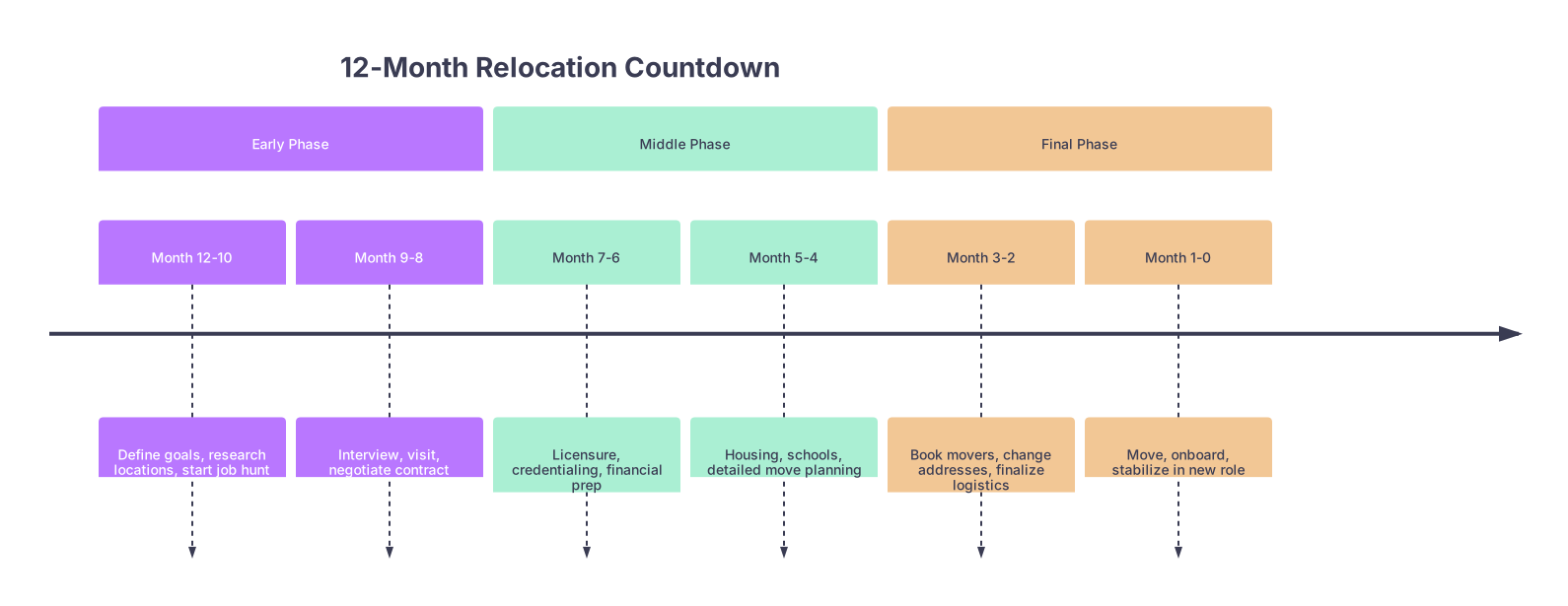
| Period | Event |
|---|---|
| Early Phase - Month 12-10 | Define goals, research locations, start job hunt |
| Early Phase - Month 9-8 | Interview, visit, negotiate contract |
| Middle Phase - Month 7-6 | Licensure, credentialing, financial prep |
| Middle Phase - Month 5-4 | Housing, schools, detailed move planning |
| Final Phase - Month 3-2 | Book movers, change addresses, finalize logistics |
| Final Phase - Month 1-0 | Move, onboard, stabilize in new role |
6–4 Months Out: Money, Housing, and Life Logistics
At this point you should be shifting from “Will I move?” to “Exactly how will I live there?”
Month 6: Financial and Insurance Setup
Align your start date with your finances:
- When does fellowship/residency pay stop?
- When does your first attending paycheck hit? (Often a 2–4 week lag)
- Plan for a 1–2 month cash buffer
Understand benefits:
- Health insurance: gap coverage between training and new job?
- Disability insurance: get an individual own‑occupation policy before or right after you start
- Retirement: 401(k)/403(b) match start date and vesting schedule
If you have loans:
- Decide: refinance vs PSLF vs other forgiveness
- Confirm your employer’s status (non-profit vs for-profit) if PSLF matters
Rough budget for relocation:
- Movers
- Deposits (rent or mortgage / closing costs)
- Temporary housing
- Travel for house-hunting
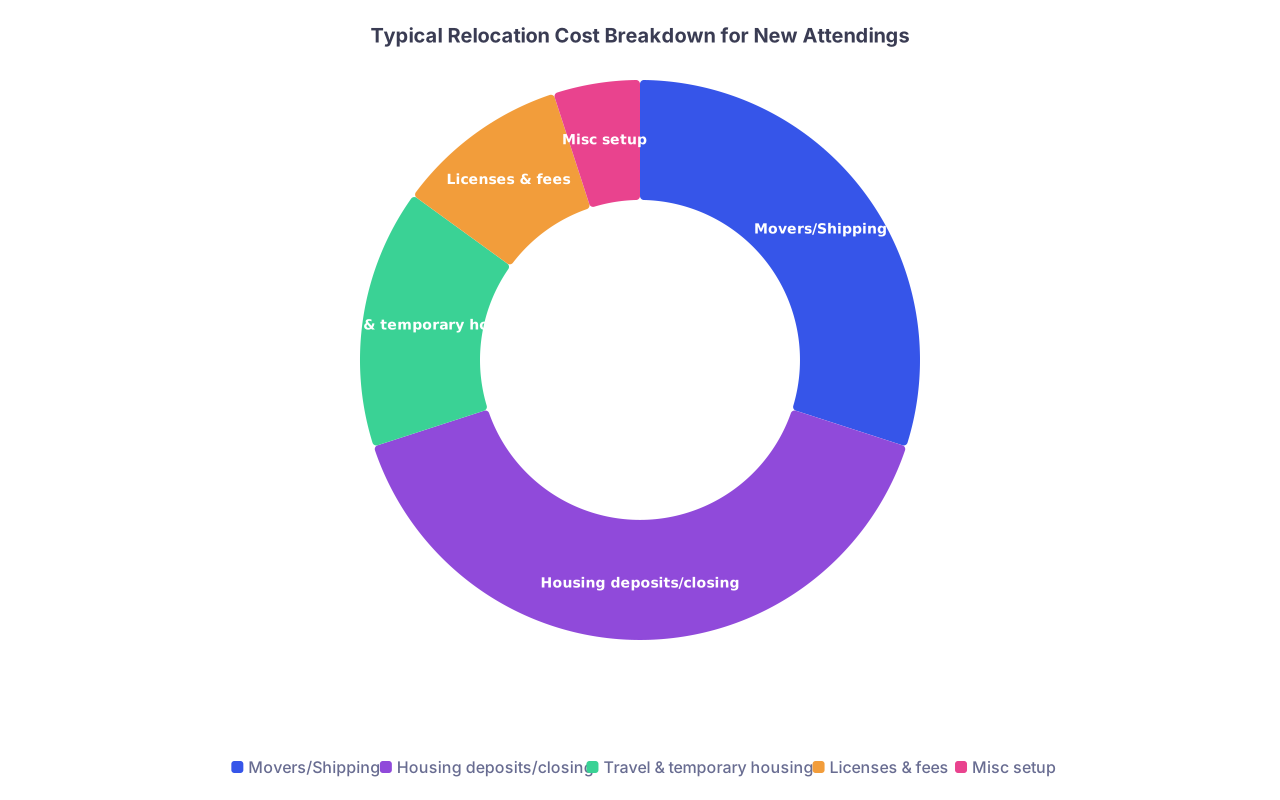
| Category | Value |
|---|---|
| Movers/Shipping | 30 |
| Housing deposits/closing | 40 |
| Travel & temporary housing | 15 |
| Licenses & fees | 10 |
| Misc setup | 5 |
Month 5: Housing Scouting and Neighborhood Triage
Now you can let yourself look at real estate. With constraints.
Clarify your non‑negotiables:
- Max commute time both during rush hour and off‑peak
- Parking (especially in urban hospitals)
- Schools/daycare options if you have children
- Safety profile of neighborhoods
Make a scouting trip if possible:
- Schedule housing tours (rentals or homes to buy)
- Drive your potential commute at peak times
- Visit grocery stores, childcare centers, parks
Decide: rent vs buy first year
- I strongly favor renting the first year in a new market:
- You do not know yet whether the job is a long‑term fit
- You do not know which neighborhood you will actually like after 6 months
- Exceptions:
- You are returning to a city you know extremely well
- Your spouse/partner is already established there and you are certain
- I strongly favor renting the first year in a new market:
Set a deadline for signing a lease or purchase contract: usually 3 months before move.

Month 4: Family, Schools, and Support Systems
If you have a partner or kids, this month matters more than any negotiation point.
Schooling:
- Research school enrollment deadlines (some are months in advance)
- For public schools, map your housing search to school zones
- For daycare, start waitlists now, not after you move
Partner career:
- Networking for their job in the new city
- Timing their job change with your move
- Assess whether you need one income buffer period
Build a support map:
- Who do you know in that city (even loosely)?
- Alumni groups from your med school or residency
- Specialty societies’ local chapters
3–1 Months Out: The Tactical Grind
Here is where the move stops being abstract and becomes boxes, forms, and deadlines. At this point you should be living in checklists.
Month 3: Lock in Dates and Vendors
Confirm:
- Exact start date (in writing)
- Orientation schedule
- First on‑call date (you want some clinic/OR days first if possible)
Book:
- Moving company (or decide on PODs / self‑move)
- Temporary housing if there is a gap between move‑in and work start
- Flights or driving route
Start the address change master list:
- Bank and credit cards
- State medical board(s)
- DEA and controlled substance registration
- Professional societies and boards
- Loan servicers
- Insurance companies
If you own where you are now:
- List your home or give notice to your landlord according to lease terms
Month 2: Systems, Licenses, and Clinical Readiness
This month is about not walking in blind on day one.
Follow up aggressively on:
- State license status
- Hospital privileges
- DEA registration (and any state-level equivalents)
Get EMR access and training:
- Schedule online modules before your first day if allowed
- Ask for:
- Sample note templates
- Order sets in your specialty
- Commonly used phrases or smart phrases
Clinical setup:
- Think through your “first clinic week”:
- Ideal schedule density (do not start at 24 patients/day)
- Procedures you do vs refer
- How refills, inbox, and results will flow
- Think through your “first clinic week”:
Personal logistics:
- Set up mail forwarding
- Transfer prescriptions to a pharmacy near your new home
- Book any needed appointments (dentist, PCP, etc.) before you lose your current network
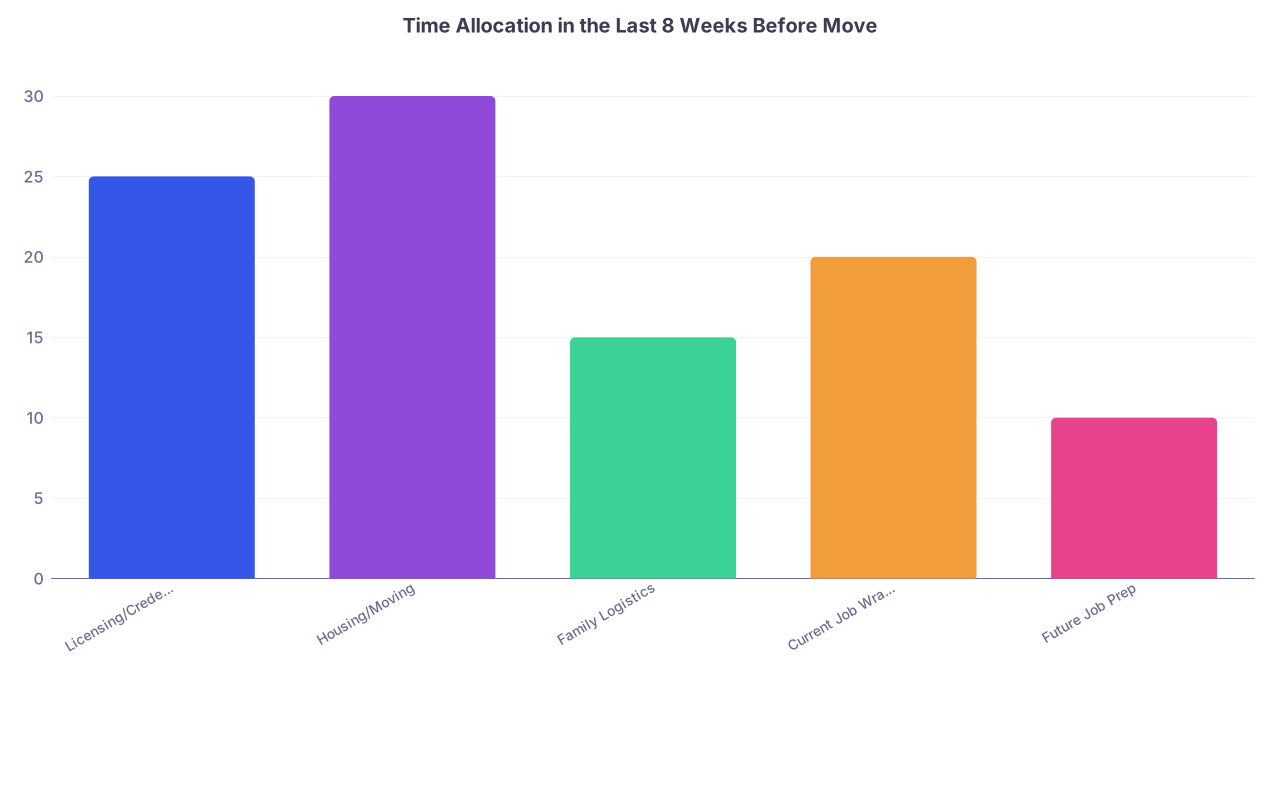
| Category | Value |
|---|---|
| Licensing/Credentialing | 25 |
| Housing/Moving | 30 |
| Family Logistics | 15 |
| Current Job Wrap-up | 20 |
| Future Job Prep | 10 |
Month 1: Pack, Close Loops, and Mentally Shift
At this point you should be wrapping up, not starting tasks.
At your current institution:
- Finish all notes and charts
- Close open quality projects or hand them off explicitly
- Say deliberate goodbyes to mentors, colleagues, and staff
Packing:
- Label boxes by room and priority
- Keep a separate first‑week bag:
- Work clothes
- Important paperwork
- Basic kitchen items
- Medications
- Electronics and chargers
Financial and admin:
- Confirm your last paycheck date and any unused PTO payout
- Confirm new job’s first paycheck date
- Download pay stubs and benefits summary from your current employer
Mental reset:
- Take at least a few days of actual downtime between finishing training and starting your attending job
- You are not a resident anymore; the way you think about responsibility and boundaries has to upgrade too

Move Week and First 30 Days: Stabilize, Then Optimize
You have actually moved. Now your timeline switches to days and weeks.
Move Week: Minimum Viable Life Setup
Day 0–3:
- Confirm:
- Housing keys, parking, mailbox, internet setup
- Unpack only what you need:
- Bed, basic kitchen, work clothes, important documents
- Walk the neighborhood:
- Nearest grocery, pharmacy, urgent care, gym
Day 4–7:
- DMV / driver’s license if needed for your new state
- Bank branches if you need in‑person help
- Explore at least one non-work place you might actually enjoy (park, café, trail)
First Work Week: Learn the System, Not Just the Medicine
Week 1:
- Arrive early every day. Not a motivational poster thing, a logistics thing.
- Focus on:
- How nurses, MAs, and APPs actually route things
- How to get stuff done: stat CT, add-on case, urgent referral
- Who fixes what: IT, scheduling, prior auths, central supply
Ask one trusted colleague:
- “What do new hires here usually screw up in the first month?”
- “What would you tell yourself on your own first week?”

| Step | Description |
|---|---|
| Step 1 | Start Day 1 |
| Step 2 | Orientation |
| Step 3 | EMR Training |
| Step 4 | Shadow Clinic or OR |
| Step 5 | Light Independent Schedule |
| Step 6 | Full Patient Load |
| Step 7 | Meet Key Staff |
Weeks 2–4: Gradual Ramp, Guardrails Up
Weeks 2–3:
- Slowly increase patient volume to your target
- Keep a running “process questions” note:
- Billing quirks
- Common order sets
- Local referral patterns
Week 4:
- Check in with your division chief or mentor:
- Ask for specific feedback
- Clarify upcoming expectations: clinics, call, meetings, committees
Do not volunteer for every committee or project in month one. Prove you can function clinically first.
Final 6-Week Micro‑Timeline (for the Detail-Oriented)
You like specifics. Good.
6 Weeks Before Move
- Confirm:
- Movers and exact dates
- Lease or closing date
- Start date and orientation schedule
- Start:
- Packing non-essentials
- Formal goodbye plan to current supervisors and mentors
4 Weeks Before Move
- Mail forwarding scheduled
- Utilities set to turn off/on appropriately
- Childcare and schools confirmed with written start dates
- Final appointments in current city (doctor, dentist, etc.)
2 Weeks Before Move
- Pack most of the house
- Keep only daily-use items out
- Back up important digital documents to cloud
- Print or save offline:
- License confirmations
- Contract and benefits summary
- Credentialing contacts
1 Week Before Move
- Deep clean current place or schedule cleaning
- Turn in keys/coordinate handoff
- Triple-check:
- First day arrival time and location
- Parking situation
- Dress code for orientation
First Week After Move
- Unpack the essentials
- Stock the kitchen enough to avoid daily takeout
- Walk or drive your commute at your actual start time
The Short Version: What Actually Matters
Three points to remember if you ignore everything else:
- Start 12 months out, not 3. Job search, contracts, and licensure eat time. If you are not interviewing by 9–10 months before graduation, you are compressing your options.
- Lock down the boring stuff early. Licenses, credentials, daycare, housing, benefits—these are what derail timelines, not “finding a couch.”
- Use the first 30 days to learn the system, not prove you are a hero. Slow clinical ramp, aggressive questions, deliberate boundaries. You are building a sustainable attending life, not surviving another rotation.


