
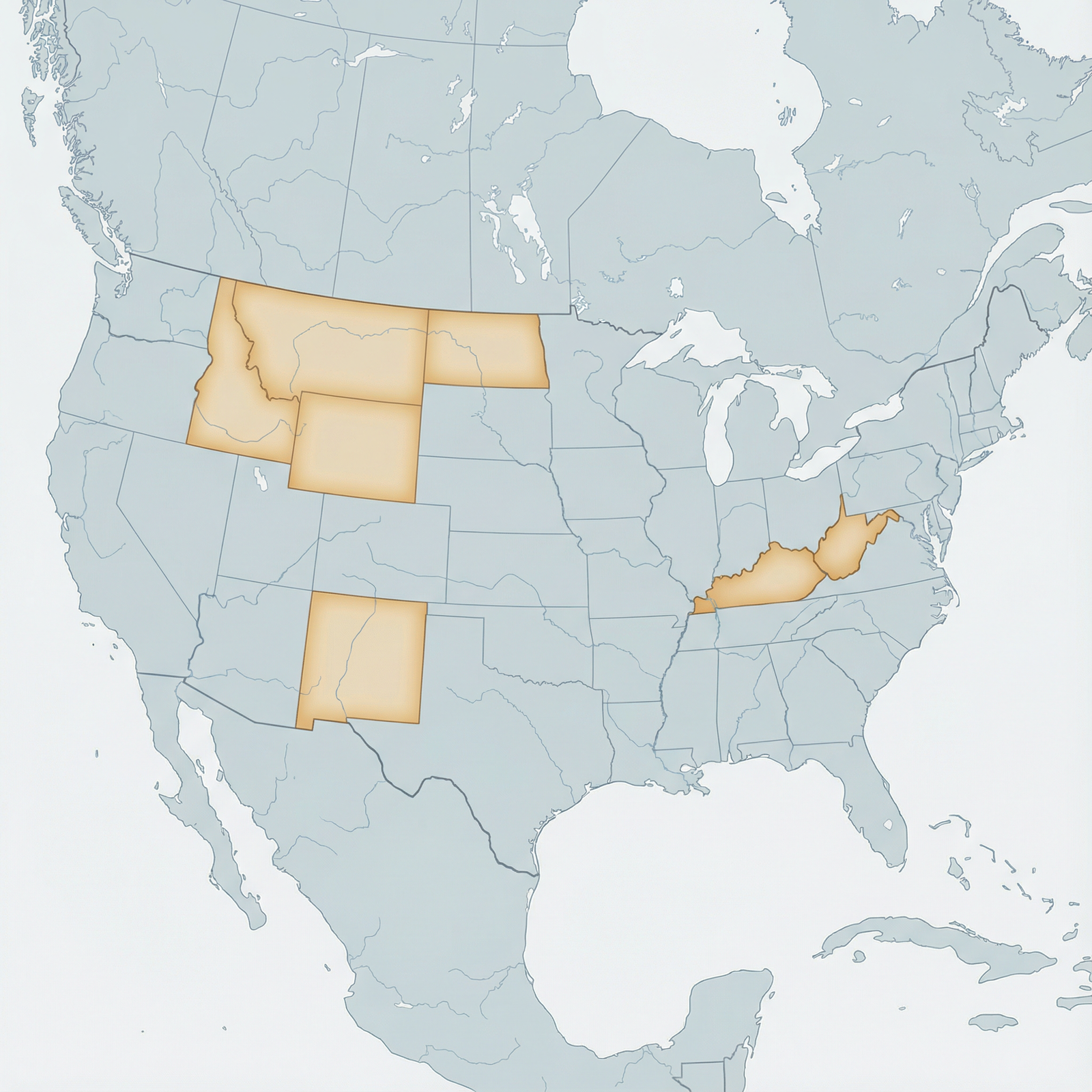
The biggest mistake young physicians make is waiting until fellowship graduation to think about where they actually want to live.
By that point, the map has already narrowed itself for you—by debt, family, visa status, and a job market you never tracked.
Let’s not do that.
You asked: MS4 to Attending: When to Start Scouting the Best States to Practice. I will walk you year by year, then quarter by quarter, then down to the last 6–12 months before you sign anything.
Big Picture: The 10‑Year Arc From MS4 to First Attending Job
From MS4 to early attending, you move through five decision zones:
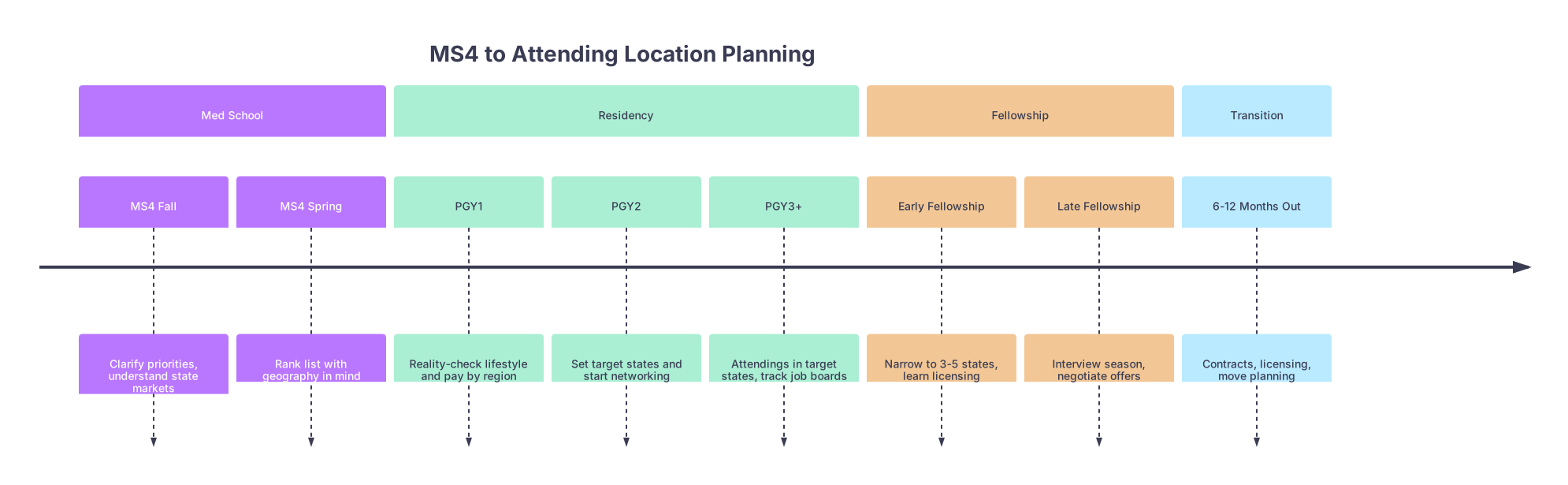
| Period | Event |
|---|---|
| Med School - MS4 Fall | Clarify priorities, understand state markets |
| Med School - MS4 Spring | Rank list with geography in mind |
| Residency - PGY1 | Reality-check lifestyle and pay by region |
| Residency - PGY2 | Set target states and start networking |
| Residency - PGY3+ | Attendings in target states, track job boards |
| Fellowship - Early Fellowship | Narrow to 3-5 states, learn licensing |
| Fellowship - Late Fellowship | Interview season, negotiate offers |
| Transition - 6-12 Months Out | Contracts, licensing, move planning |
Here is the blunt version:
- Ideal time to start thinking about best states: MS4 fall.
- Latest you can be deliberate and still have real options: Early PGY2.
- Too late but still salvageable: Last 6–9 months of fellowship or chief year.
- Truly late: After signing a “just for now” contract in a random city you hate.
We are going to work forward from MS4 and keep geography in play at each step.
MS4: When You Should Quietly Start Caring About States
By MS4 you are choosing residency. You are not choosing your final practice state yet. But you are definitely setting probabilities.
MS4 Fall (Rank List Season): Define What “Best State” Means For You
At this point you should stop thinking in slogans like “I want a coastal city” and start thinking in filters:
- Compensation vs cost of living
- Malpractice climate and litigation risk
- Loan repayment potential (federal and state programs)
- Lifestyle: outdoor access, urban vs rural, public schools, partner’s career
- Scope of practice and autonomy (especially for proceduralists)
- State taxes
Use this year to at least understand the rough landscape. For example:
| State | Income Tax | Typical Pay (Primary Care) | Malpractice Climate | COL vs US Avg |
|---|---|---|---|---|
| California | High | Moderate | Plaintiff-friendly | High |
| Texas | None | High | Relatively friendly | Low-Medium |
| New York | High | Moderate | Plaintiff-friendly | High |
| Florida | None | High | Mixed | Medium |
| Ohio | Medium | High | Moderate | Low |
Not perfect numbers, but the pattern is real. Some states pay more, tax less, and sue less. That matters.
Action items in MS4 fall
- Draw up your “states I’d love” vs “states I’d tolerate” vs “hard no” lists.
- When you build a rank list, do not put five programs in a state you already know you hate.
- Talk to residents at interview dinners:
“Where are graduates going for jobs? Do people stay in-state or scatter?”
You are not locking in your practice state. You are avoiding locking in a state pipeline that does not match your long‑term goals.
Early Residency (PGY1–PGY2): Turning Vague Ideas Into Target Regions
By the end of internship, you know if your specialty choice was sane and what kind of life you can tolerate. Use that awareness.
PGY1: Reality Check Year
At this point you should:
- Track your actual spending and debt trajectory.
- Compare that to average compensation by state for your specialty.
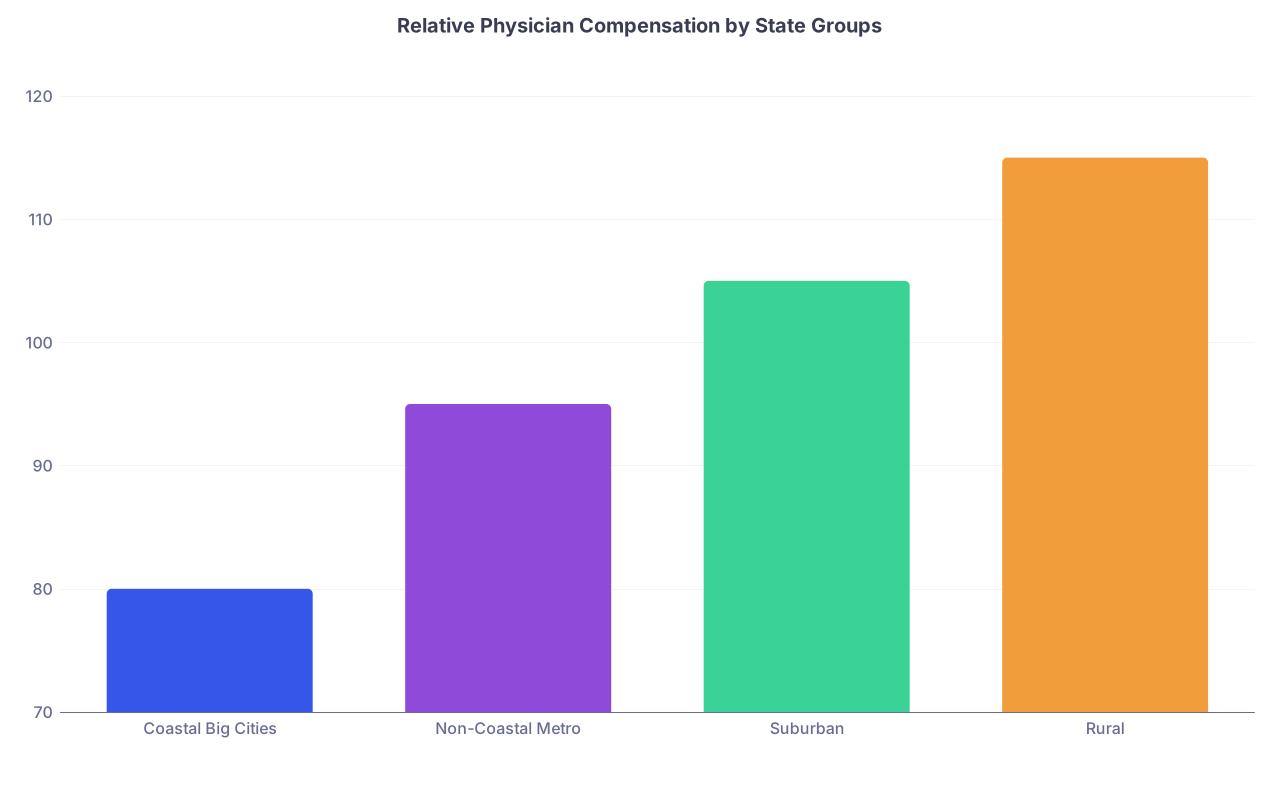
| Category | Value |
|---|---|
| Coastal Big Cities | 80 |
| Non-Coastal Metro | 95 |
| Suburban | 105 |
| Rural | 115 |
Quick pattern I have seen over and over:
- Coastal academic centers: prestige, research, pain
- Midwestern/Southern metros: solid pay, tolerable lifestyle
- Rural: massive pay, isolation, thinner support
PGY1 is when you should start mapping yourself onto those buckets.
PGY1 practical moves
- Identify 2–3 attendings whose lives you would actually want. Ask them:
- “If you could move to any state for your current job, where would you go?”
- “What do you think are the best states for [your specialty] right now?”
- Start a simple document:
- Column A: State
- Column B: Pros (pay, taxes, lifestyle)
- Column C: Cons
- Column D: Notes from real physicians
It will look naive at first. That is fine. It will mature fast.
PGY2: Commit to Target States (Even If You Later Change Them)
PGY2 is the ideal time to start scouting the best states with intent.
At this point you should:
Pick a short list of 5–8 target states.
Example pattern I see a lot:- “Texas, Florida, North Carolina, Colorado, Washington, and one wildcard like Tennessee.”
Start following job markets in those states:
- Subscribe to physician job boards filtered by those states.
- Watch which systems are constantly hiring (turnover is a signal).
- Notice if your specialty is saturated there or not.
Network deliberately.
- Go to national meetings.
- When you meet someone from your target states, ask pointed questions:
- “How is call coverage?”
- “Do new attendings actually pay off loans there?”
- “How bad is malpractice?”
This is the first real scouting phase. You are not applying yet, but you are learning the terrain before you have to camp there for years.
Late Residency / Fellowship Decision: How State Choice and Training Interact
If your specialty has common fellowships (cards, GI, CC, heme/onc, etc), your eventual practice location often follows your fellowship state.
PGY3 (Or Final IM/EM Year): Decide Strategy
At this point you should answer two questions:
- Do I want to stay in academic medicine or not?
- Do my dream states have the kind of practice I want?
If you want:
- Academic career → big coastal or large metro states are dominant.
- High pay community job → many of the “quietly great” states are inland:
Ohio, Indiana, Missouri, Tennessee, the Dakotas, parts of Texas.

Concrete moves in PGY3
- Line up away rotations or electives in one of your target states, if feasible.
You learn a lot in 4 weeks about pace, support staff, and culture. - Talk to 2–3 graduates from your program now practicing in your target states:
- “What surprised you about practicing in [state]?”
- “If you had to move, where would you go next and why?”
If you are going straight into a job (no fellowship), late PGY2–early PGY3 is when the serious scouting should start. For most core specialties, jobs start recruiting 6–18 months before start date.
Fellowship Years: Narrowing From “Good States” to “This Zip Code”
Fellowship is when most people finally wake up and realize geography matters. Frankly, it is late but still workable.
Early Fellowship (Year 1): Hard Narrow to 3–5 States
At this point you should:
- Cut your long list down to 3–5 serious target states.
- For each, identify:
- 3–5 major hospital systems
- Whether they are saturated in your subspecialty
- Typical call burden and employment model (W2 vs 1099, RVU-heavy vs salary)
Use state medical society resources and specialty societies. Many have:
- State‑level salary surveys
- Malpractice premium ranges
- Legislative updates that affect scope and pay
This is the time to consider malpractice climate and legal environment seriously.
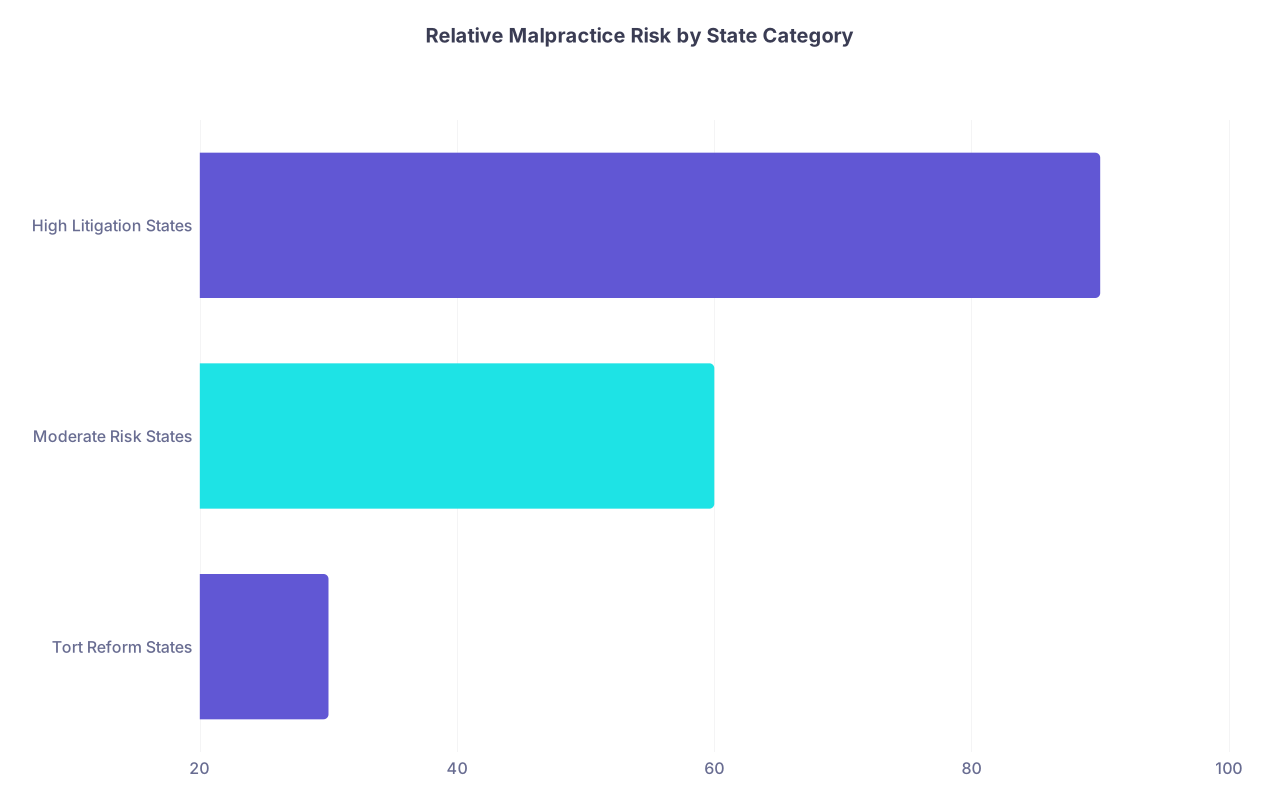
| Category | Value |
|---|---|
| Tort Reform States | 30 |
| Moderate Risk States | 60 |
| High Litigation States | 90 |
High‑litigation states are not always bad places to work, but you should not discover that after you have bought a house.
Mid‑Fellowship (Year 2 if 3‑year fellowship): First Real Job Conversations
At this point you should start:
- Reaching out to department chairs or group leaders in your target states:
- “I am a [year] fellow in [subspecialty]; I am interested in learning more about opportunities in [state] in [year]. Can we talk for 15 minutes?”
- Attending national meetings with a hit list:
- You are not collecting random recruiter swag.
- You are talking to employers from your 3–5 states.
This is still scouting, not committing. But people will start marking your name down as “potential 202X hire.” That matters.
Final Training Year: From Scouting to Signing
Whether this is PGY3 (no fellowship), PGY5–6 (with fellowship), or chief year, this is the crunch.
12–18 Months Before Completion: Aggressive Market Scan
At this point you should:
- Reconfirm your top 3 states. If your partner or family situation changed, adjust now.
- Request detailed comp packages from multiple employers in those states. Not vague numbers. Actual sample contracts.
Look at:
- Base salary vs RVU compensation
- Call expectations
- Partnership track if private
- Non‑compete clauses (varies a lot by state law)
- Tail coverage responsibility
Different states have radically different norms.

9–12 Months Before Completion: Site Visits and Shortlist
This is where scouting becomes concrete.
At this point you should:
- Visit your top 3–6 potential jobs, ideally spread across 2–3 states.
- During visits:
- Drive around the actual neighborhoods where physicians live.
- Visit a local grocery store and school (if you have or plan kids).
- Ask to speak with a young attending who has been there <3 years:
- “What made your colleagues leave, if anyone has?”
- “Do you feel this state is good or bad for physicians politically and financially?”
You are not just picking a hospital. You are tying yourself to that state’s trajectory for at least 2–5 years.
6–9 Months Before Completion: Contract Negotiation and Licensing
At this point you should be:
- Down to 1–2 states seriously.
- Actively in contract negotiation with 1–3 employers.
Important state‑level issues to check now:
- State income tax and property tax
- Non‑compete enforceability in that state
- Any state‑specific loan repayment or rural incentive programs
- Telemedicine laws if you plan side gigs
Licensing is slower in some states than others. This is another reason to scout early.
| State Group | Example States | Typical Processing Time |
|---|---|---|
| Fast | WI, MO, CO | 4–8 weeks |
| Moderate | TX, FL, NC | 2–3 months |
| Slow / Bureaucratic | CA, NY, MA | 4–6+ months |
If you start license applications late in a slow state, your “great job” can turn into 3 months of unpaid waiting.
First Attending Year: Keep Scouting Quietly, Even After You Sign
The reality: your first job is often not your forever job. That is not failure. That is normal.
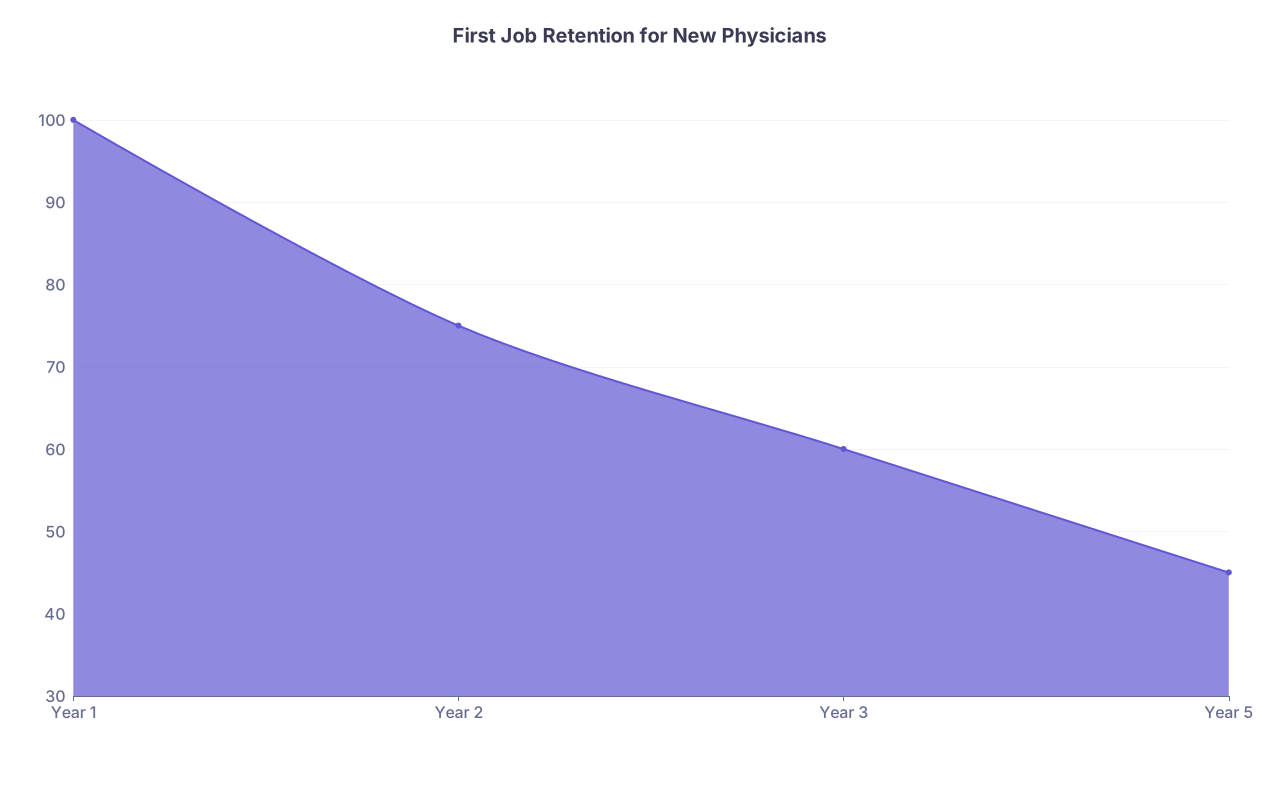
| Category | Value |
|---|---|
| Year 1 | 100 |
| Year 2 | 75 |
| Year 3 | 60 |
| Year 5 | 45 |
By year 3–5, a large fraction of physicians have moved on.
At this point you should:
- Keep a light watch on job markets in your top states, even if you chose a “starter state” that was not in your original top 3.
- Track:
- Are more practices opening or closing?
- Are hospitals merging into huge systems that squeeze physicians?
- Are state laws shifting toward or away from physician autonomy?
I have seen people lock into a mediocre state because they stopped paying attention. Then three years later a neighboring state is paying 20% more with better laws, and they never noticed.
Putting It All Together: A Simple Timeline
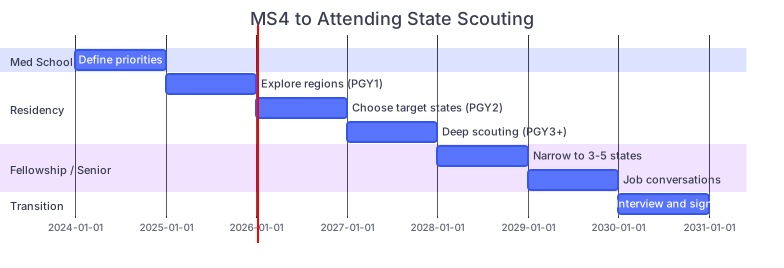
| Task | Details |
|---|---|
| Med School: Define priorities | a1, 2024, 1y |
| Residency: Explore regions (PGY1) | a2, 2025, 1y |
| Residency: Choose target states (PGY2) | a3, 2026, 1y |
| Residency: Deep scouting (PGY3+) | a4, 2027, 1y |
| Fellowship / Senior: Narrow to 3-5 states | a5, 2028, 1y |
| Fellowship / Senior: Job conversations | a6, 2029, 1y |
| Transition: Interview and sign | a7, 2030, 1y |
And a stripped‑down, “at this point you should…” checklist:
MS4:
- Define what “best state” means to you.
- Avoid ranking residencies in states you already know are wrong.
PGY1:
- Learn pay and lifestyle differences by region.
- Start a living document of state pros/cons.
PGY2:
- Pick 5–8 target states.
- Follow job markets and start light networking.
PGY3 / Early Fellowship:
- Narrow to realistic states that fit your specialty’s job patterns.
- Do electives or away time in at least one target state if possible.
Mid–Late Fellowship / Final Year:
- Hard narrow to 3–5 states.
- Visit jobs, compare contracts, factor in laws, taxes, and malpractice.
6–12 Months From Finish:
- Choose 1–2 states, negotiate serious offers, start licensing.
- Plan the move as if you will stay 5 years—even if you do not.
First Attending Years:
- Keep quietly scouting. Give yourself permission to upgrade states if needed.


